Ravi Sir's Cards › AWS
Standard vs Express
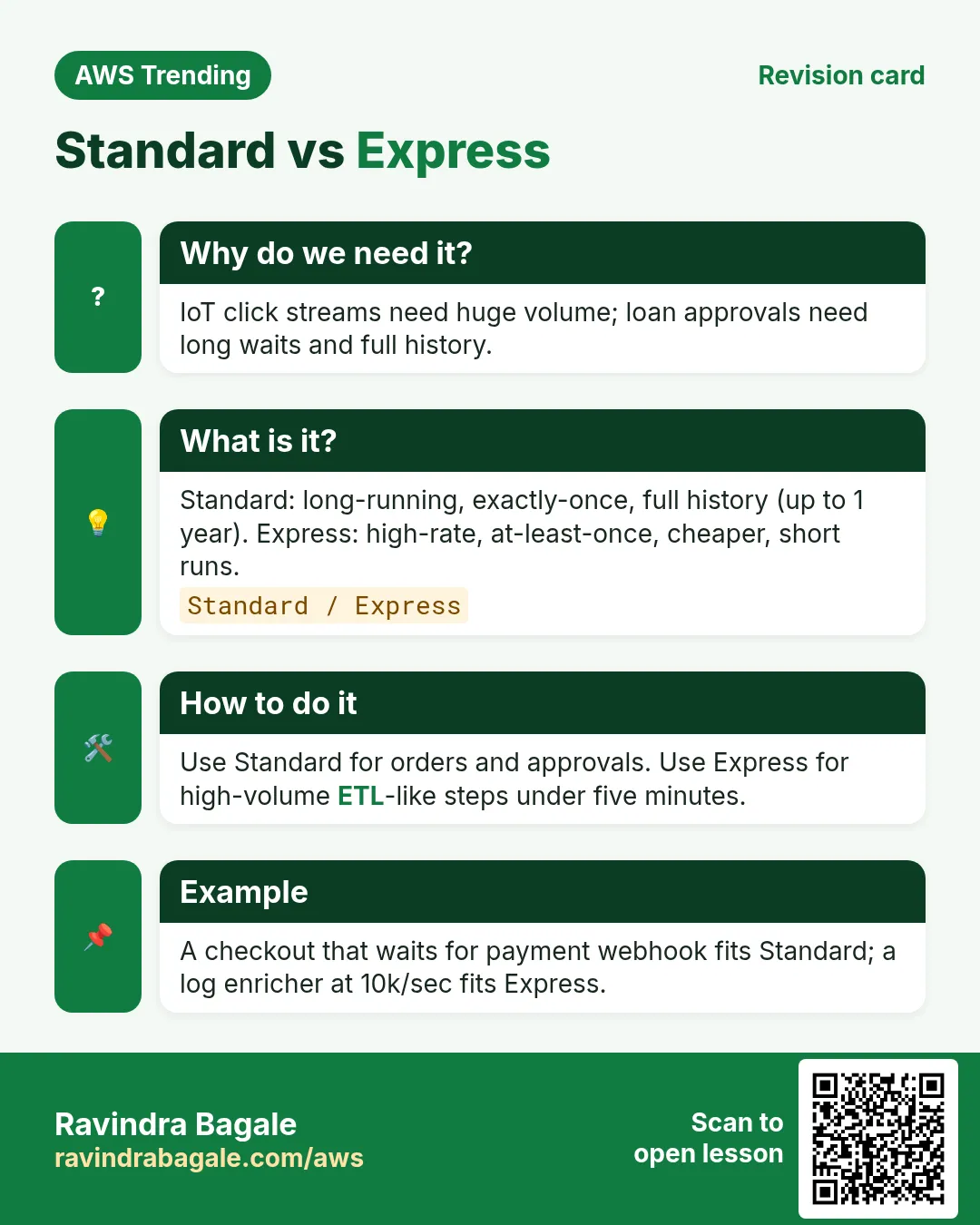
This revision card explains Standard vs Express. It starts from the need that ioT click streams need huge volume; loan approvals need long waits and full history. It describes standard — long-running, exactly-once, full history (up to 1 year). Express: high-rate, at-least-once, cheaper, short runs. The how-to section covers how to use Standard for orders and approvals. Use Express for high-volume ETL-like steps under five minutes. An example on the card is a checkout that waits for payment webhook fits Standard; a log enricher at 10k/sec fits Express.
Read card text
What this card says
Why do we need it?
IoT click streams need huge volume; loan approvals need long waits and full history.
What is it?
Standard: long-running, exactly-once, full history (up to 1 year). Express: high-rate, at-least-once, cheaper, short runs.
Standard / Express
How to do it
Use Standard for orders and approvals. Use Express for high-volume ETL-like steps under five minutes.
Example
A checkout that waits for payment webhook fits Standard; a log enricher at 10k/sec fits Express.