Revision cards
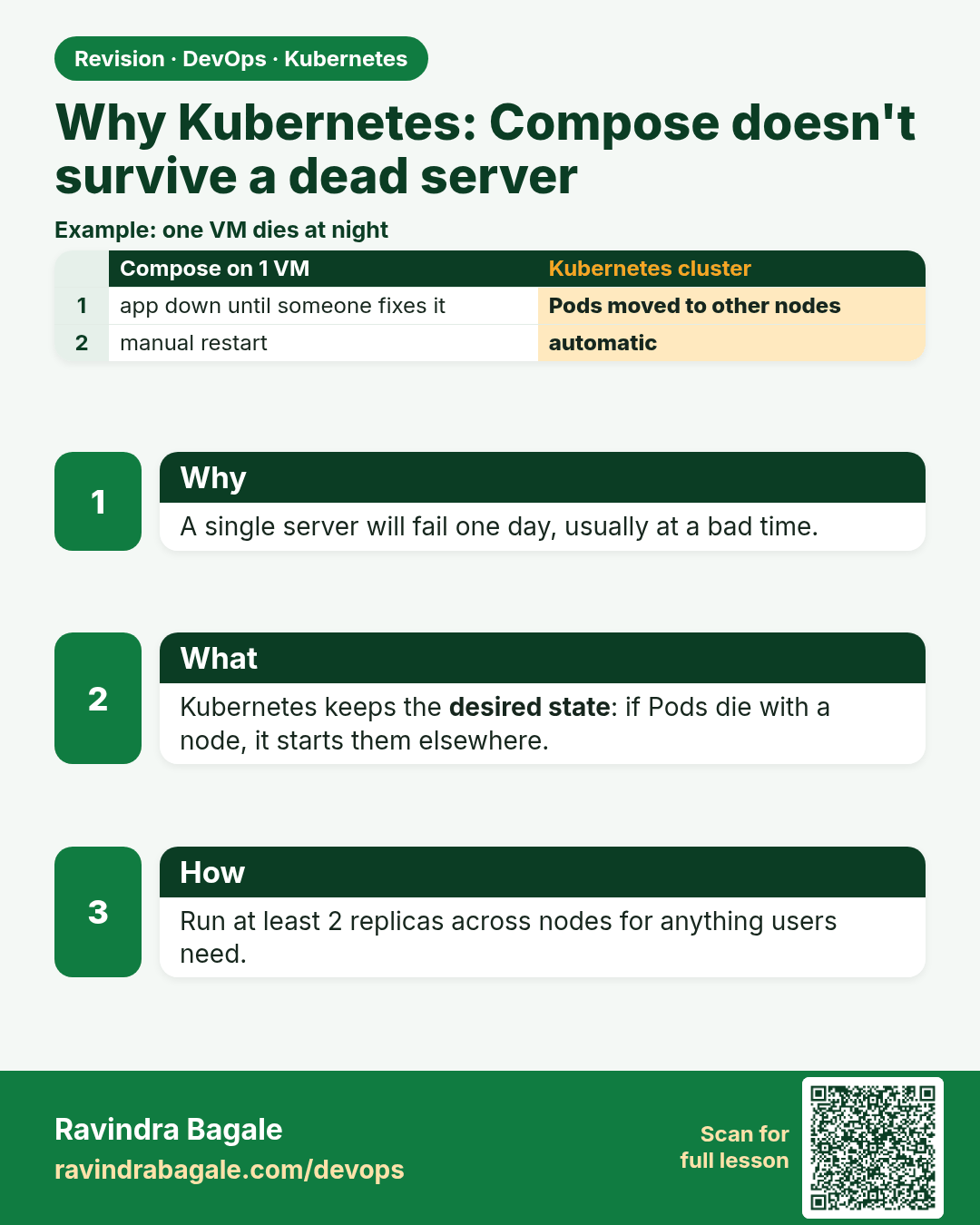
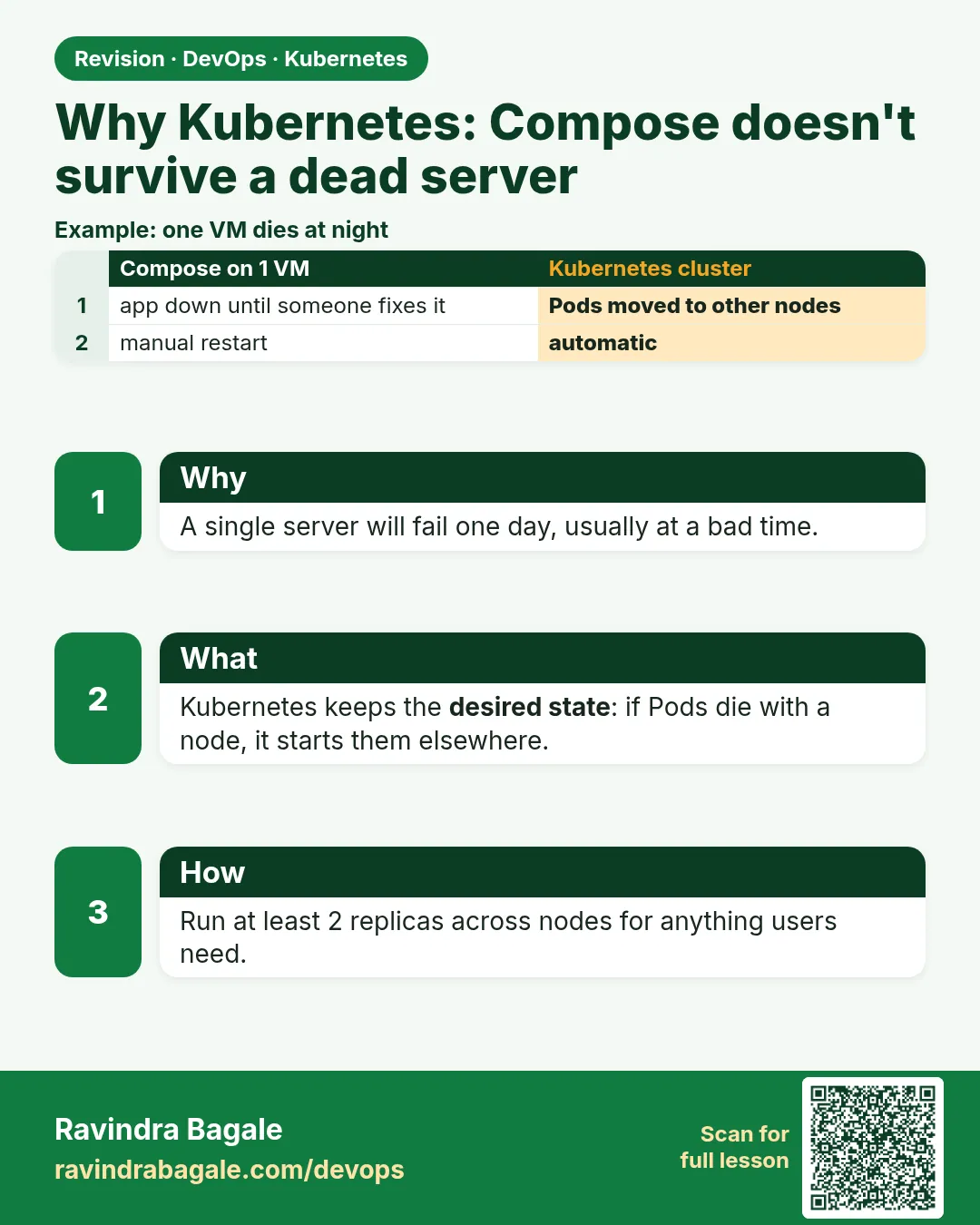 Revision card 1 of 15: Why Kubernetes: Compose doesn't survive a dead server · Download PNG · Open card page
Lesson: 18.1 Why Kubernetes — Compose does not survive a dead host
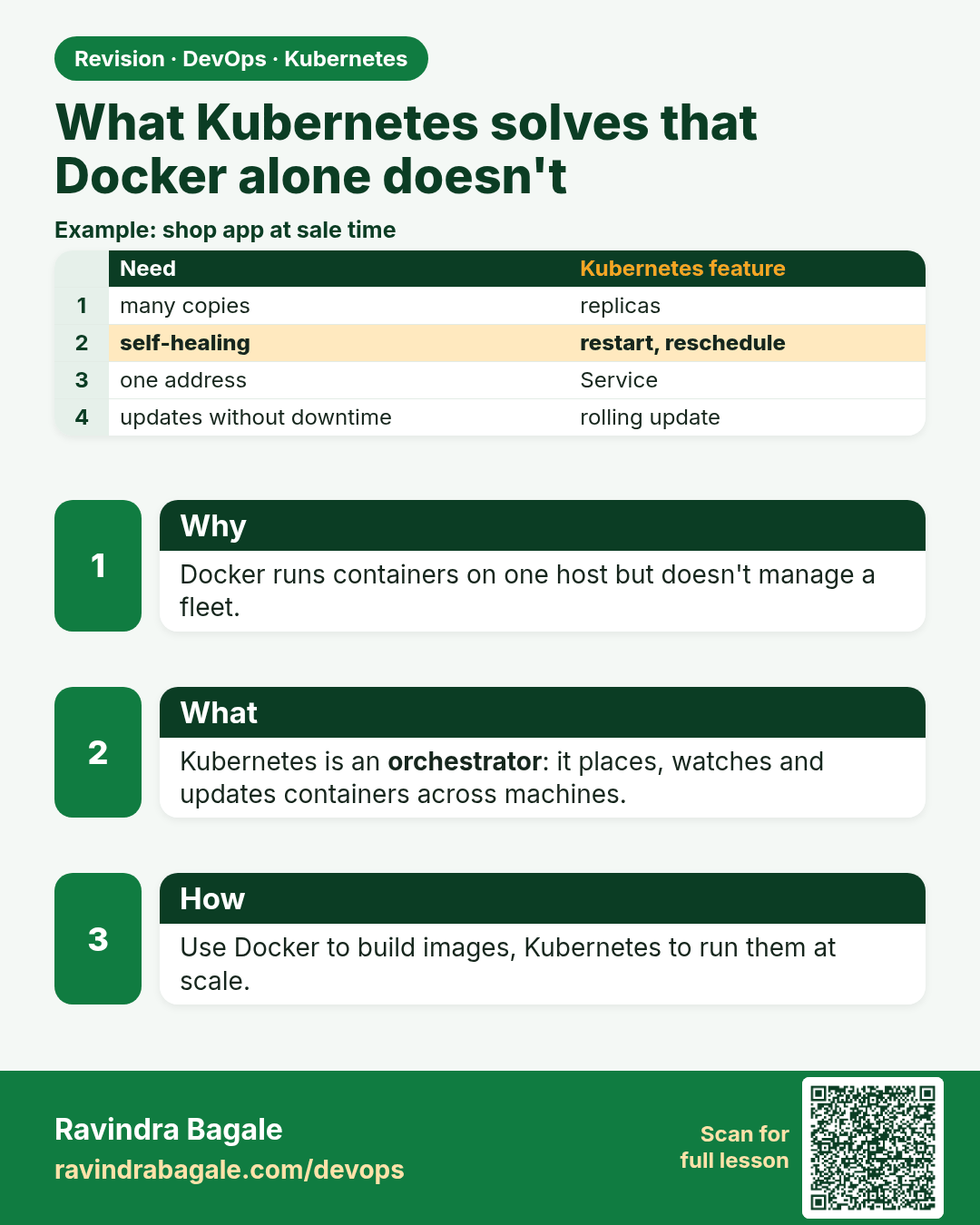
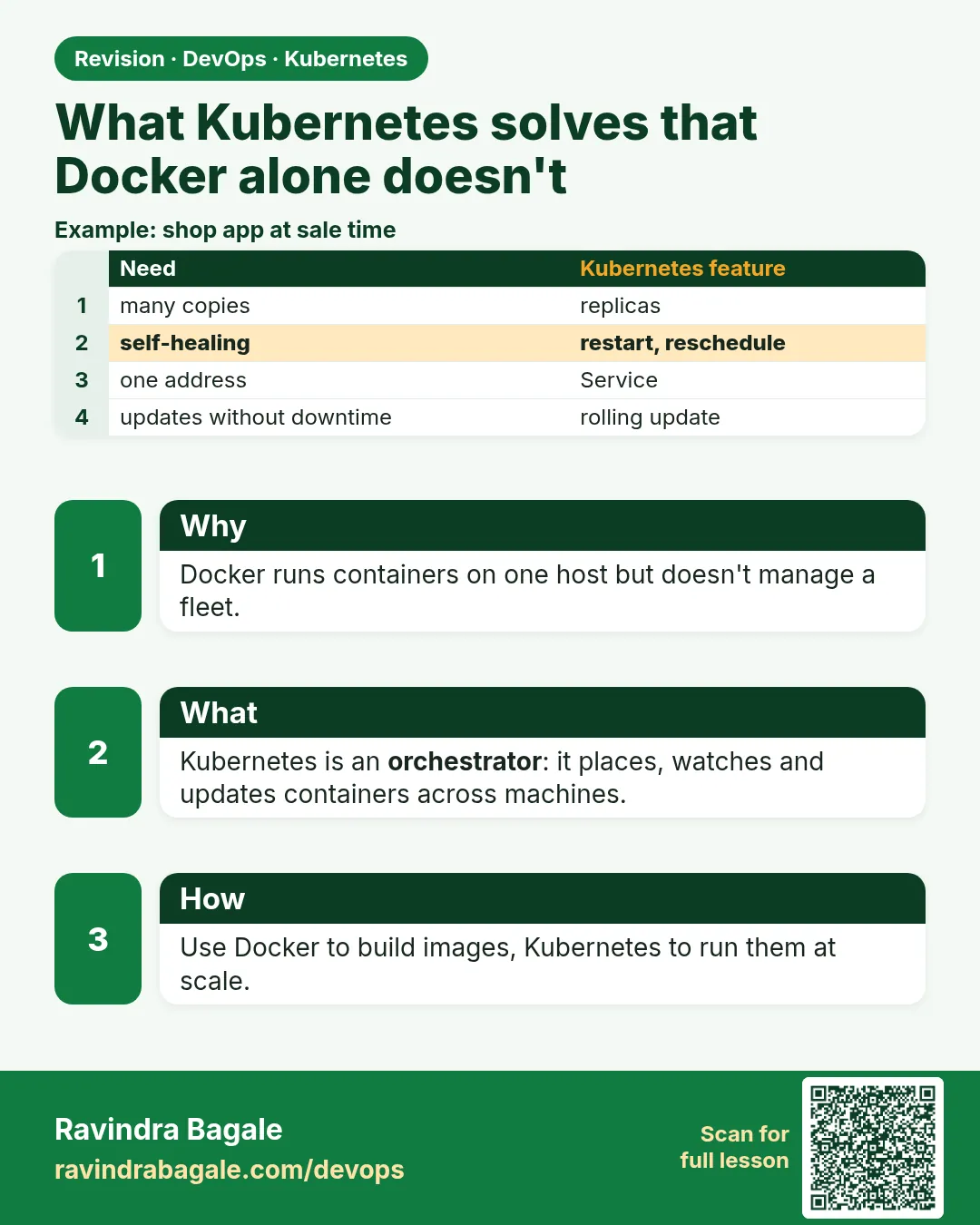 Revision card 2 of 15: What Kubernetes solves that Docker alone doesn't · Download PNG · Open card page
Lesson: 18.2 What this solves that Docker alone does not
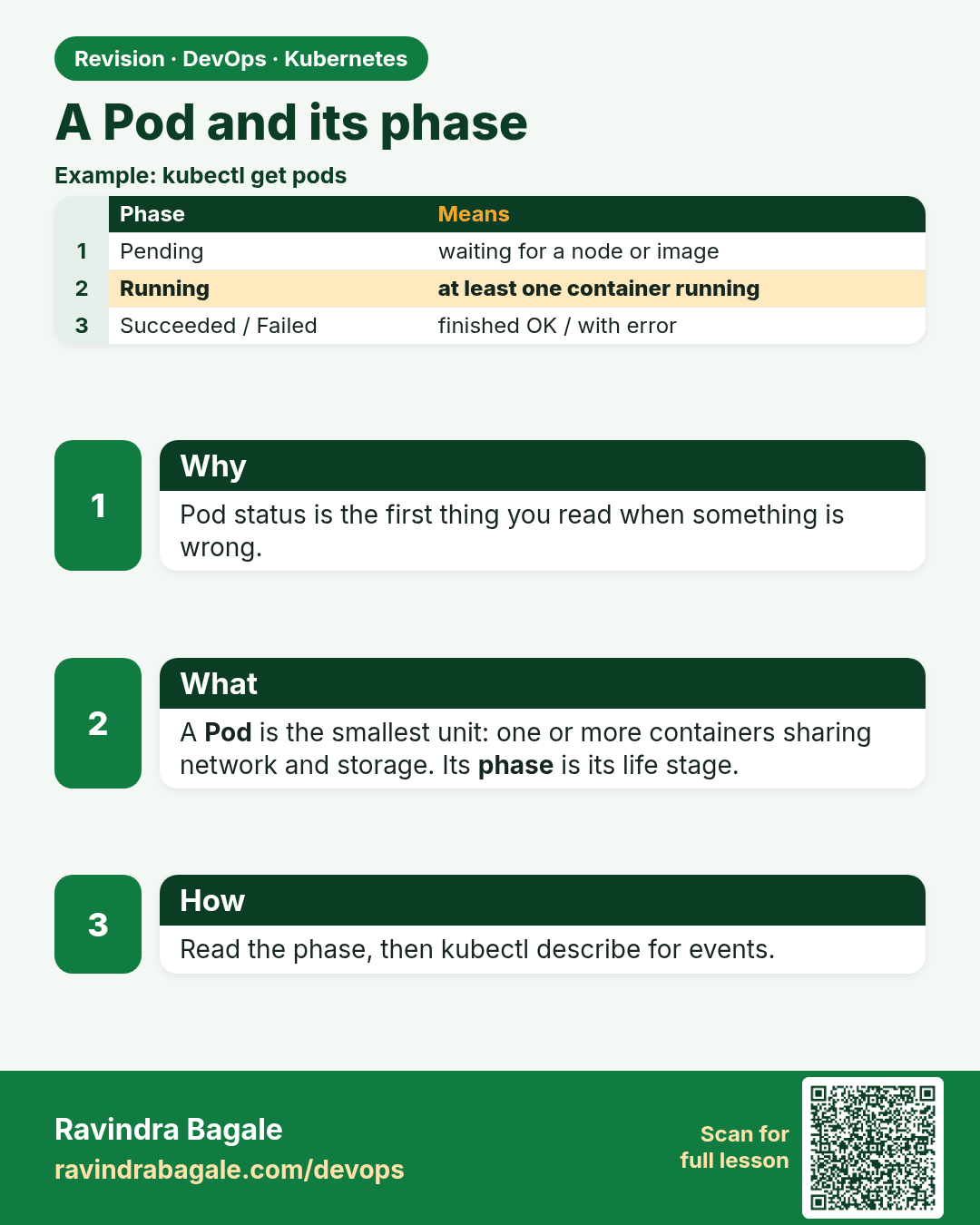
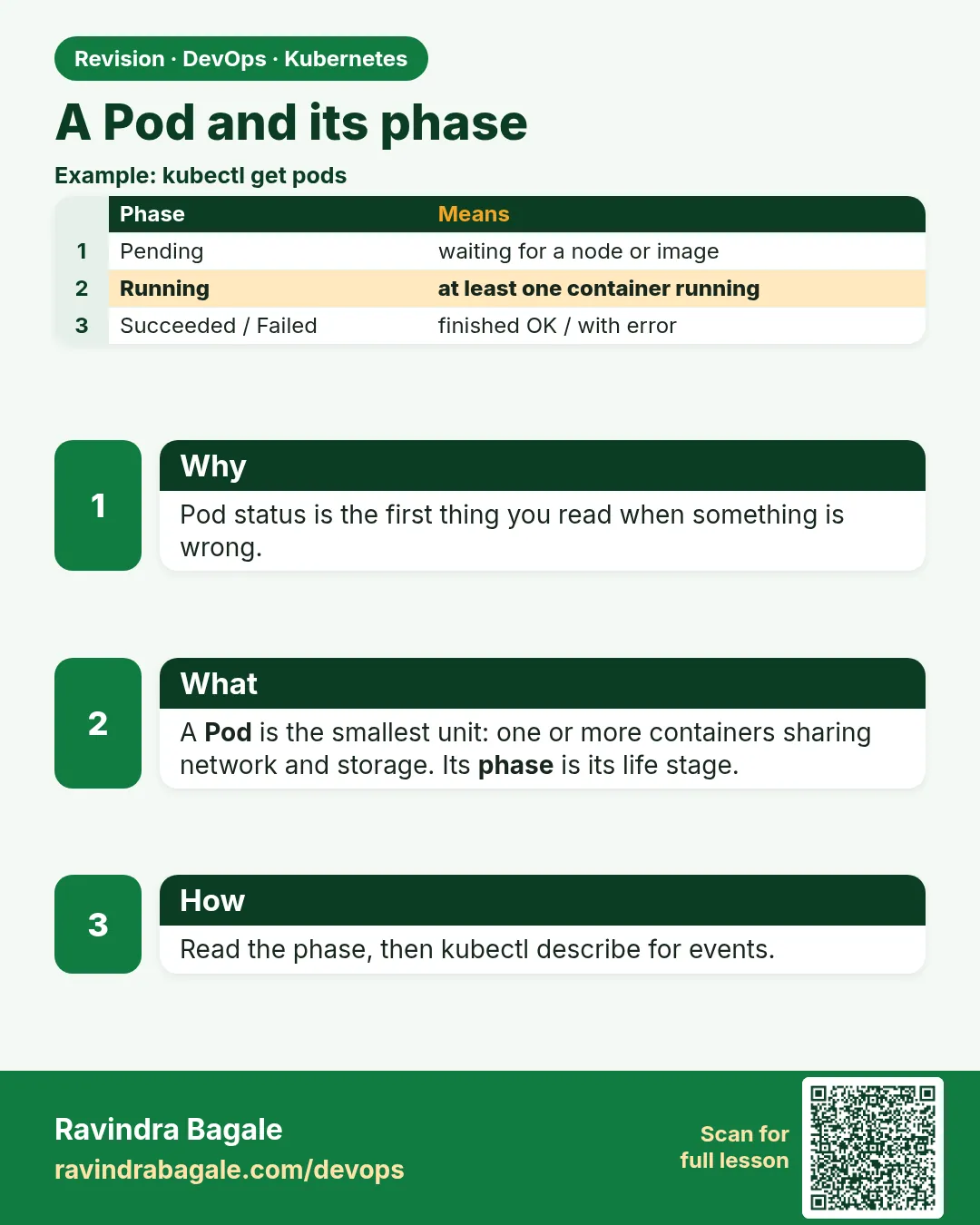 Revision card 3 of 15: A Pod and its phase · Download PNG · Open card page
Lesson: 18.3 A Pod, and the phase you can quote
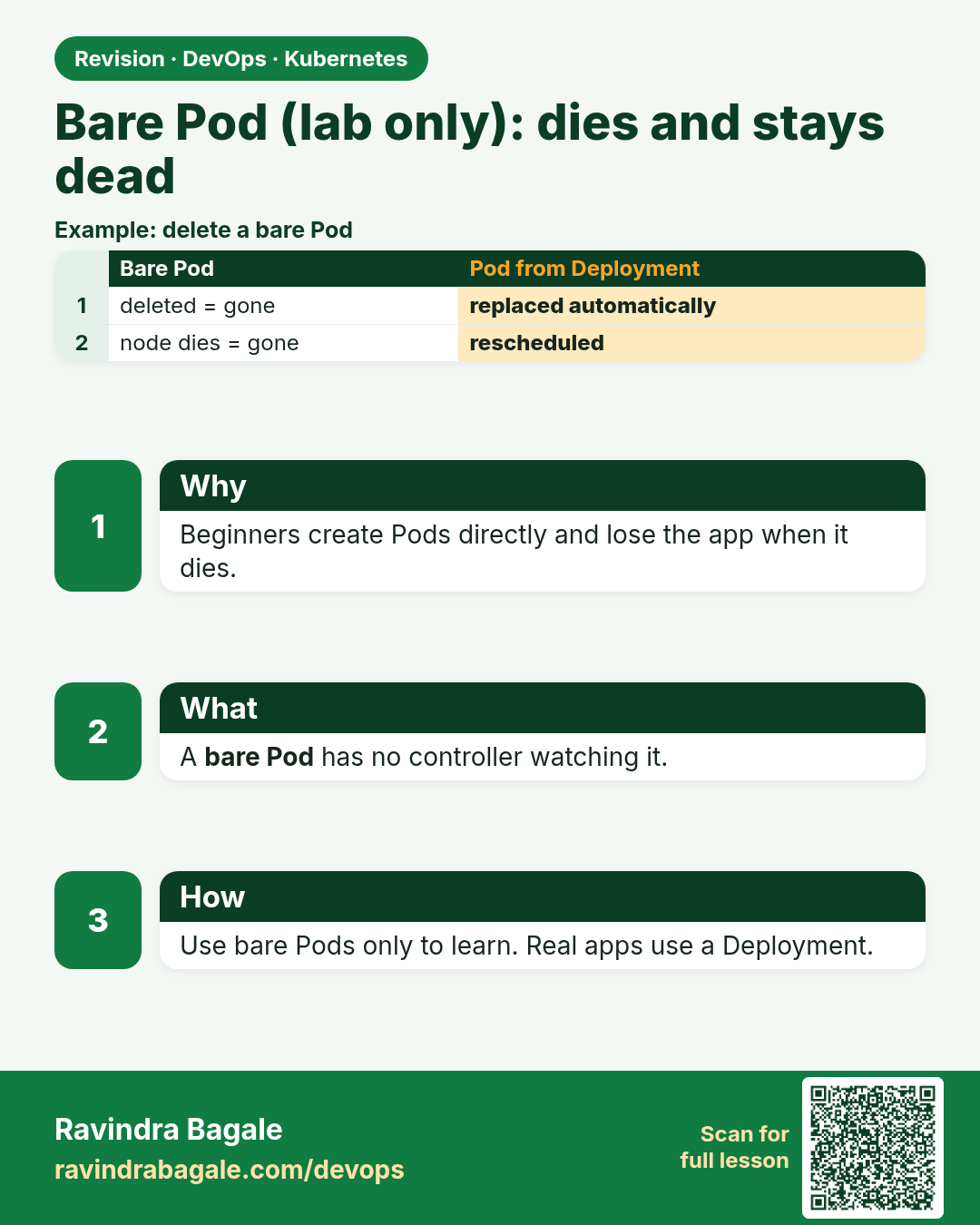
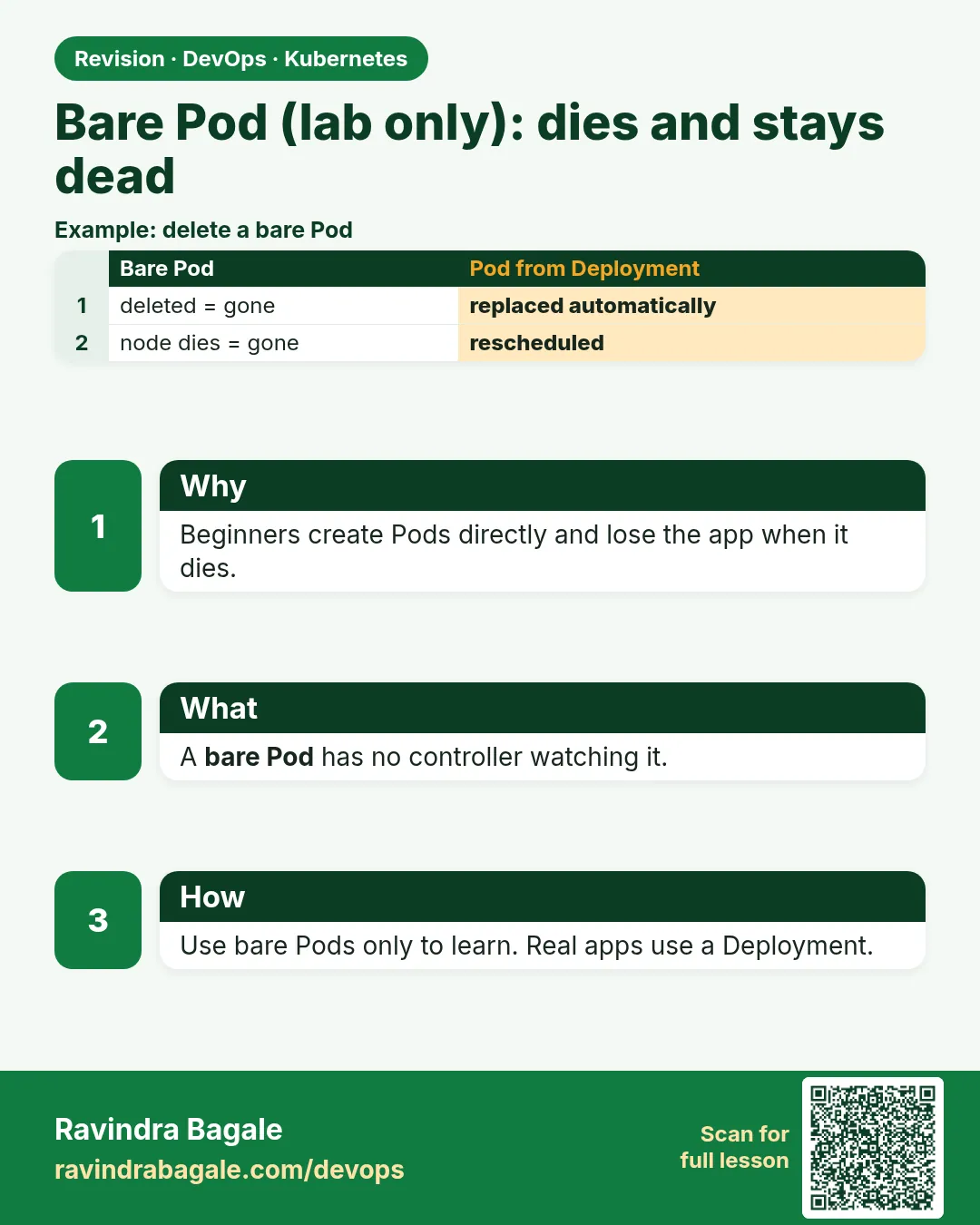 Revision card 4 of 15: Bare Pod (lab only): dies and stays dead · Download PNG · Open card page
Lesson: 18.4 Bare Pod — lab only, dies and stays dead
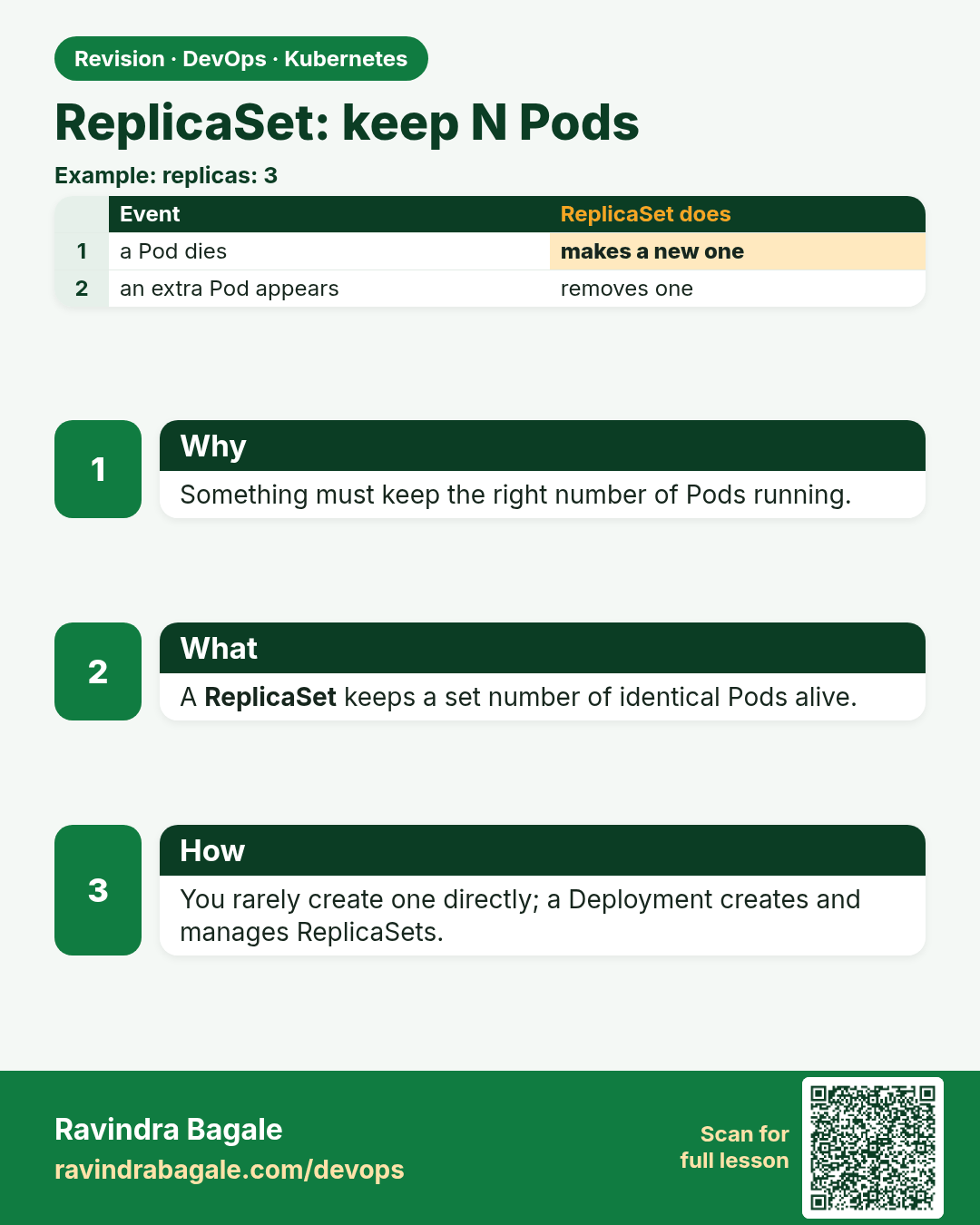
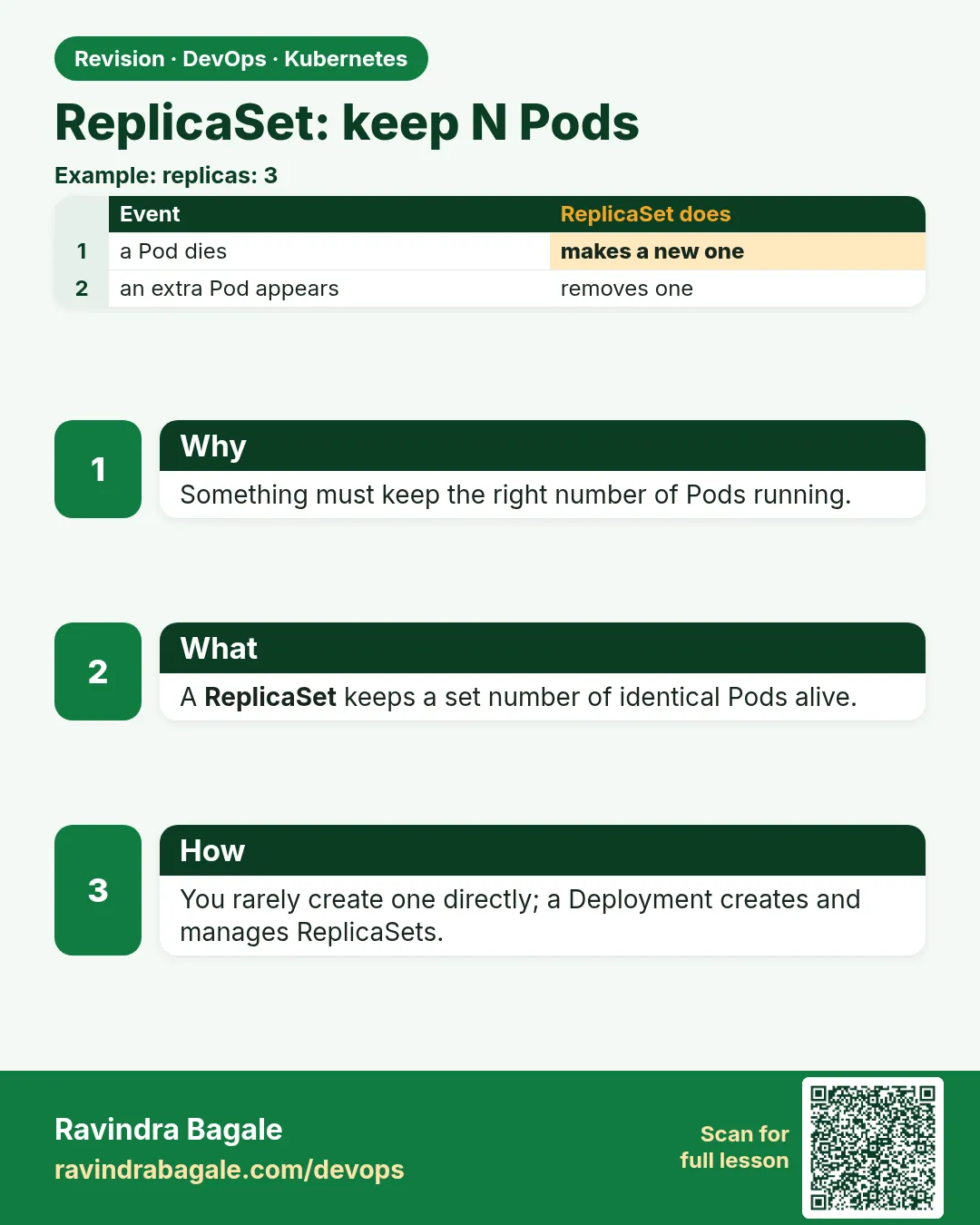 Revision card 5 of 15: ReplicaSet: keep N Pods · Download PNG · Open card page
Lesson: 18.5 ReplicaSet — keep N Pods
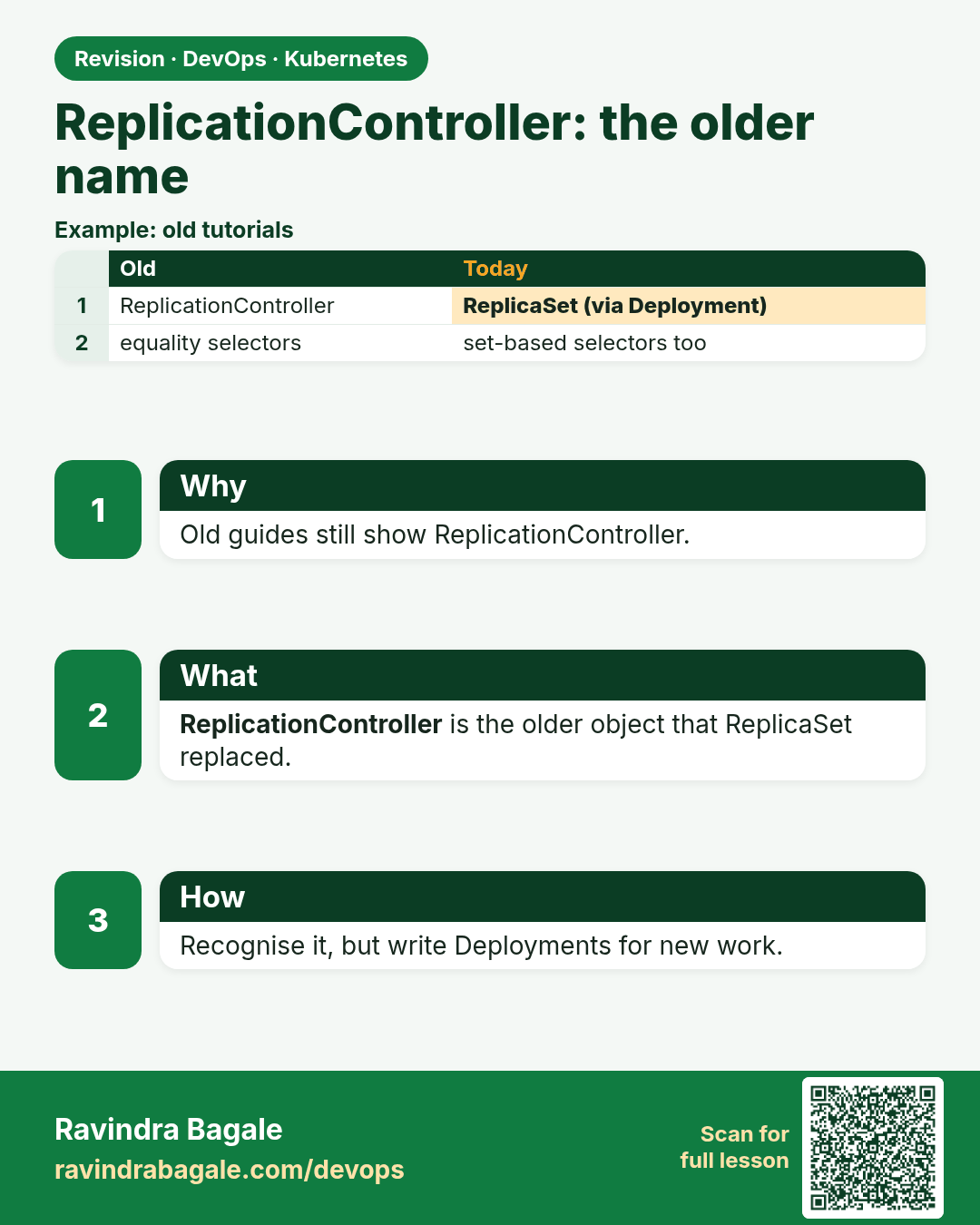
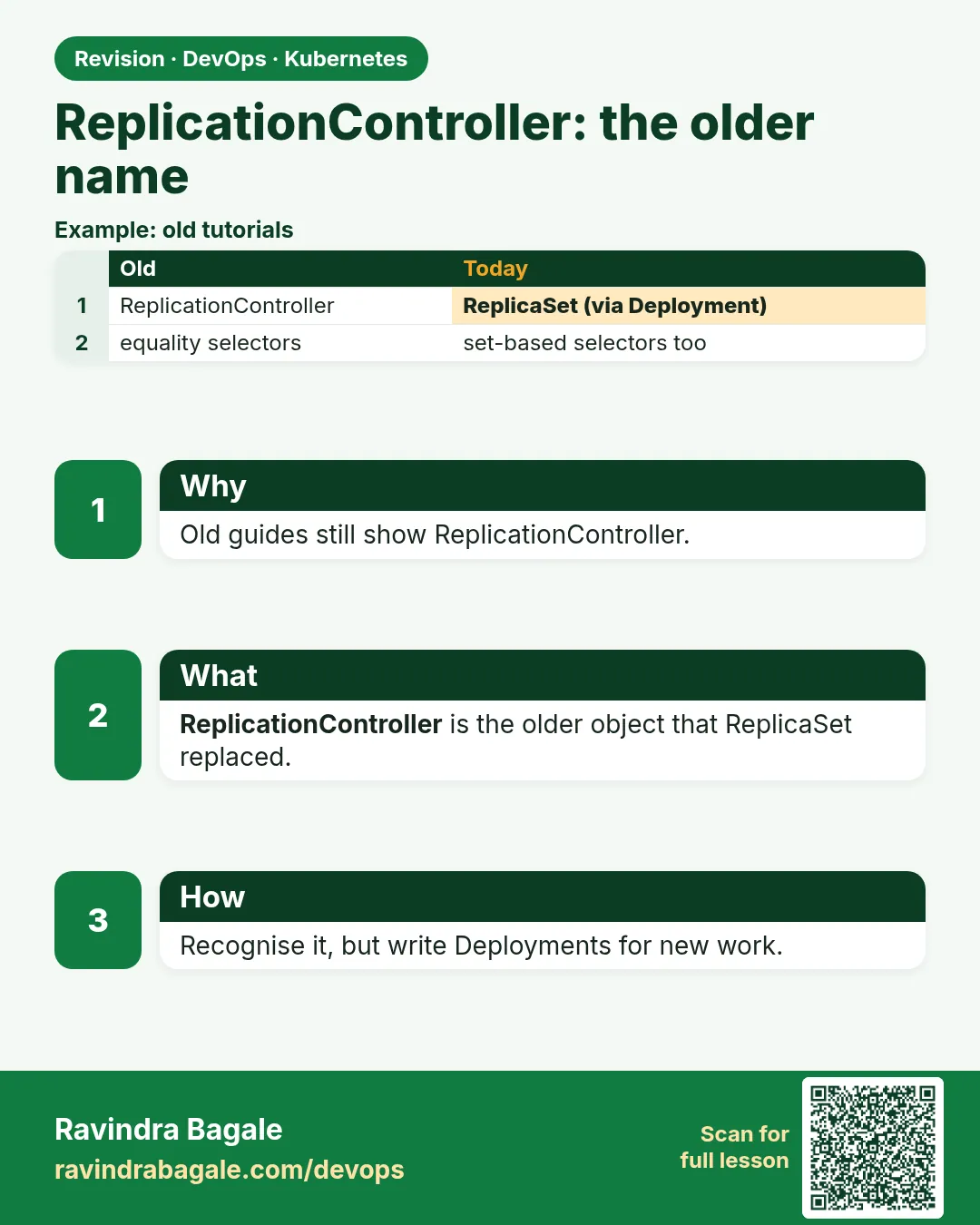 Revision card 6 of 15: ReplicationController: the older name · Download PNG · Open card page
Lesson: 18.6 ReplicationController — the older name
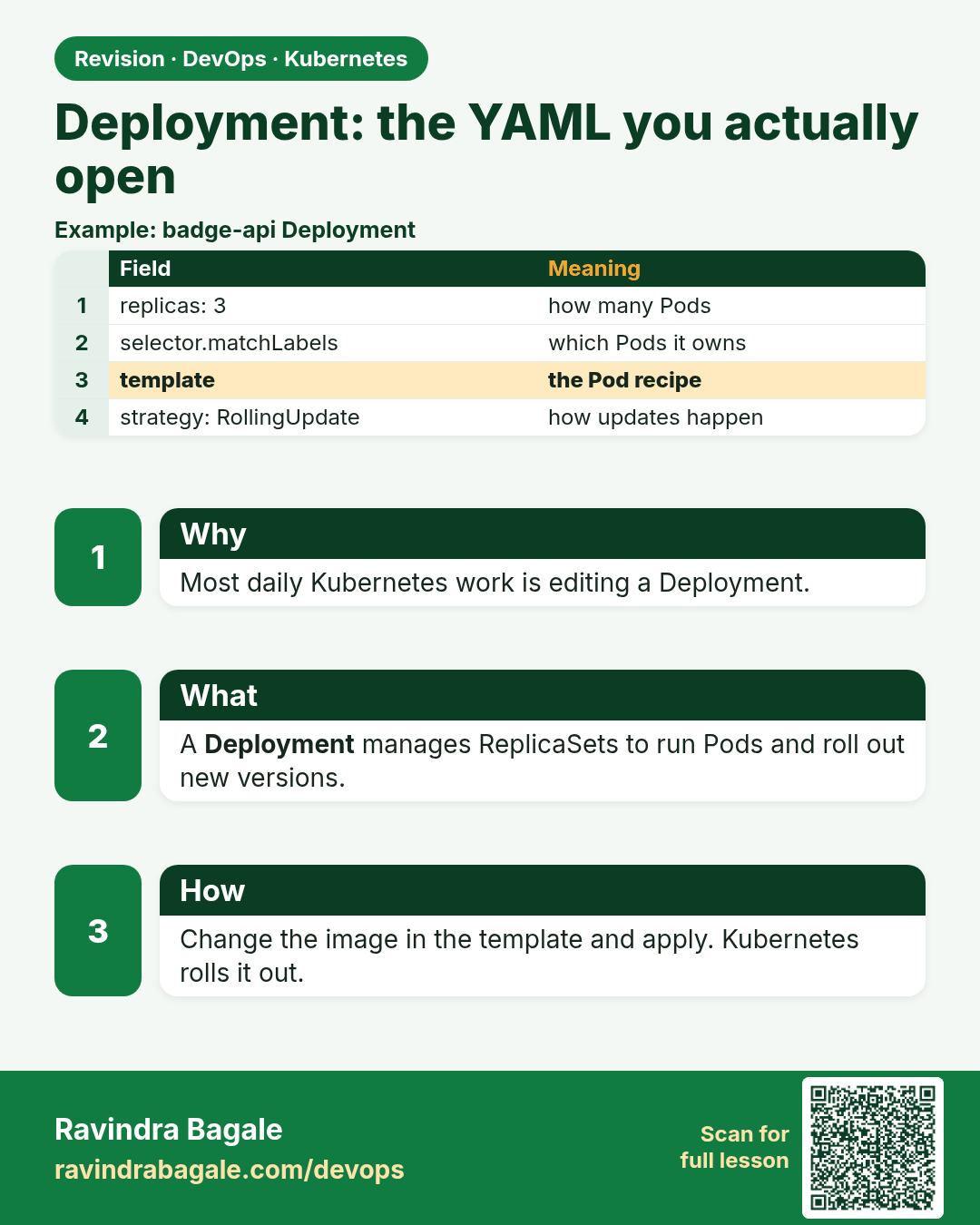
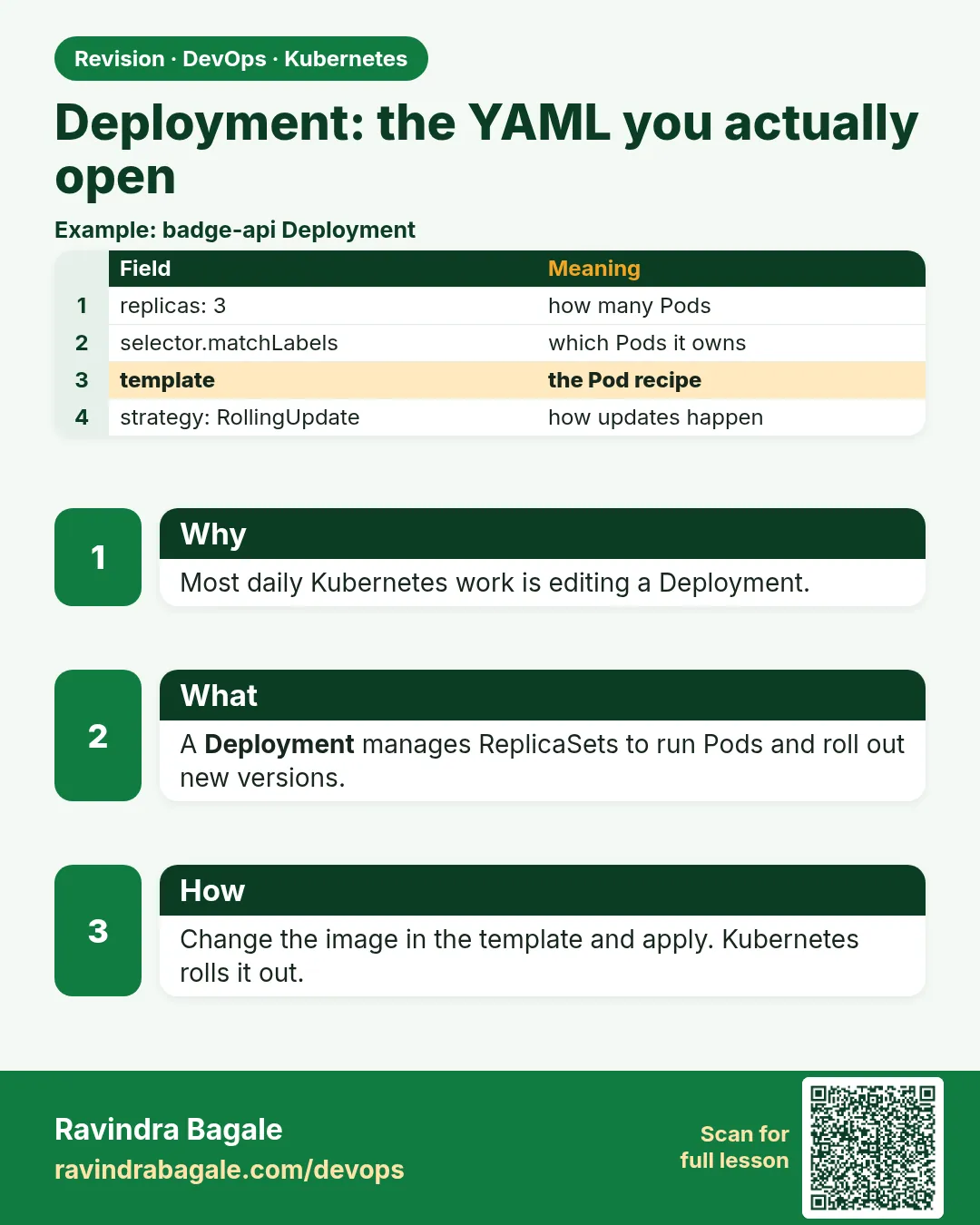 Revision card 7 of 15: Deployment: the YAML you actually open · Download PNG · Open card page
Lesson: 18.7 Deployment — the YAML you actually open
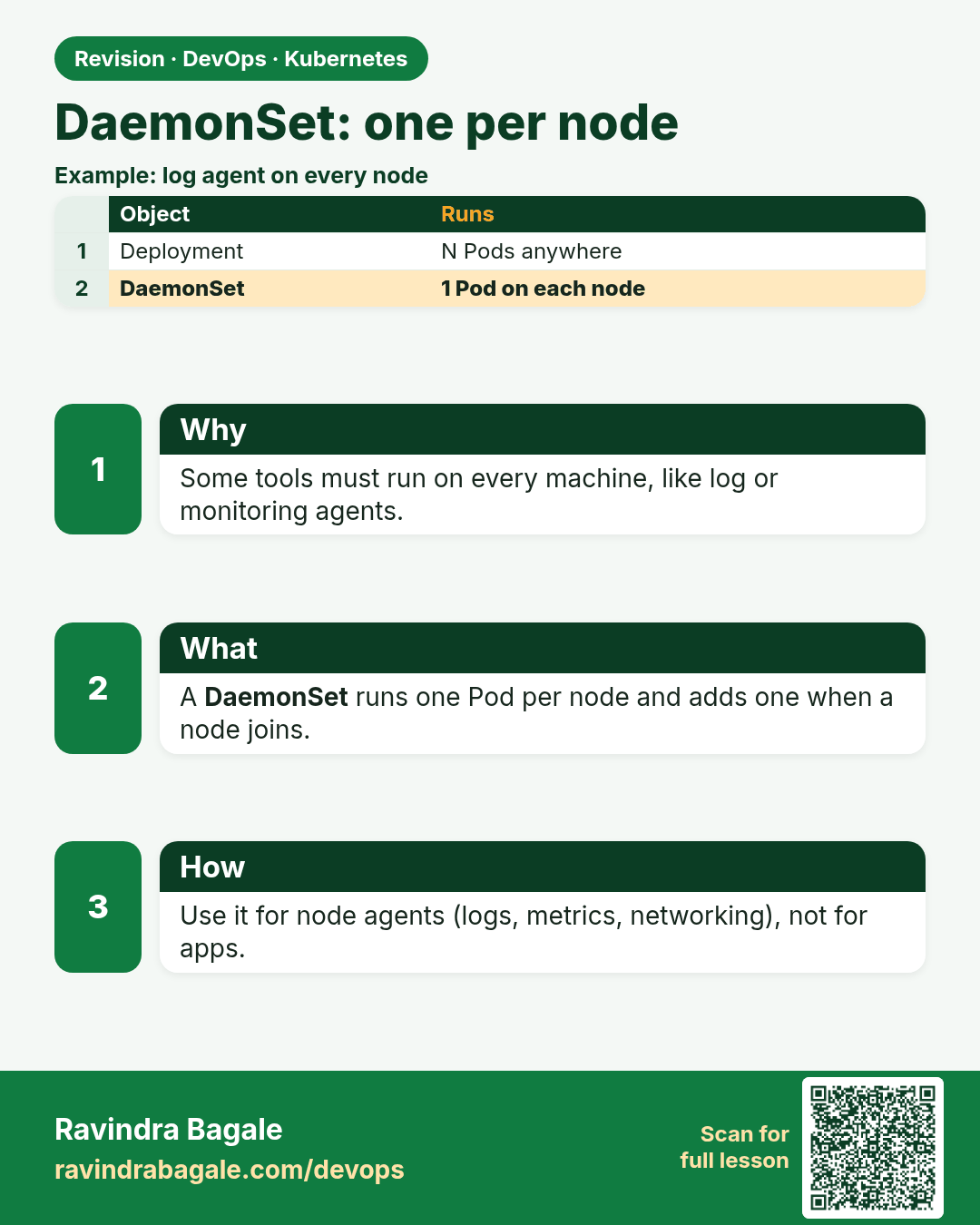
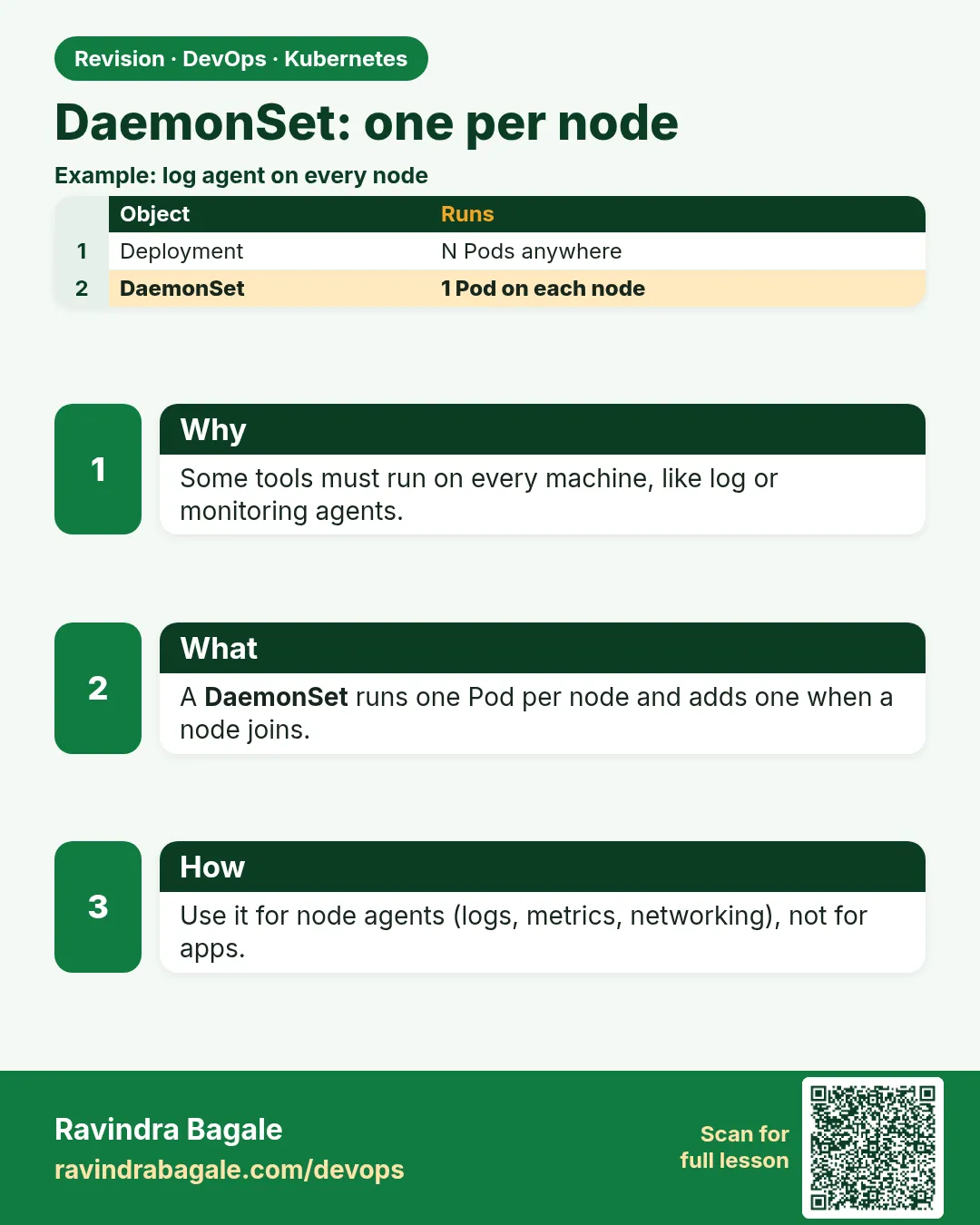 Revision card 8 of 15: DaemonSet: one per node · Download PNG · Open card page
Lesson: 18.8 DaemonSet — one per node
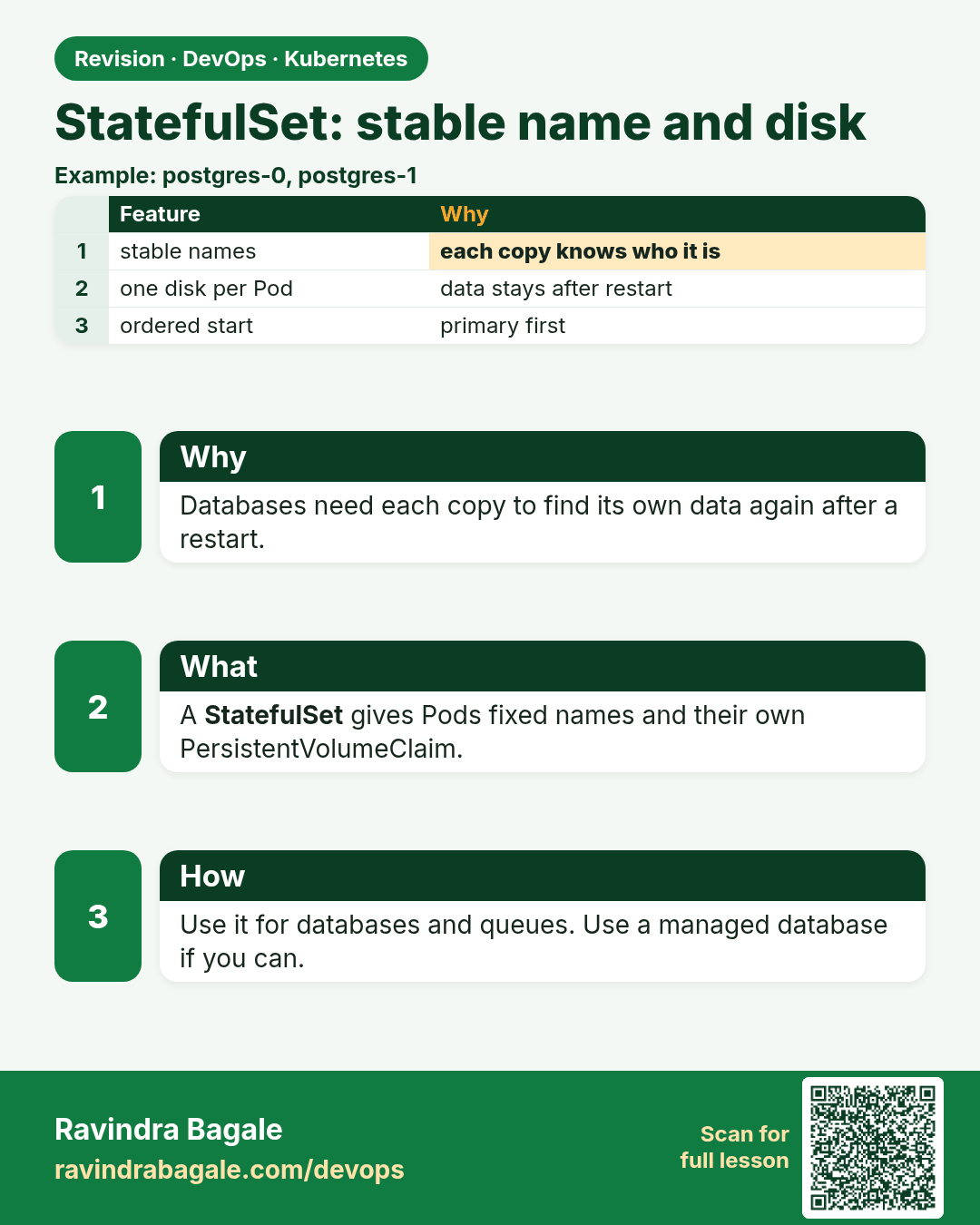
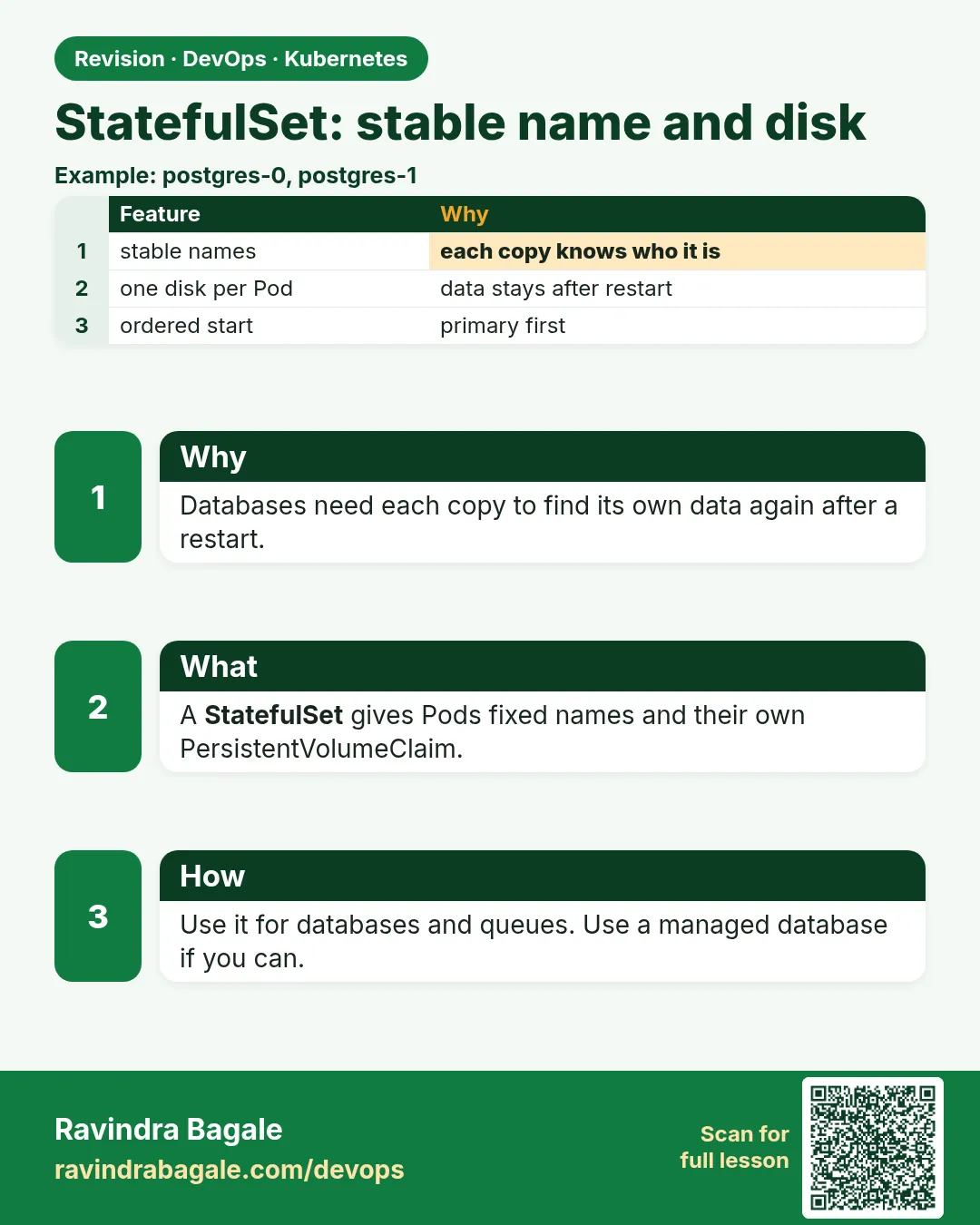 Revision card 9 of 15: StatefulSet: stable name and disk · Download PNG · Open card page
Lesson: 18.9 StatefulSet — stable name and disk
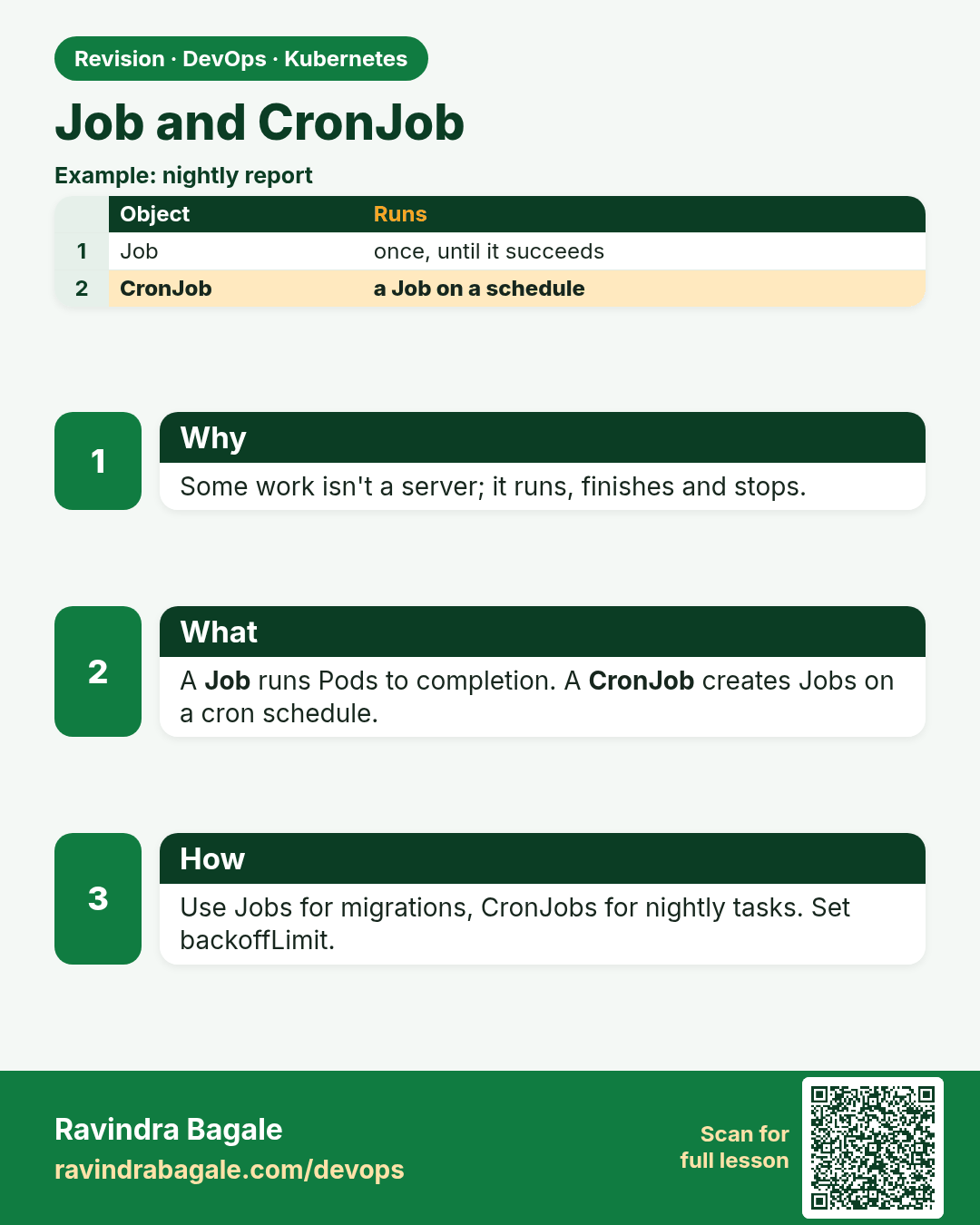
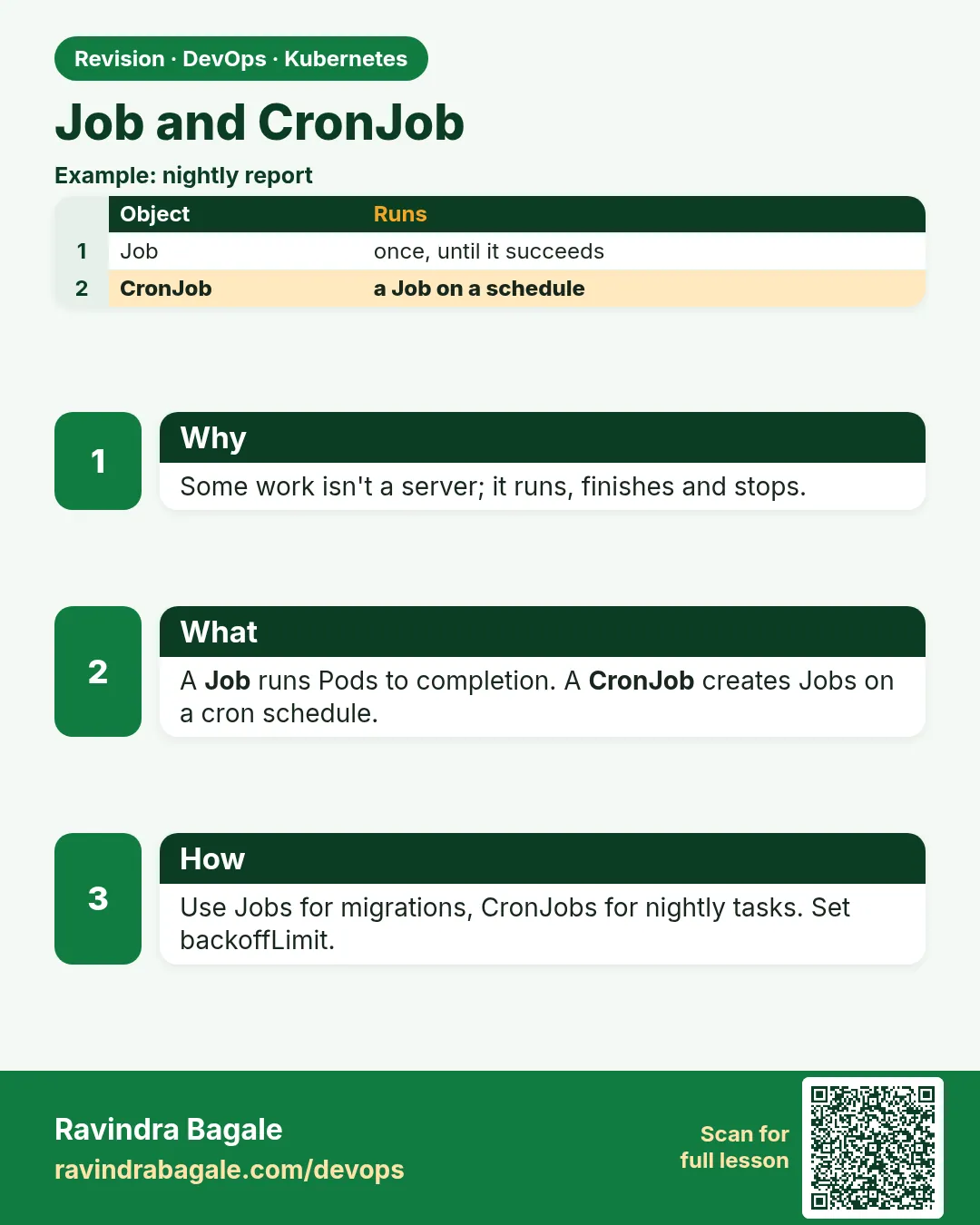 Revision card 10 of 15: Job and CronJob · Download PNG · Open card page
Lesson: 18.10 Job and CronJob
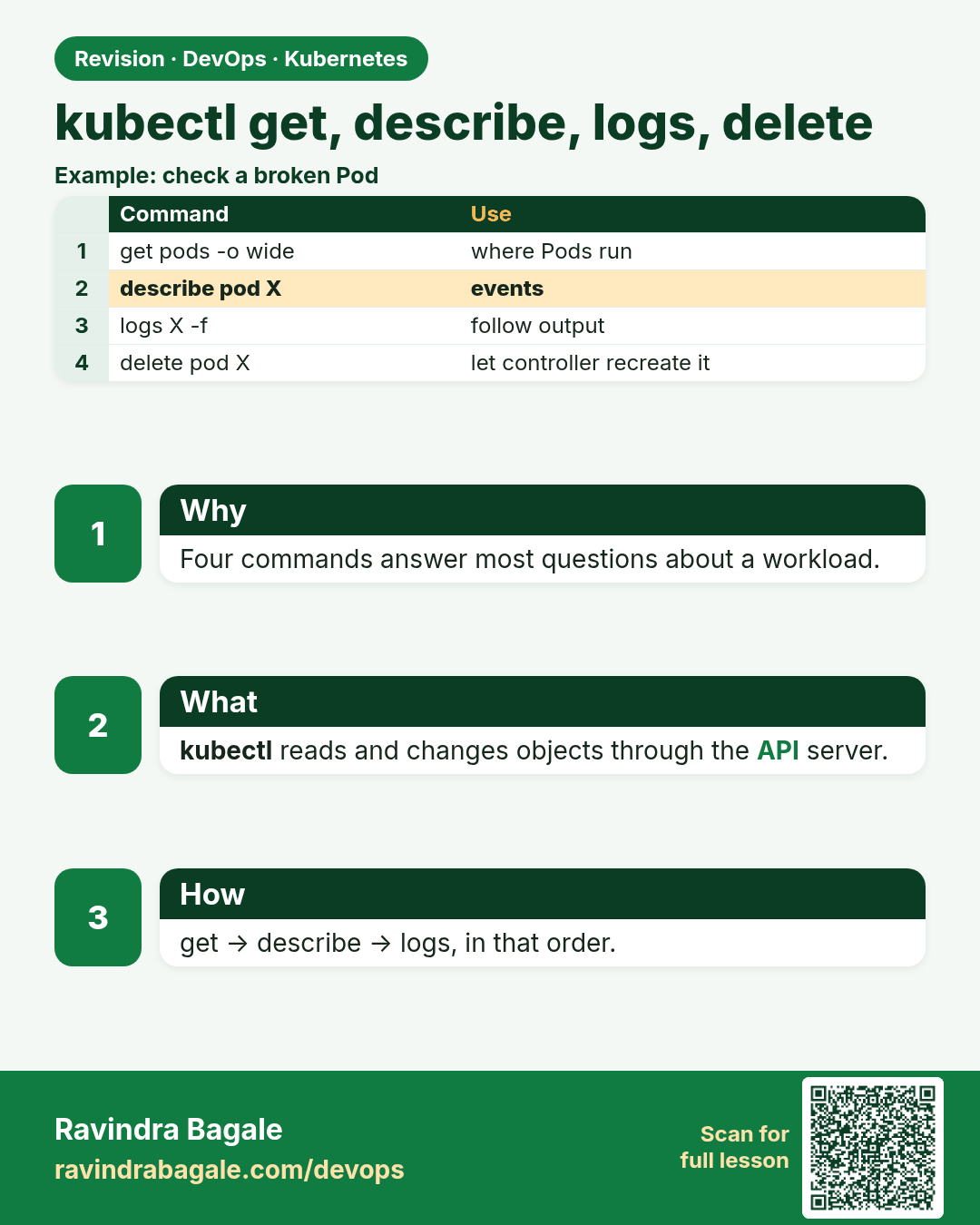
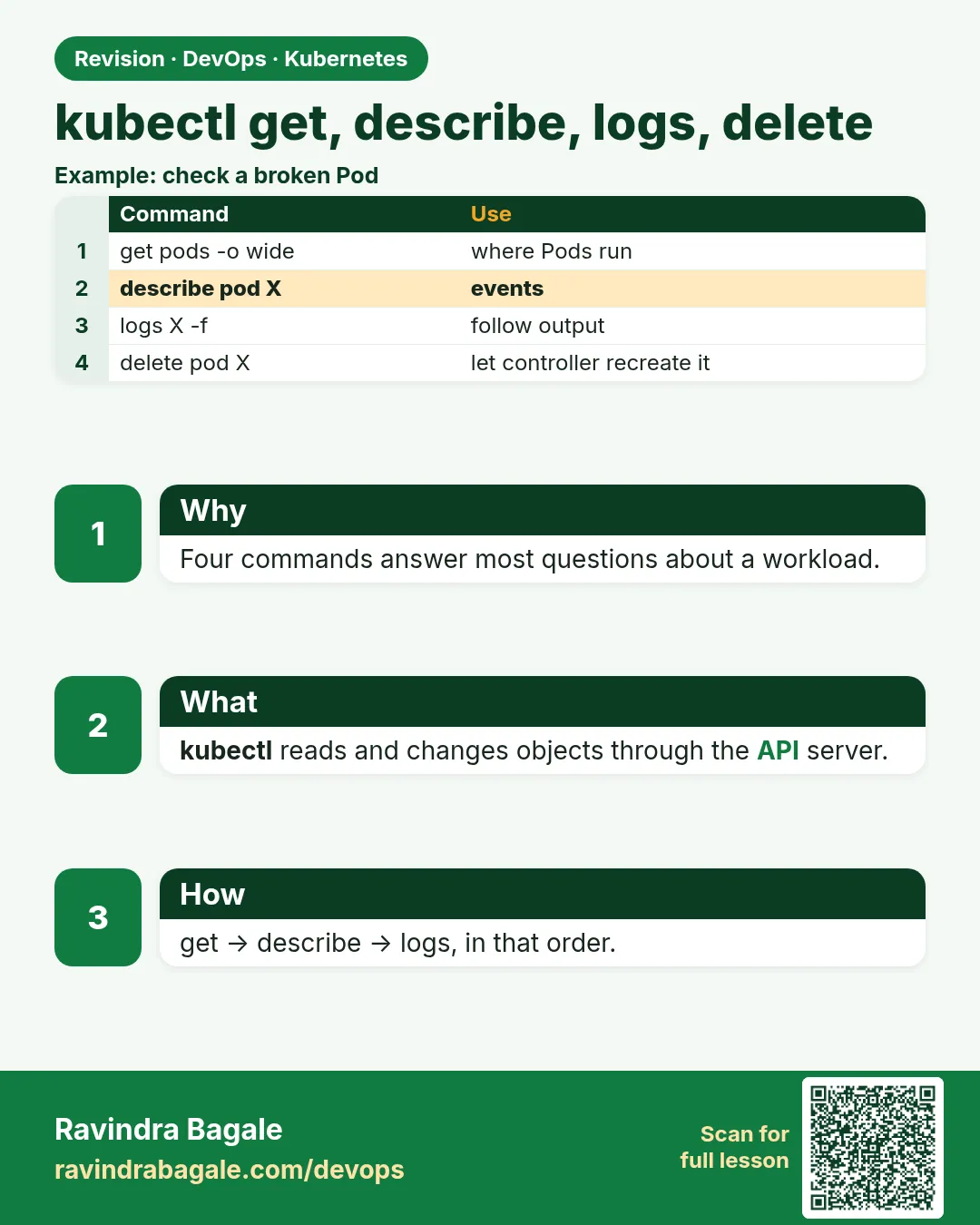 Revision card 11 of 15: kubectl get, describe, logs, delete · Download PNG · Open card page
Lesson: 18.11 kubectl get, describe, logs, delete
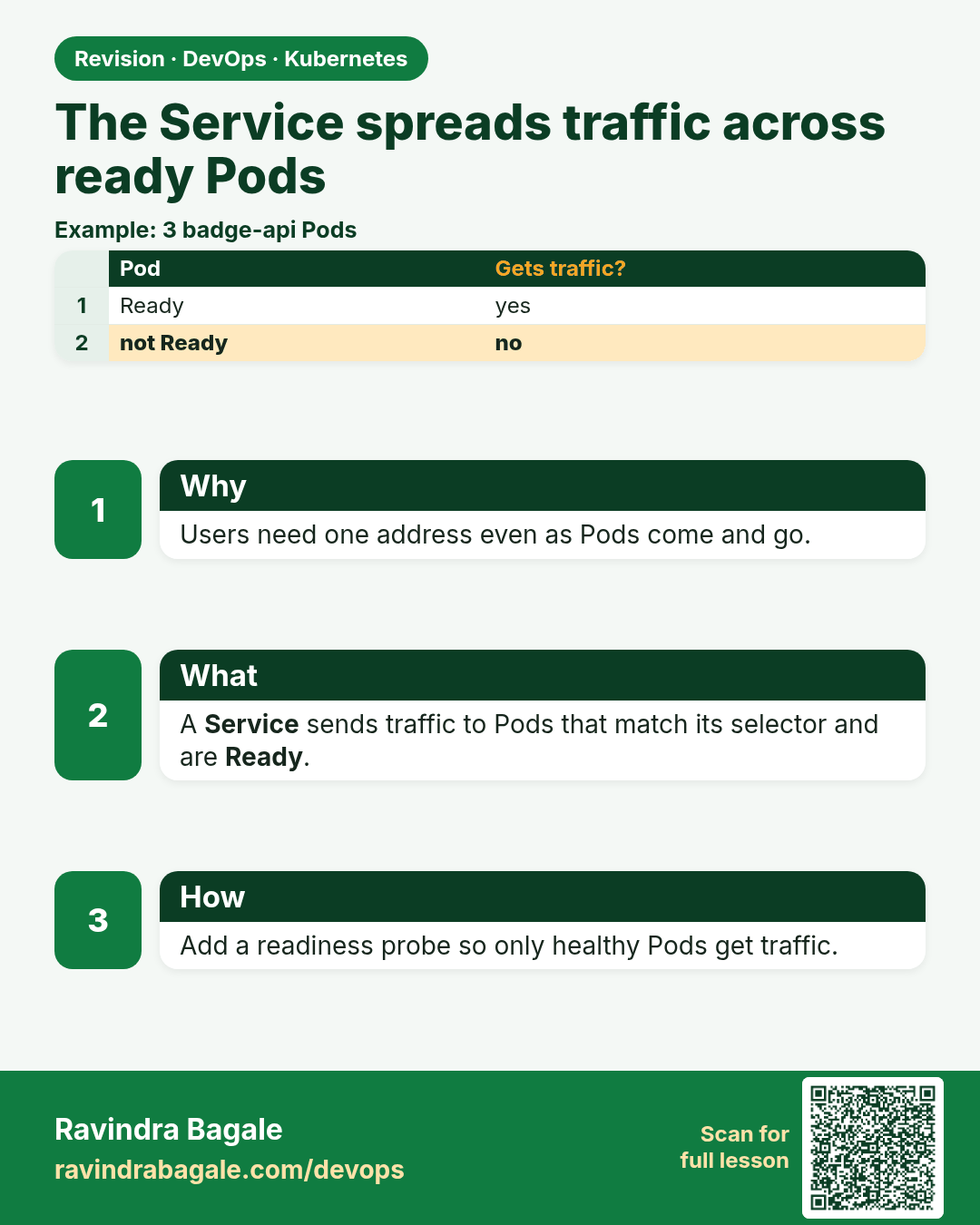
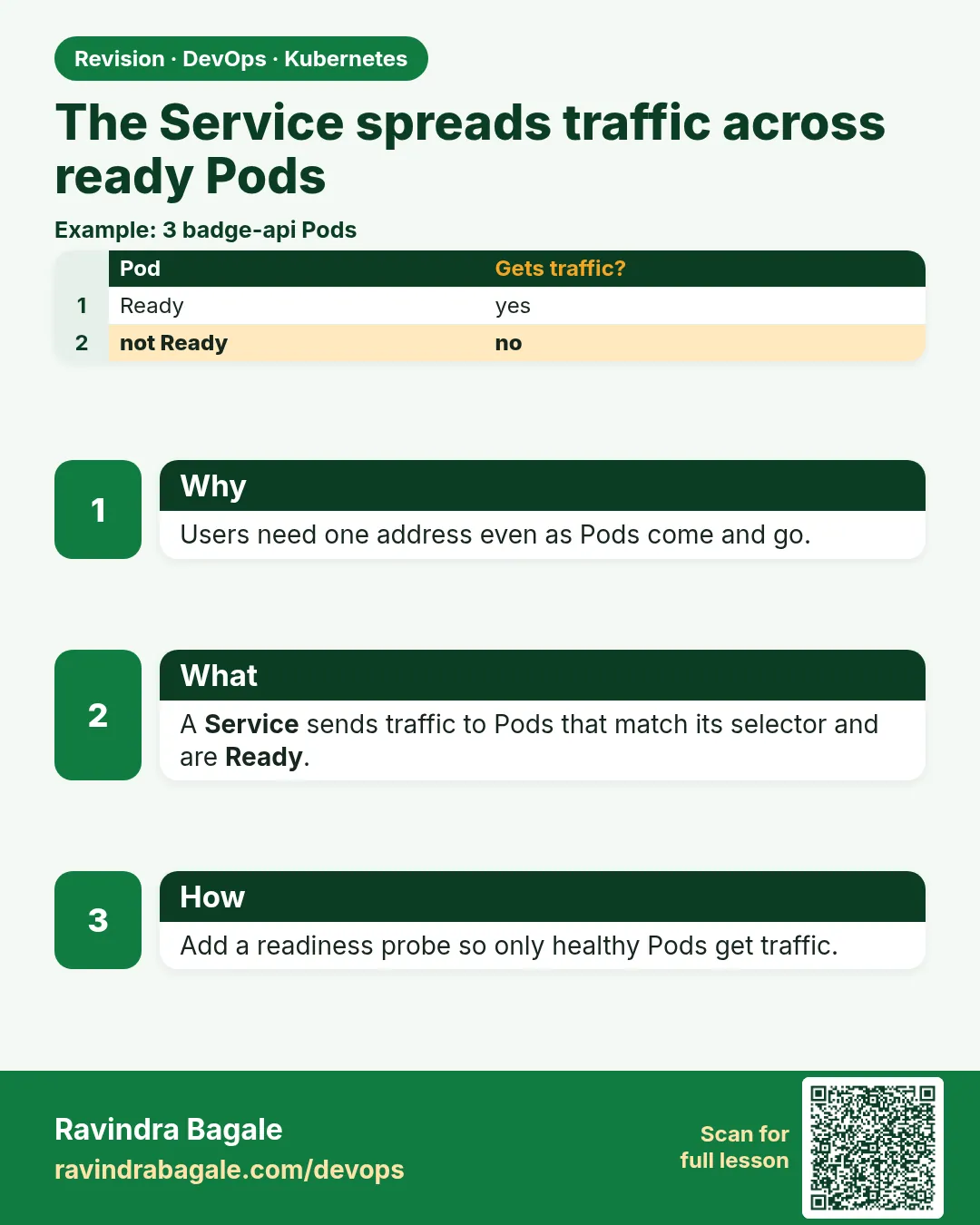 Revision card 12 of 15: The Service spreads traffic across ready Pods · Download PNG · Open card page
Lesson: 18.12 The Service spreads traffic across ready Pods
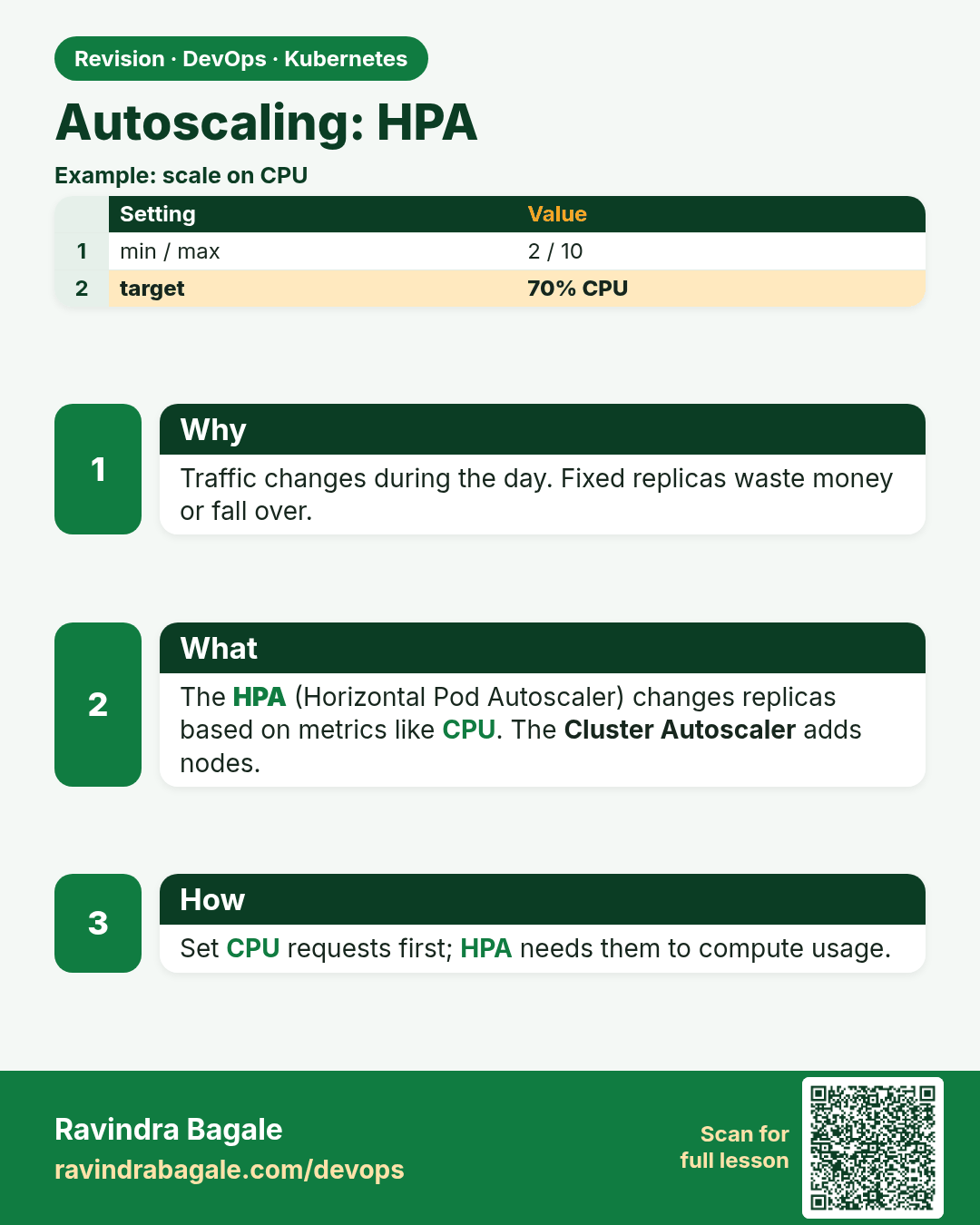
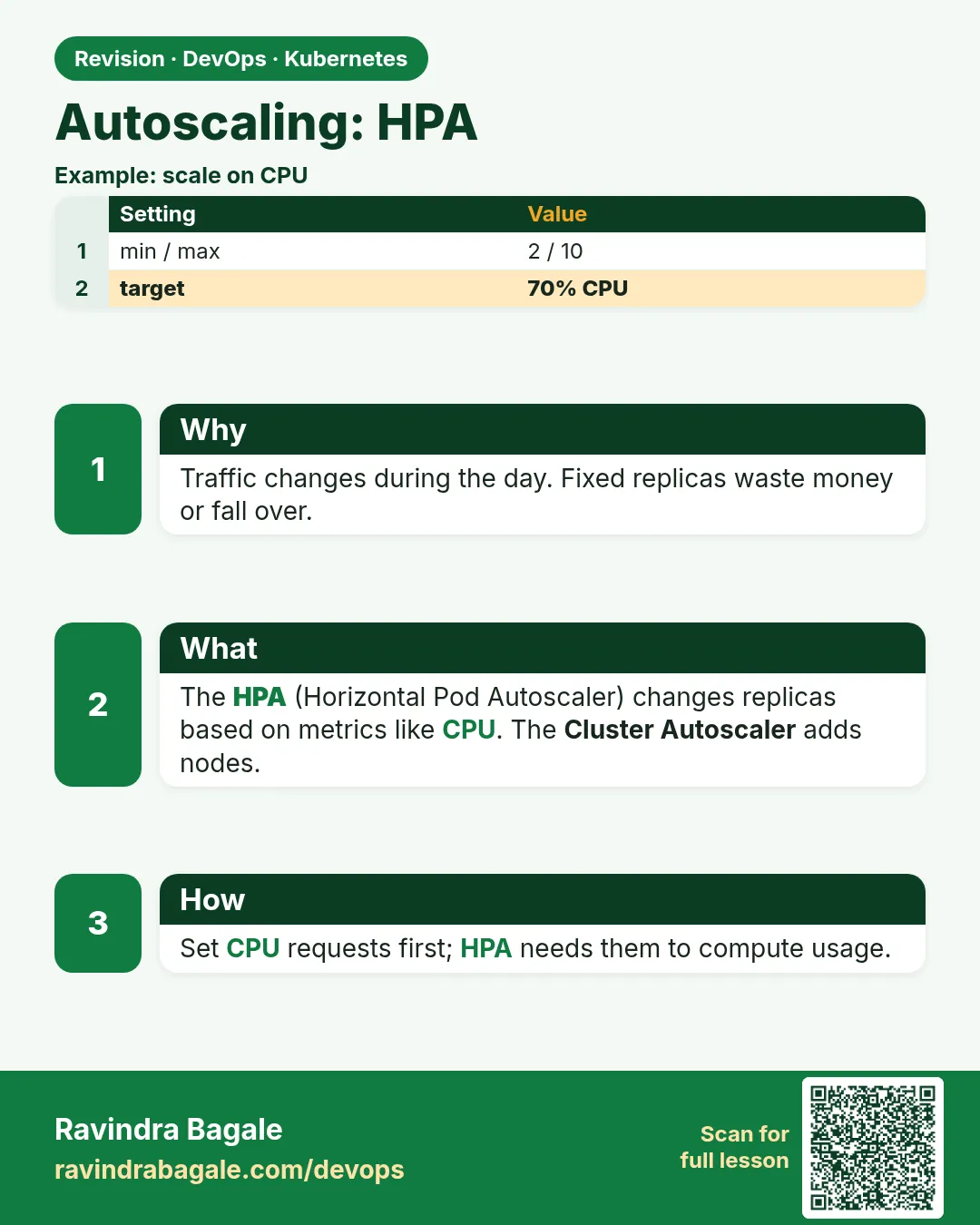 Revision card 13 of 15: Autoscaling: HPA · Download PNG · Open card page
Lesson: 18.13 Autoscaling — HPA, and two names to recognise
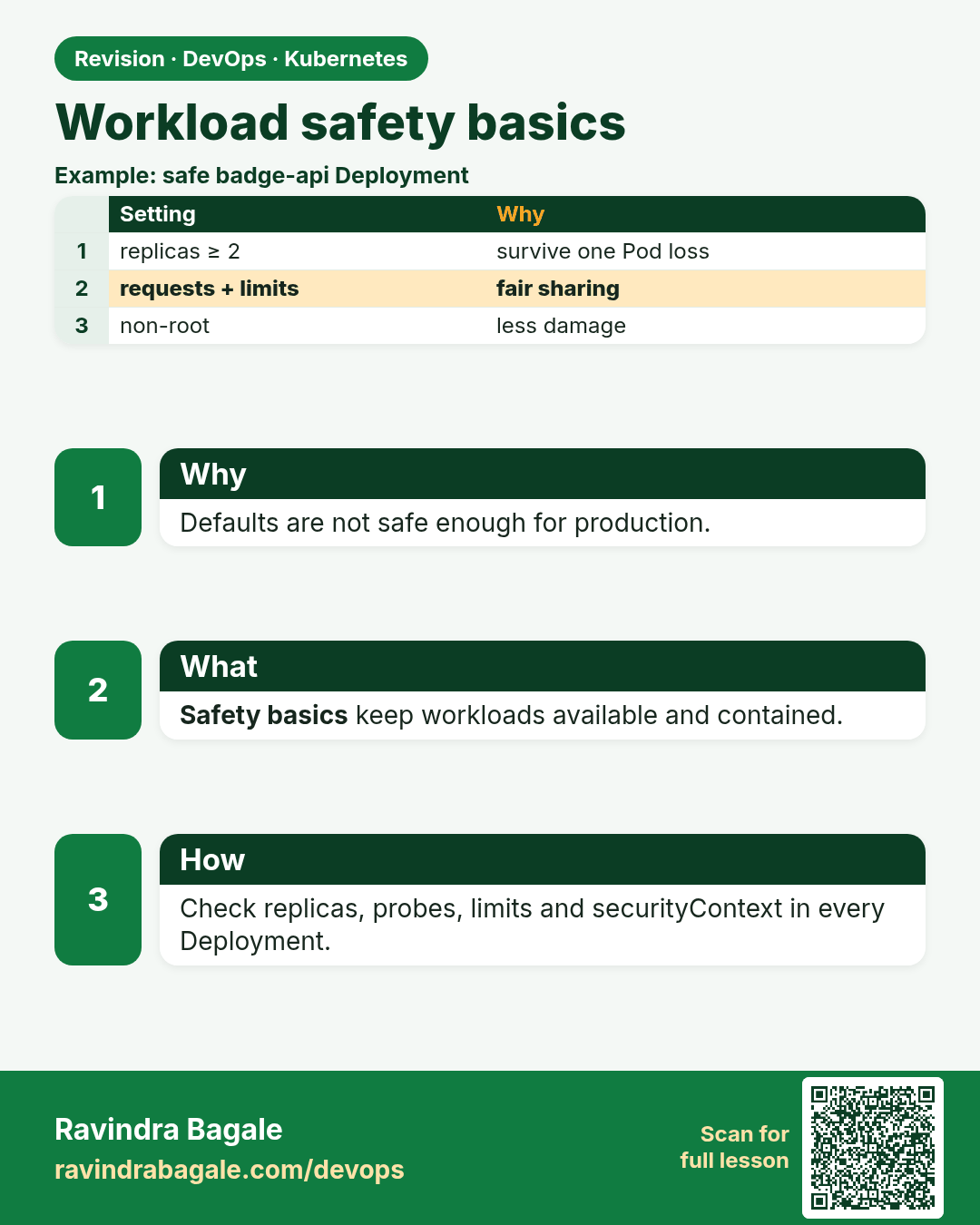
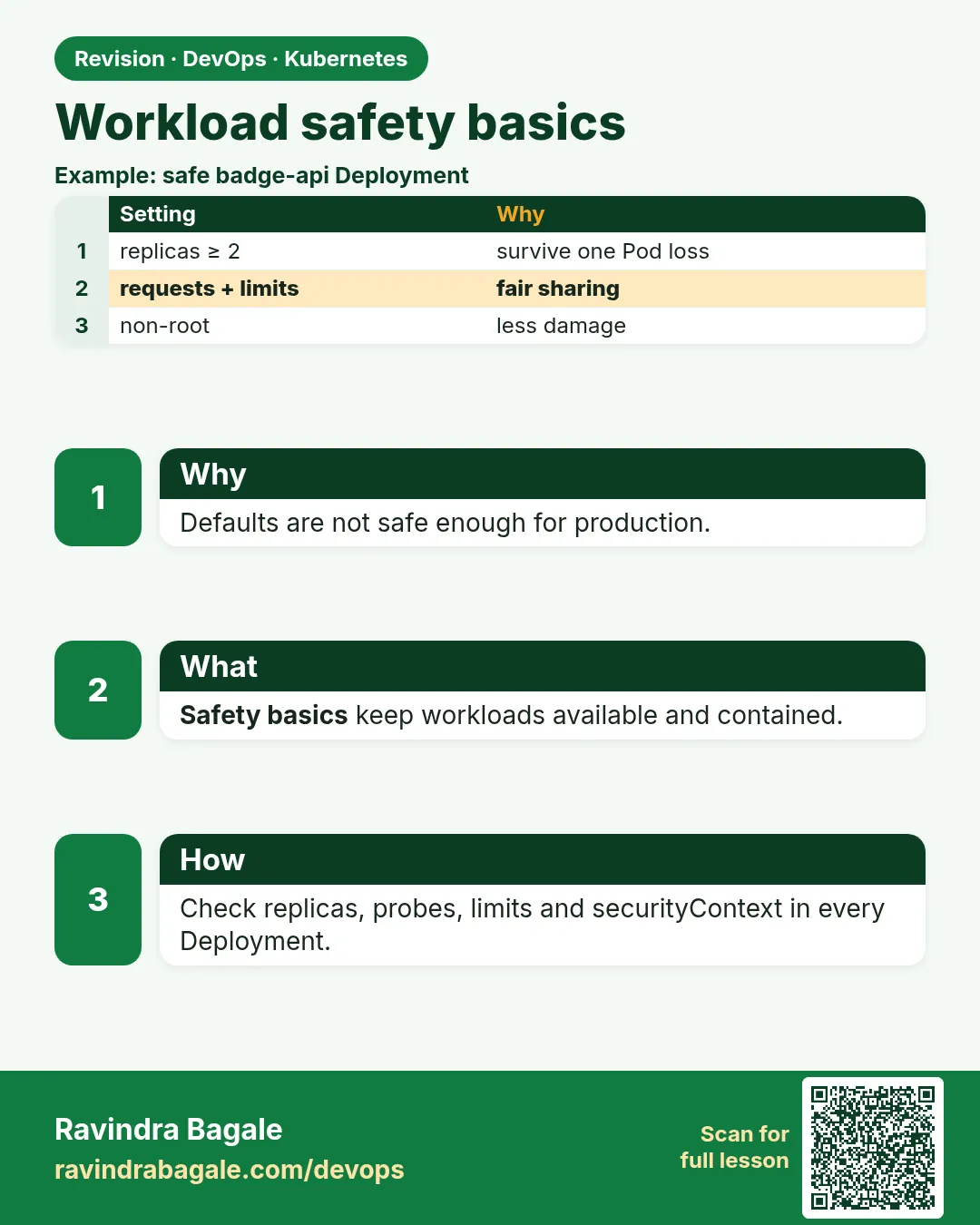 Revision card 14 of 15: Workload safety basics · Download PNG · Open card page
Lesson: 18.14 Safety basics
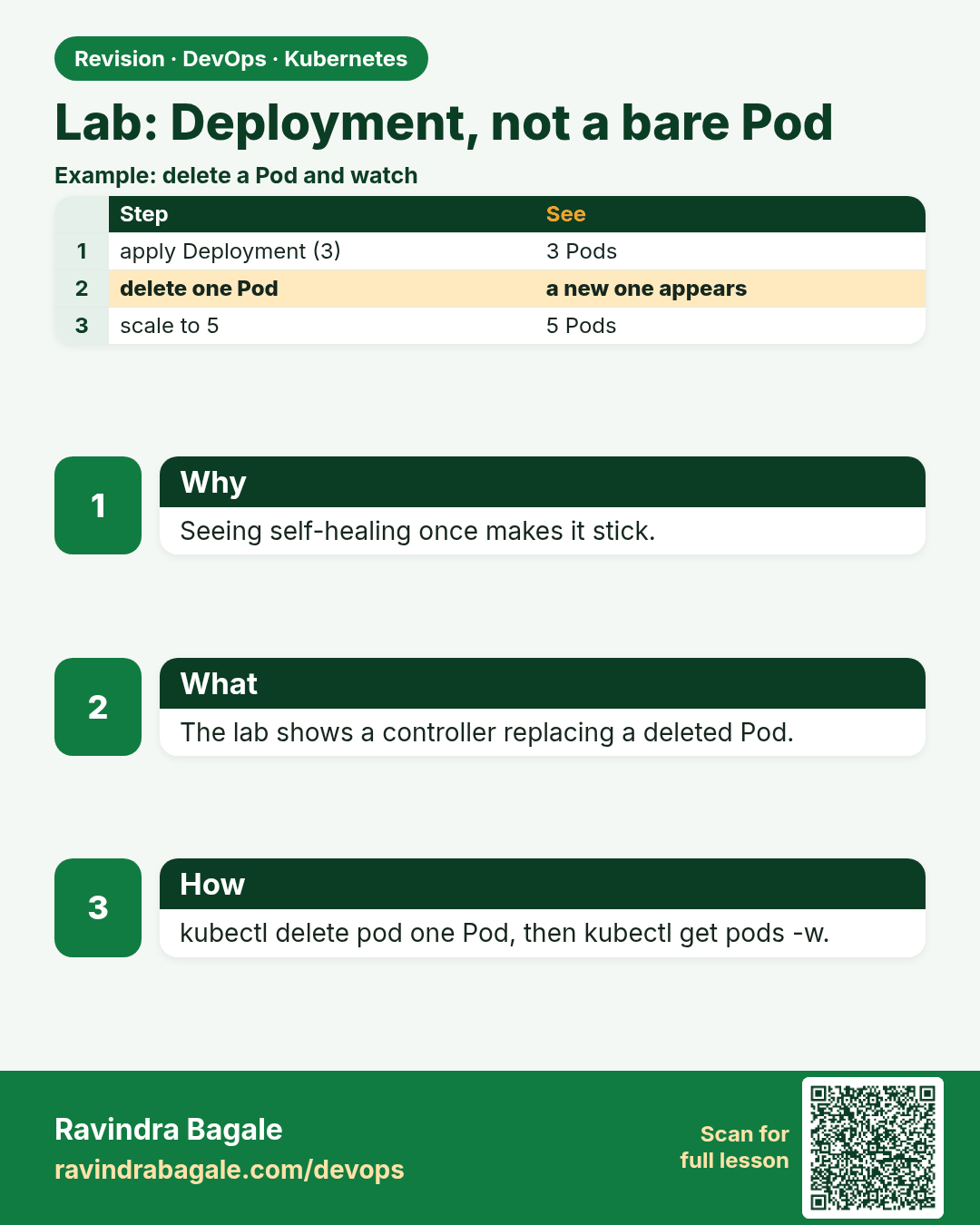
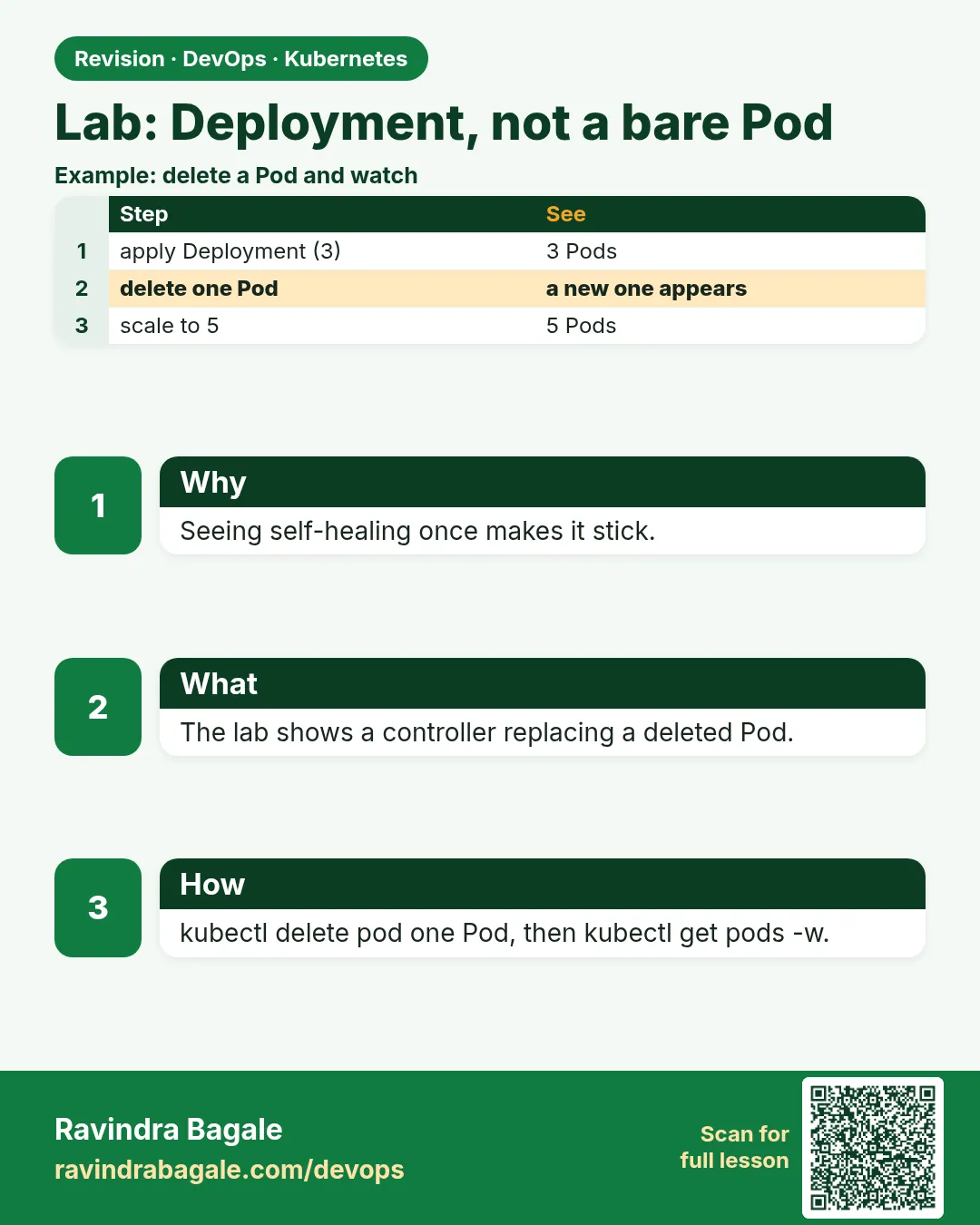 Revision card 15 of 15: Lab: Deployment, not a bare Pod · Download PNG · Open card page
Lesson: 18.15 Lab — Deployment, not a bare Pod
Interview cards
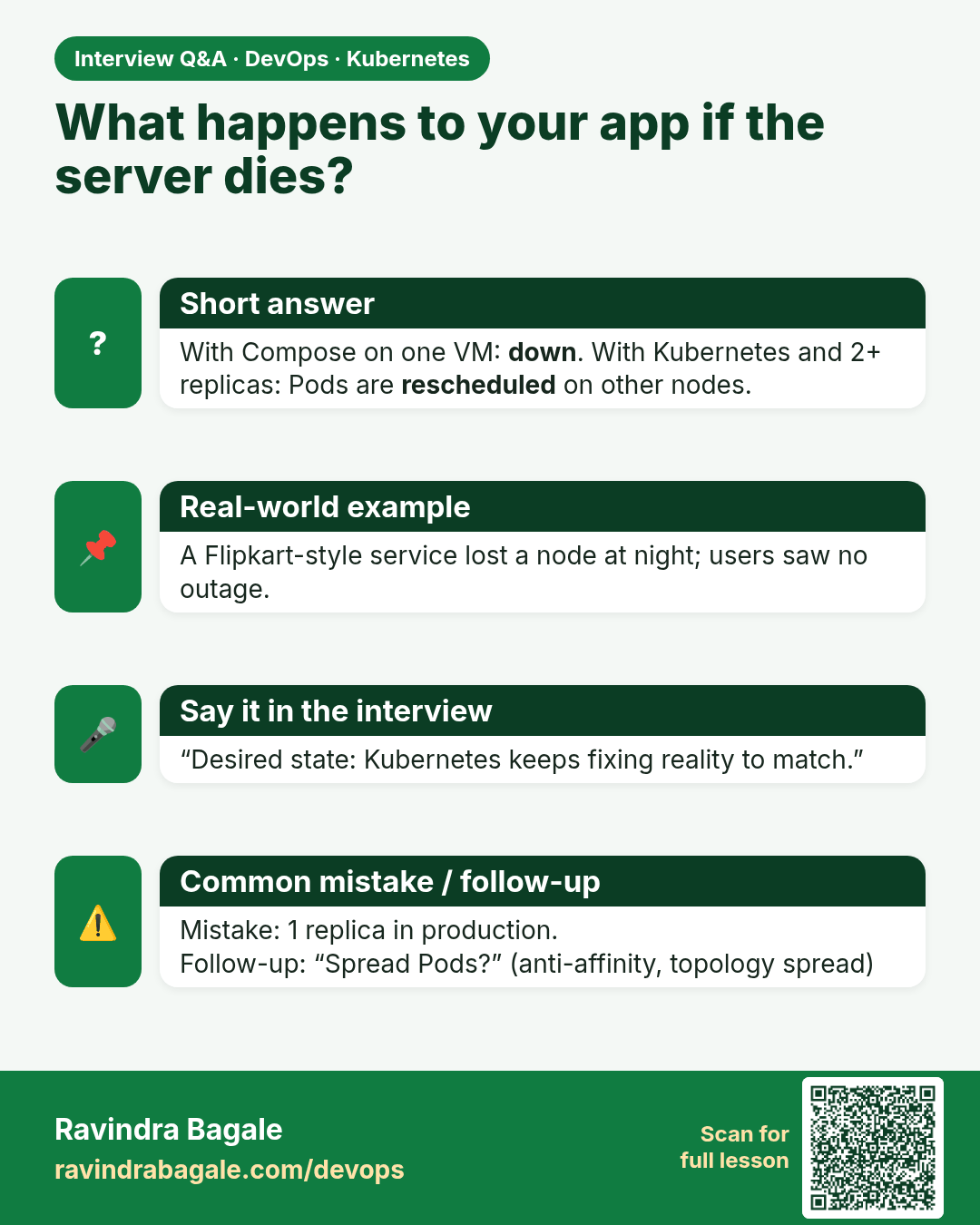
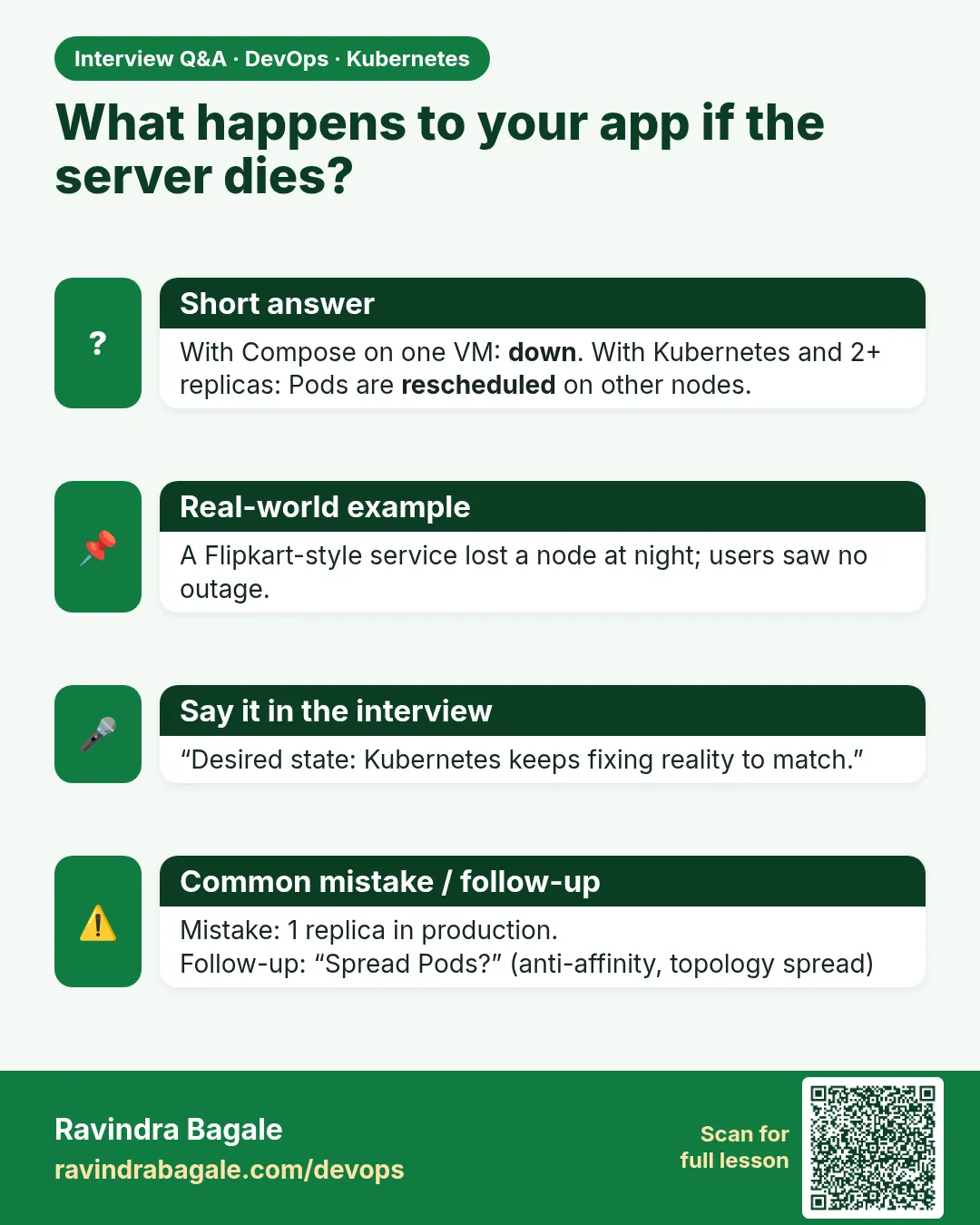 Interview card 1 of 15: What happens to your app if the server dies? · Download PNG · Open card page
Lesson: 18.1 Why Kubernetes — Compose does not survive a dead host
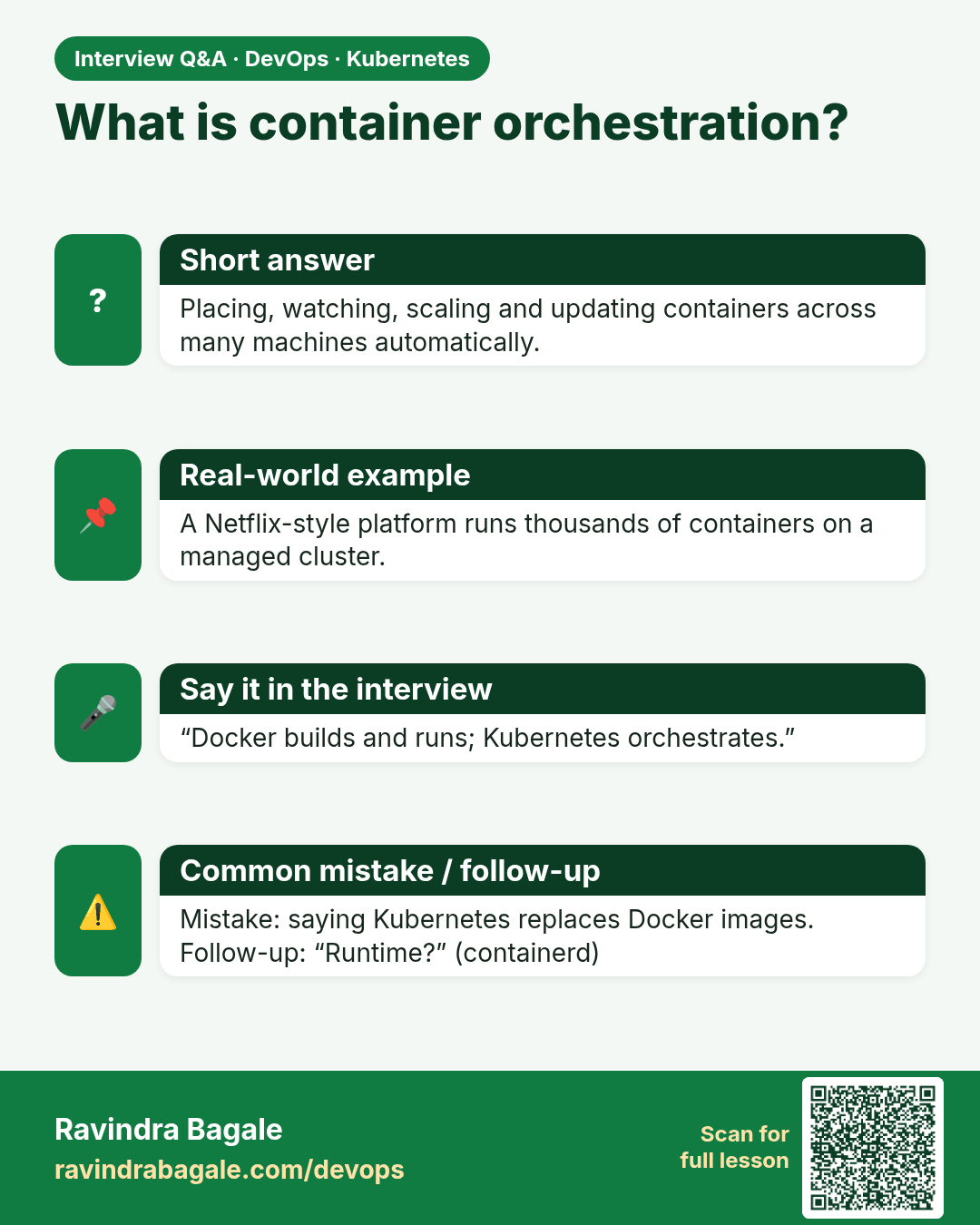
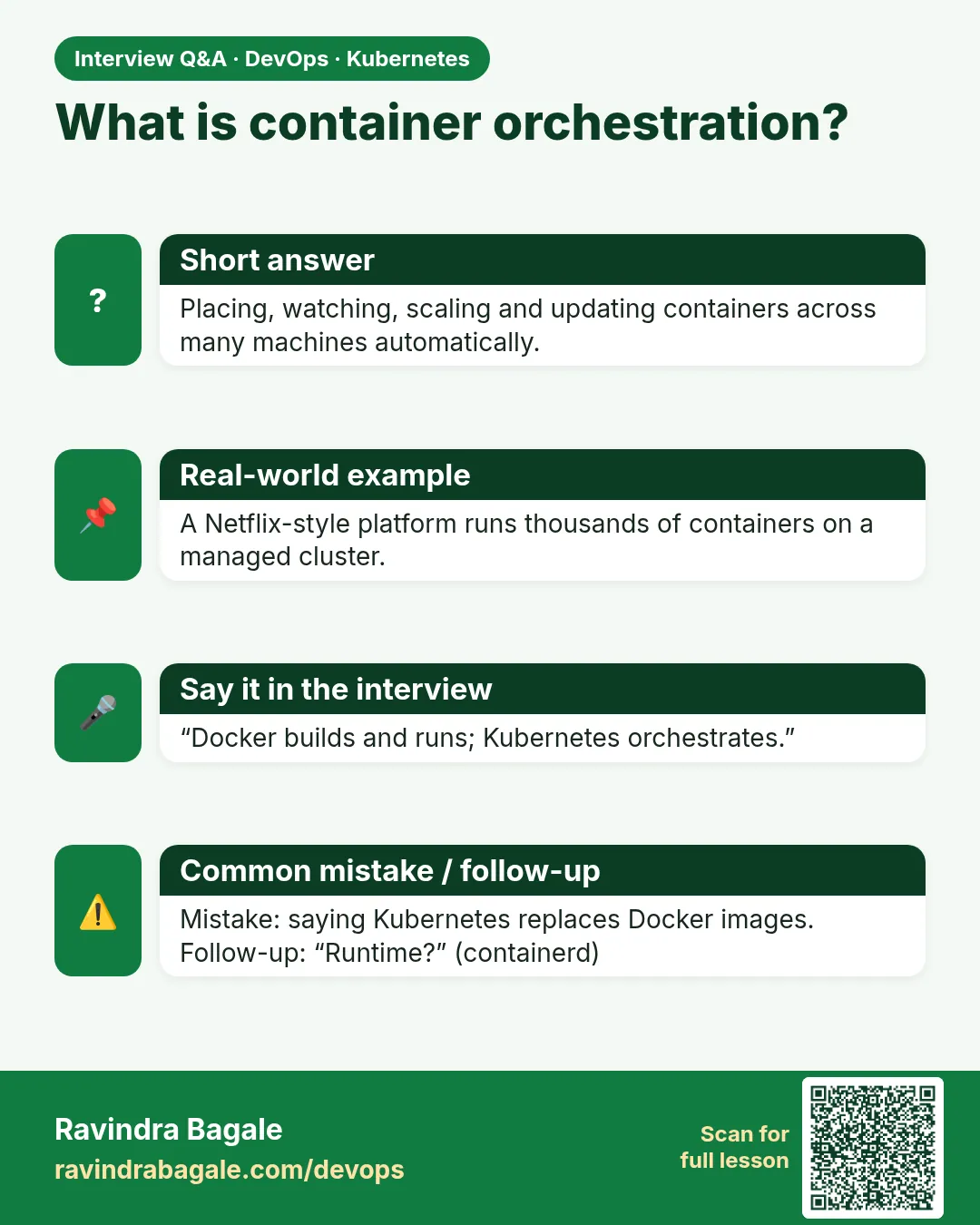 Interview card 2 of 15: What is container orchestration? · Download PNG · Open card page
Lesson: 18.2 What this solves that Docker alone does not
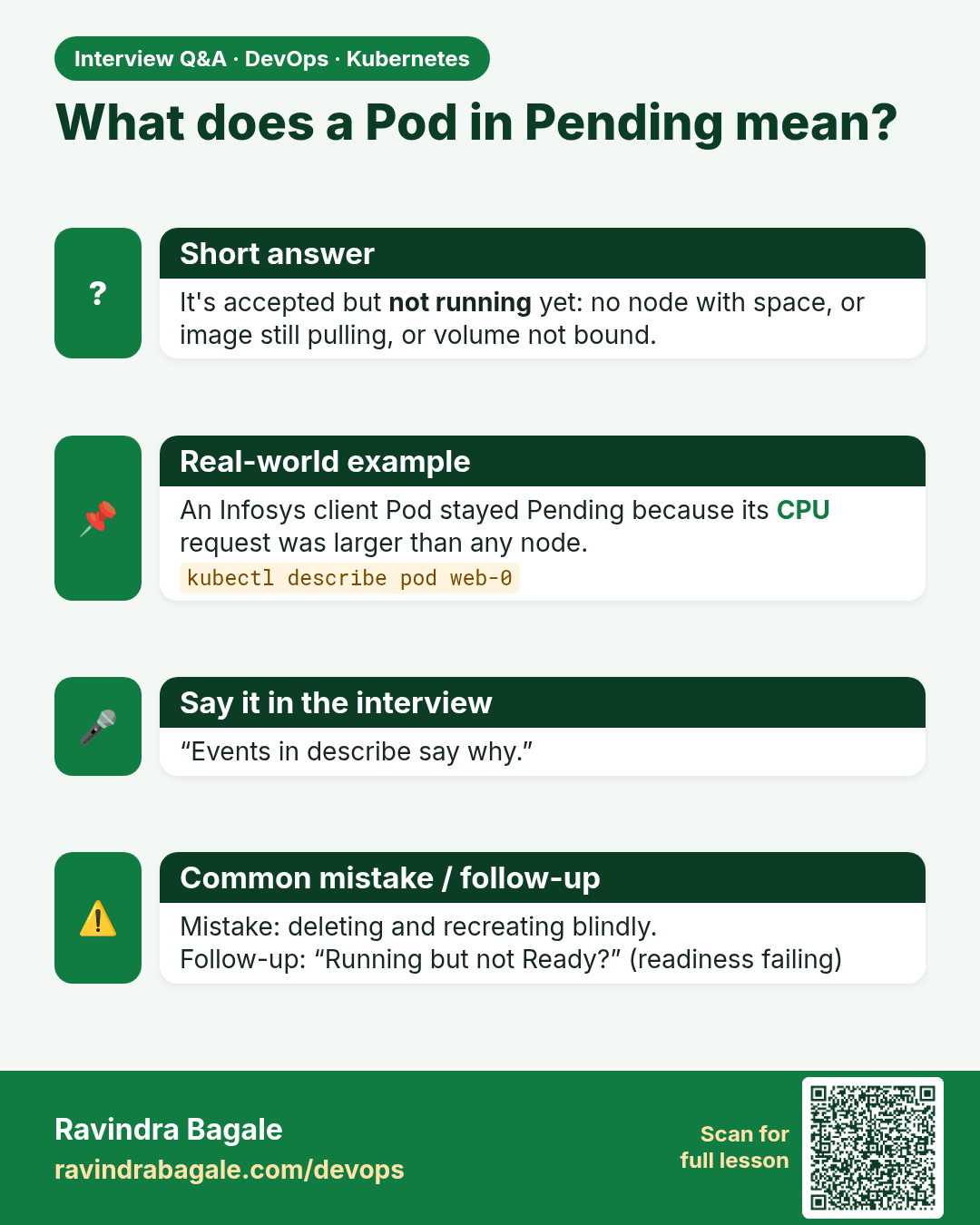
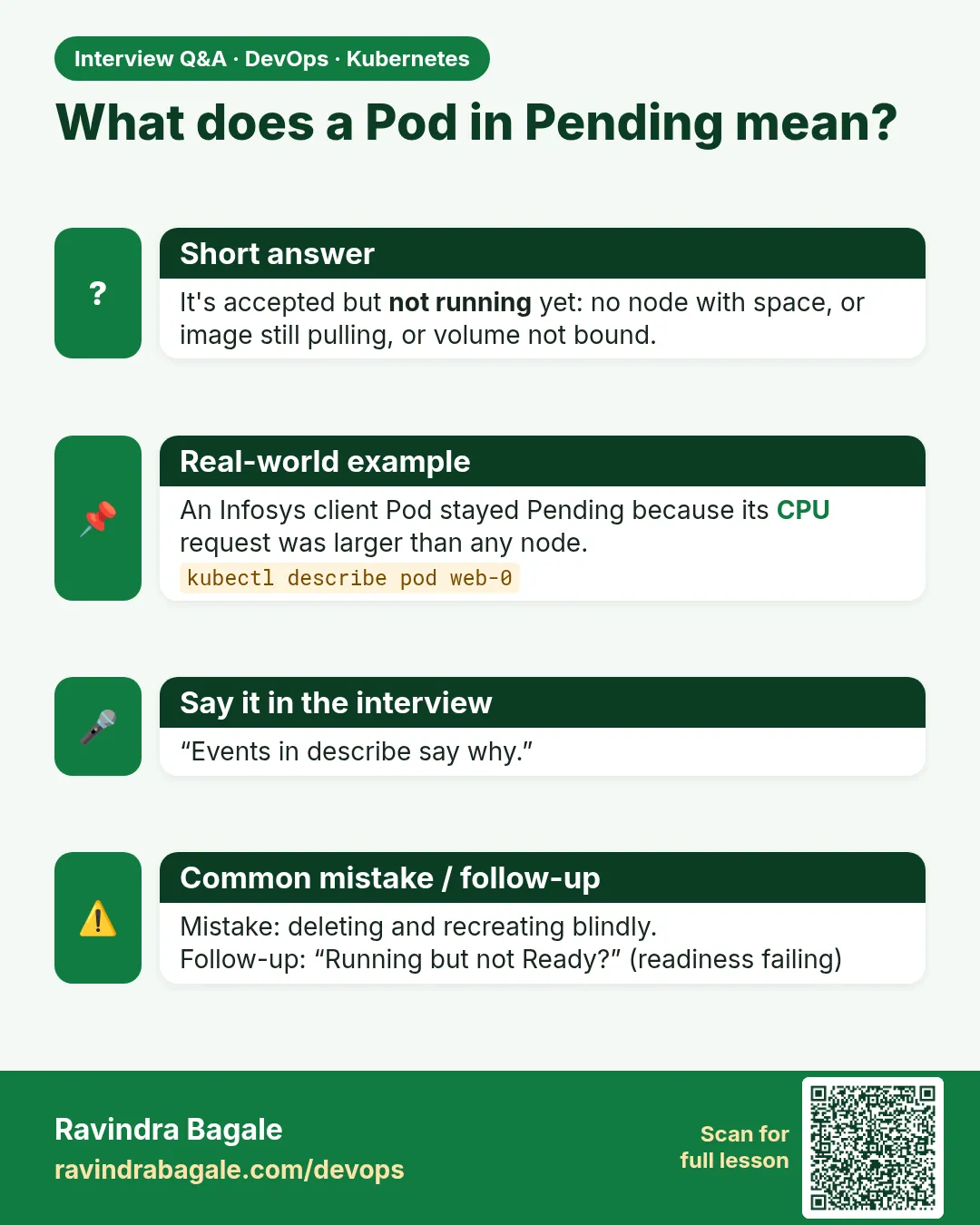 Interview card 3 of 15: What does a Pod in Pending mean? · Download PNG · Open card page
Lesson: 18.3 A Pod, and the phase you can quote
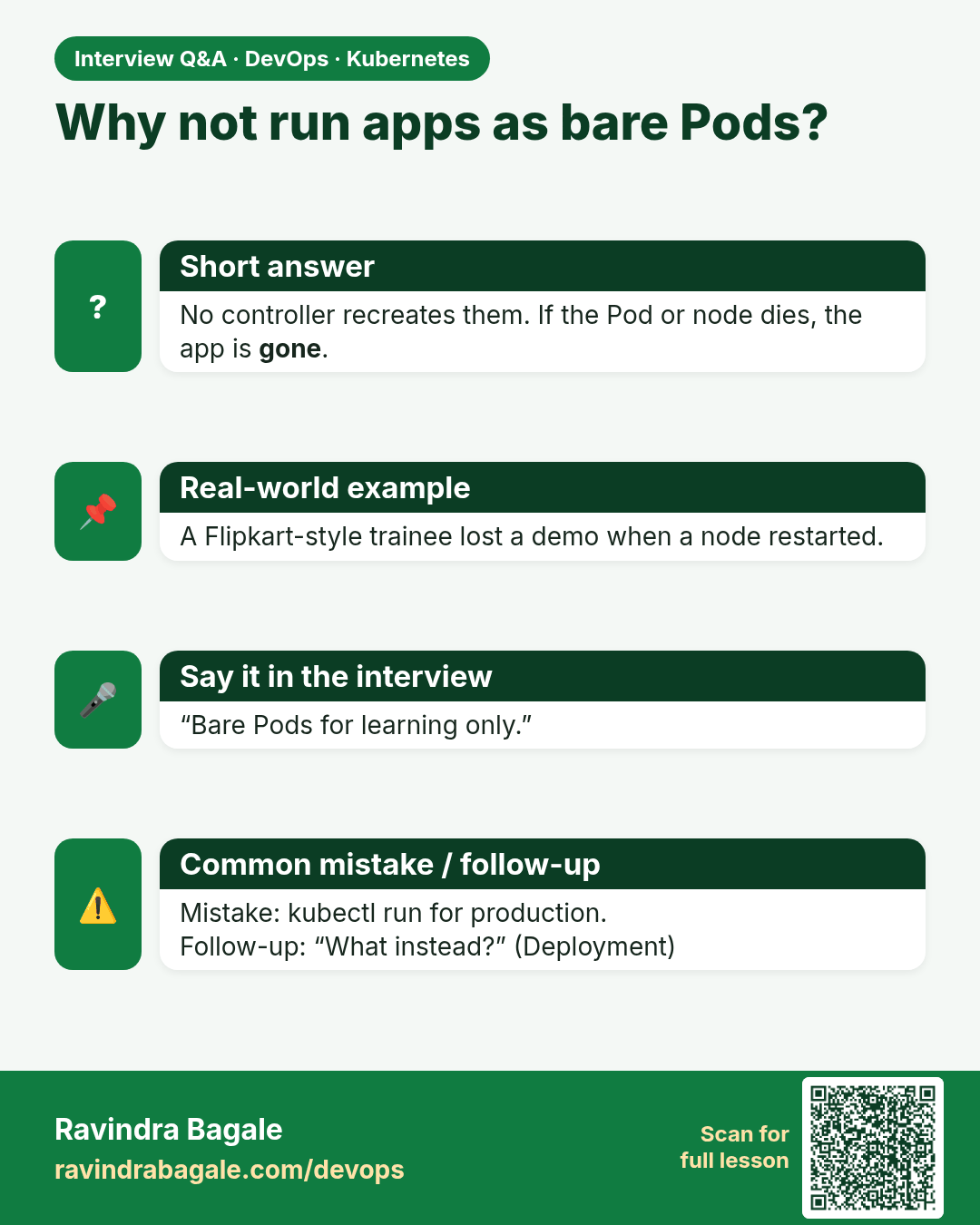
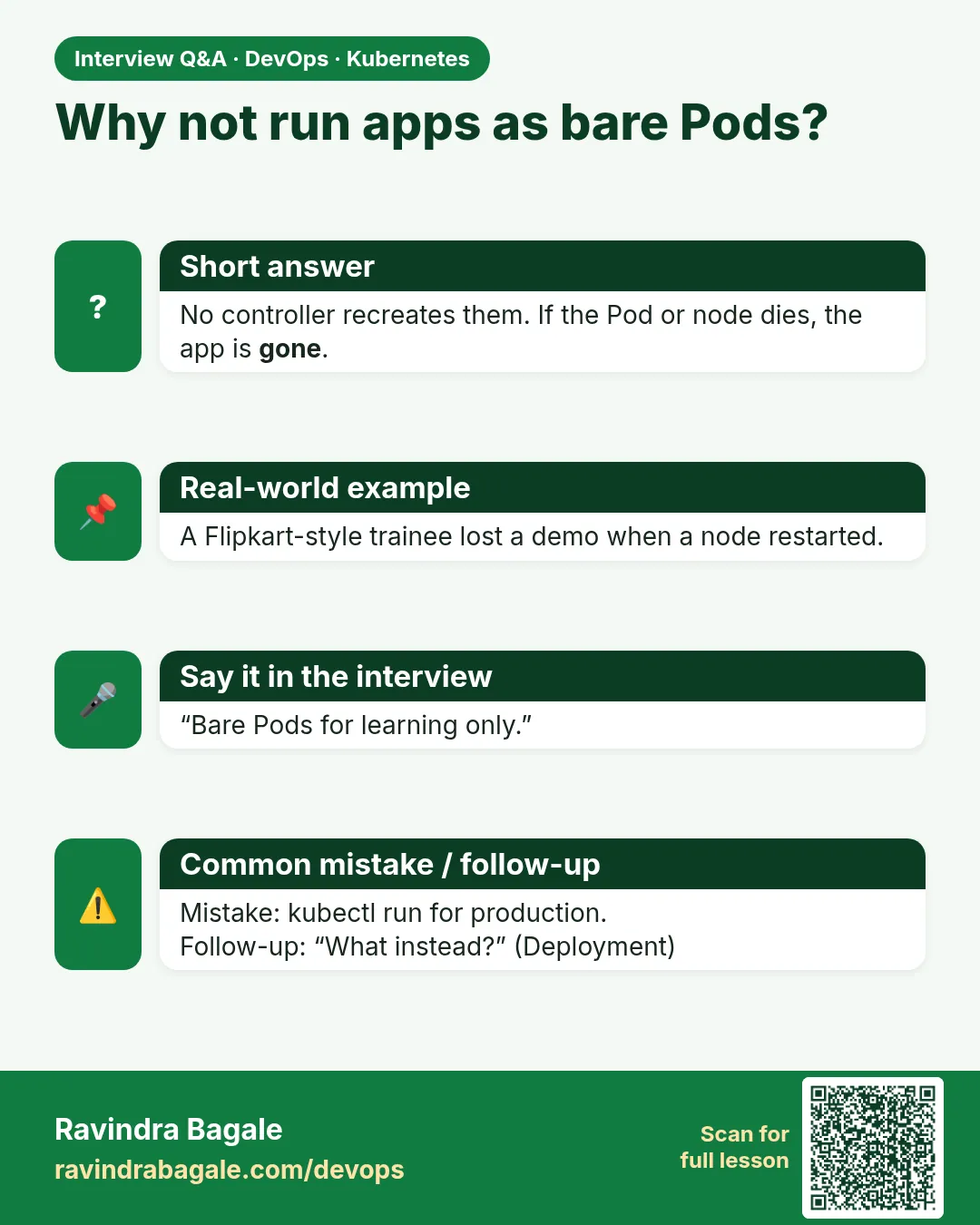 Interview card 4 of 15: Why not run apps as bare Pods? · Download PNG · Open card page
Lesson: 18.4 Bare Pod — lab only, dies and stays dead
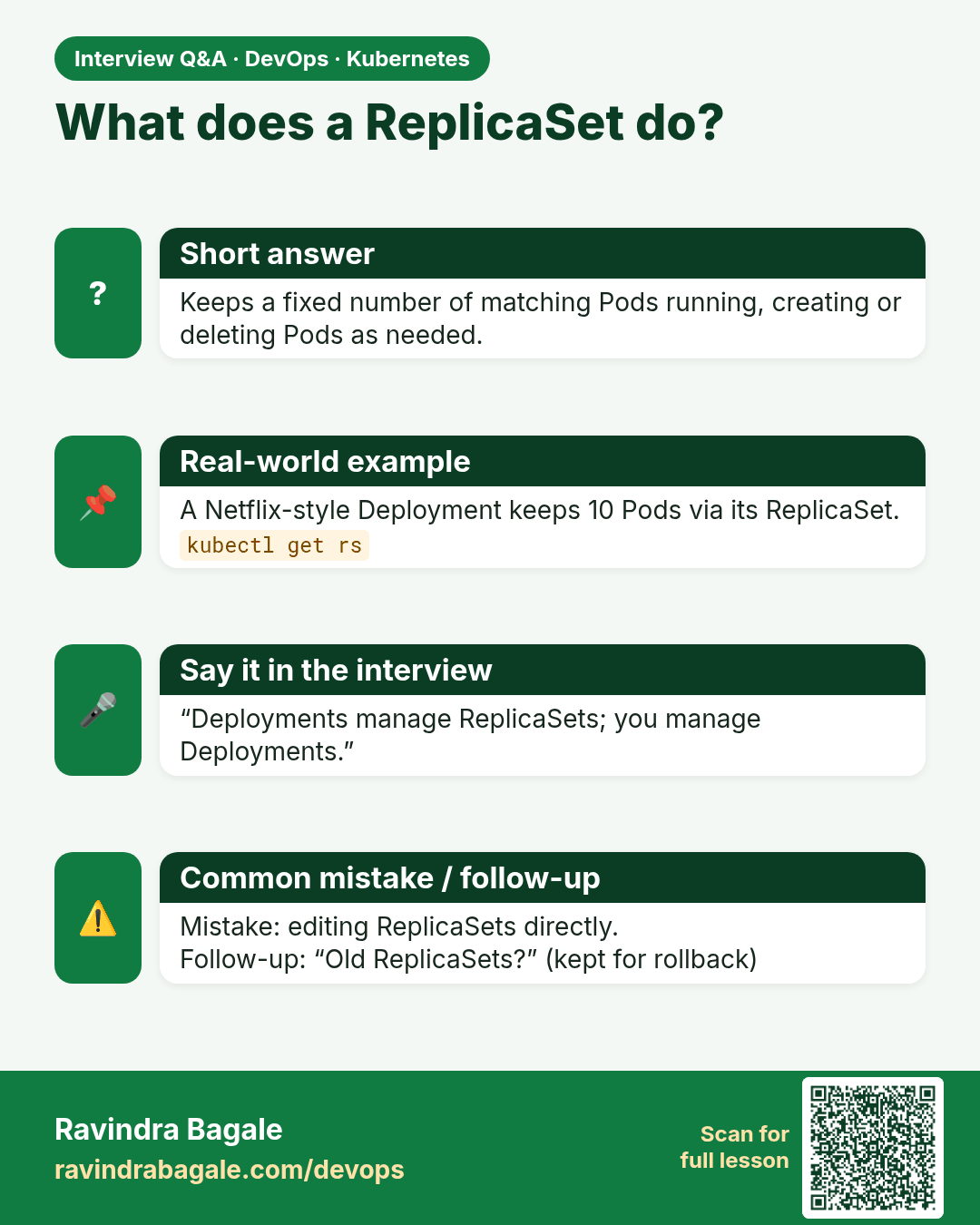
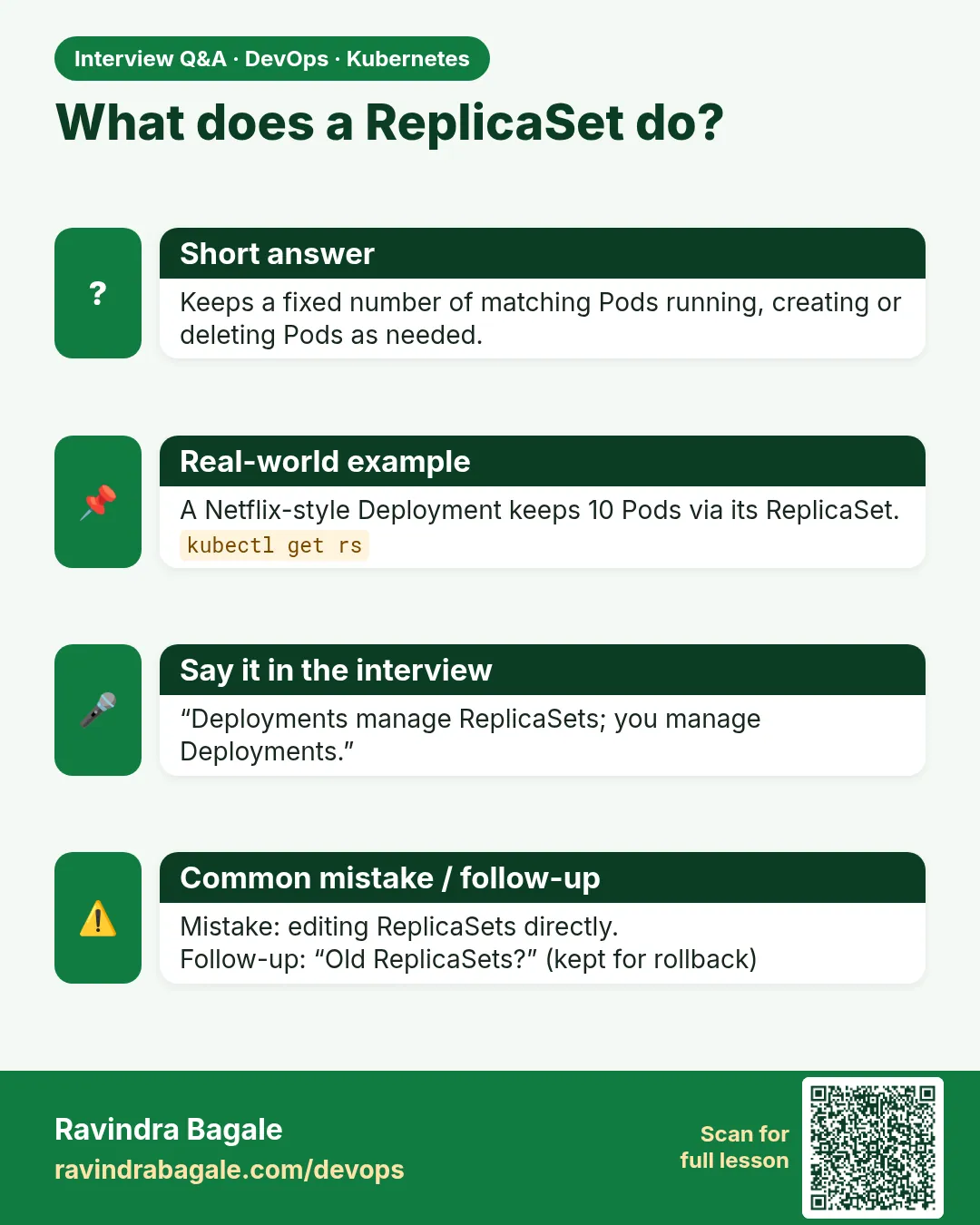 Interview card 5 of 15: What does a ReplicaSet do? · Download PNG · Open card page
Lesson: 18.5 ReplicaSet — keep N Pods
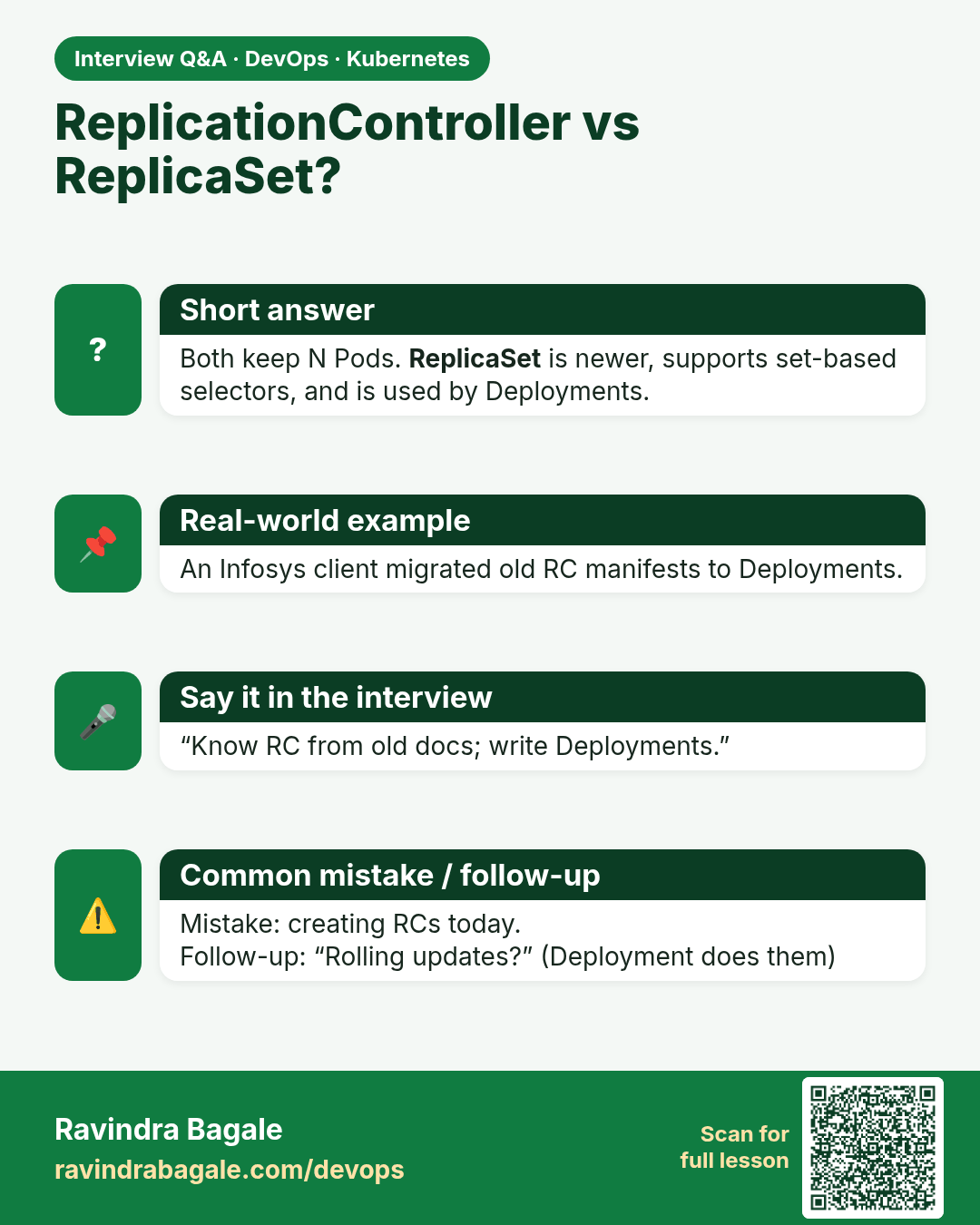
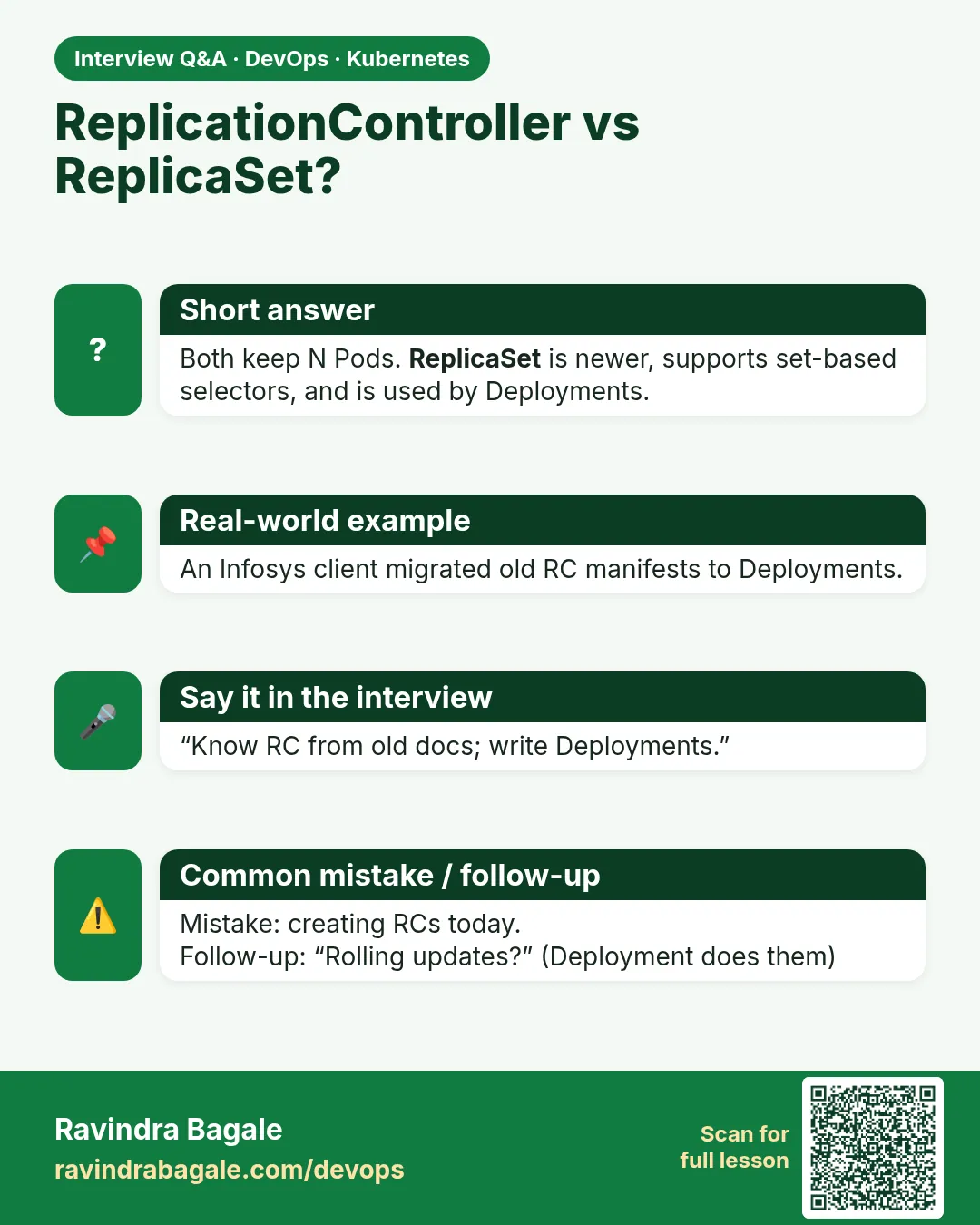 Interview card 6 of 15: ReplicationController vs ReplicaSet? · Download PNG · Open card page
Lesson: 18.6 ReplicationController — the older name
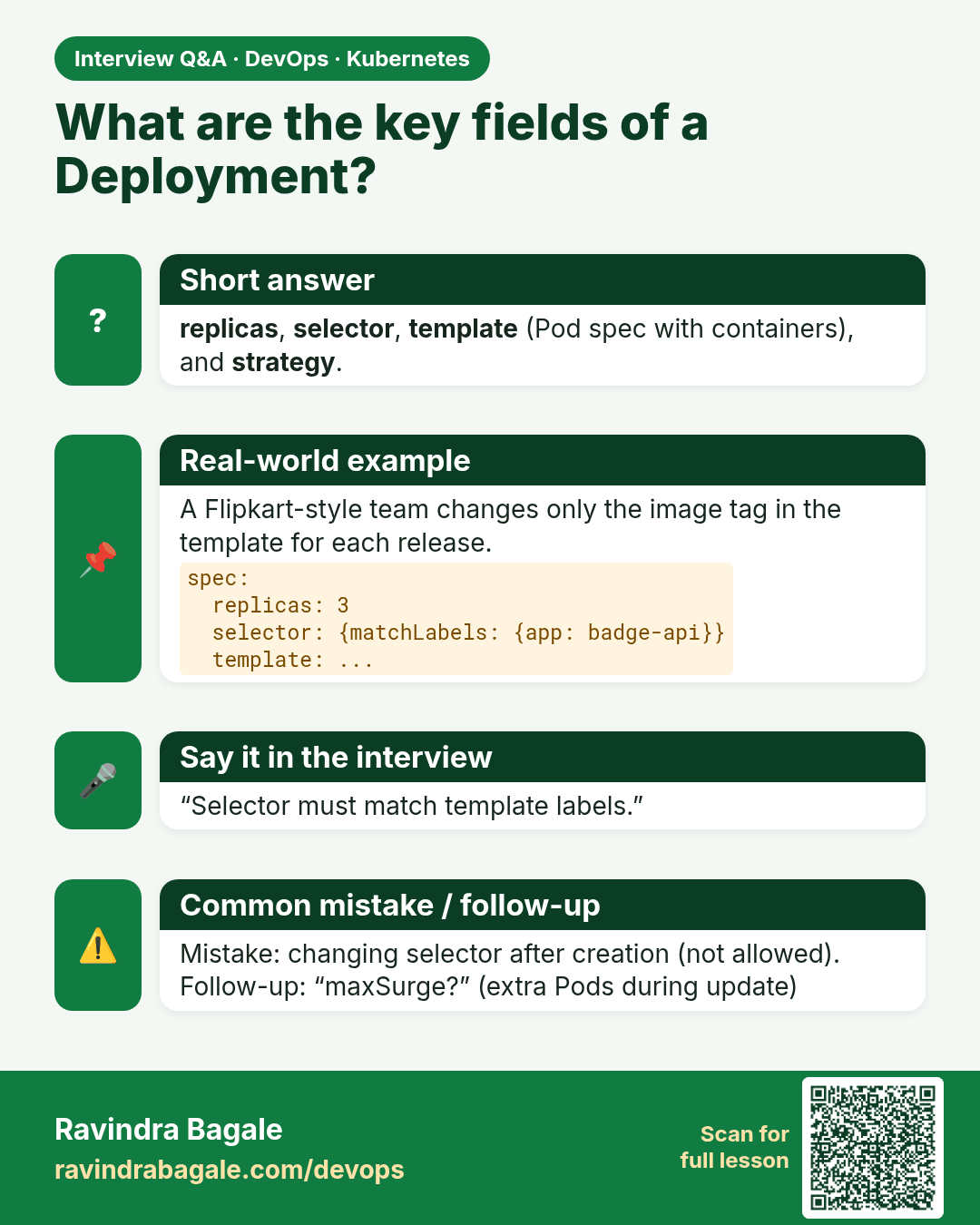
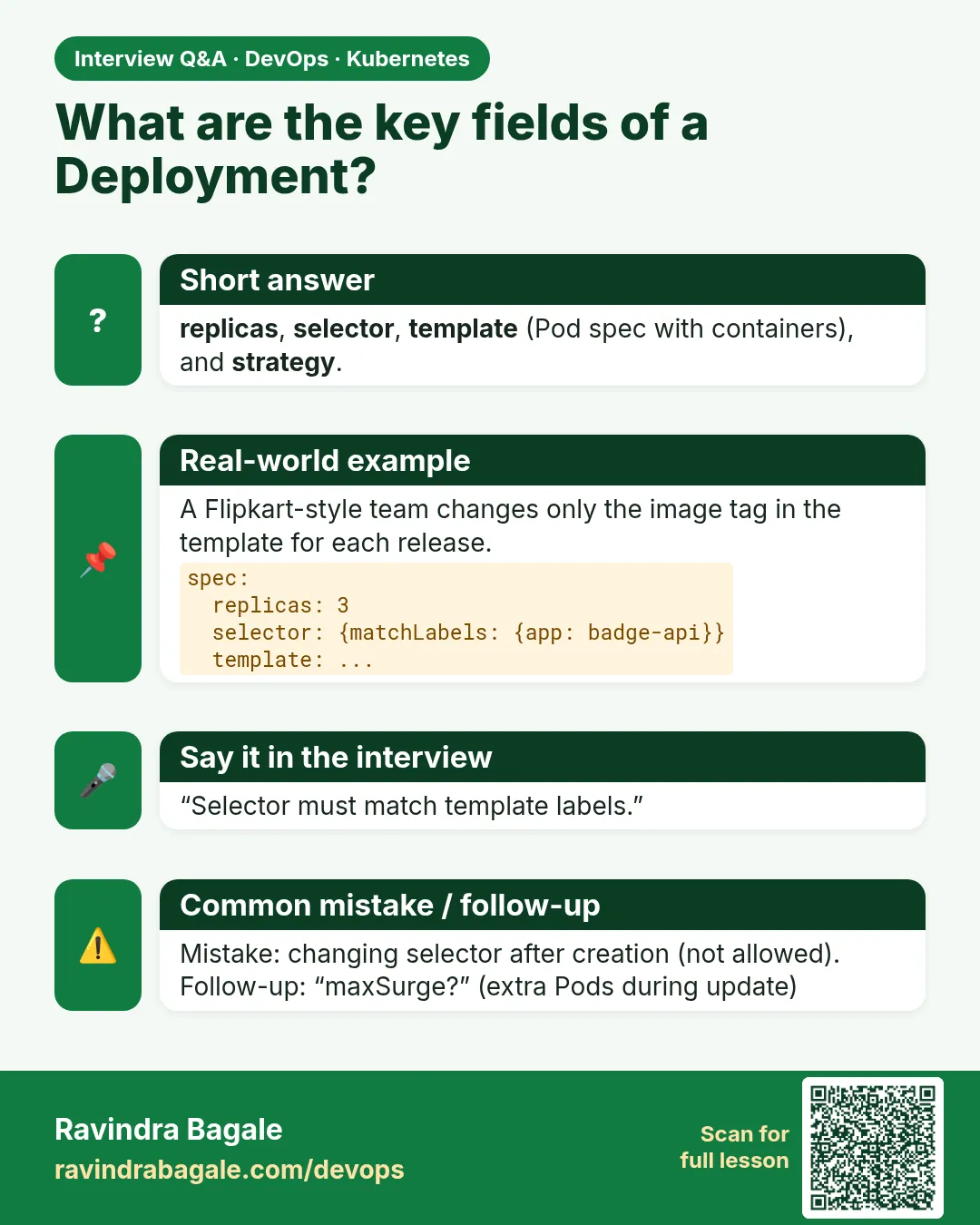 Interview card 7 of 15: What are the key fields of a Deployment? · Download PNG · Open card page
Lesson: 18.7 Deployment — the YAML you actually open
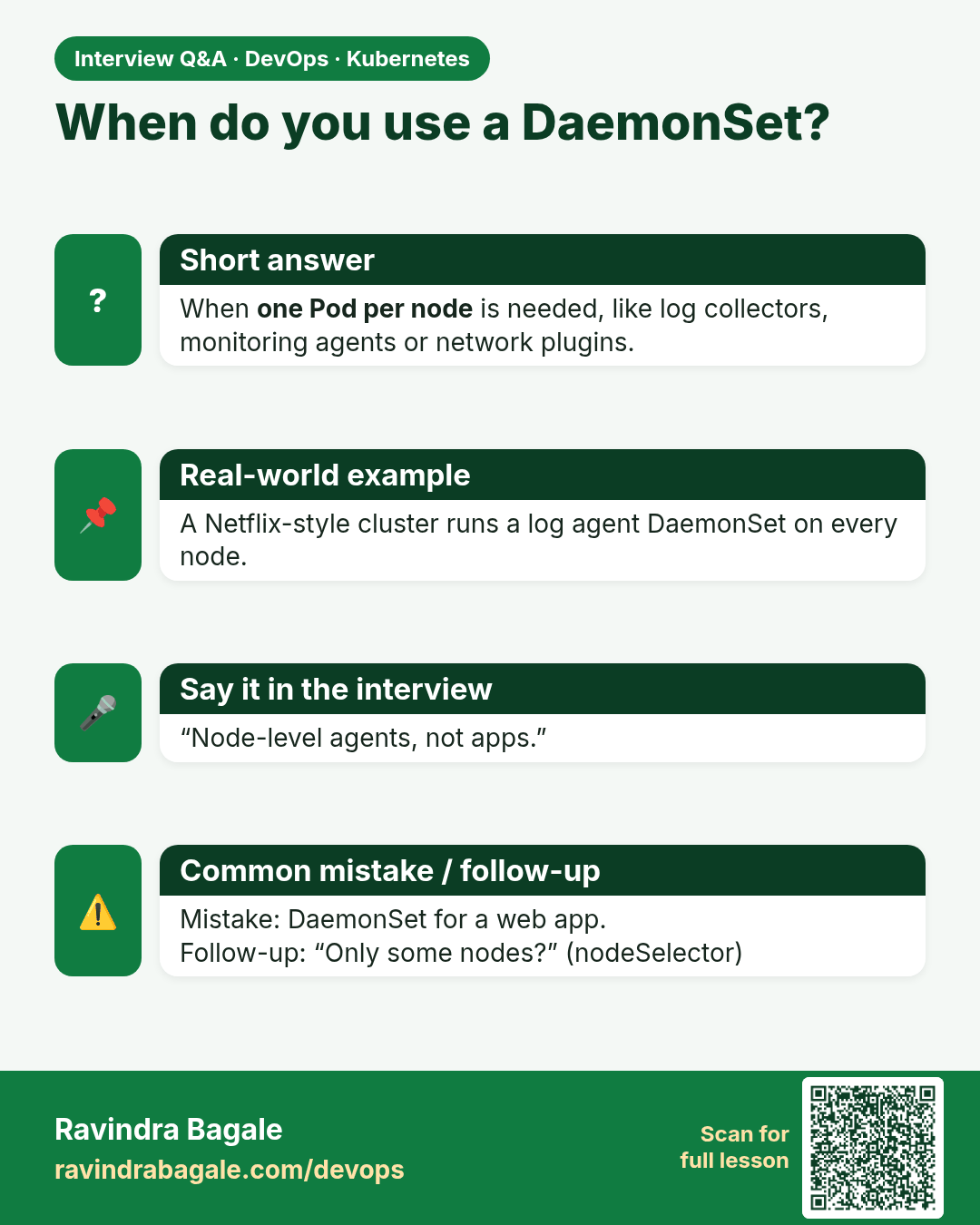
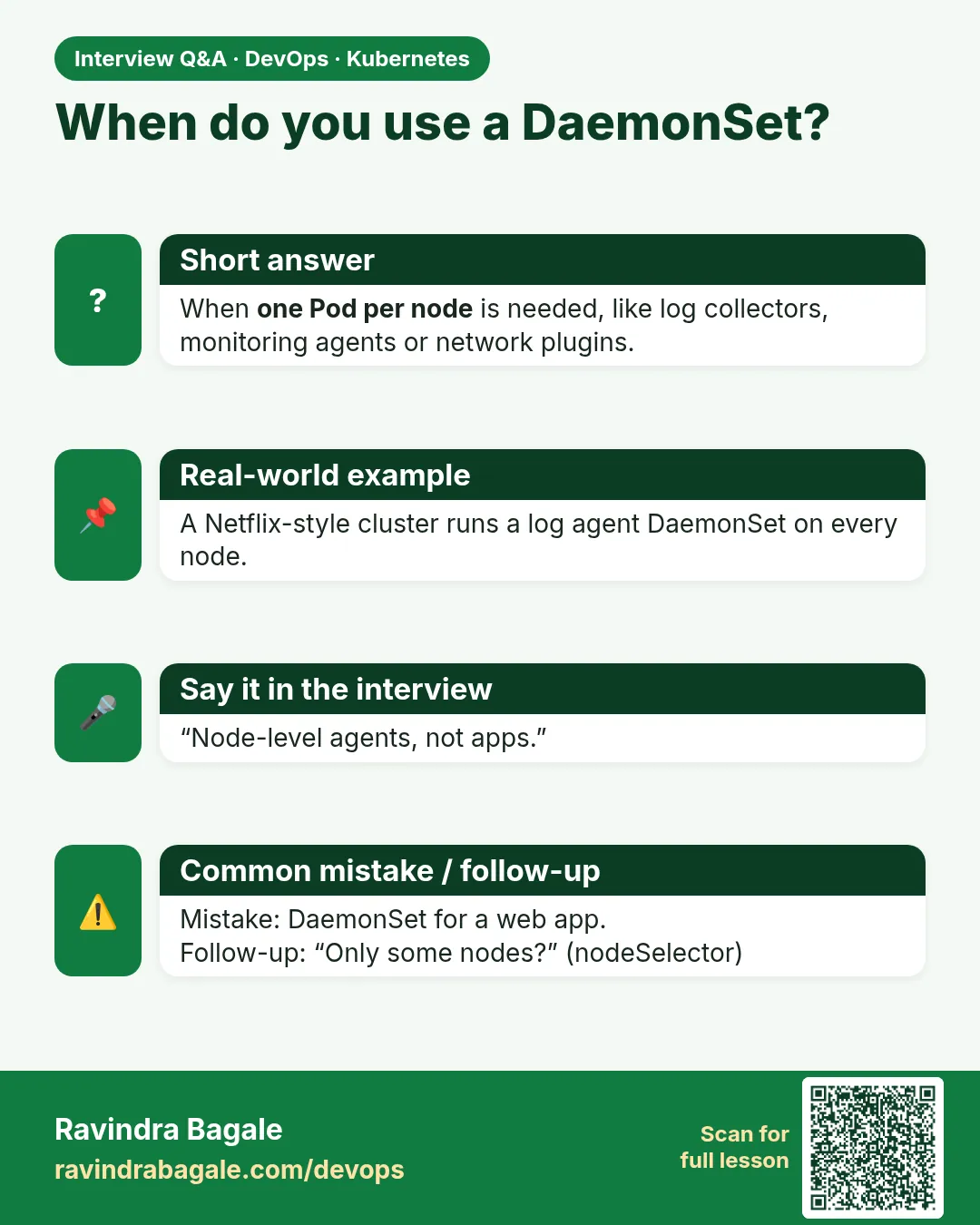 Interview card 8 of 15: When do you use a DaemonSet? · Download PNG · Open card page
Lesson: 18.8 DaemonSet — one per node
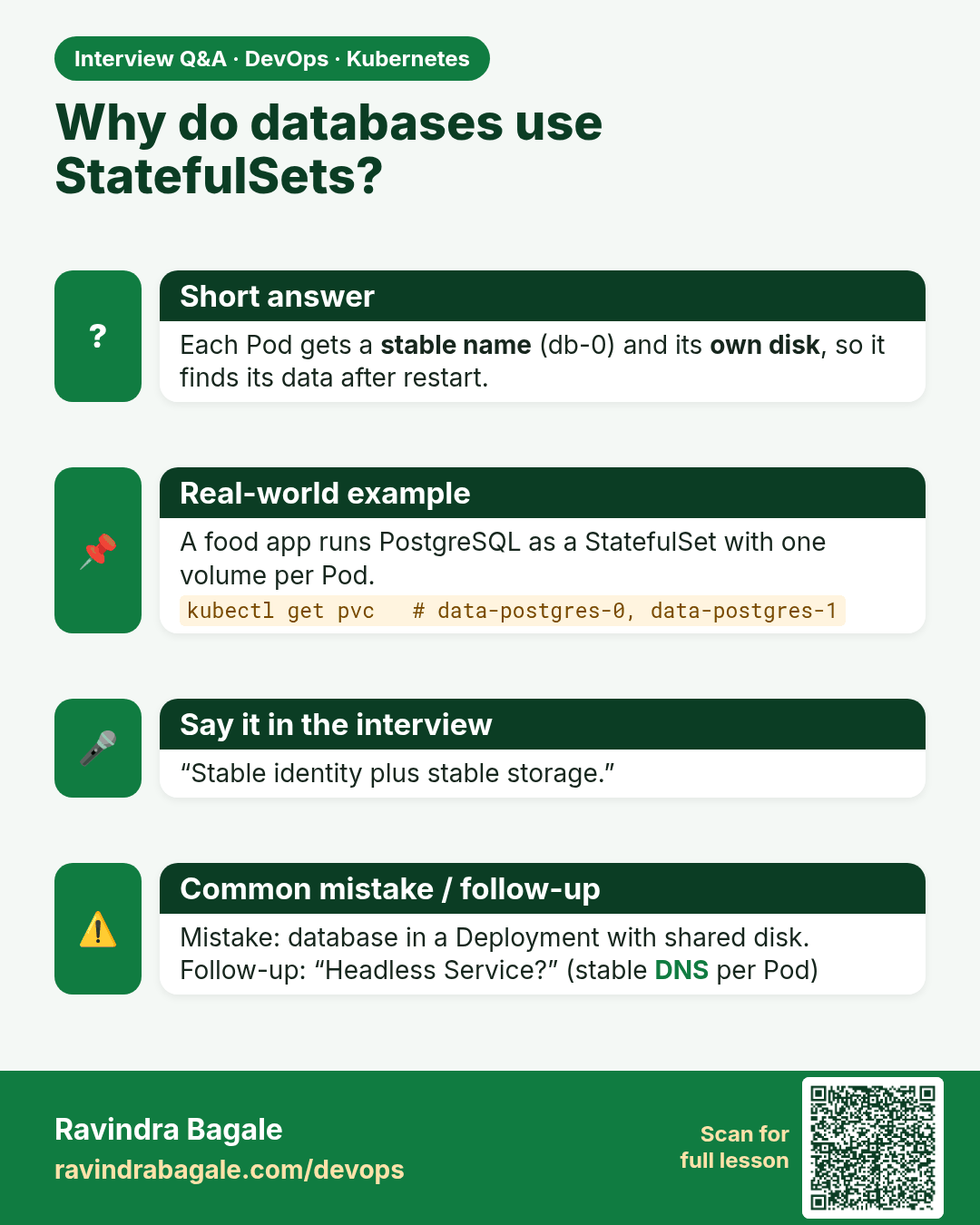
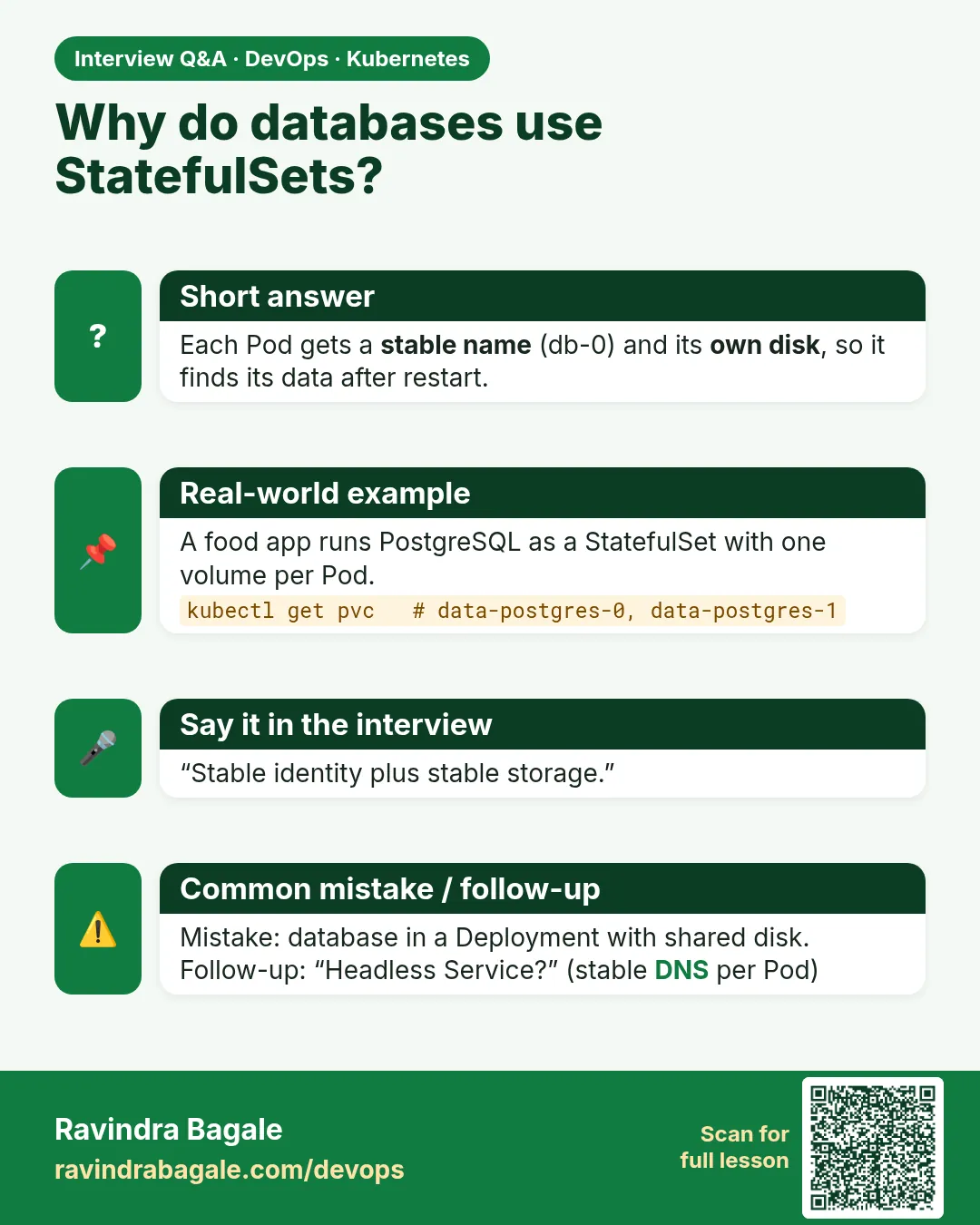 Interview card 9 of 15: Why do databases use StatefulSets? · Download PNG · Open card page
Lesson: 18.9 StatefulSet — stable name and disk
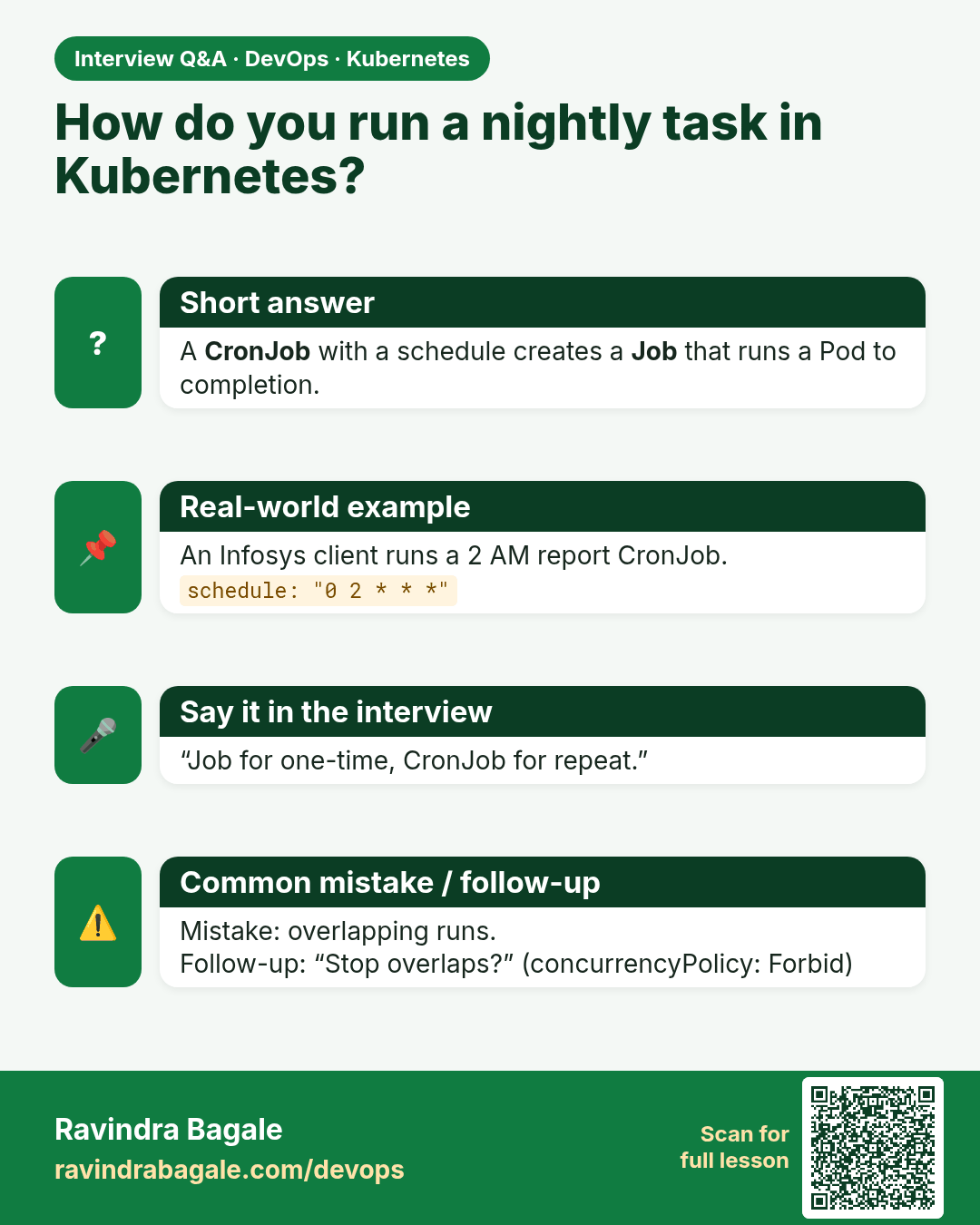
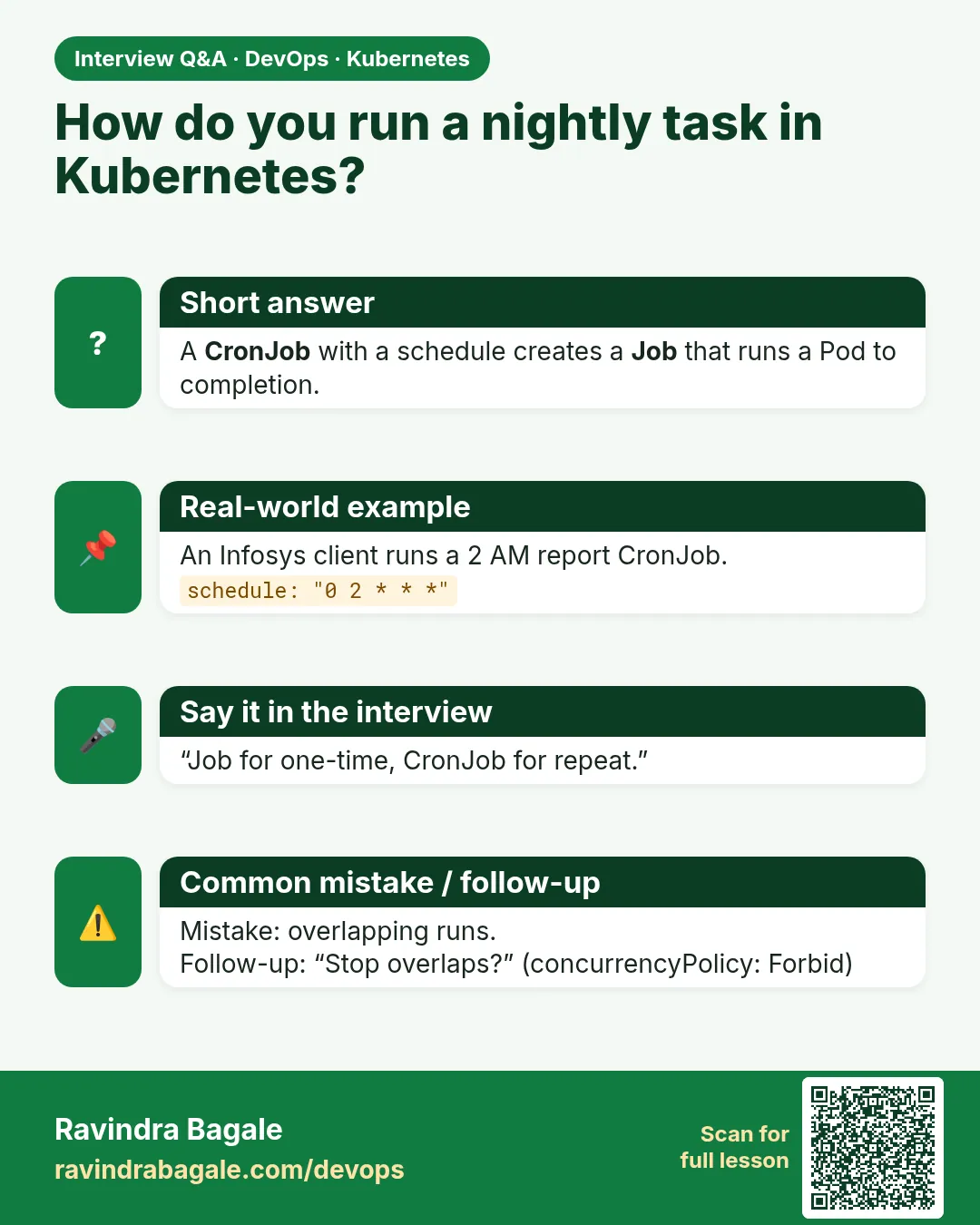 Interview card 10 of 15: How do you run a nightly task in Kubernetes? · Download PNG · Open card page
Lesson: 18.10 Job and CronJob
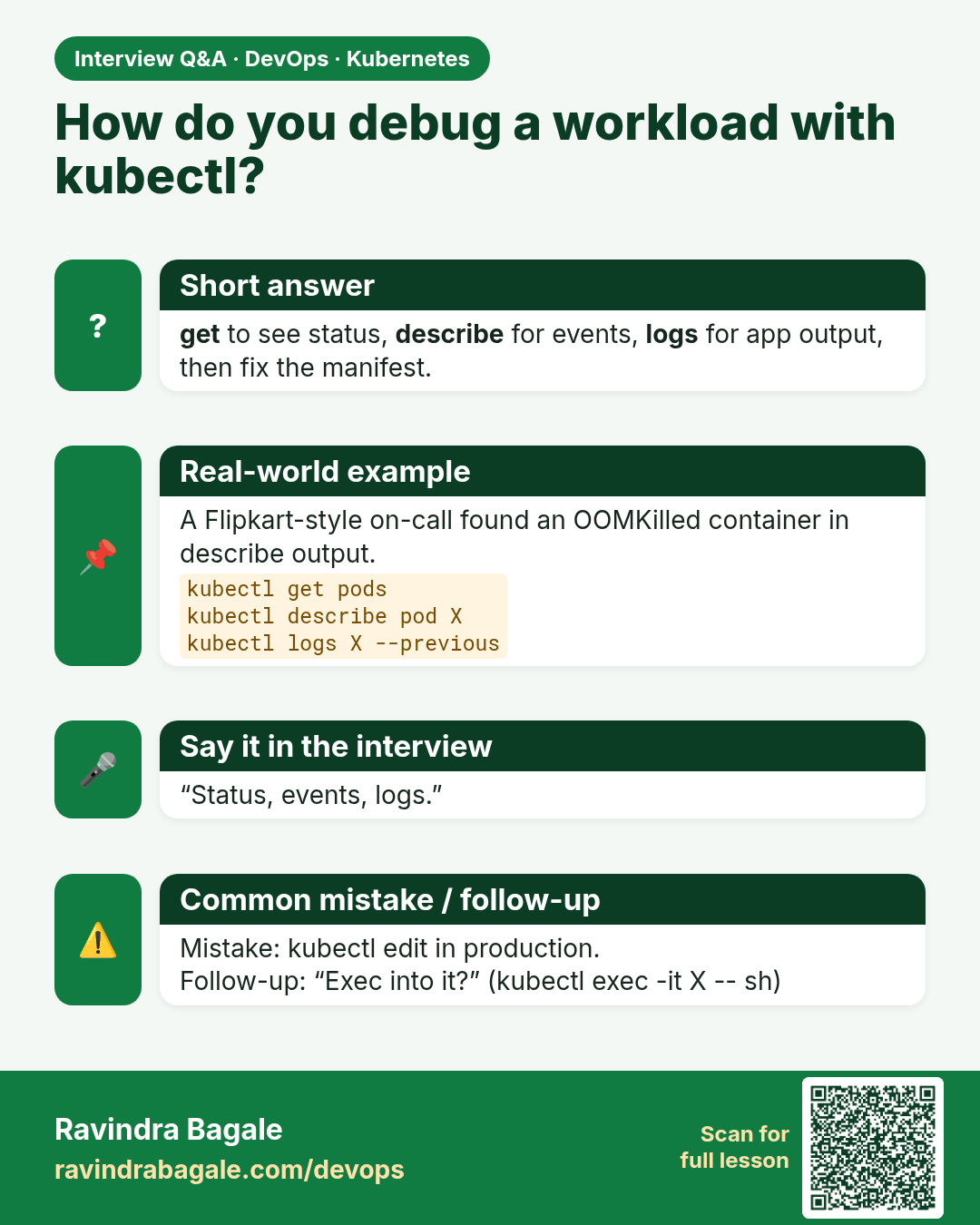
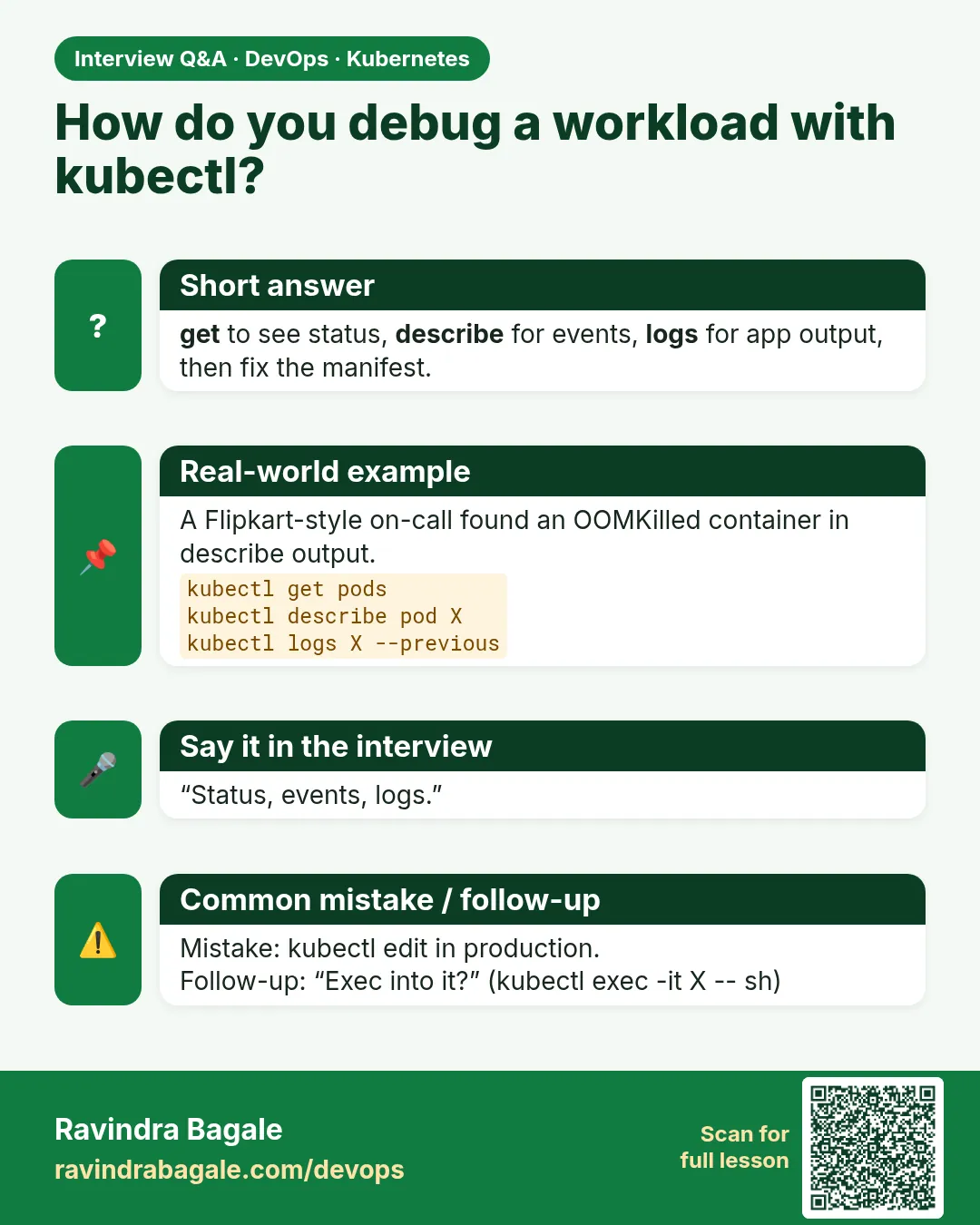 Interview card 11 of 15: How do you debug a workload with kubectl? · Download PNG · Open card page
Lesson: 18.11 kubectl get, describe, logs, delete
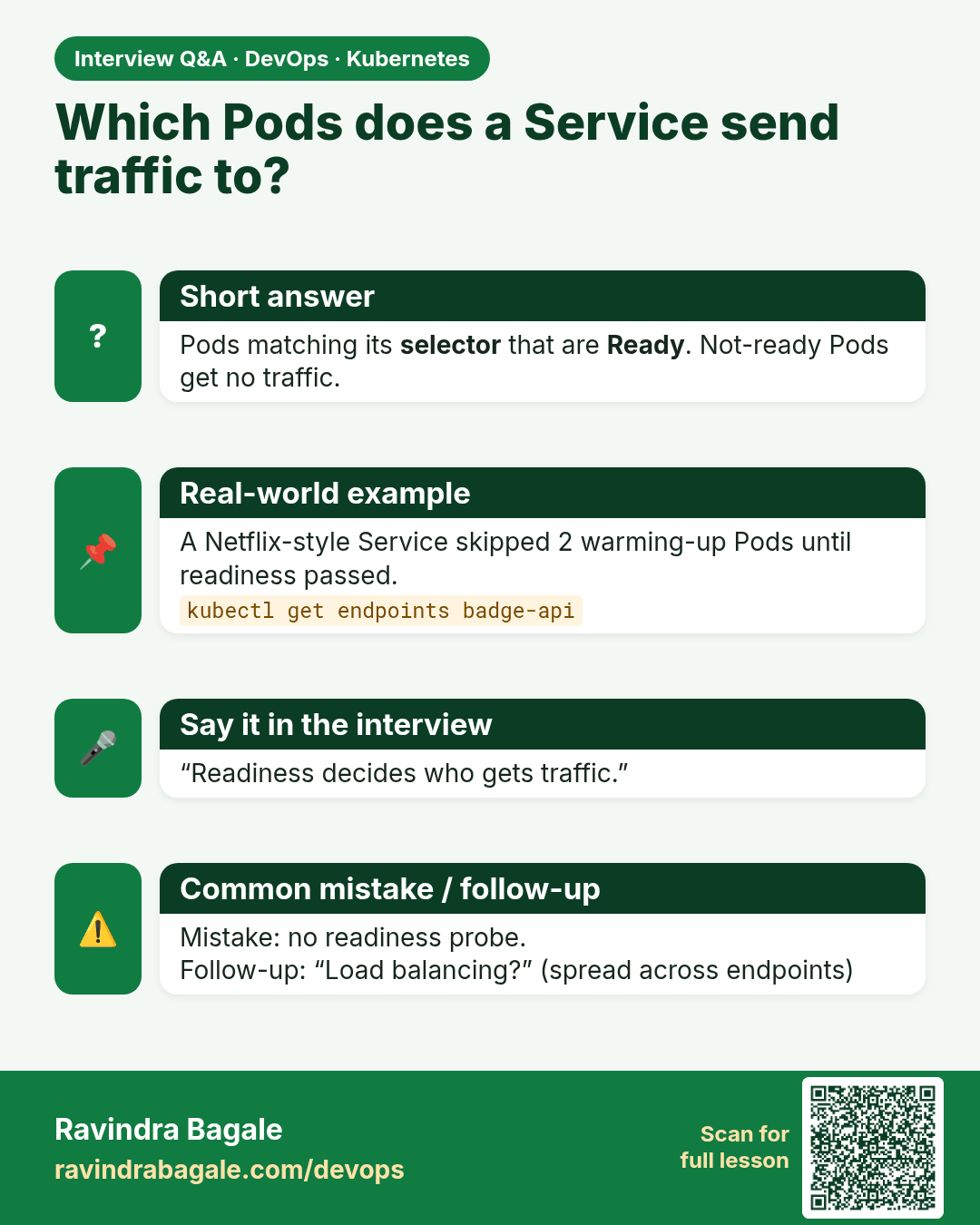
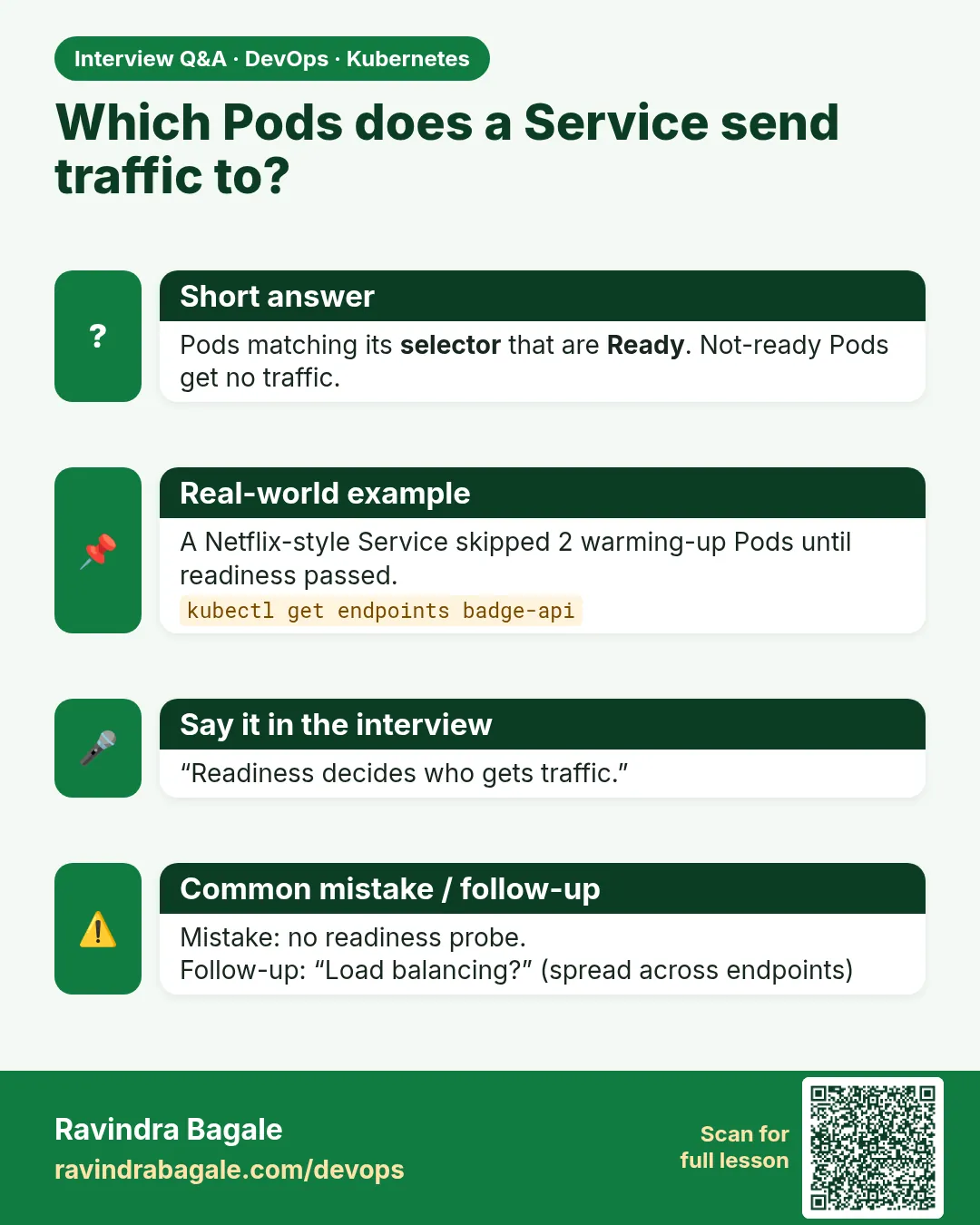 Interview card 12 of 15: Which Pods does a Service send traffic to? · Download PNG · Open card page
Lesson: 18.12 The Service spreads traffic across ready Pods
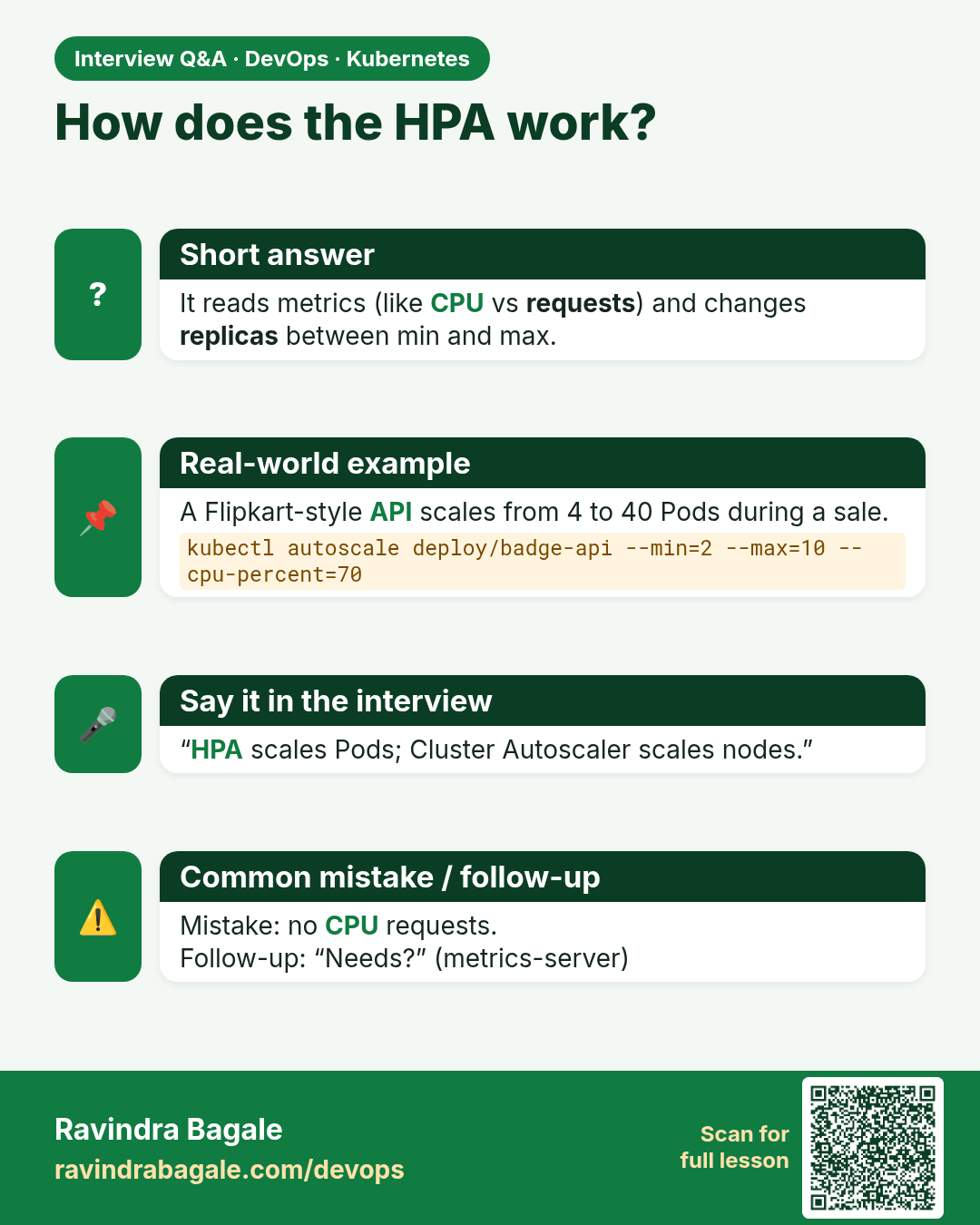
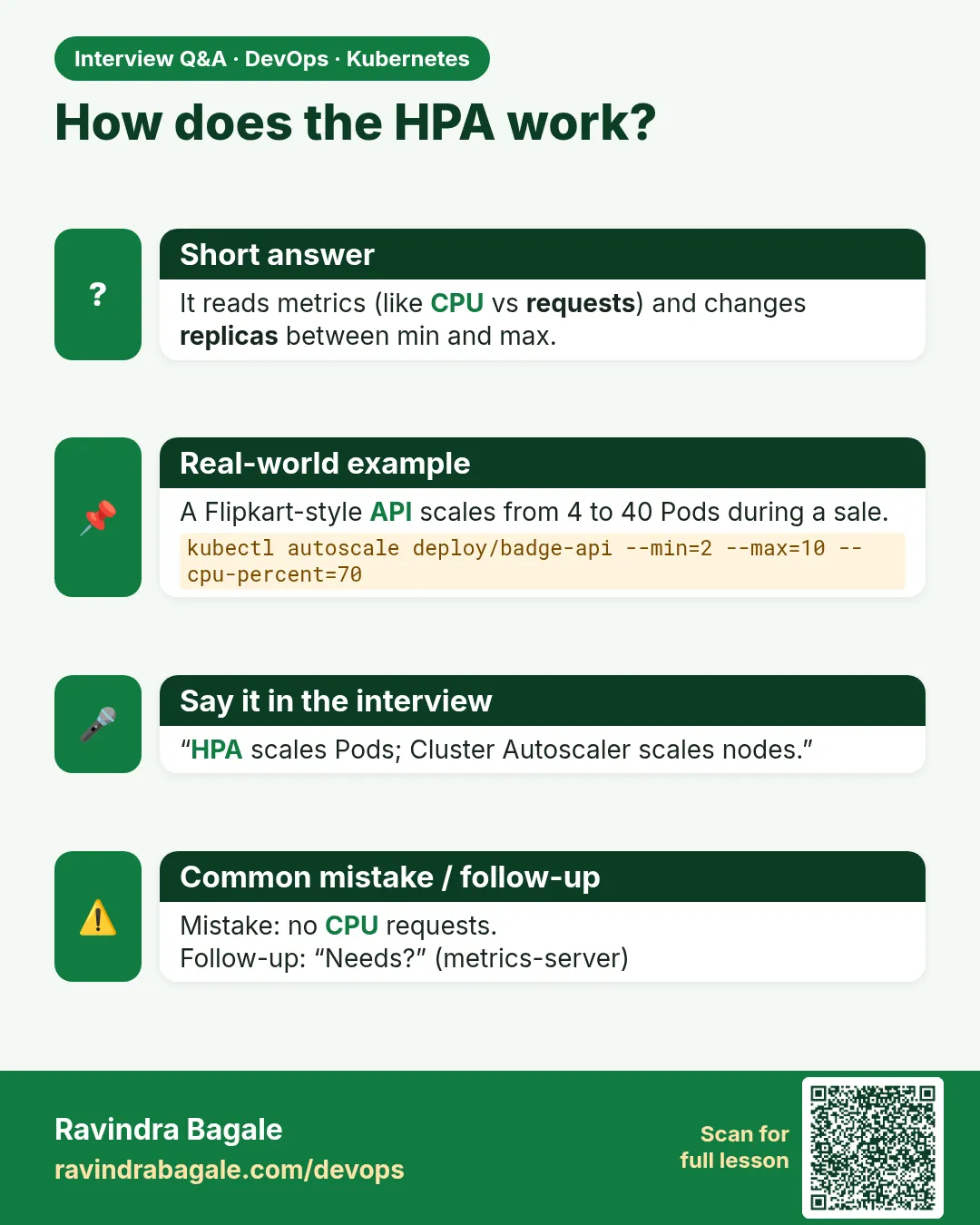 Interview card 13 of 15: How does the HPA work? · Download PNG · Open card page
Lesson: 18.13 Autoscaling — HPA, and two names to recognise
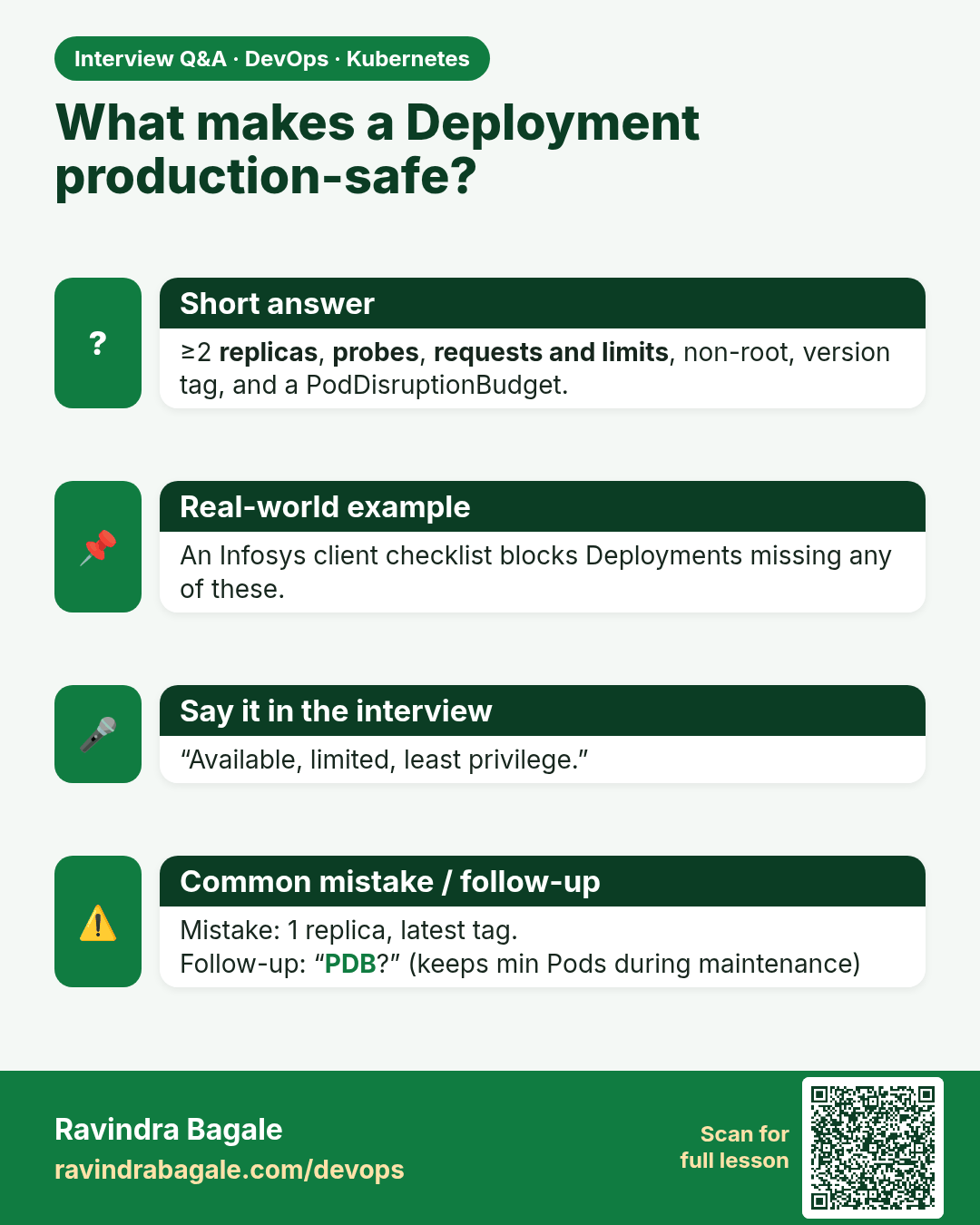
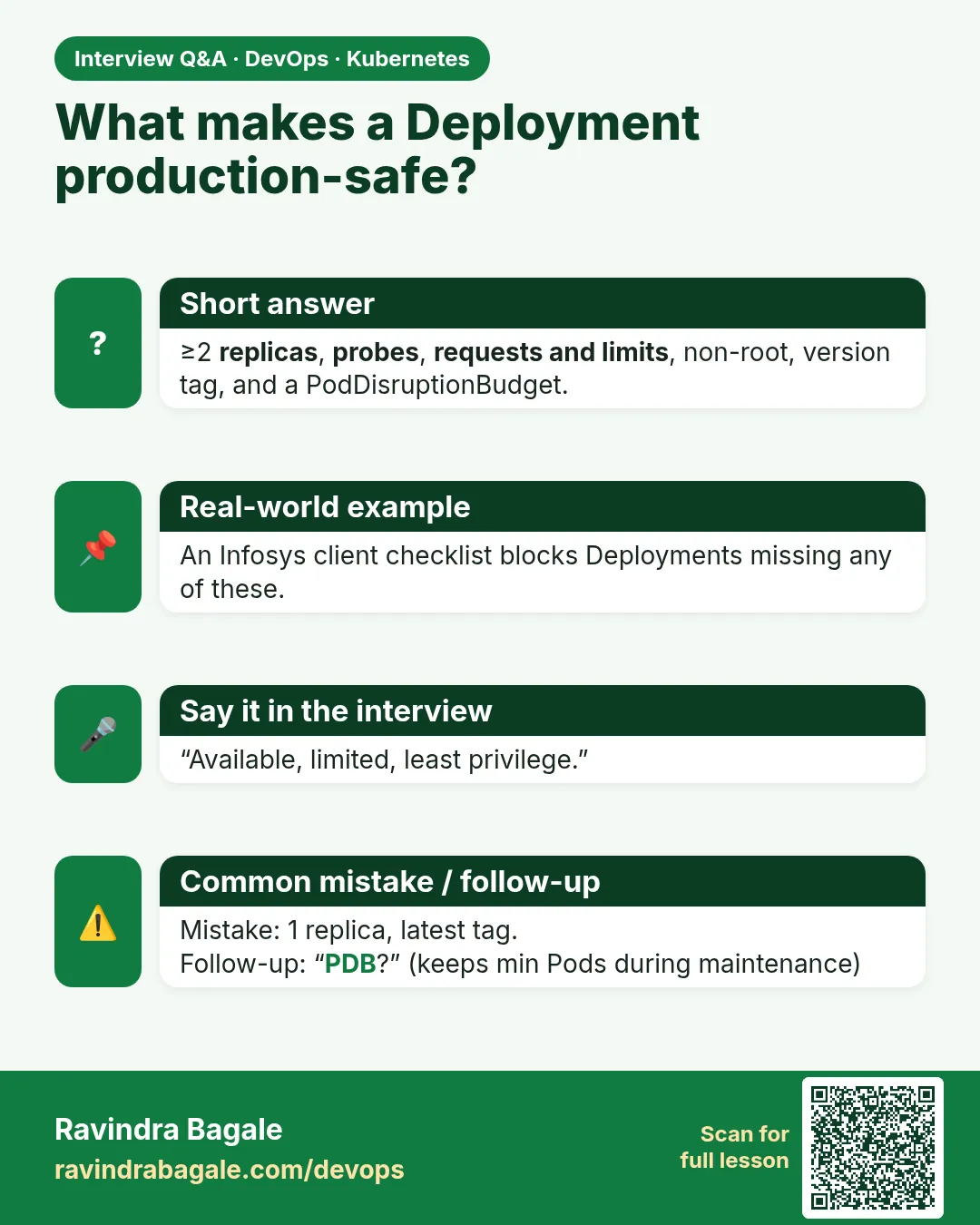 Interview card 14 of 15: What makes a Deployment production-safe? · Download PNG · Open card page
Lesson: 18.14 Safety basics
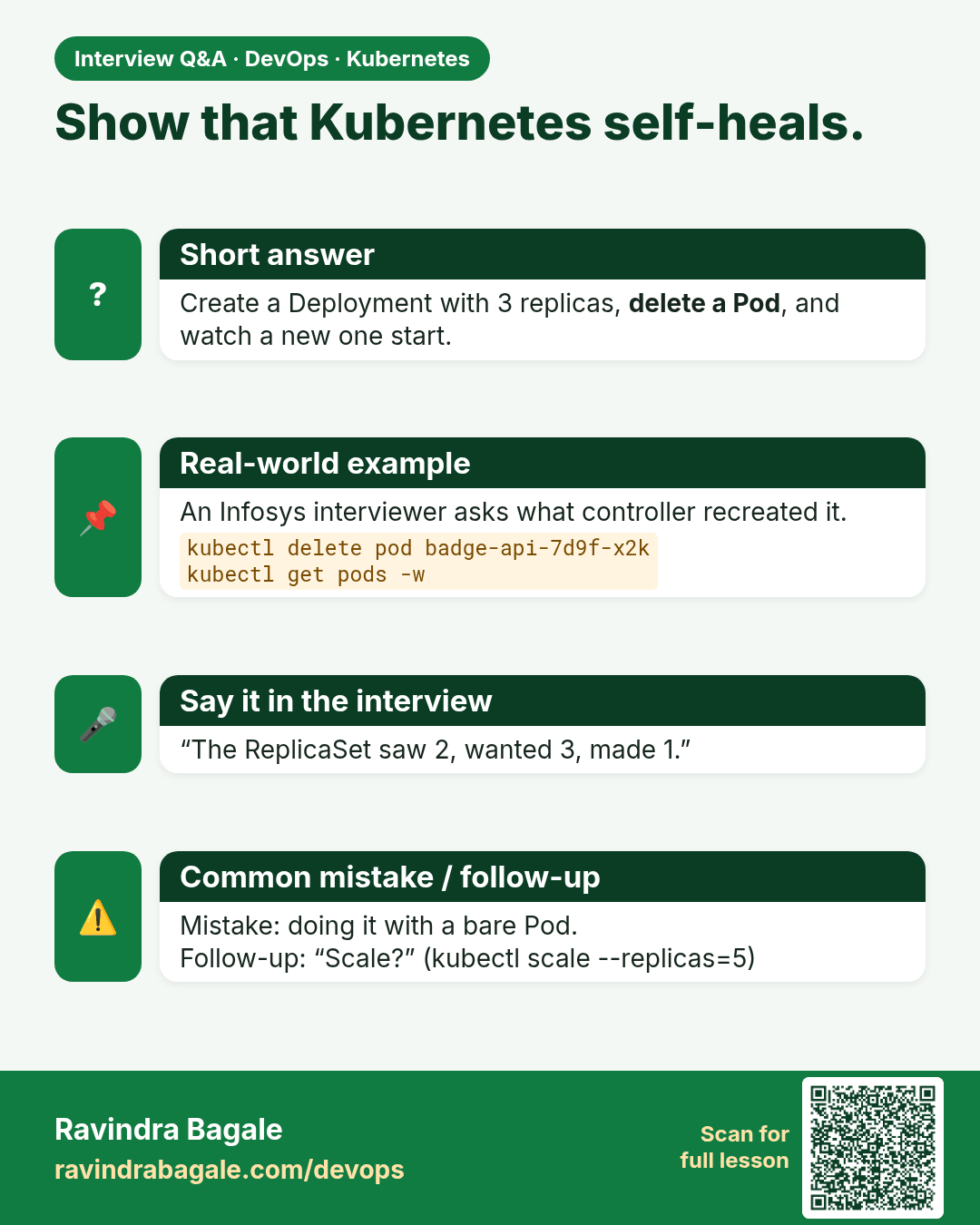
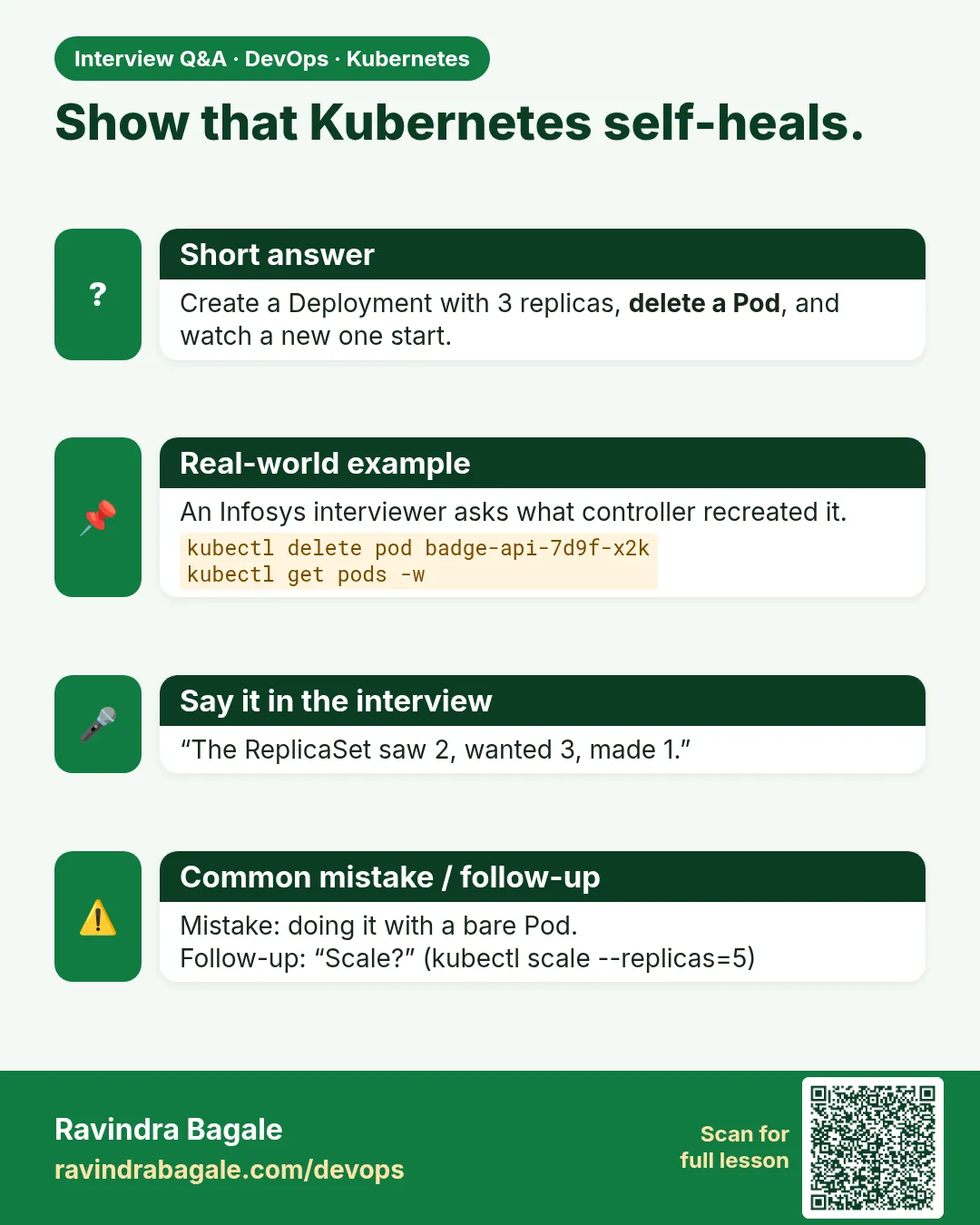 Interview card 15 of 15: Show that Kubernetes self-heals. · Download PNG · Open card page
Lesson: 18.15 Lab — Deployment, not a bare Pod
Comparison cards
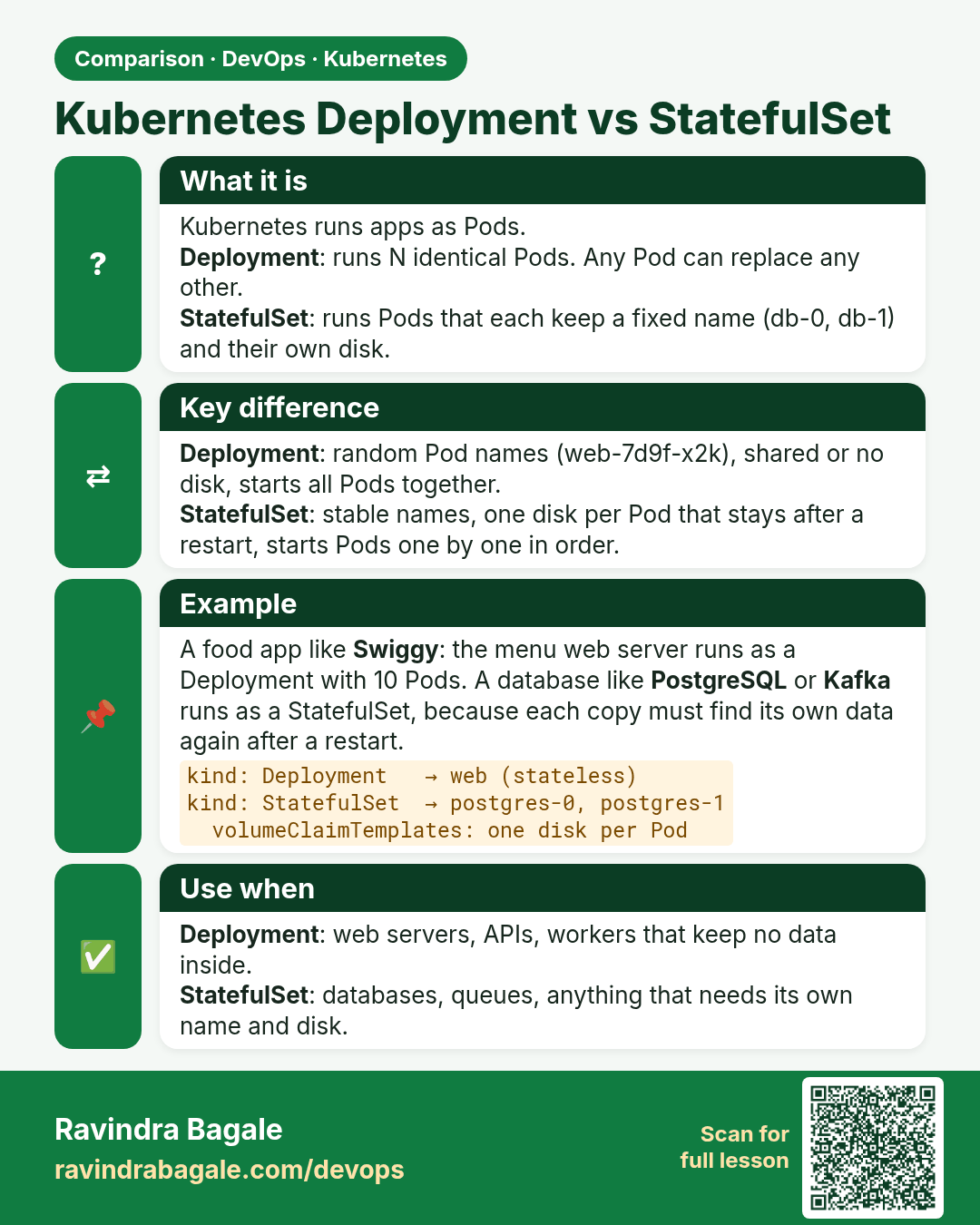
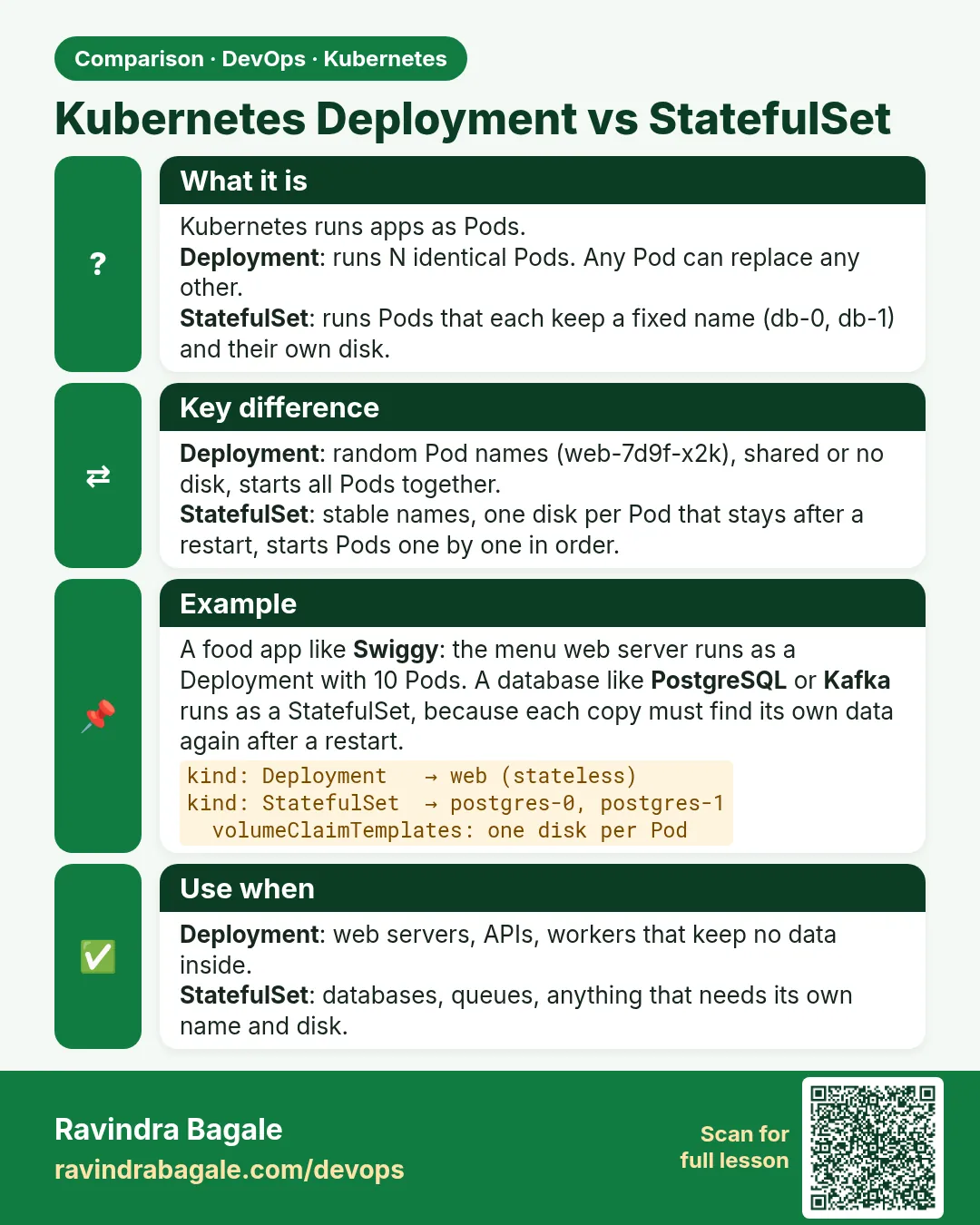 Comparison card 1 of 3: Kubernetes Deployment vs StatefulSet · Download PNG · Open card page
Lesson: 18.9 StatefulSet — stable name and disk
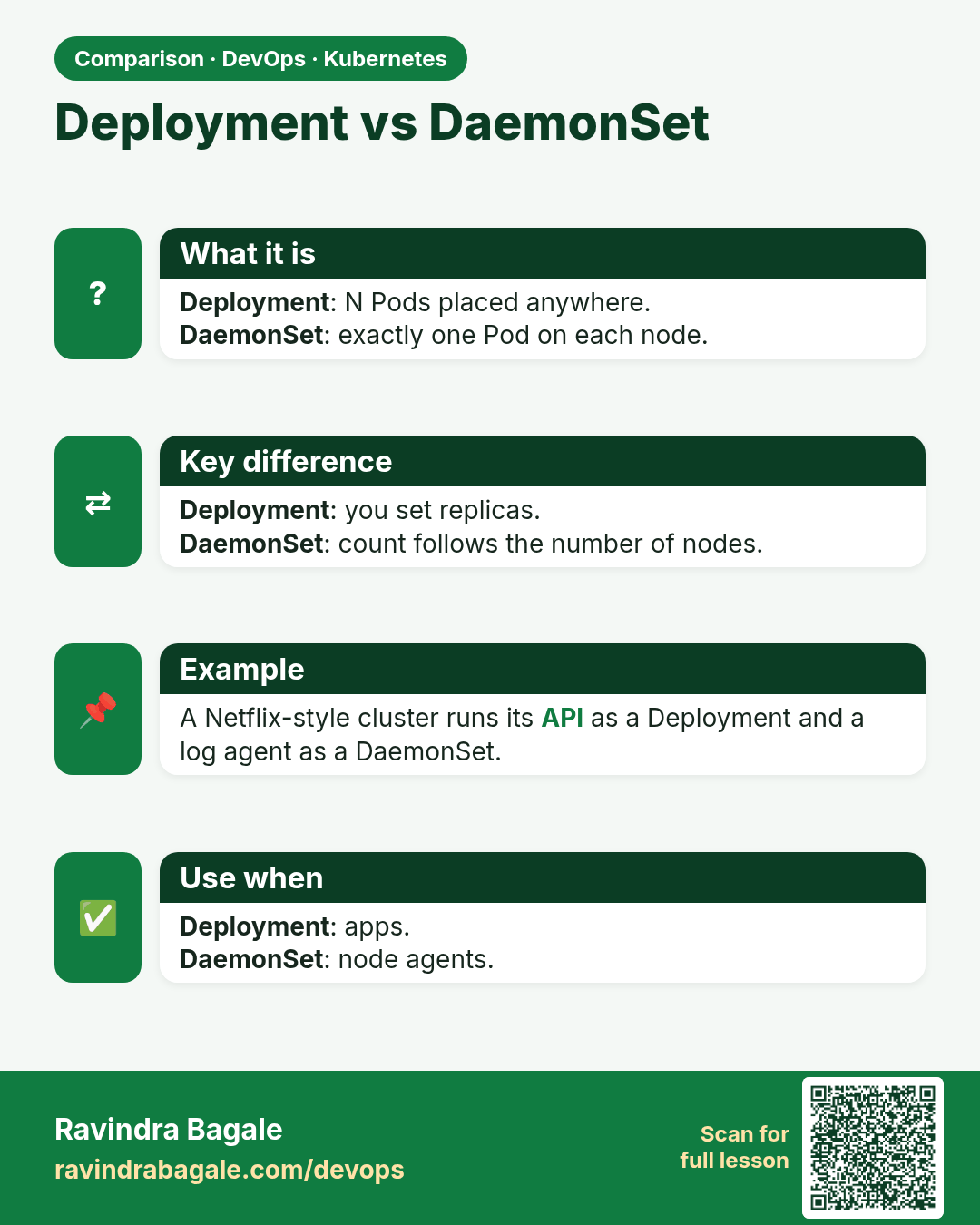
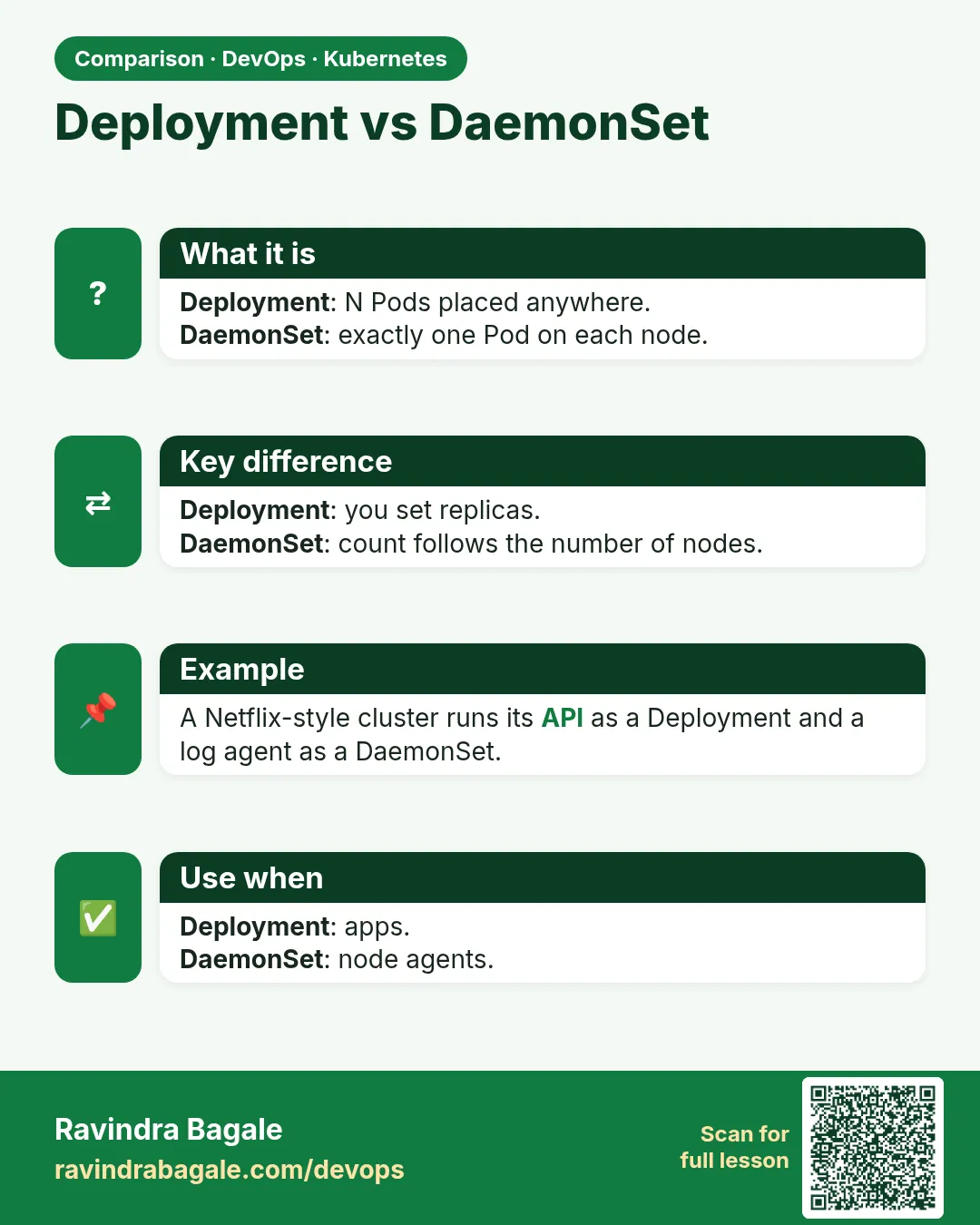 Comparison card 2 of 3: Deployment vs DaemonSet · Download PNG · Open card page
Lesson: 18.8 DaemonSet — one per node
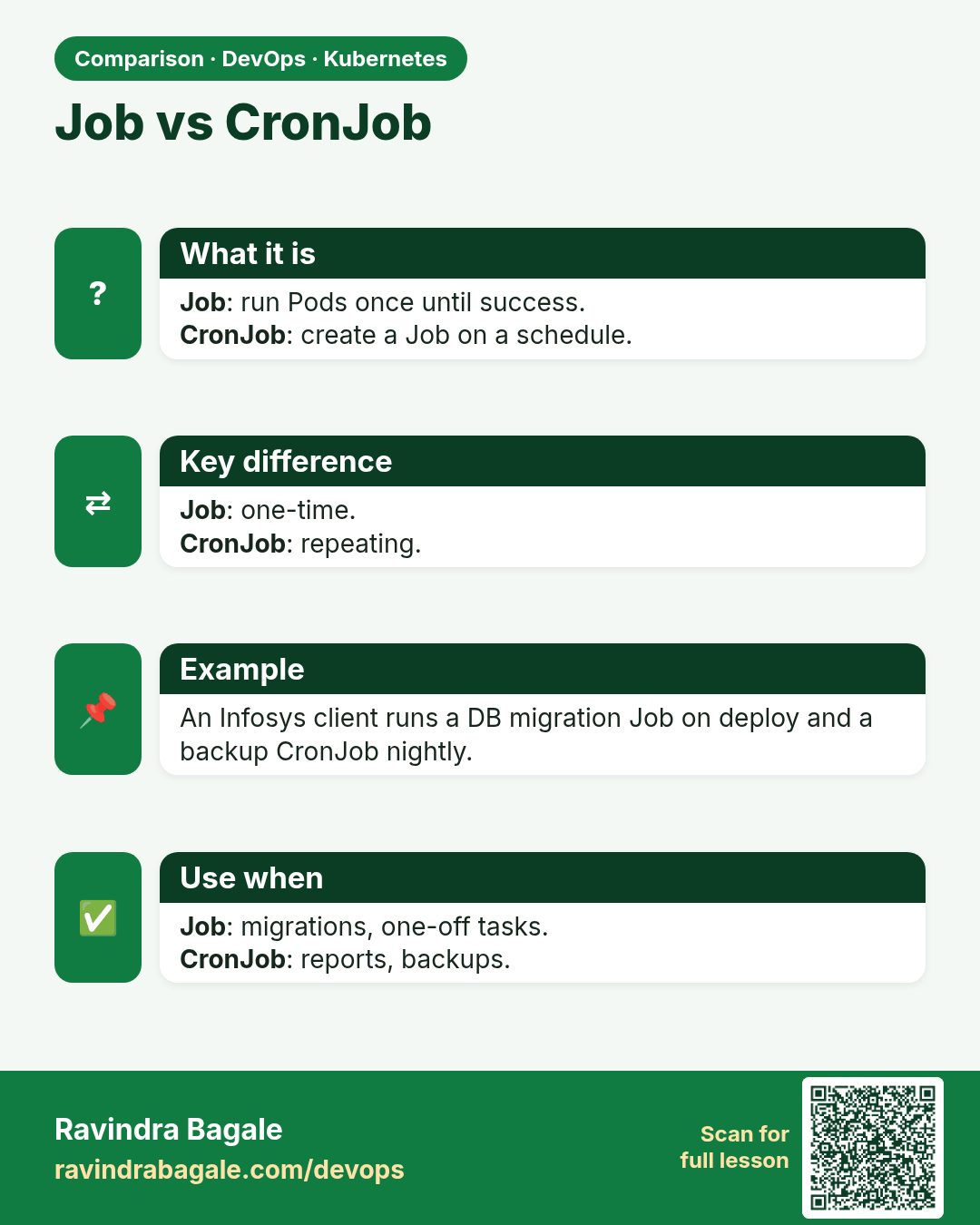
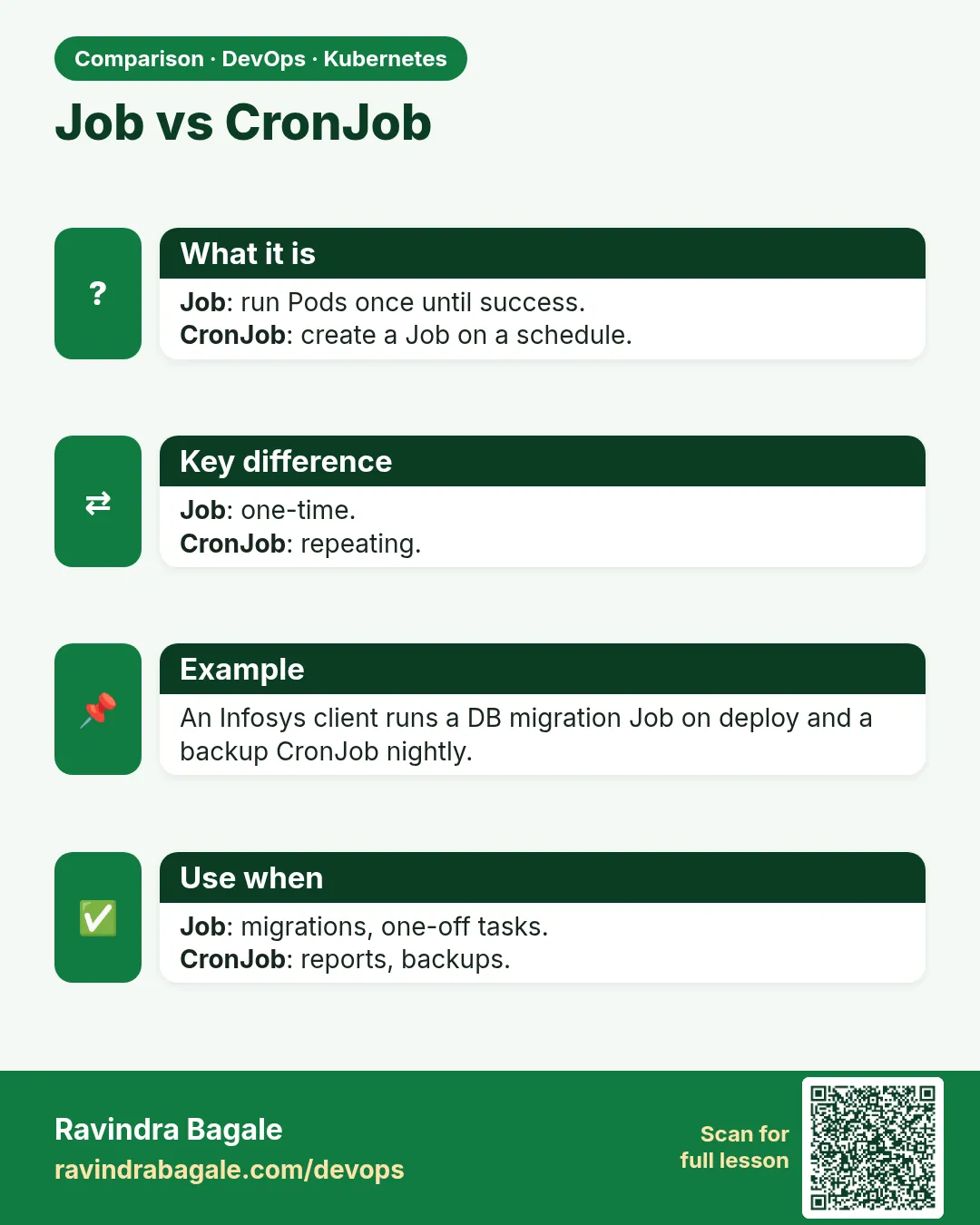 Comparison card 3 of 3: Job vs CronJob · Download PNG · Open card page
Lesson: 18.10 Job and CronJob