Revision cards
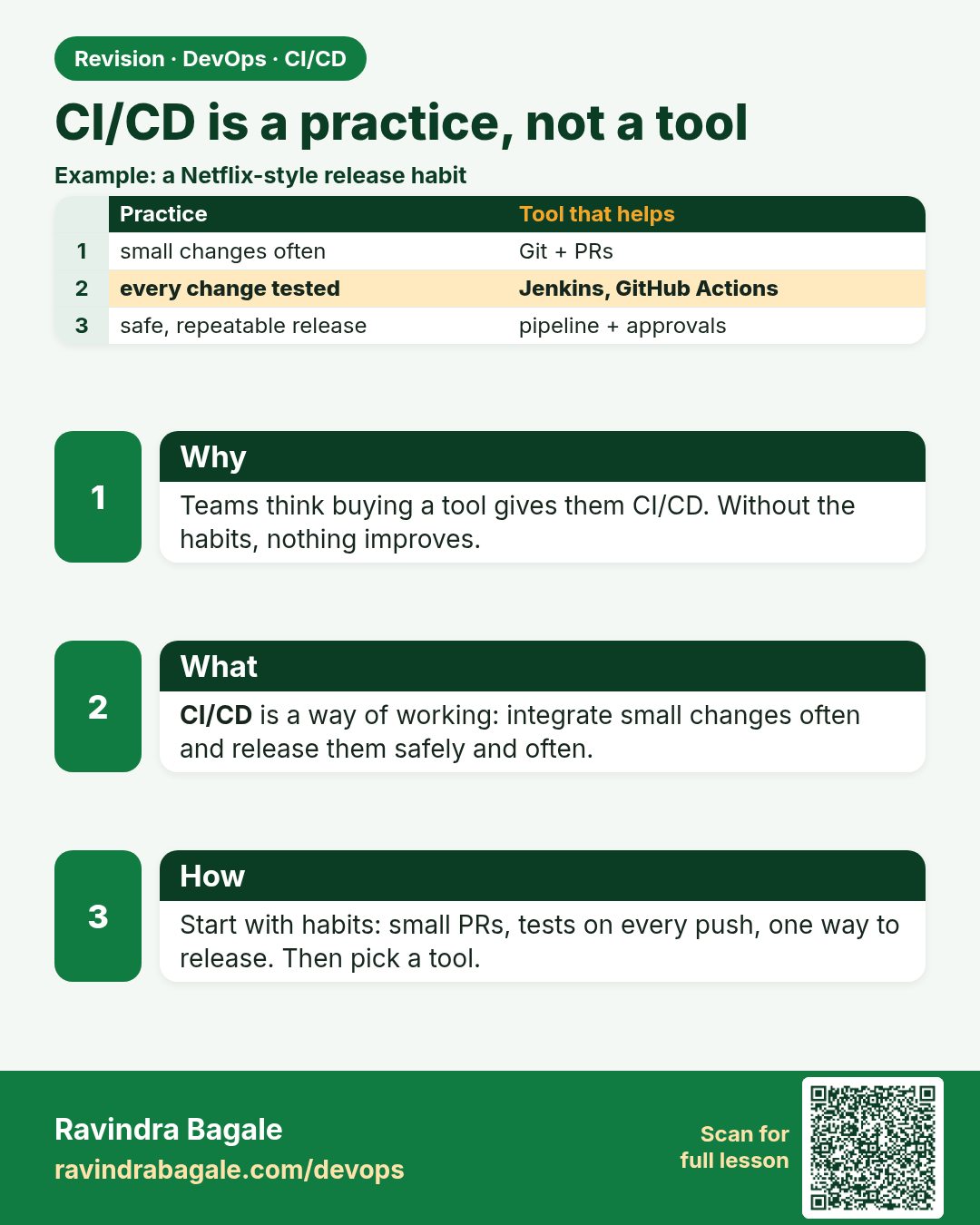
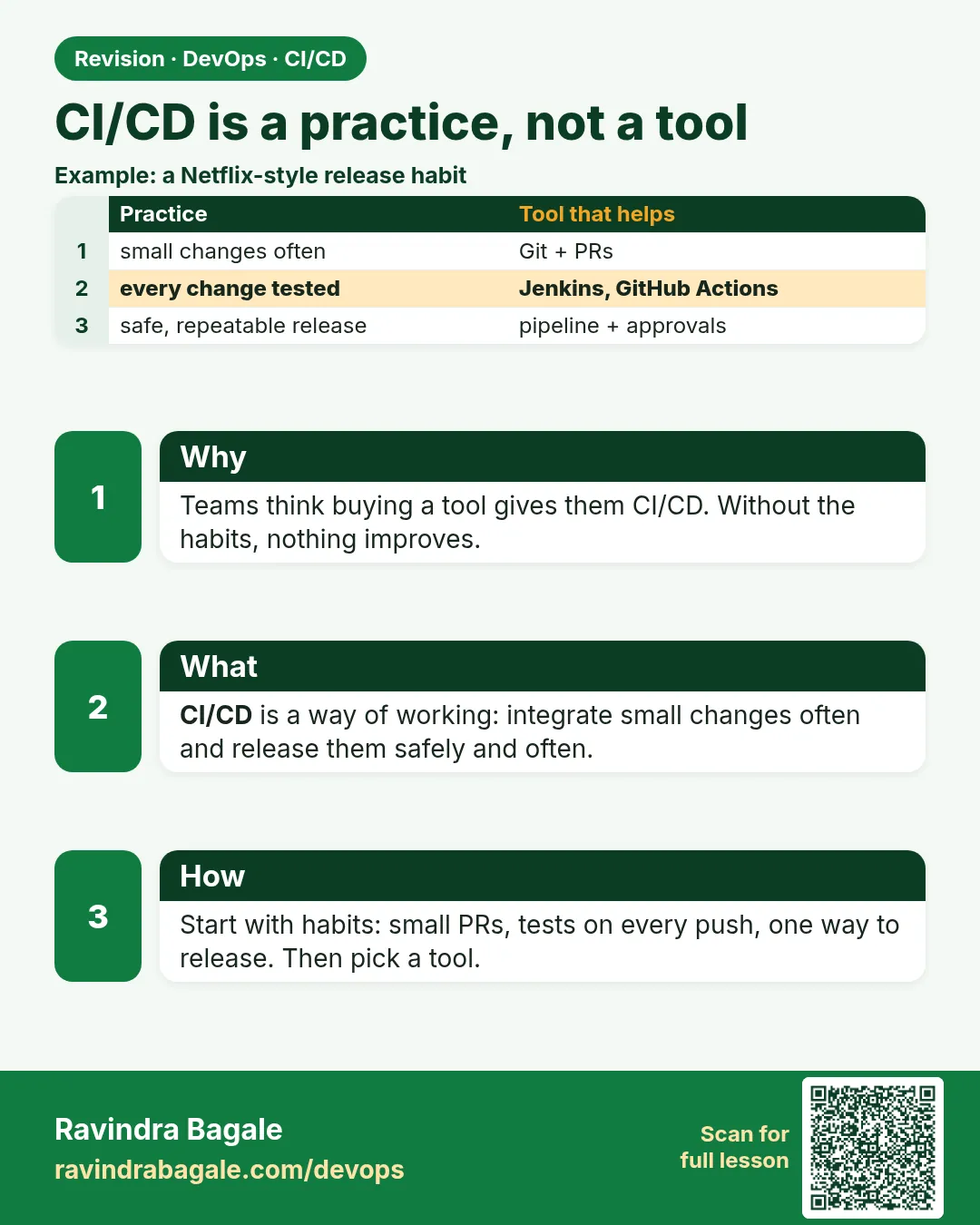 Revision card 1 of 14: CI/CD is a practice, not a tool · Download PNG · Open card page
Lesson: 8.0 A Netflix-style release — CI/CD is the practice, Jenkins is a tool
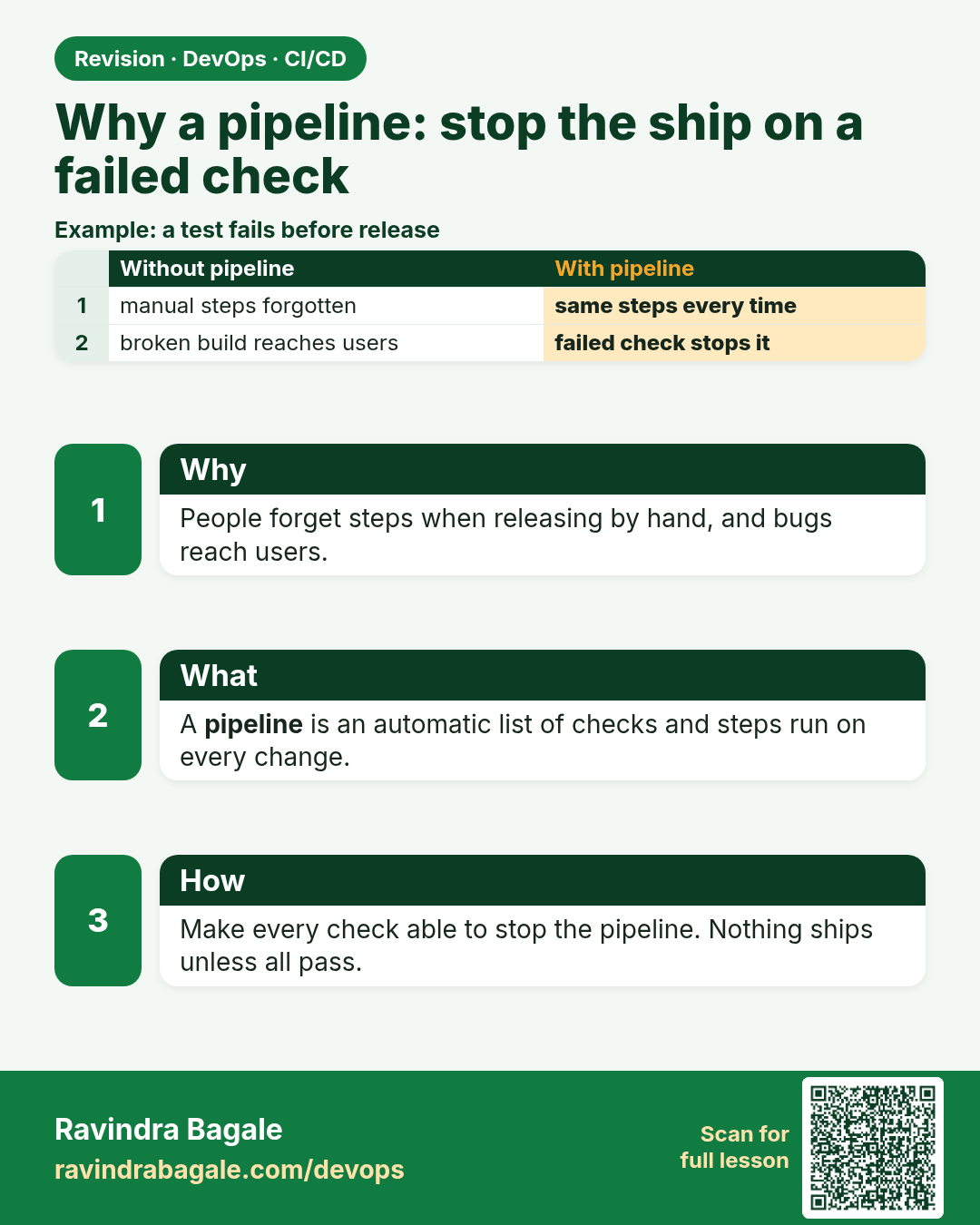
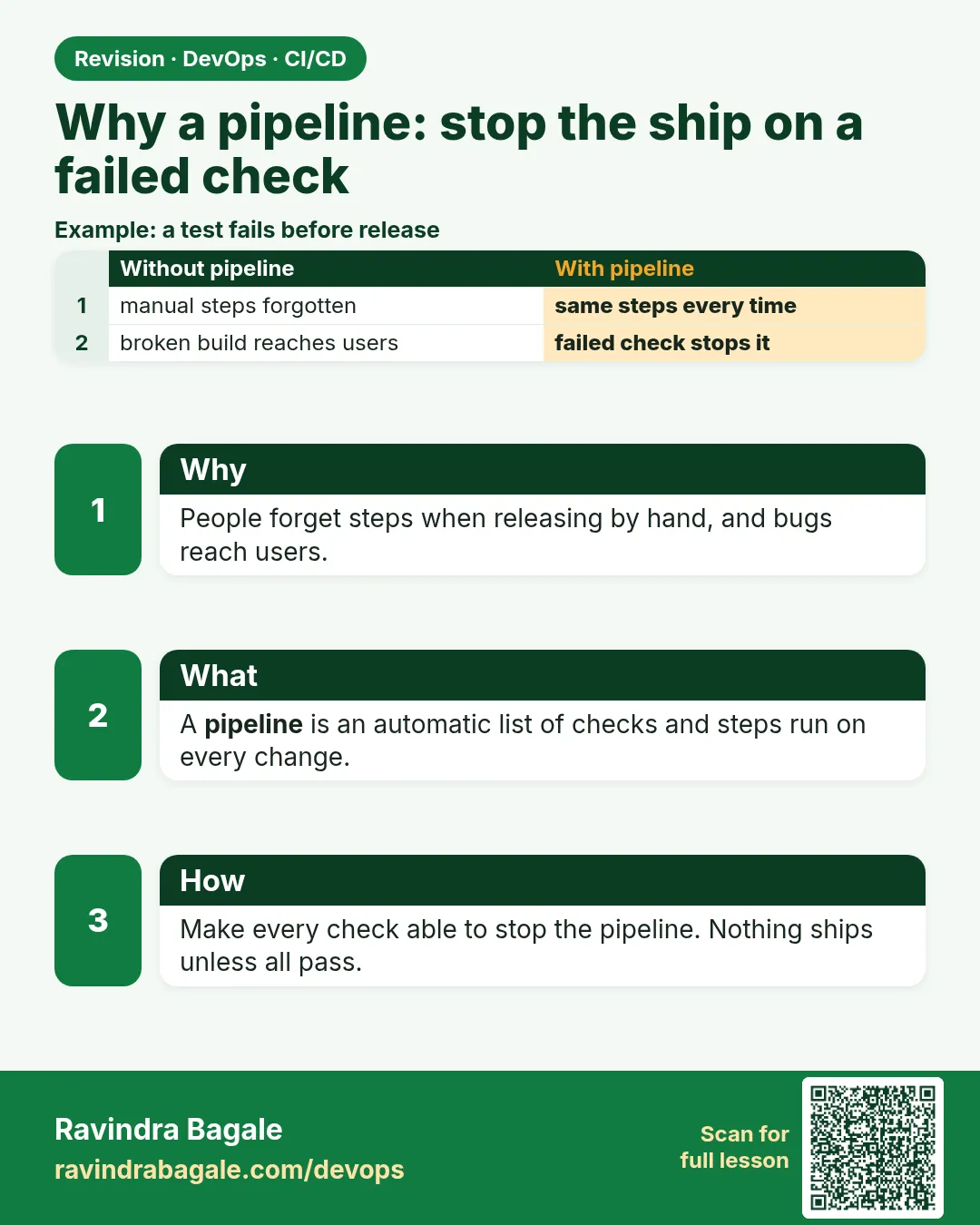 Revision card 2 of 14: Why a pipeline: stop the ship on a failed check · Download PNG · Open card page
Lesson: 8.1 Why a pipeline — stop the ship on a failed check
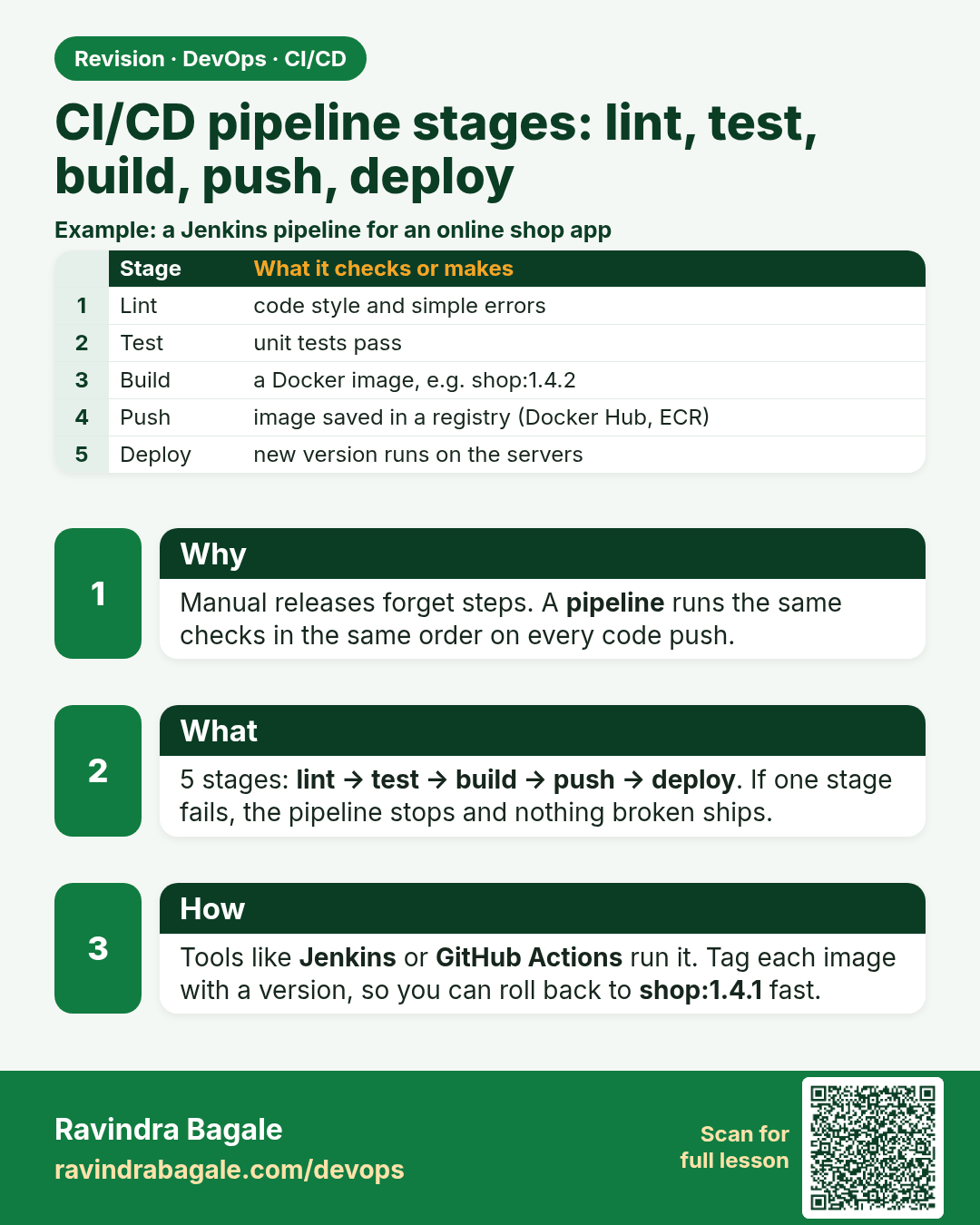
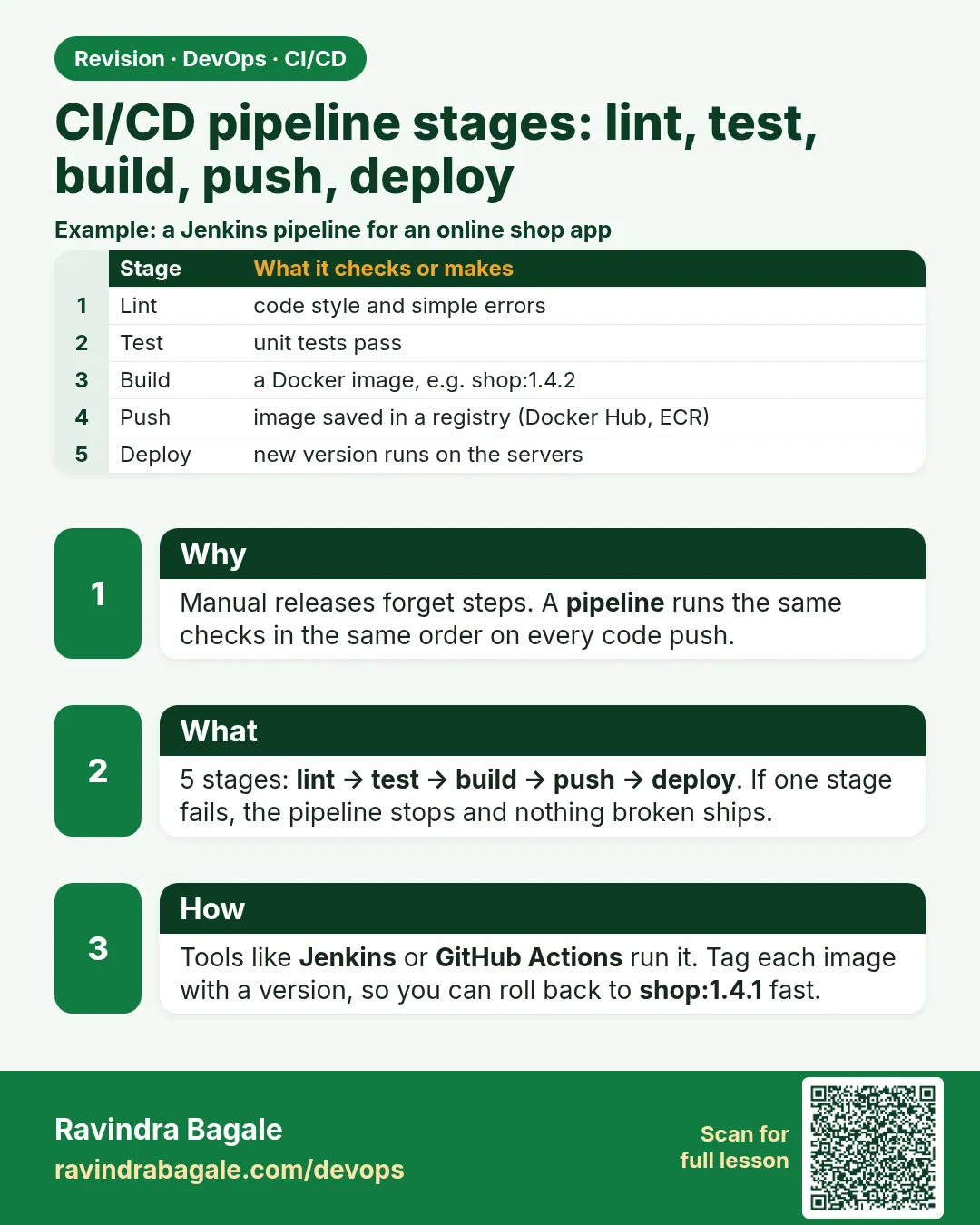 Revision card 3 of 14: CI/CD pipeline stages: lint, test, build, push, deploy · Download PNG · Open card page
Lesson: 8.2 Pipeline stages — lint → test → build → push → deploy
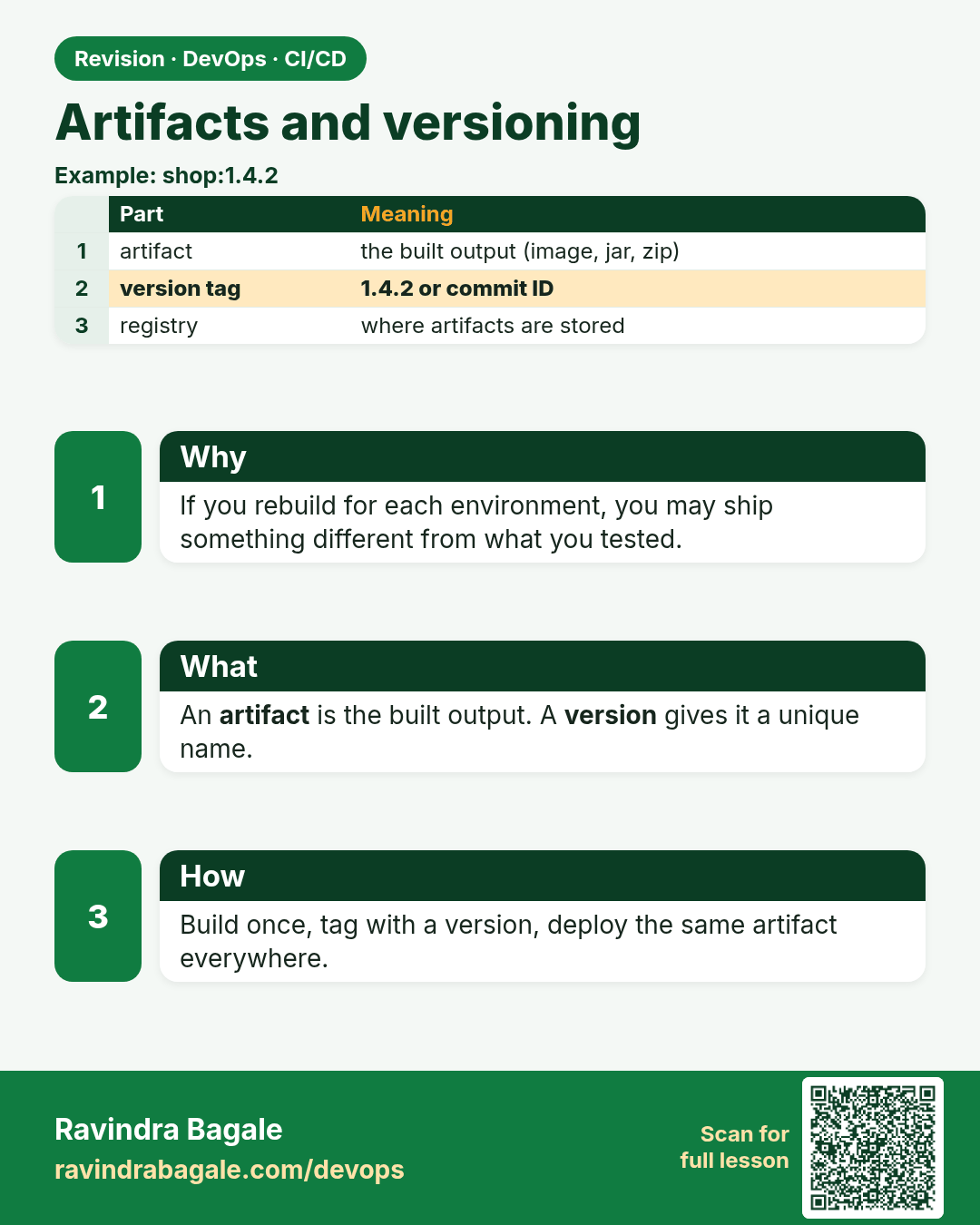
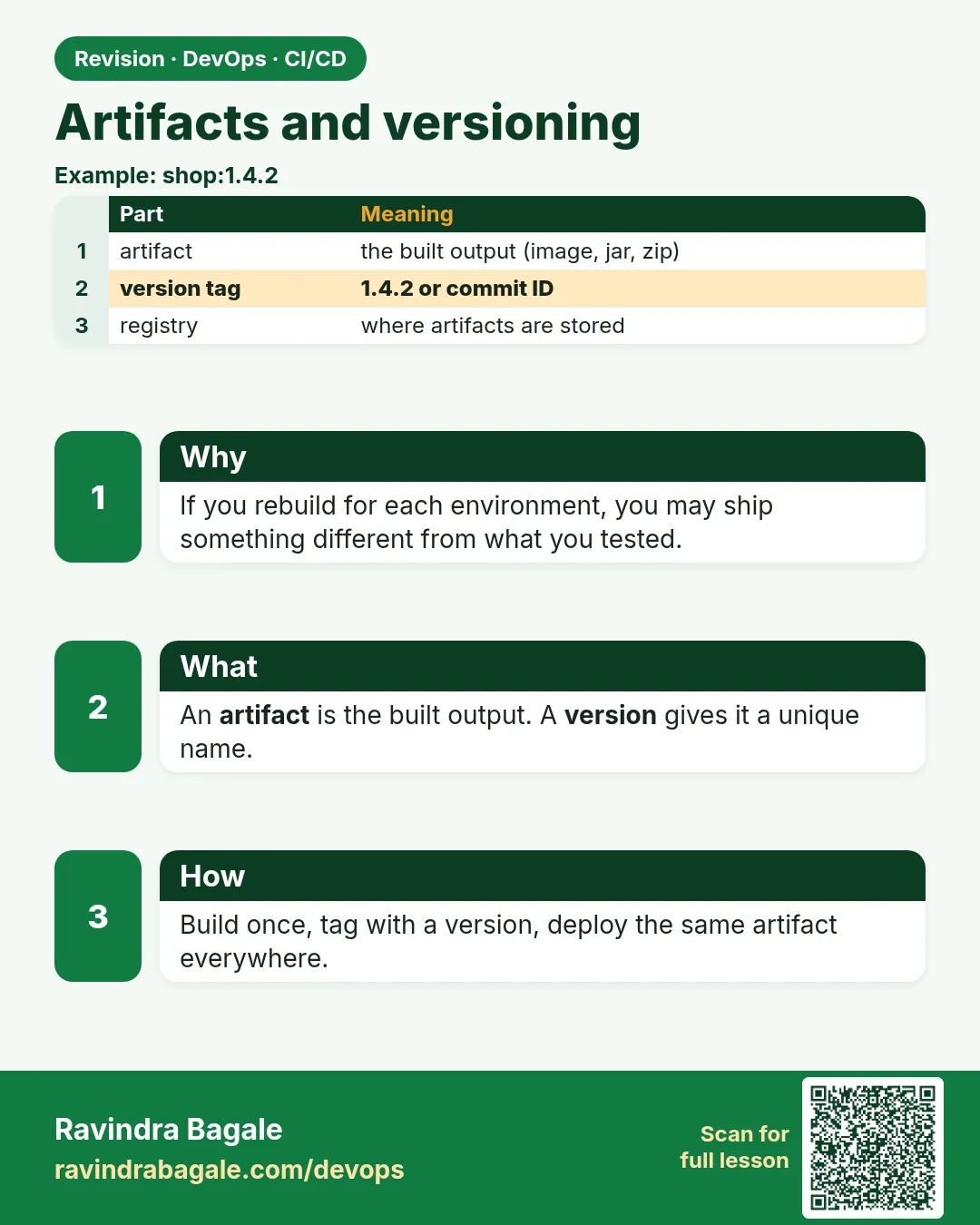 Revision card 4 of 14: Artifacts and versioning · Download PNG · Open card page
Lesson: 8.3 Artifacts and versioning
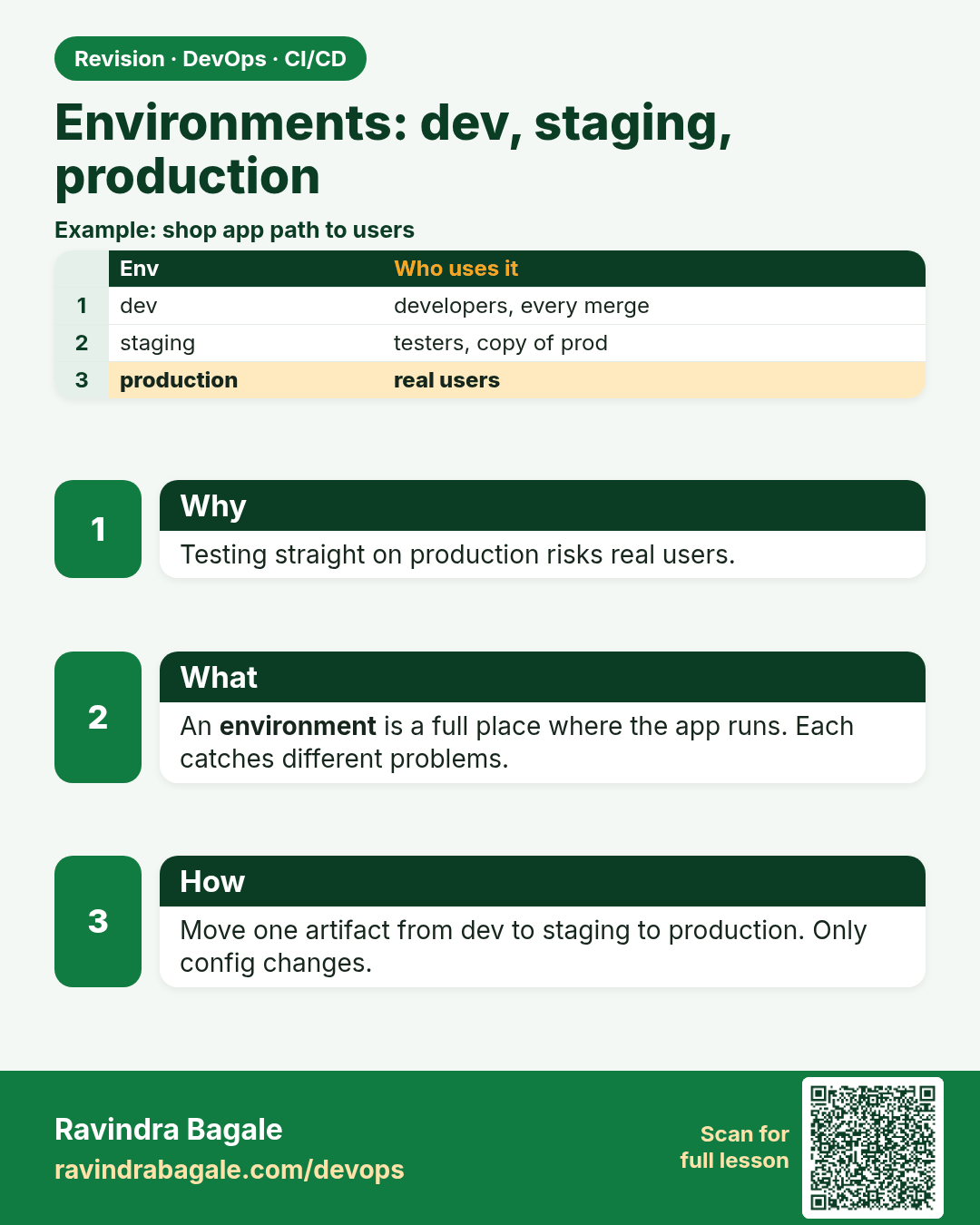
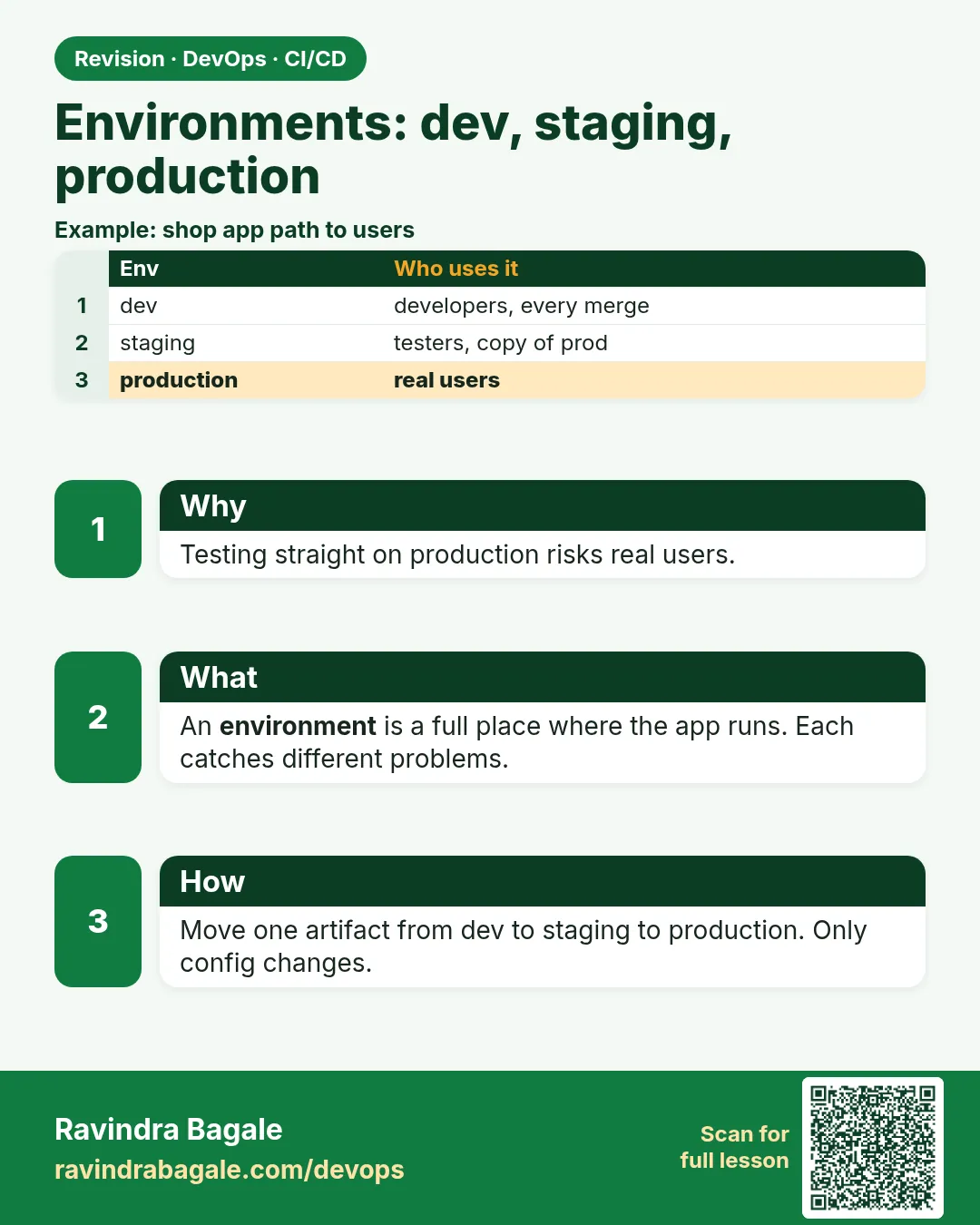 Revision card 5 of 14: Environments: dev, staging, production · Download PNG · Open card page
Lesson: 8.4 Environments — dev, staging, production
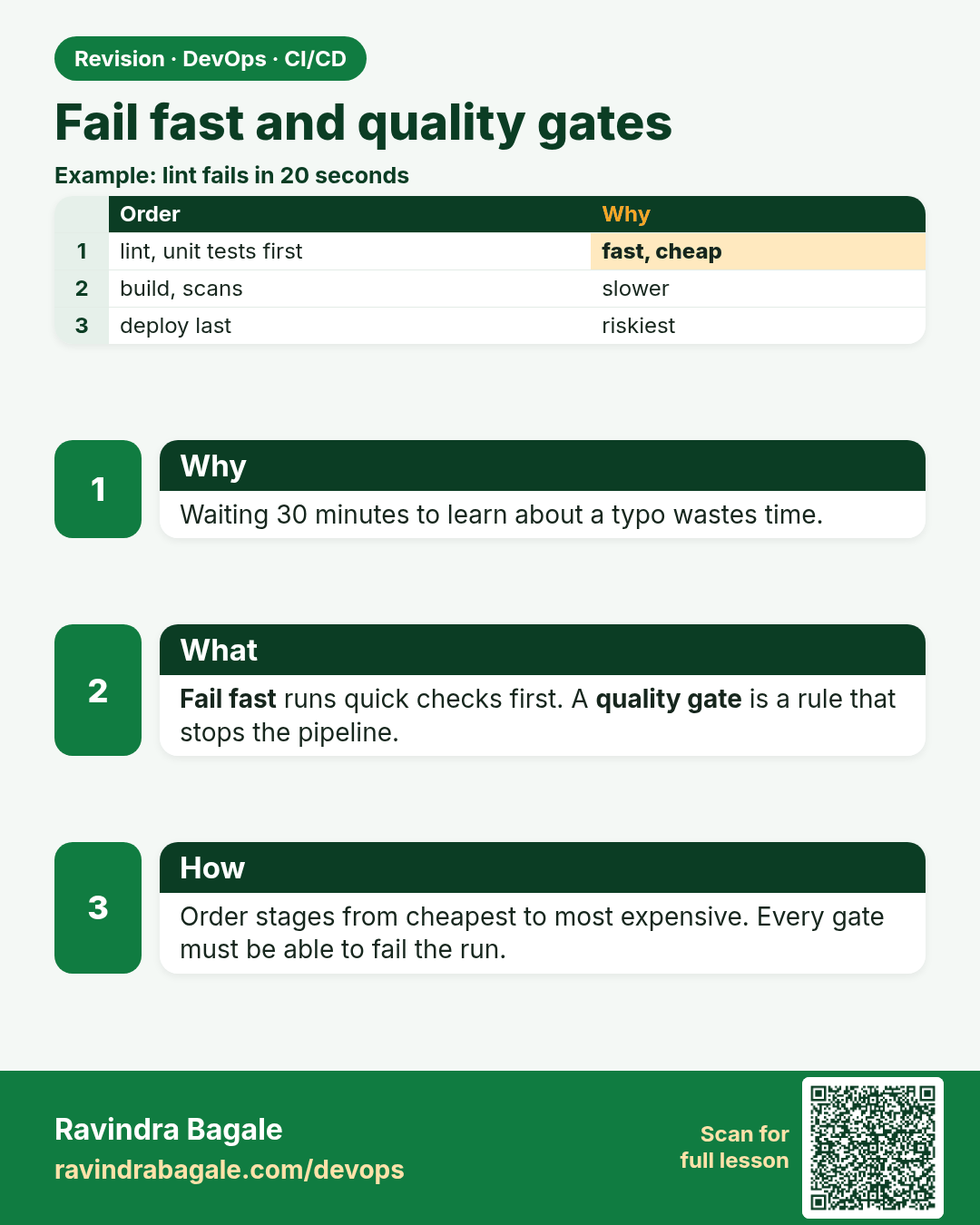
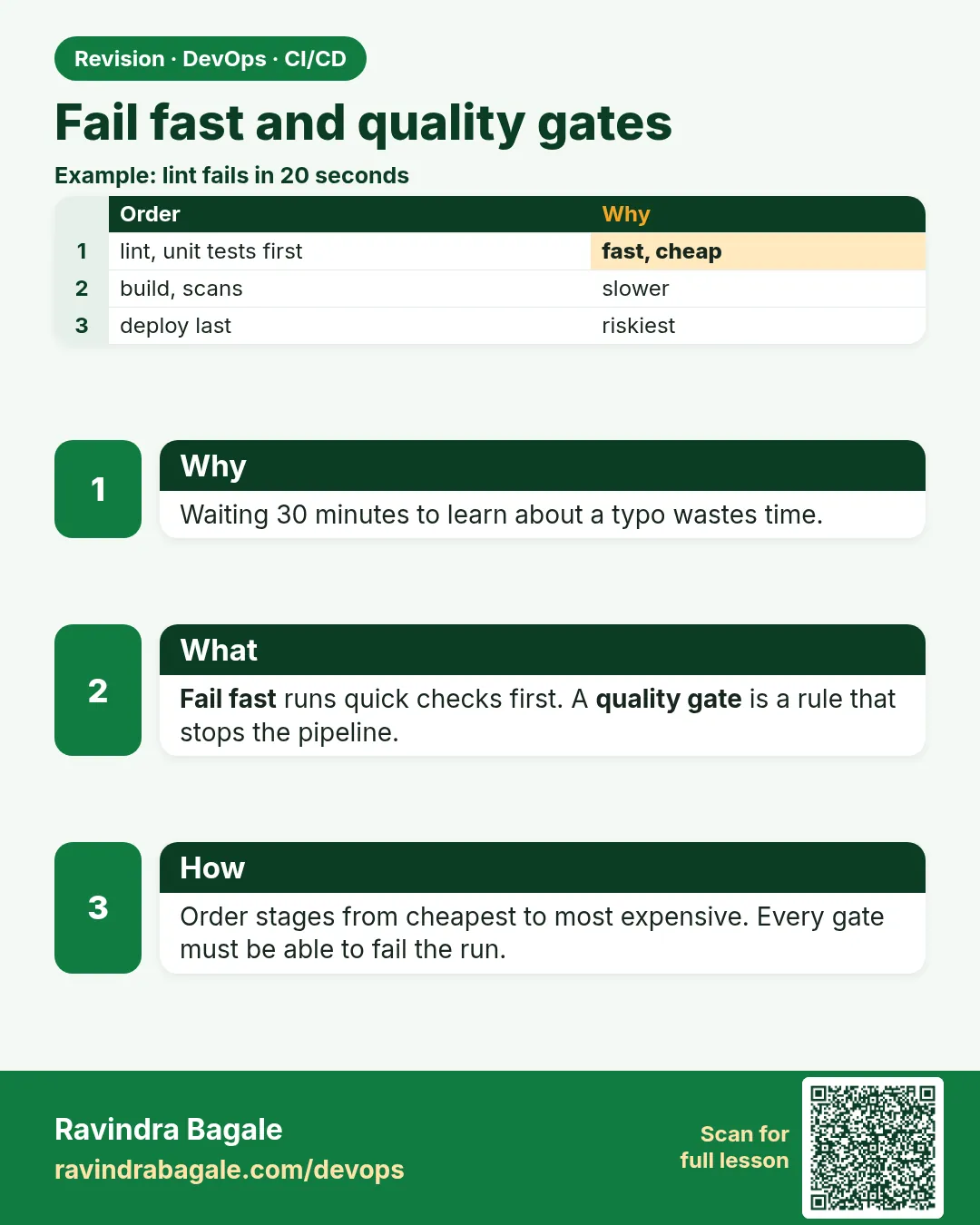 Revision card 6 of 14: Fail fast and quality gates · Download PNG · Open card page
Lesson: 8.5 Fail fast and quality gates
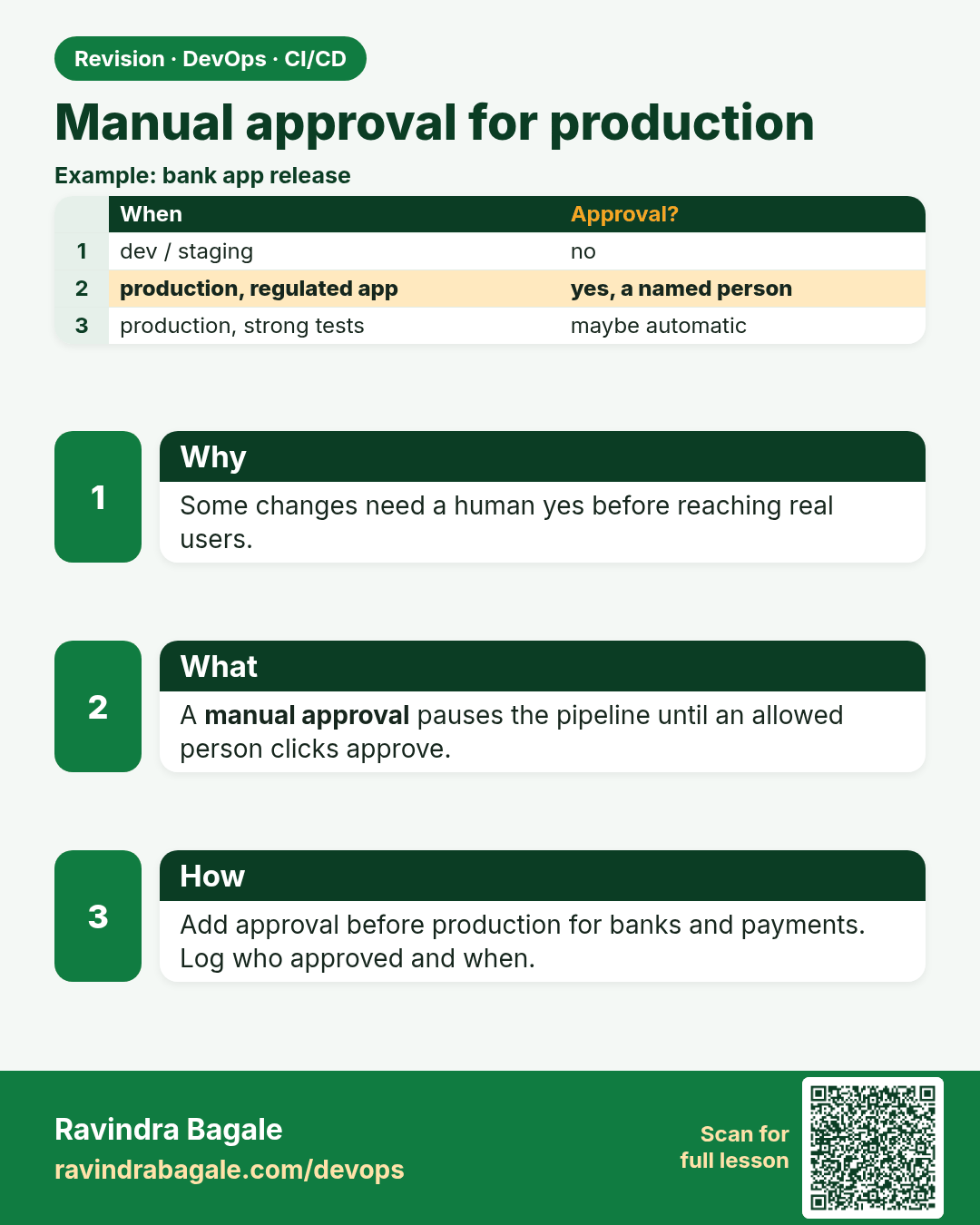
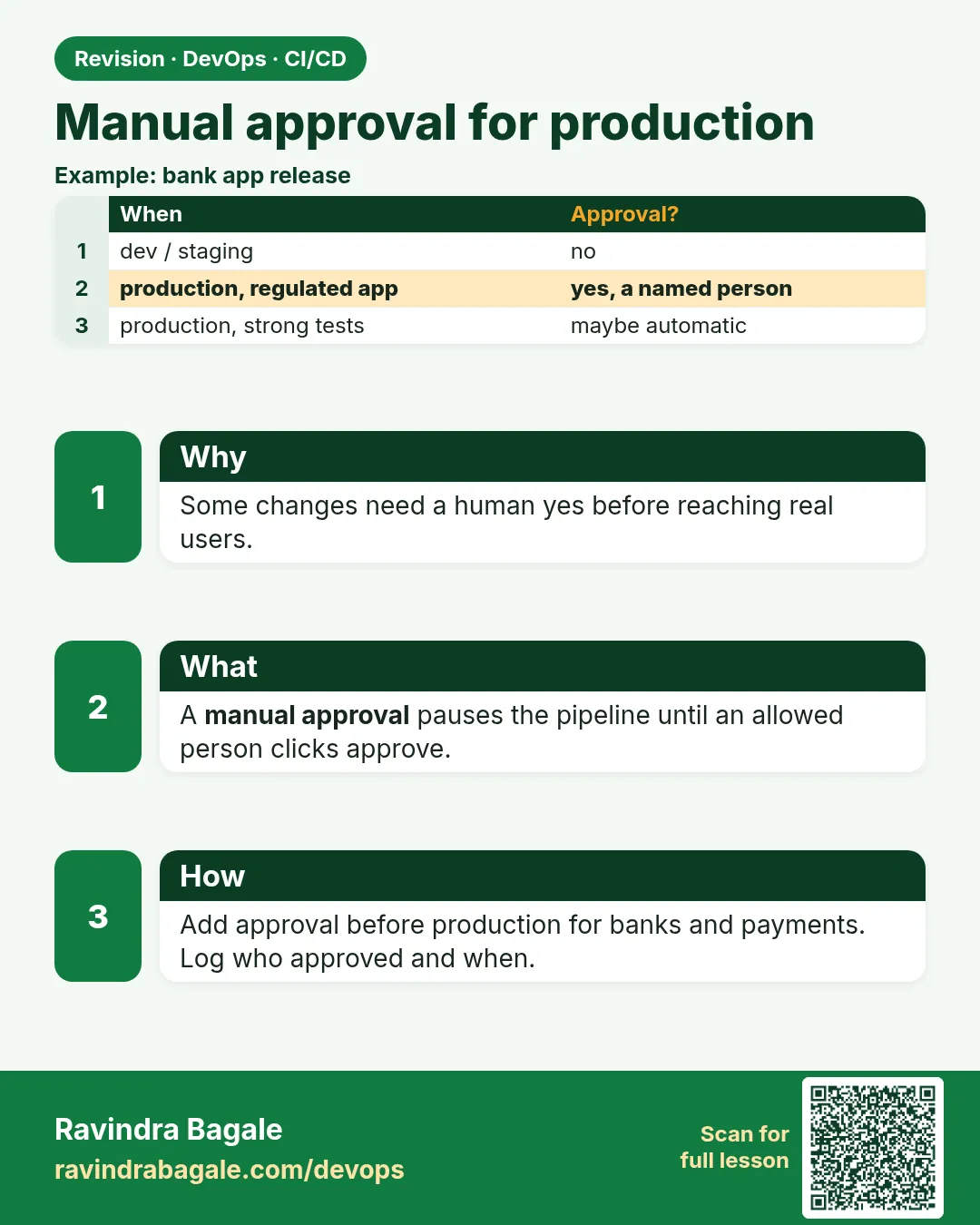 Revision card 7 of 14: Manual approval for production · Download PNG · Open card page
Lesson: 8.6 Manual approval for production — when and why
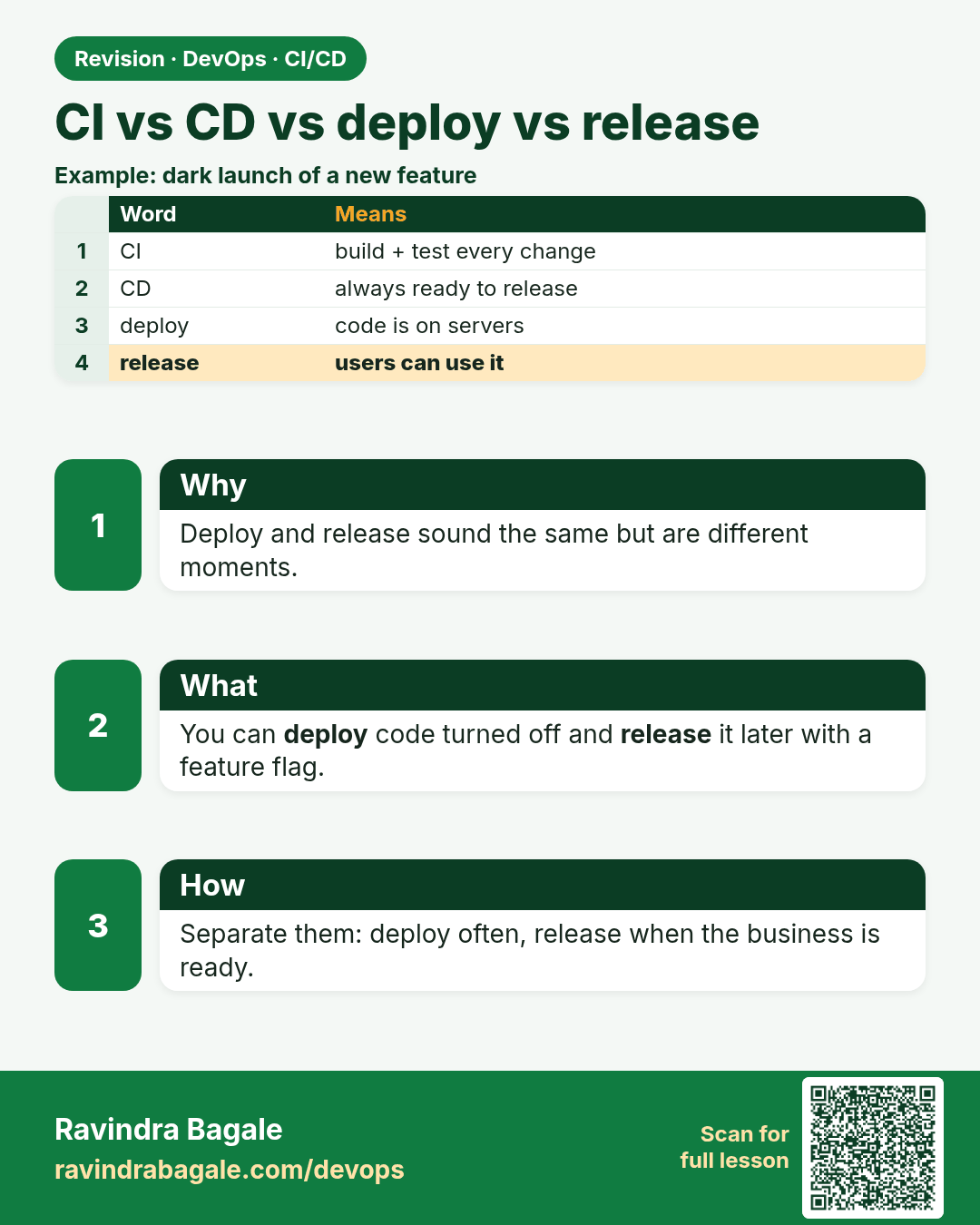
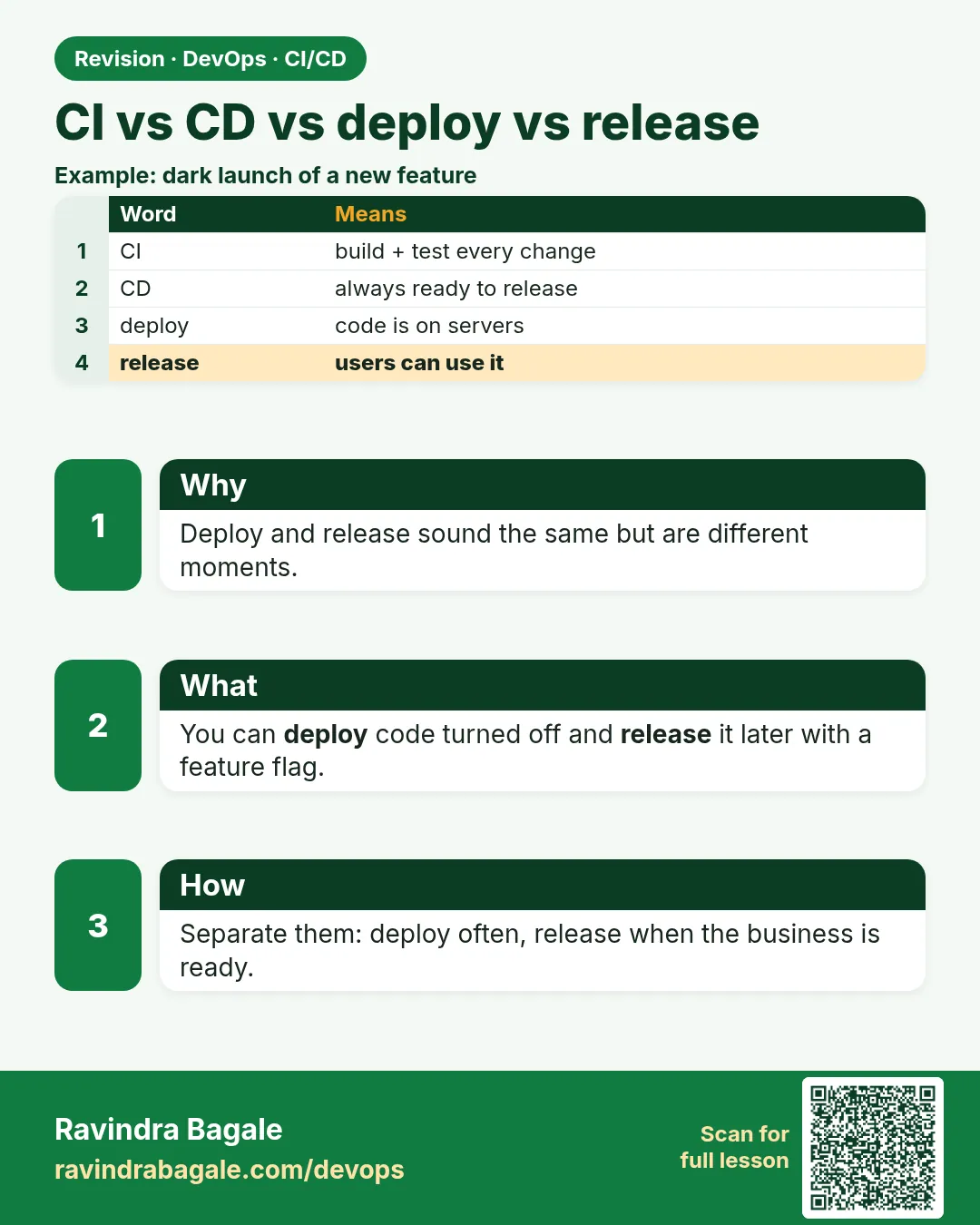 Revision card 8 of 14: CI vs CD vs deploy vs release · Download PNG · Open card page
Lesson: 8.7 CI vs CD vs deploy vs release (refresh)
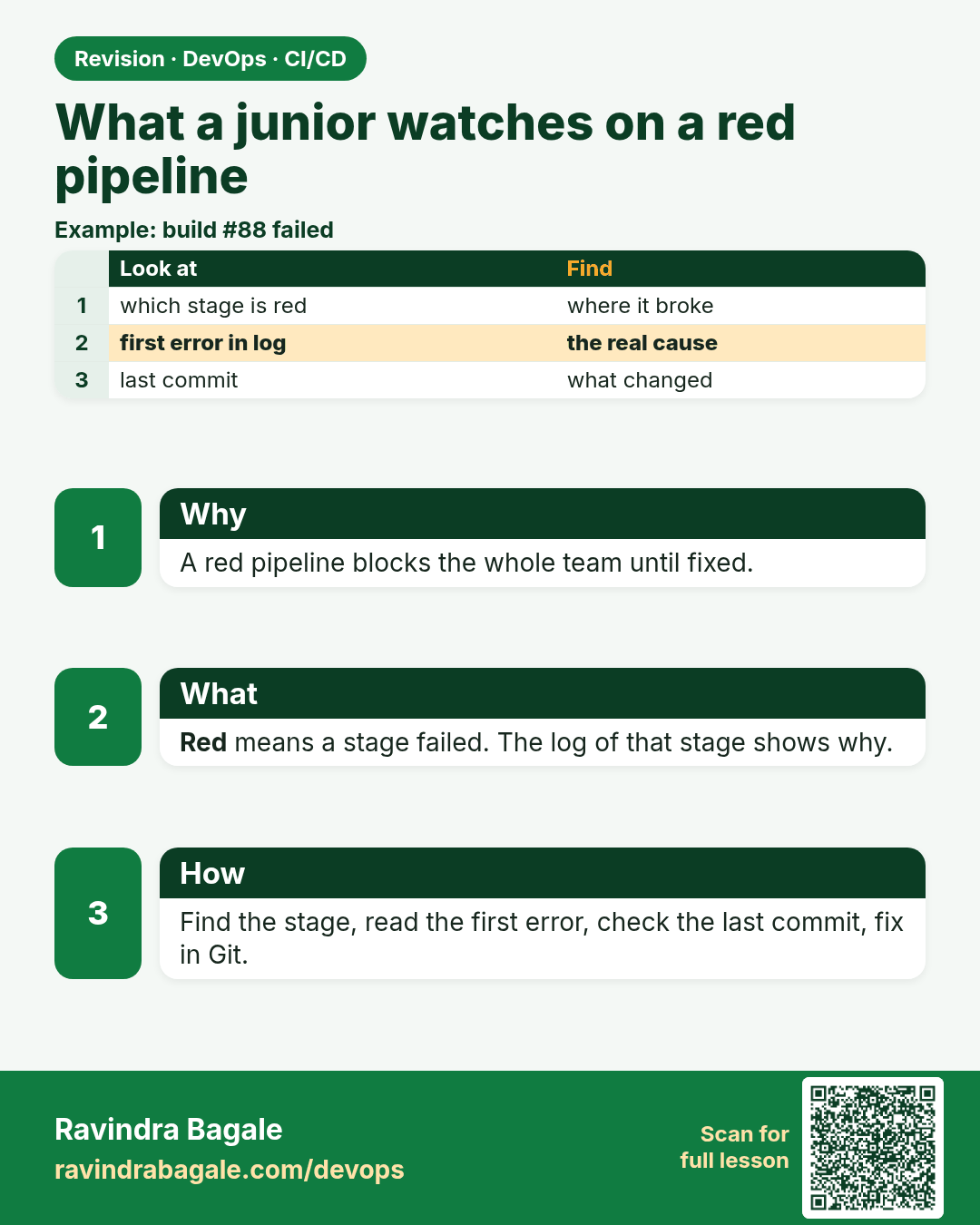
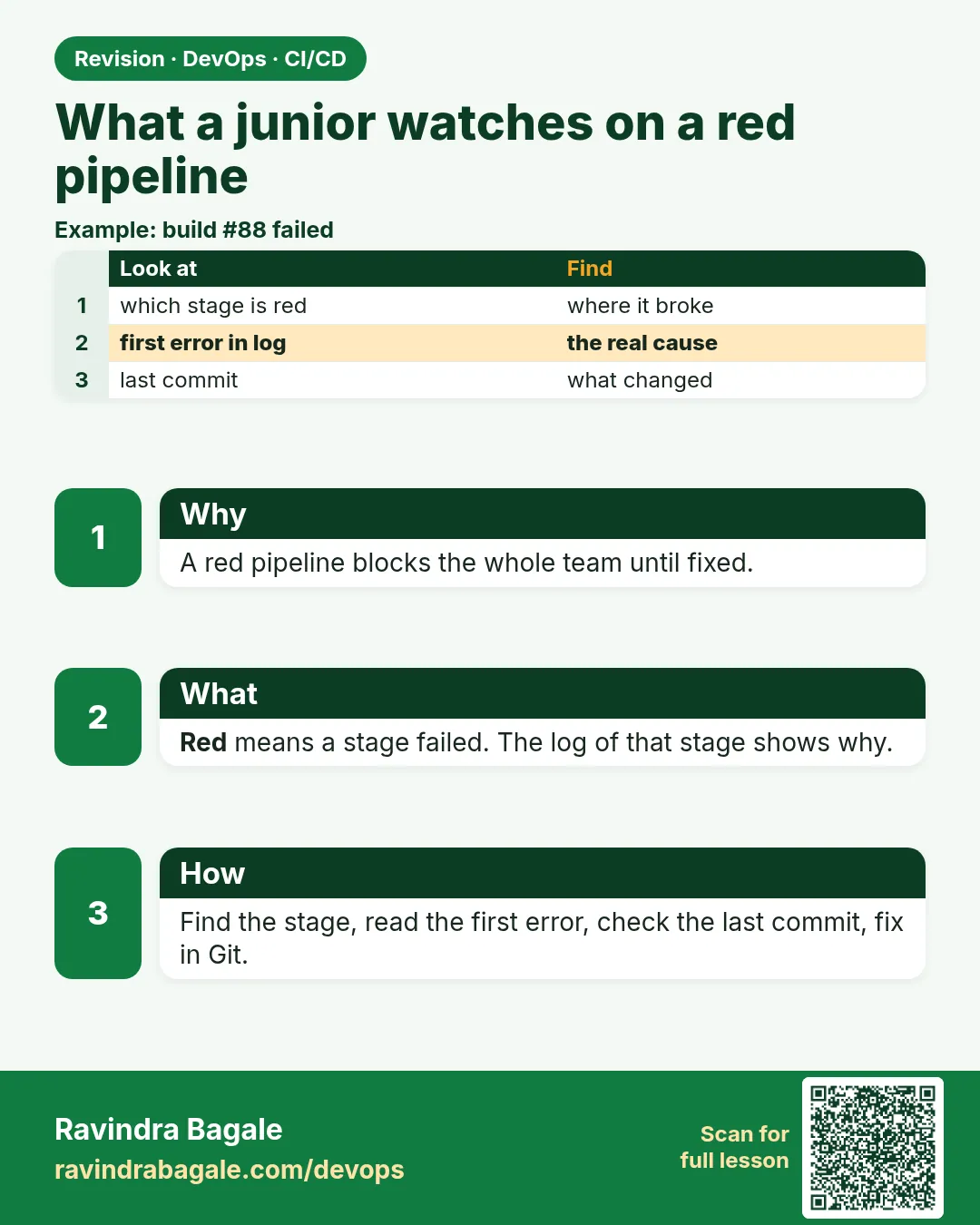 Revision card 9 of 14: What a junior watches on a red pipeline · Download PNG · Open card page
Lesson: 8.8 What a junior watches on a red pipeline
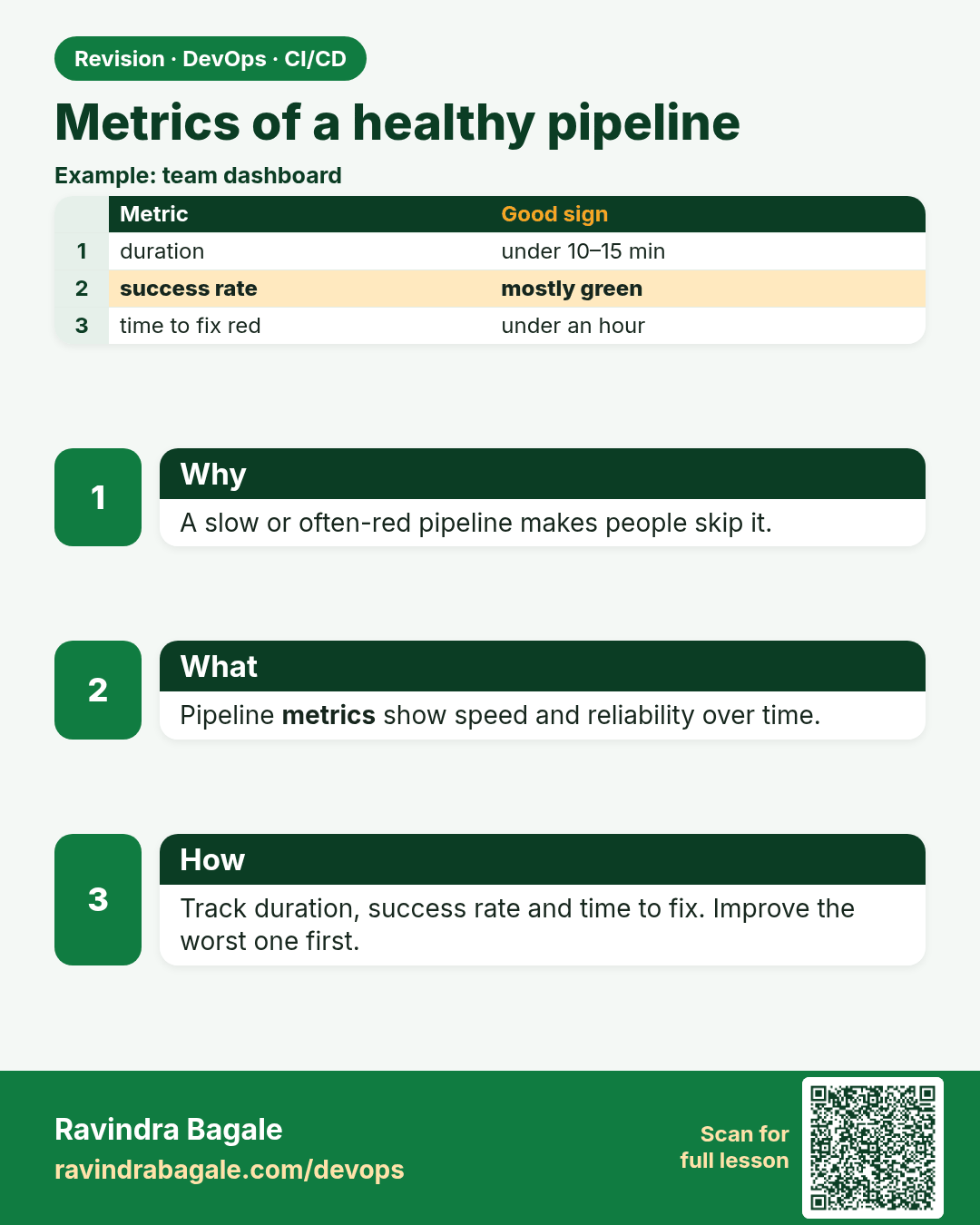
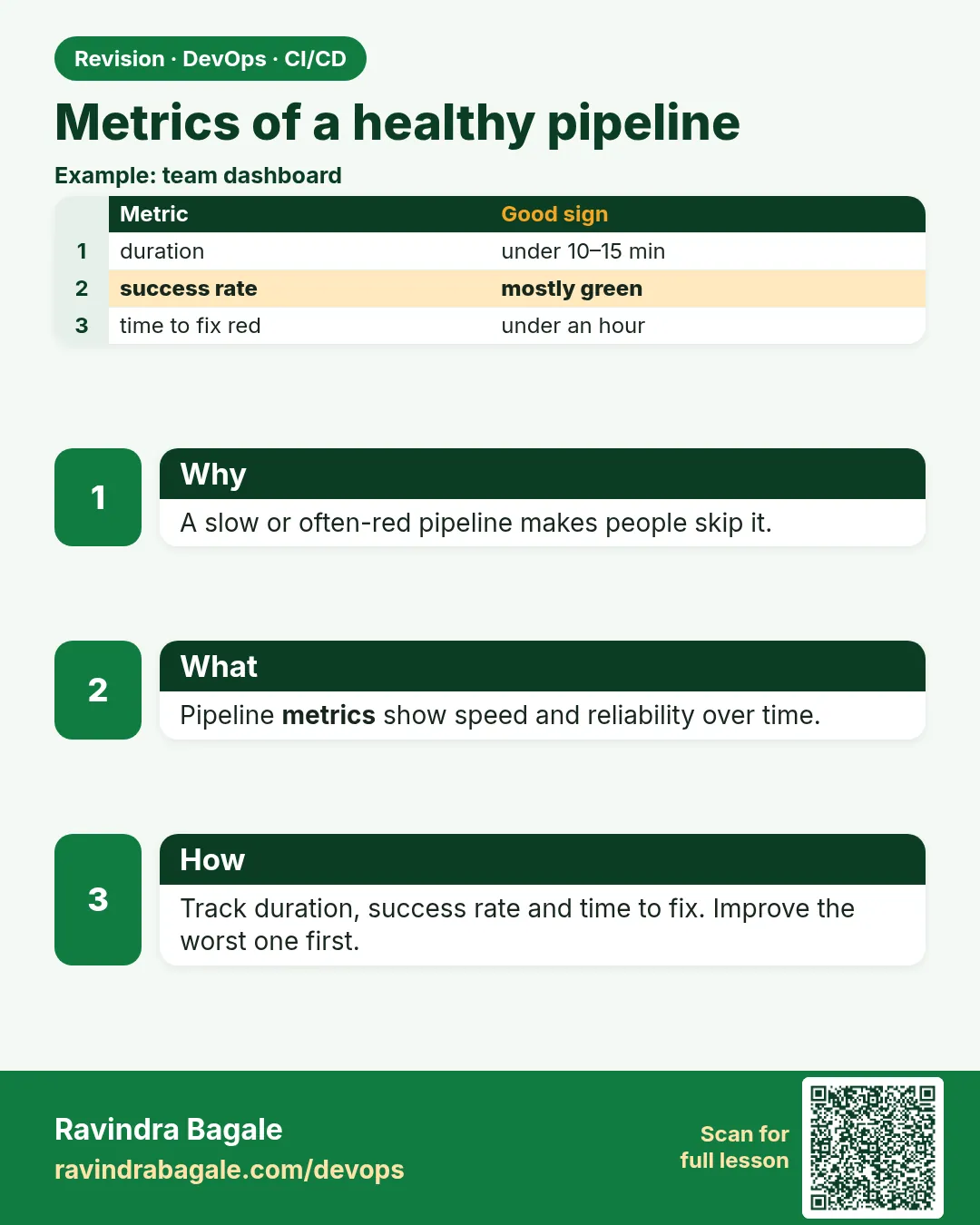 Revision card 10 of 14: Metrics of a healthy pipeline · Download PNG · Open card page
Lesson: 8.8b Metrics of a healthy pipeline (plain English)
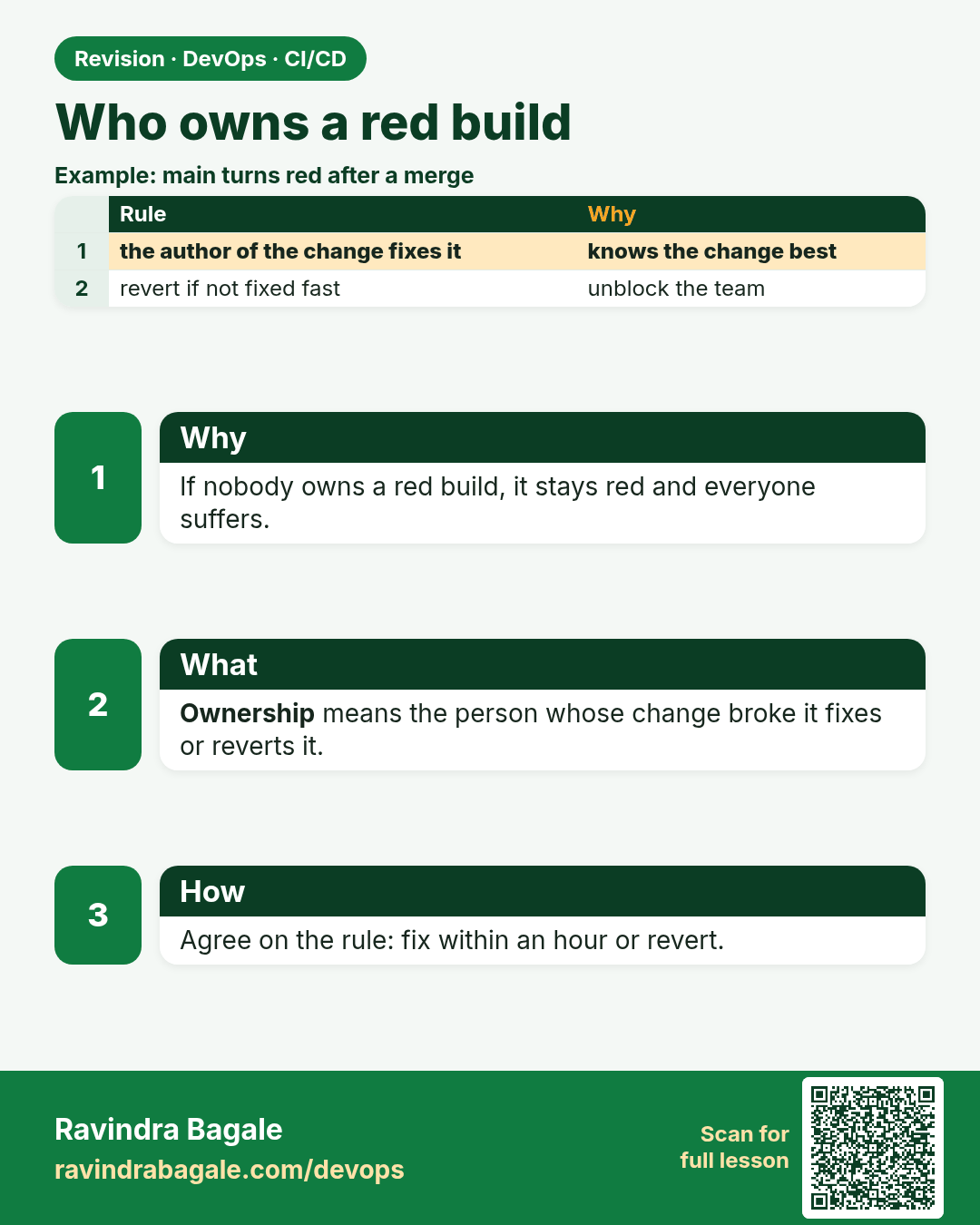
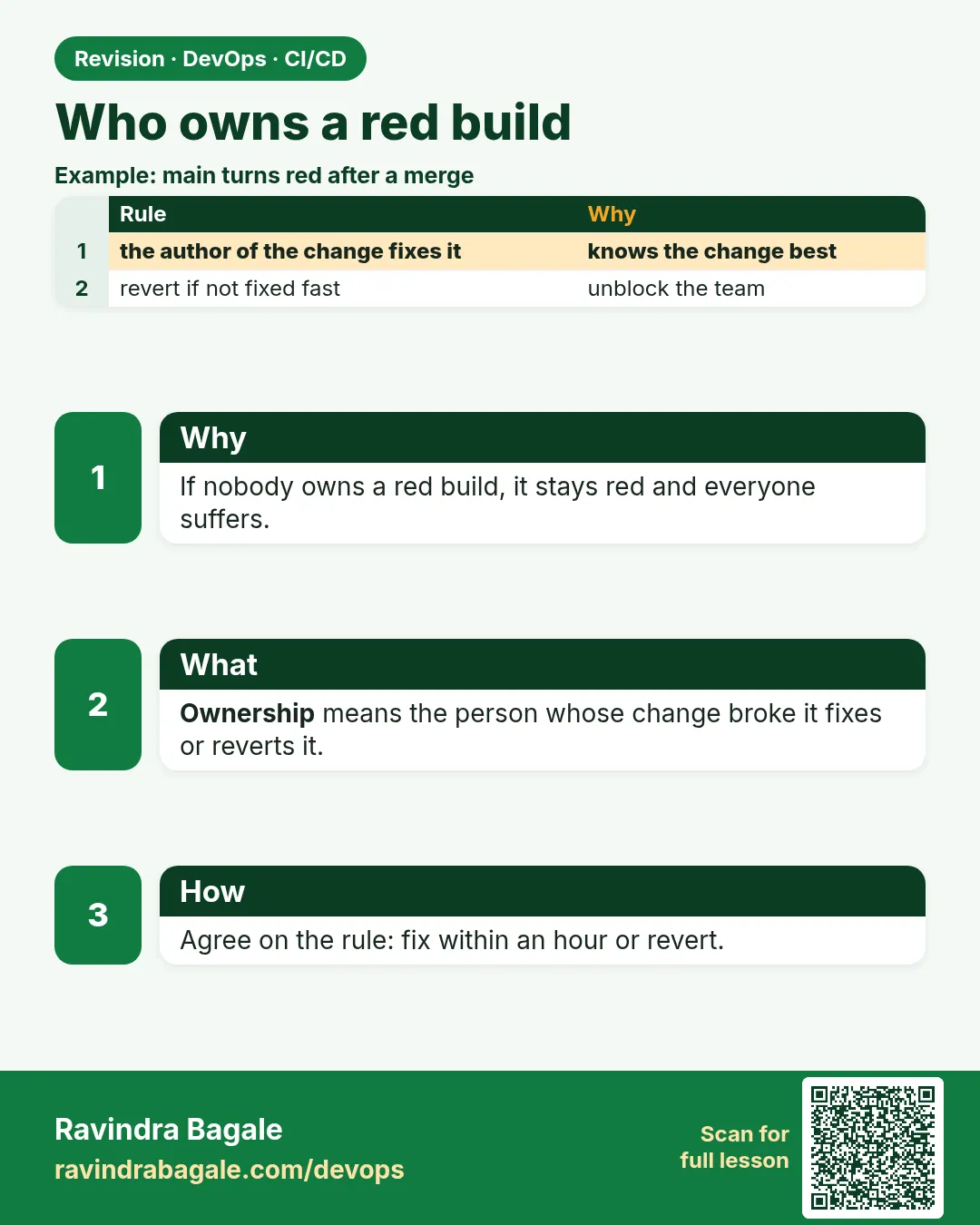 Revision card 11 of 14: Who owns a red build · Download PNG · Open card page
Lesson: 8.8c Who owns a red build?
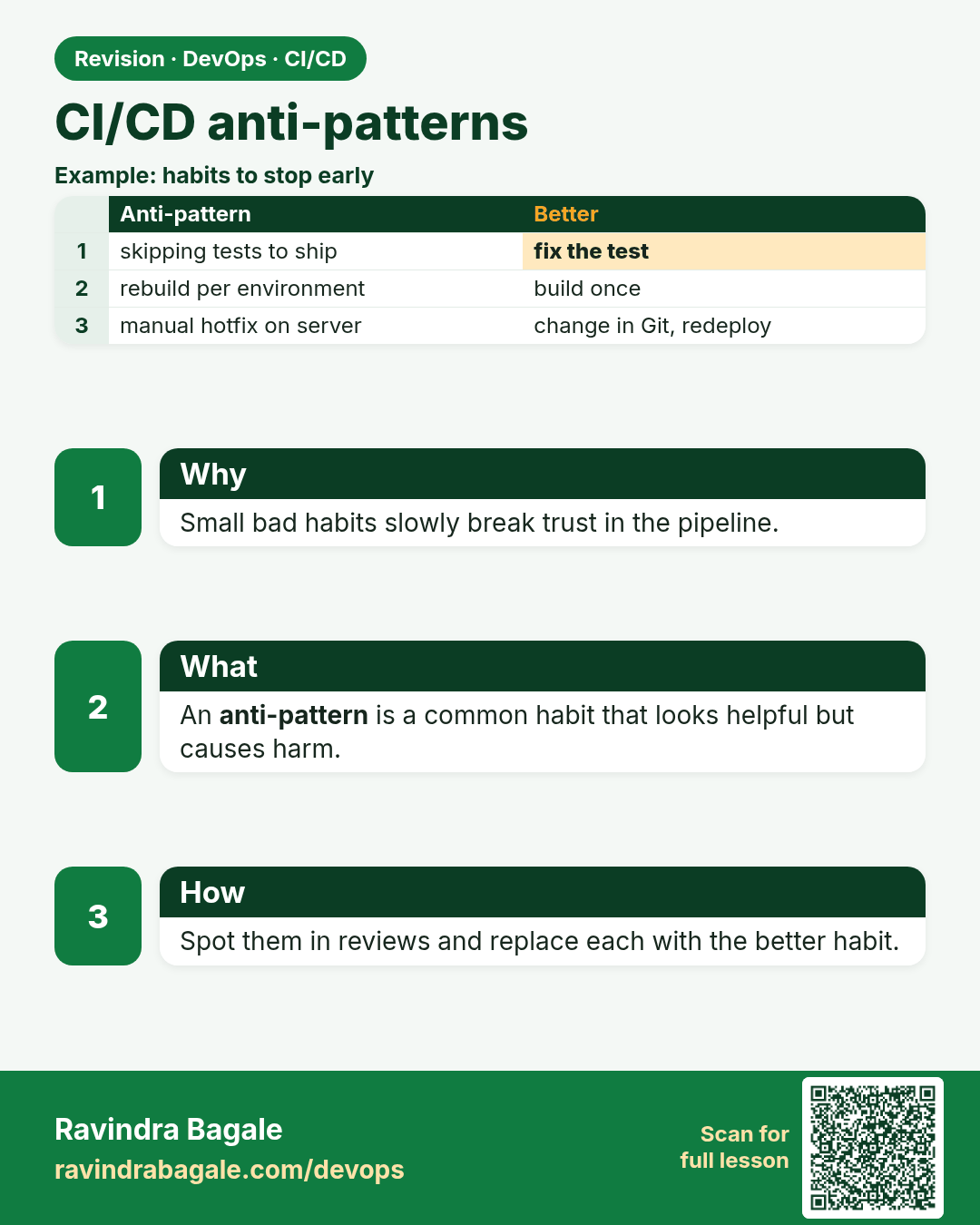
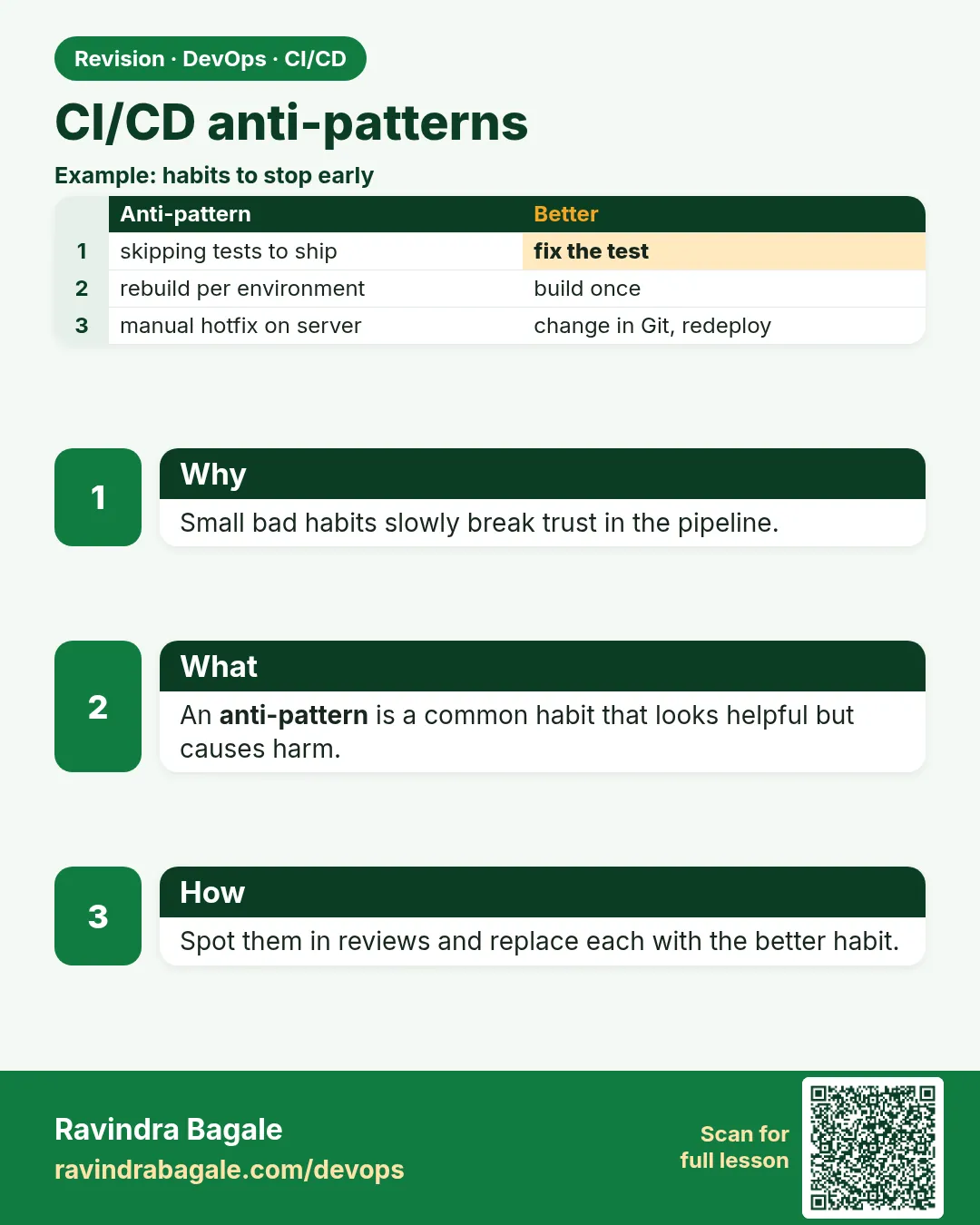 Revision card 12 of 14: CI/CD anti-patterns · Download PNG · Open card page
Lesson: 8.9 Anti-patterns (spot them early)
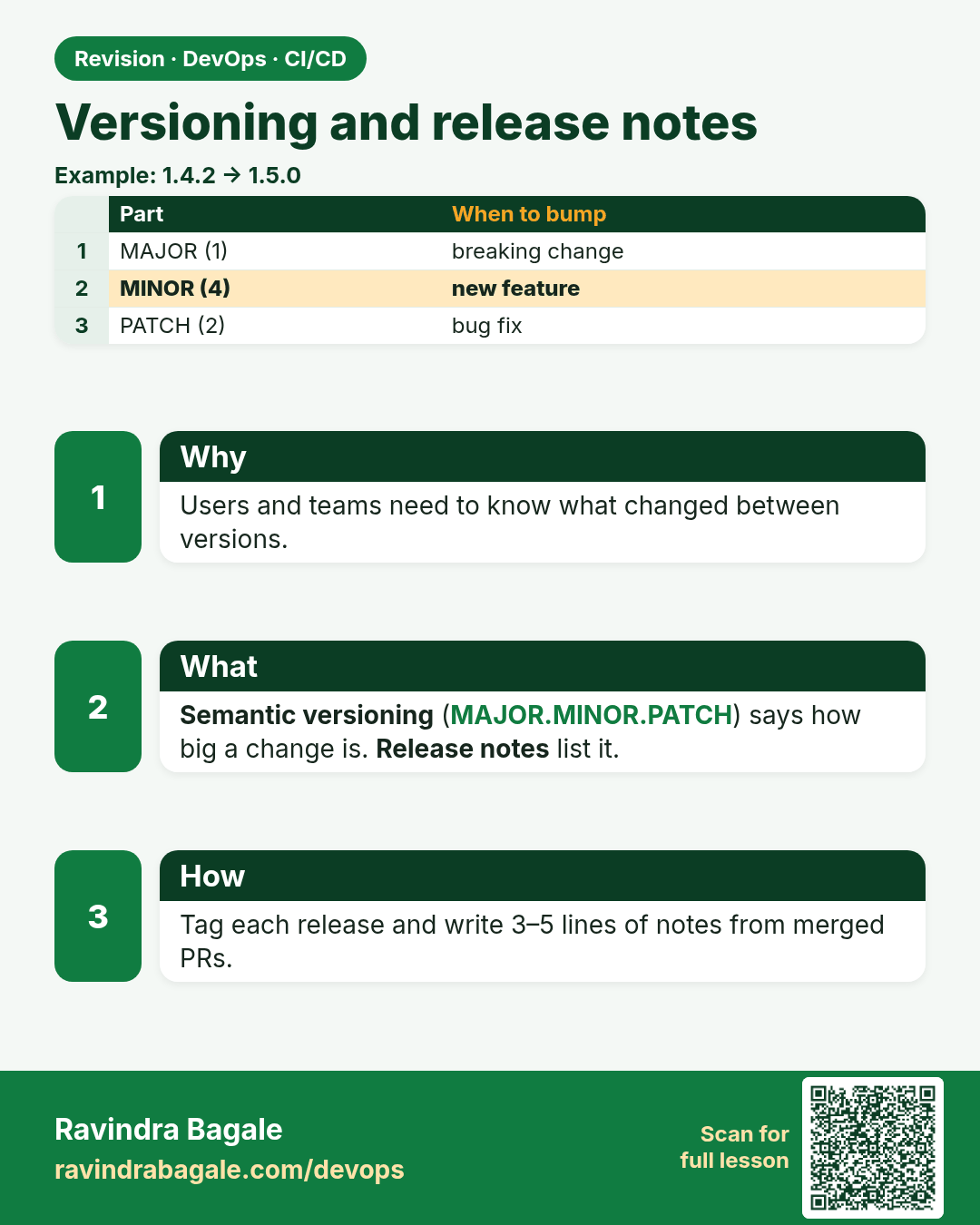
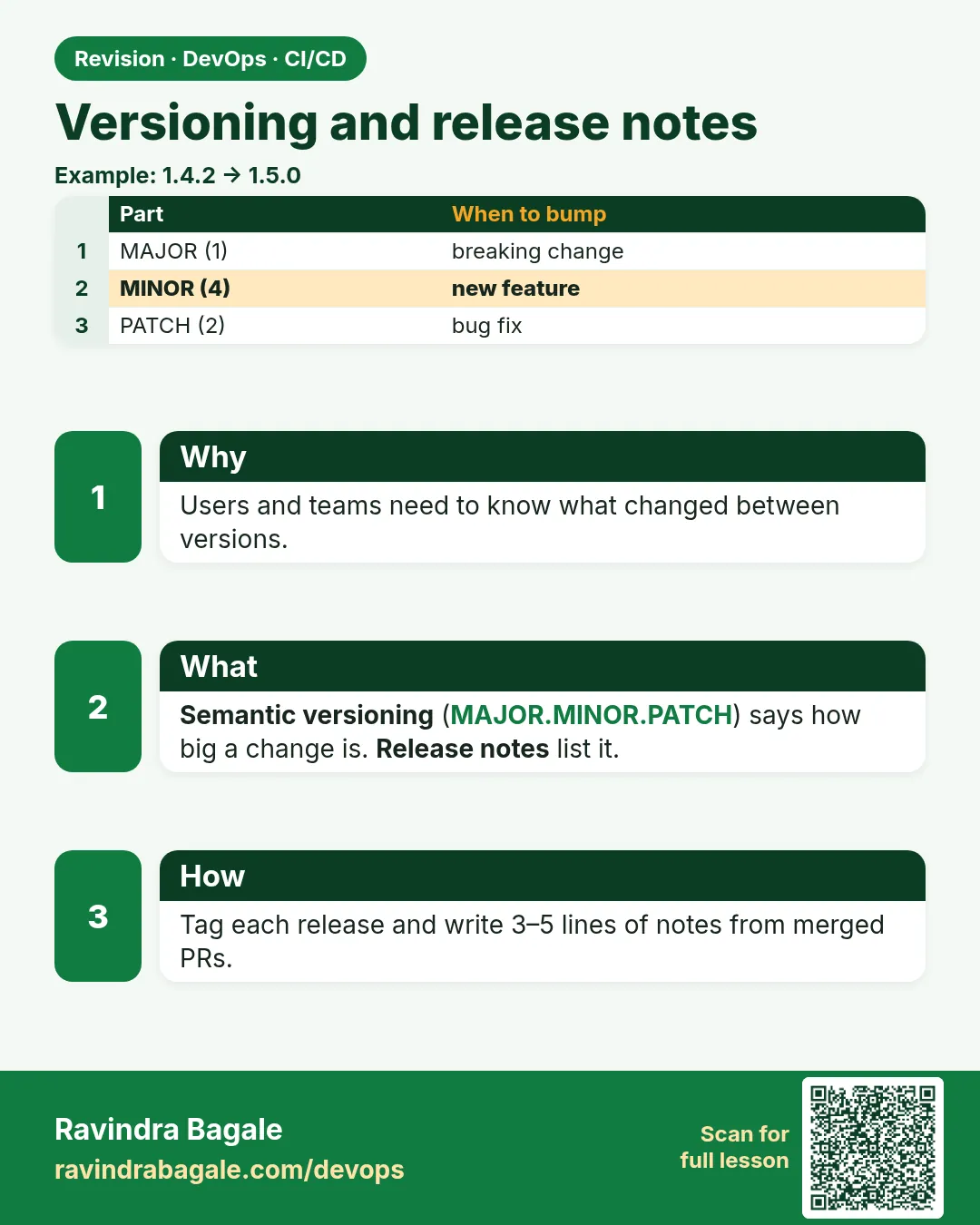 Revision card 13 of 14: Versioning and release notes · Download PNG · Open card page
Lesson: 8.10 Versioning and release notes (lightweight)
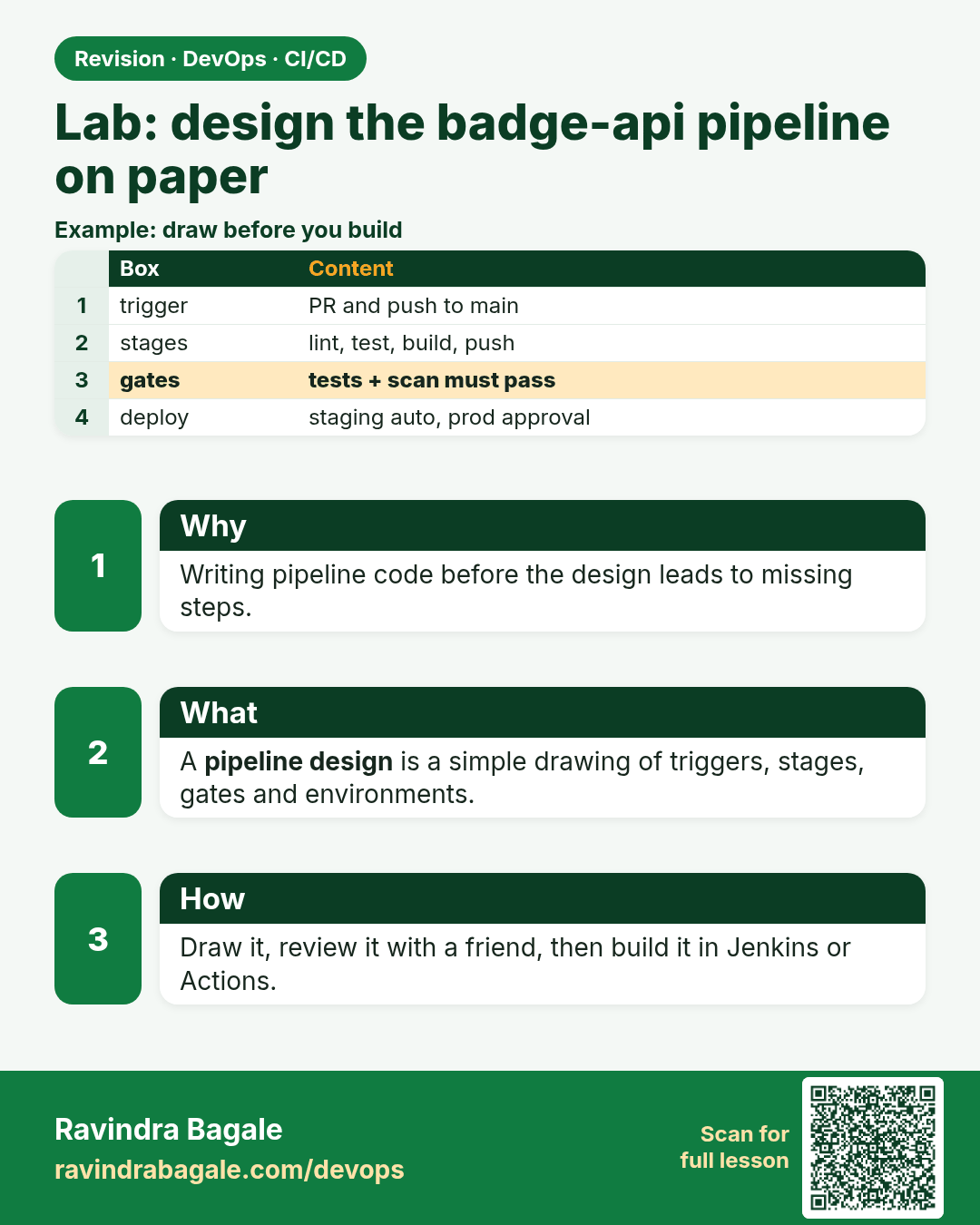
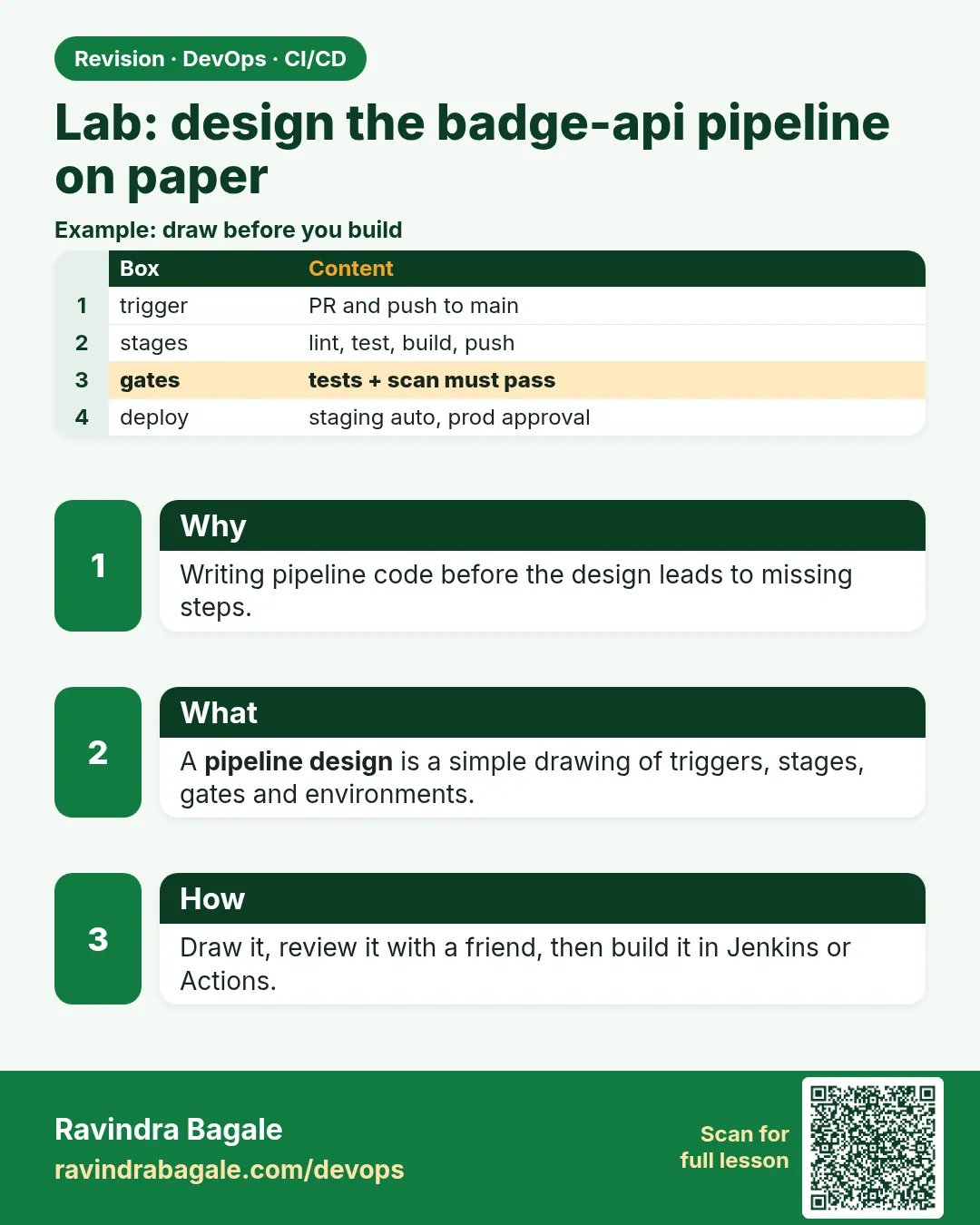 Revision card 14 of 14: Lab: design the badge-api pipeline on paper · Download PNG · Open card page
Lesson: 8.11 Lab — design badge API pipeline on paper
Interview cards
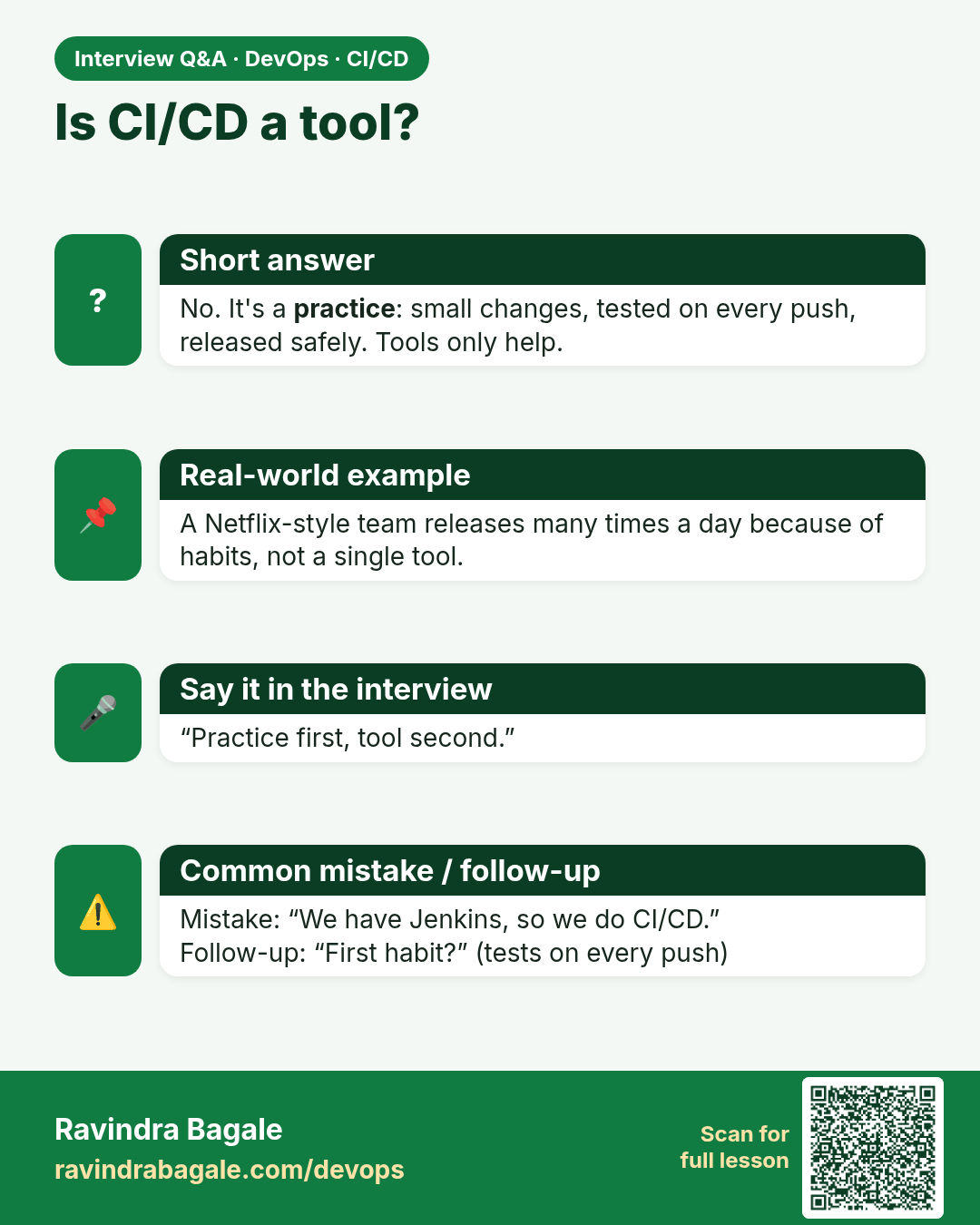
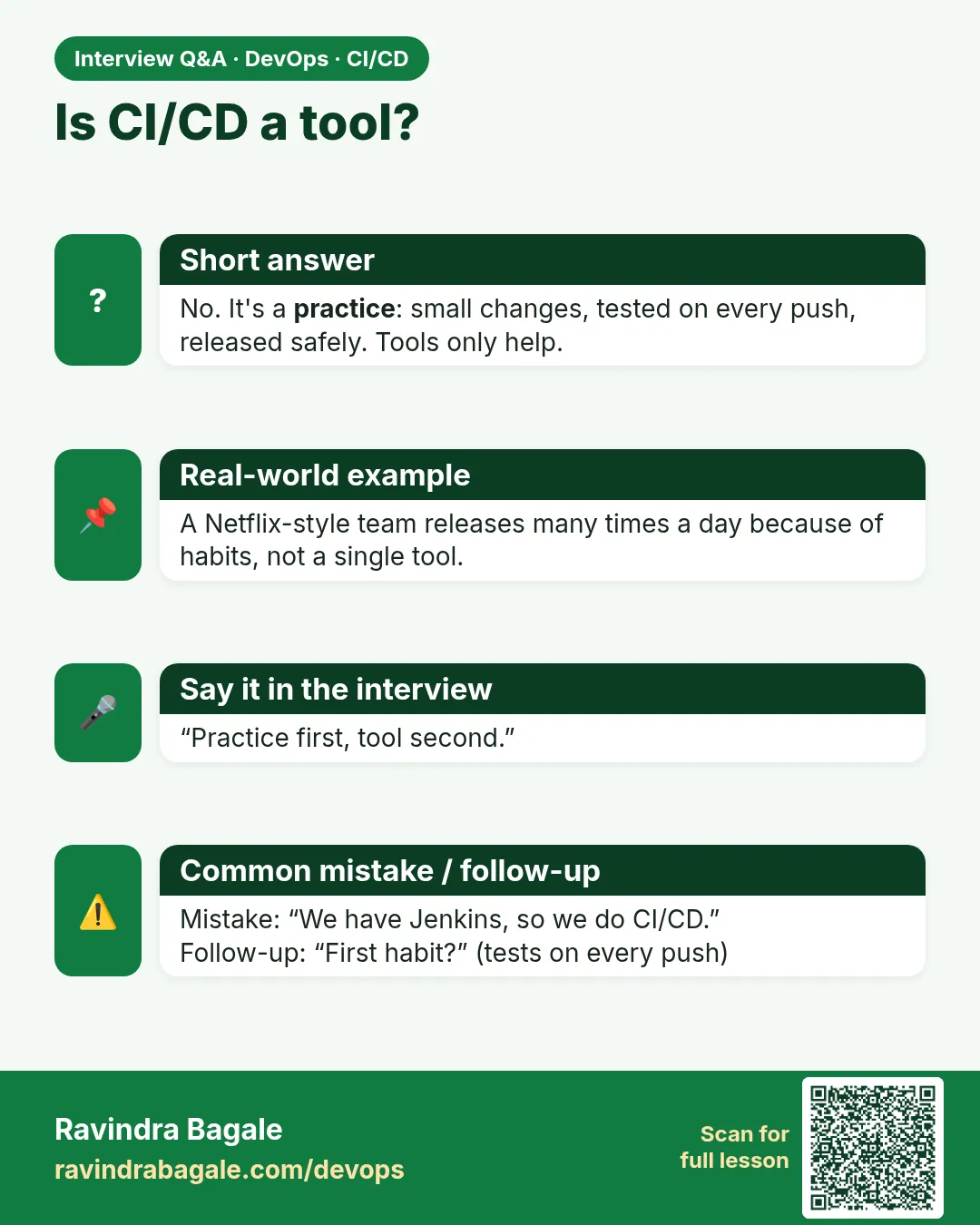 Interview card 1 of 14: Is CI/CD a tool? · Download PNG · Open card page
Lesson: 8.0 A Netflix-style release — CI/CD is the practice, Jenkins is a tool
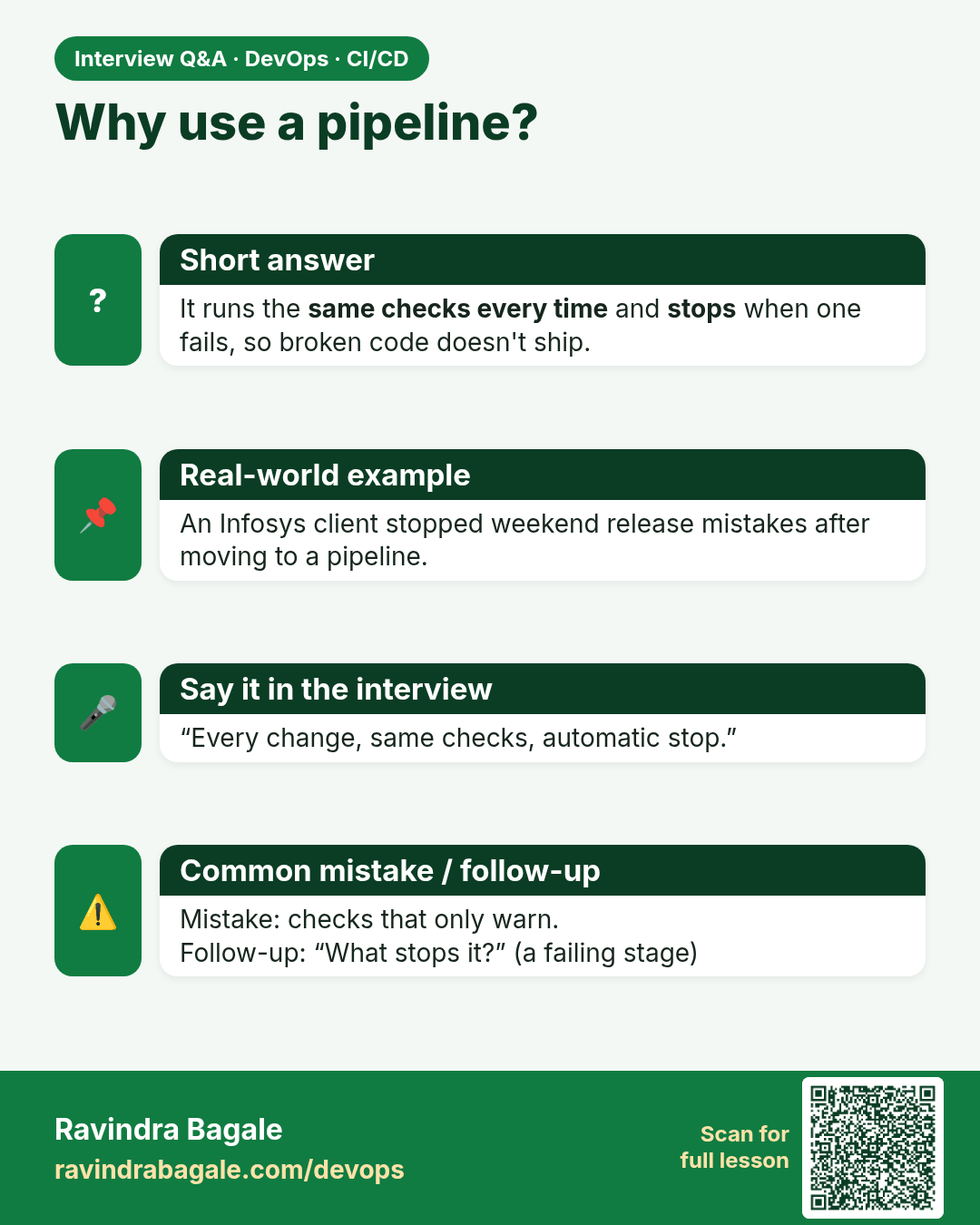
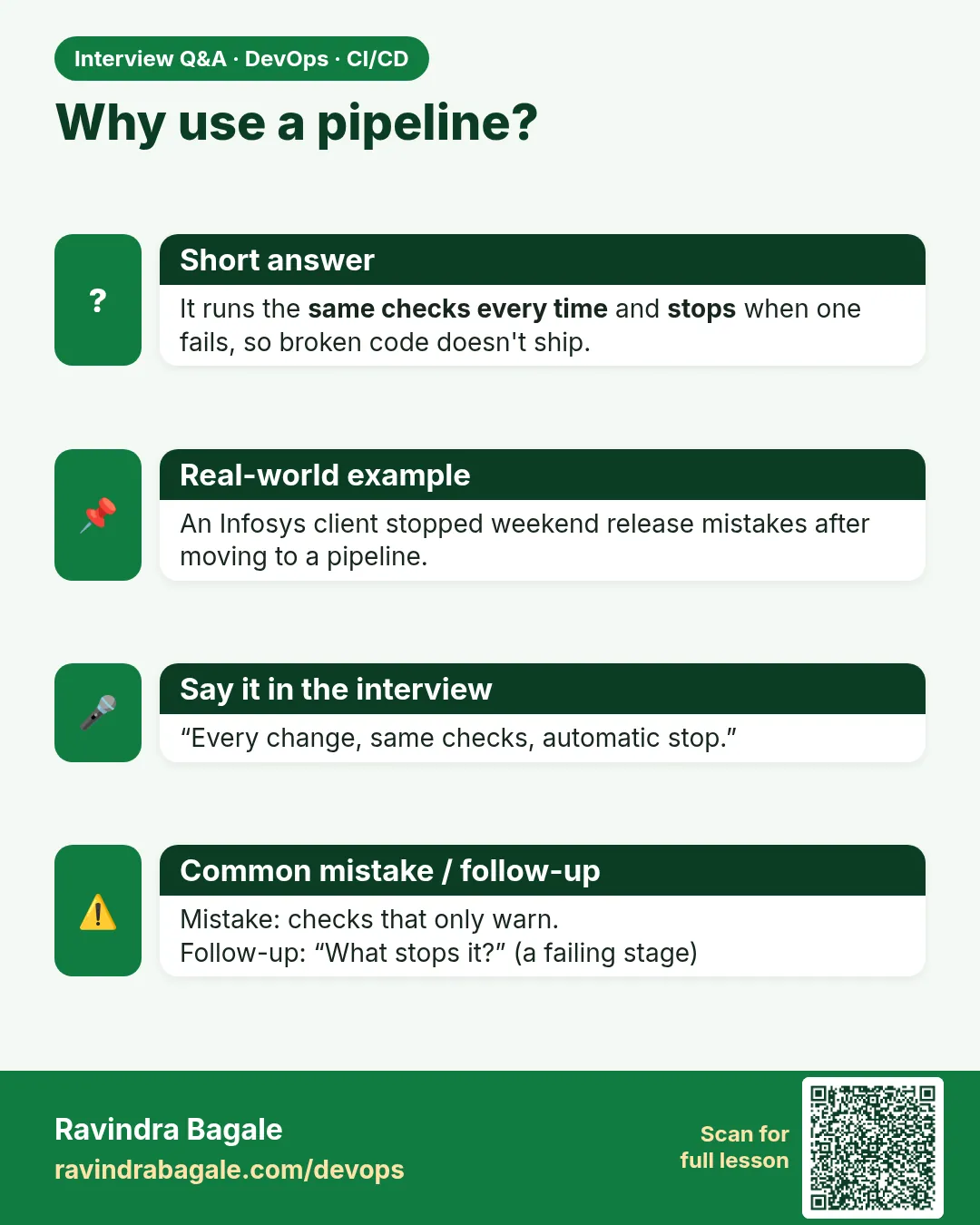 Interview card 2 of 14: Why use a pipeline? · Download PNG · Open card page
Lesson: 8.1 Why a pipeline — stop the ship on a failed check
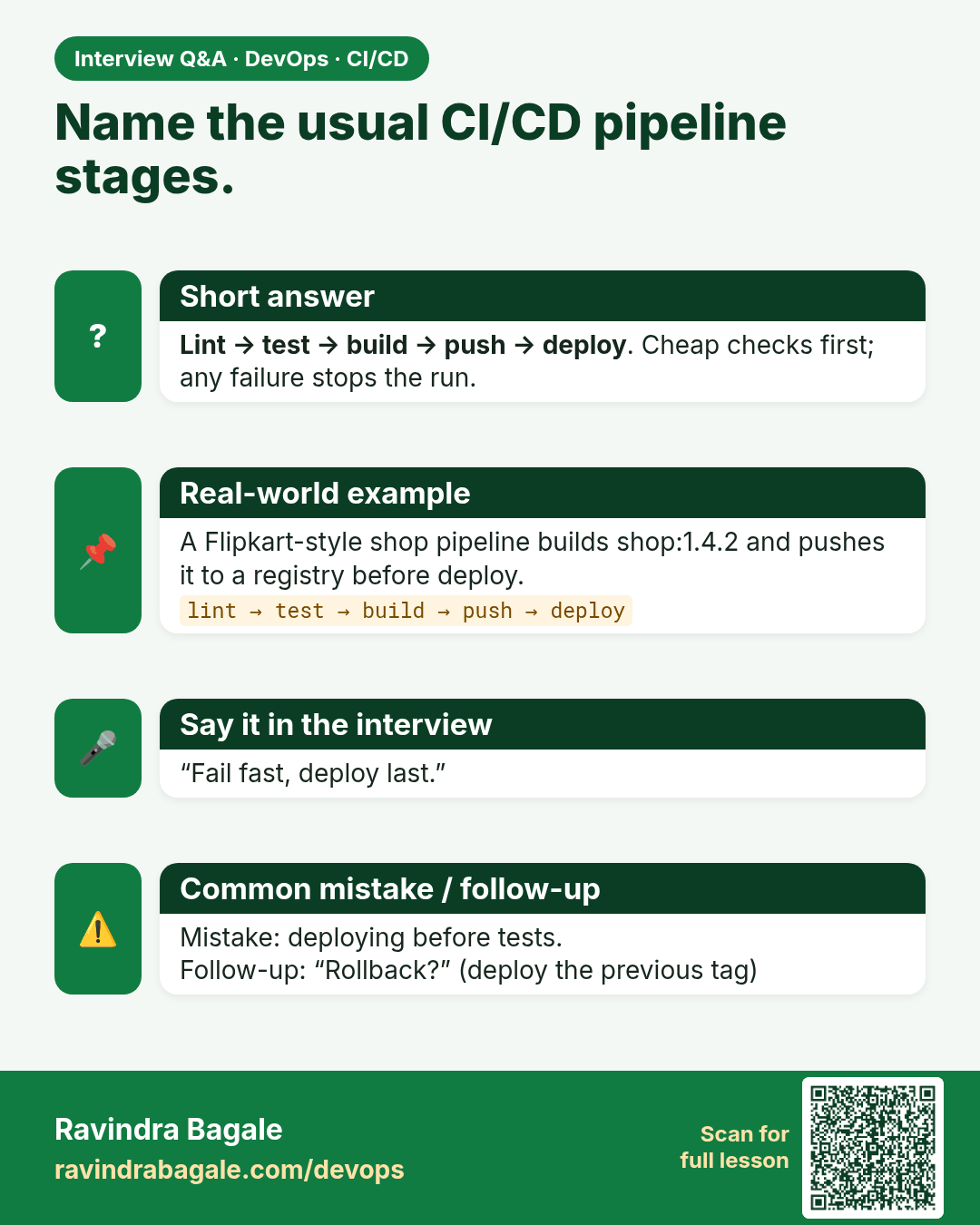
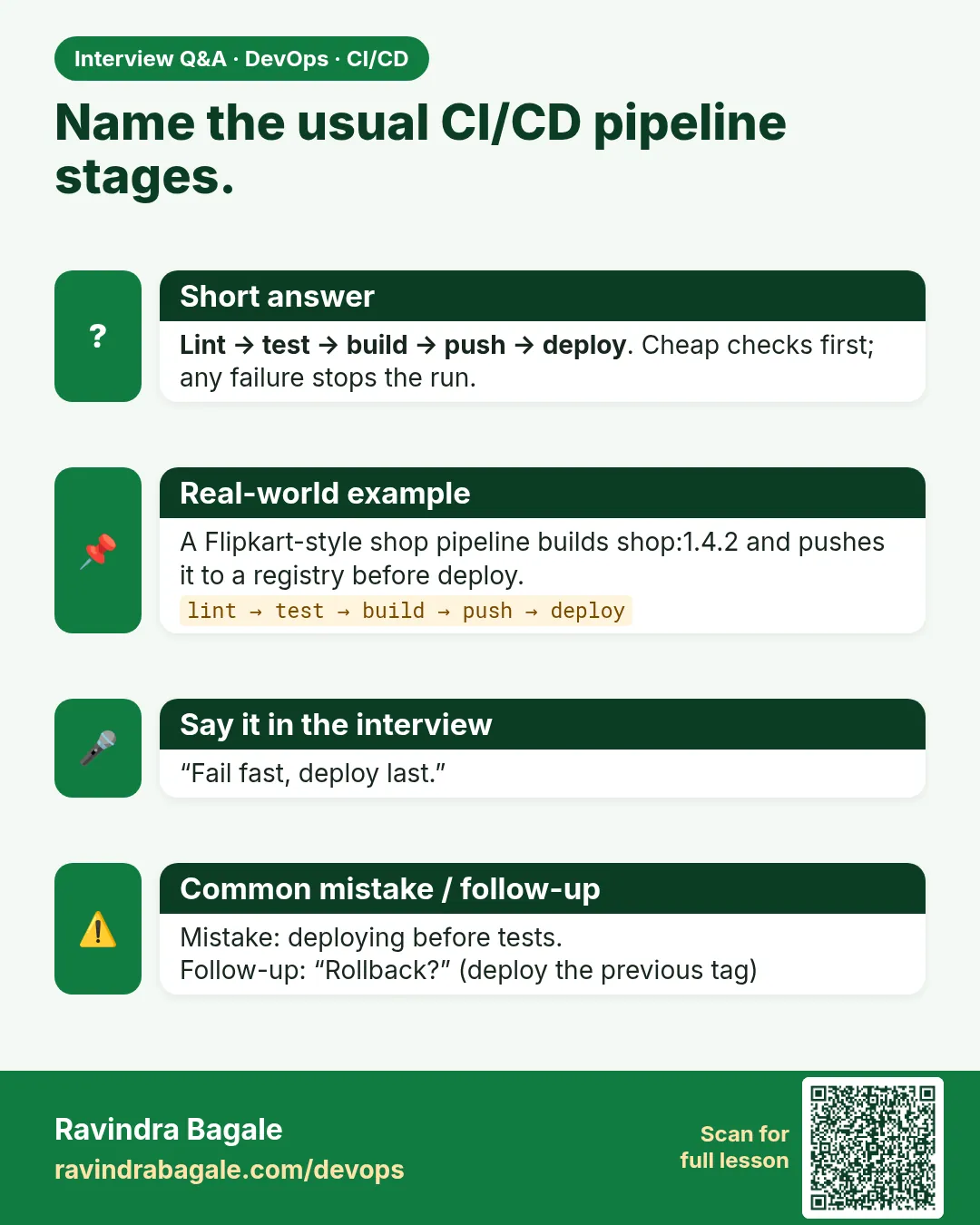 Interview card 3 of 14: Name the usual CI/CD pipeline stages. · Download PNG · Open card page
Lesson: 8.2 Pipeline stages — lint → test → build → push → deploy
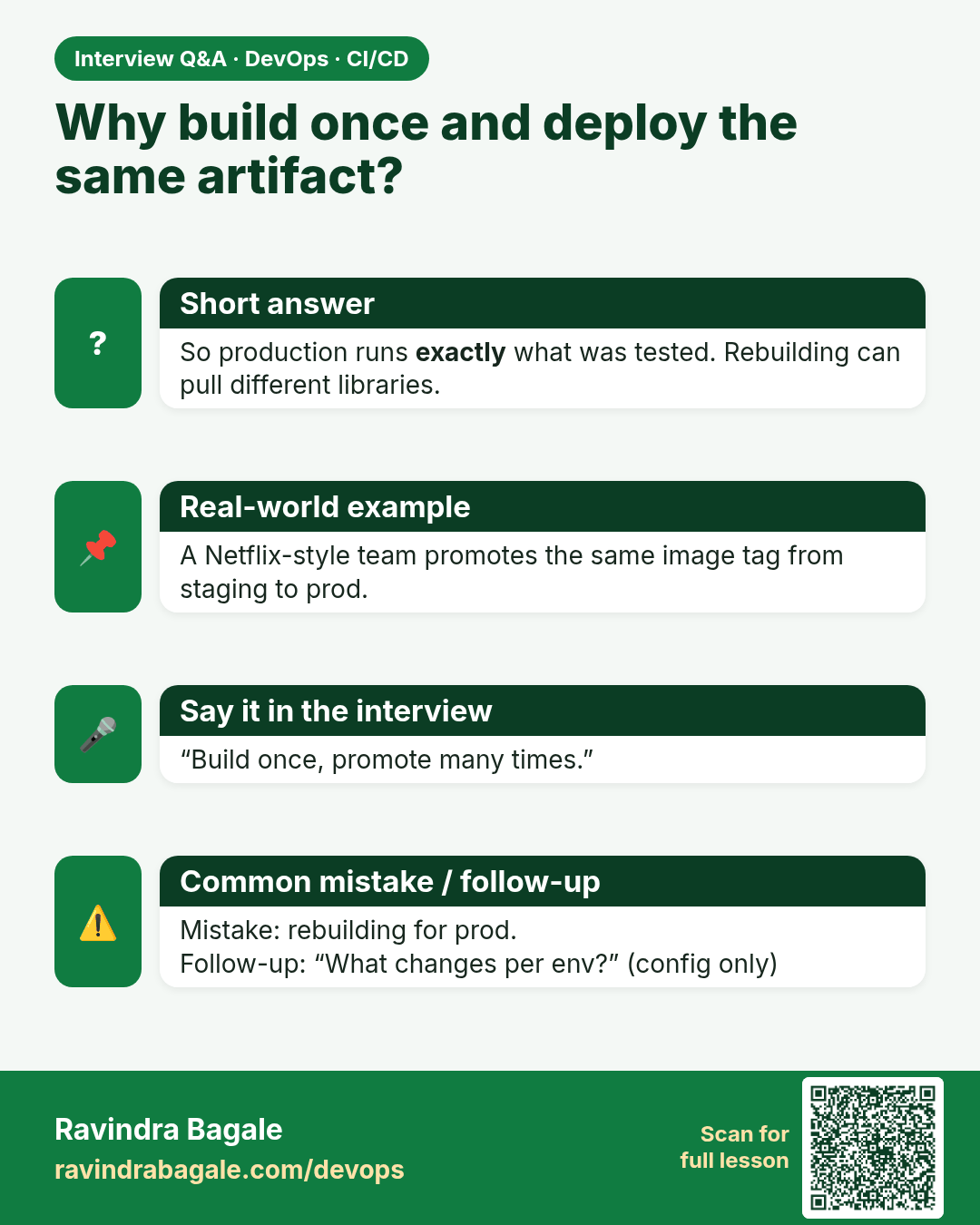
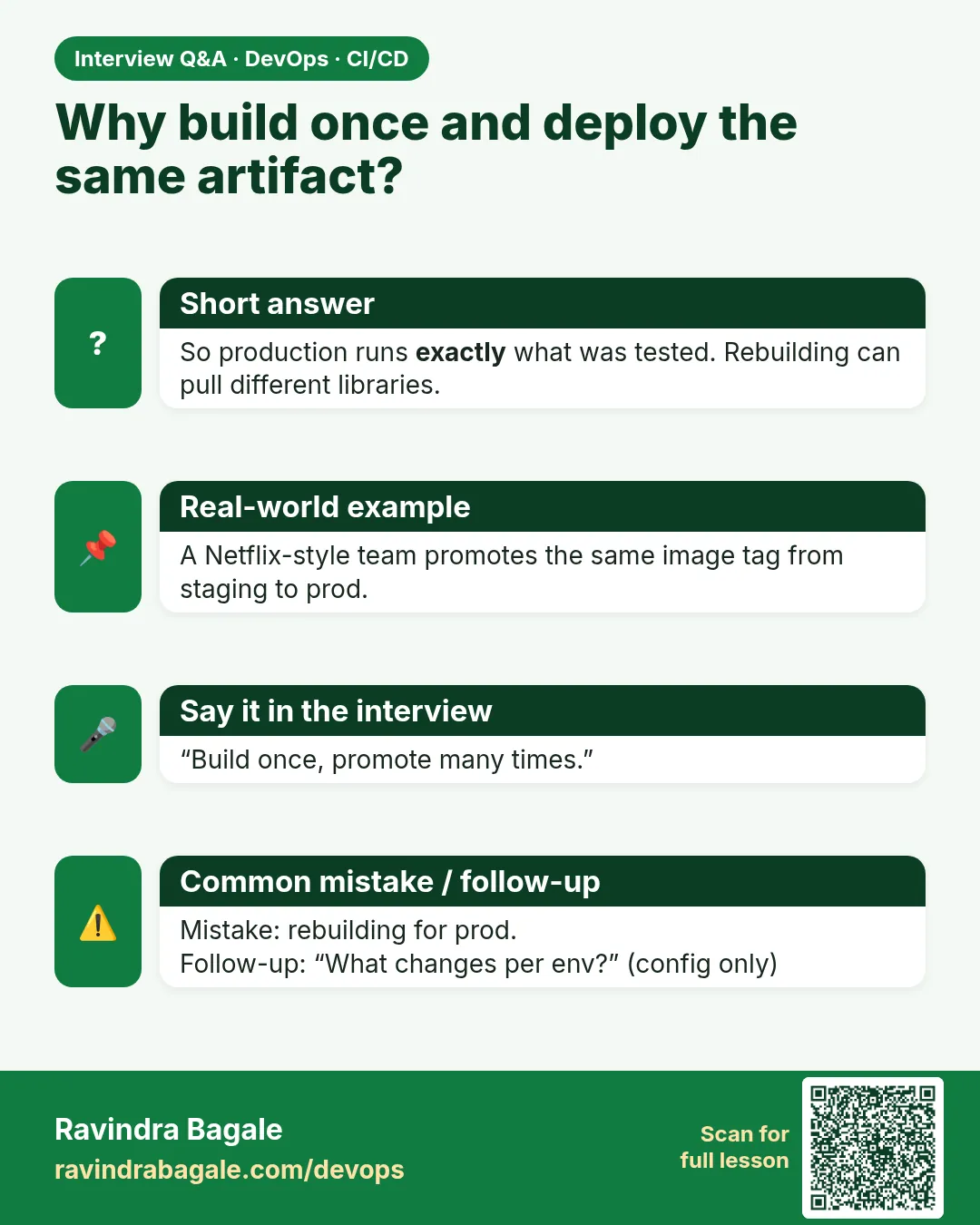 Interview card 4 of 14: Why build once and deploy the same artifact? · Download PNG · Open card page
Lesson: 8.3 Artifacts and versioning
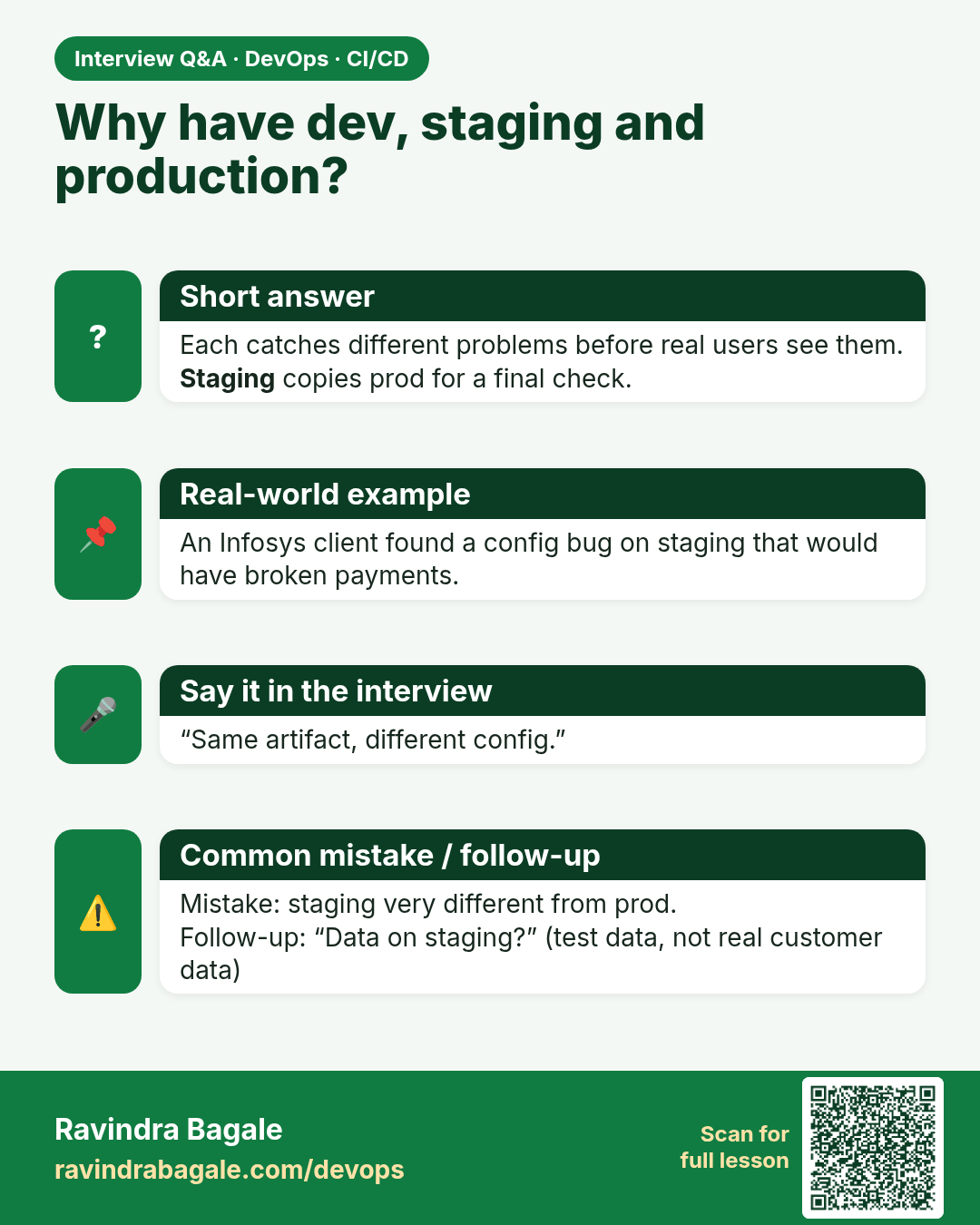
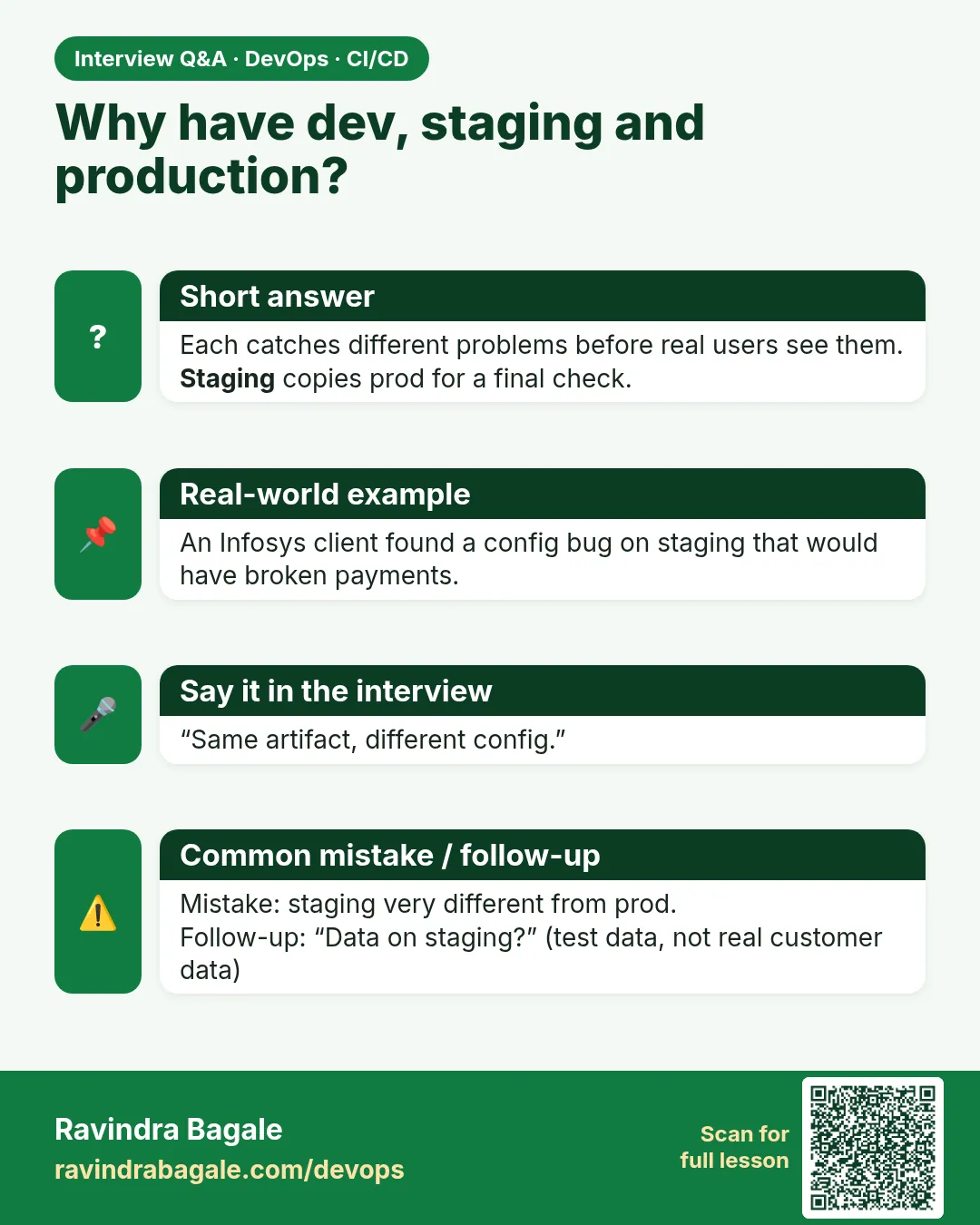 Interview card 5 of 14: Why have dev, staging and production? · Download PNG · Open card page
Lesson: 8.4 Environments — dev, staging, production
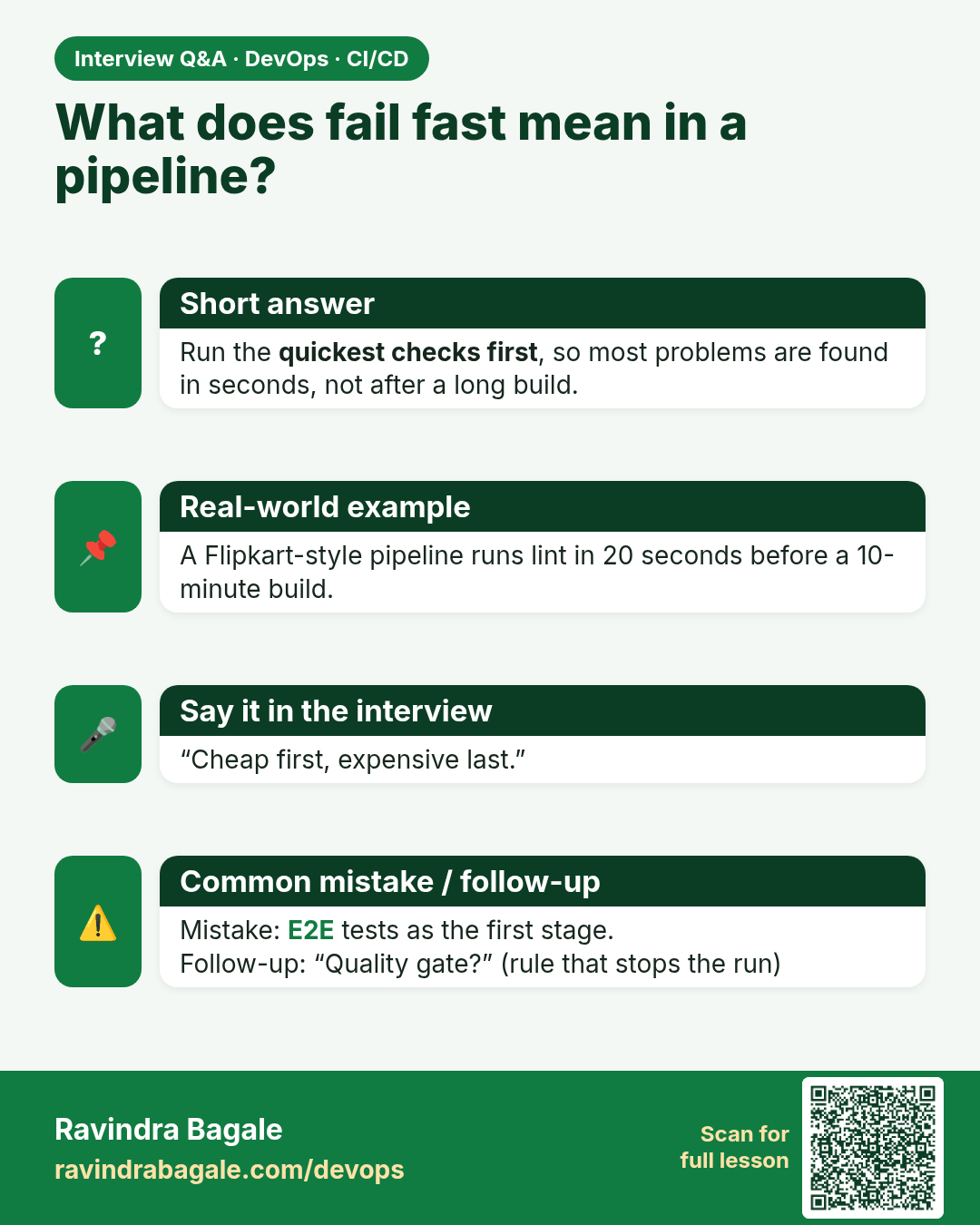
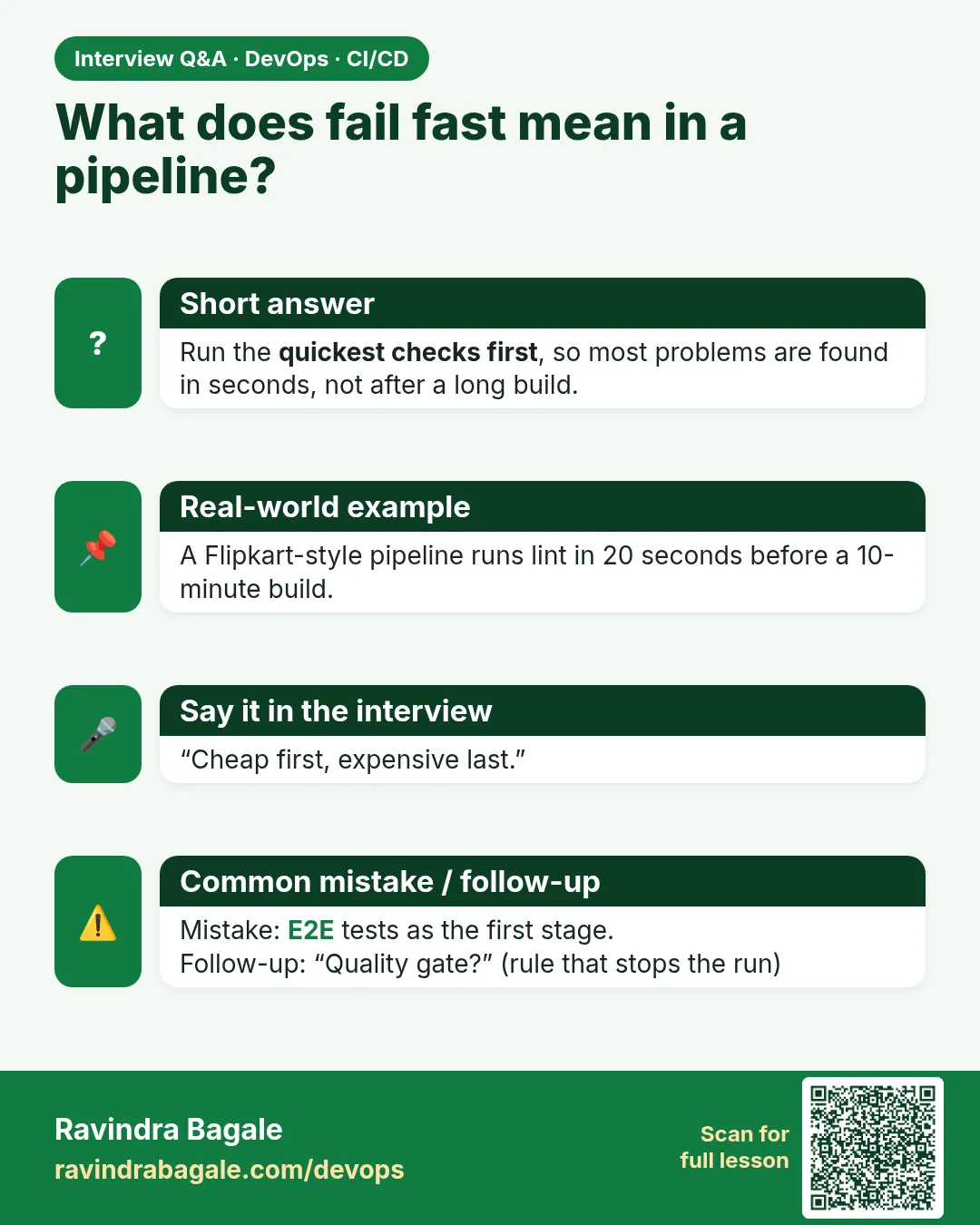 Interview card 6 of 14: What does fail fast mean in a pipeline? · Download PNG · Open card page
Lesson: 8.5 Fail fast and quality gates
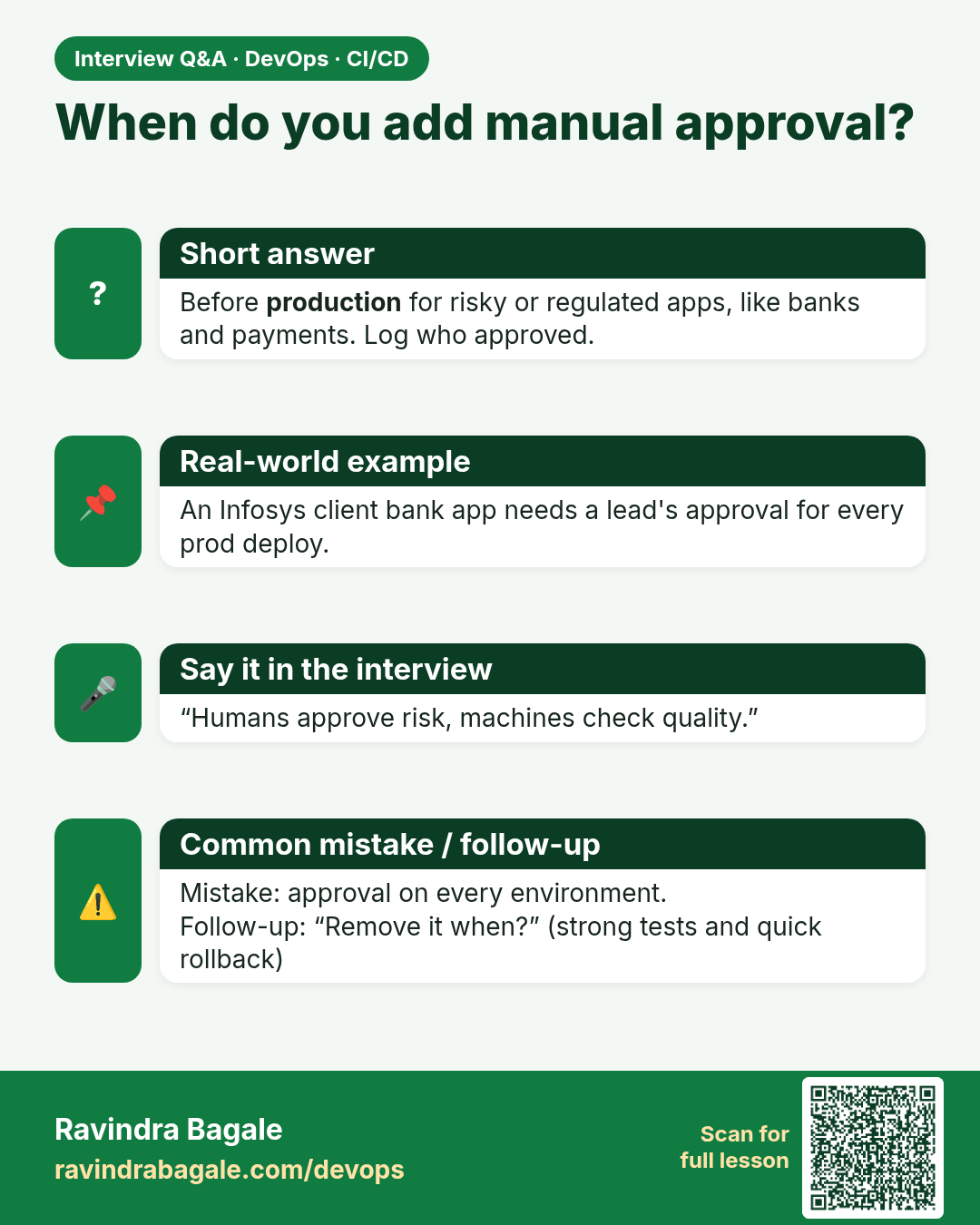
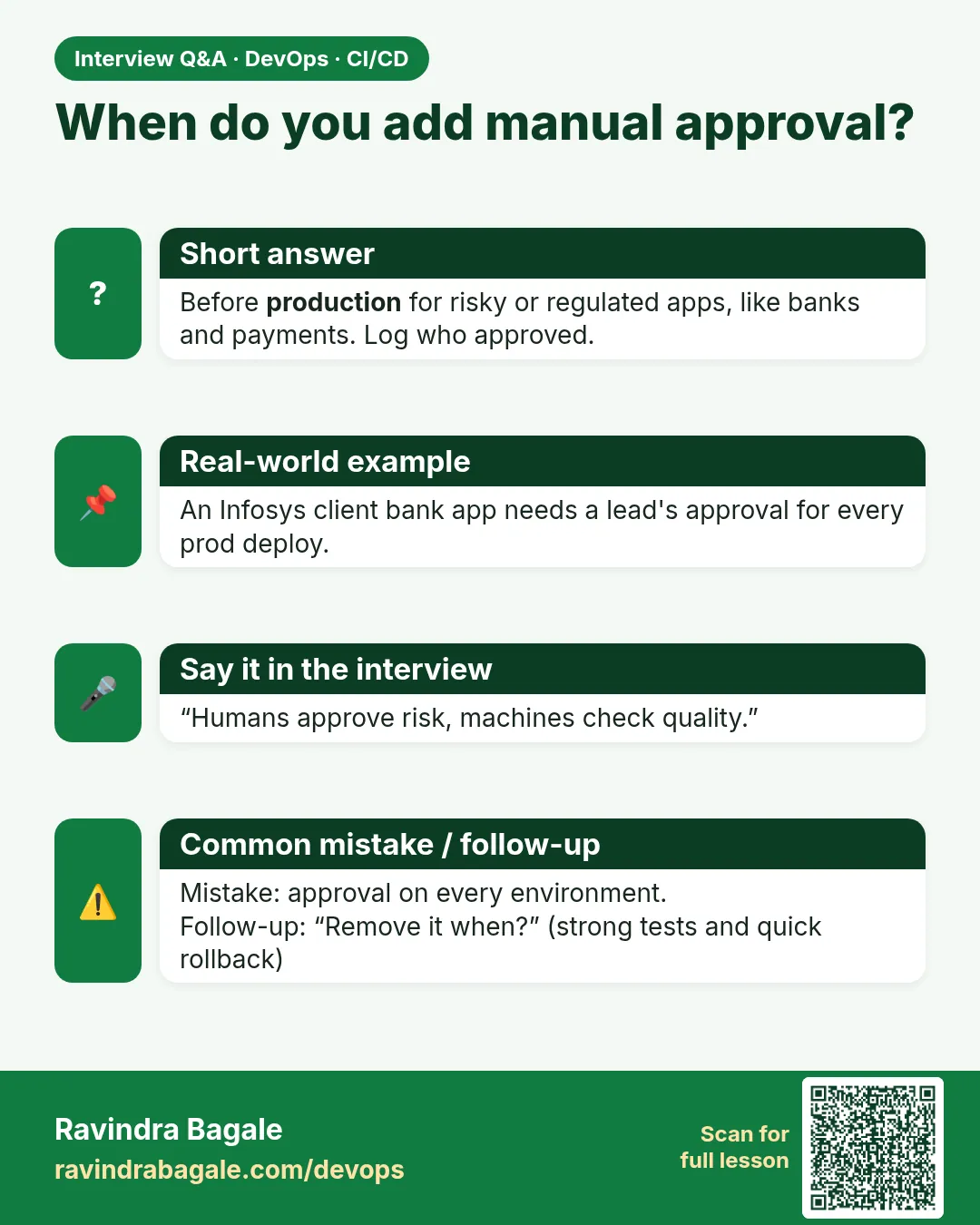 Interview card 7 of 14: When do you add manual approval? · Download PNG · Open card page
Lesson: 8.6 Manual approval for production — when and why
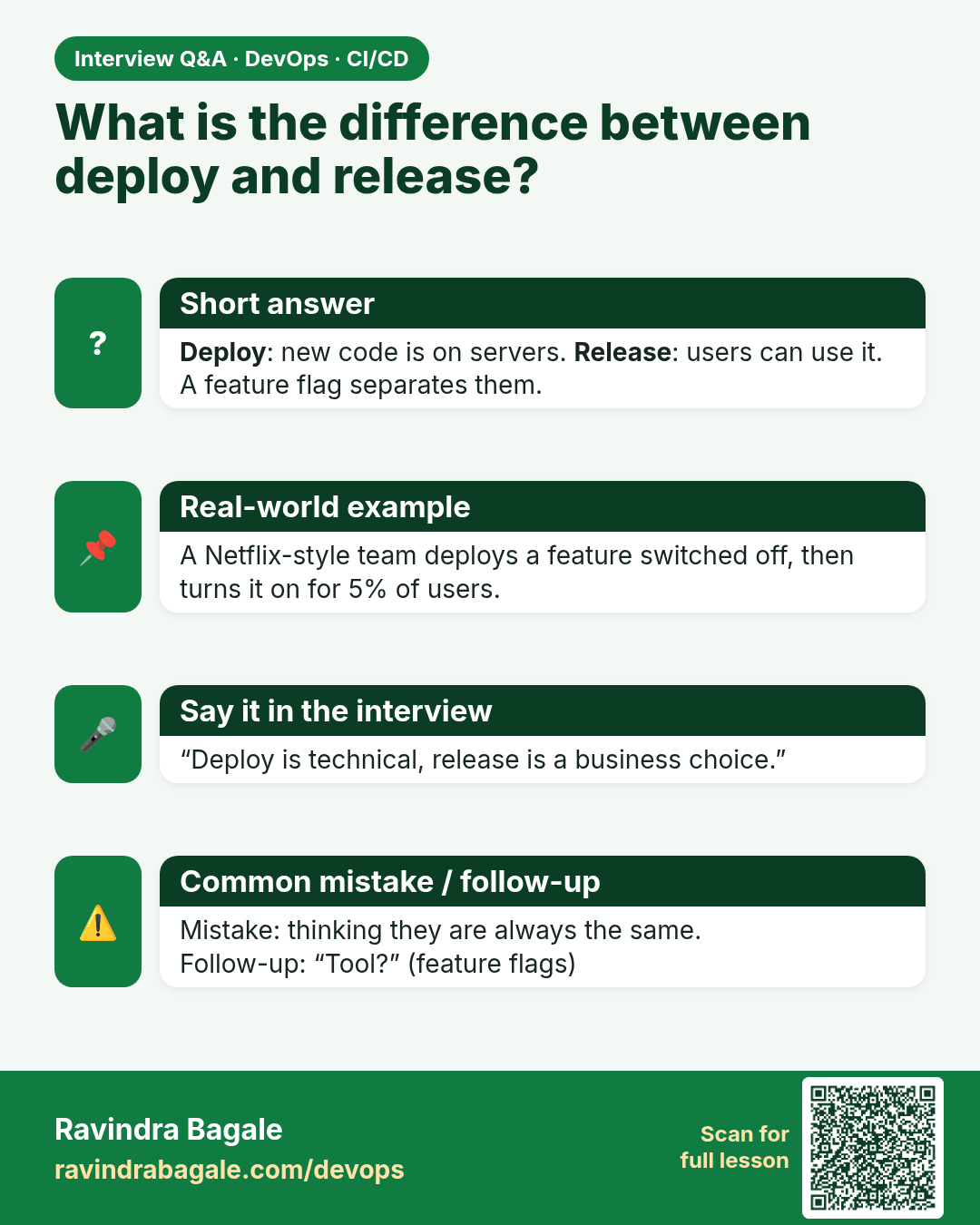
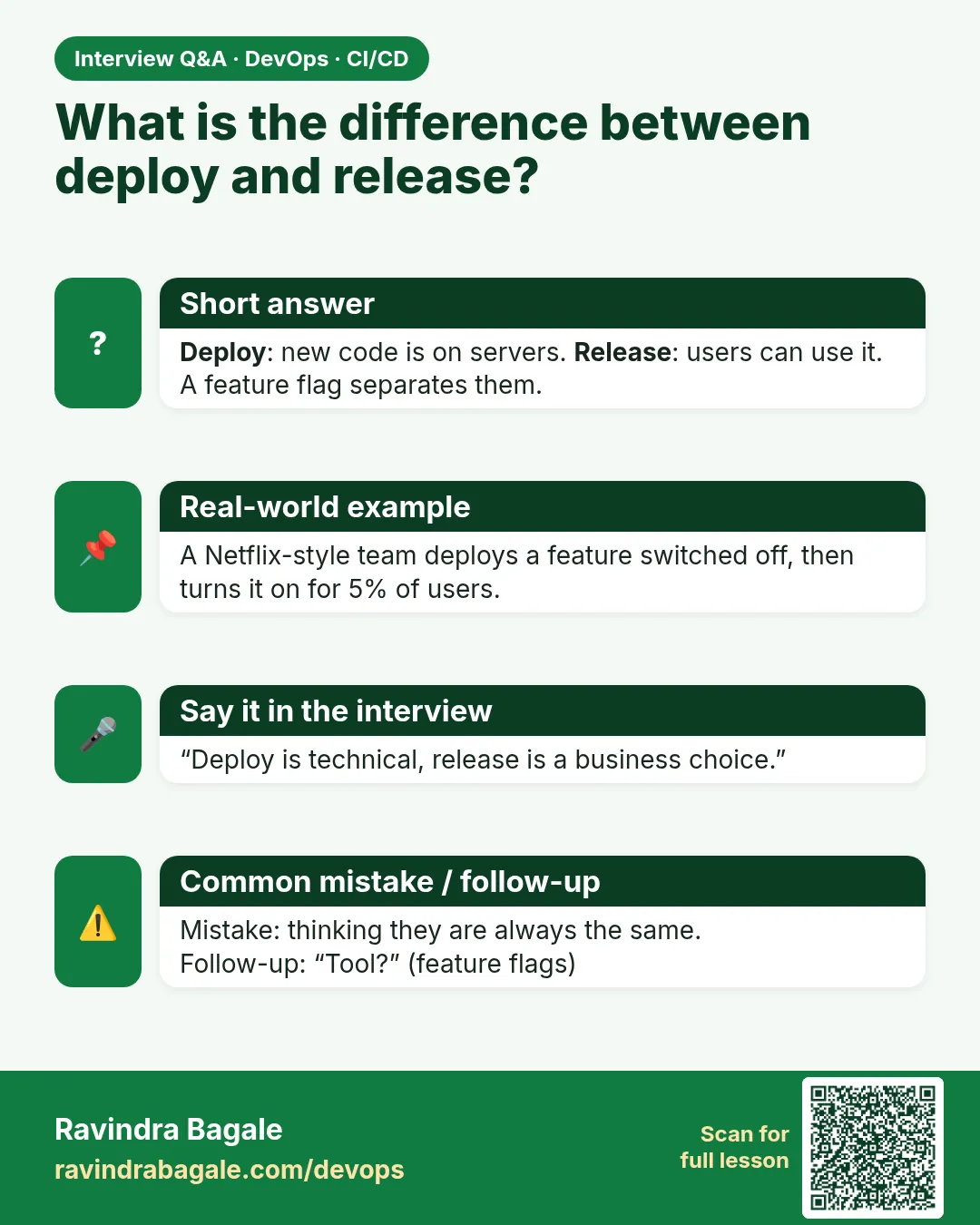 Interview card 8 of 14: What is the difference between deploy and release? · Download PNG · Open card page
Lesson: 8.7 CI vs CD vs deploy vs release (refresh)
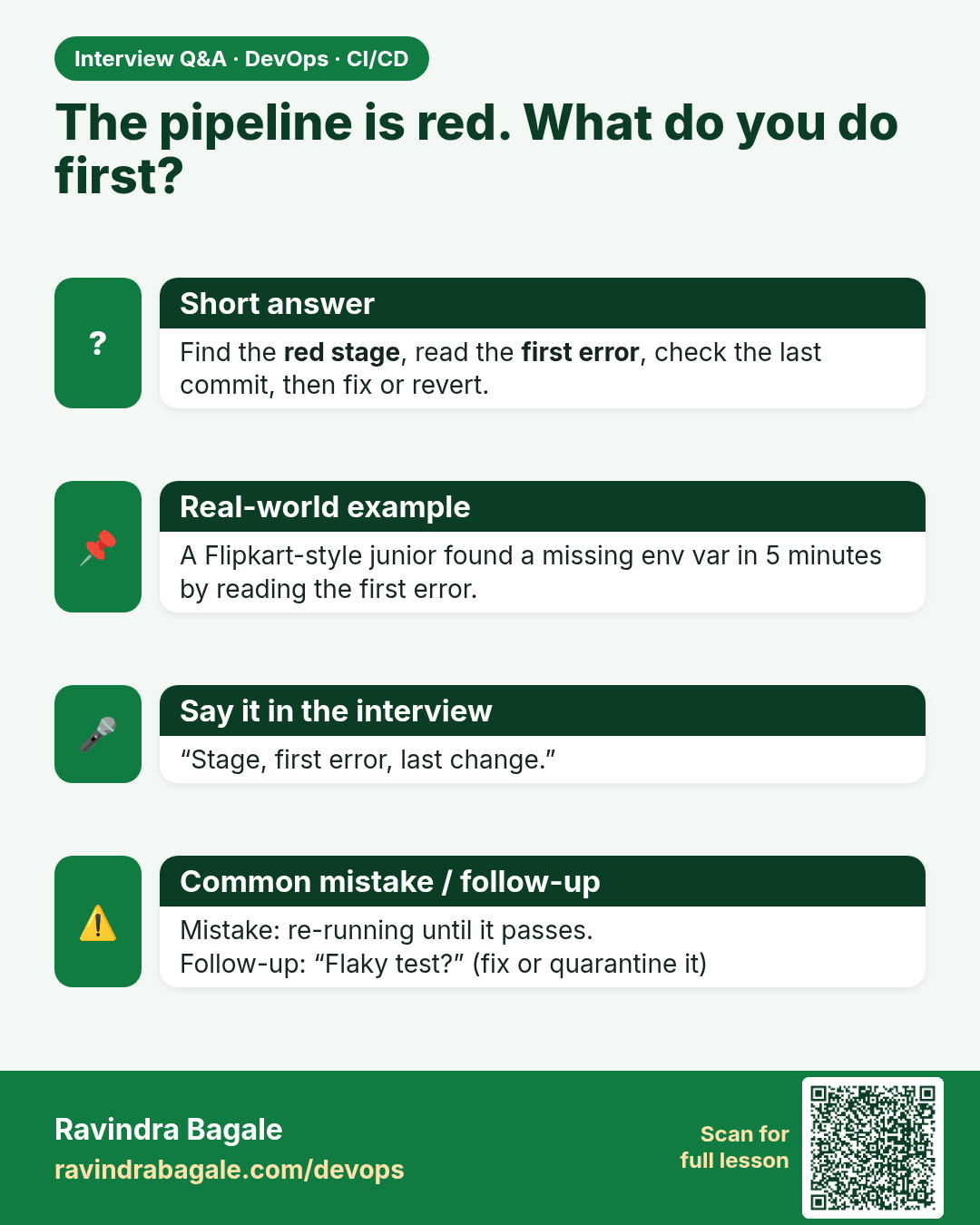
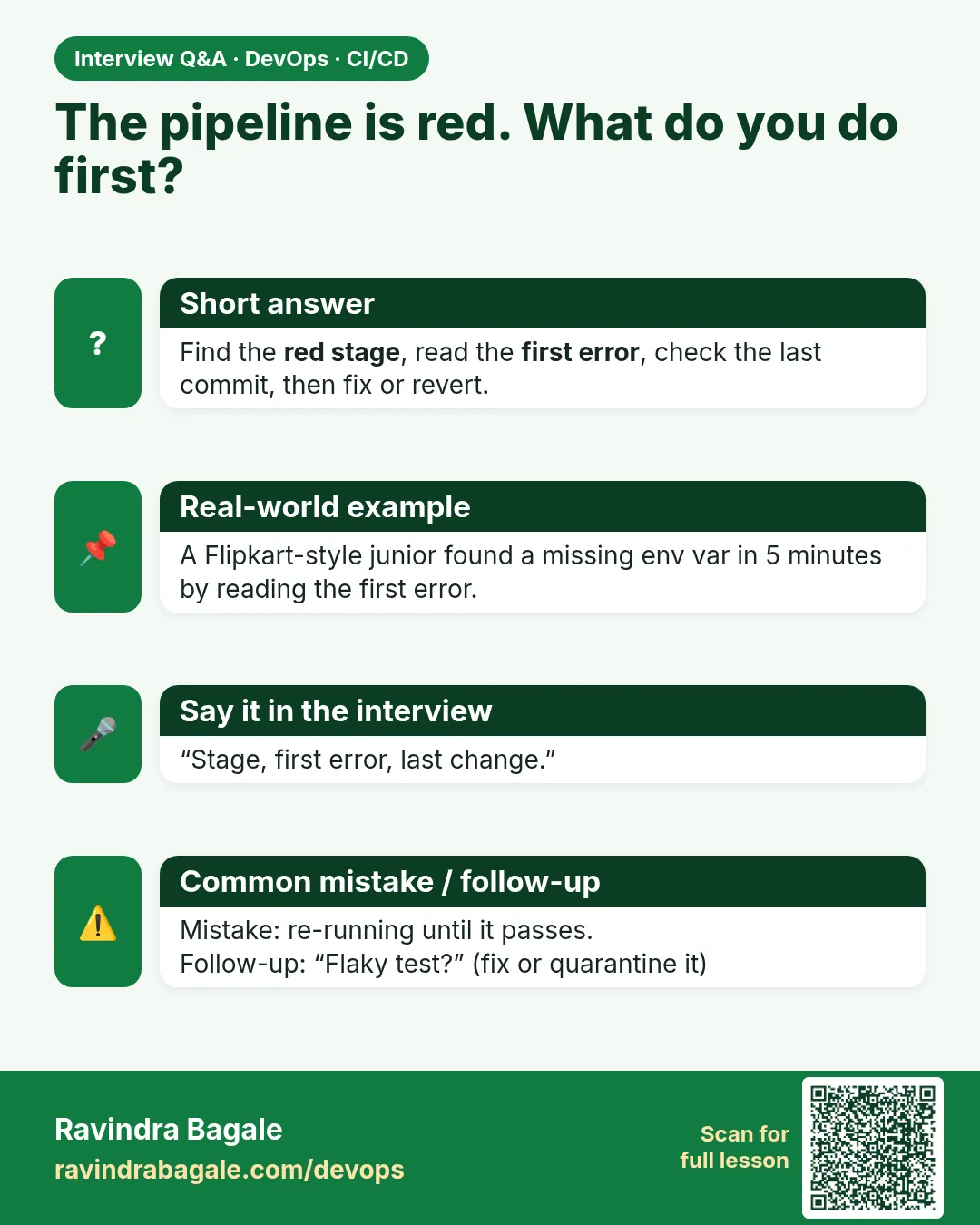 Interview card 9 of 14: The pipeline is red. What do you do first? · Download PNG · Open card page
Lesson: 8.8 What a junior watches on a red pipeline
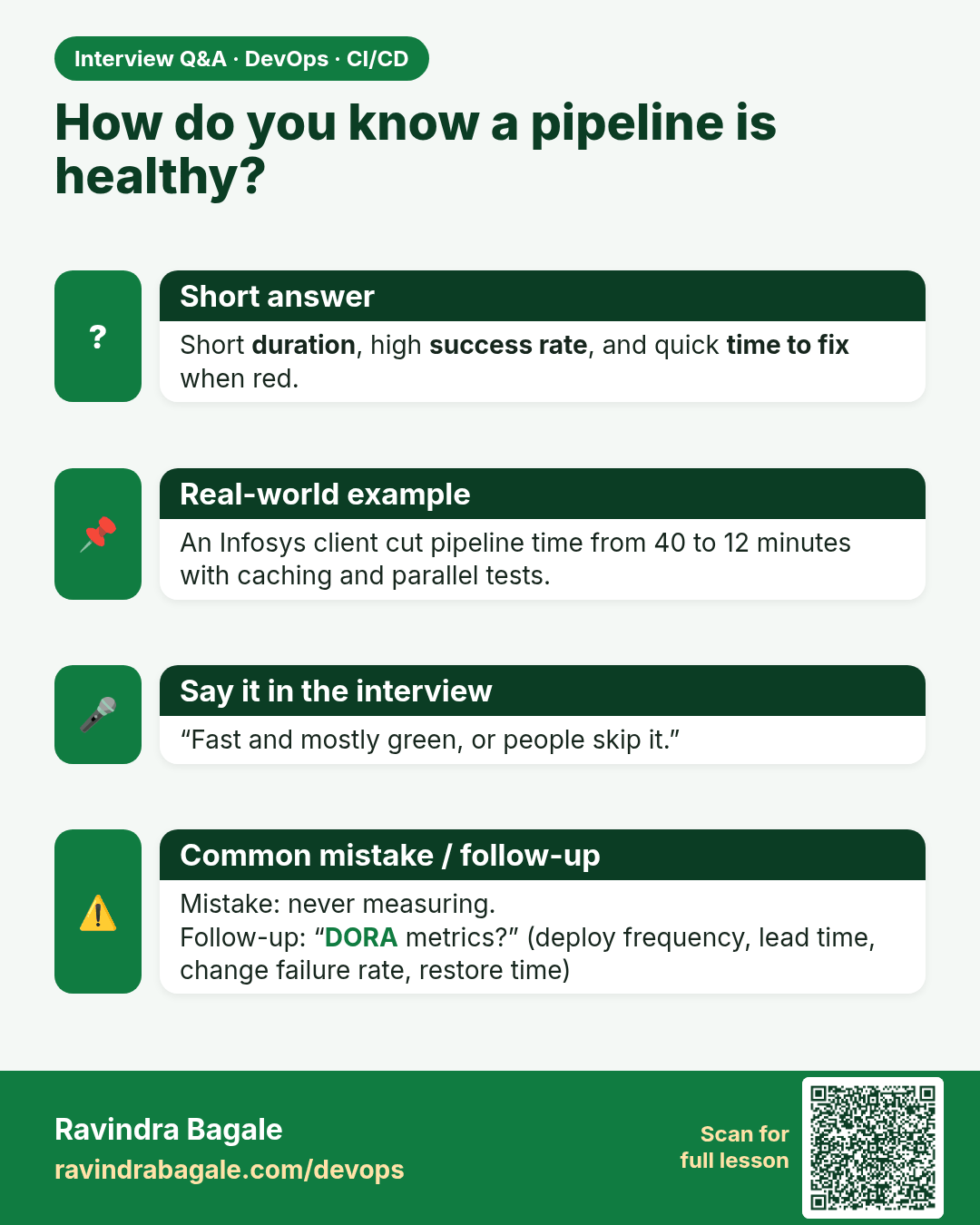
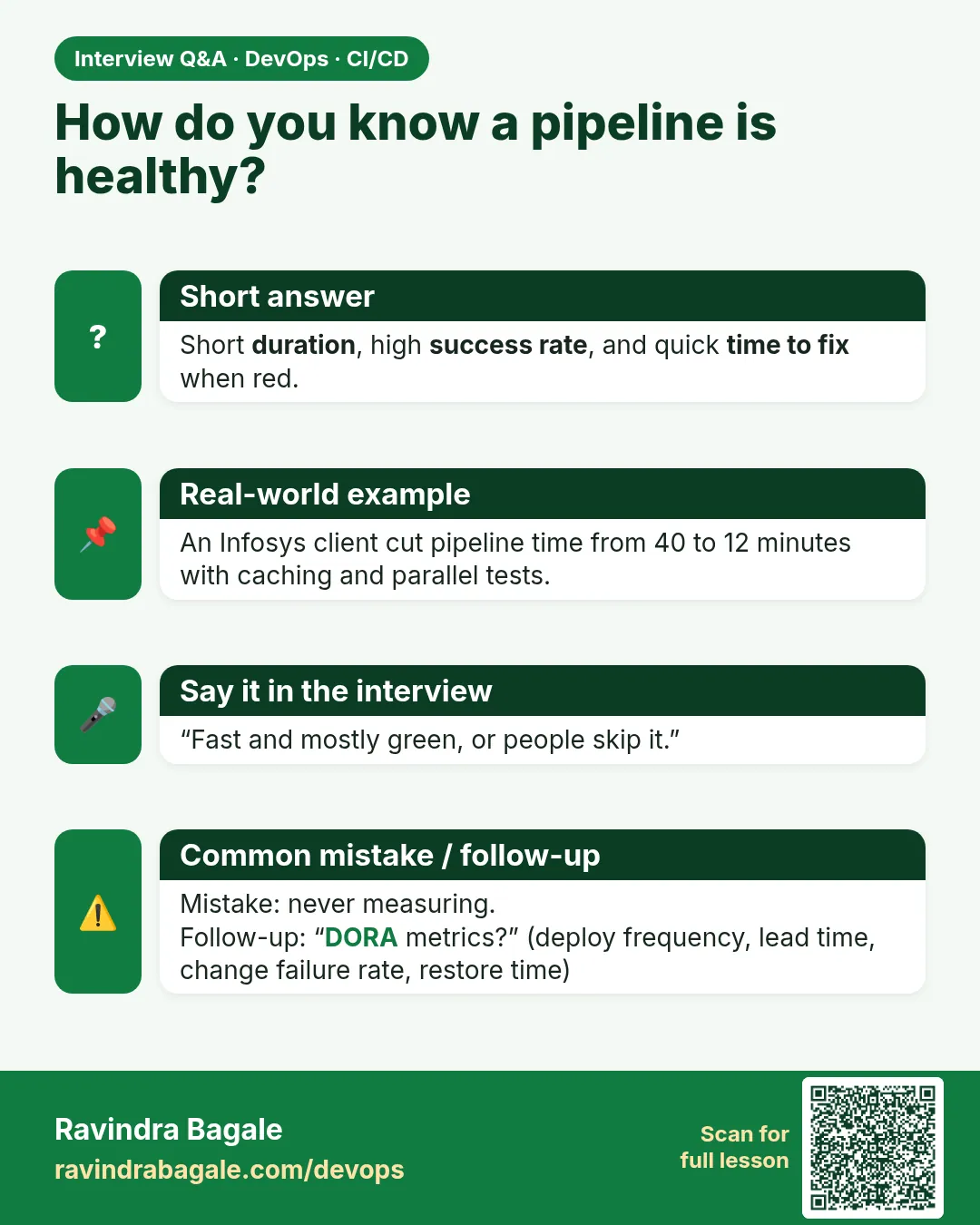 Interview card 10 of 14: How do you know a pipeline is healthy? · Download PNG · Open card page
Lesson: 8.8b Metrics of a healthy pipeline (plain English)
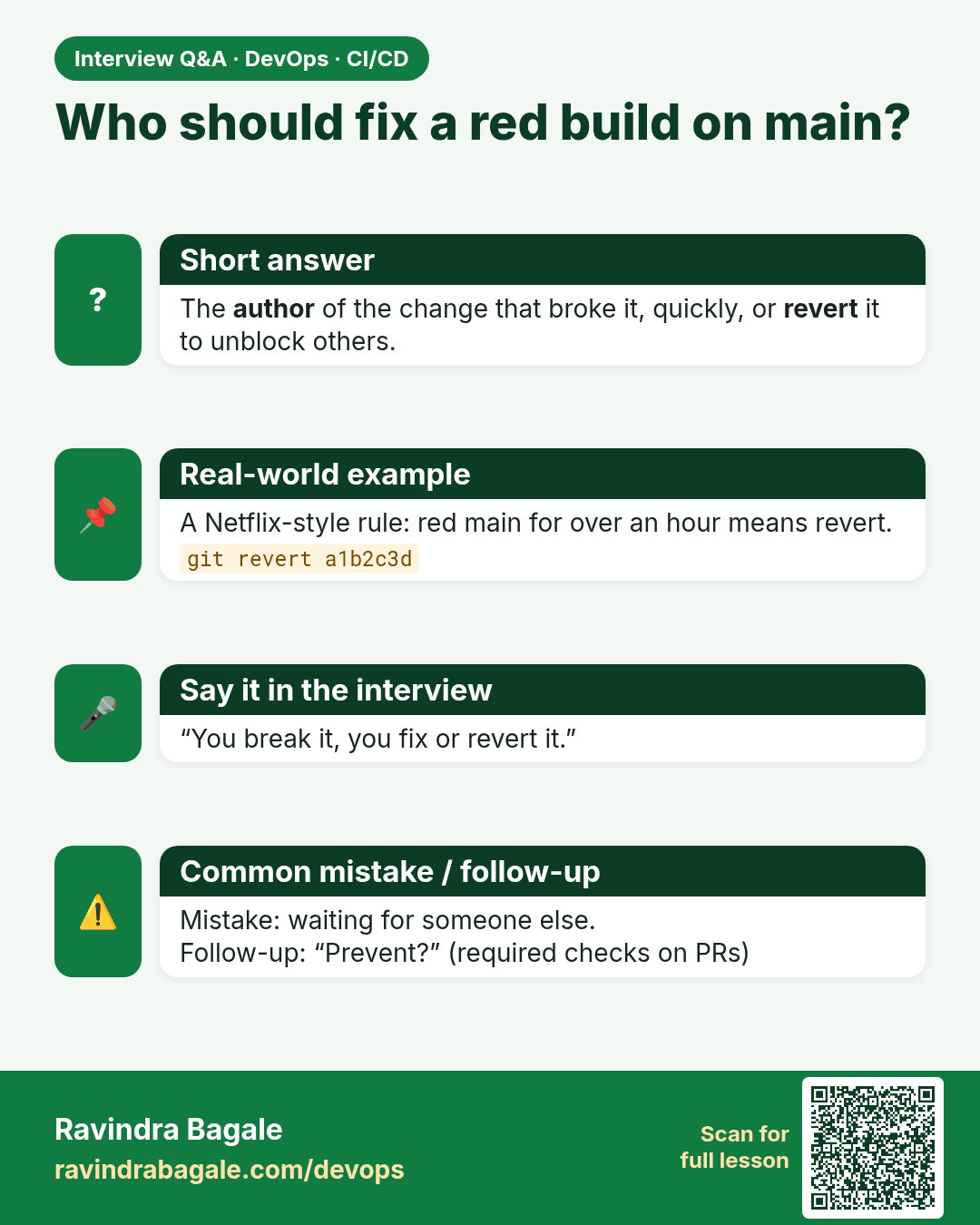
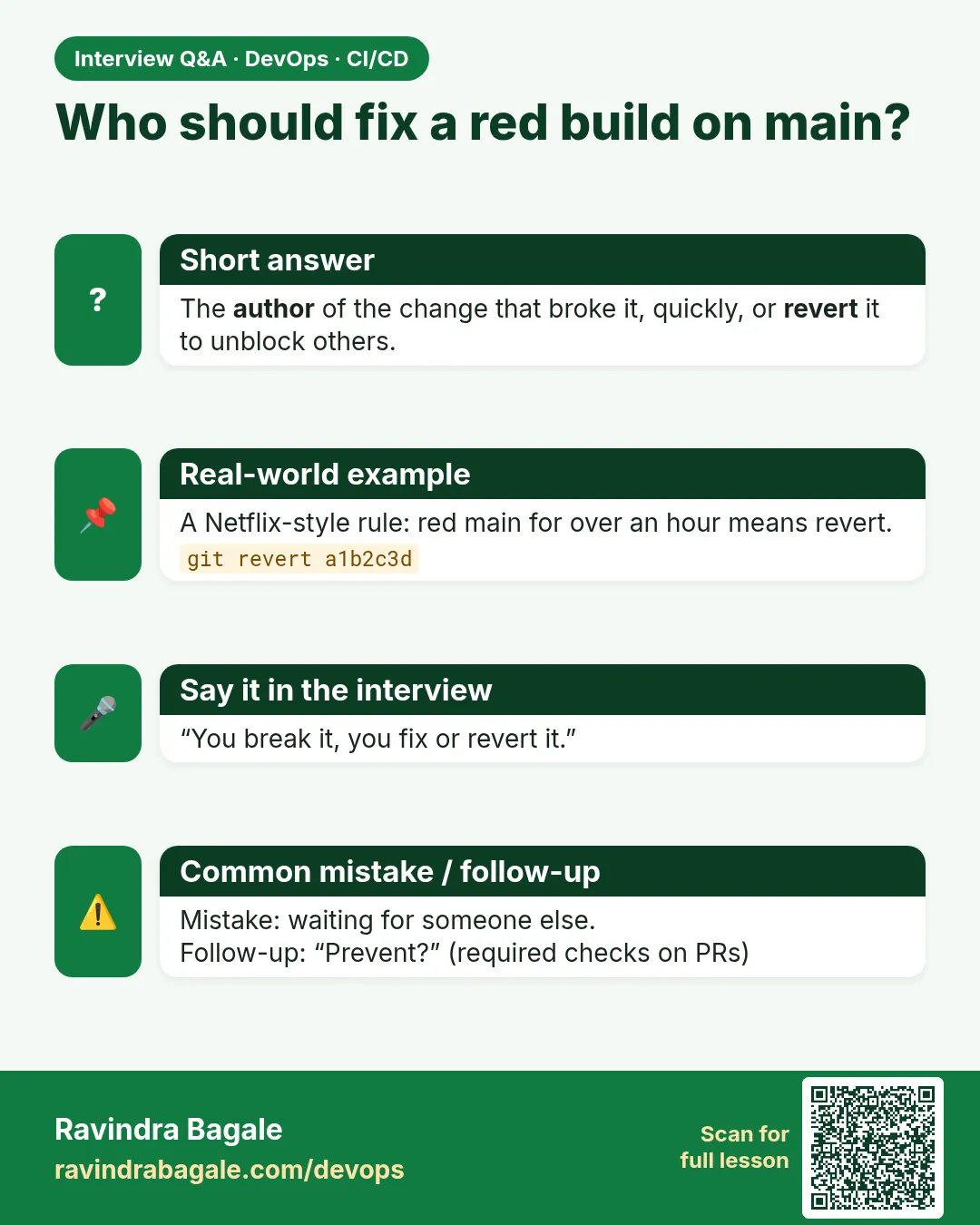 Interview card 11 of 14: Who should fix a red build on main? · Download PNG · Open card page
Lesson: 8.8c Who owns a red build?
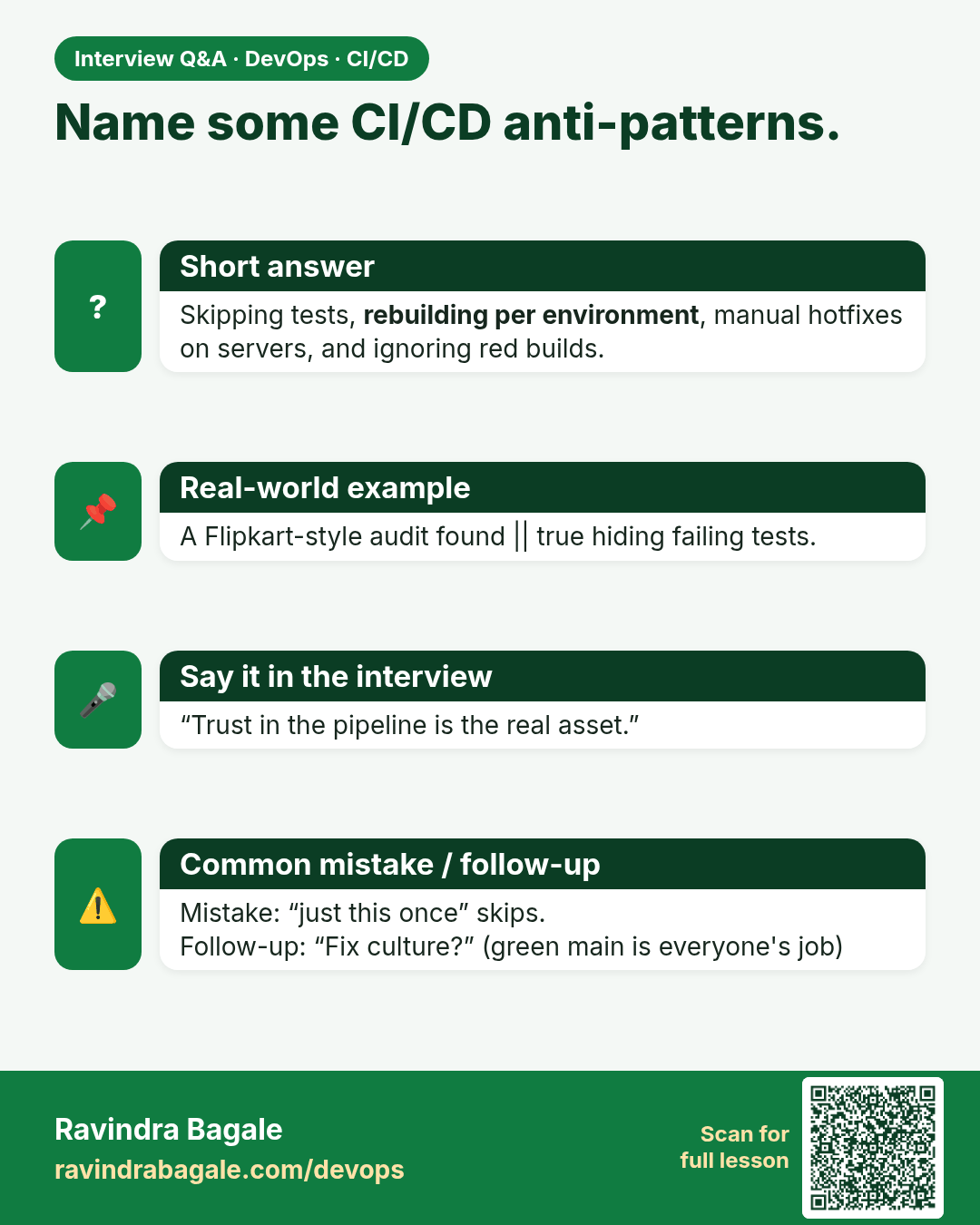
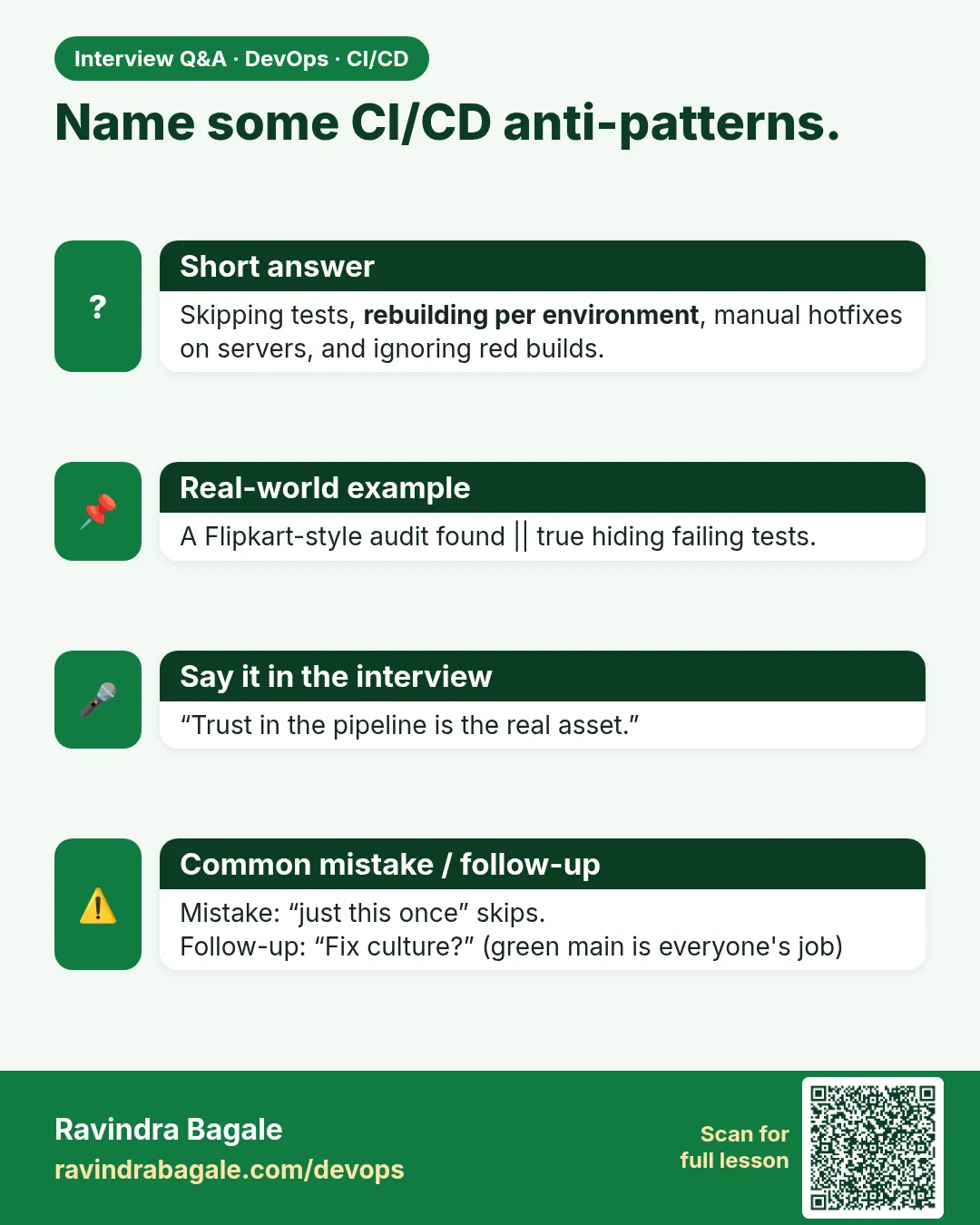 Interview card 12 of 14: Name some CI/CD anti-patterns. · Download PNG · Open card page
Lesson: 8.9 Anti-patterns (spot them early)
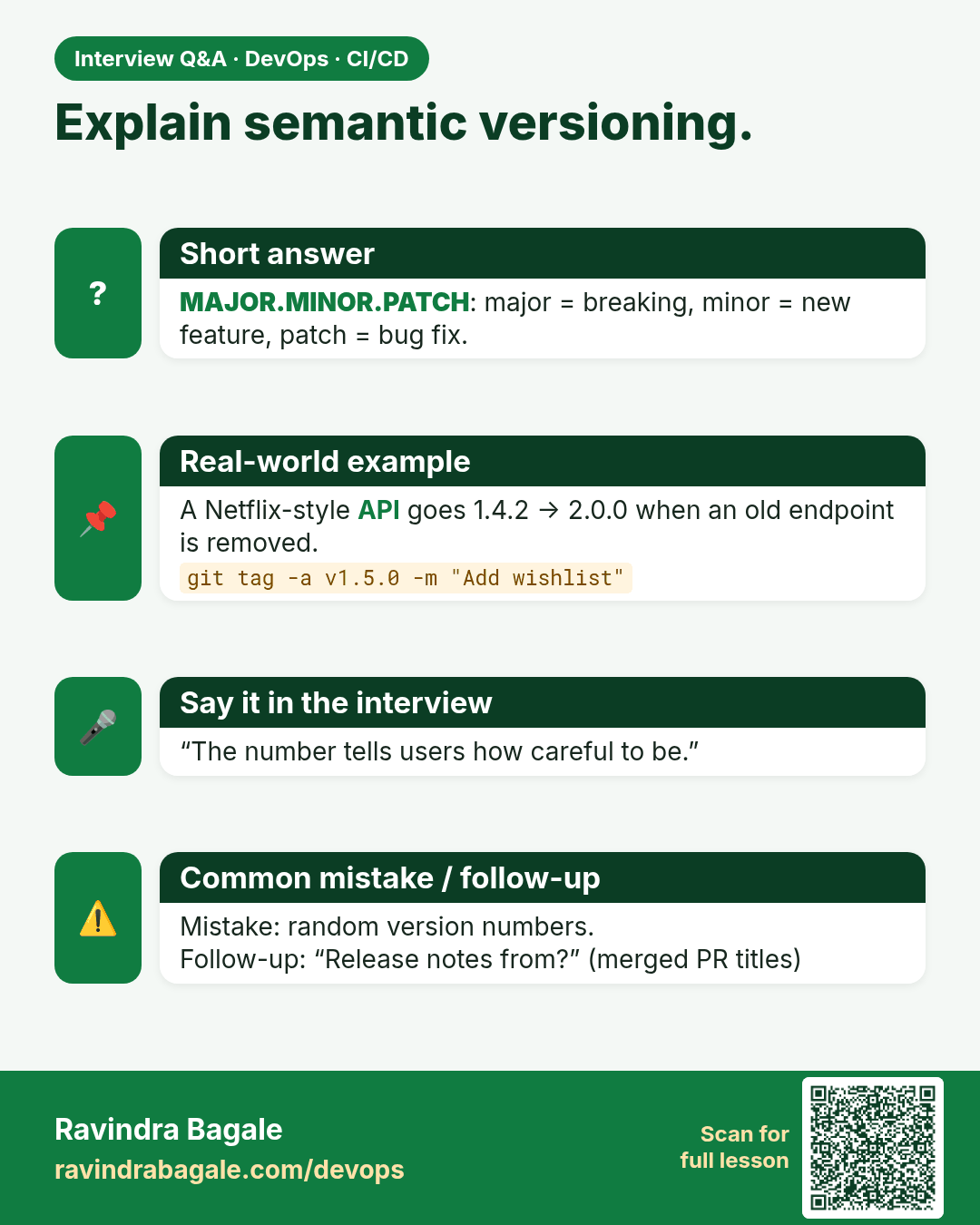
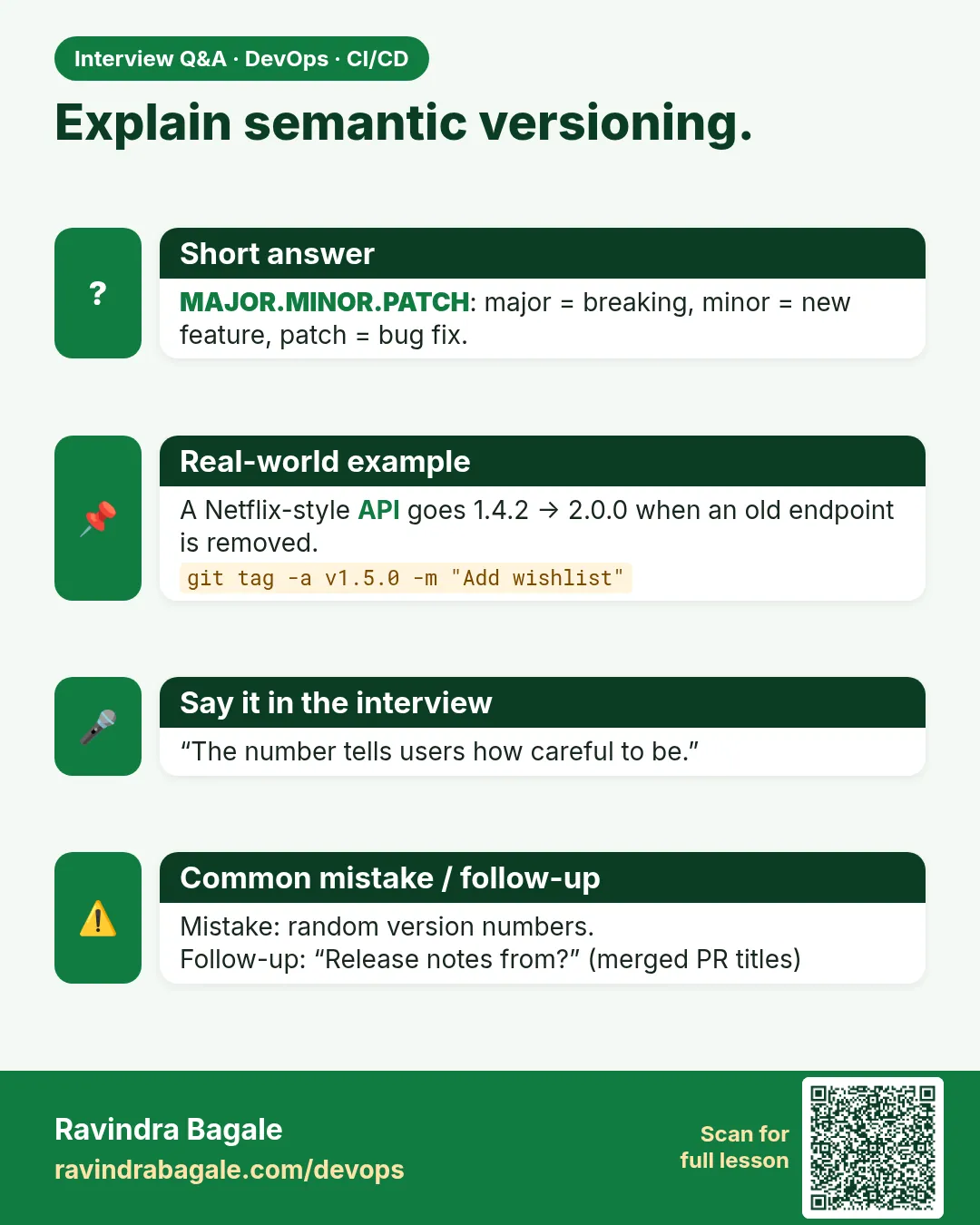 Interview card 13 of 14: Explain semantic versioning. · Download PNG · Open card page
Lesson: 8.10 Versioning and release notes (lightweight)
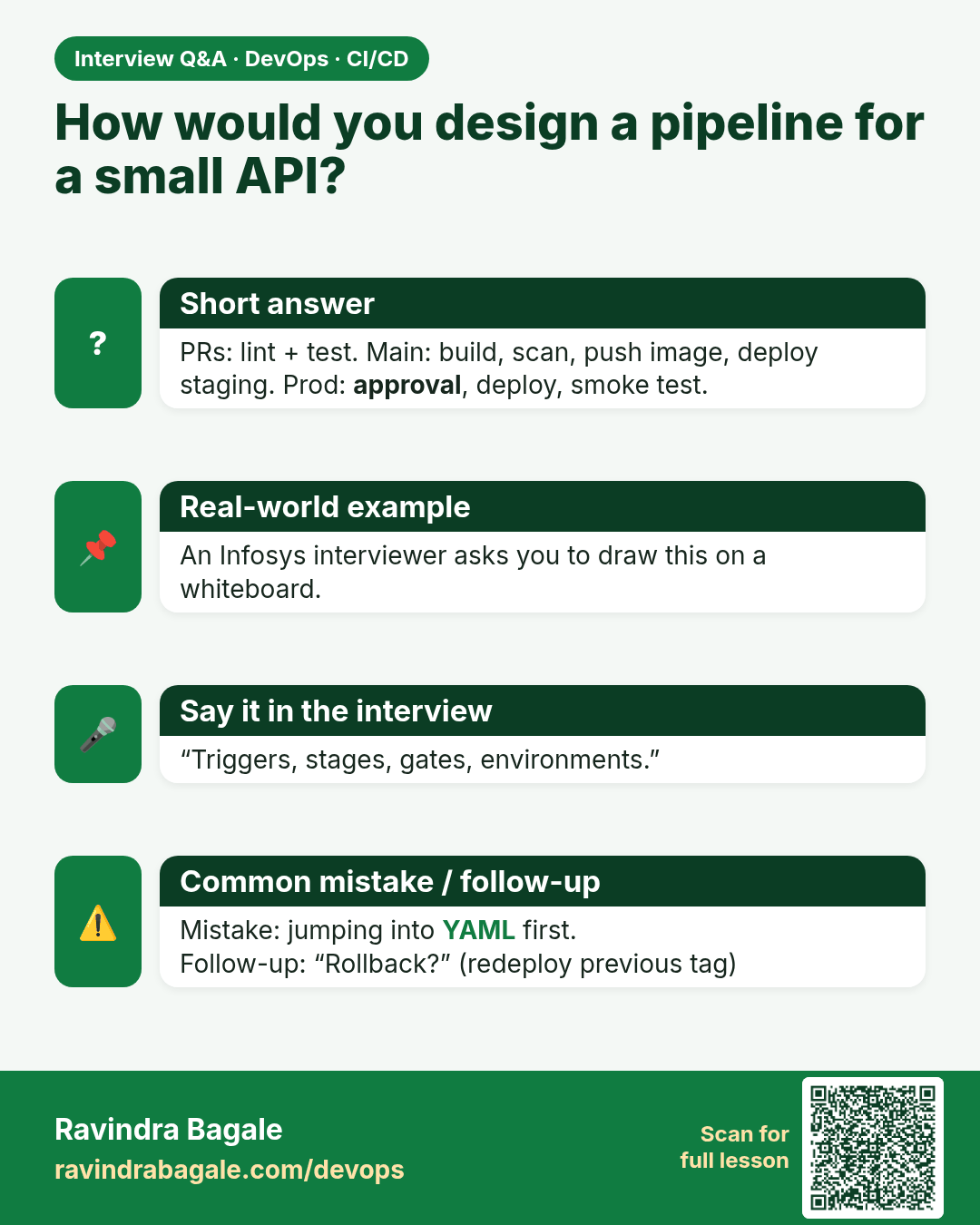
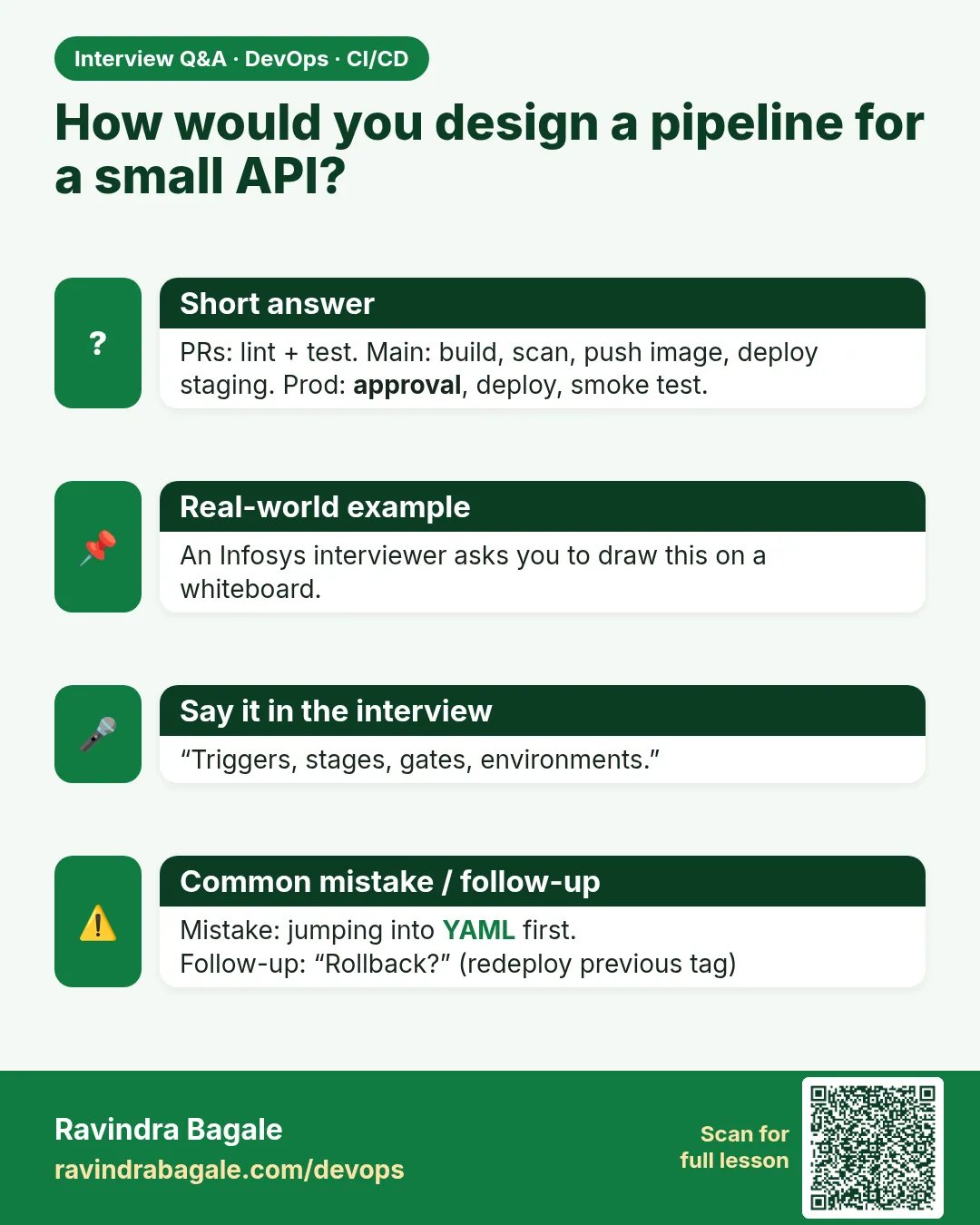 Interview card 14 of 14: How would you design a pipeline for a small API? · Download PNG · Open card page
Lesson: 8.11 Lab — design badge API pipeline on paper
Comparison cards
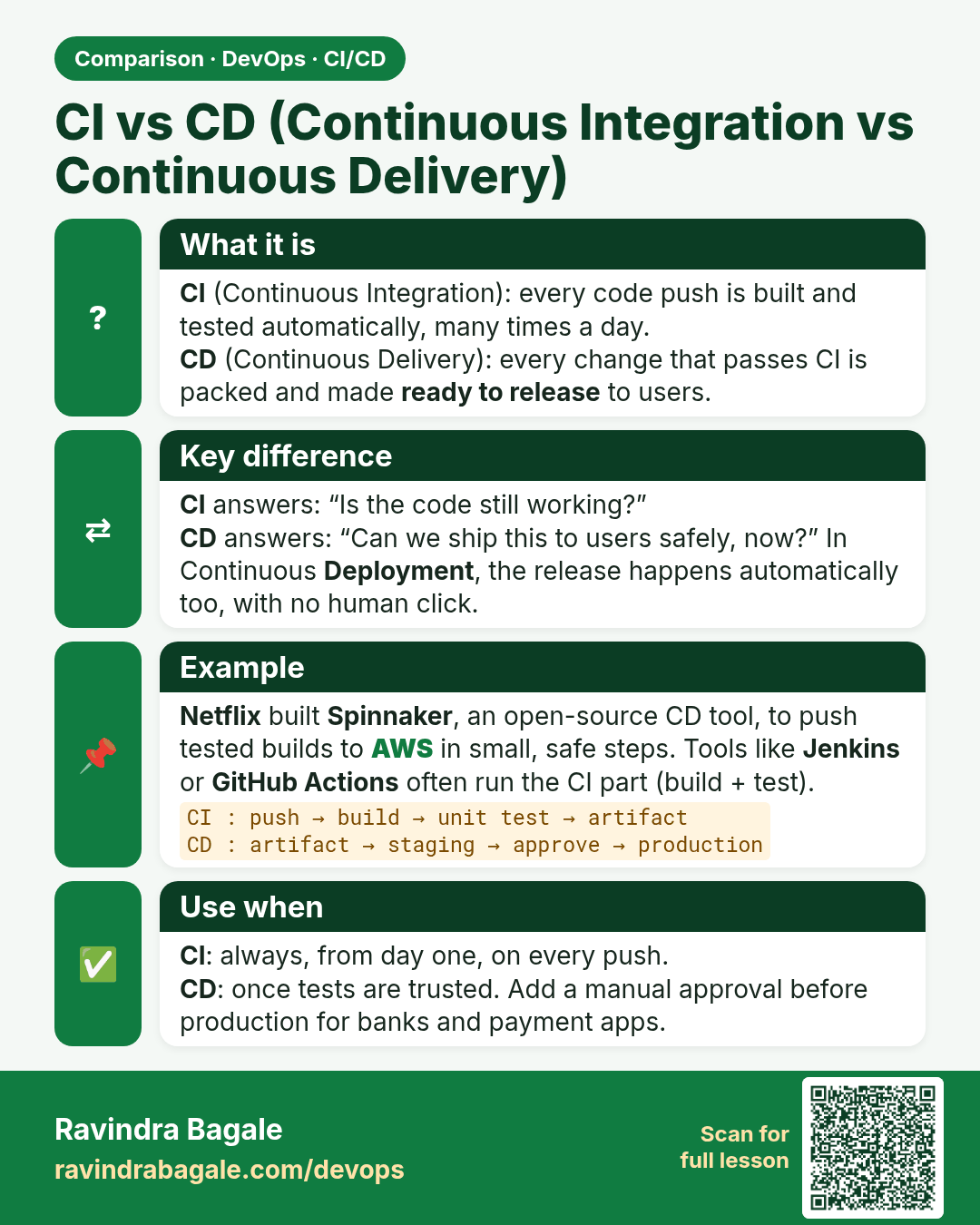
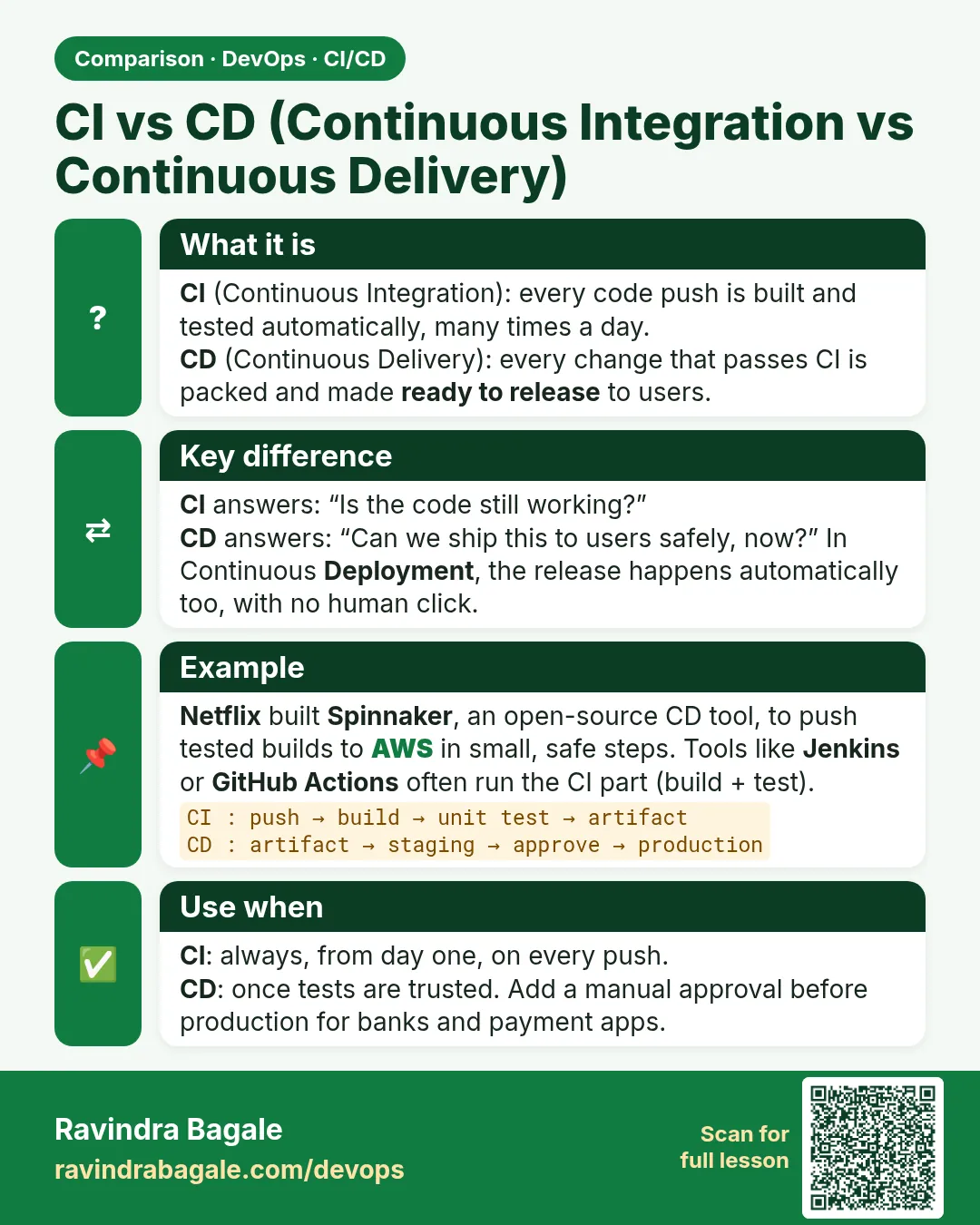 Comparison card 1 of 3: CI vs CD (Continuous Integration vs Continuous Delivery) · Download PNG · Open card page
Lesson: 8.7 CI vs CD vs deploy vs release (refresh)
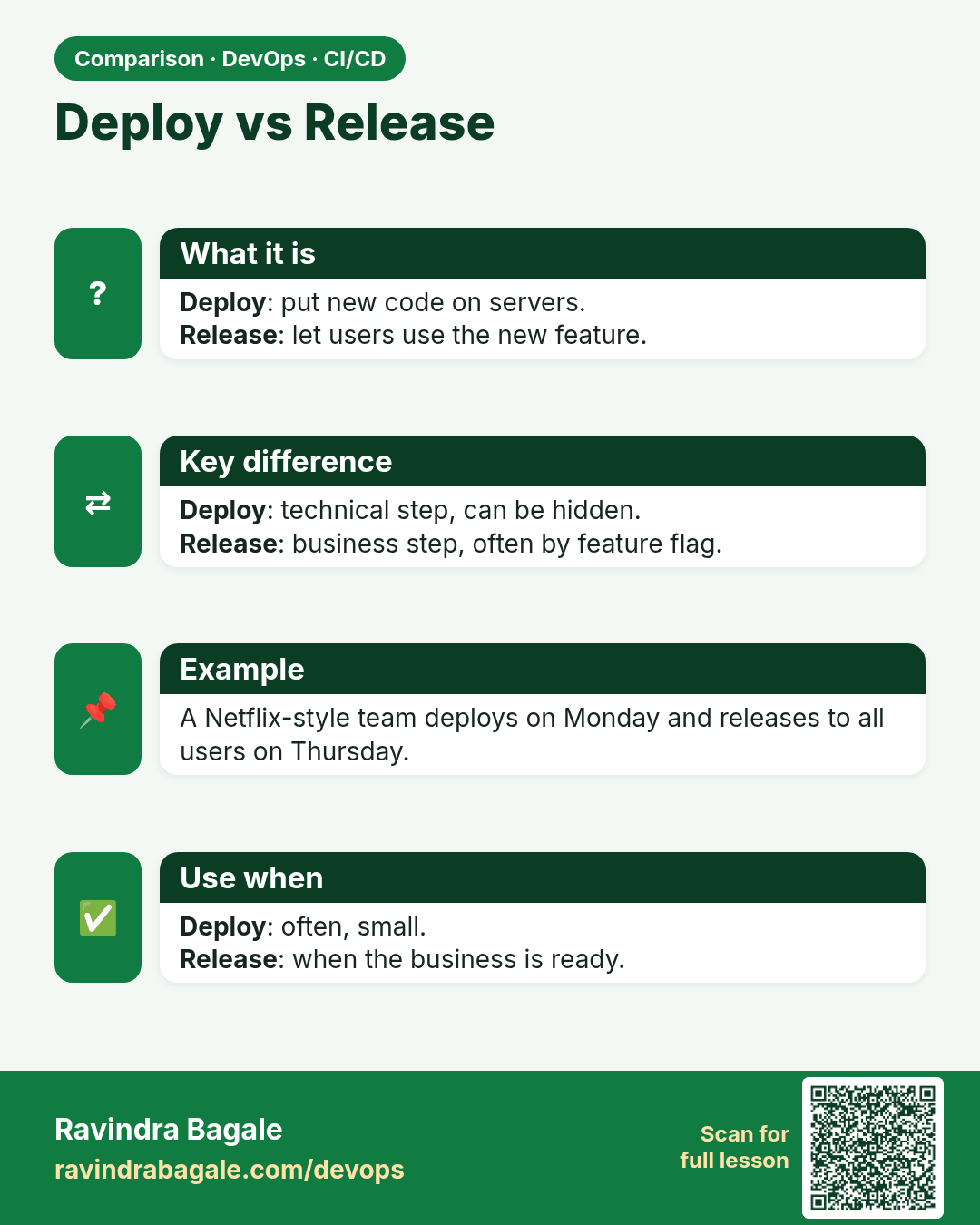
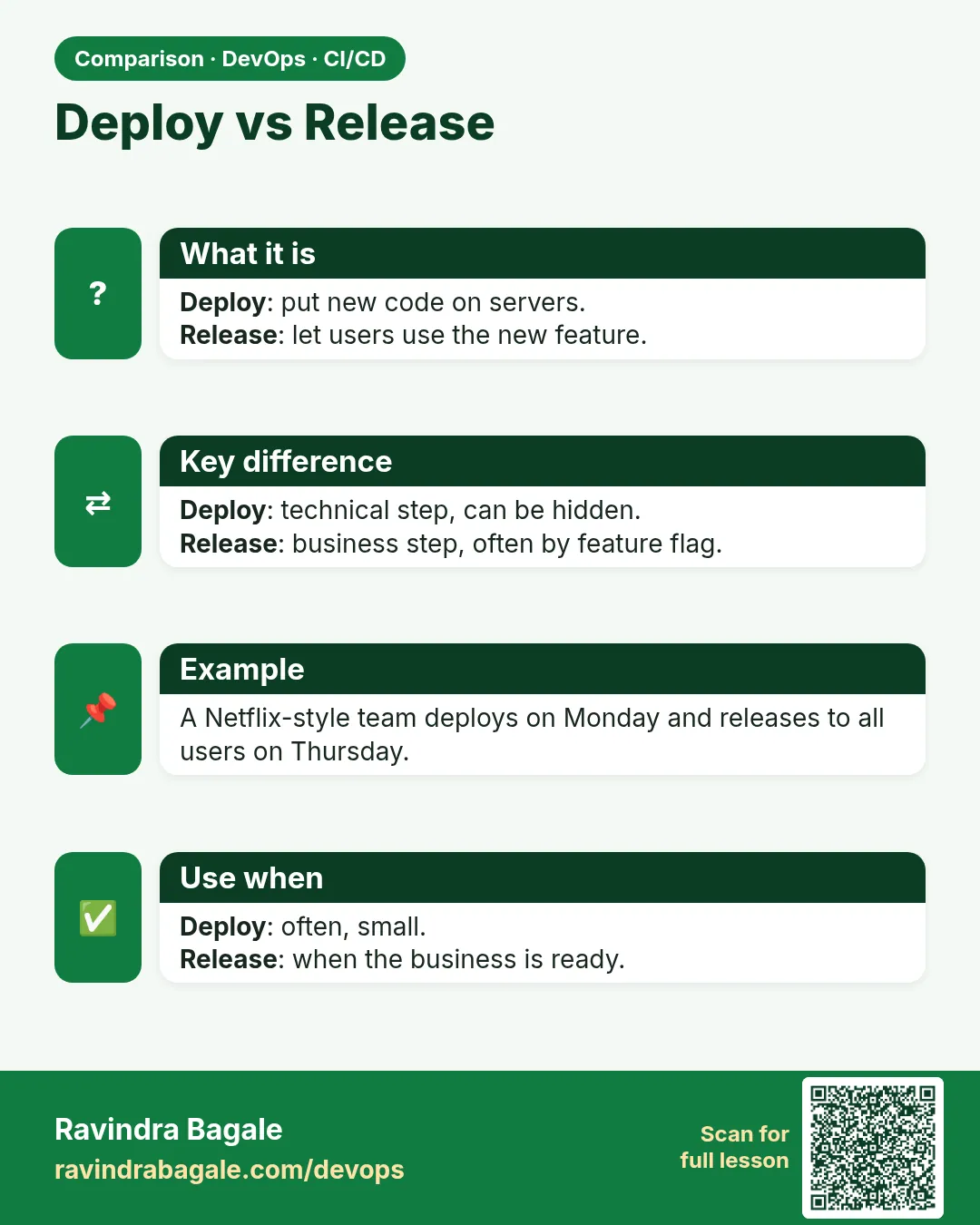 Comparison card 2 of 3: Deploy vs Release · Download PNG · Open card page
Lesson: 8.7 CI vs CD vs deploy vs release (refresh)
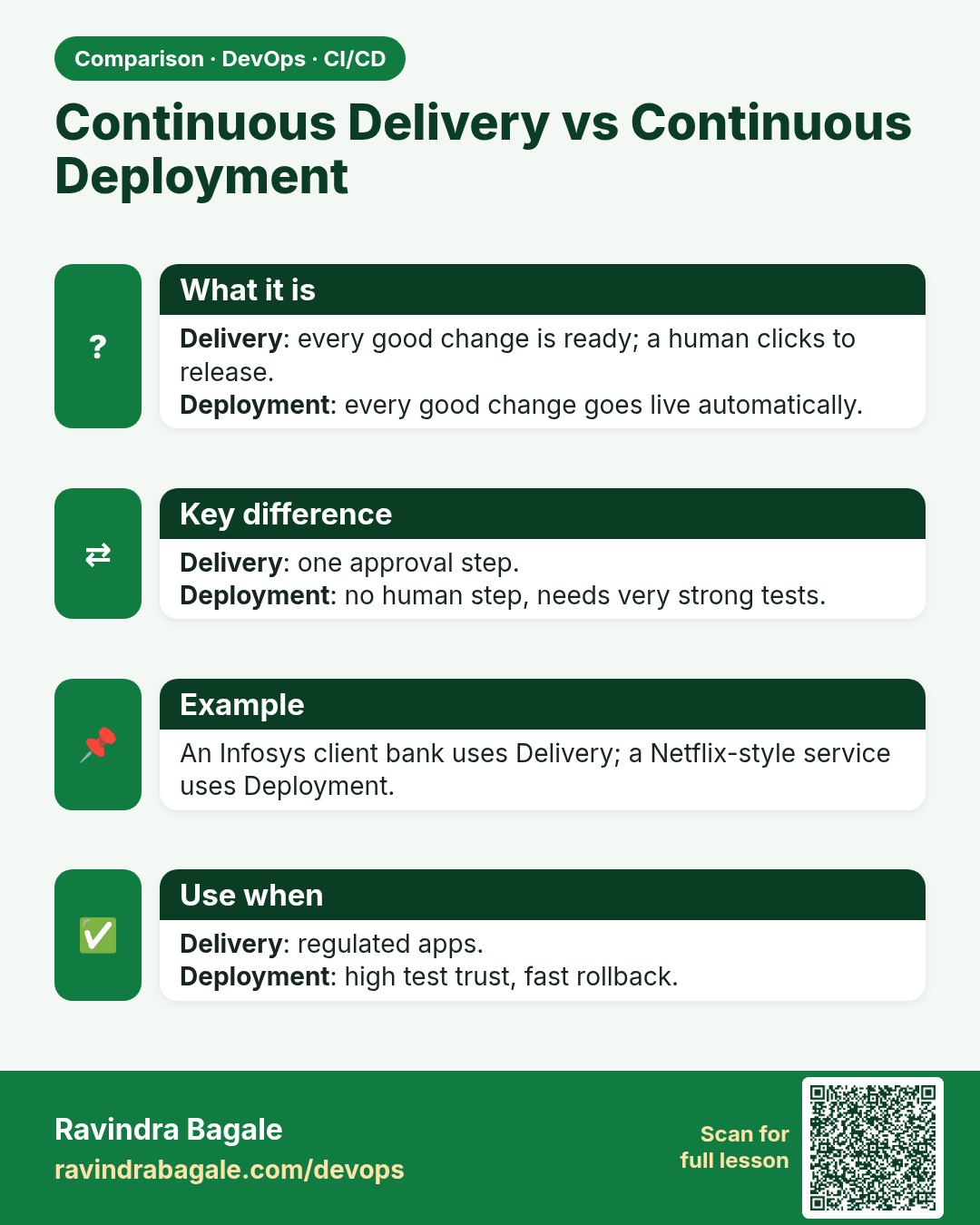
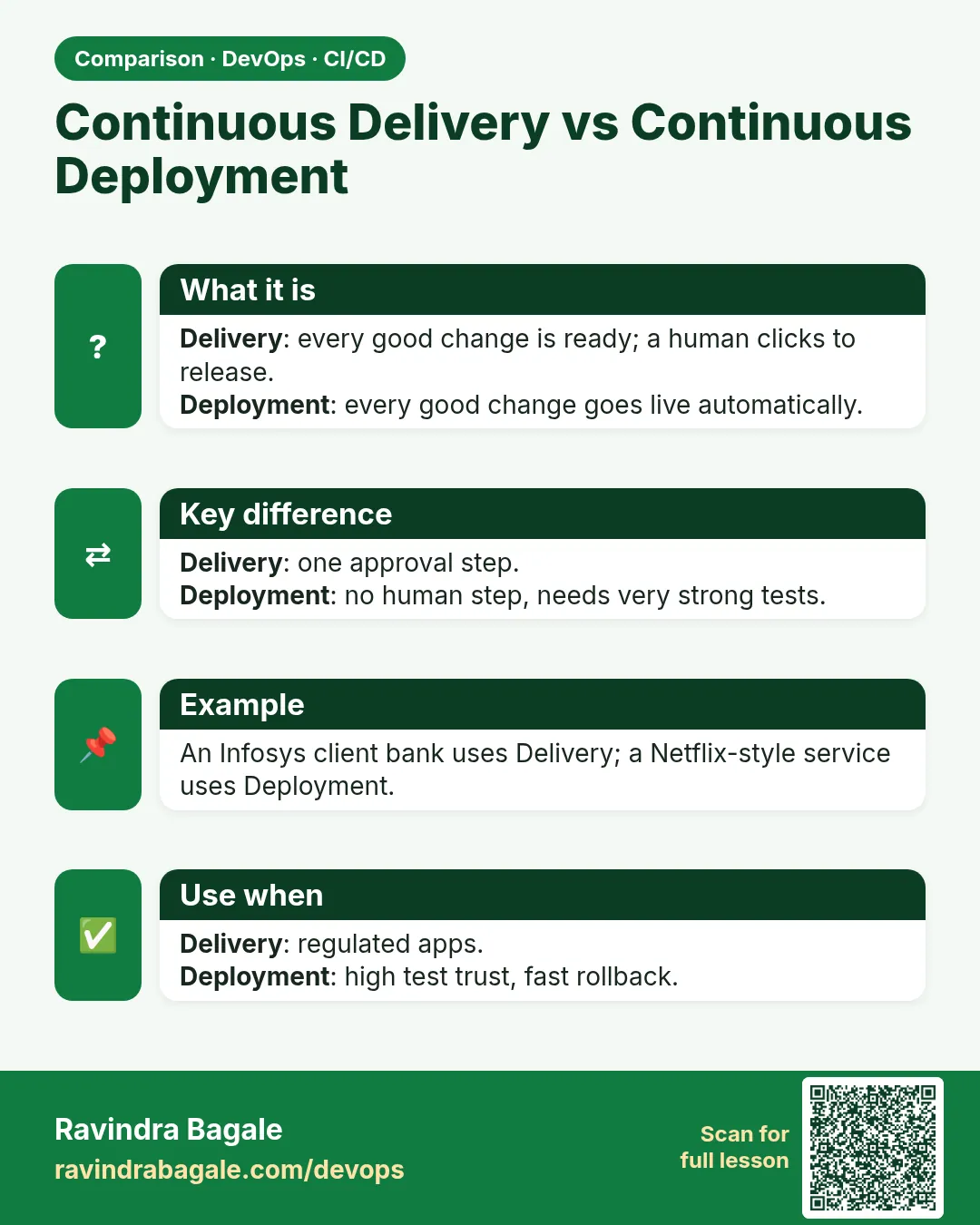 Comparison card 3 of 3: Continuous Delivery vs Continuous Deployment · Download PNG · Open card page
Lesson: 8.6 Manual approval for production — when and why