Ravindra BagaleCourses & study guides मराठी

Ravi Sir's Cards › DevOps

Chapter 27: Jenkins Agents: Cards

मराठी cards · Open the chapter

Revision cards
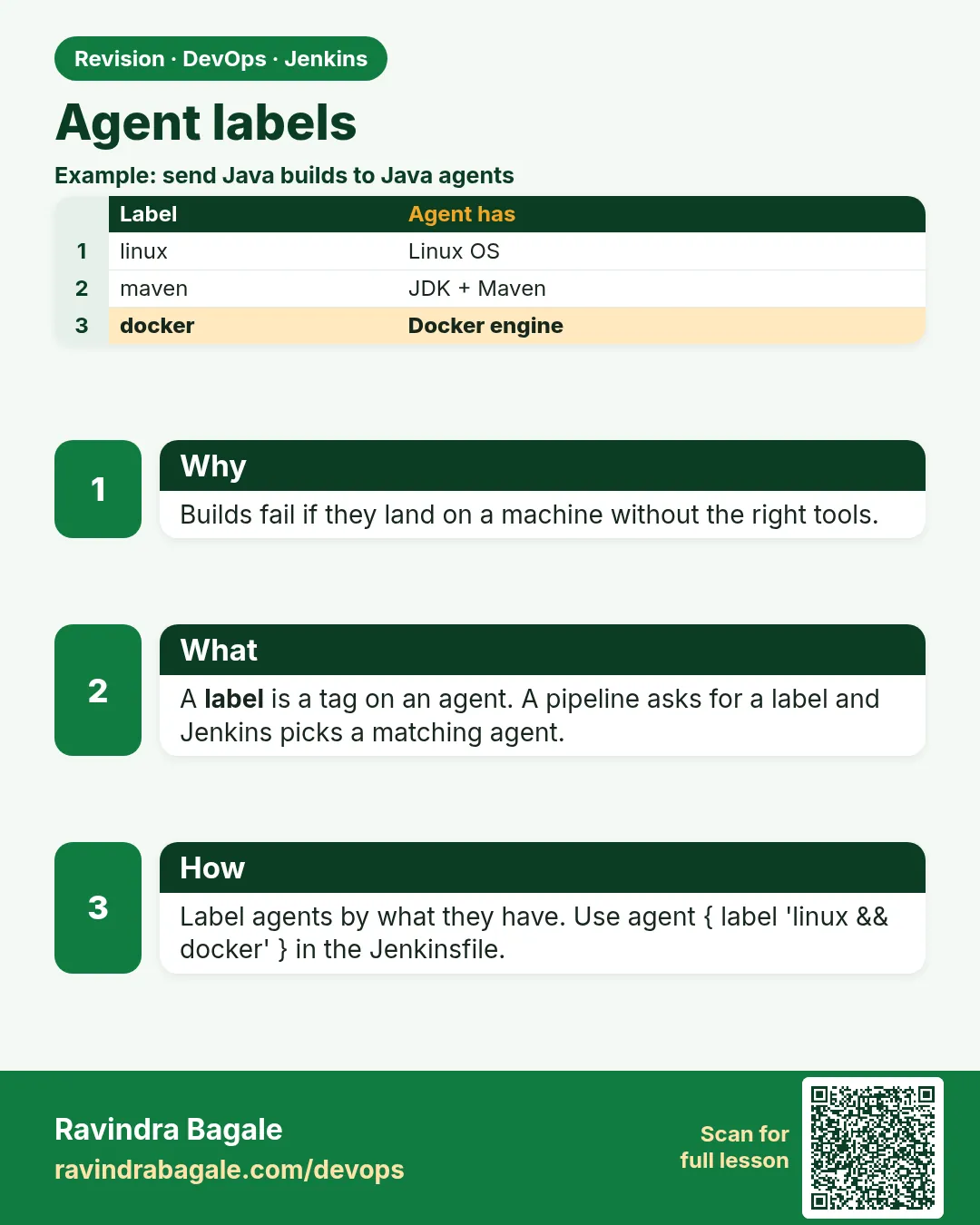
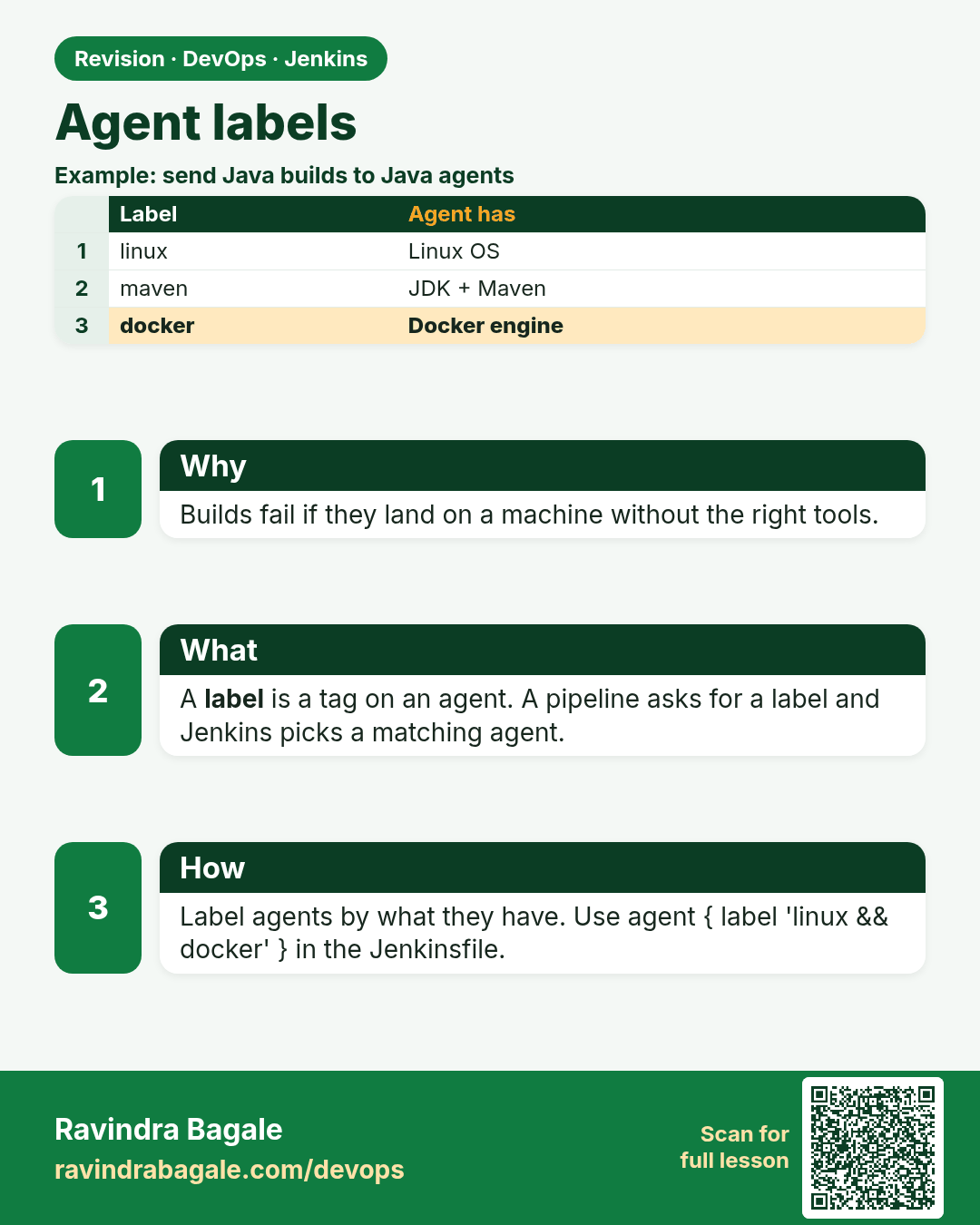
Agent labels. Builds fail if they land on a machine without the right tools.
Revision card 1 of 6: Agent labels · Download PNG · Open card page

Lesson: 27.1 Labels

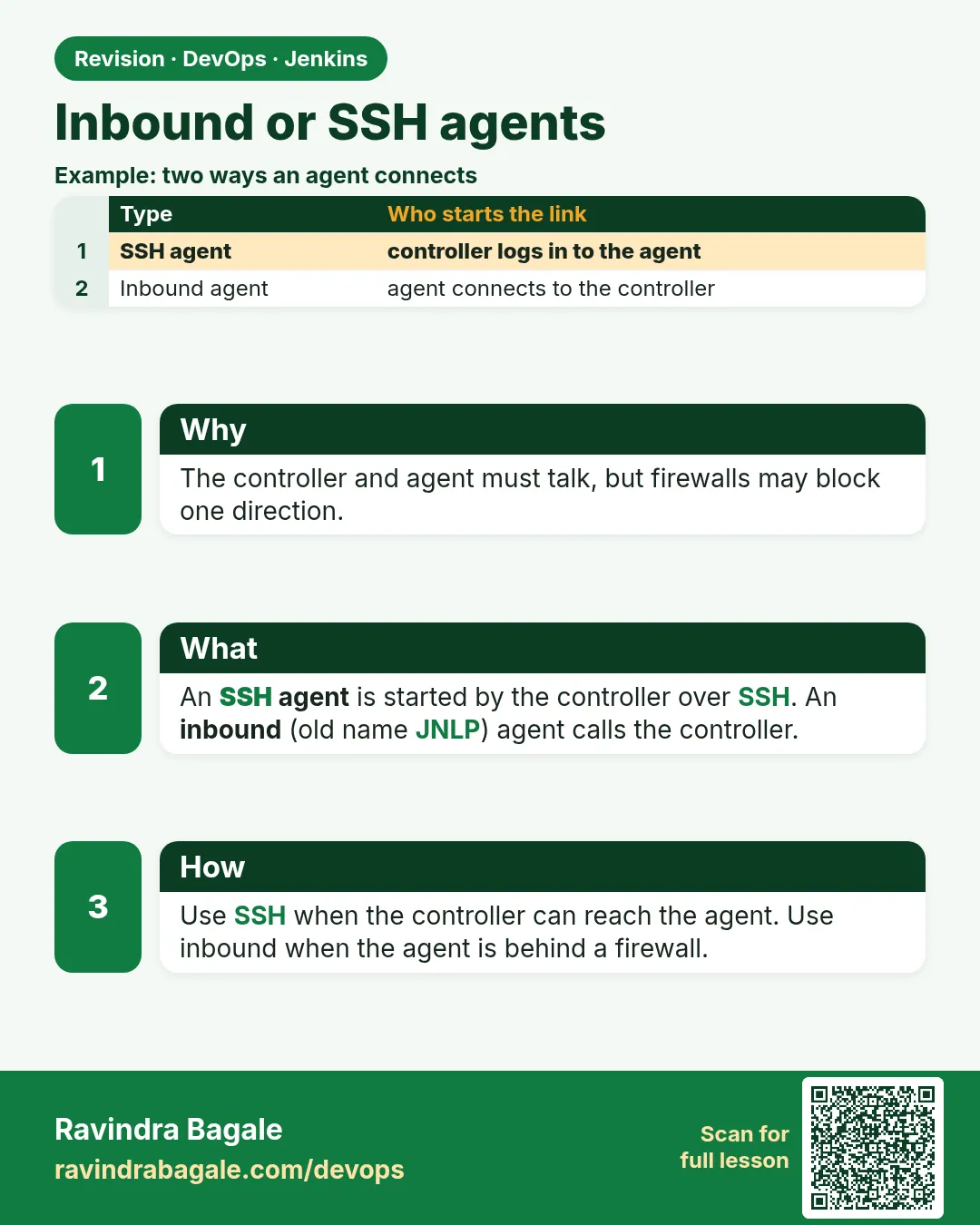
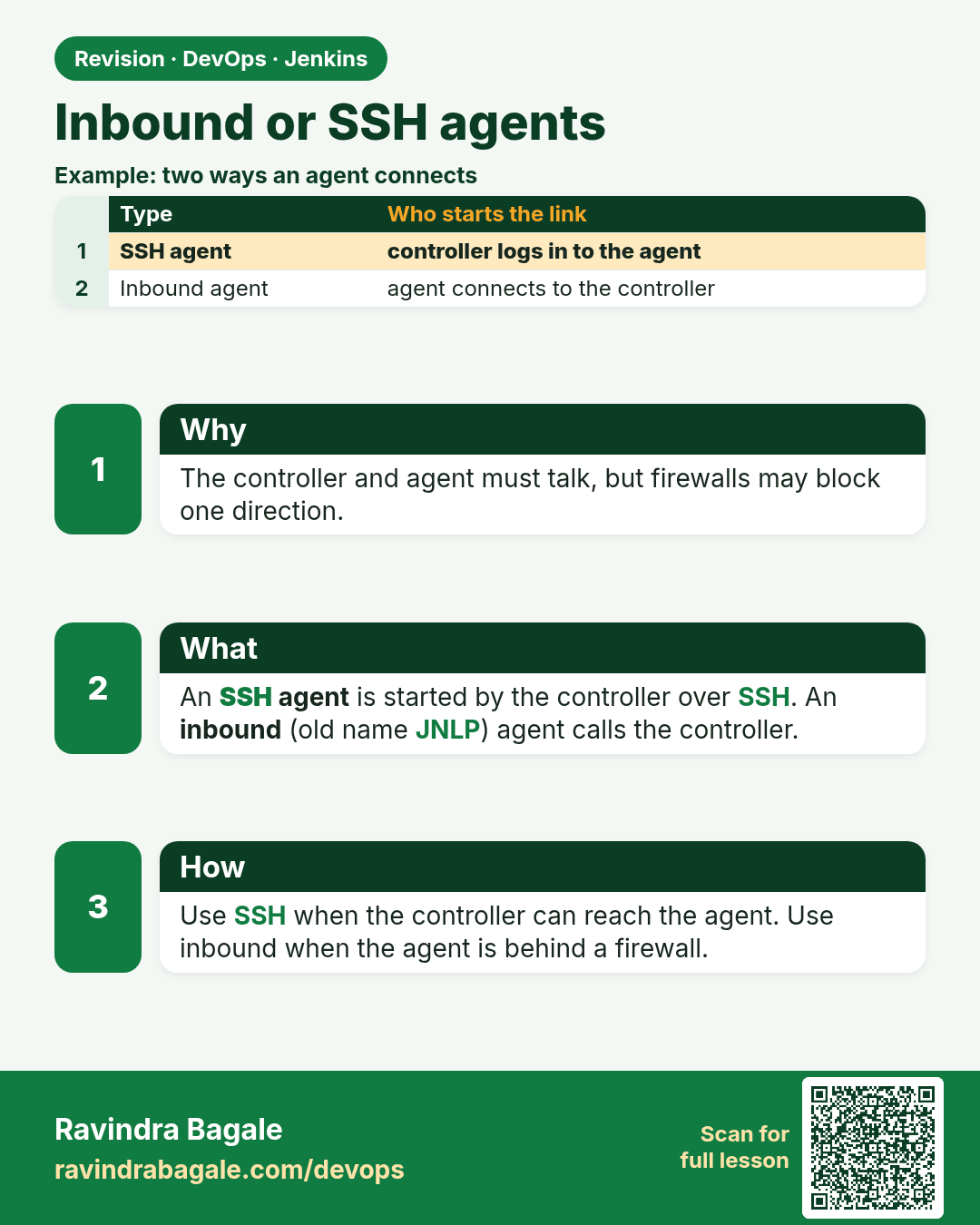
Inbound or SSH agents. The controller and agent must talk, but firewalls may block one direction.
Revision card 2 of 6: Inbound or SSH agents · Download PNG · Open card page

Lesson: 27.2 Inbound or SSH

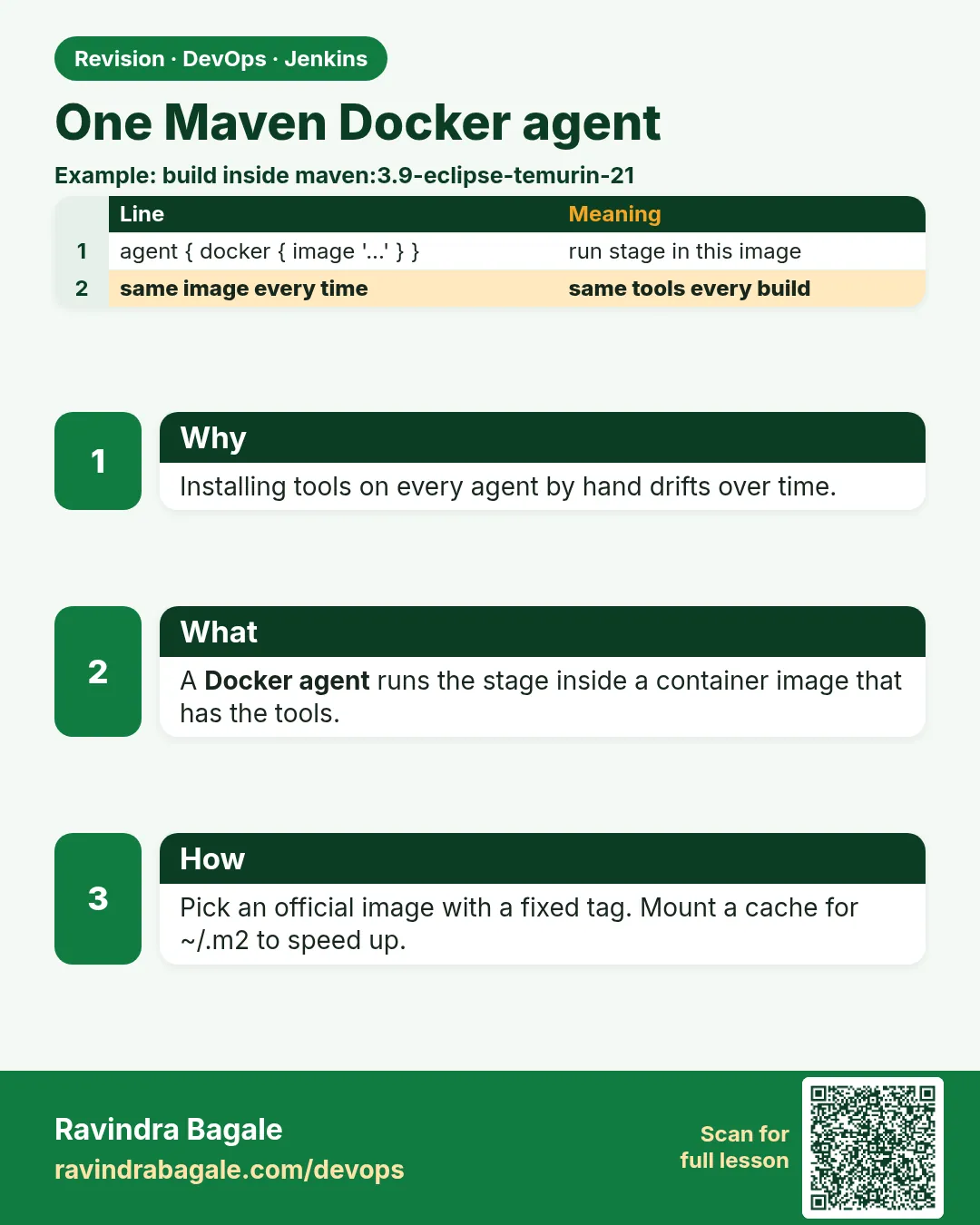
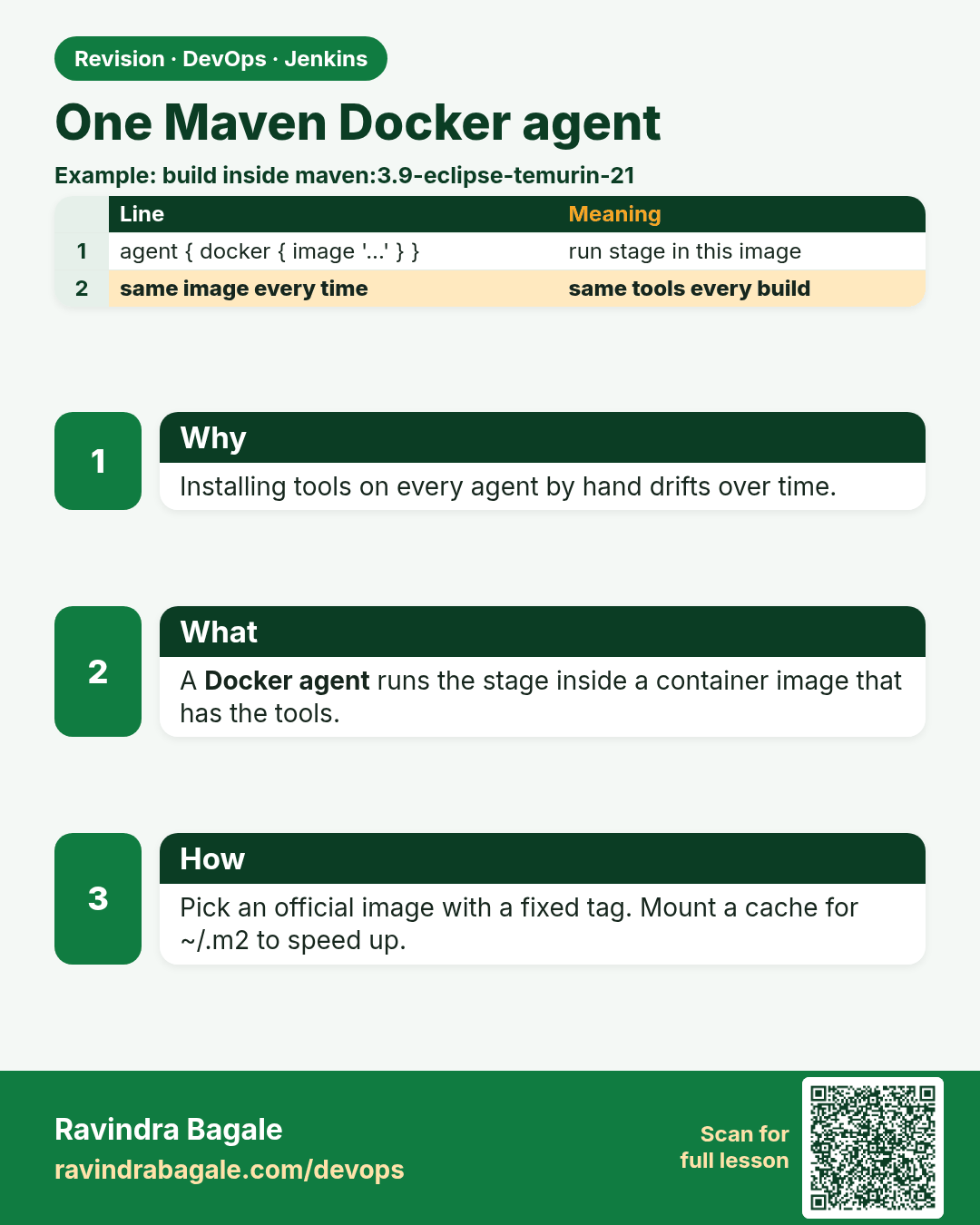
One Maven Docker agent. Installing tools on every agent by hand drifts over time.
Revision card 3 of 6: One Maven Docker agent · Download PNG · Open card page

Lesson: 27.3 One Maven Docker agent
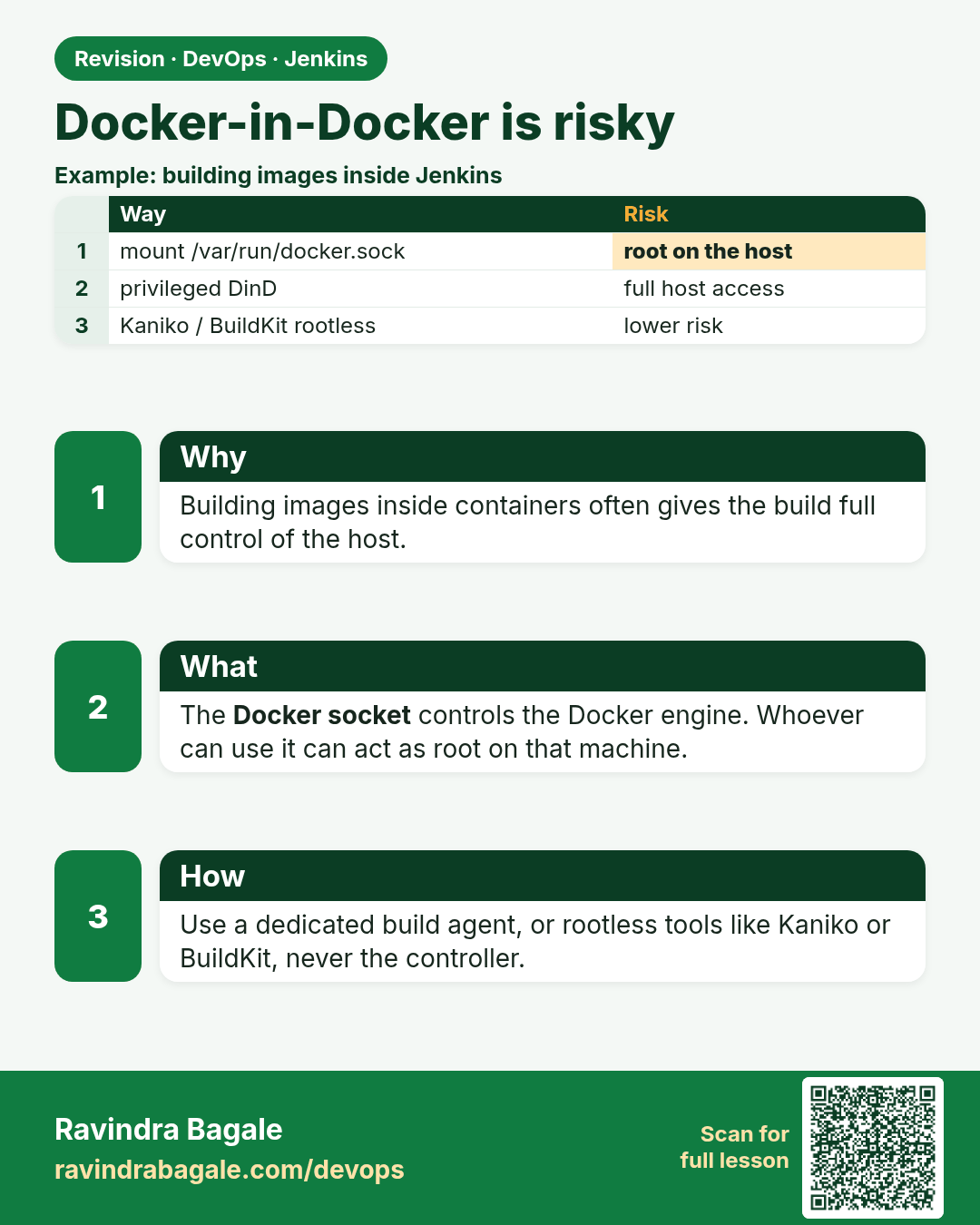
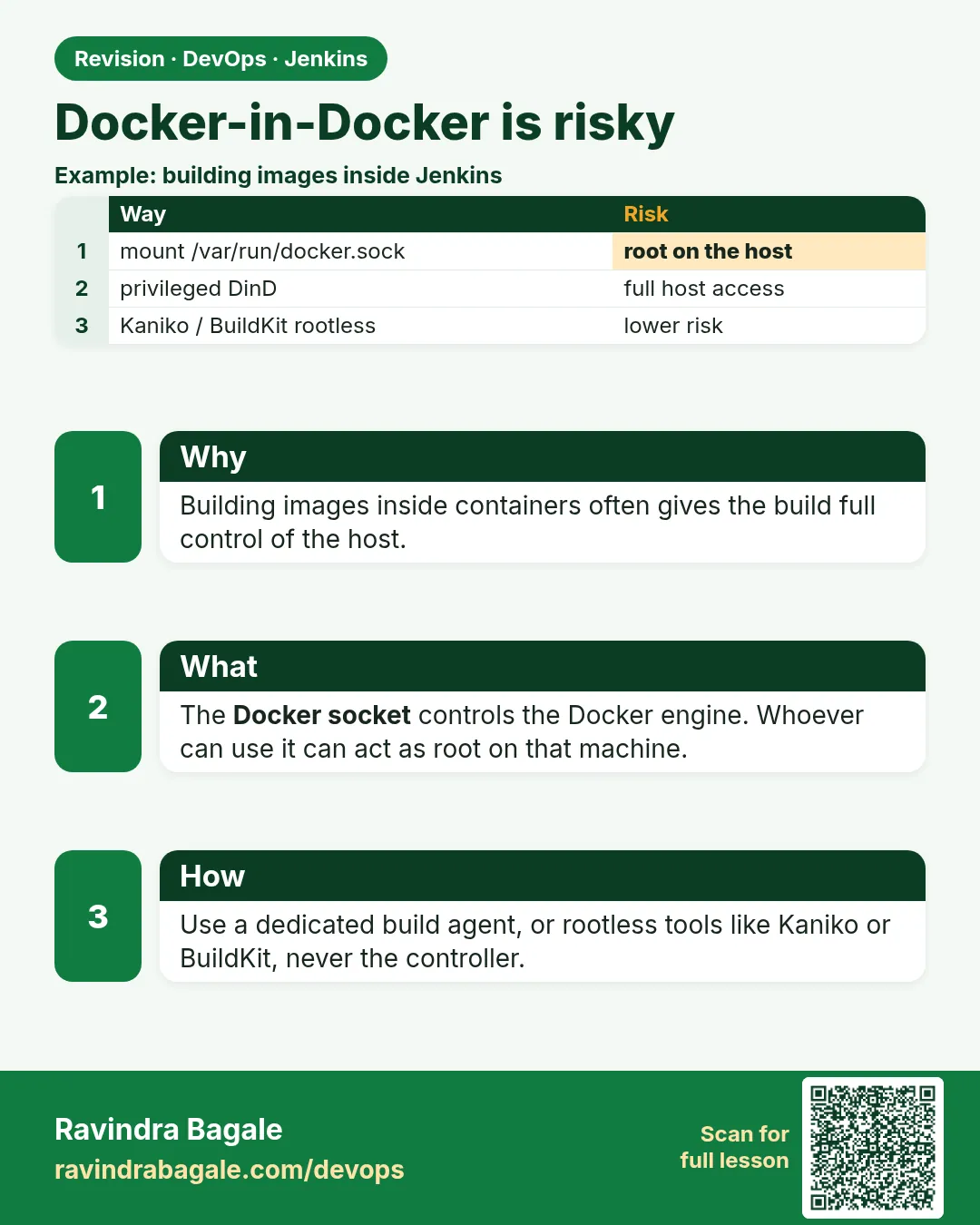
Docker-in-Docker is risky. Building images inside containers often gives the build full control of the host.
Revision card 4 of 6: Docker-in-Docker is risky · Download PNG · Open card page

Lesson: 27.4 Docker-in-Docker is risky
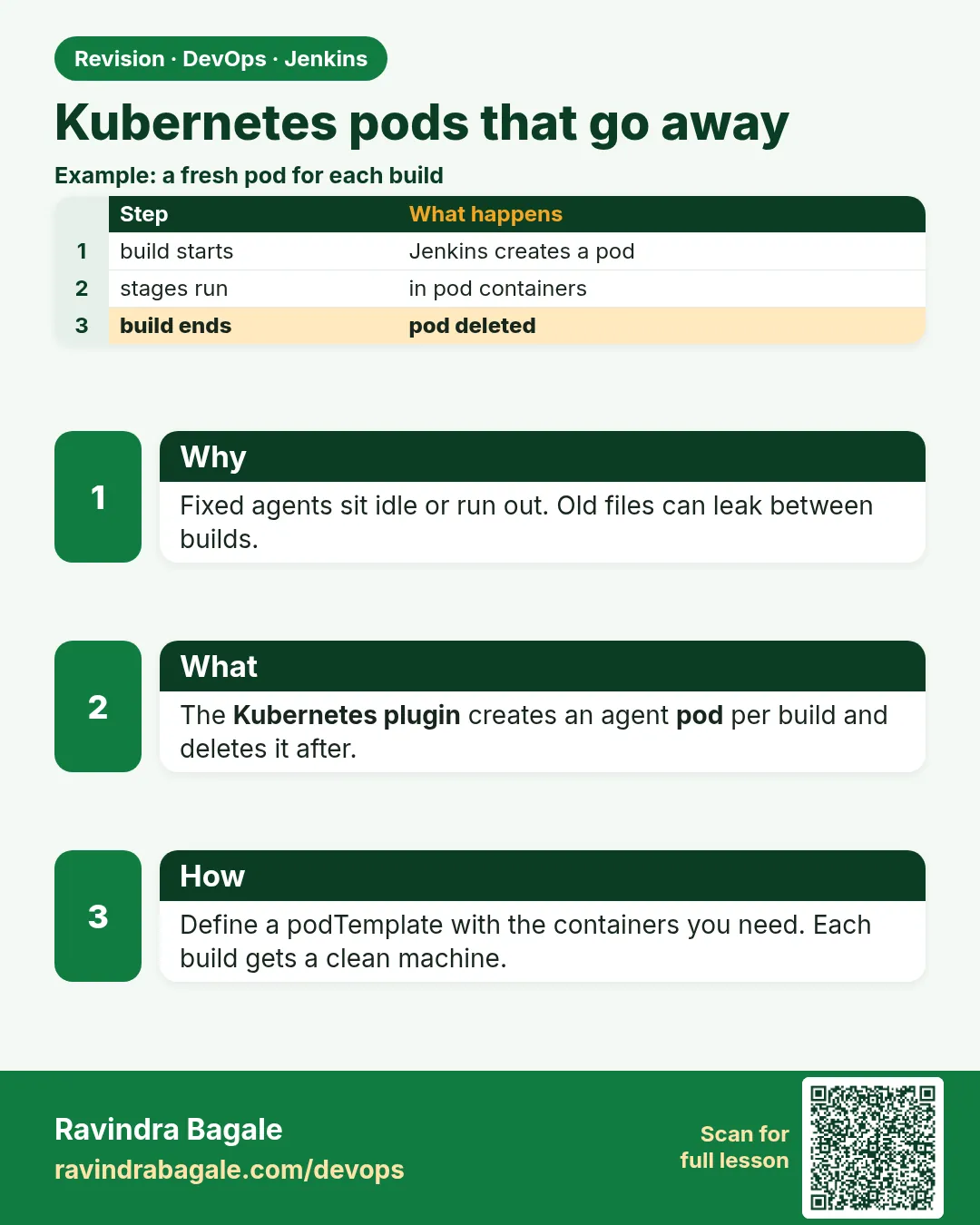
Kubernetes pods that go away. Fixed agents sit idle or run out. Old files can leak between builds.
Revision card 5 of 6: Kubernetes pods that go away · Download PNG · Open card page

Lesson: 27.5 Kubernetes pods that go away

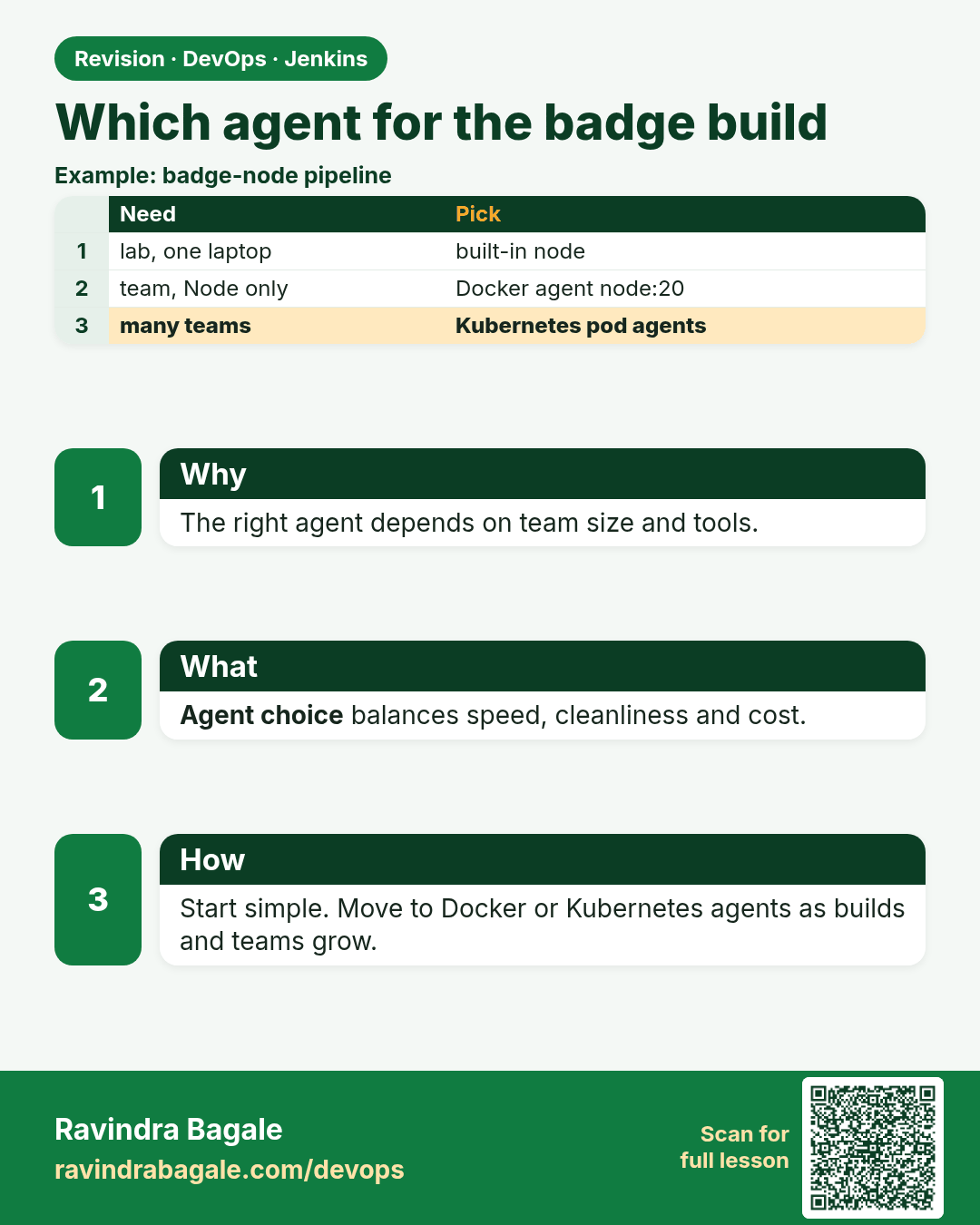
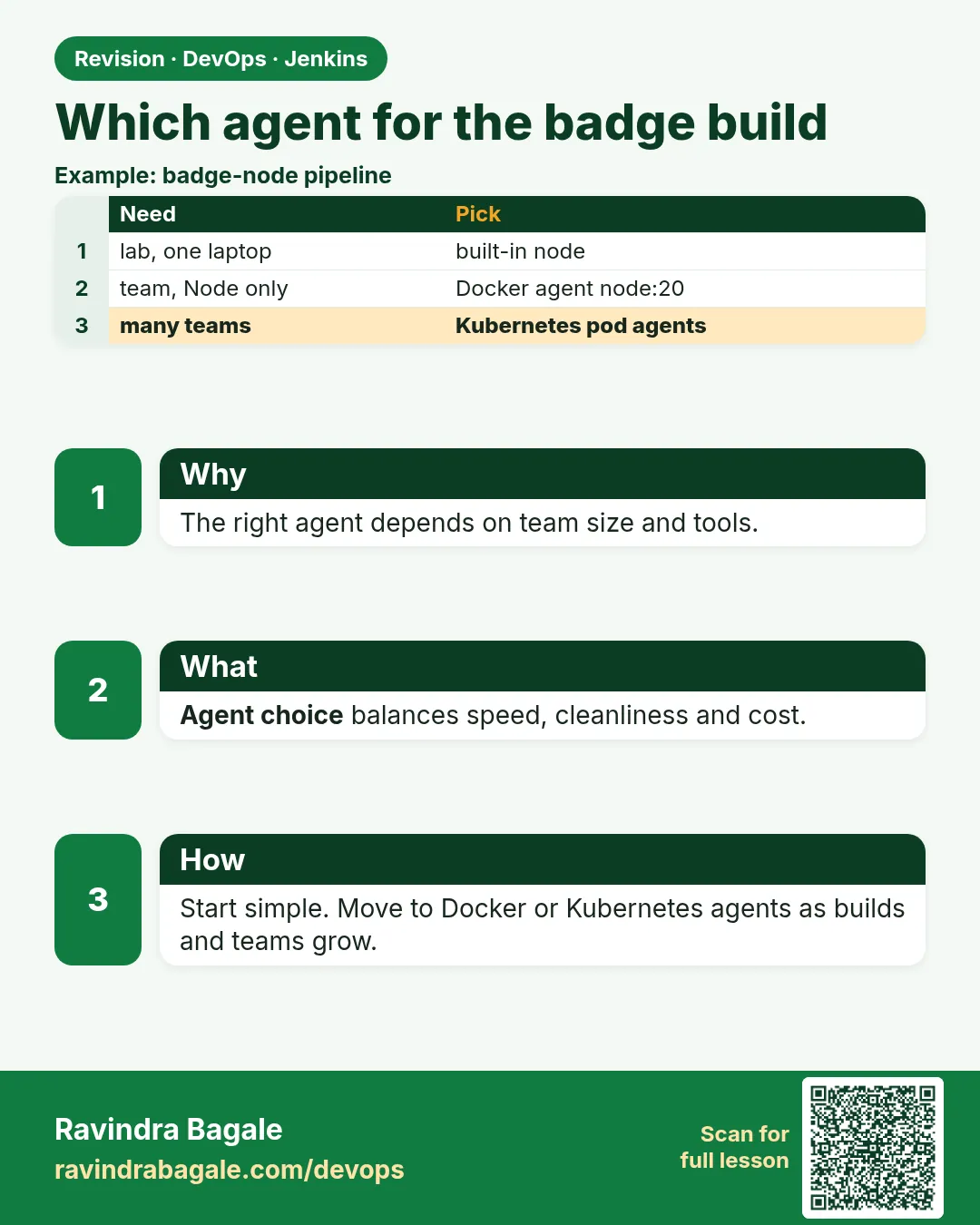
Which agent for the badge build. The right agent depends on team size and tools.
Revision card 6 of 6: Which agent for the badge build · Download PNG · Open card page

Lesson: 27.6 Which agent for the badge

Interview cards

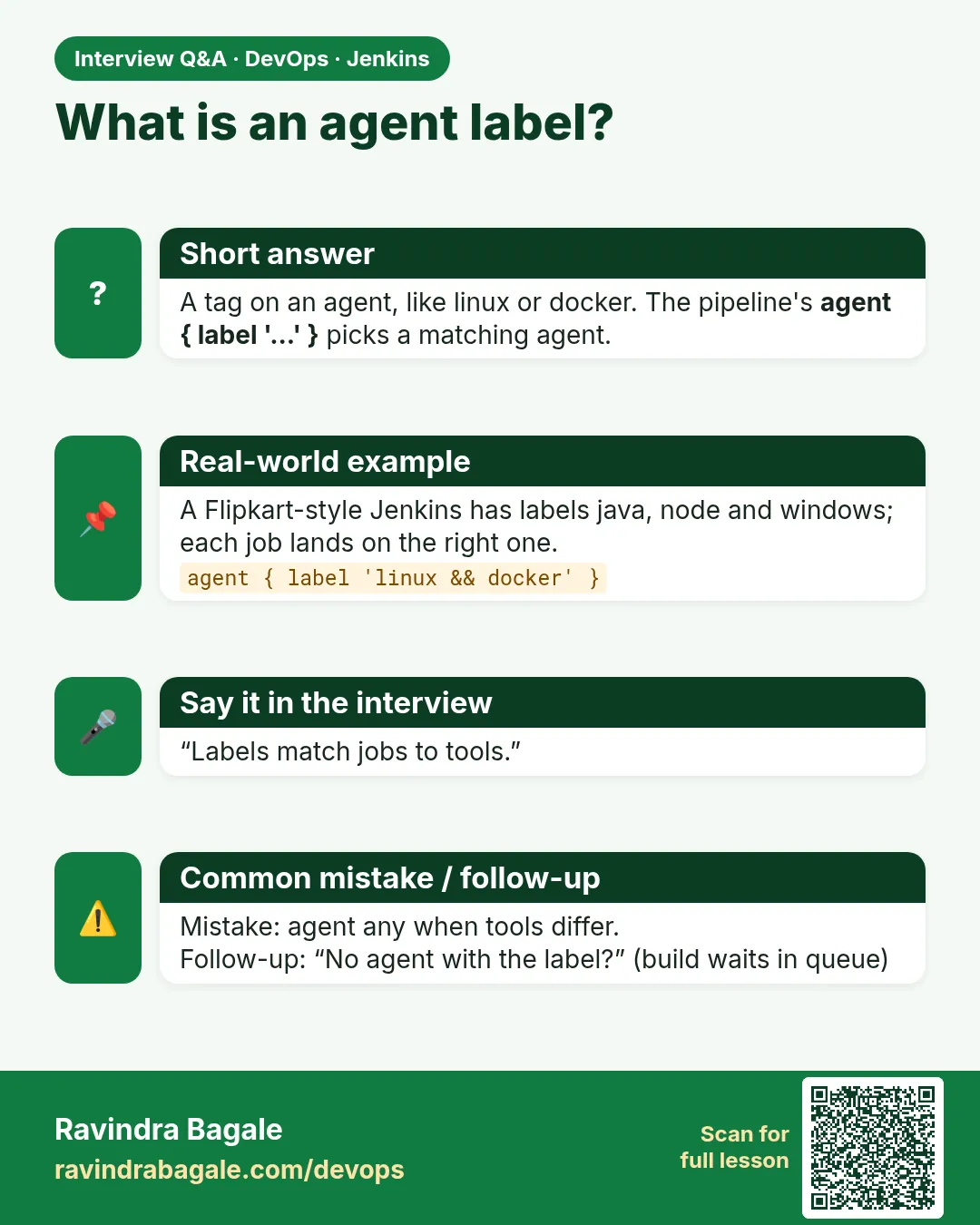
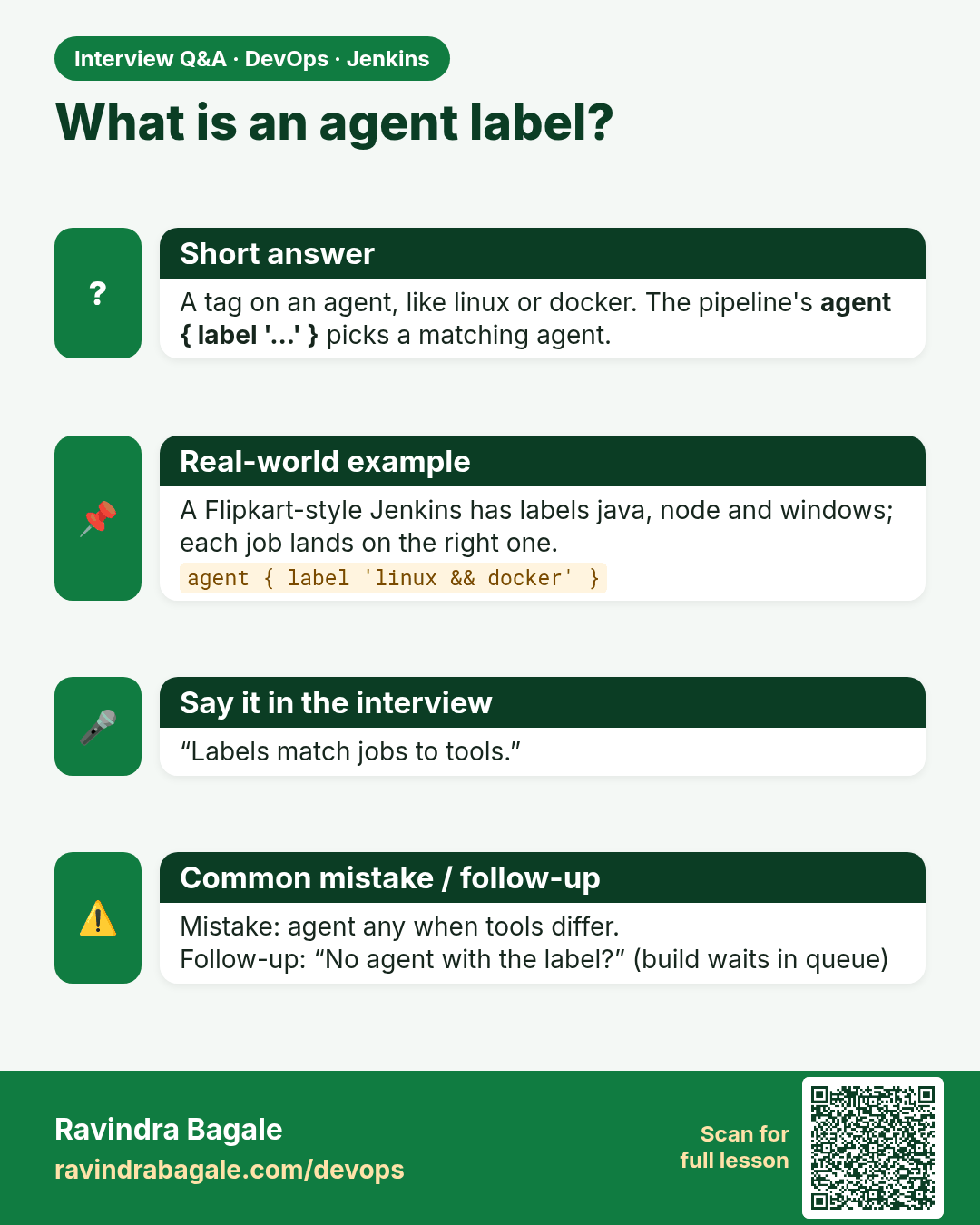
What is an agent label? A tag on an agent, like linux or docker. The pipeline's agent { label '...' } picks a matching agent.
Interview card 1 of 6: What is an agent label? · Download PNG · Open card page

Lesson: 27.1 Labels

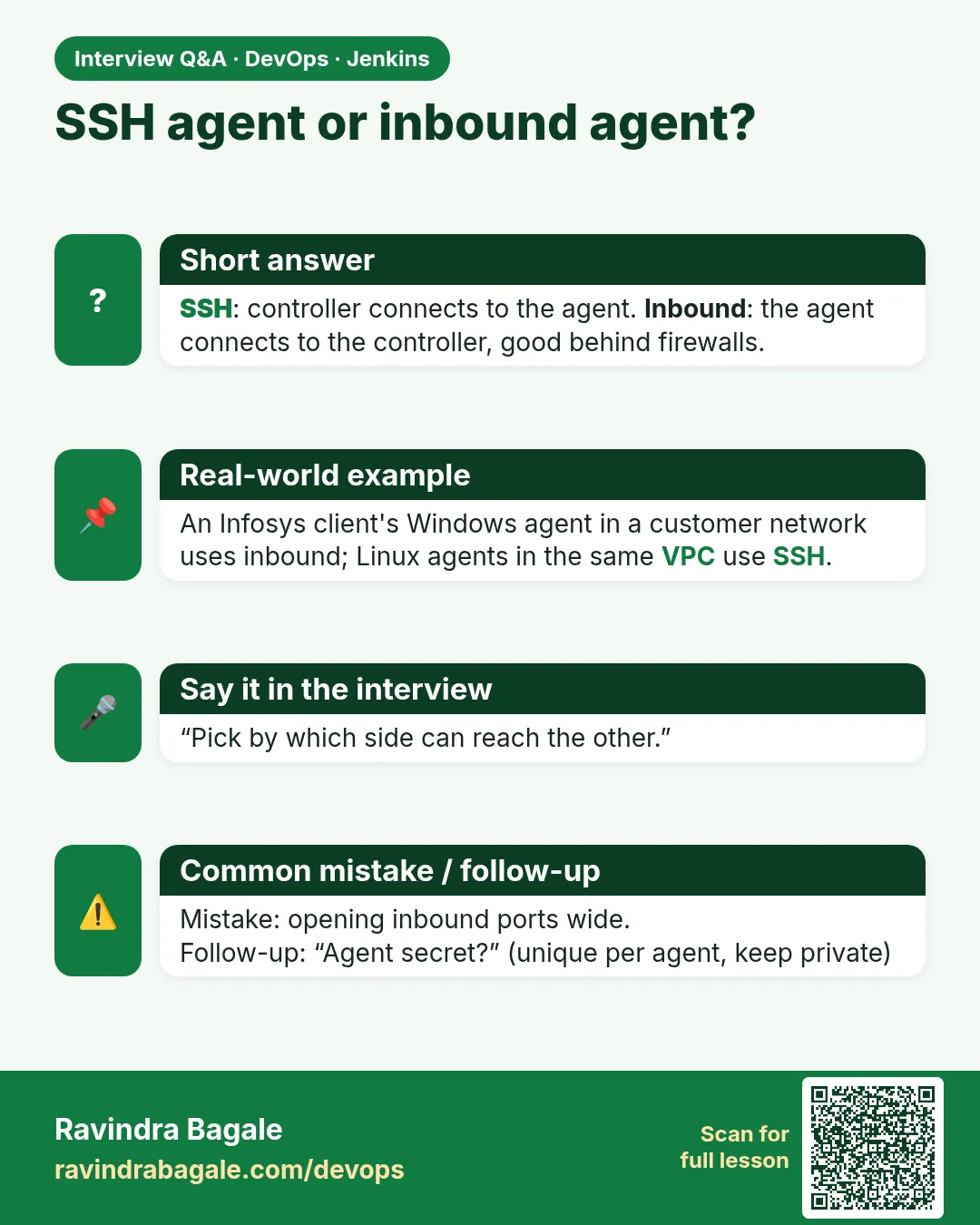
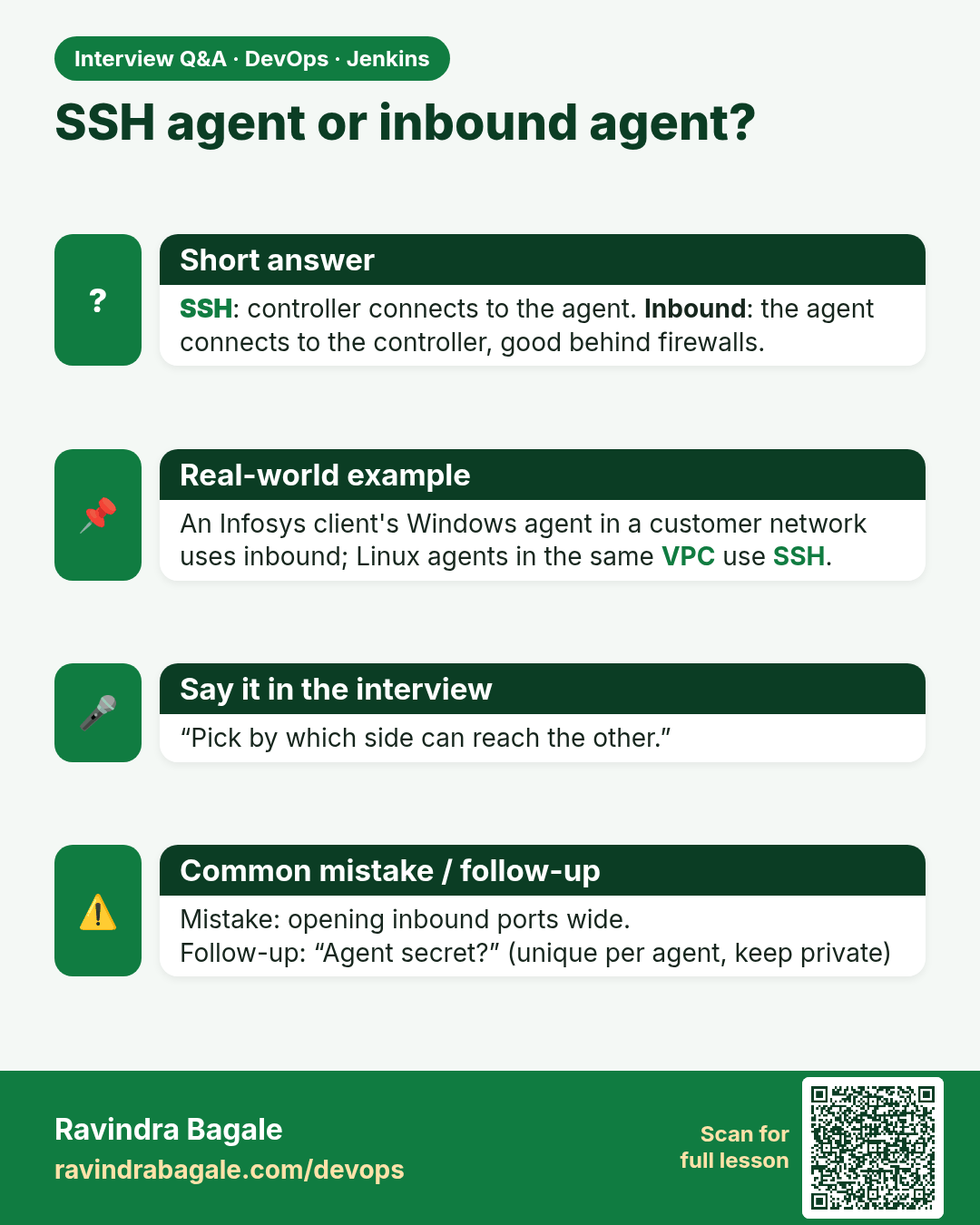
SSH agent or inbound agent? SSH: controller connects to the agent. Inbound: the agent connects to the controller, good behind firewalls.
Interview card 2 of 6: SSH agent or inbound agent? · Download PNG · Open card page

Lesson: 27.2 Inbound or SSH

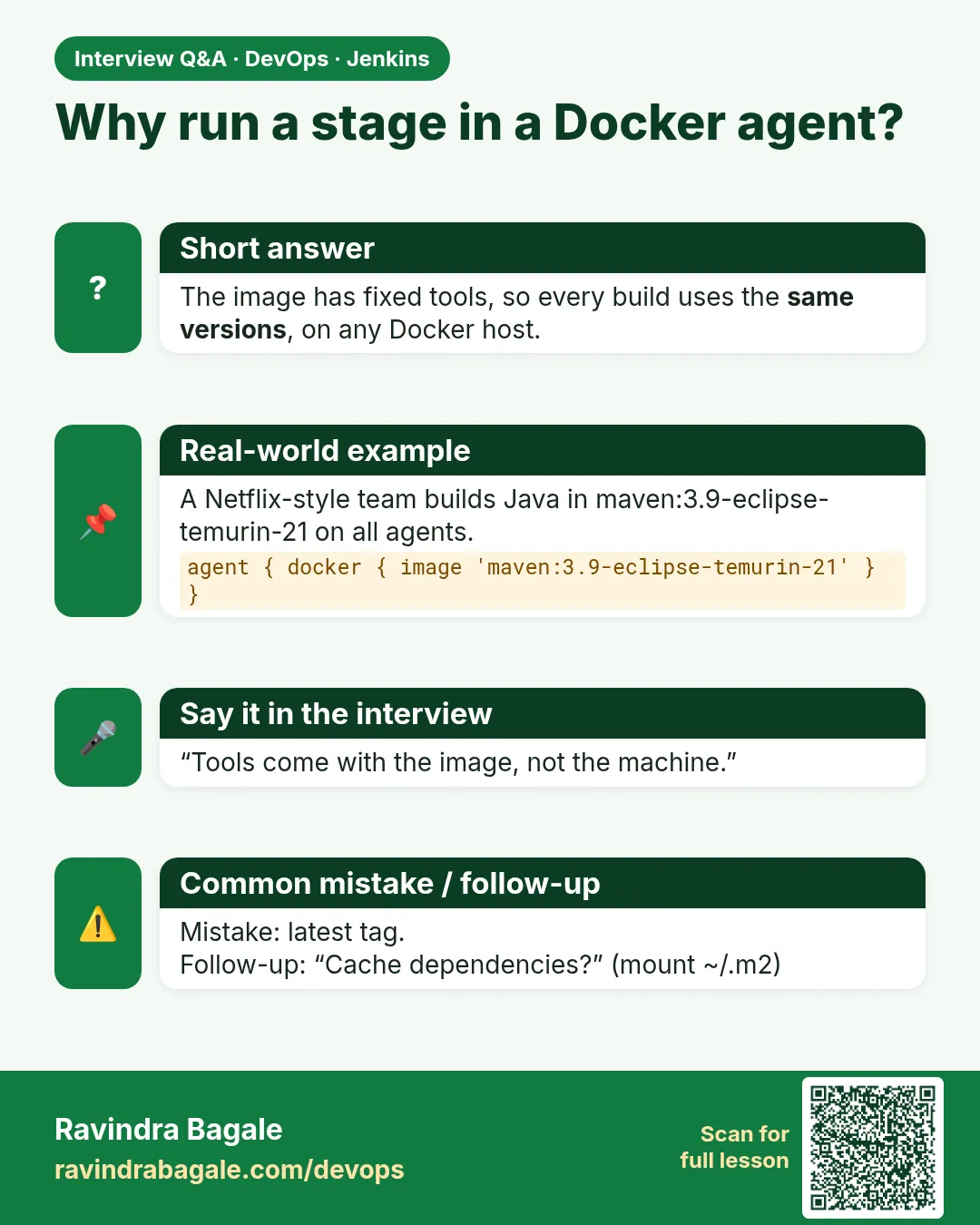
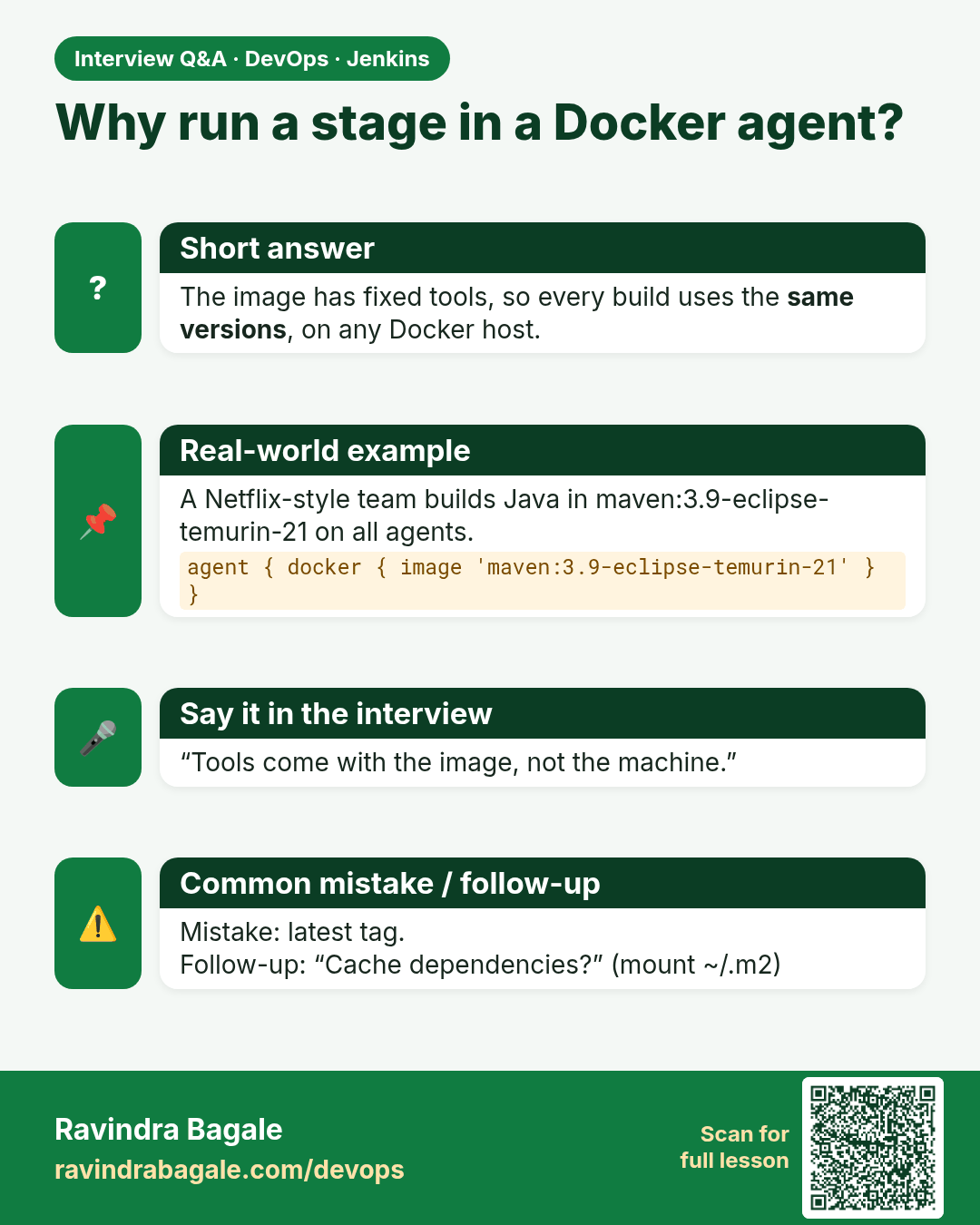
Why run a stage in a Docker agent? The image has fixed tools, so every build uses the same versions, on any Docker host.
Interview card 3 of 6: Why run a stage in a Docker agent? · Download PNG · Open card page

Lesson: 27.3 One Maven Docker agent

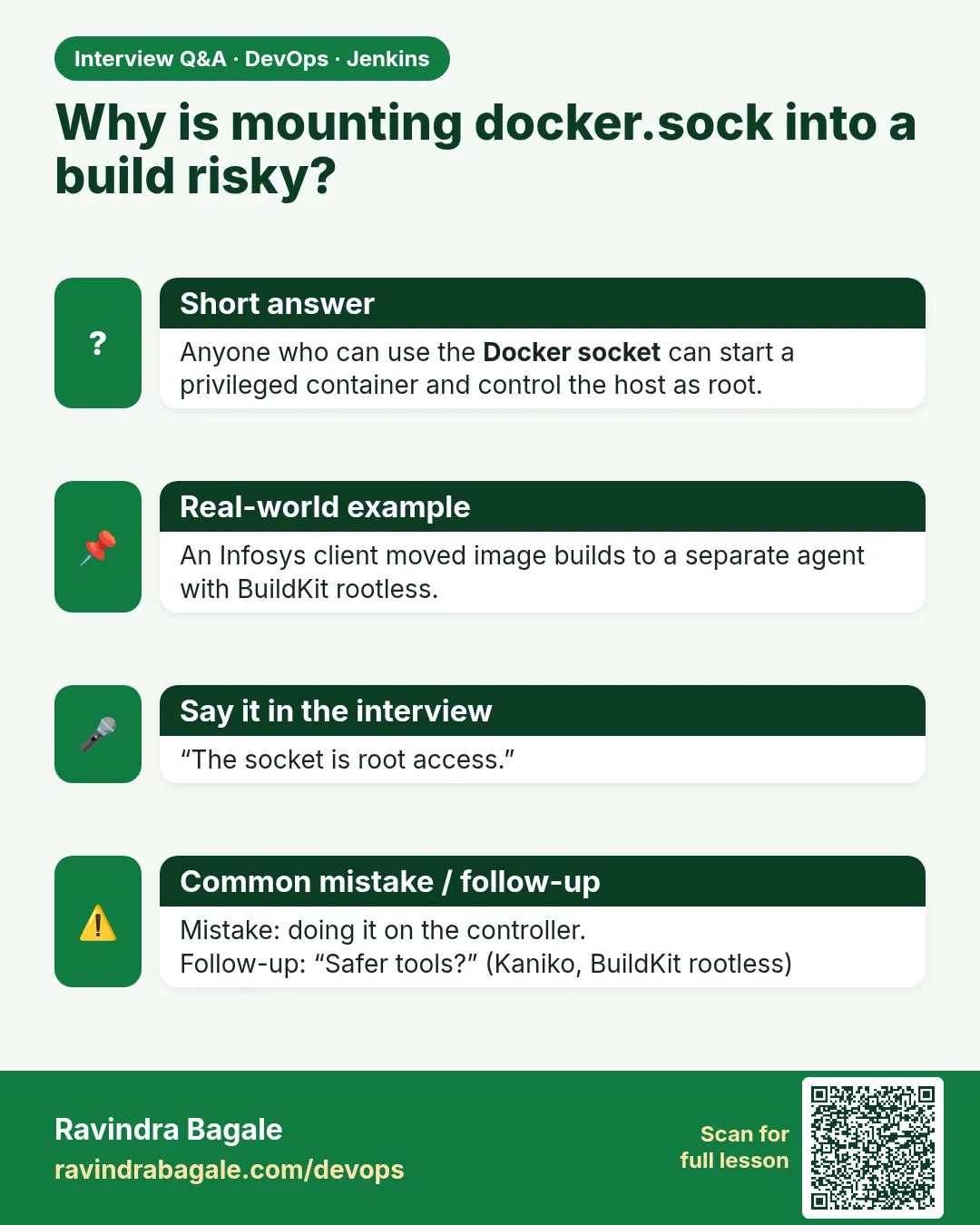
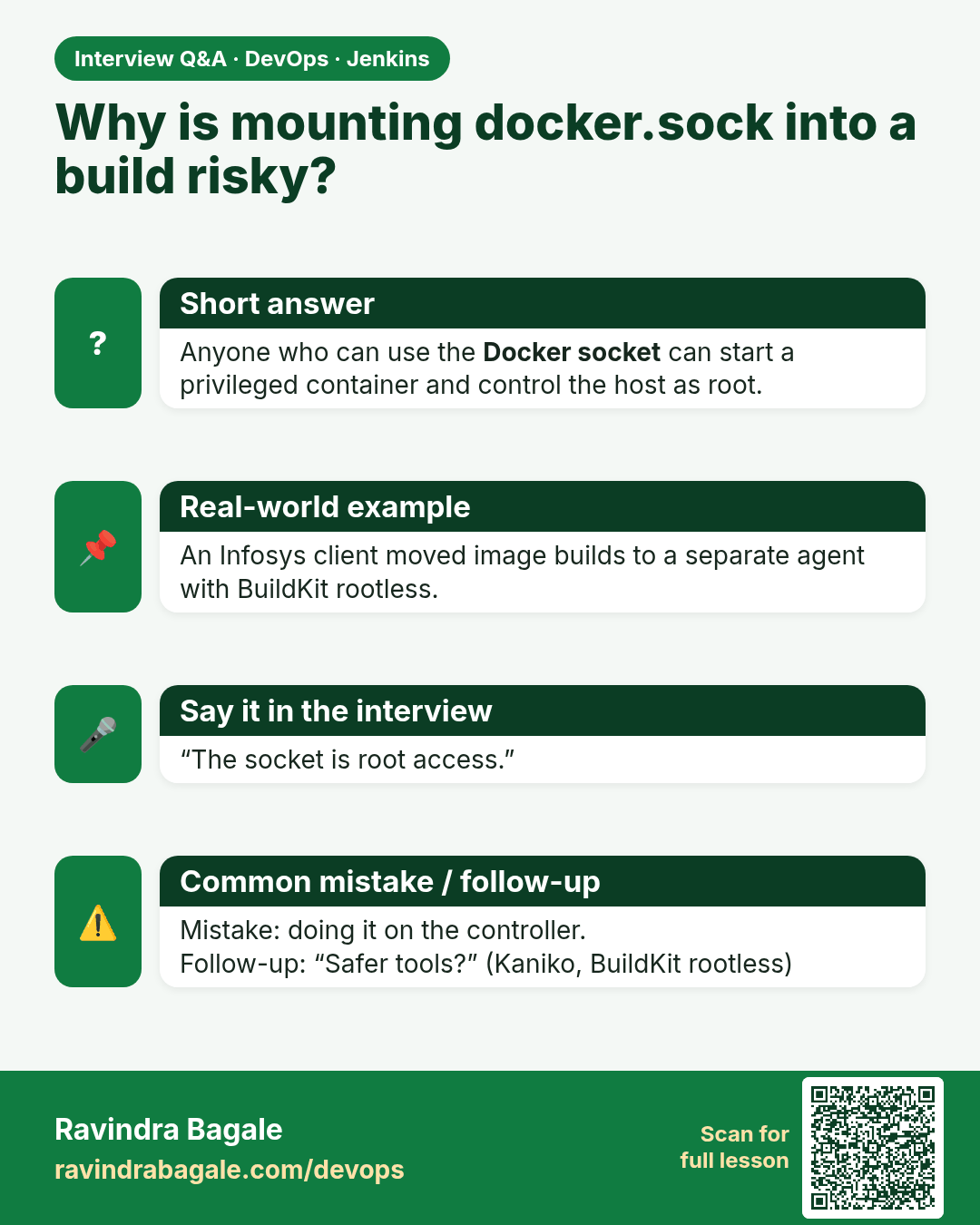
Why is mounting docker.sock into a build risky? Anyone who can use the Docker socket can start a privileged container and control the host as root.
Interview card 4 of 6: Why is mounting docker.sock into a build risky? · Download PNG · Open card page

Lesson: 27.4 Docker-in-Docker is risky
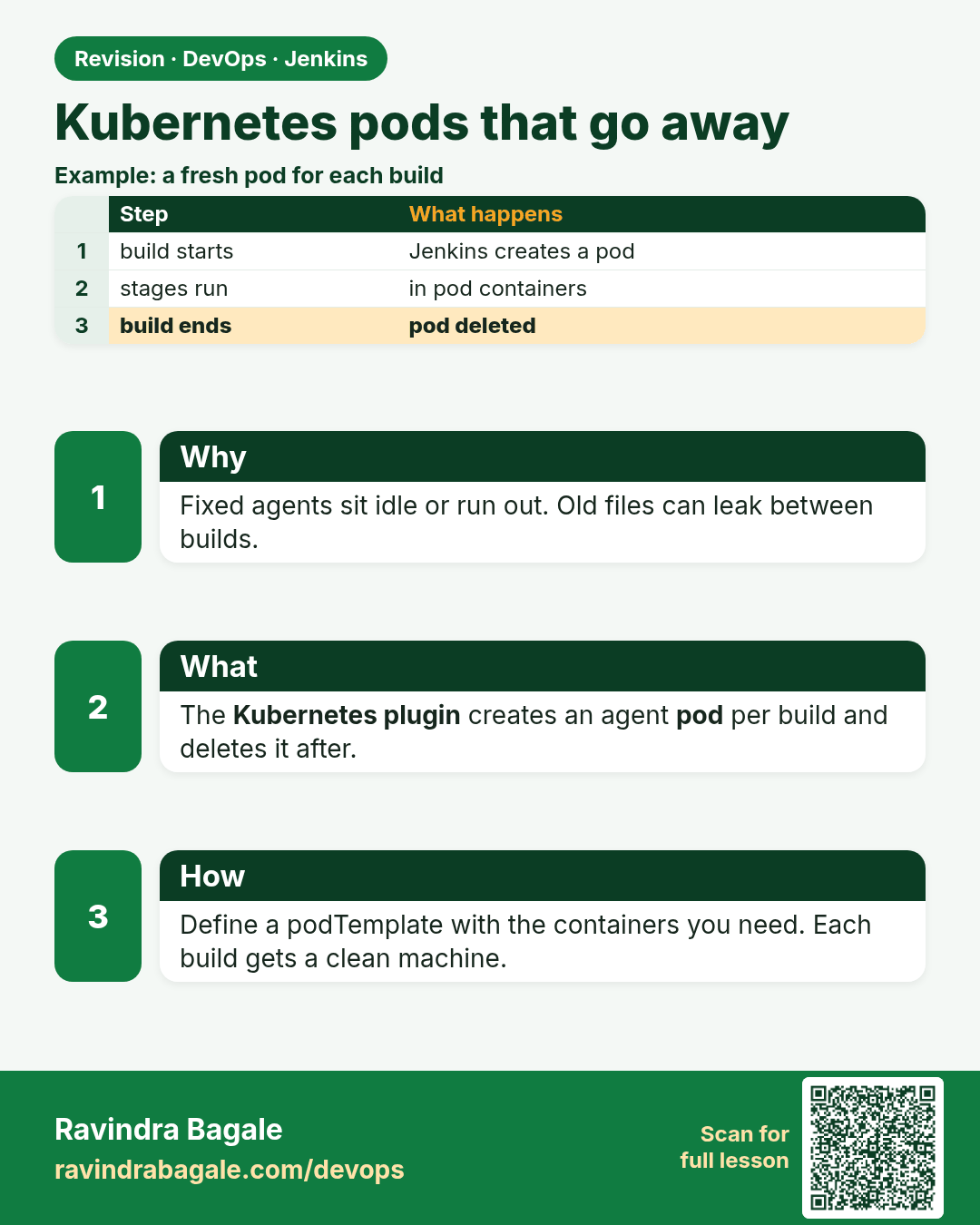
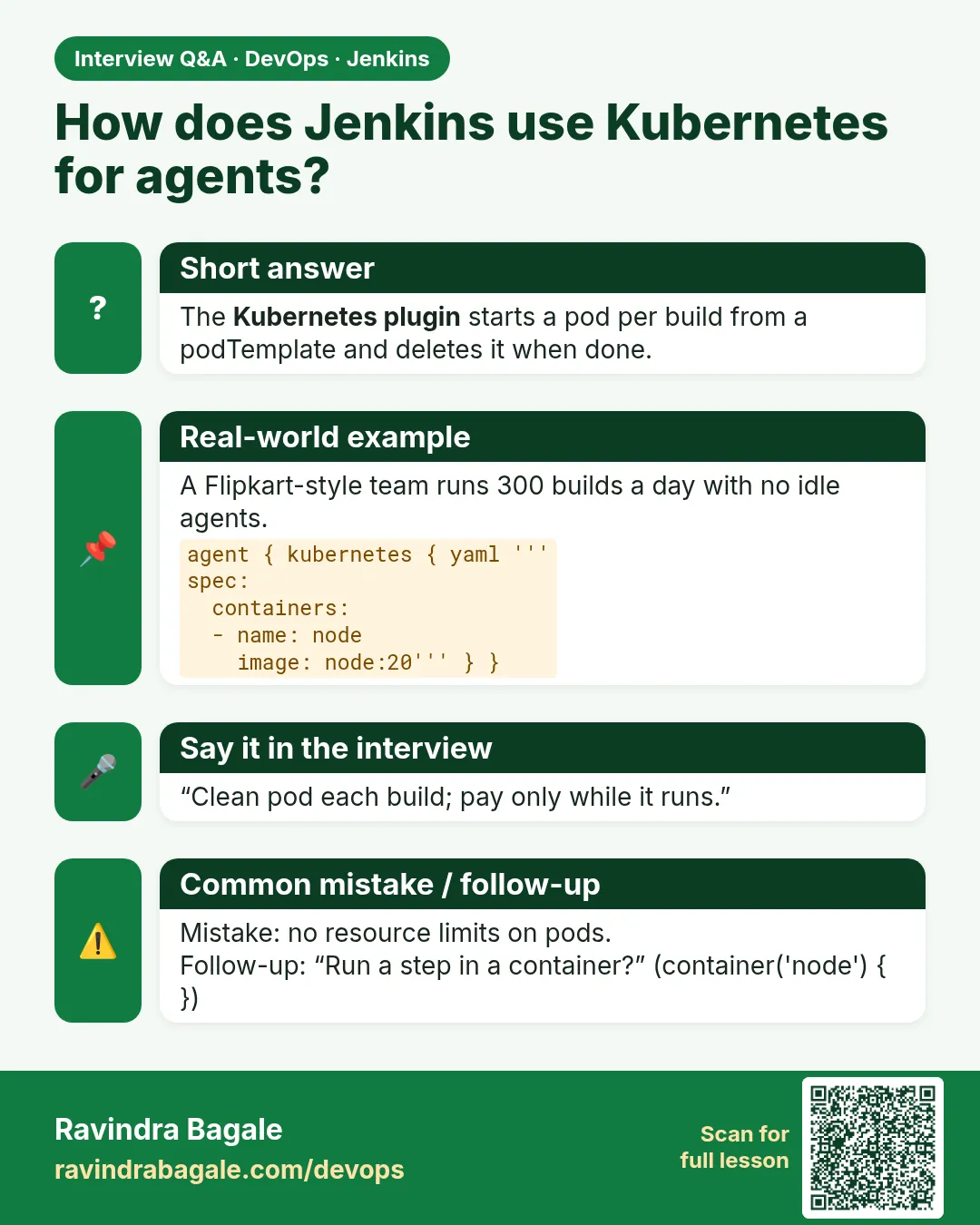
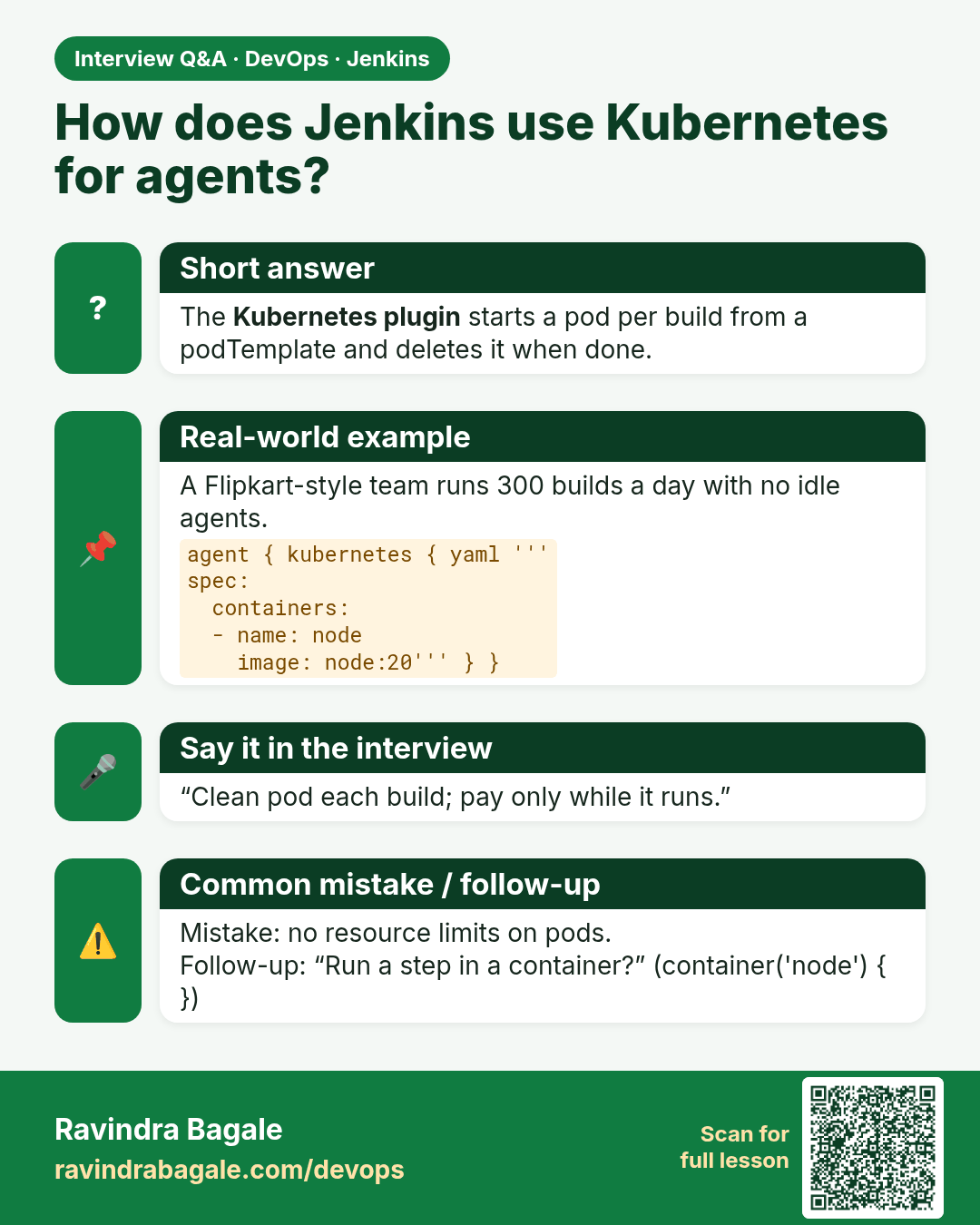
How does Jenkins use Kubernetes for agents? The Kubernetes plugin starts a pod per build from a podTemplate and deletes it when done.
Interview card 5 of 6: How does Jenkins use Kubernetes for agents? · Download PNG · Open card page

Lesson: 27.5 Kubernetes pods that go away
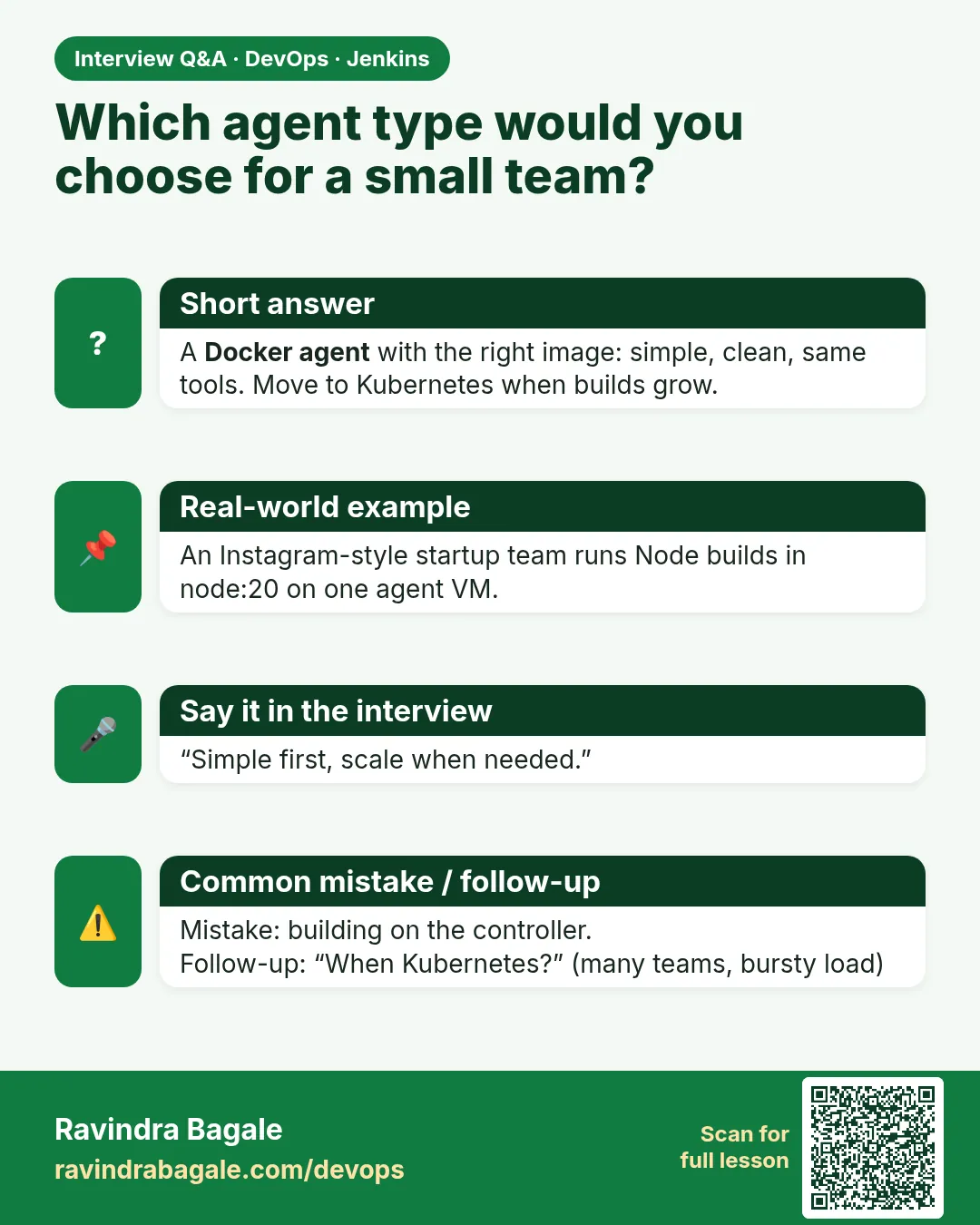
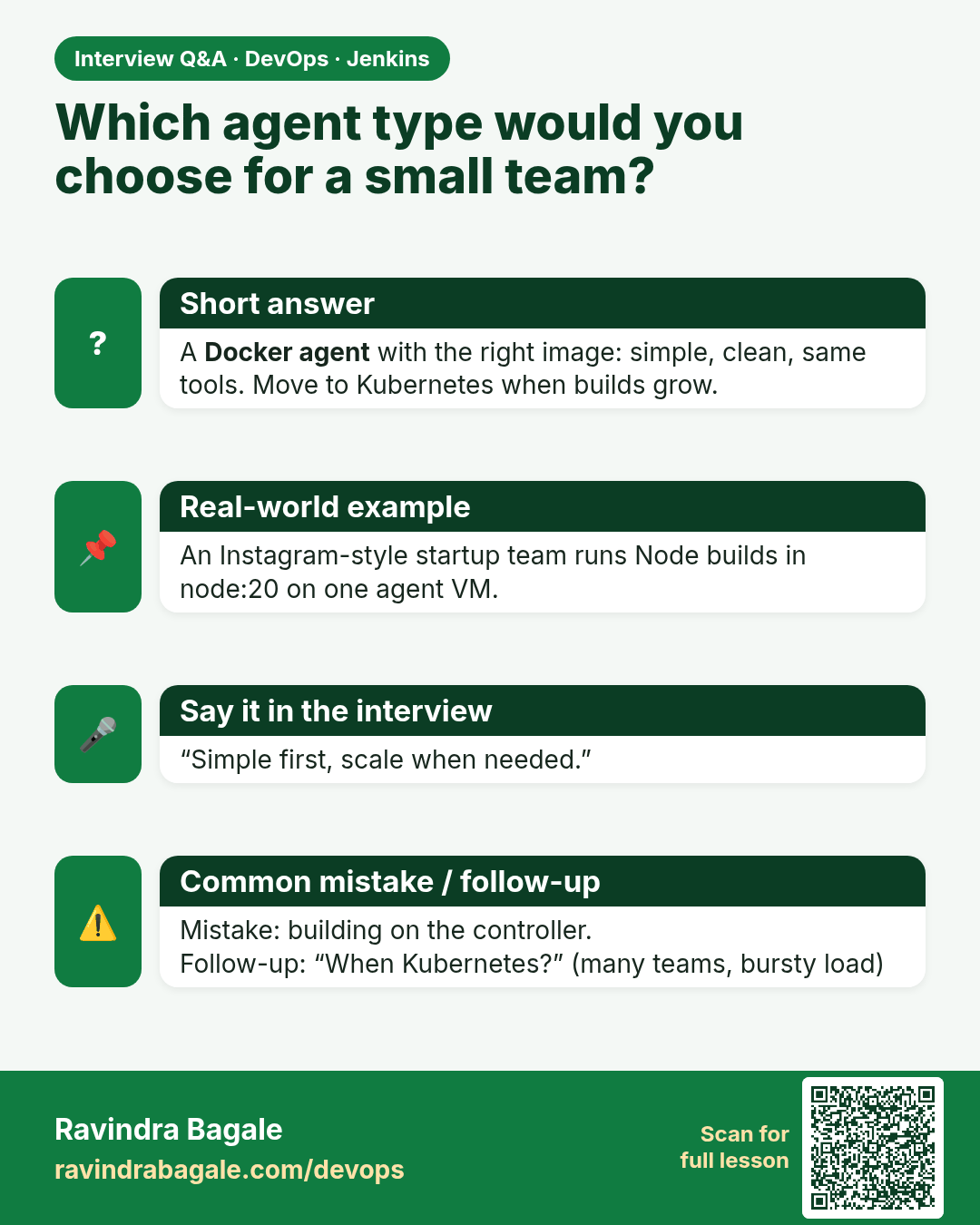
Which agent type would you choose for a small team? A Docker agent with the right image: simple, clean, same tools. Move to Kubernetes when builds grow.
Interview card 6 of 6: Which agent type would you choose for a small team? · Download PNG · Open card page

Lesson: 27.6 Which agent for the badge

Comparison cards

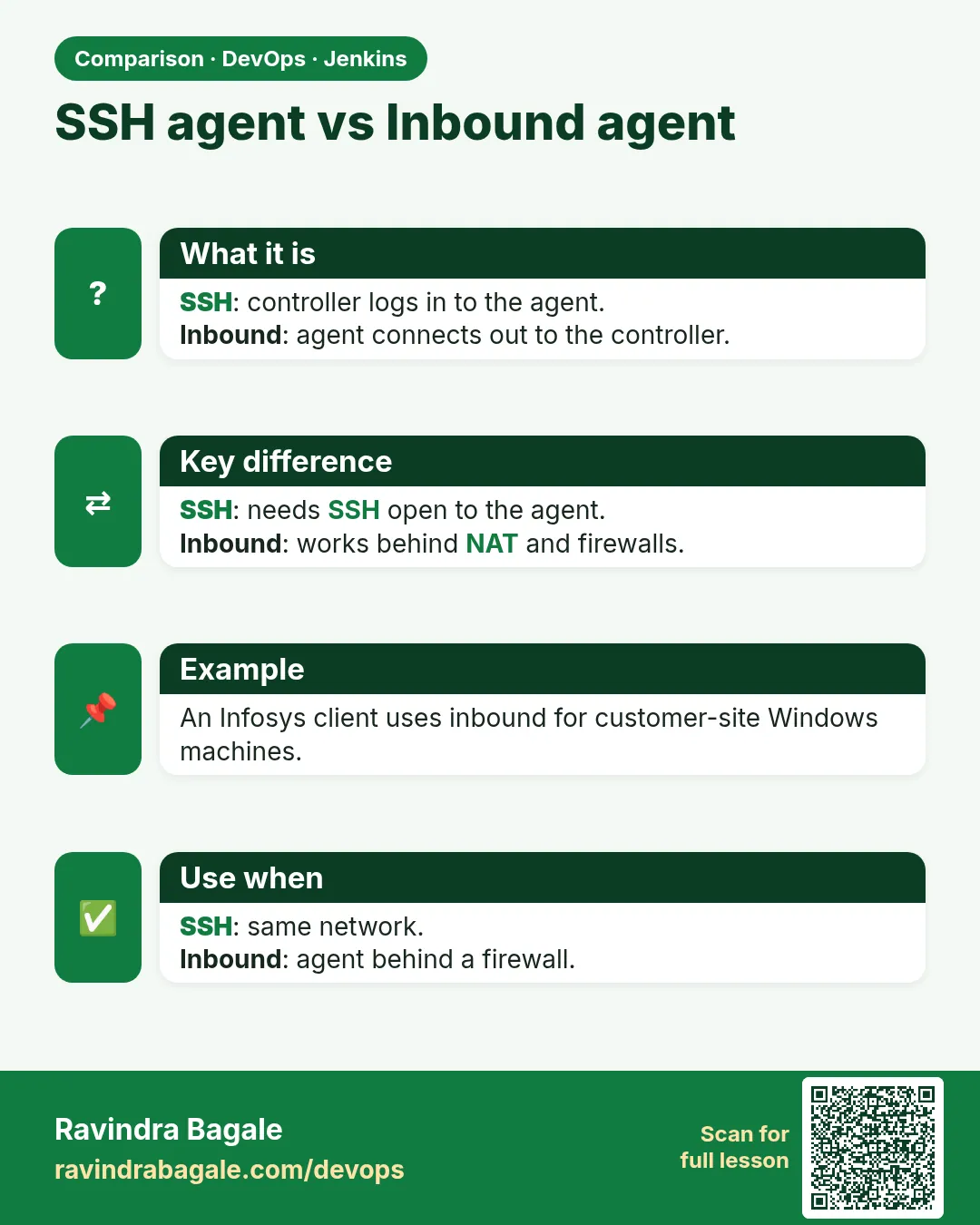
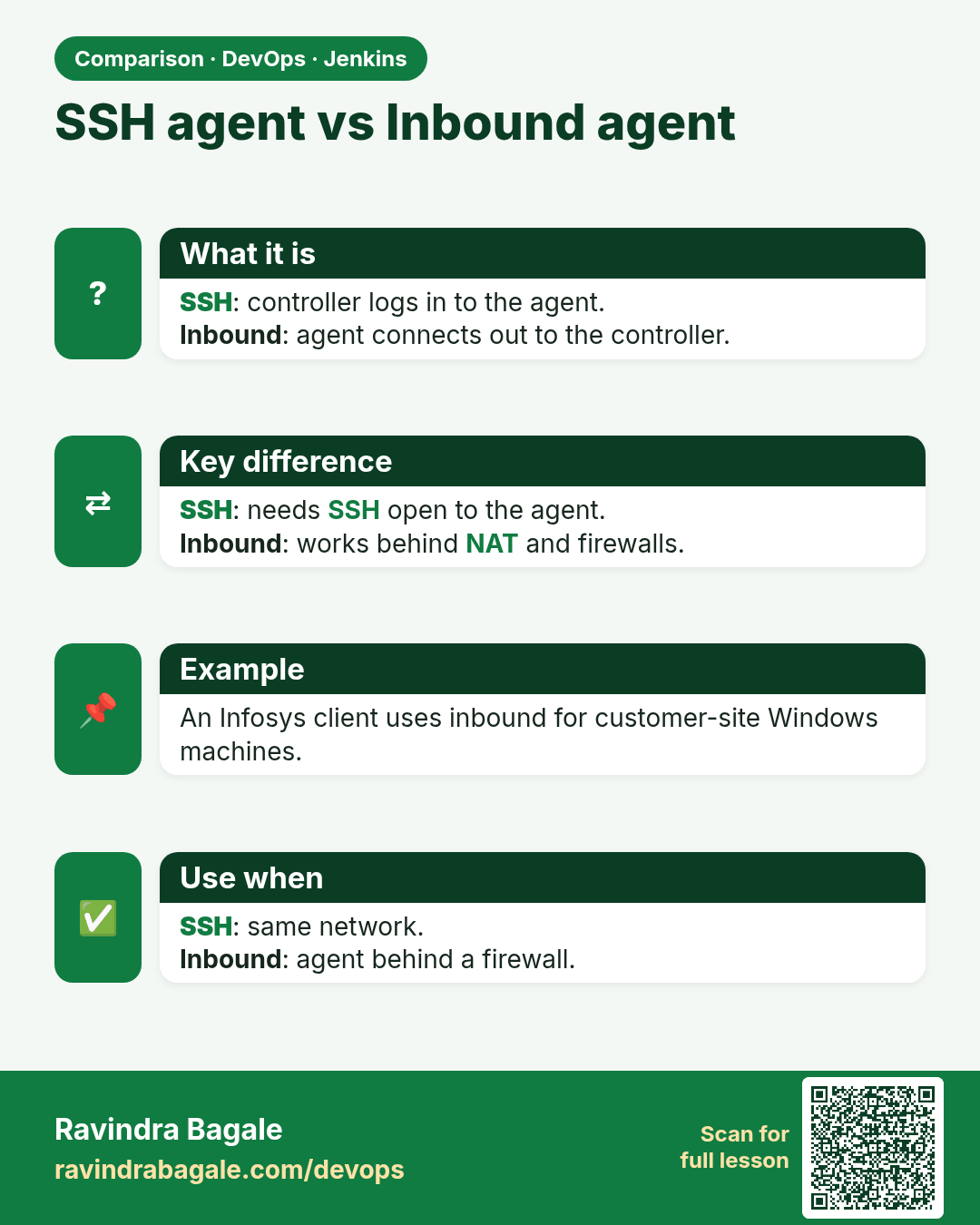
SSH agent vs Inbound agent. SSH: controller logs in to the agent.Inbound: agent connects out to the controller.
Comparison card 1 of 3: SSH agent vs Inbound agent · Download PNG · Open card page

Lesson: 27.2 Inbound or SSH

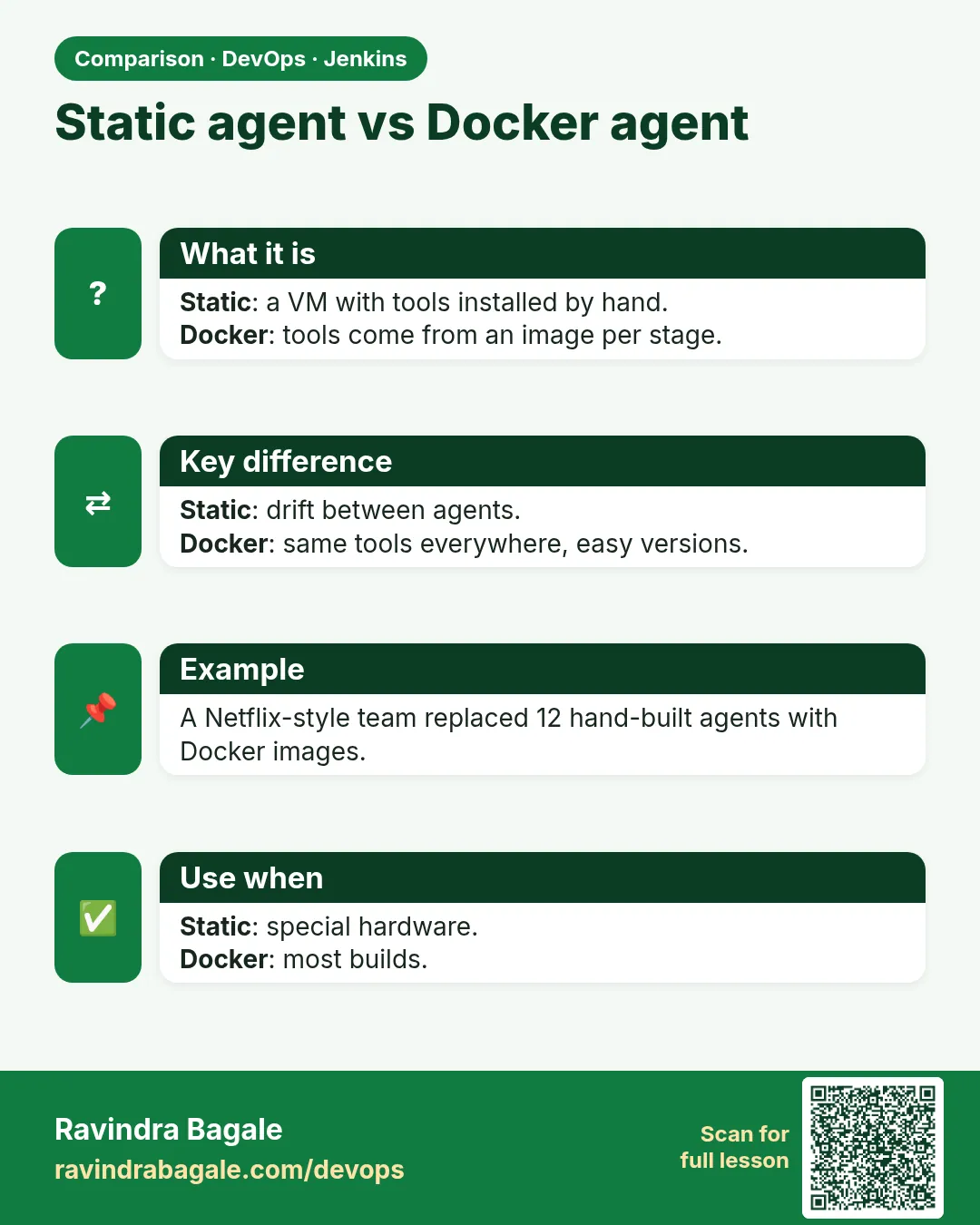
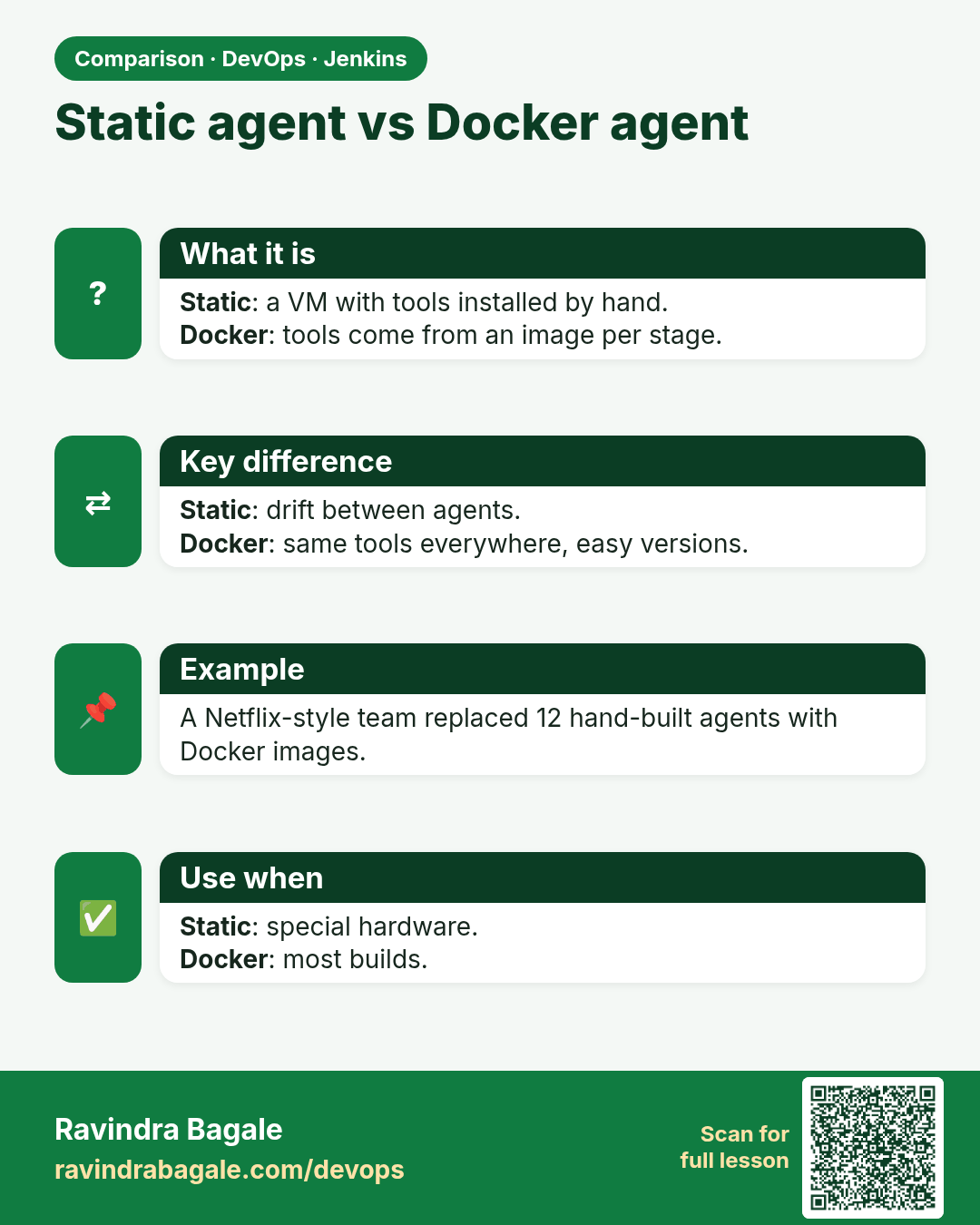
Static agent vs Docker agent. Static: a VM with tools installed by hand.Docker: tools come from an image per stage.
Comparison card 2 of 3: Static agent vs Docker agent · Download PNG · Open card page

Lesson: 27.3 One Maven Docker agent
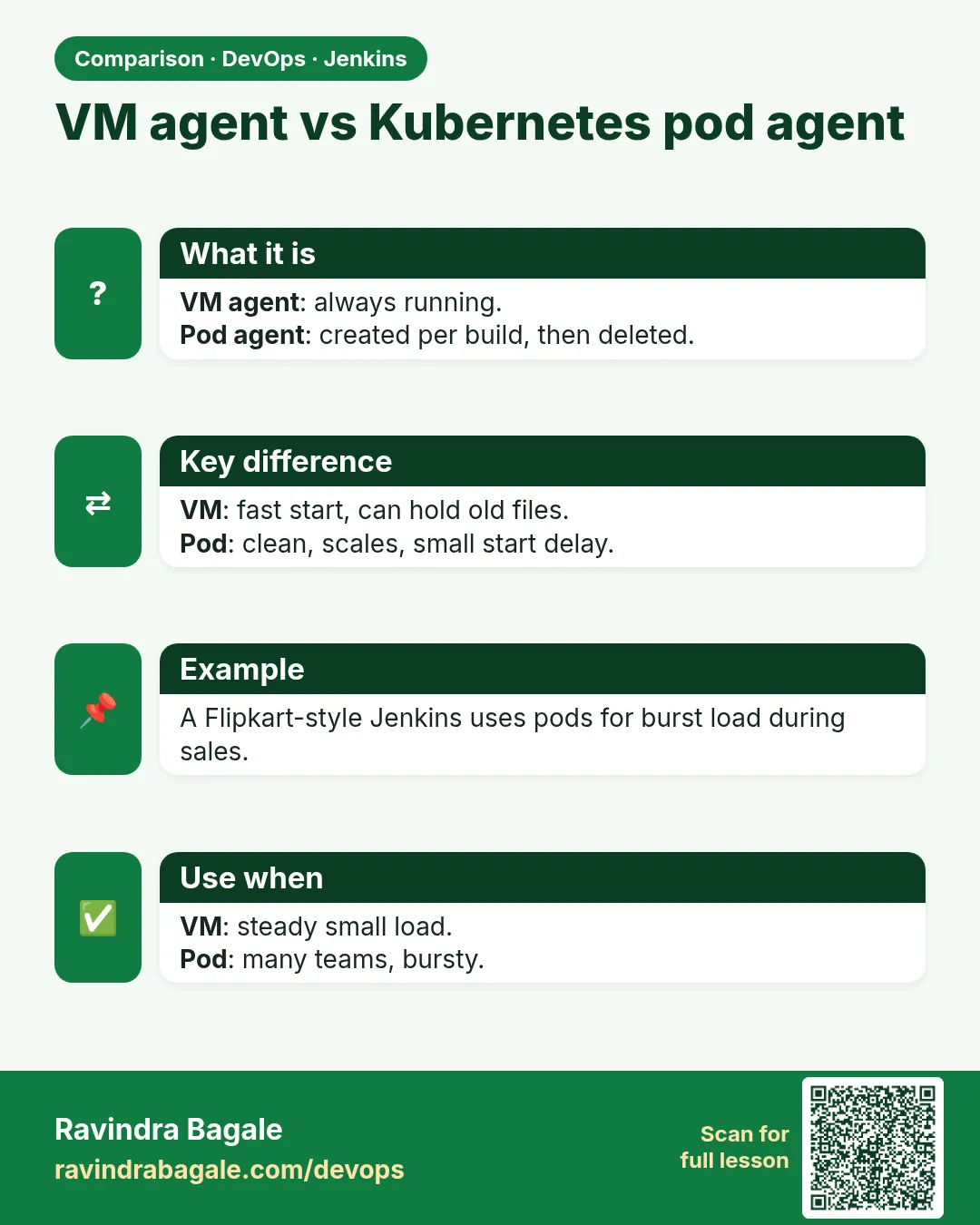
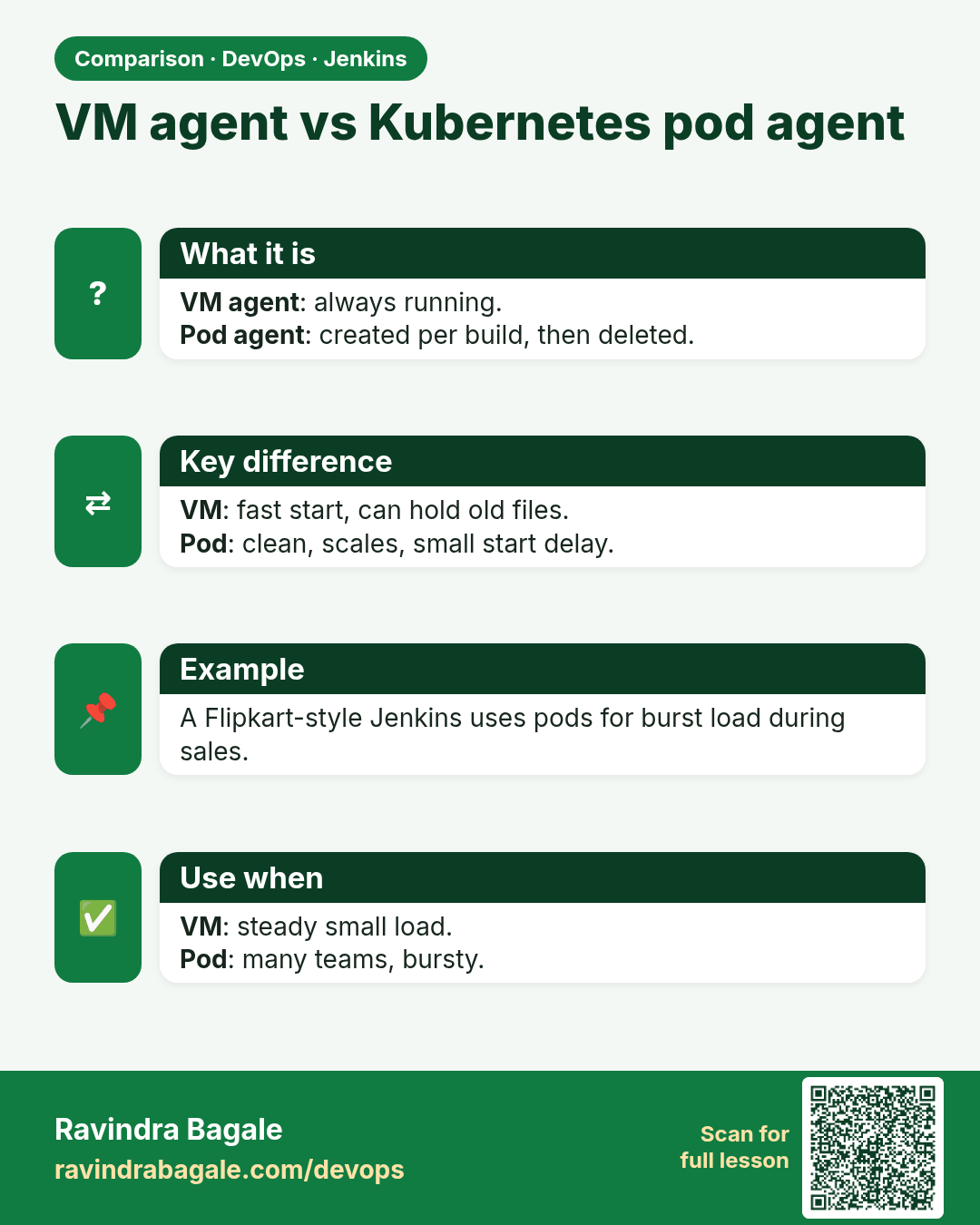
VM agent vs Kubernetes pod agent. VM agent: always running.Pod agent: created per build, then deleted.
Comparison card 3 of 3: VM agent vs Kubernetes pod agent · Download PNG · Open card page

Lesson: 27.5 Kubernetes pods that go away