Ravi Sir's Cards › DevOps
Chapter 5: Bash Scripting for Automation: Cards
मराठी cards · Open the chapter
Revision cards
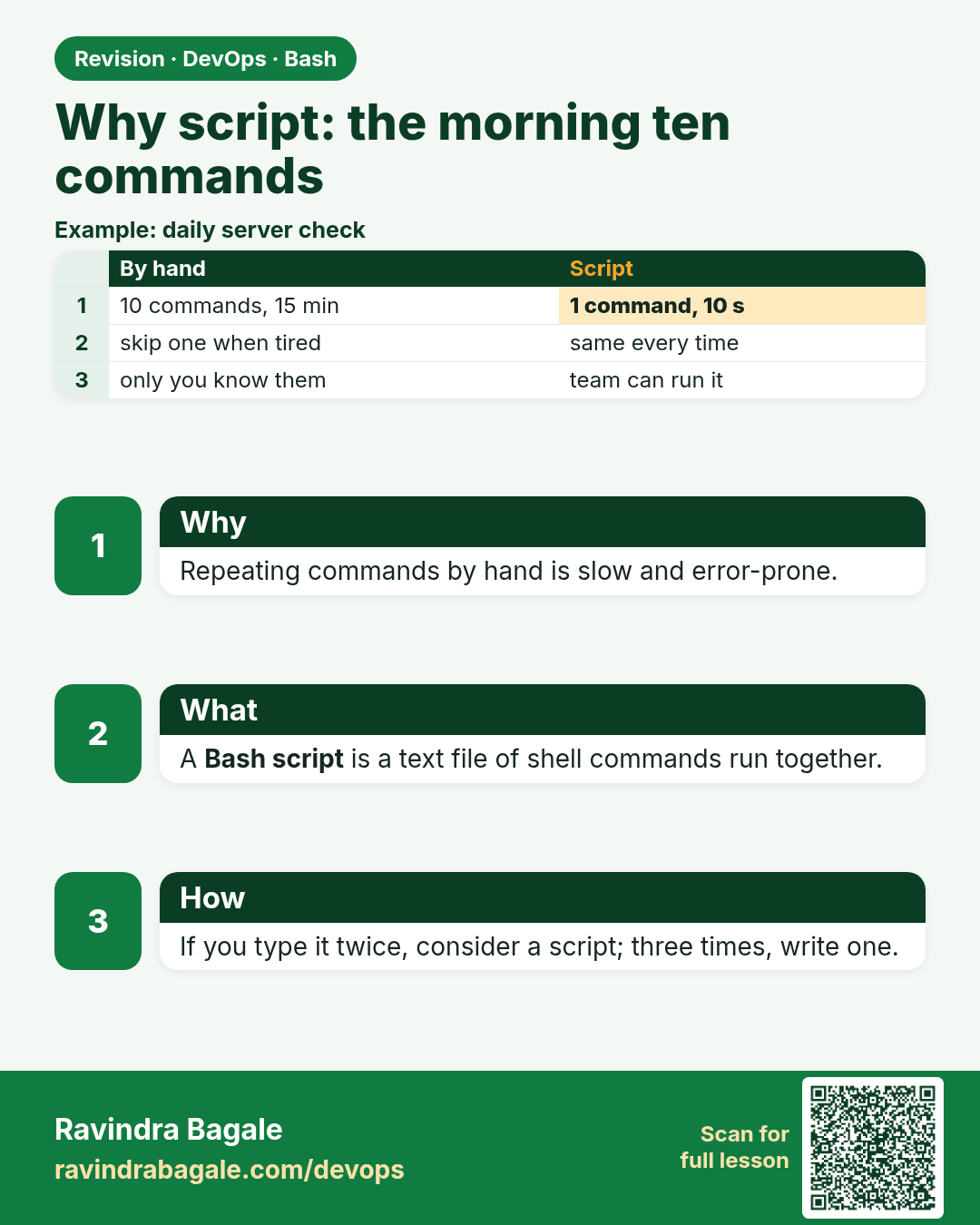
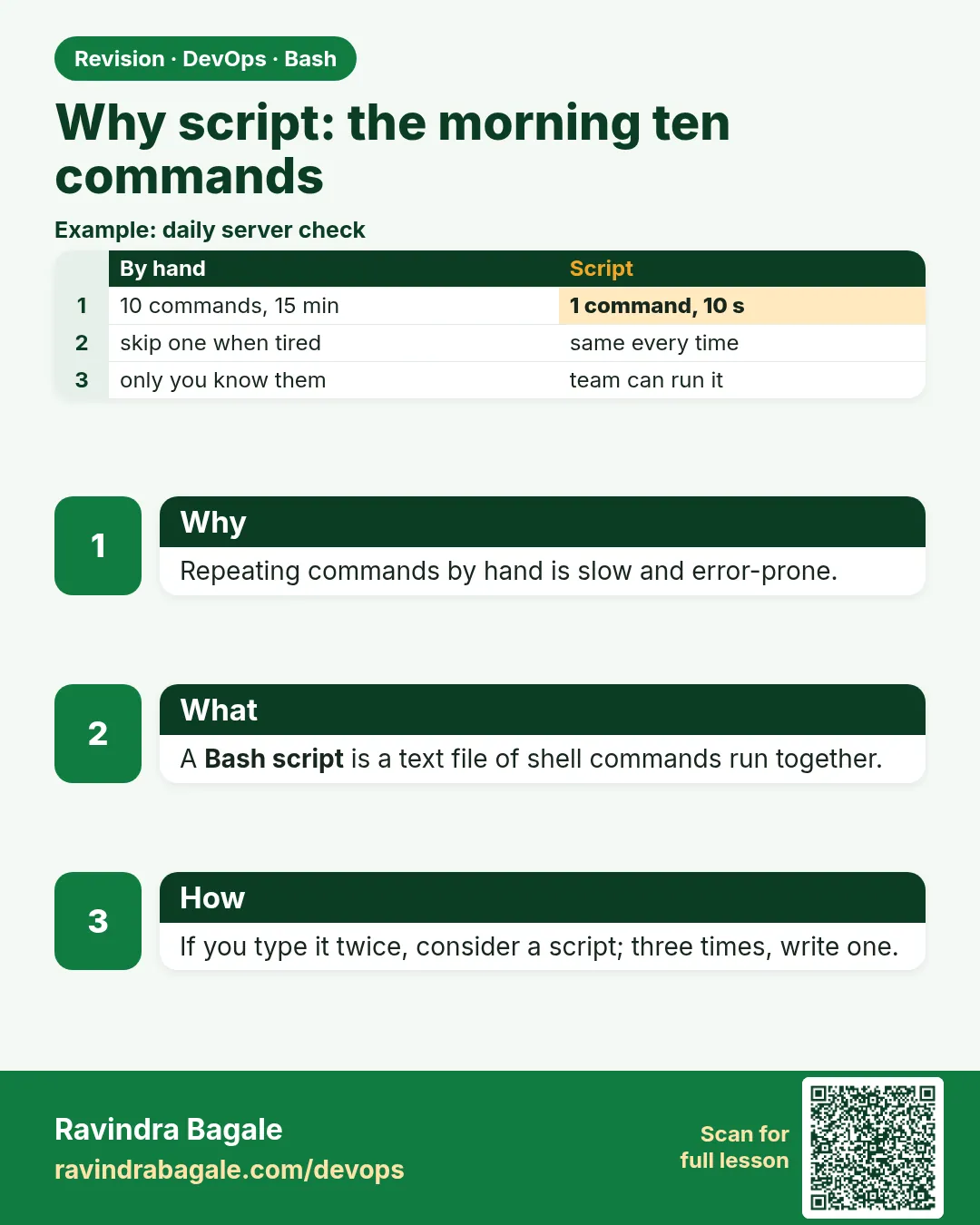 Revision card 1 of 11: Why script: the morning ten commands · Download PNG · Open card page
Lesson: 5.1 Why script — the morning ten commands
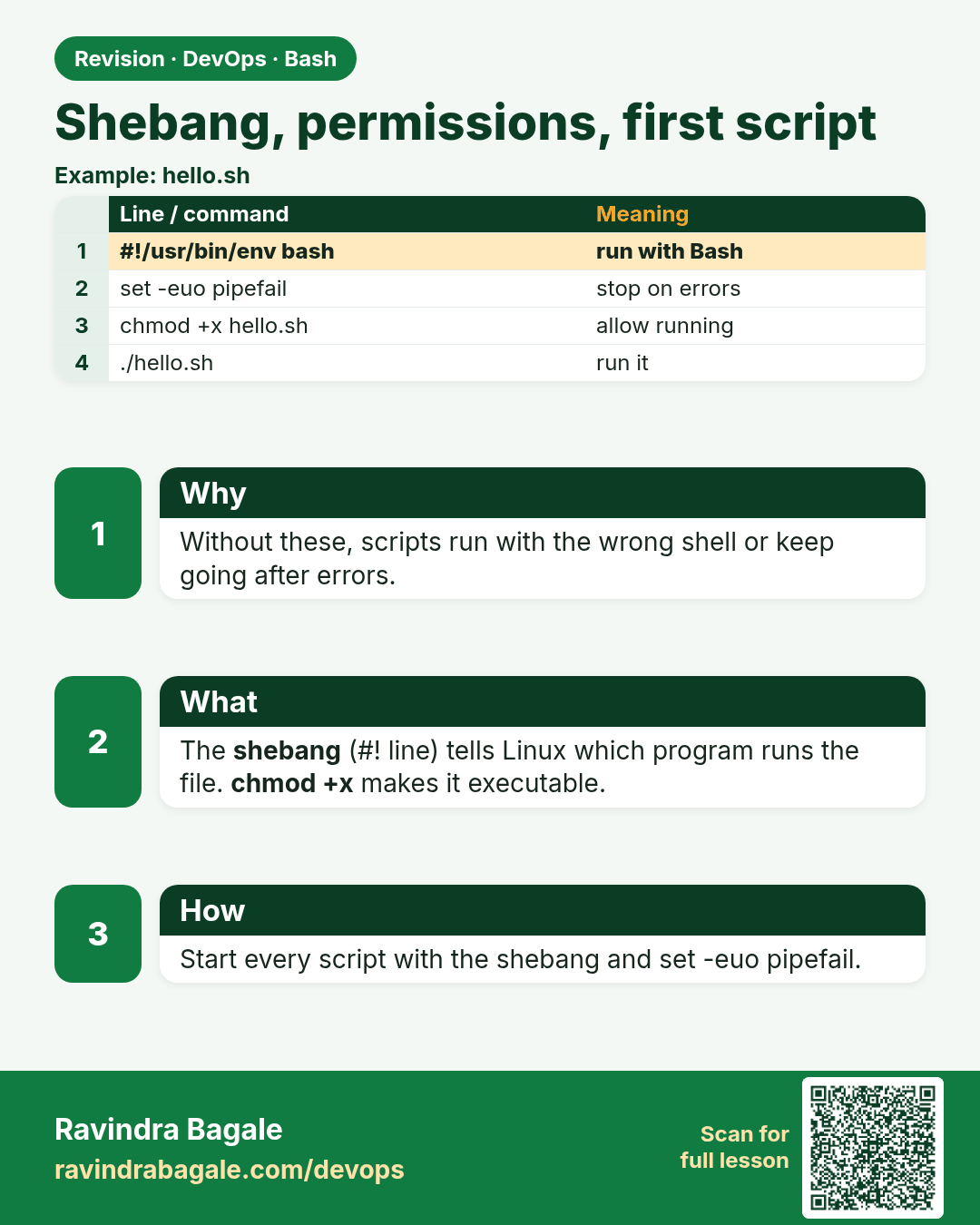
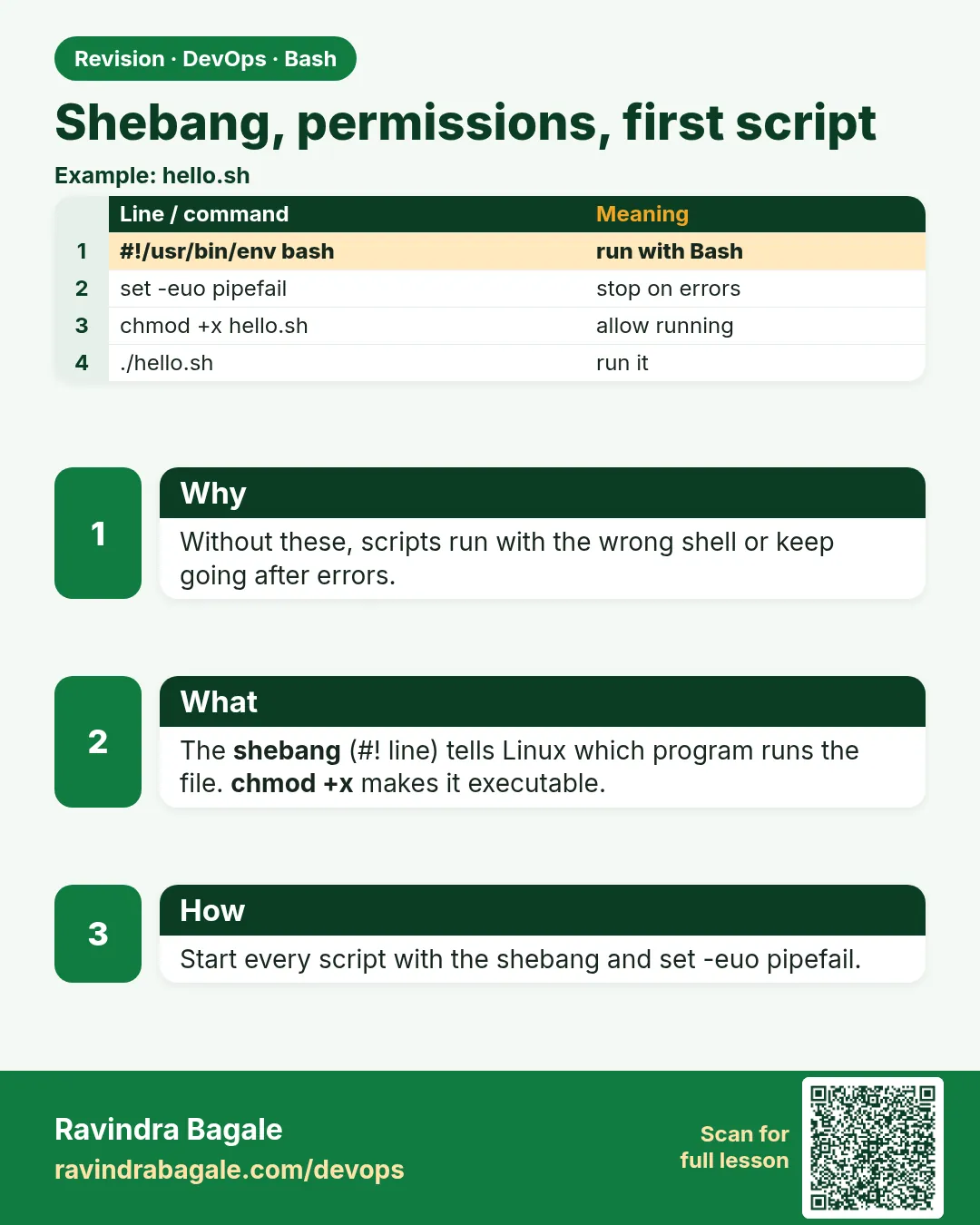 Revision card 2 of 11: Shebang, permissions, first script · Download PNG · Open card page
Lesson: 5.2 Shebang, permissions, first script
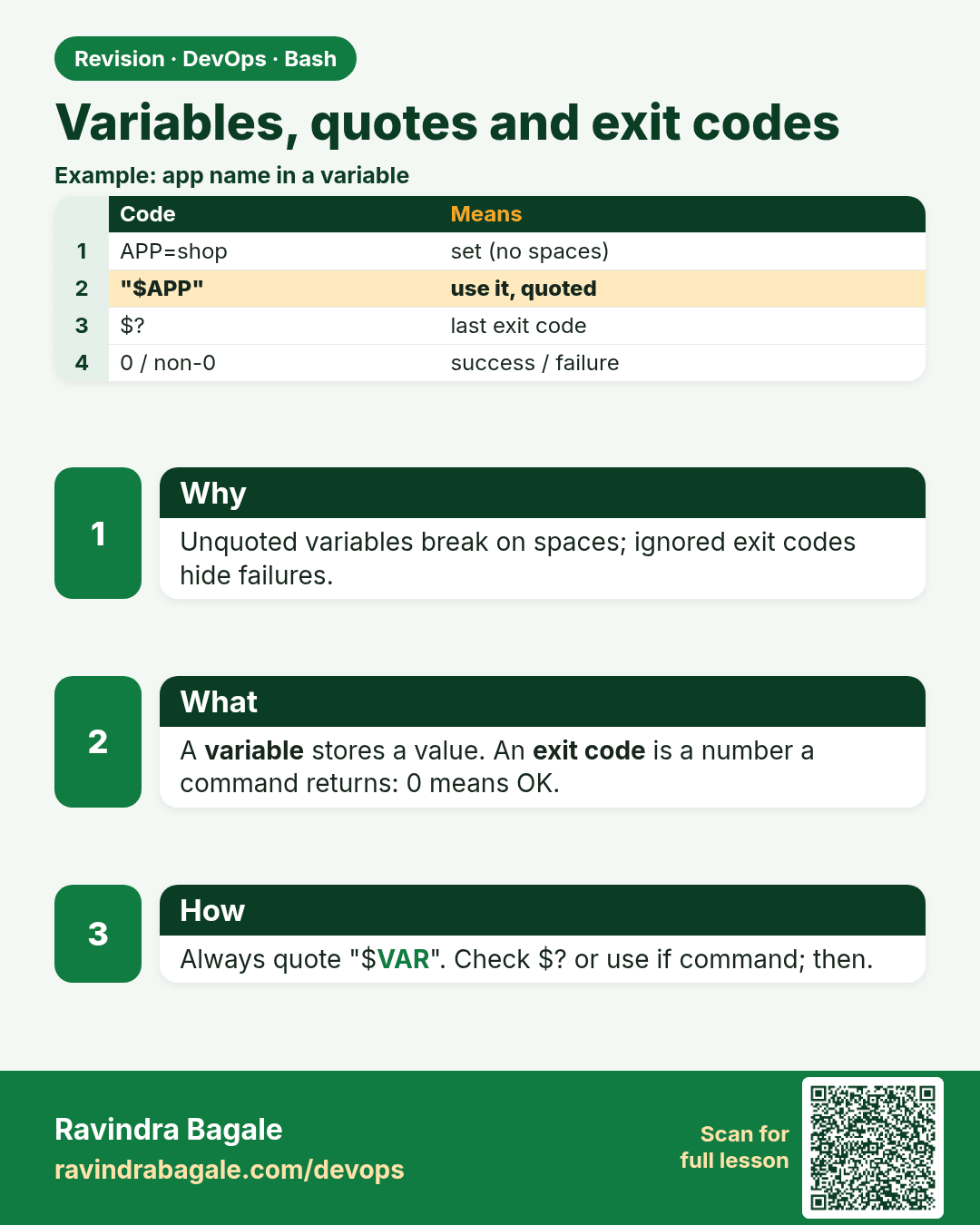
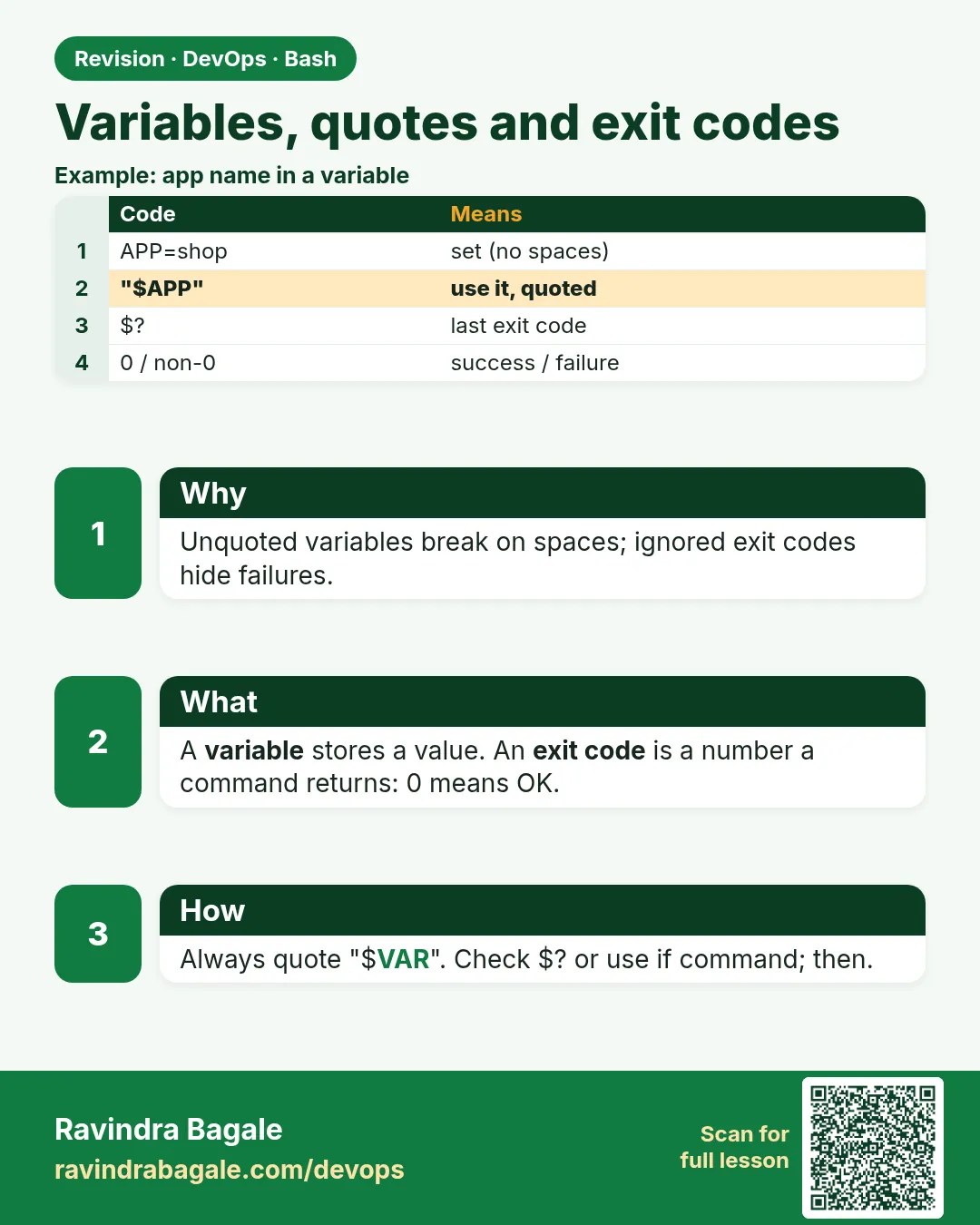 Revision card 3 of 11: Variables, quotes and exit codes · Download PNG · Open card page
Lesson: 5.3 Variables, quotes and exit codes
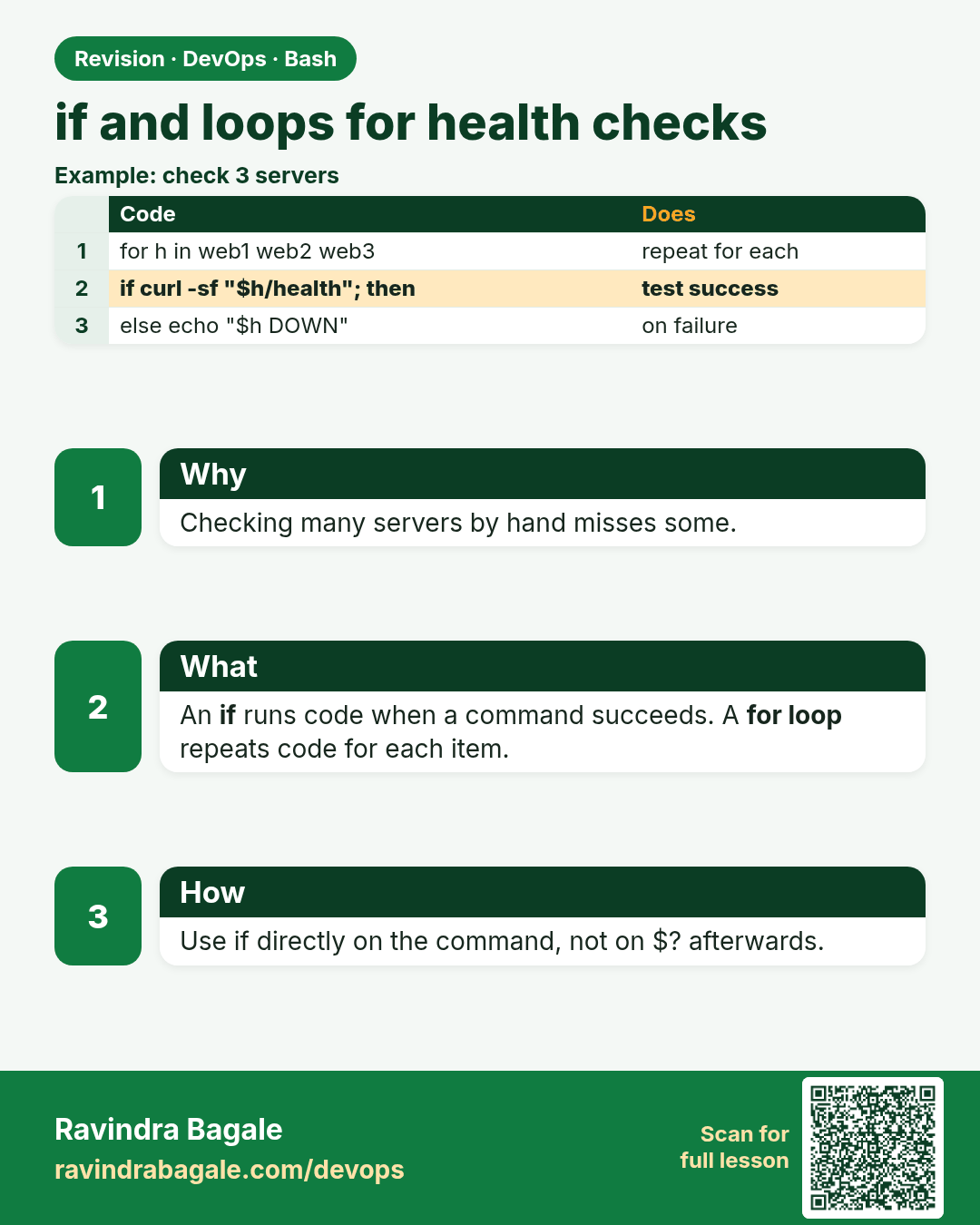
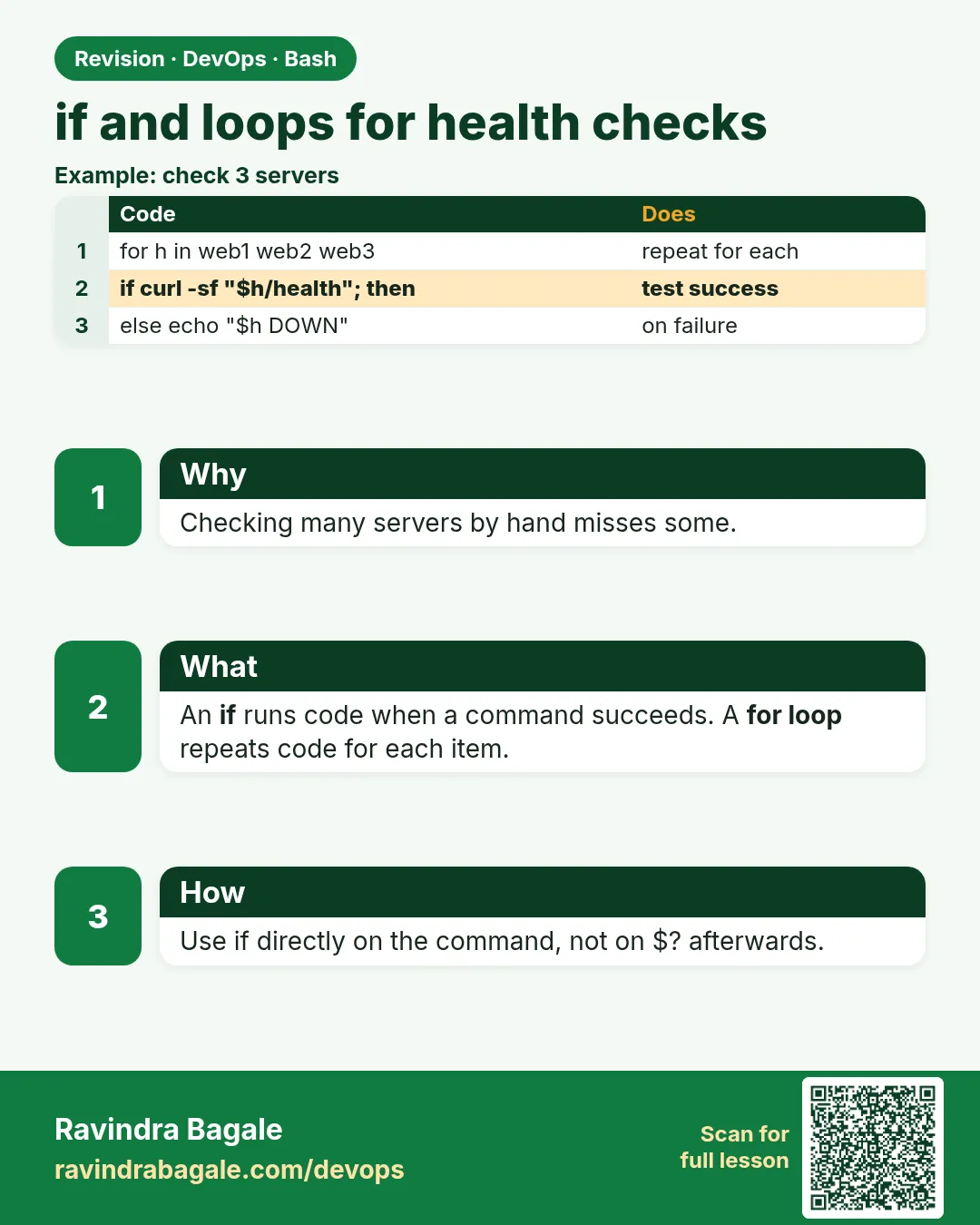 Revision card 4 of 11: if and loops for health checks · Download PNG · Open card page
Lesson: 5.4 if and loops for health checks
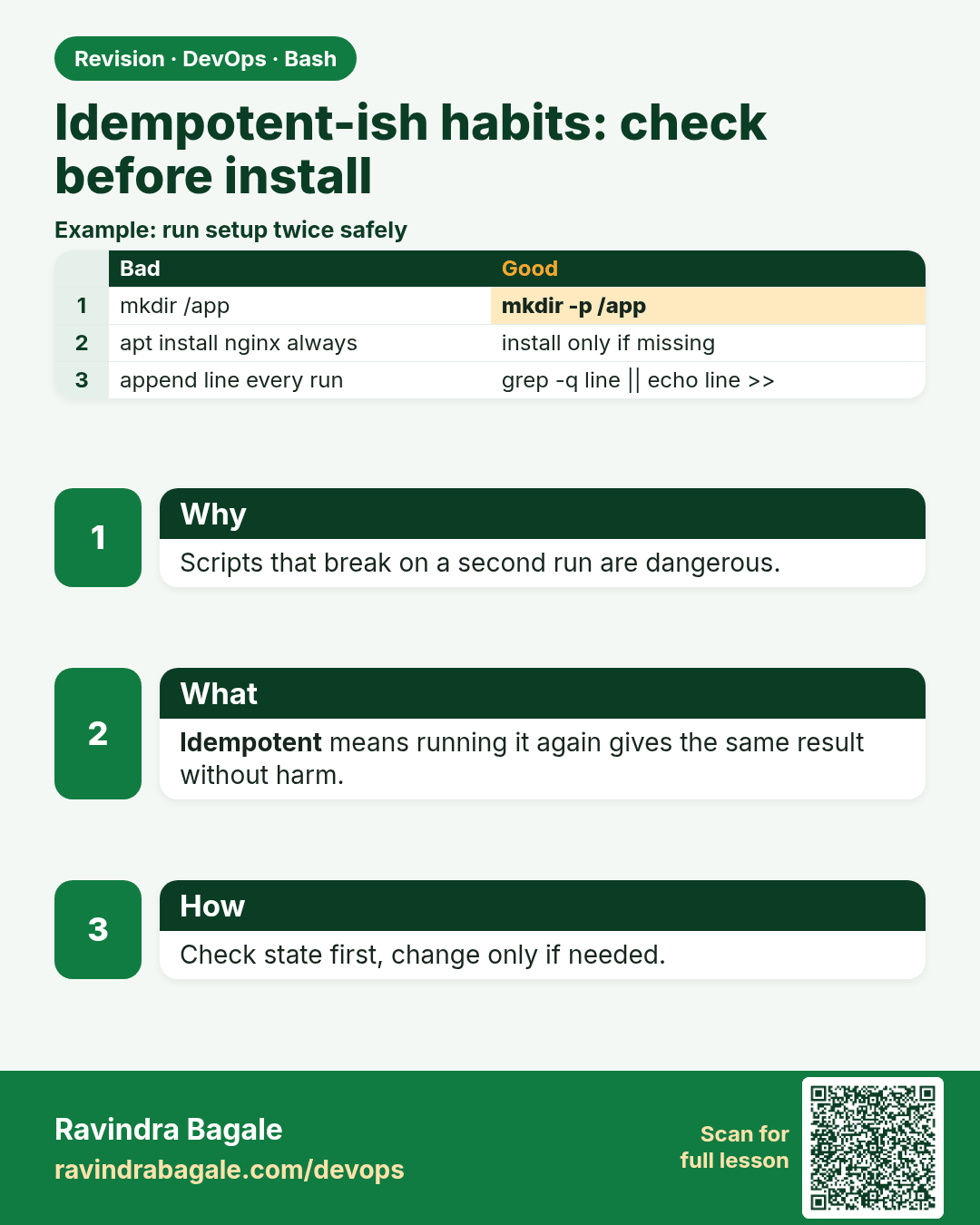
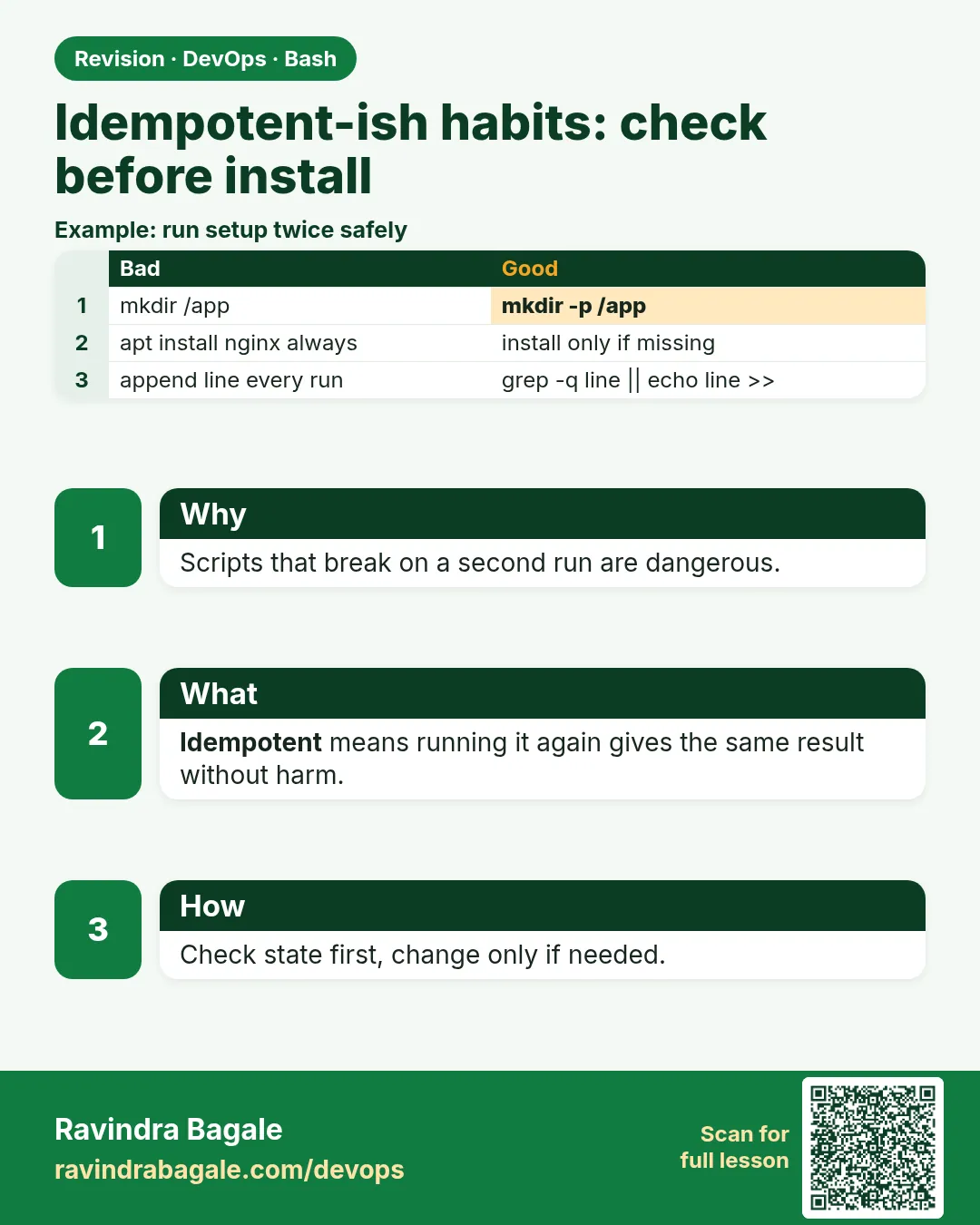 Revision card 5 of 11: Idempotent-ish habits: check before install · Download PNG · Open card page
Lesson: 5.5 Idempotent-ish habits — check before install
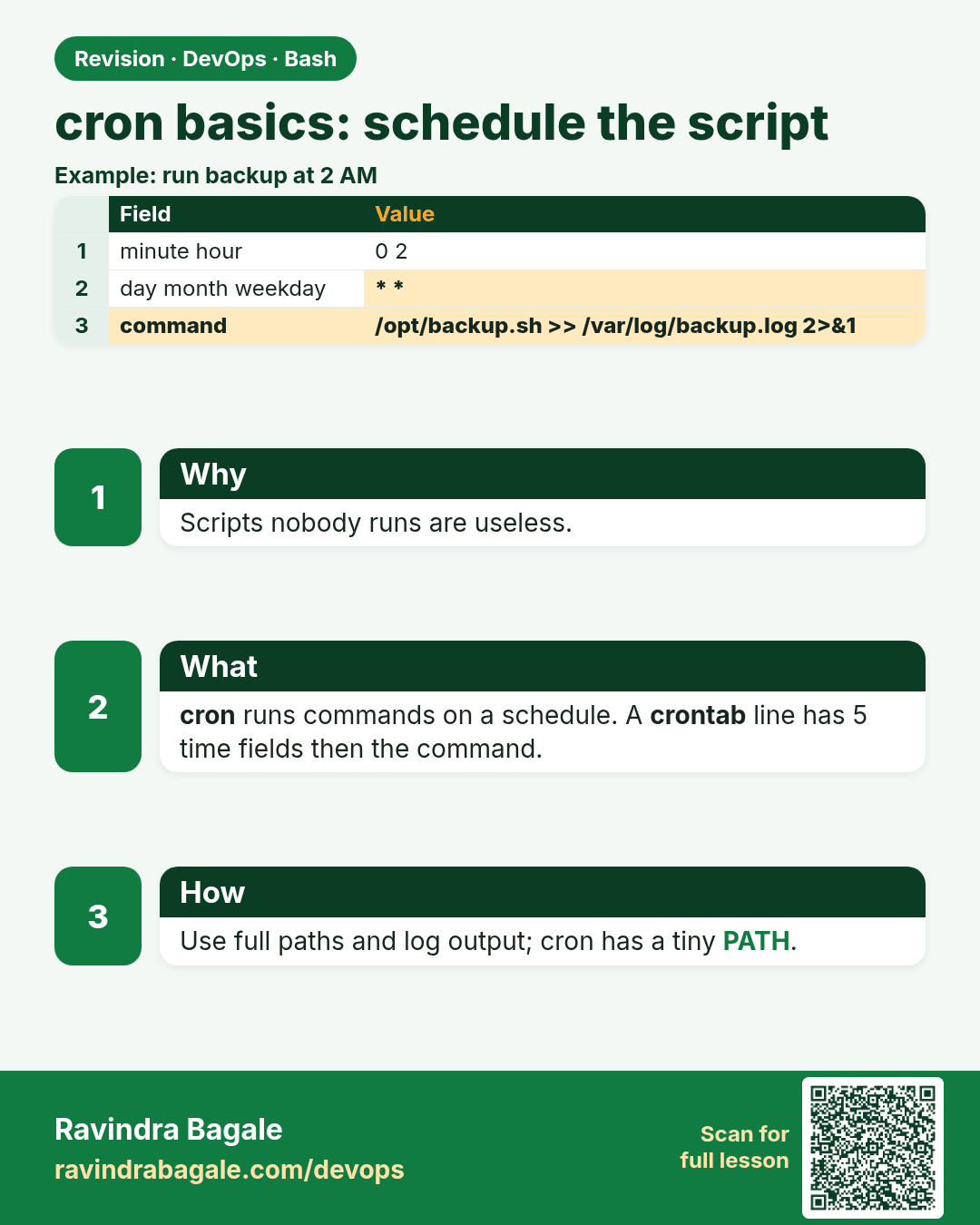
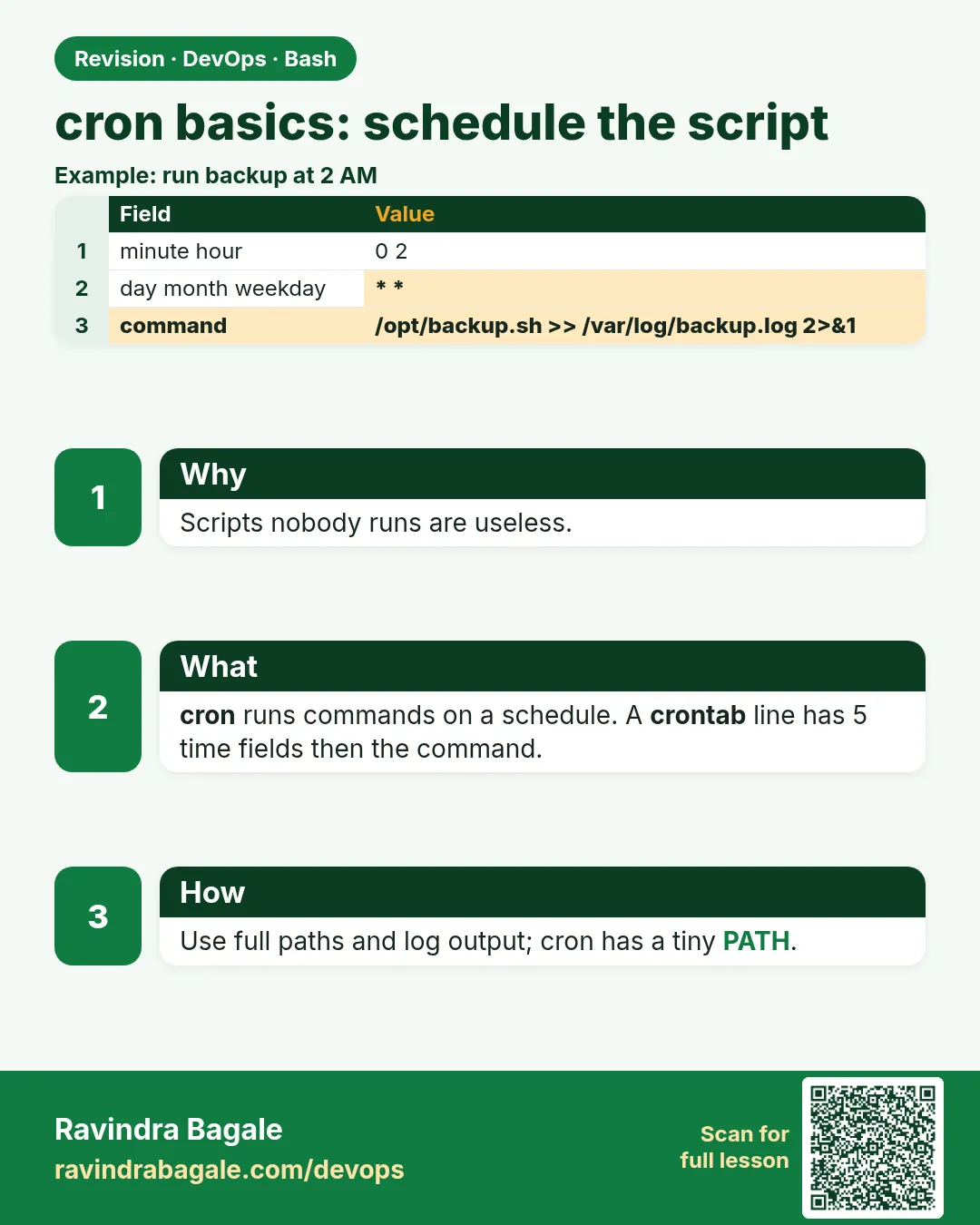 Revision card 6 of 11: cron basics: schedule the script · Download PNG · Open card page
Lesson: 5.6 Cron basics — schedule the script
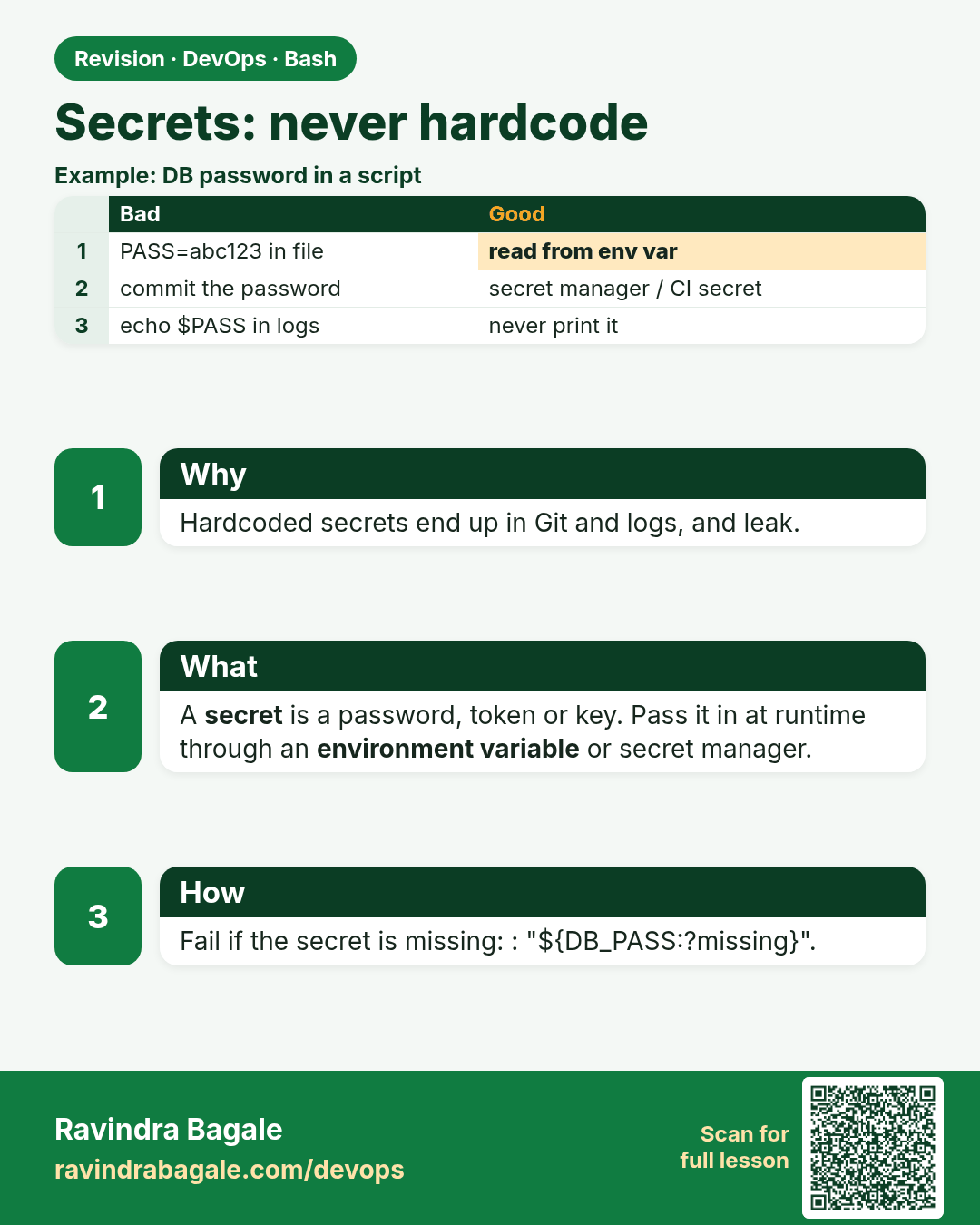
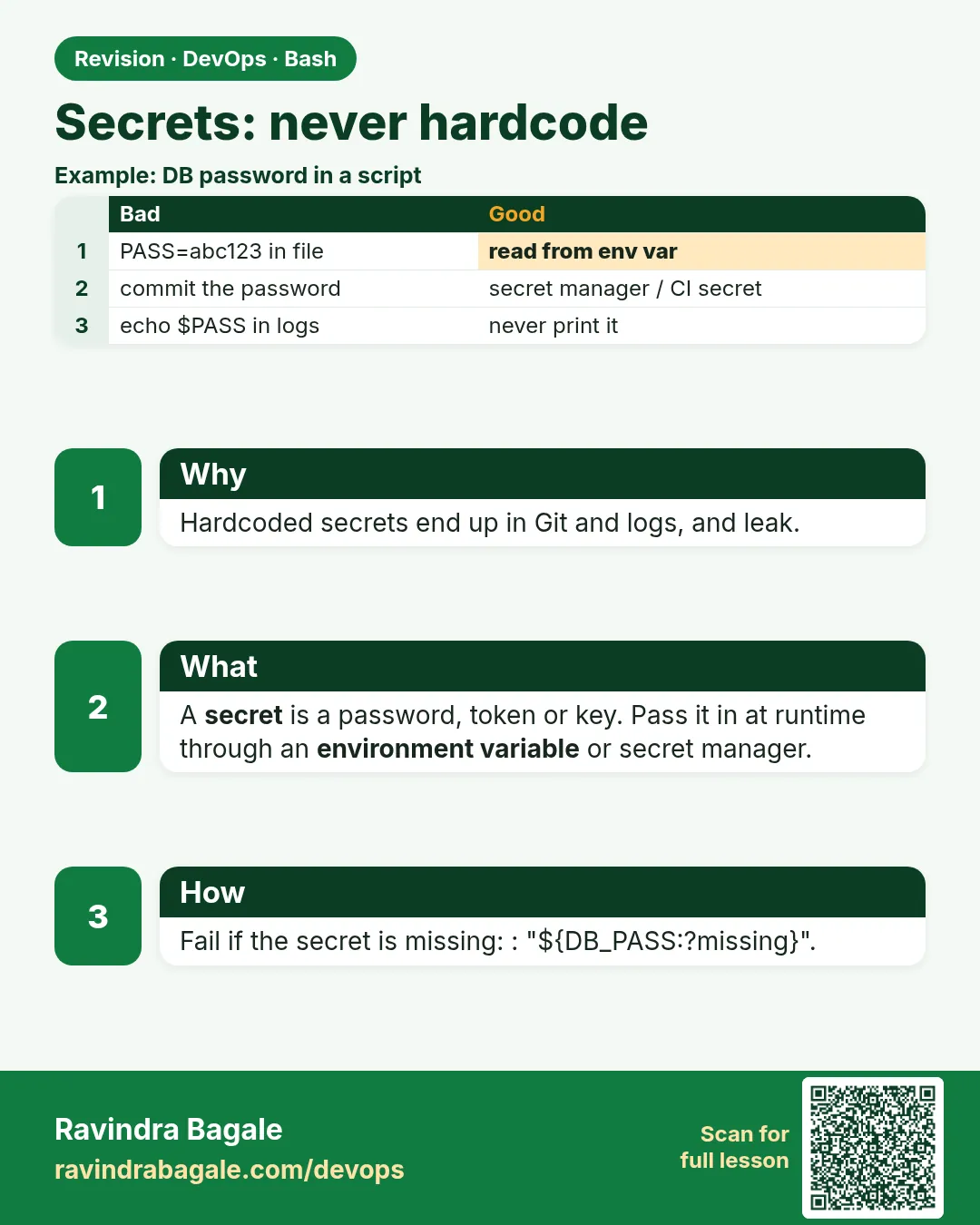 Revision card 7 of 11: Secrets: never hardcode · Download PNG · Open card page
Lesson: 5.7 Secrets — never hardcode
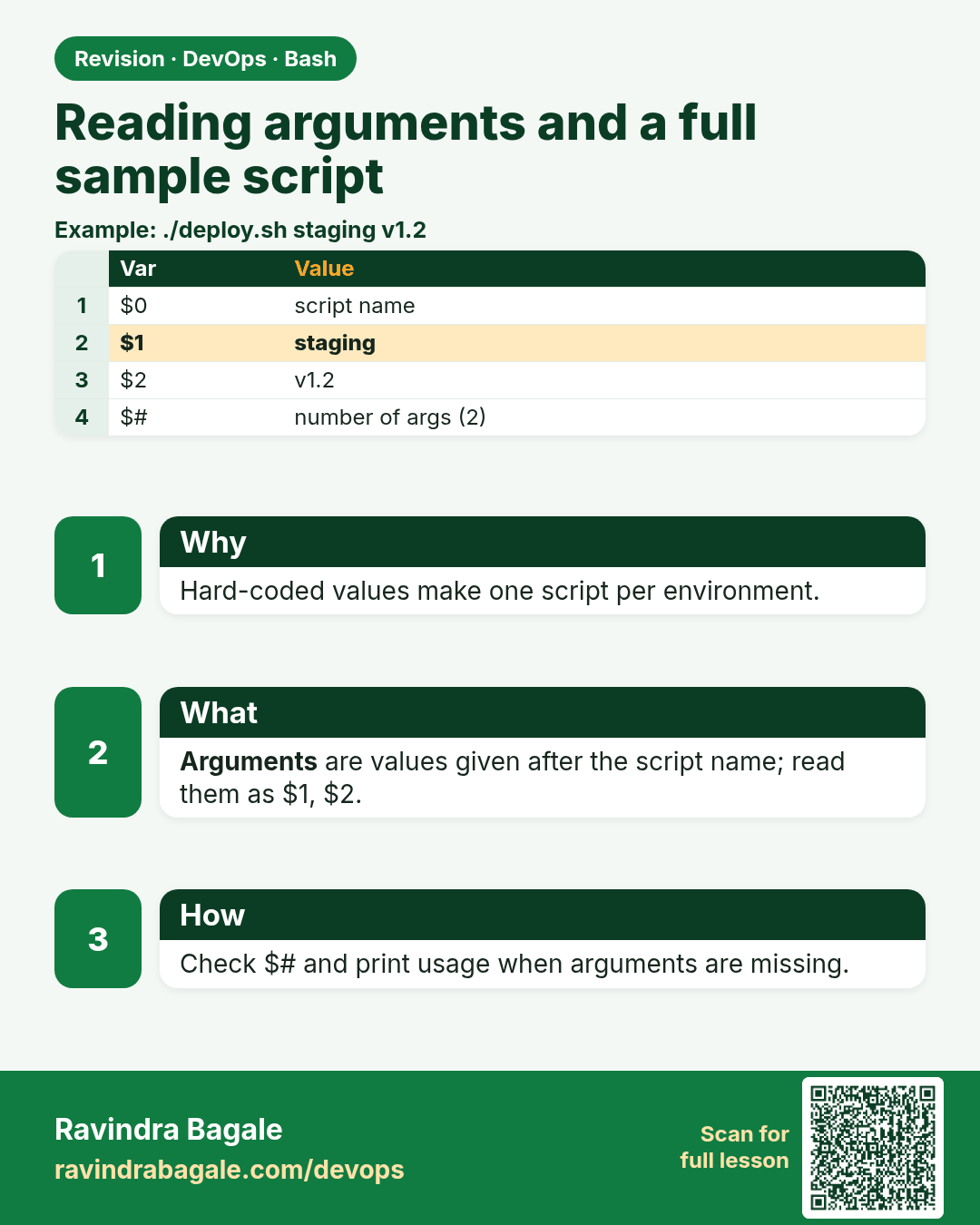
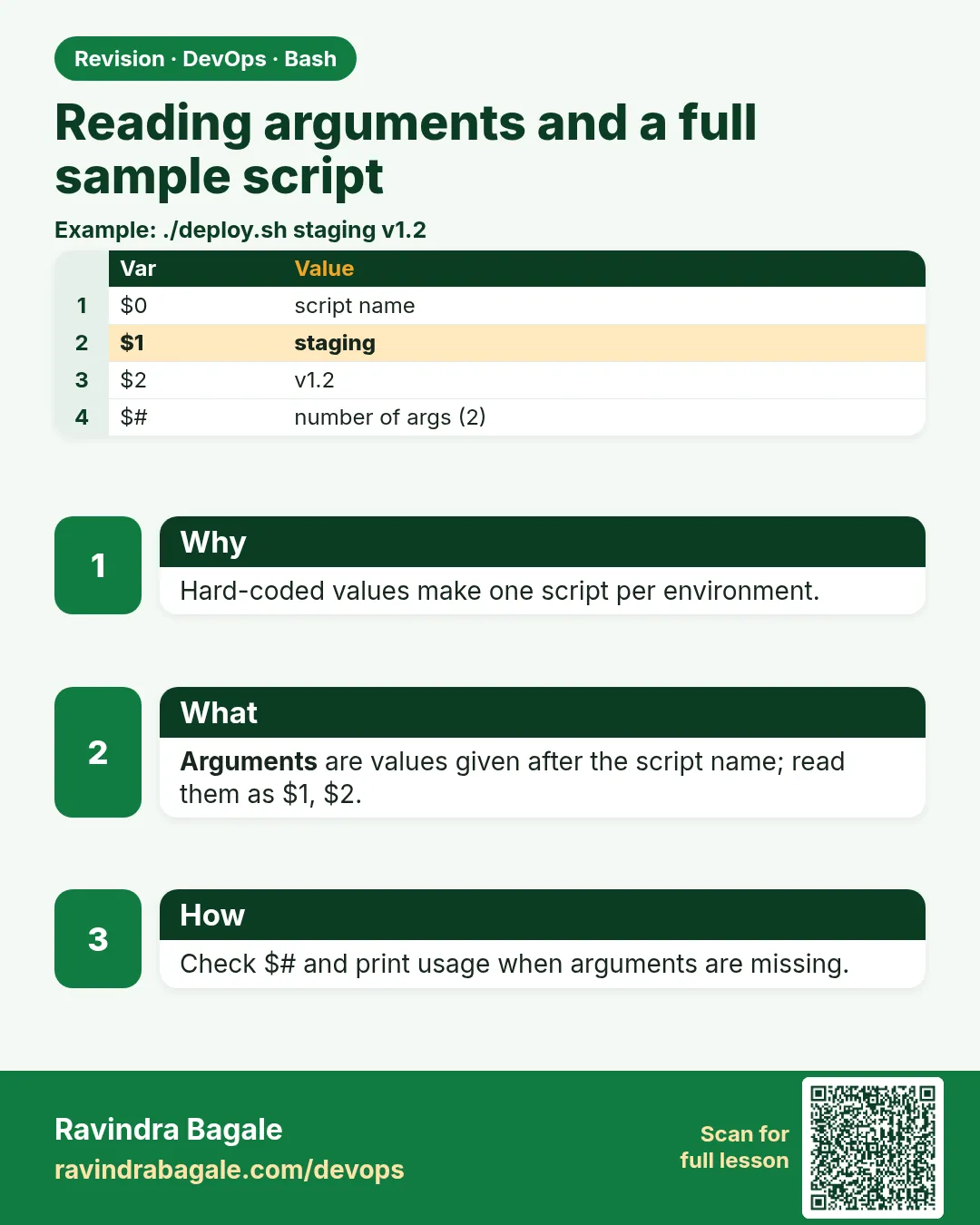 Revision card 8 of 11: Reading arguments and a full sample script · Download PNG · Open card page
Lesson: 5.8 Reading arguments and a full sample script
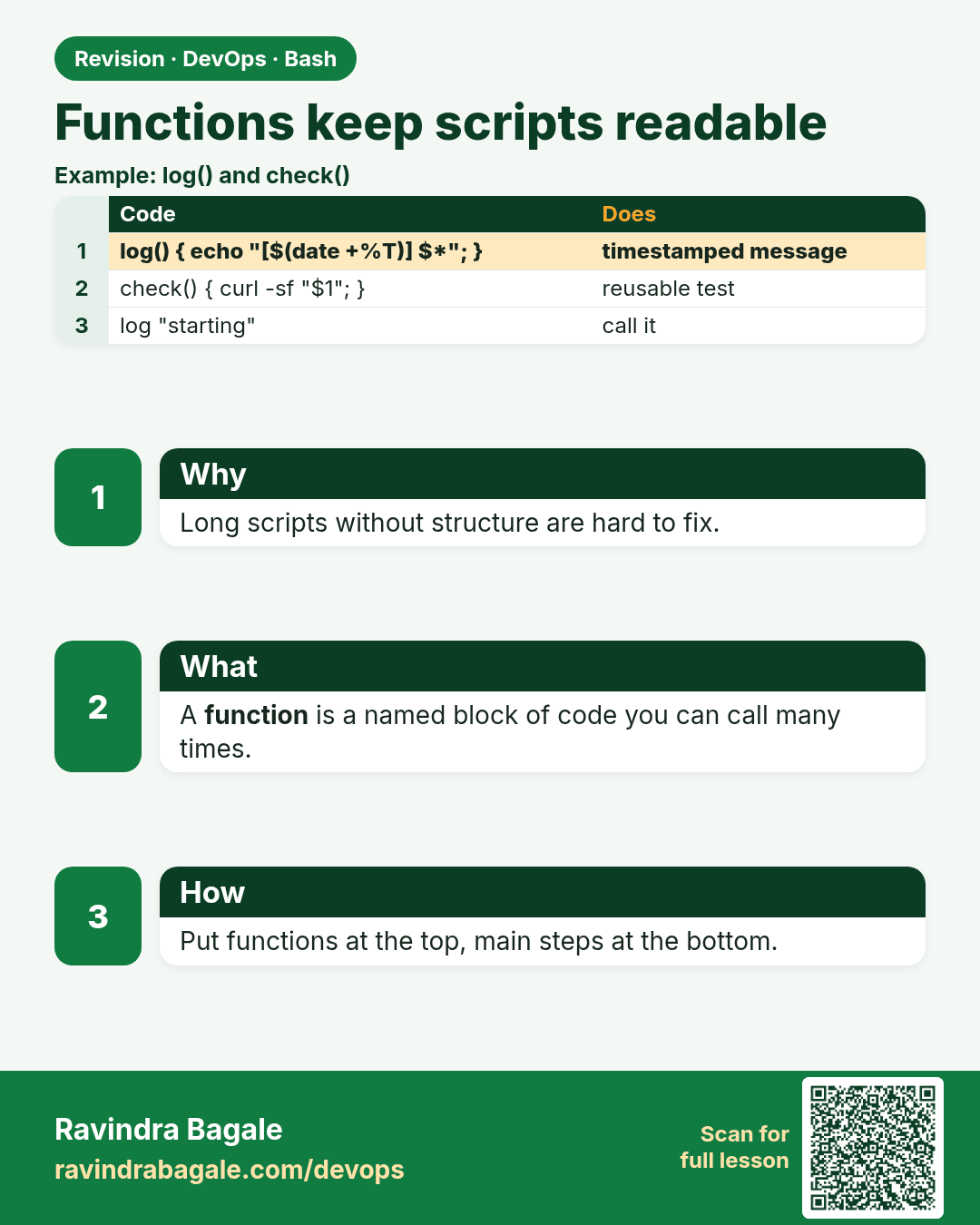
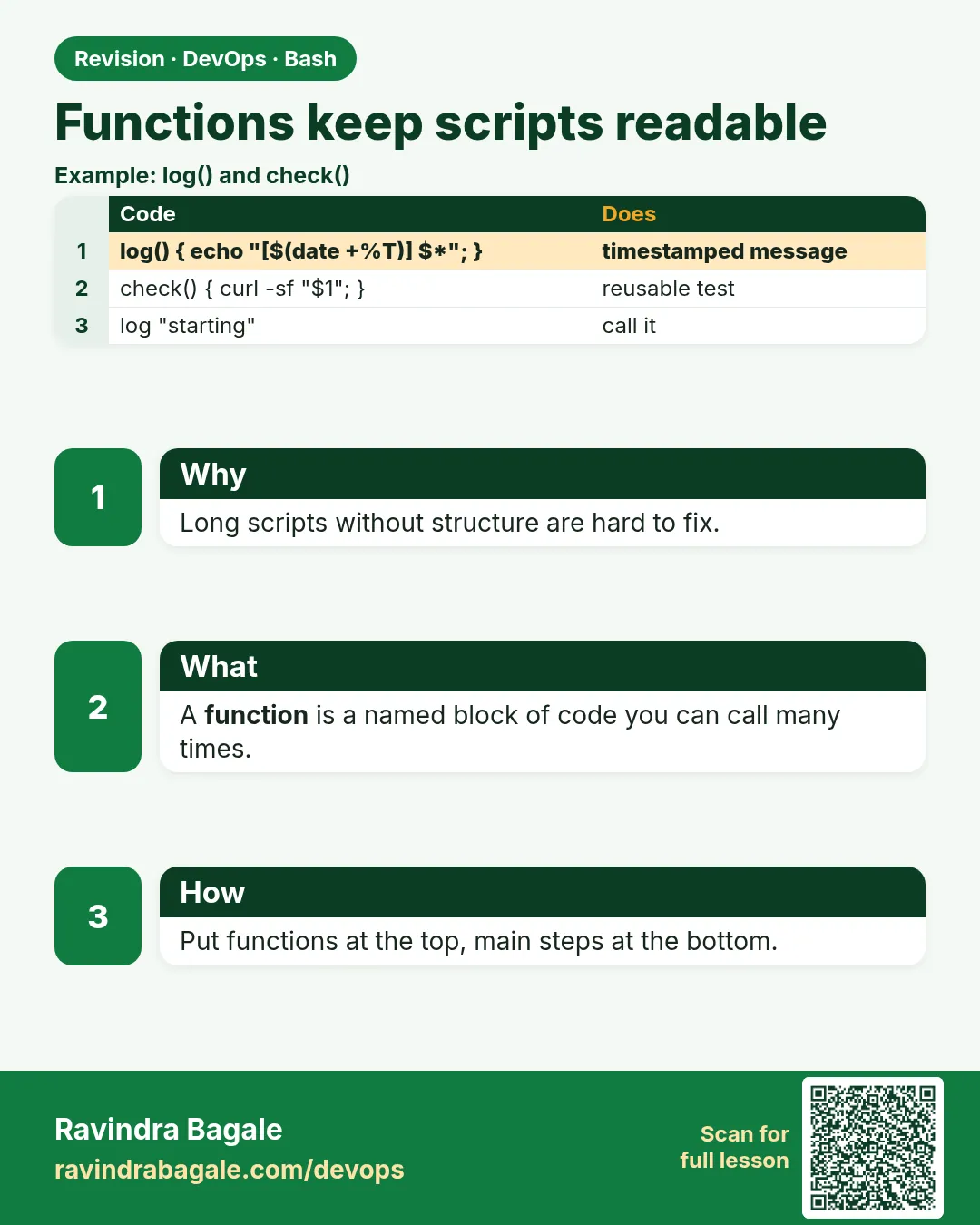 Revision card 9 of 11: Functions keep scripts readable · Download PNG · Open card page
Lesson: 5.9 Functions — keep scripts readable
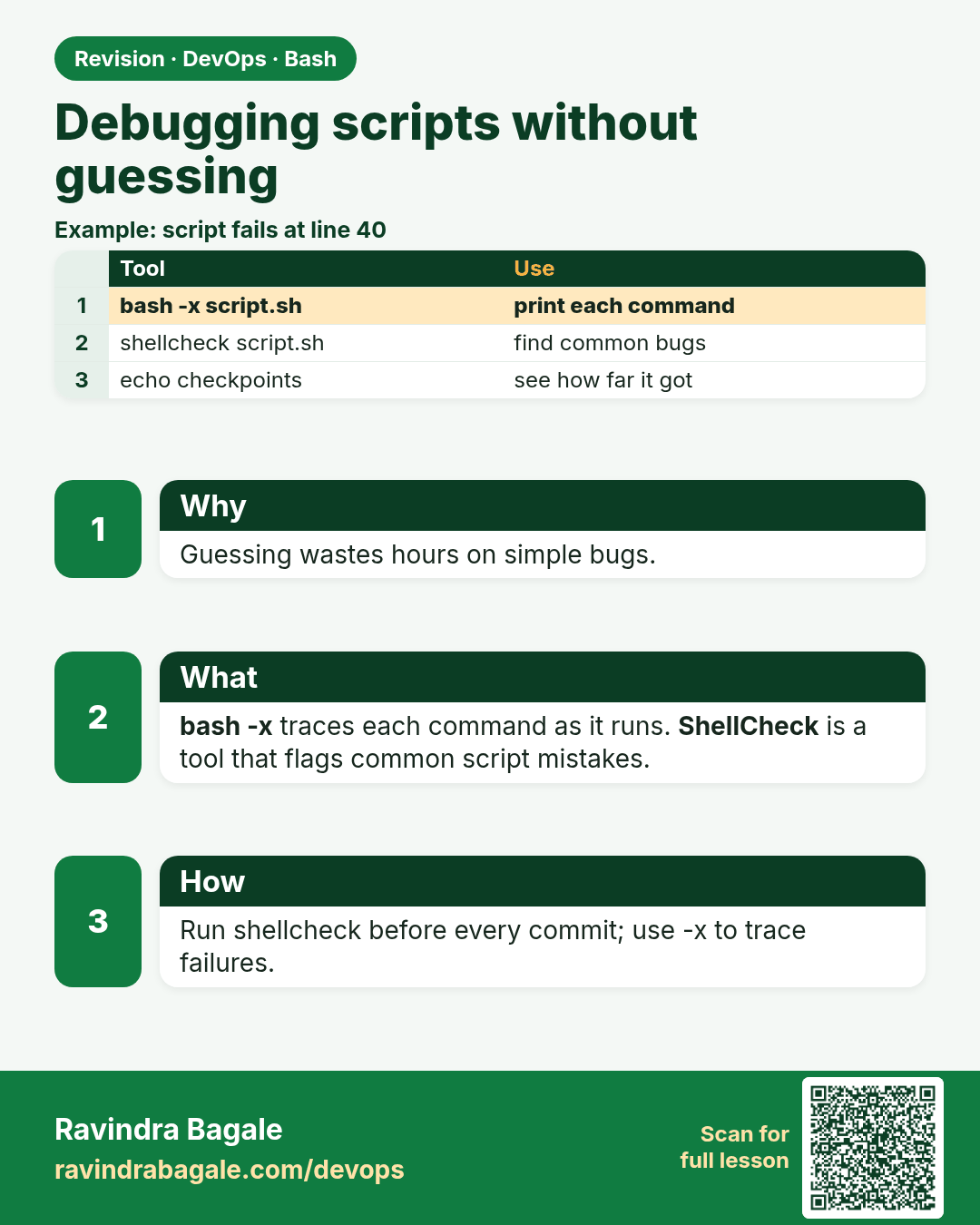
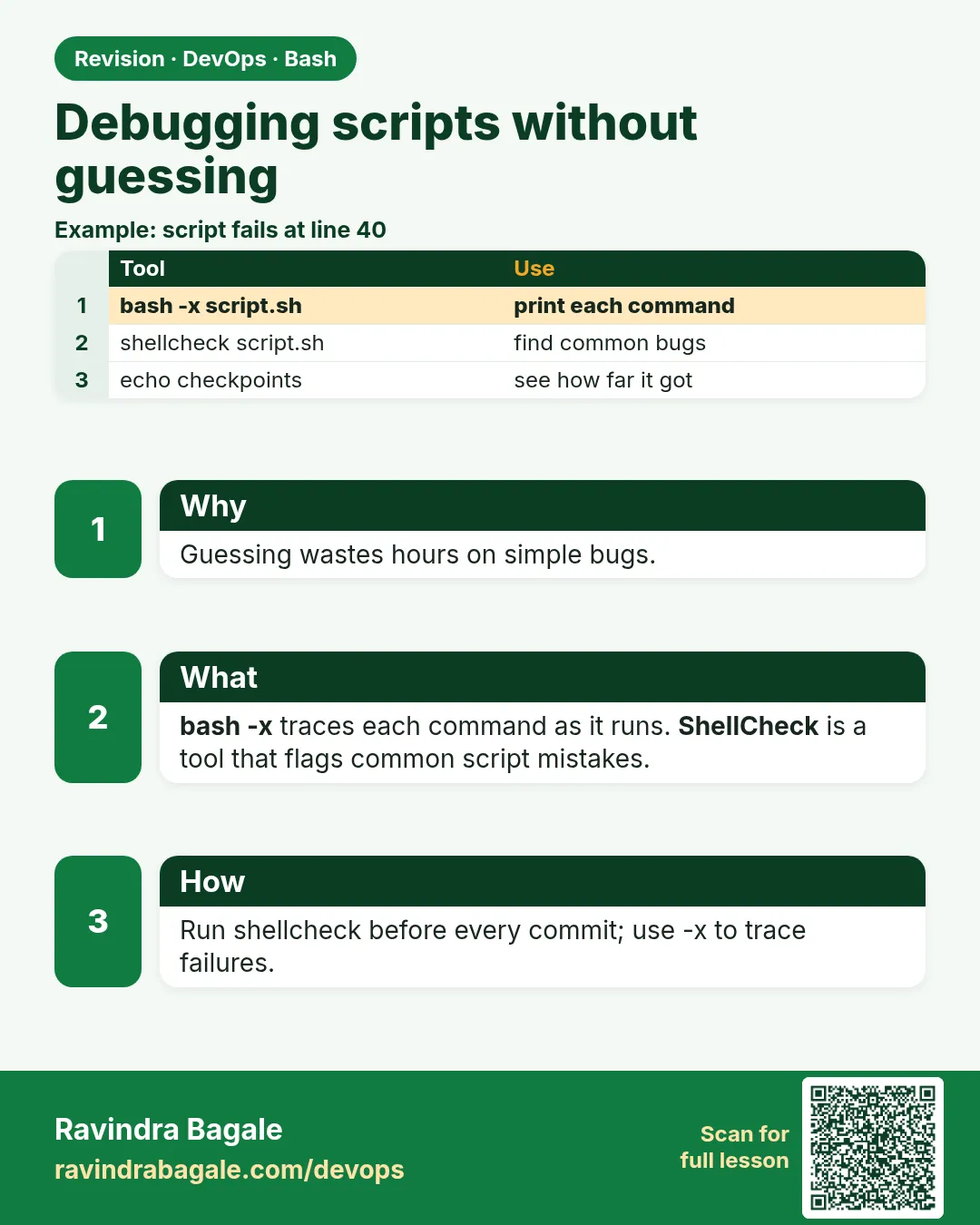 Revision card 10 of 11: Debugging scripts without guessing · Download PNG · Open card page
Lesson: 5.10 Debugging scripts without guessing
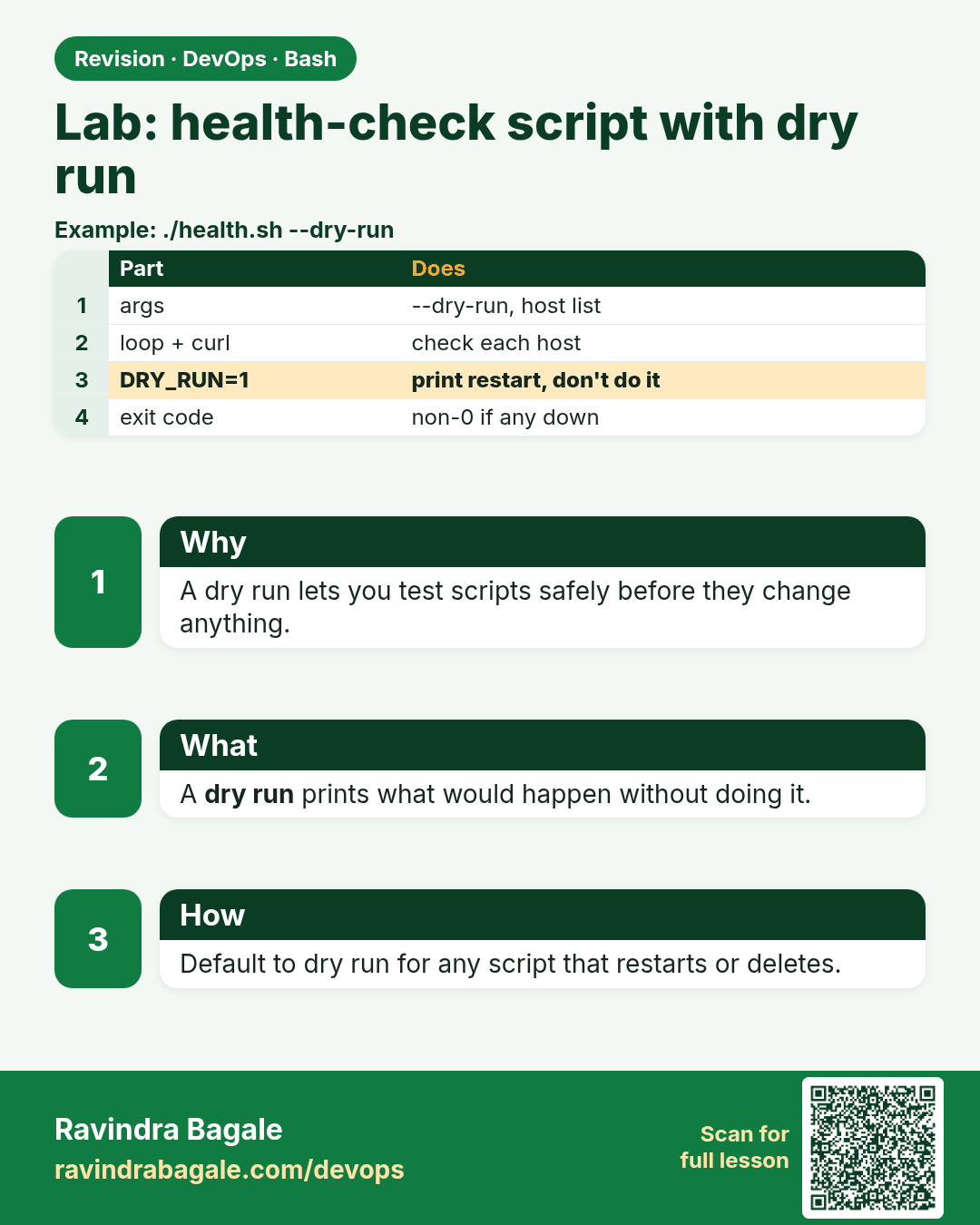
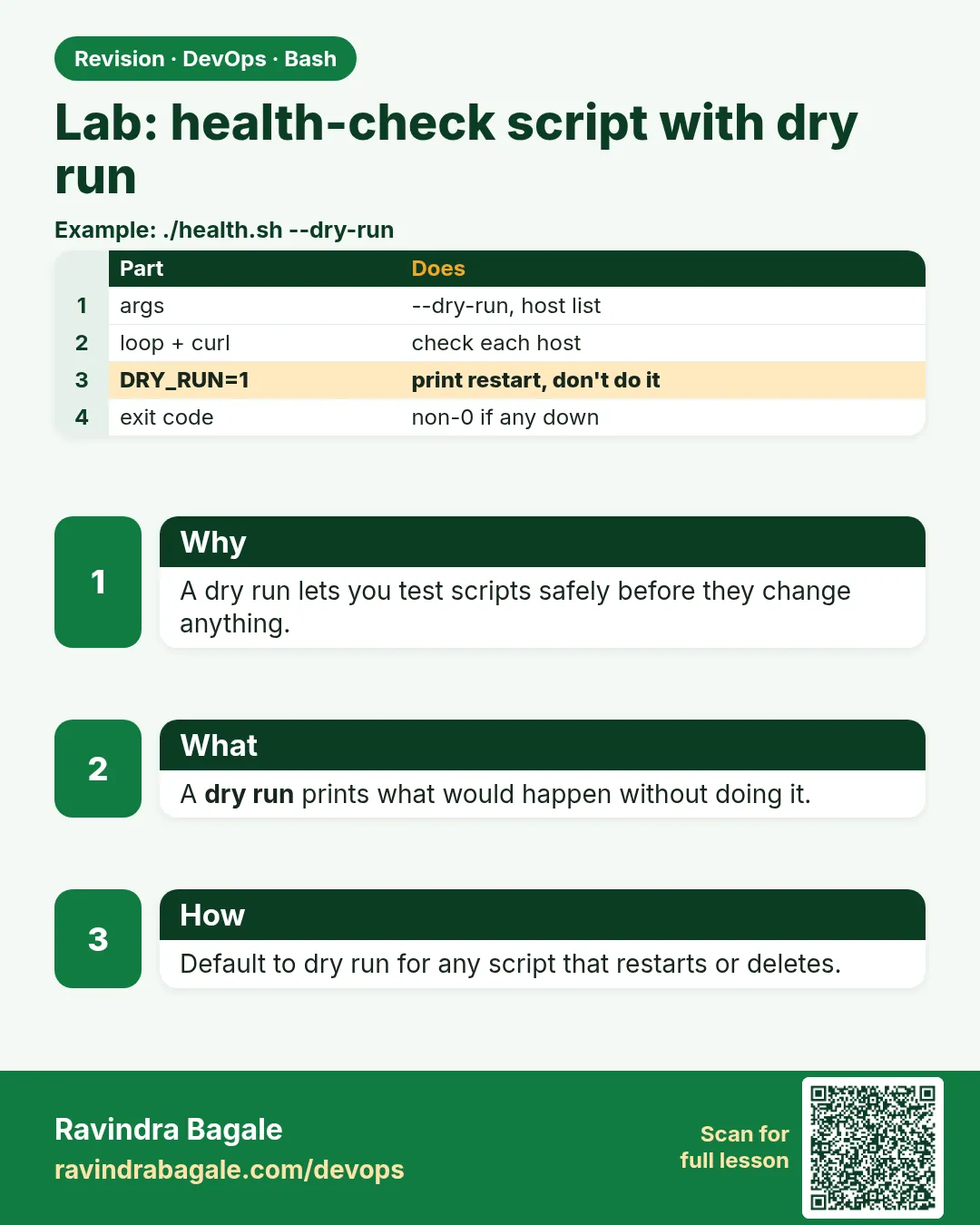 Revision card 11 of 11: Lab: health-check script with dry run · Download PNG · Open card page
Lesson: 5.11 Lab — health check script with dry-run
Interview cards
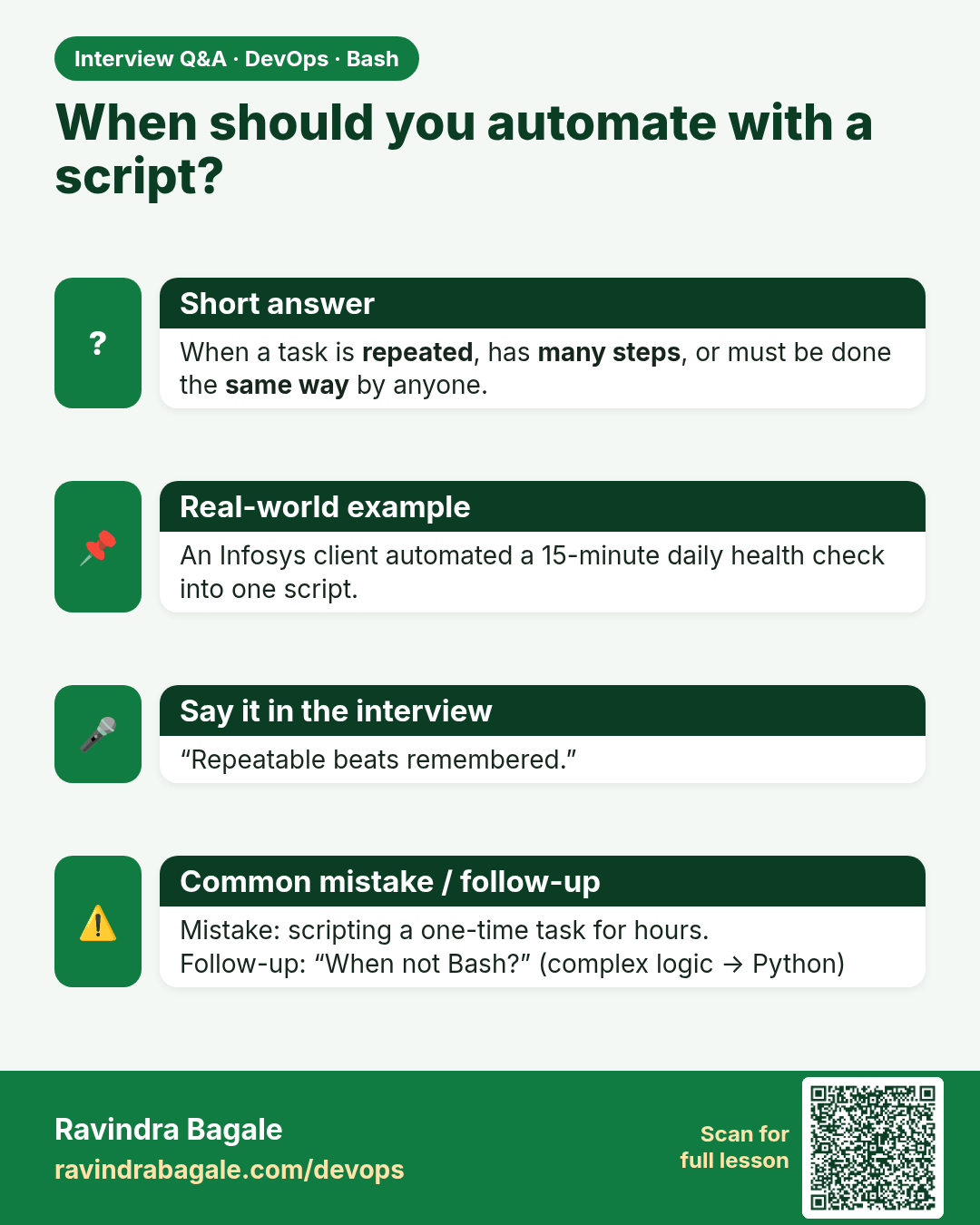
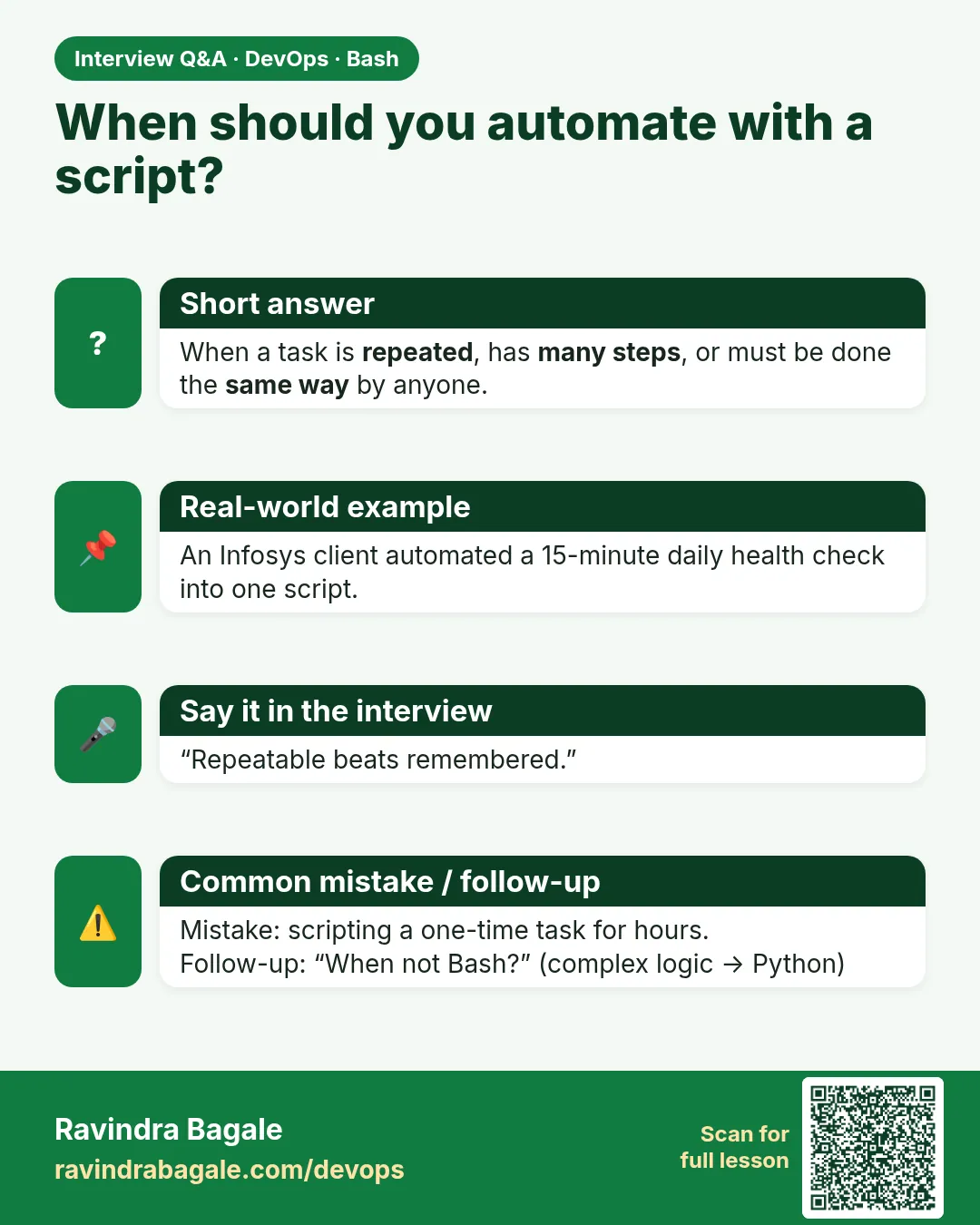 Interview card 1 of 11: When should you automate with a script? · Download PNG · Open card page
Lesson: 5.1 Why script — the morning ten commands
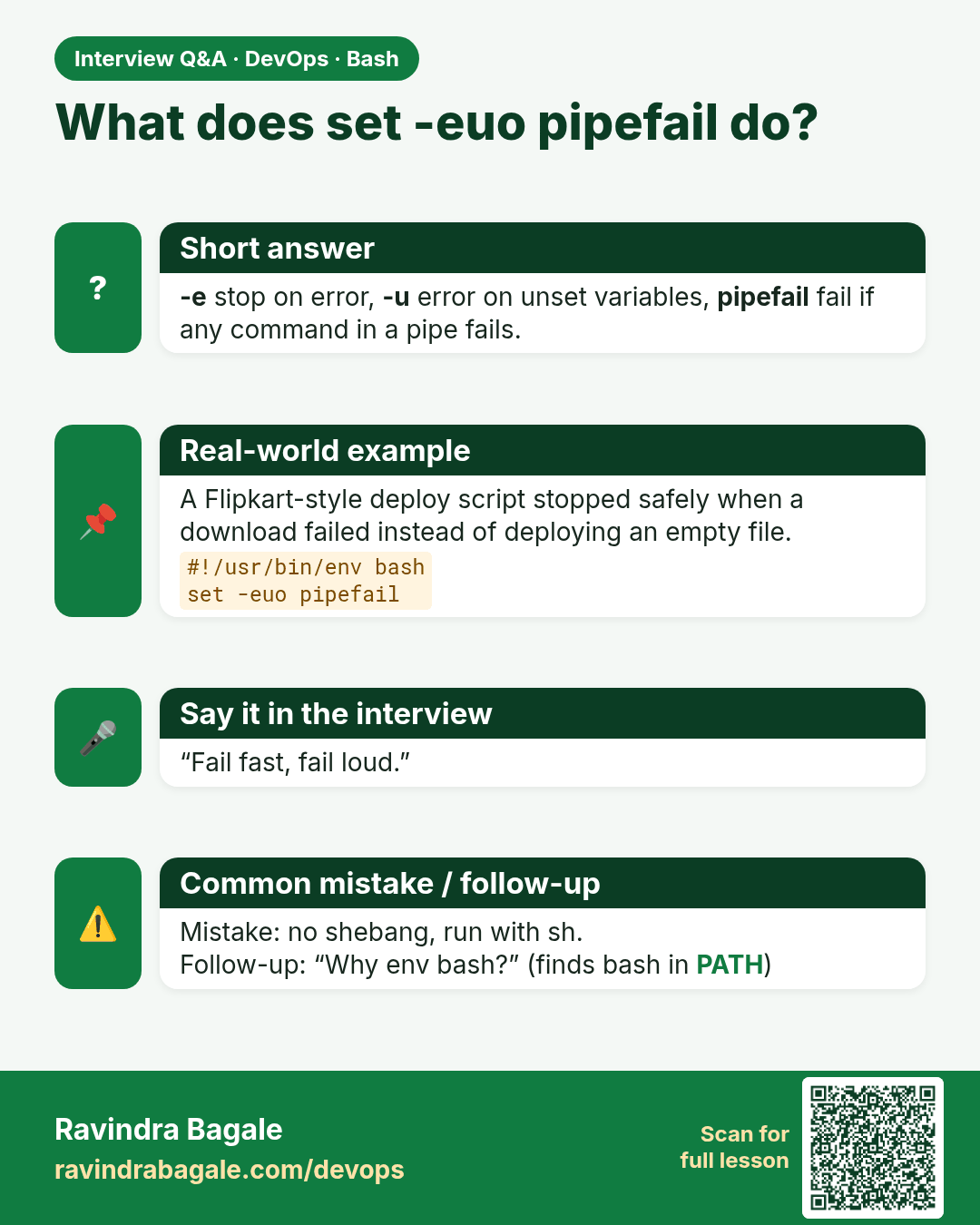
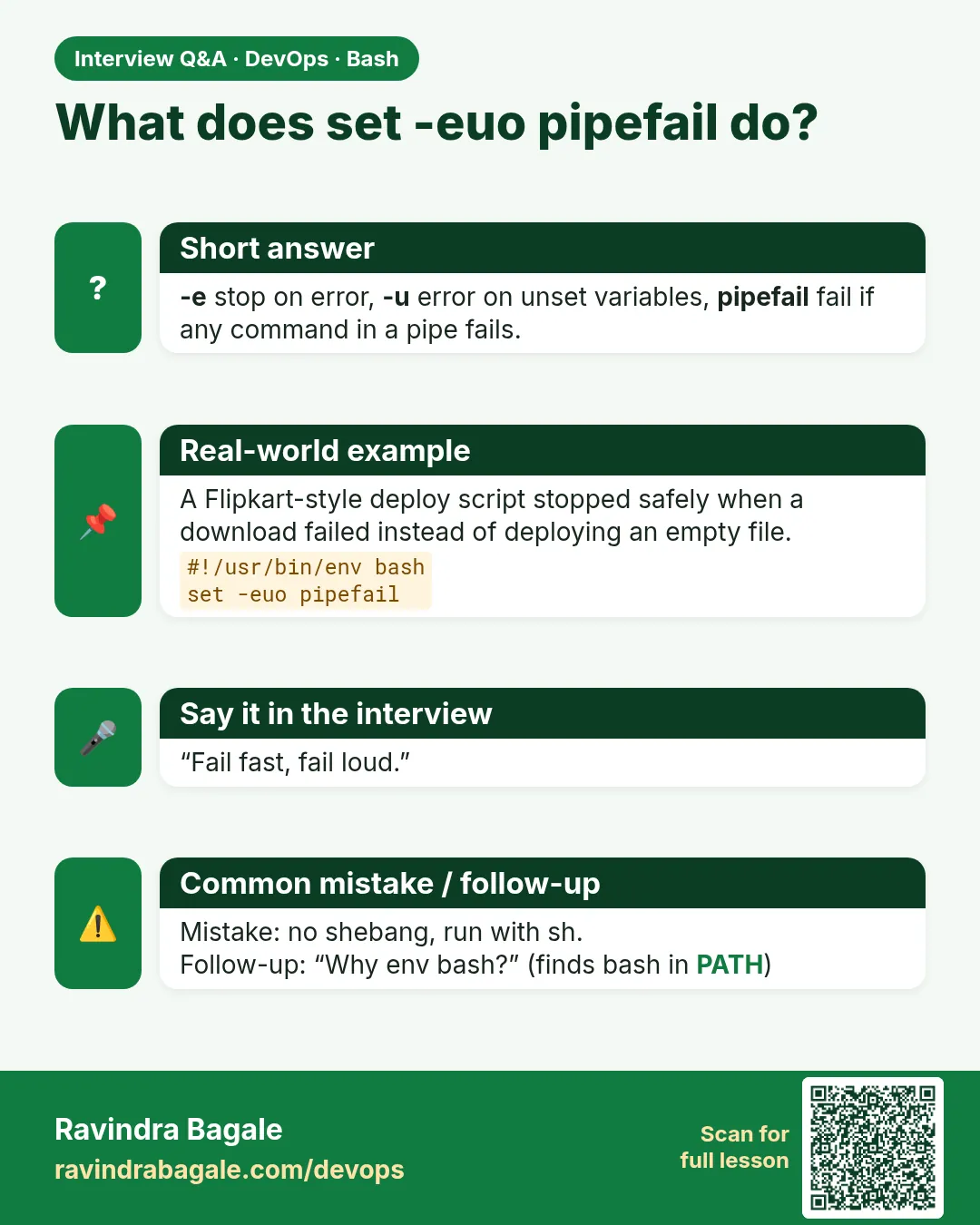 Interview card 2 of 11: What does set -euo pipefail do? · Download PNG · Open card page
Lesson: 5.2 Shebang, permissions, first script
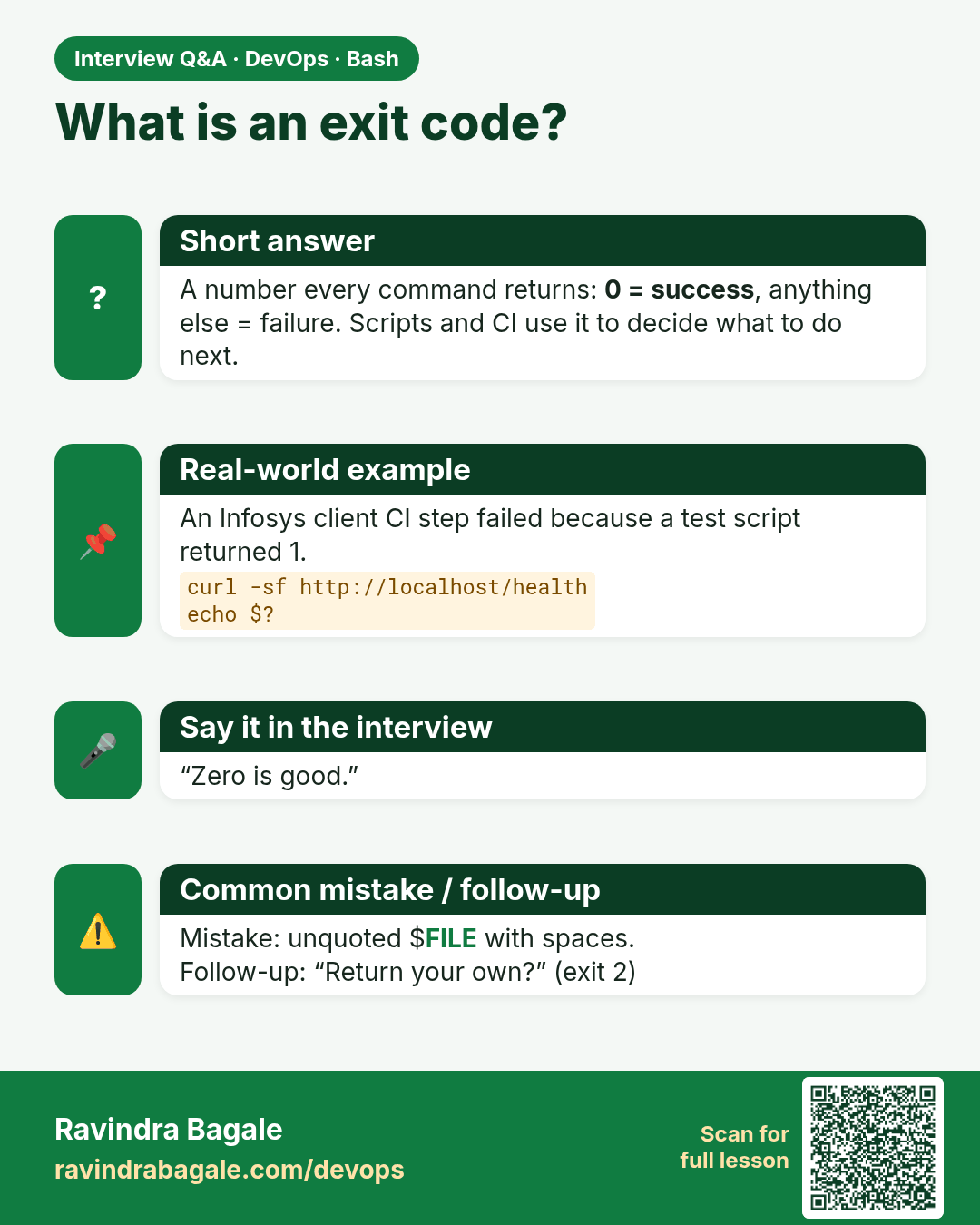
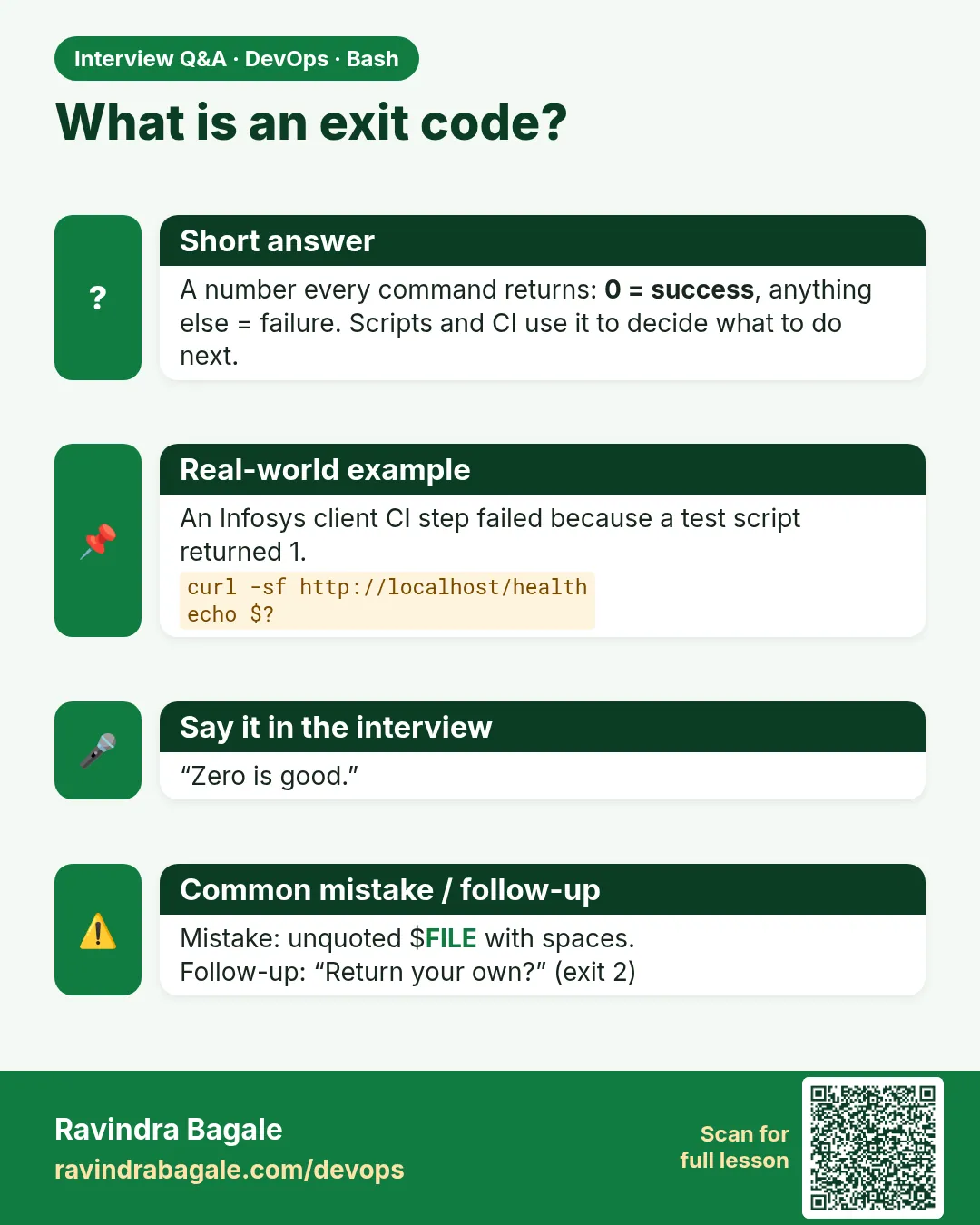 Interview card 3 of 11: What is an exit code? · Download PNG · Open card page
Lesson: 5.3 Variables, quotes and exit codes
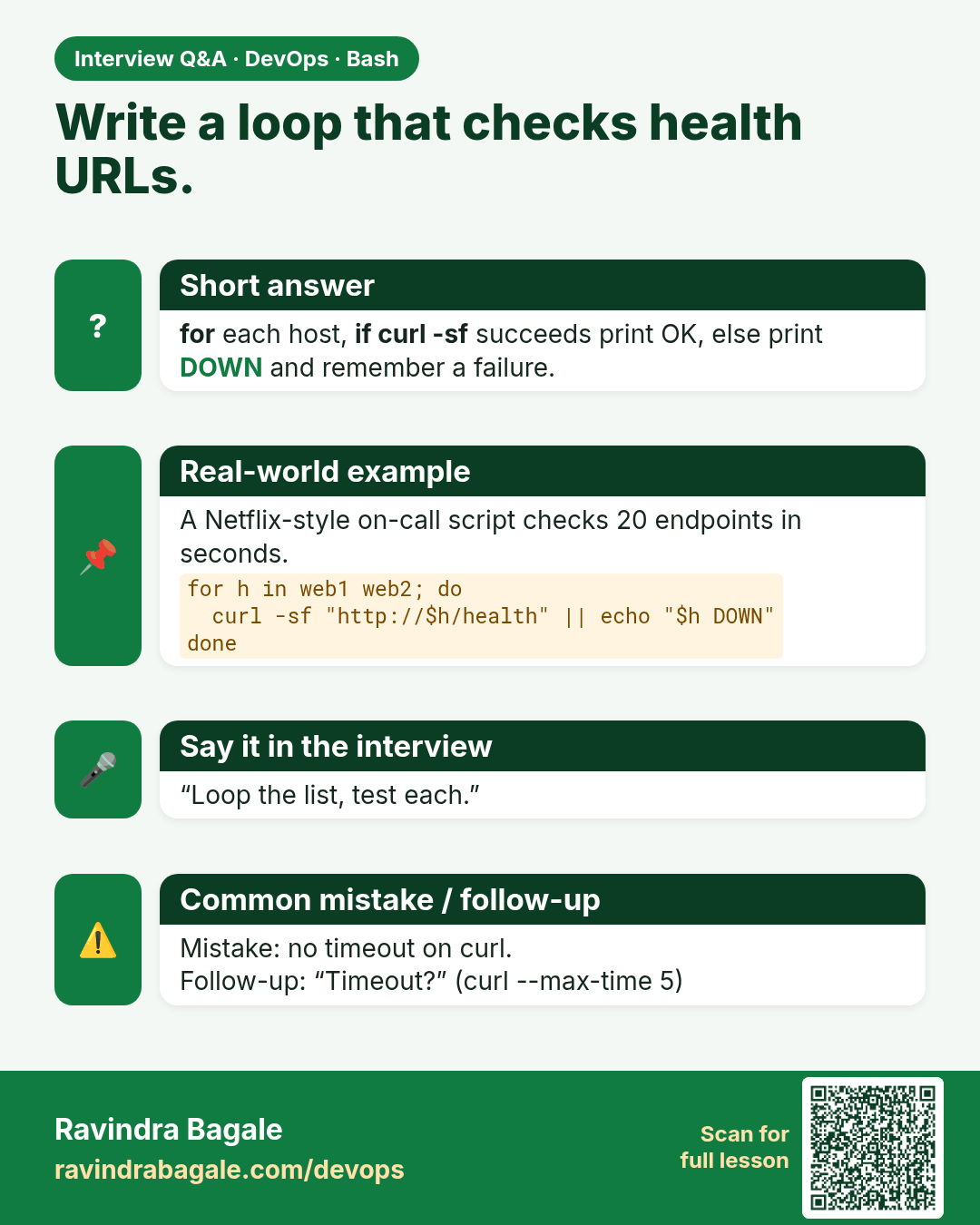
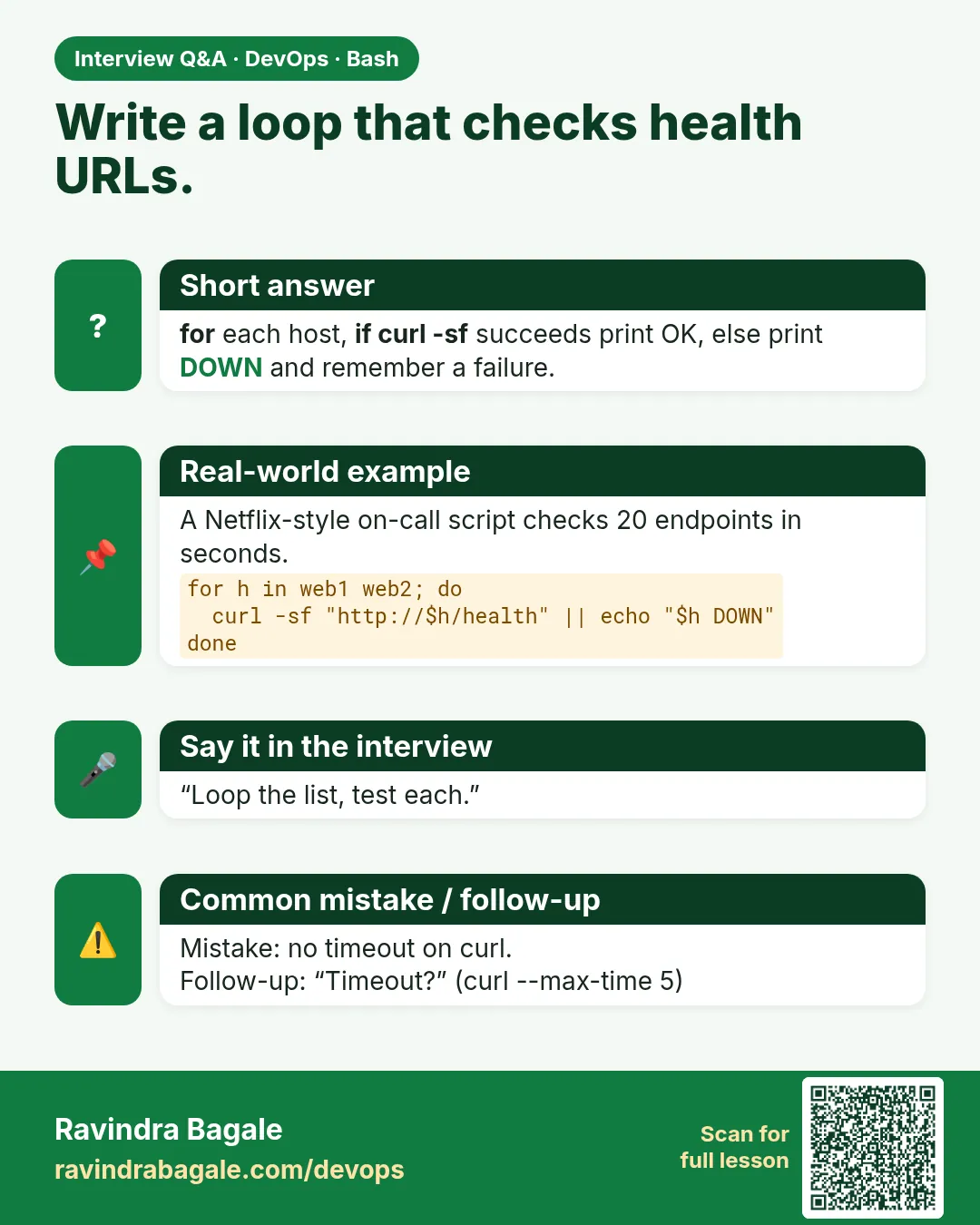 Interview card 4 of 11: Write a loop that checks health URLs. · Download PNG · Open card page
Lesson: 5.4 if and loops for health checks
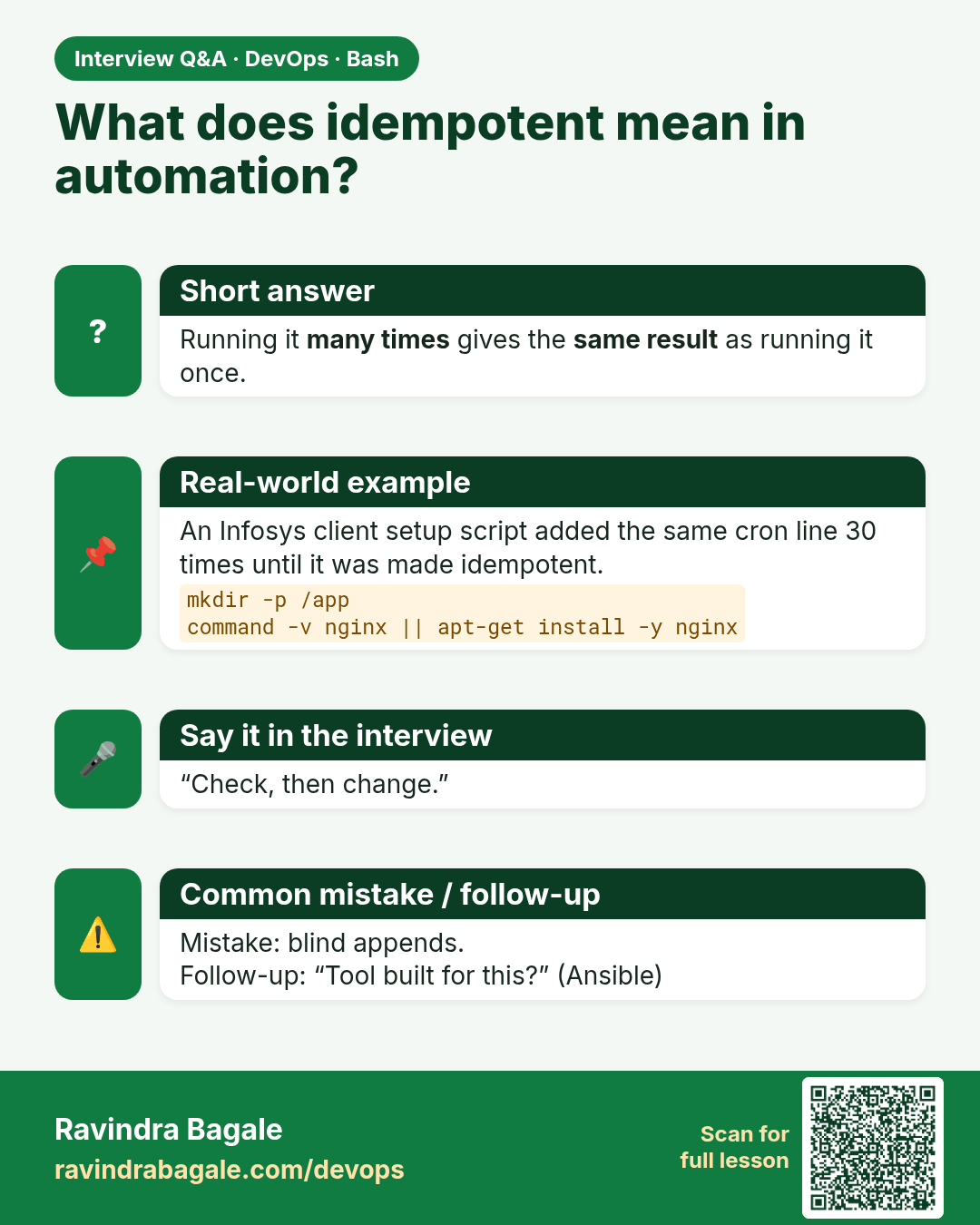
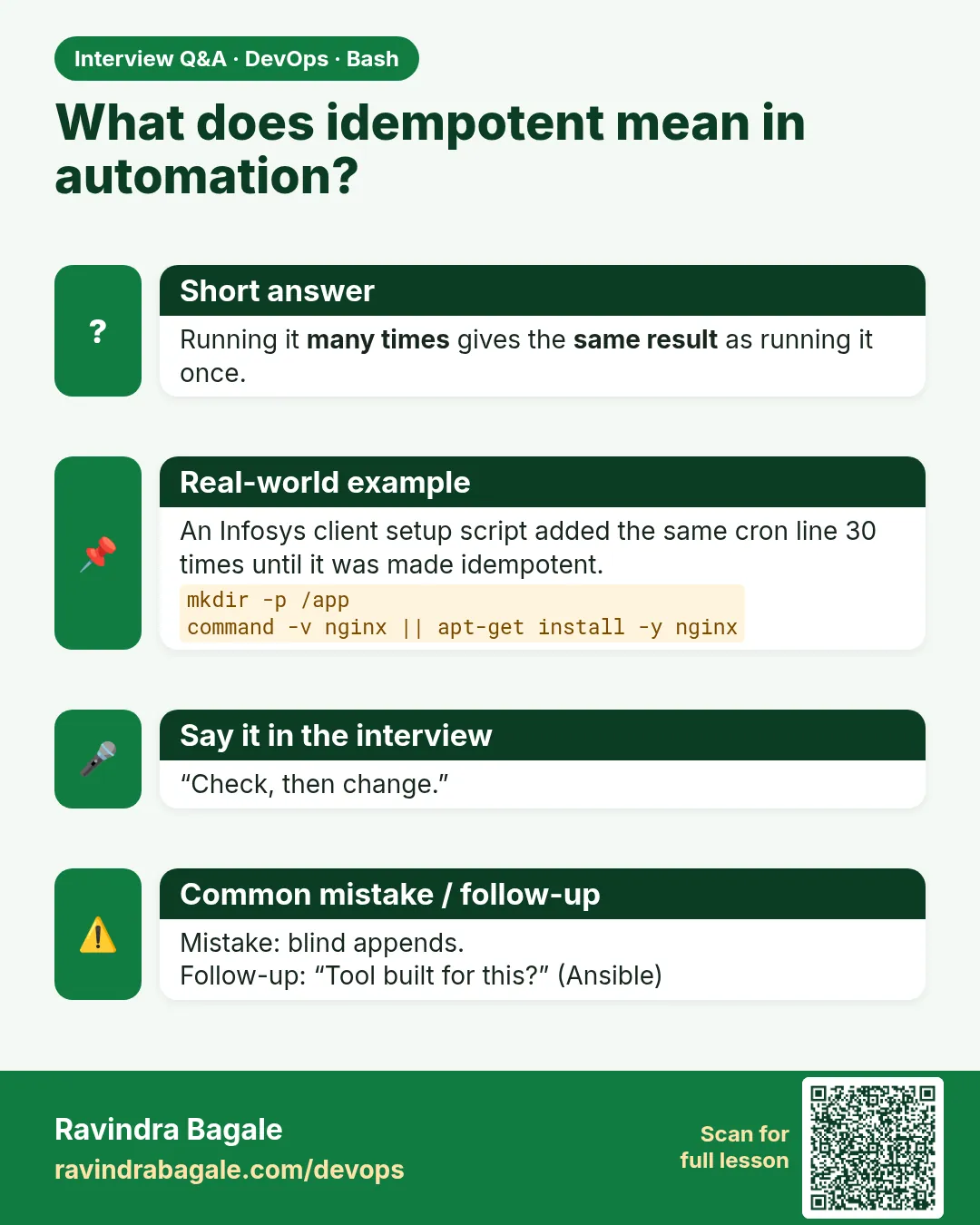 Interview card 5 of 11: What does idempotent mean in automation? · Download PNG · Open card page
Lesson: 5.5 Idempotent-ish habits — check before install
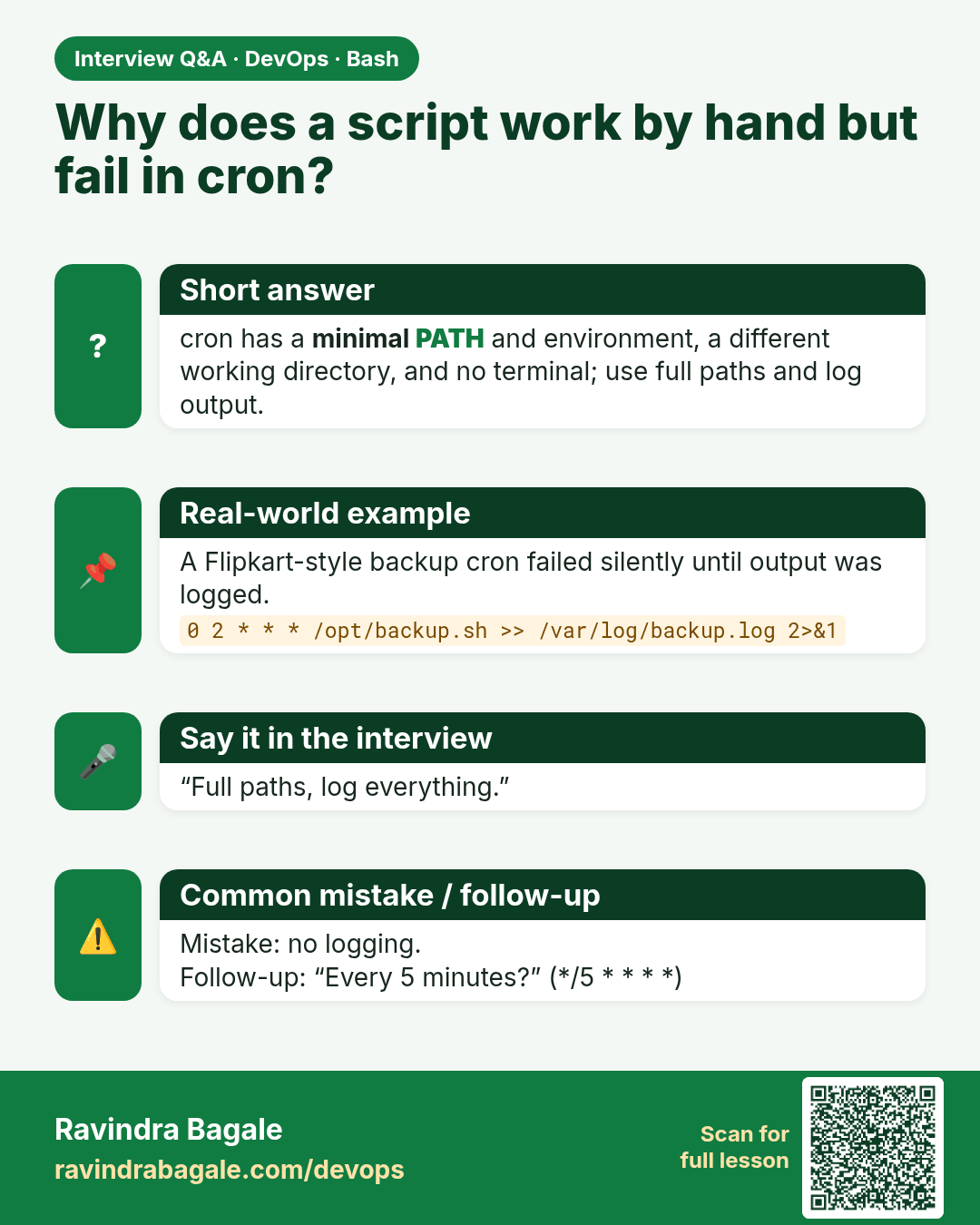
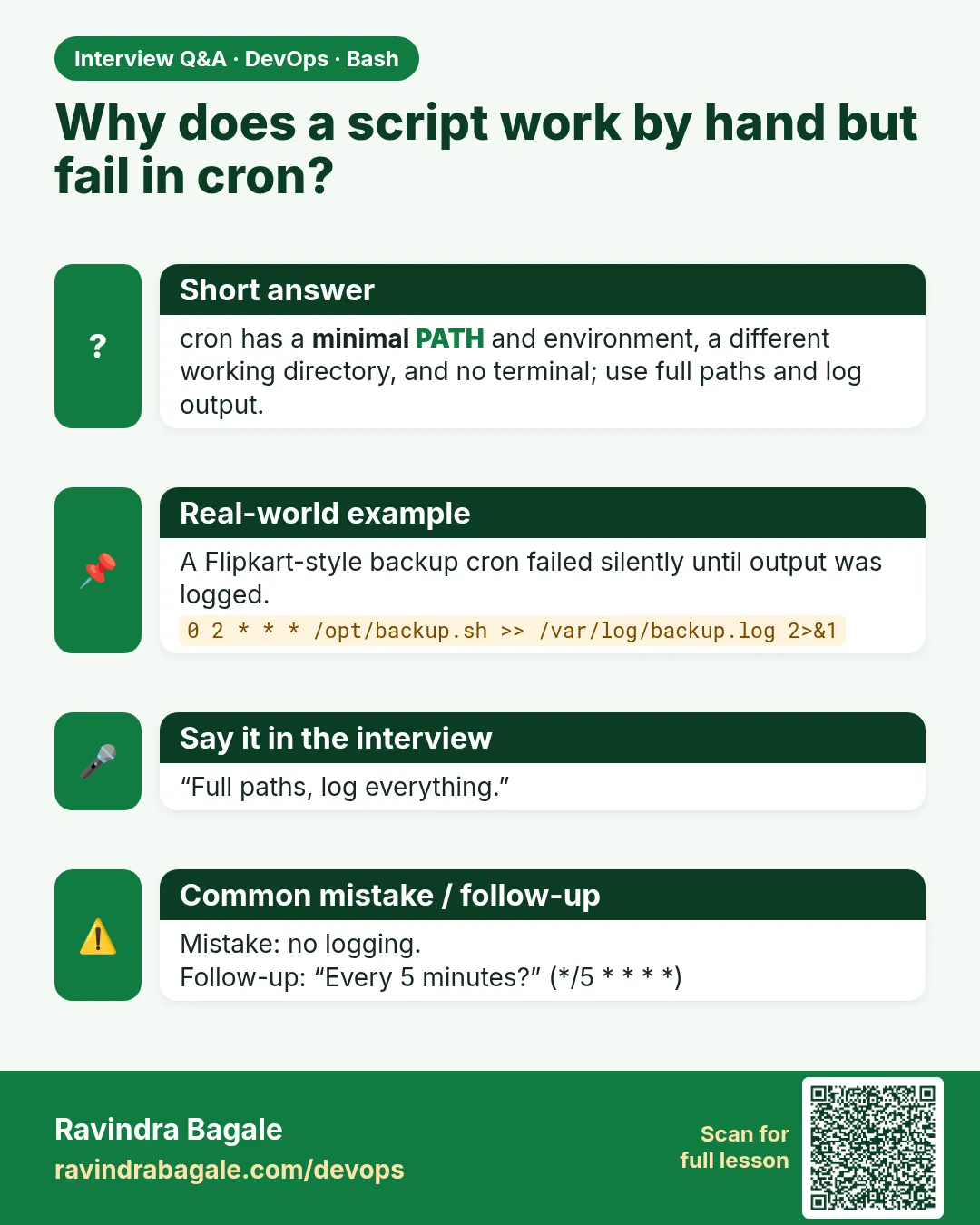 Interview card 6 of 11: Why does a script work by hand but fail in cron? · Download PNG · Open card page
Lesson: 5.6 Cron basics — schedule the script
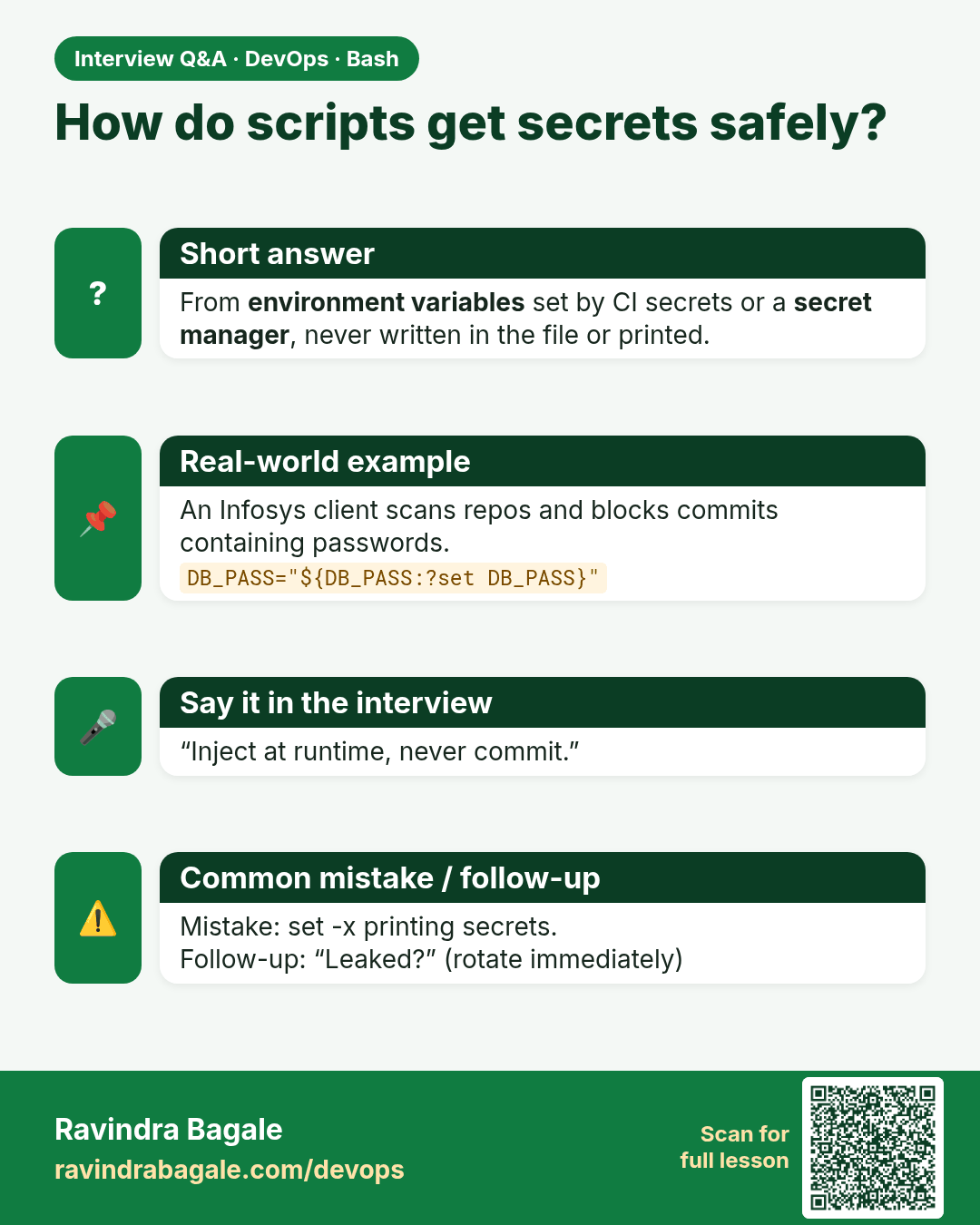
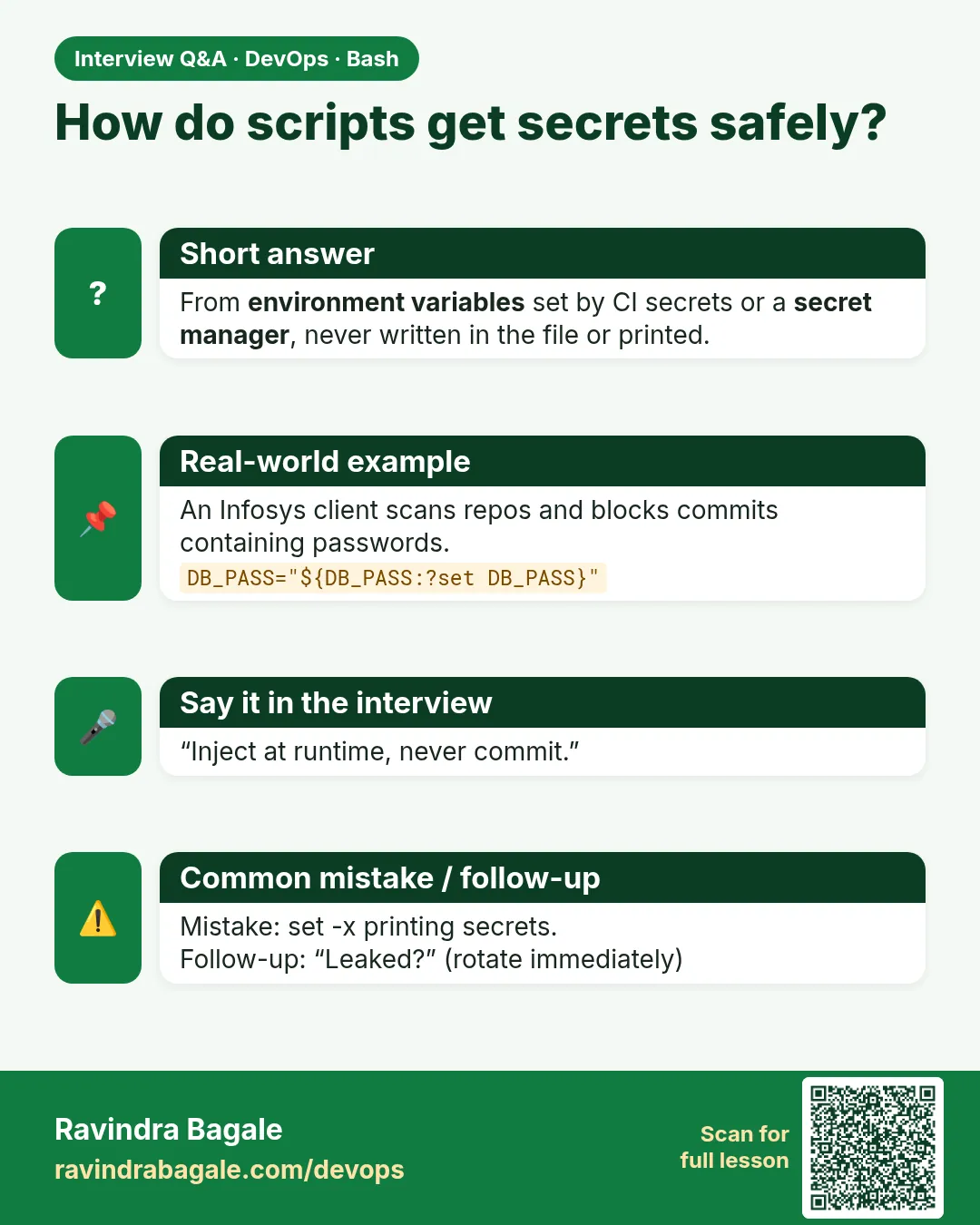 Interview card 7 of 11: How do scripts get secrets safely? · Download PNG · Open card page
Lesson: 5.7 Secrets — never hardcode
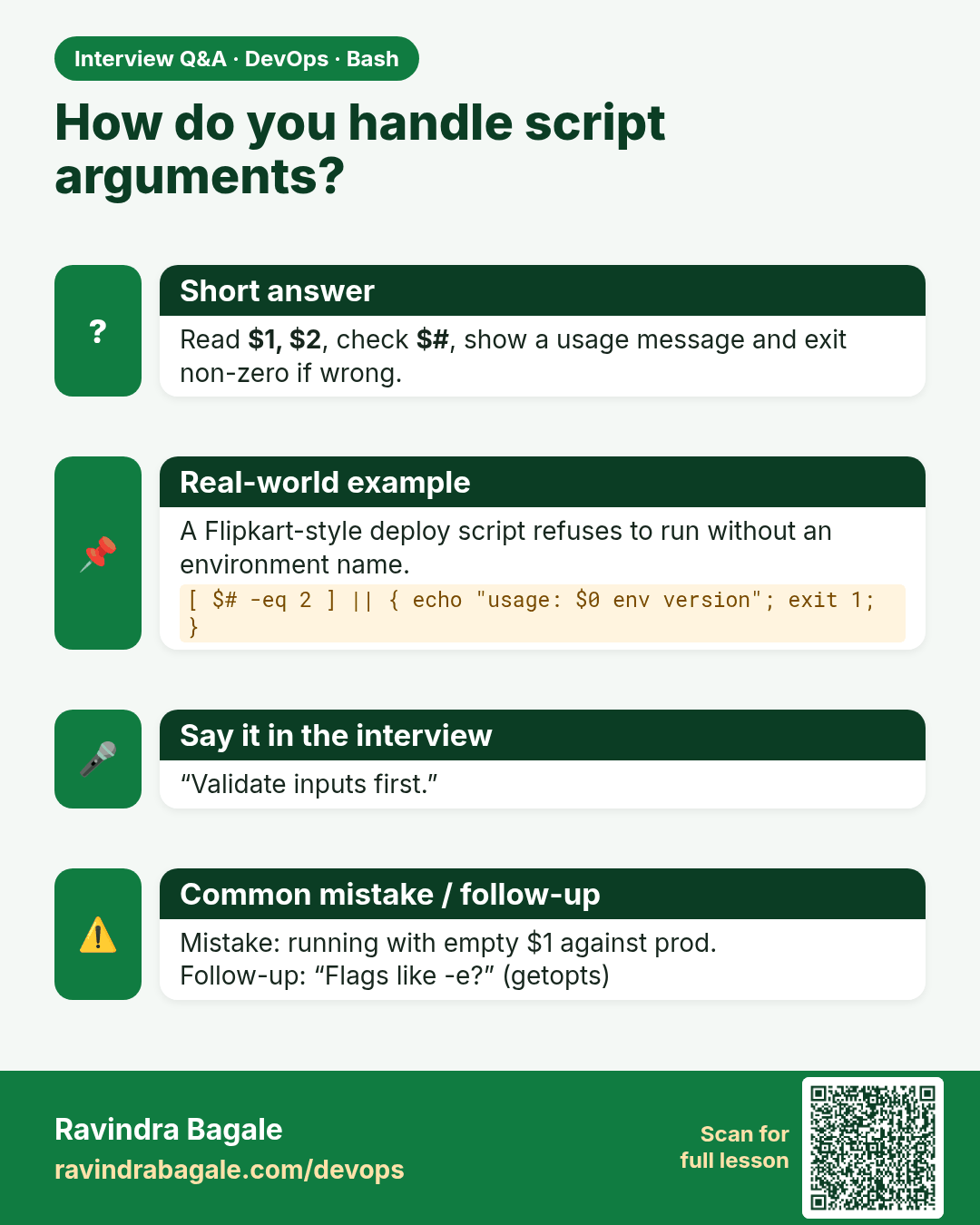
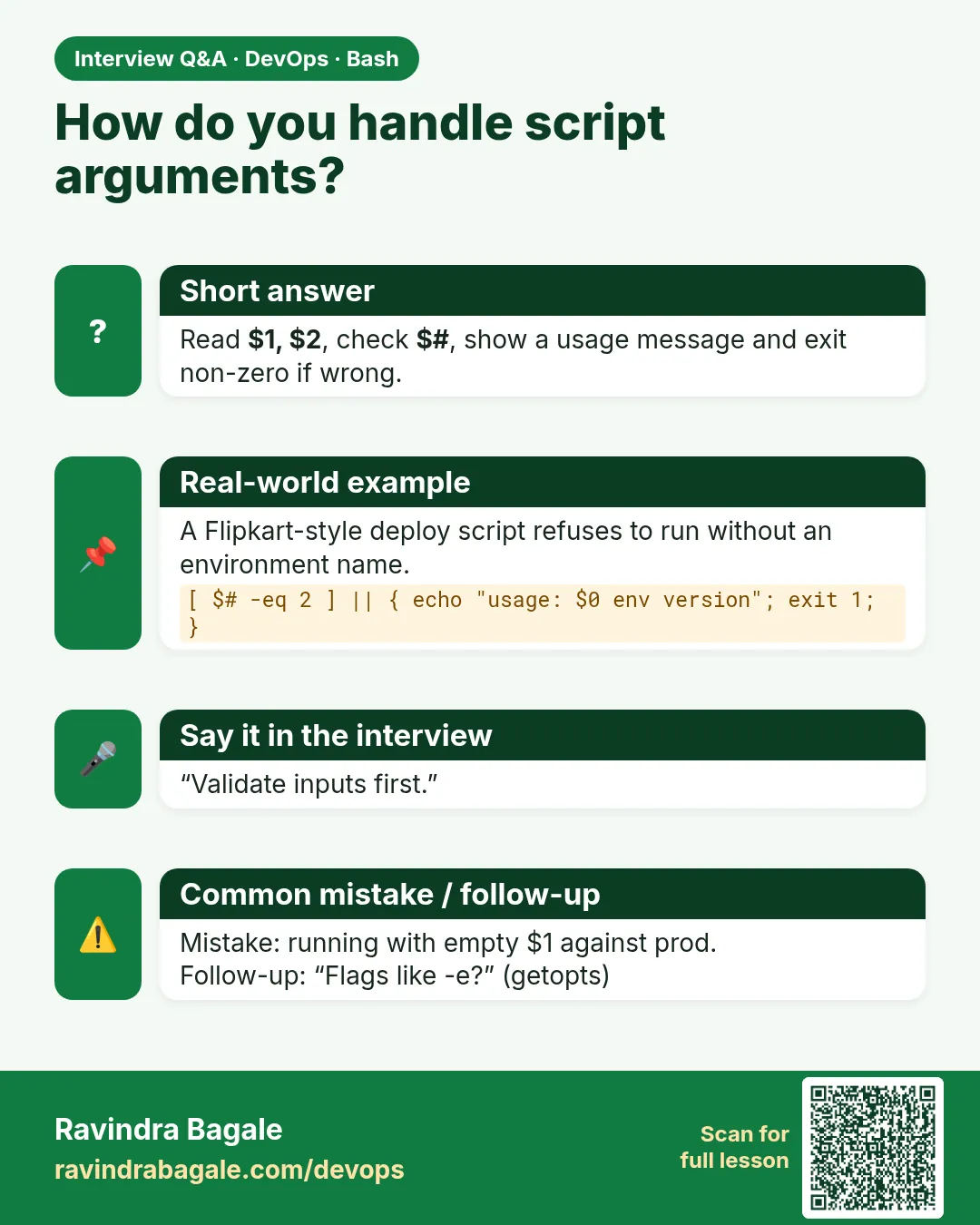 Interview card 8 of 11: How do you handle script arguments? · Download PNG · Open card page
Lesson: 5.8 Reading arguments and a full sample script
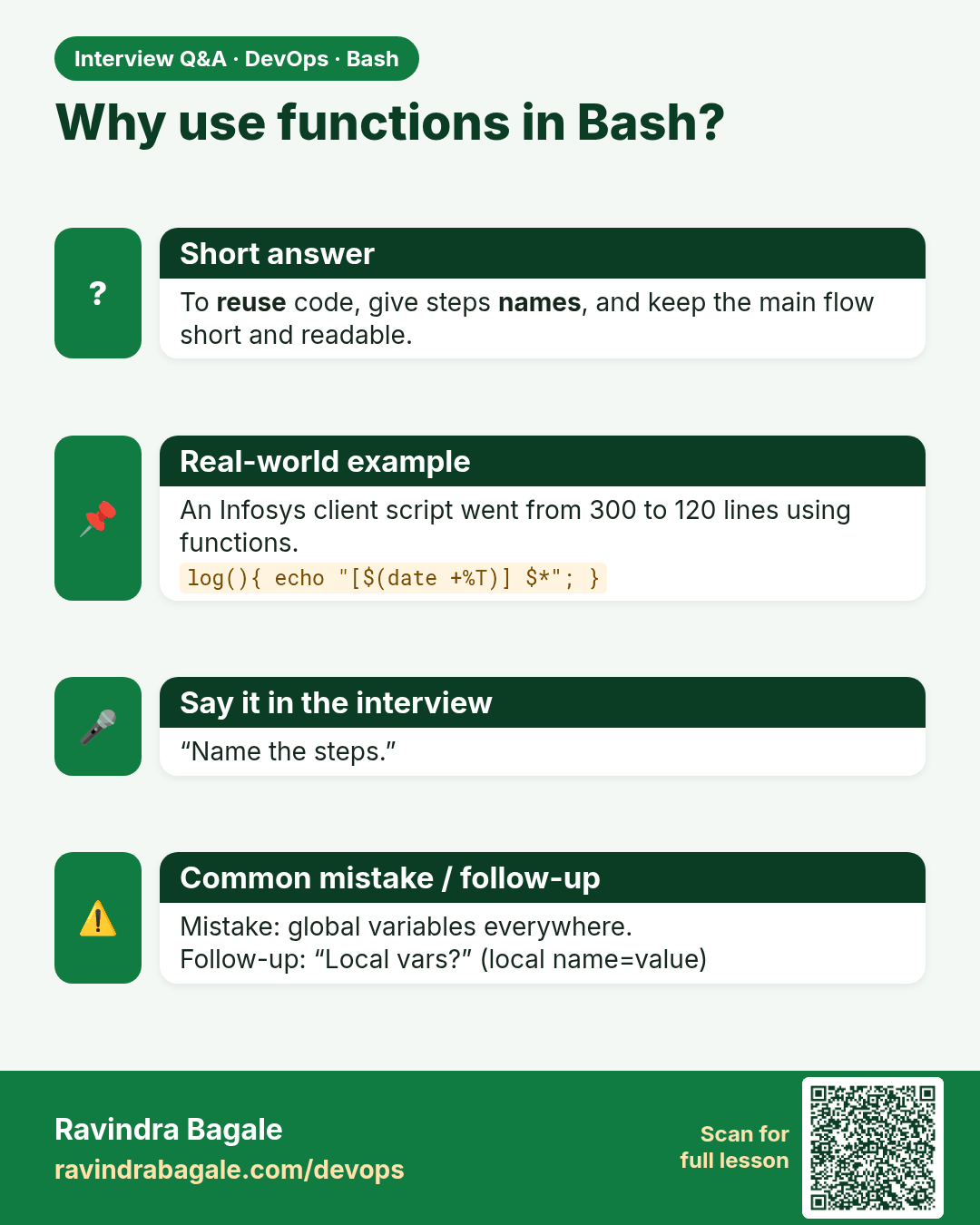
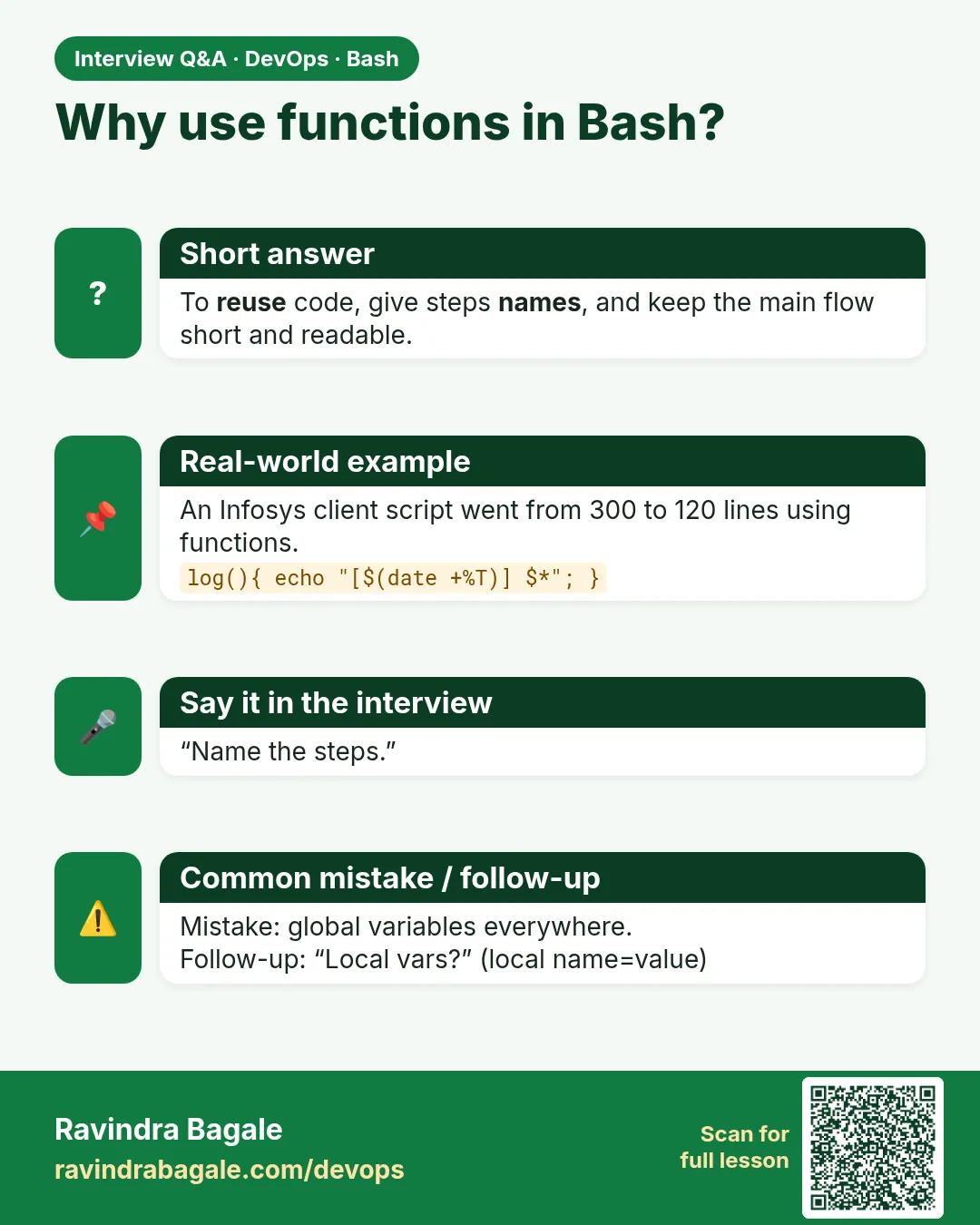 Interview card 9 of 11: Why use functions in Bash? · Download PNG · Open card page
Lesson: 5.9 Functions — keep scripts readable
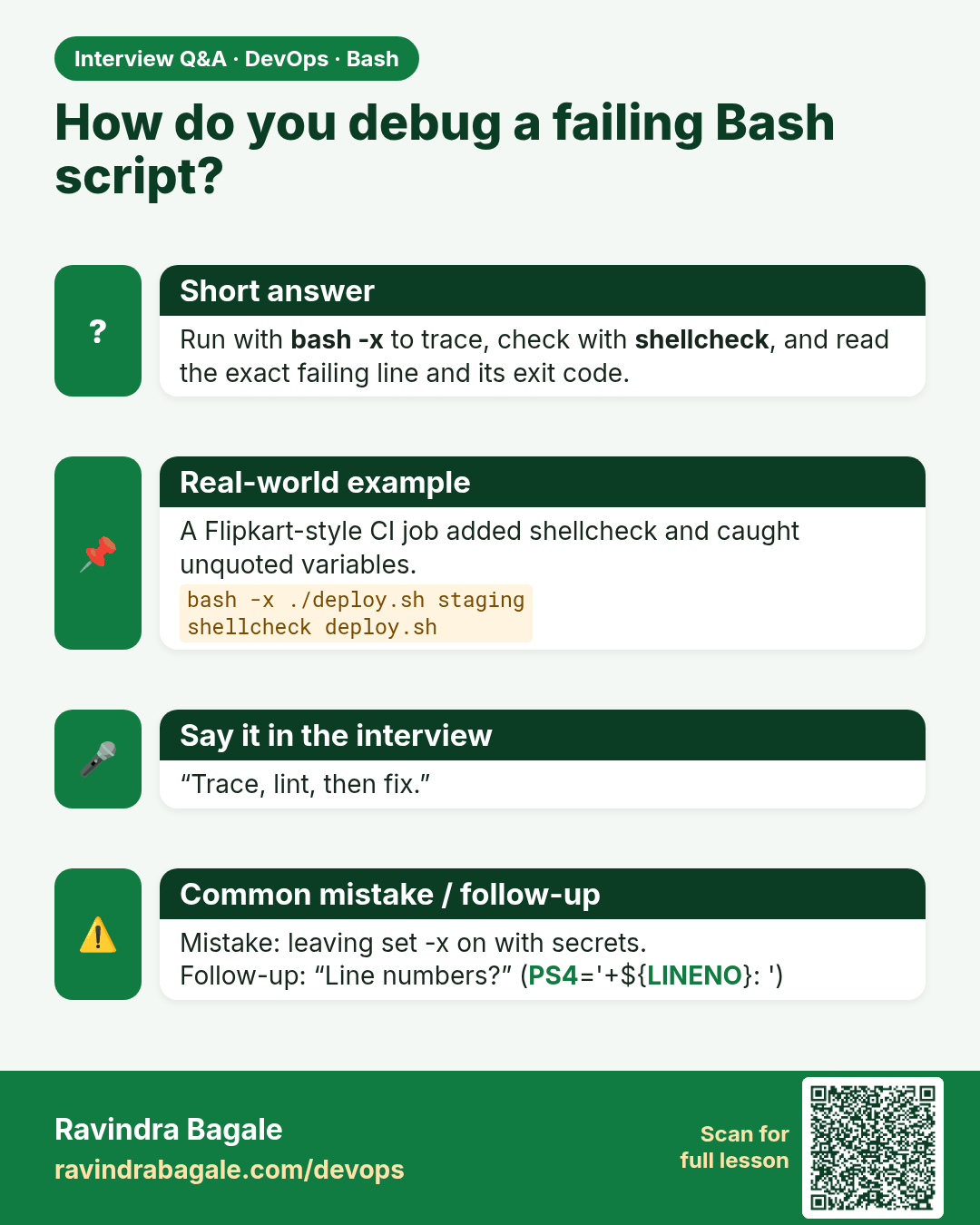
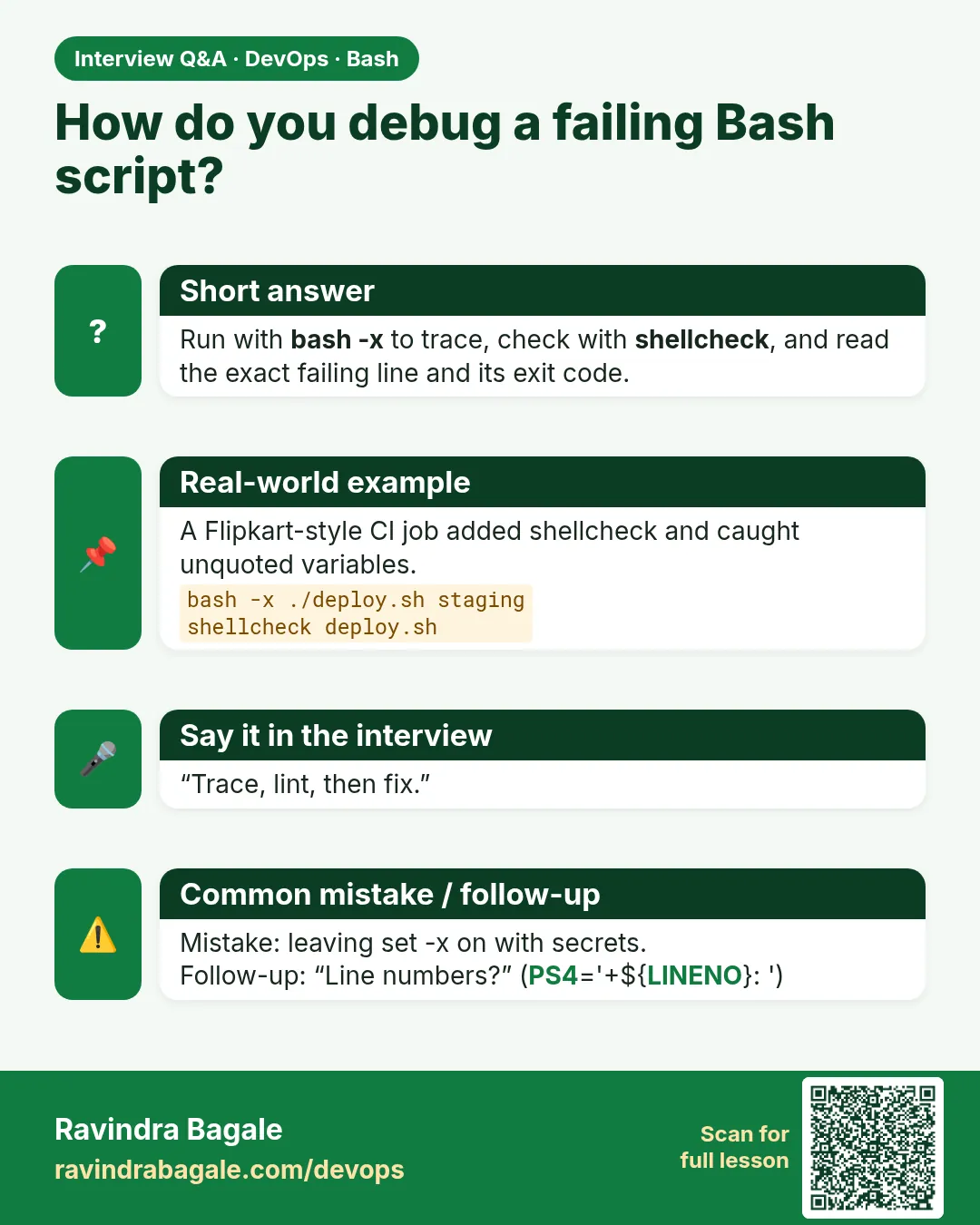 Interview card 10 of 11: How do you debug a failing Bash script? · Download PNG · Open card page
Lesson: 5.10 Debugging scripts without guessing
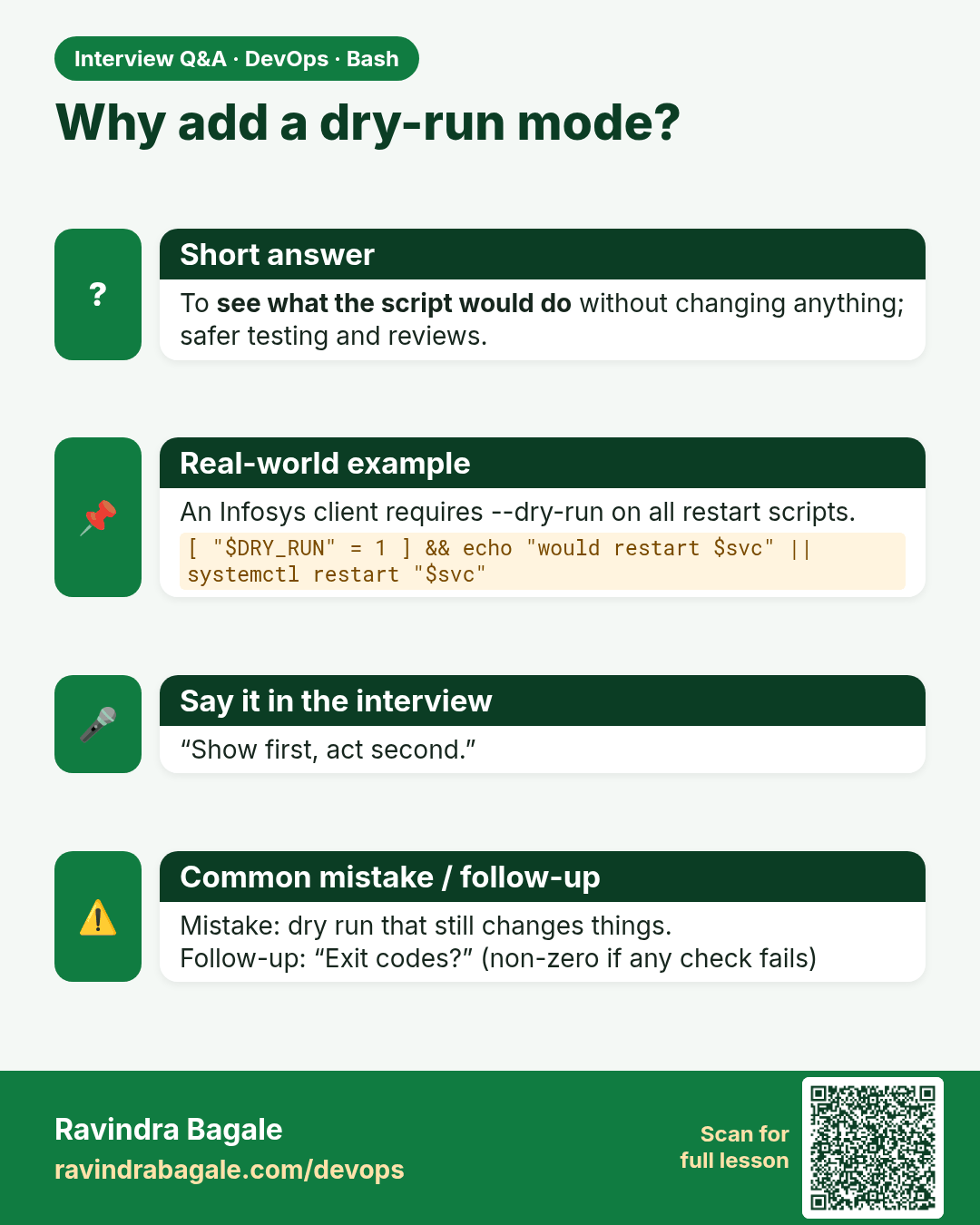
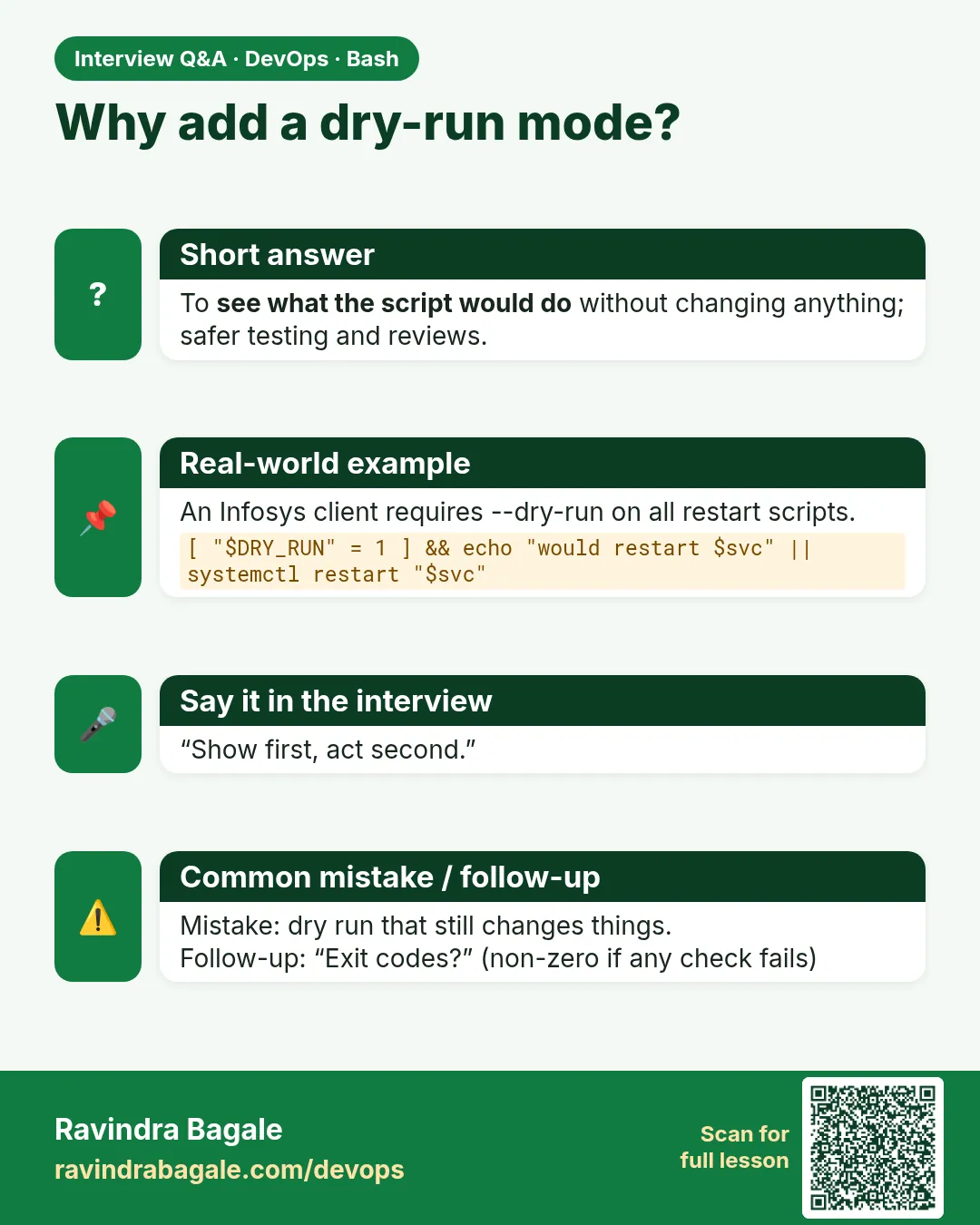 Interview card 11 of 11: Why add a dry-run mode? · Download PNG · Open card page
Lesson: 5.11 Lab — health check script with dry-run
Comparison cards
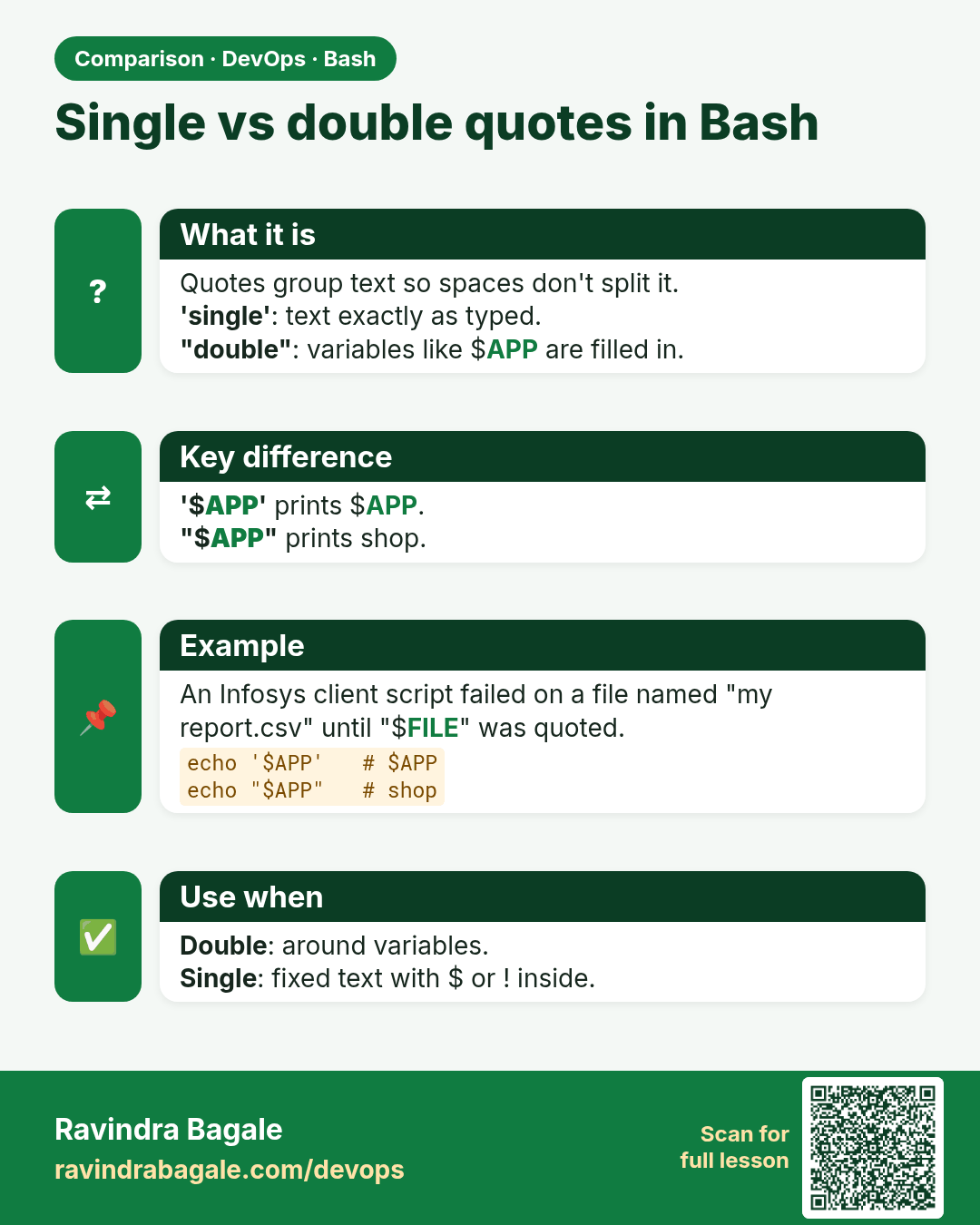
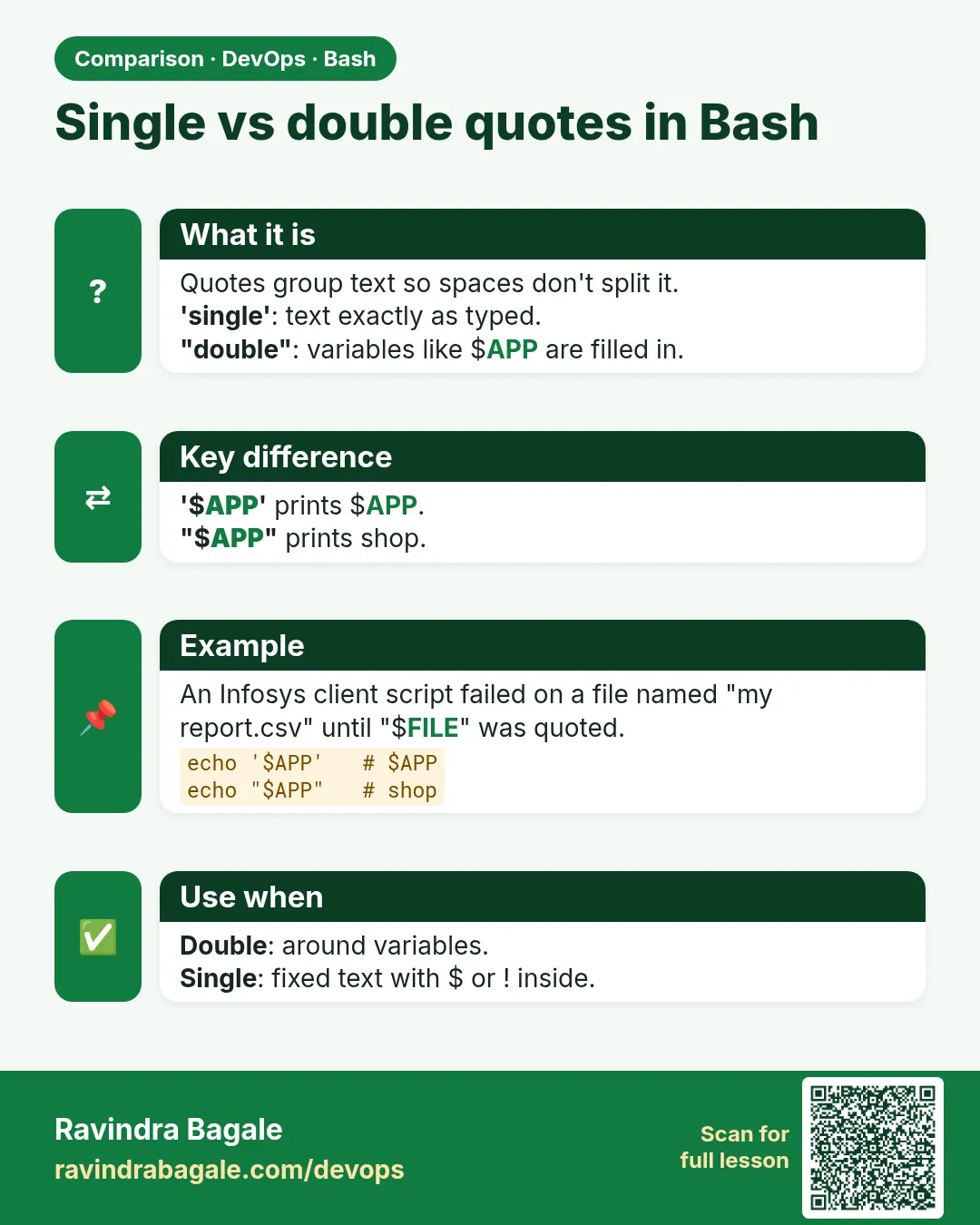 Comparison card 1 of 3: Single vs double quotes in Bash · Download PNG · Open card page
Lesson: 5.3 Variables, quotes and exit codes
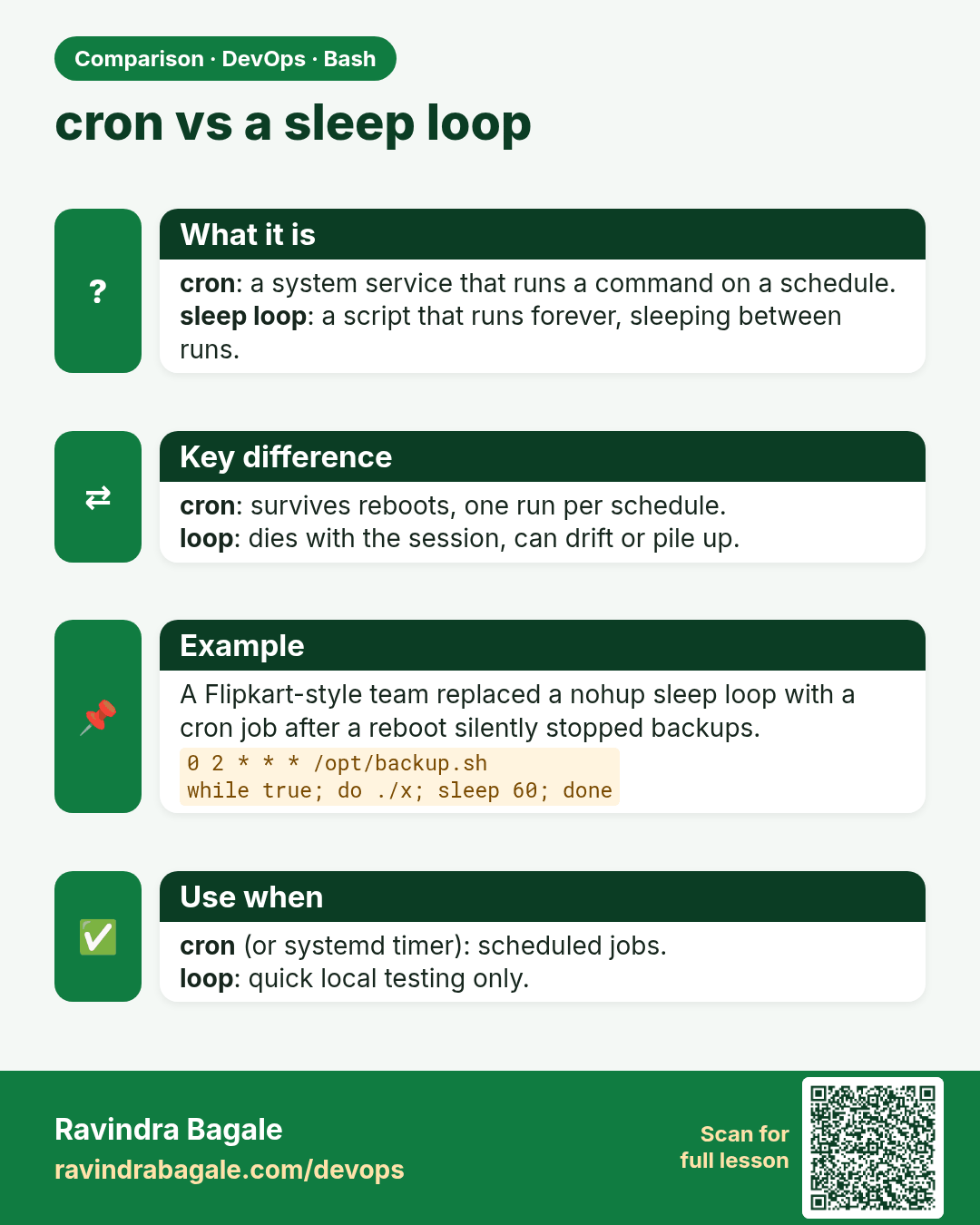
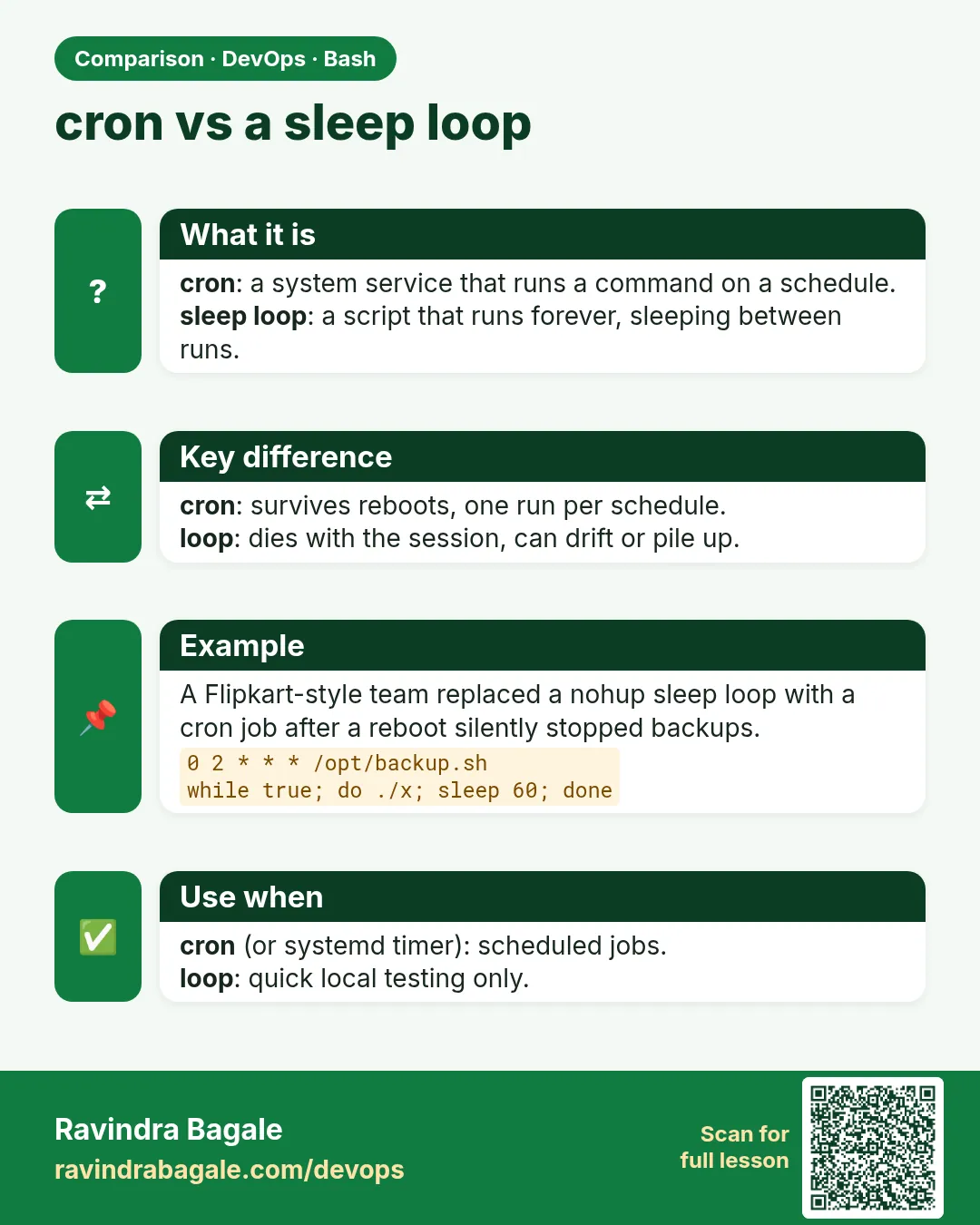 Comparison card 2 of 3: cron vs a sleep loop · Download PNG · Open card page
Lesson: 5.6 Cron basics — schedule the script
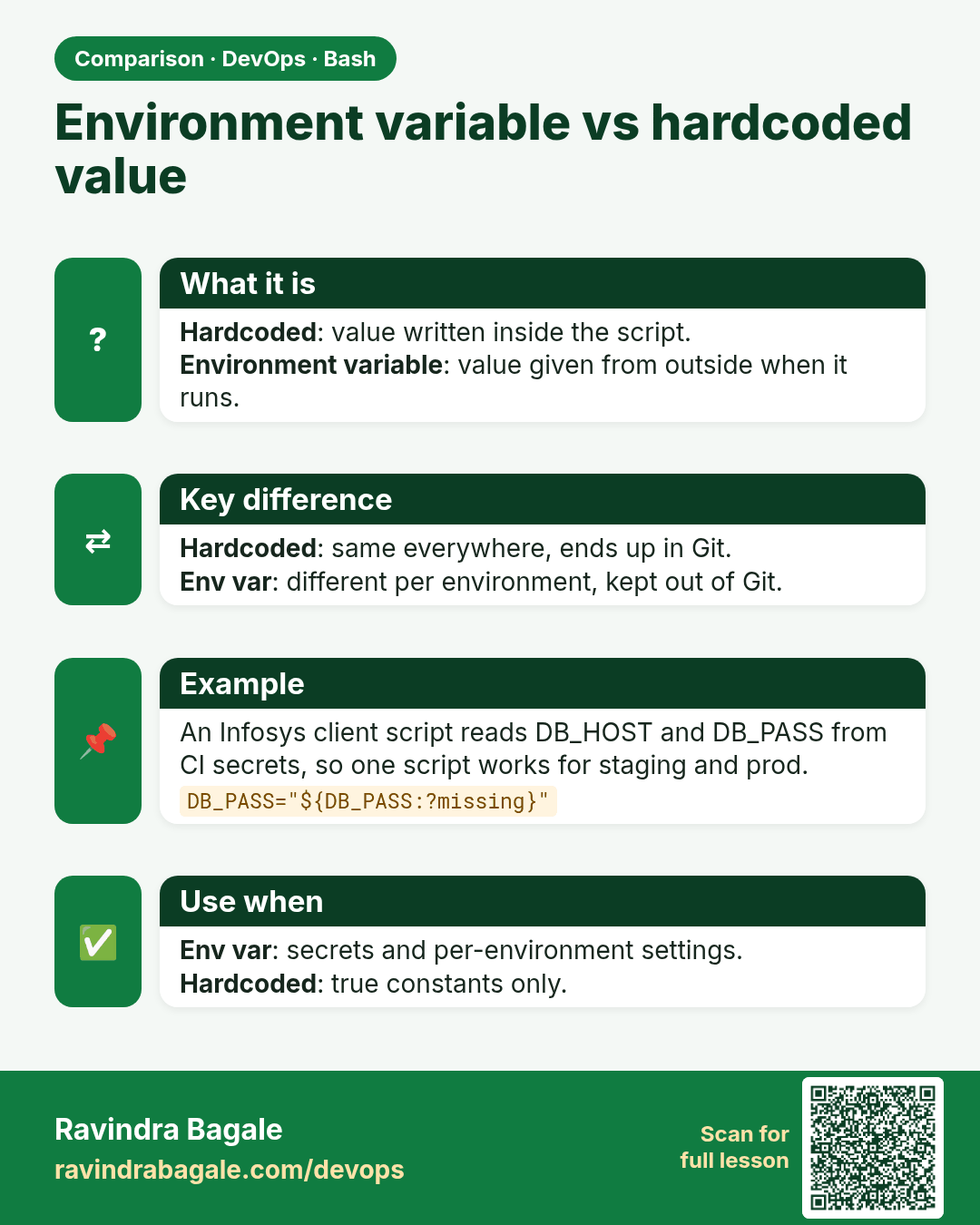
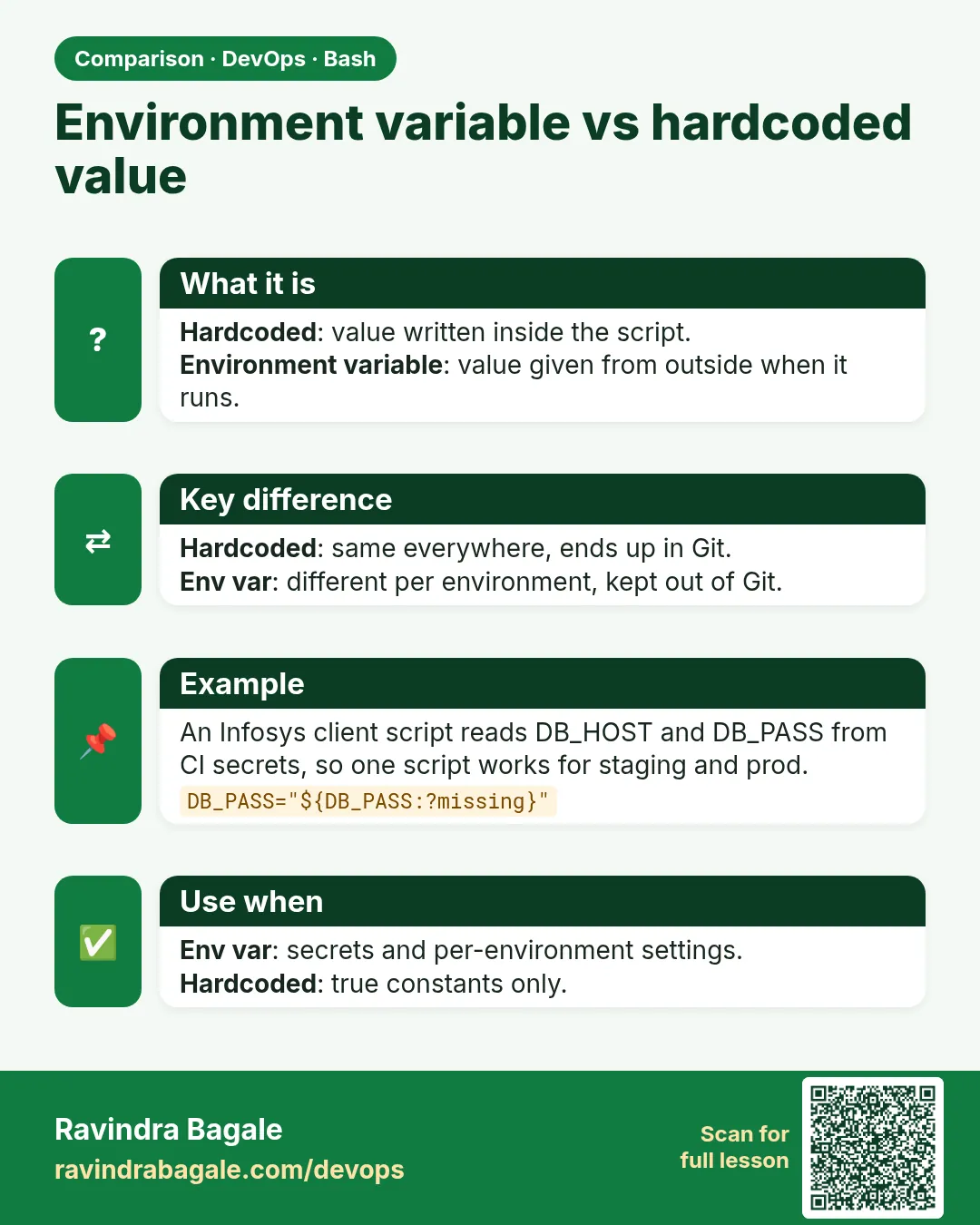 Comparison card 3 of 3: Environment variable vs hardcoded value · Download PNG · Open card page
Lesson: 5.7 Secrets — never hardcode