Chapter 94: HashiCorp Vault and Secrets Management
94.18 Interview questions, revision and chapter quiz
Why
A clear lifecycle explanation is better than memorizing commands.
What
Use these standalone cards to compare and revise.
How
- Read a question aloud.
- Give one short answer and one example.
- Try the chapter quiz before opening its answers.
Revision checklist
- I can distinguish HashiCorp Vault from Ansible Vault.
- I can explain barrier, seal, unseal and identity boundaries.
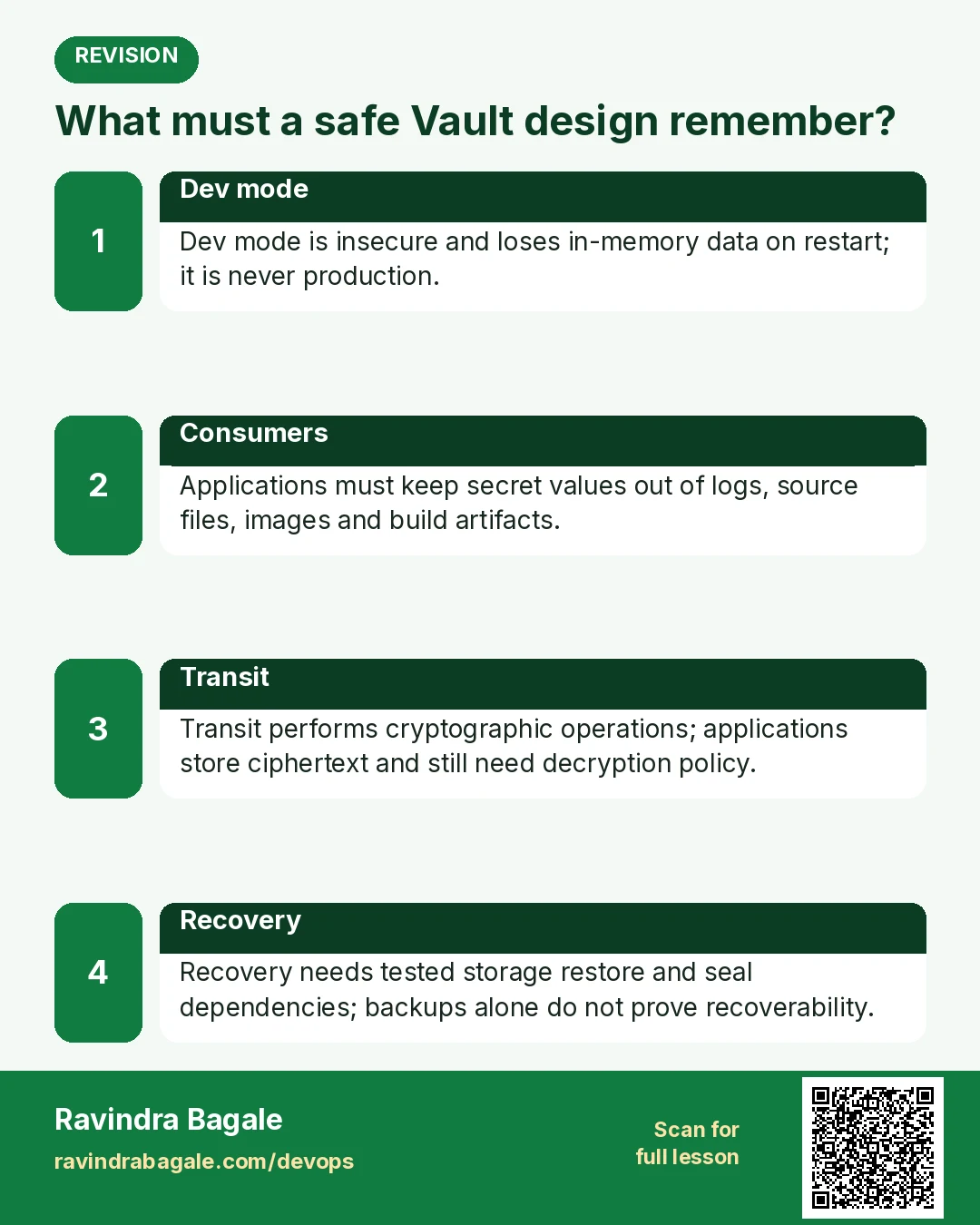
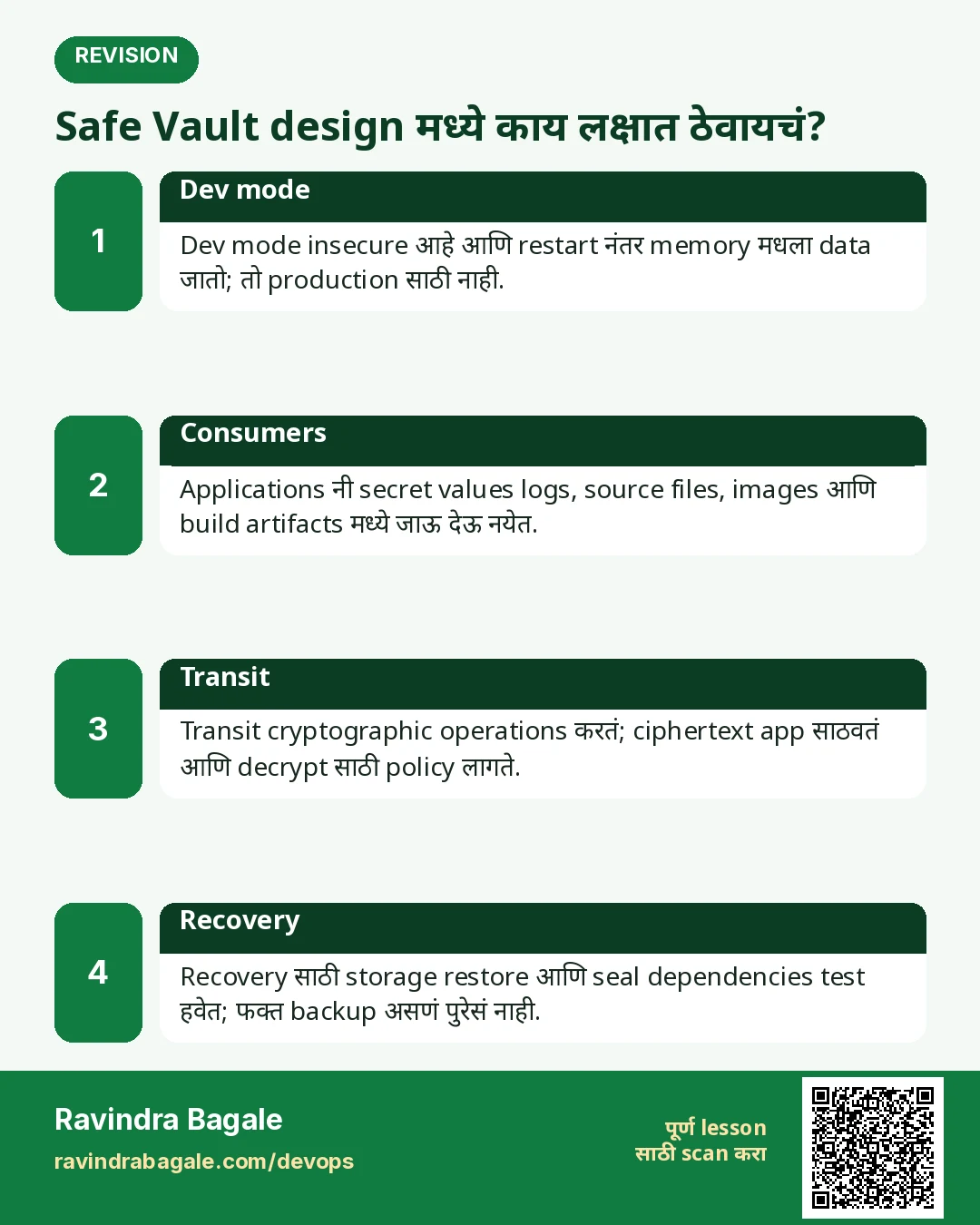
- I never recommend dev mode for production.
- I know KV v2 data and metadata paths.
- I can explain CAS, soft delete and destruction without executing unsafe operations.
- I can write a least-privilege exact-path read rule.
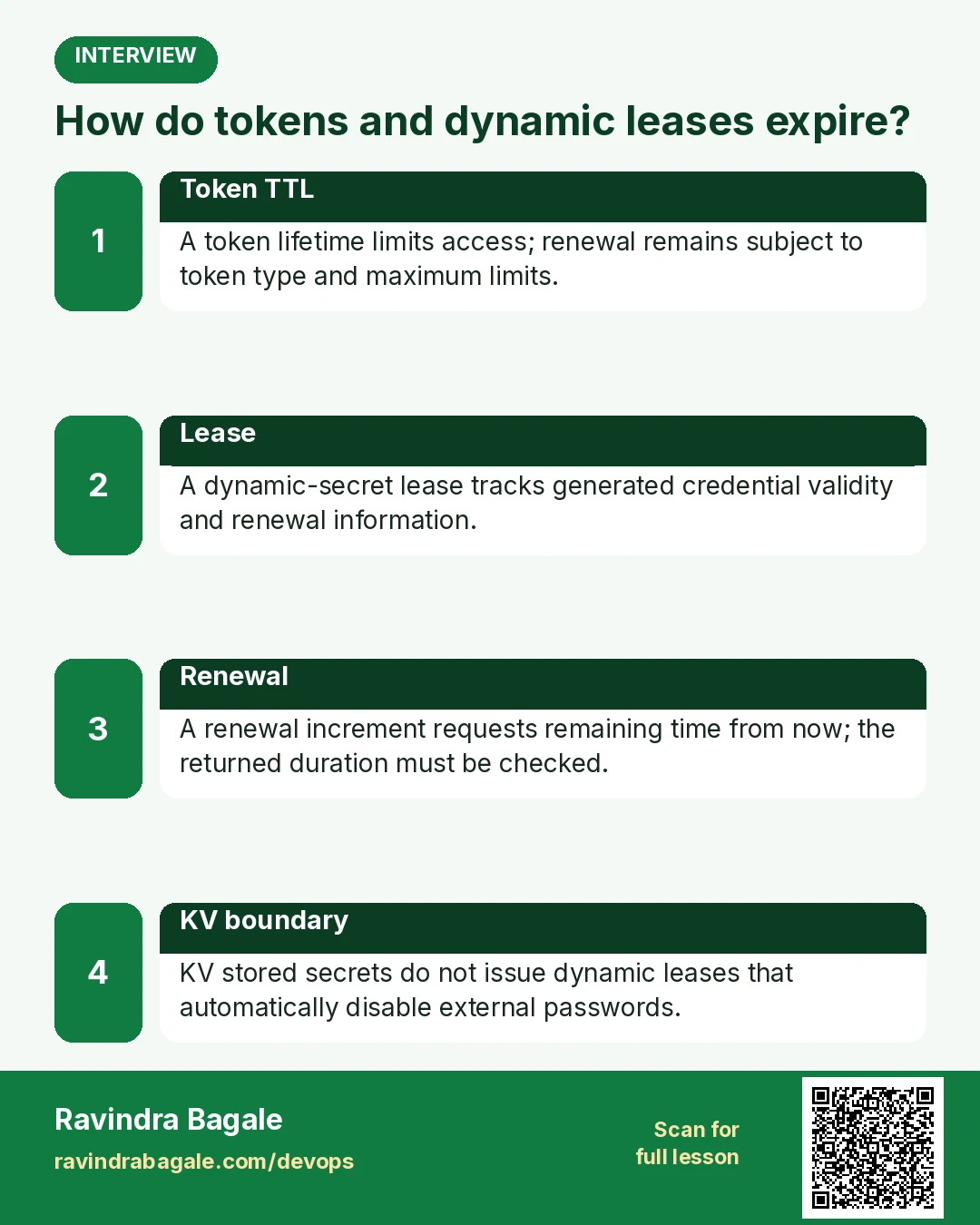
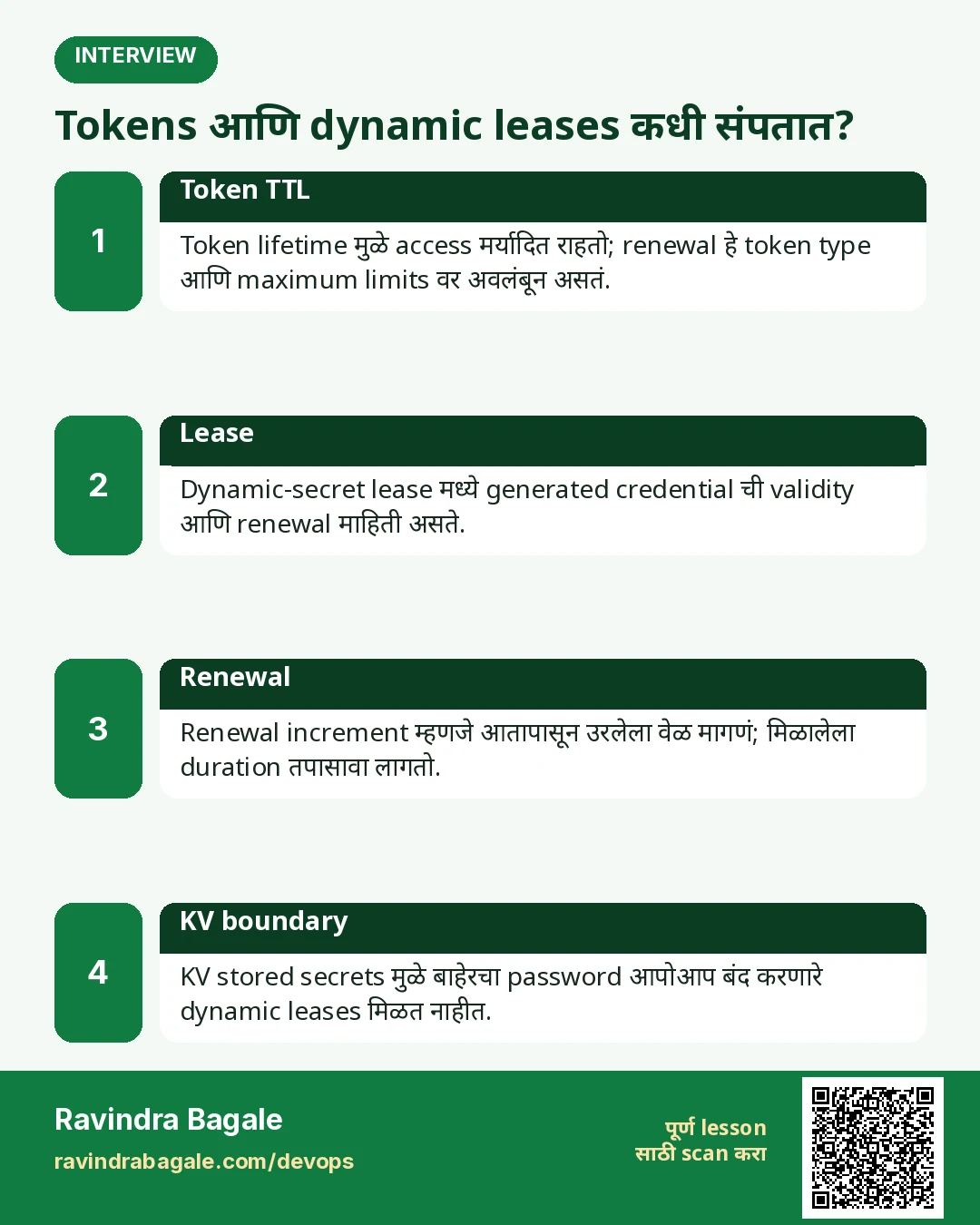
- I can explain TTL, renewability, revocation and bootstrap identity.
- I know dynamic leases are not KV expiry.
- I keep secret values out of logs and CI artifacts.
- I can explain transit, audit and restore responsibilities, plus model limitations.
Ravindra Bagale's Tip
Say what was really tested, not what a model might suggest.
खरंच काय test केलं ते सांगा; model वरून मोठे दावे करू नका.
जो सच में test हुआ वही बताओ, model से बड़े दावे मत करो.
Did you understand? Let us try it once more.
Quick quiz
Q1. Is Ansible Vault the same service as HashiCorp Vault?
No. Ansible Vault encrypts files/values; HashiCorp Vault is a running policy-driven service.
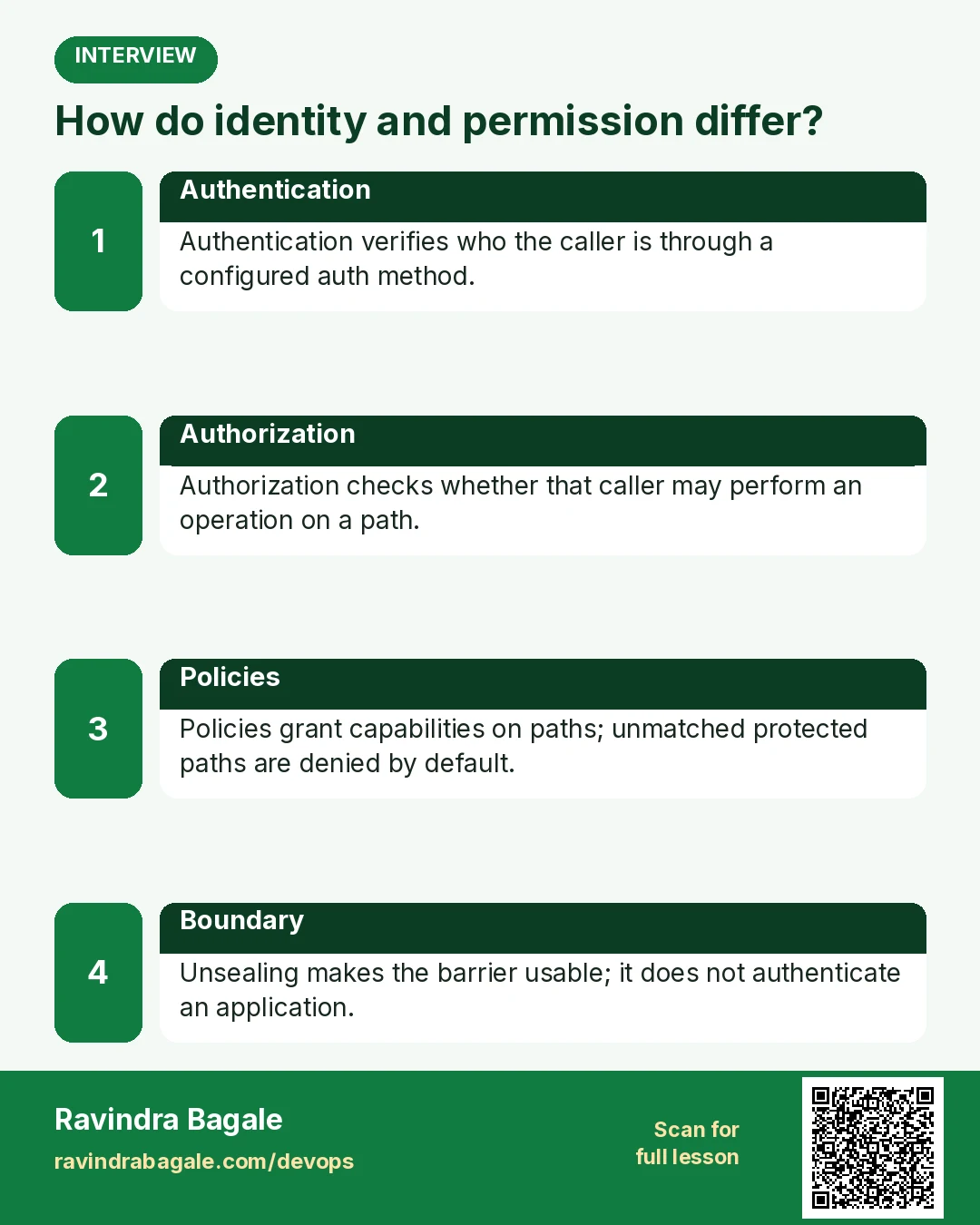
Q2. Does unsealing log an application in?
No. Unseal enables barrier operations; caller authentication and policy are still required.
Q3. Can dev mode be used in production?
No. It uses insecure defaults and in-memory storage that loses data on restart.
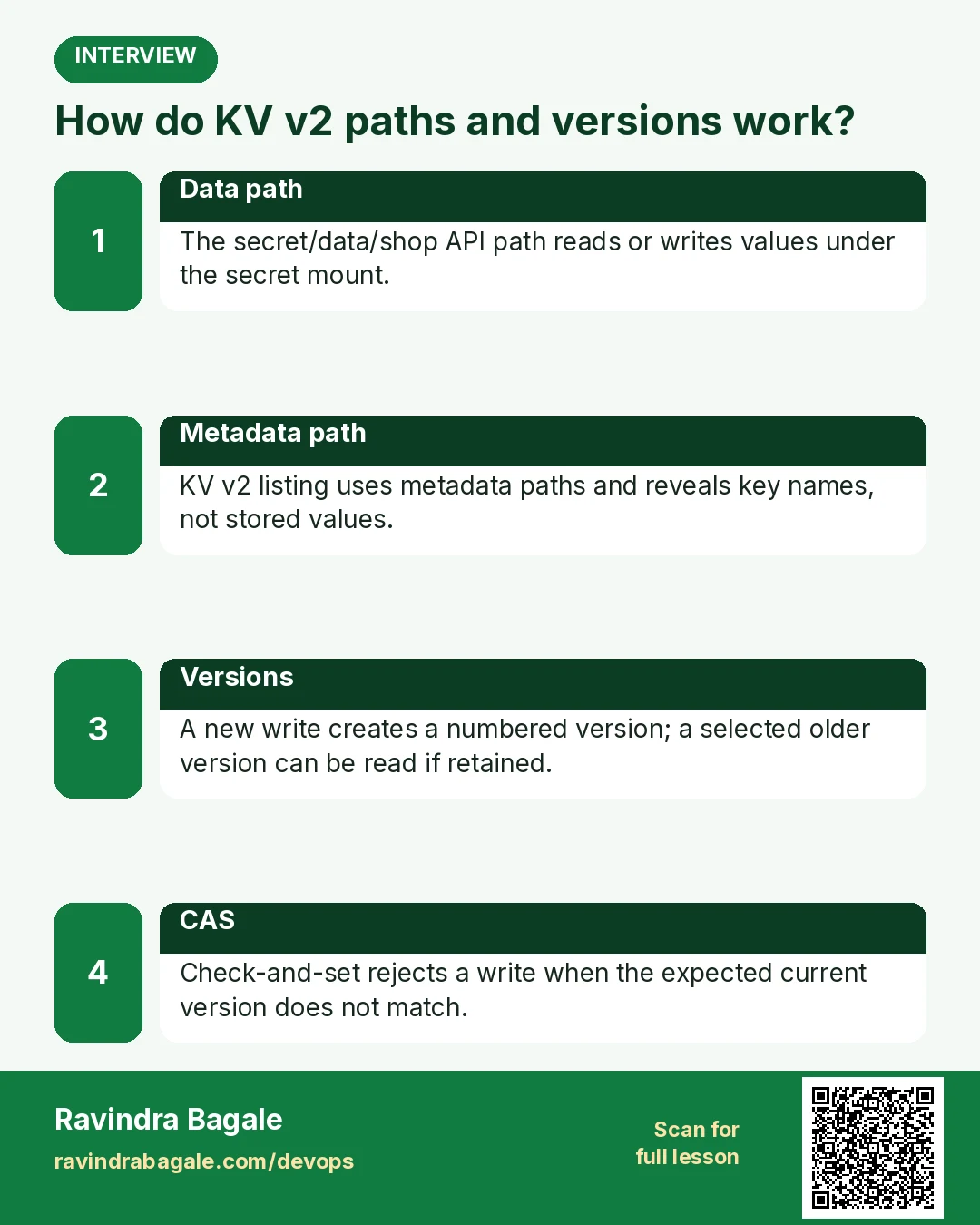
Q4. Which KV v2 API path reads the shop value under secret/?
secret/data/shop; metadata/list operations use metadata paths.
Q5. What does CAS protect against?
An unexpected current version and accidental lost updates from concurrent writes.
Q6. Does an unmatched protected path permit access?
No. Policies are deny by default.
Q7. Does renewable mean a token never expires?
No. Renewal is subject to type, limits and returned TTL.
Q8. Does KV issue a lease that disables an external password automatically?
No. KV stored values do not issue dynamic-secret leases.
Q9. Is base64 encryption?
No. It is reversible encoding without a secret key.
Q10. What do the twelve Python tests prove?
The simplified local model behaviour, not Vault integration, cryptography or production security.
Did you understand? Let us try it once more.
In short
- Identity, policy and engine operations are different steps.
- KV versions, token TTL and dynamic leases are different lifecycles.
- Keep values out of logs, source, images and artifacts.
- Production Vault needs tested operations and recovery, not dev mode.
Official references opened
- Dev server mode.
- KV v2 API.
- Policies.
- Tokens.
- Lease, renew and revoke.
- Seal and unseal.
- Transit.
- Audit devices.
Read on 6 November 2026. Architecture/agent guidance is conceptual; this lab did not validate a running Vault deployment.