डेटा सायन्स Interview Cards: ४२ प्रश्न उदाहरणांसह
About these cards
42 Data Science interview cards: 13 Python basics (py01–py13) plus 28 chapter cards (ch01–ch28) + ch65. Each card has a small Blinkit Maharashtra teaching example. Scan the QR for the full lesson.
या cards बद्दल
डेटा सायन्स interview मधील ४२ cards: Python basics (py01–py13) + chapter cards (ch01–ch28) + ch65. प्रत्येक card वर Blinkit Maharashtra उदाहरण. पूर्ण lesson साठी QR स्कॅन करा.
इन cards के बारे में
डेटा सायन्स interview मधील ४२ प्रश्न, एका Python basics (py01–py13) + chapter cards (ch01–ch28) + ch65. प्रत्येक card वर Blinkit Maharashtra चे छोटं उदाहरण, मग What, Why आणि How. पूर्ण lesson साठी QR scan करा. Phone वर save करा किंवा PNG download करा. सगळी नावं आणि आकडे सरावासाठी काल्पनिक आहेत. या course मध्ये ML नाही.
अनुक्रमणिका
Python basics
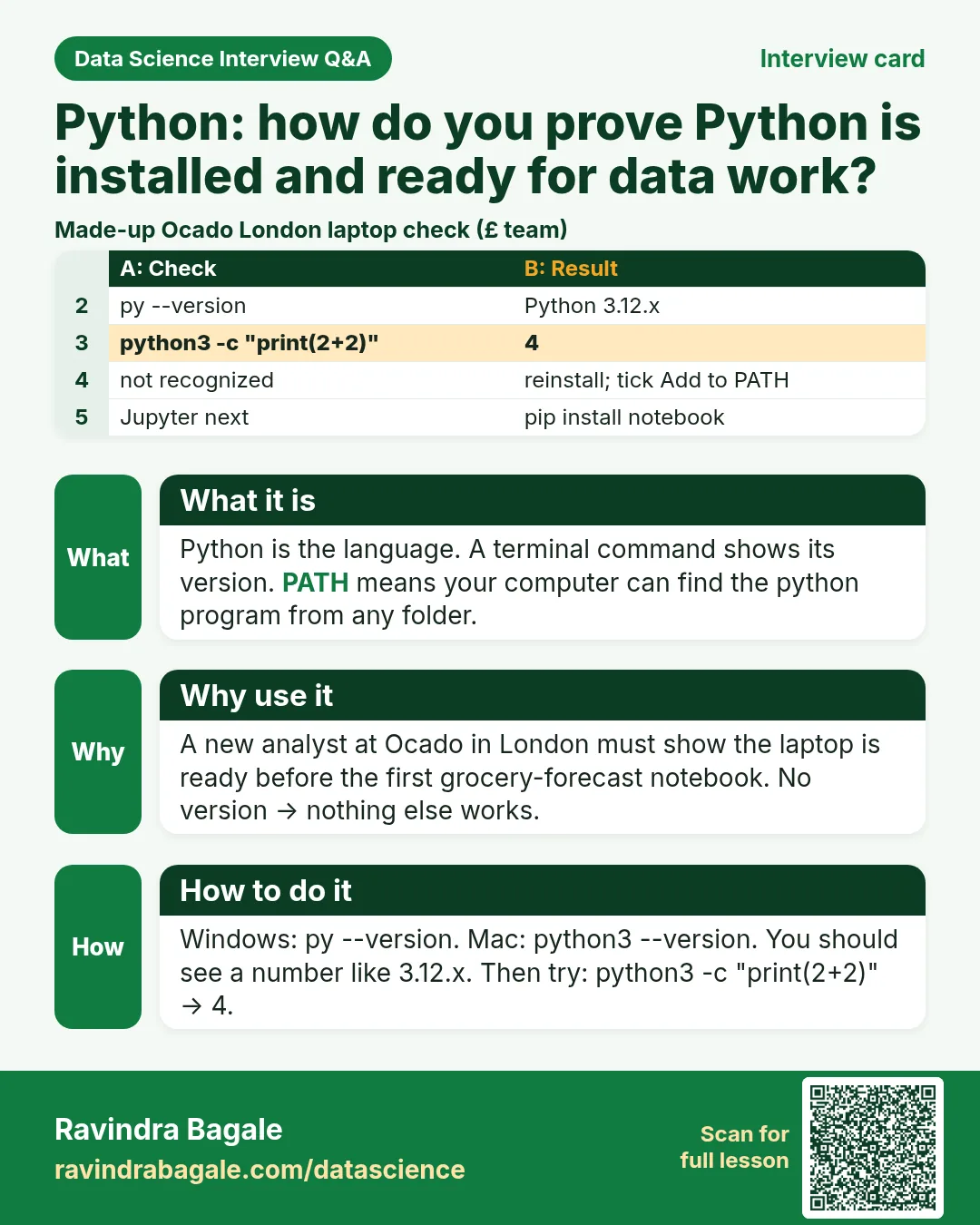
- Card P1: Python: how do you prove Python is installed and ready for data work?
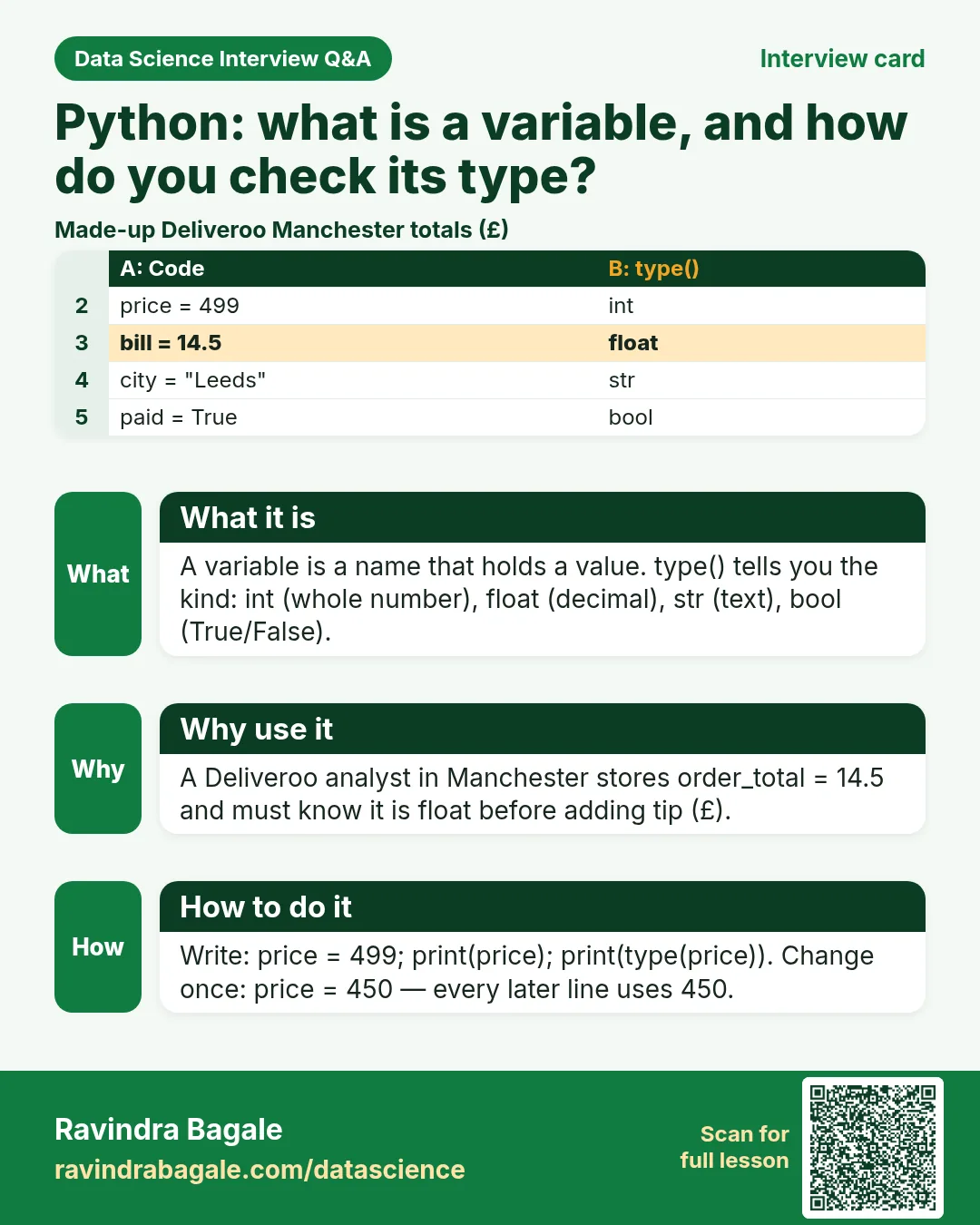
- Card P2: Python: what is a variable, and how do you check its type?
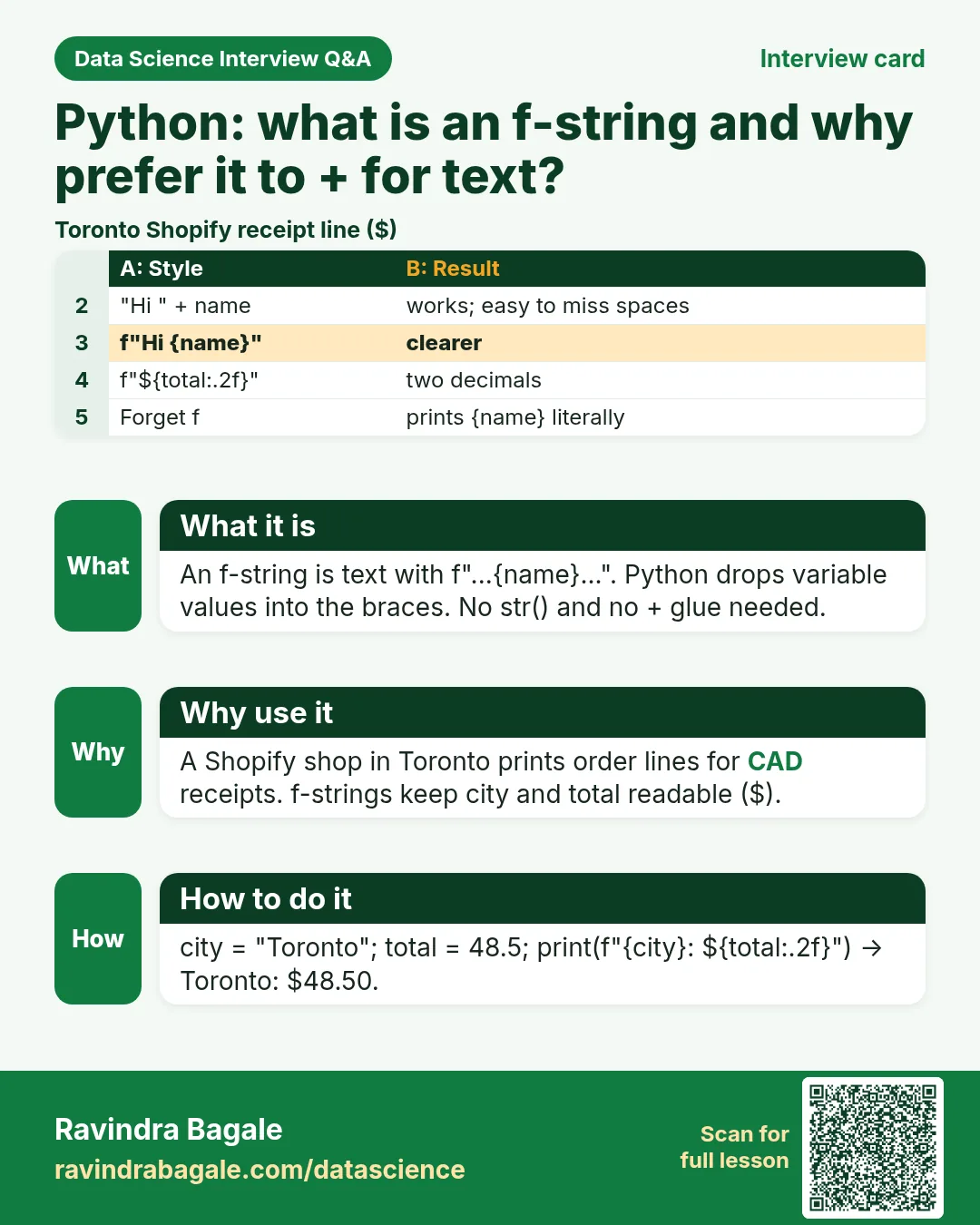
- Card P3: Python: what is an f-string and why prefer it to + for text?
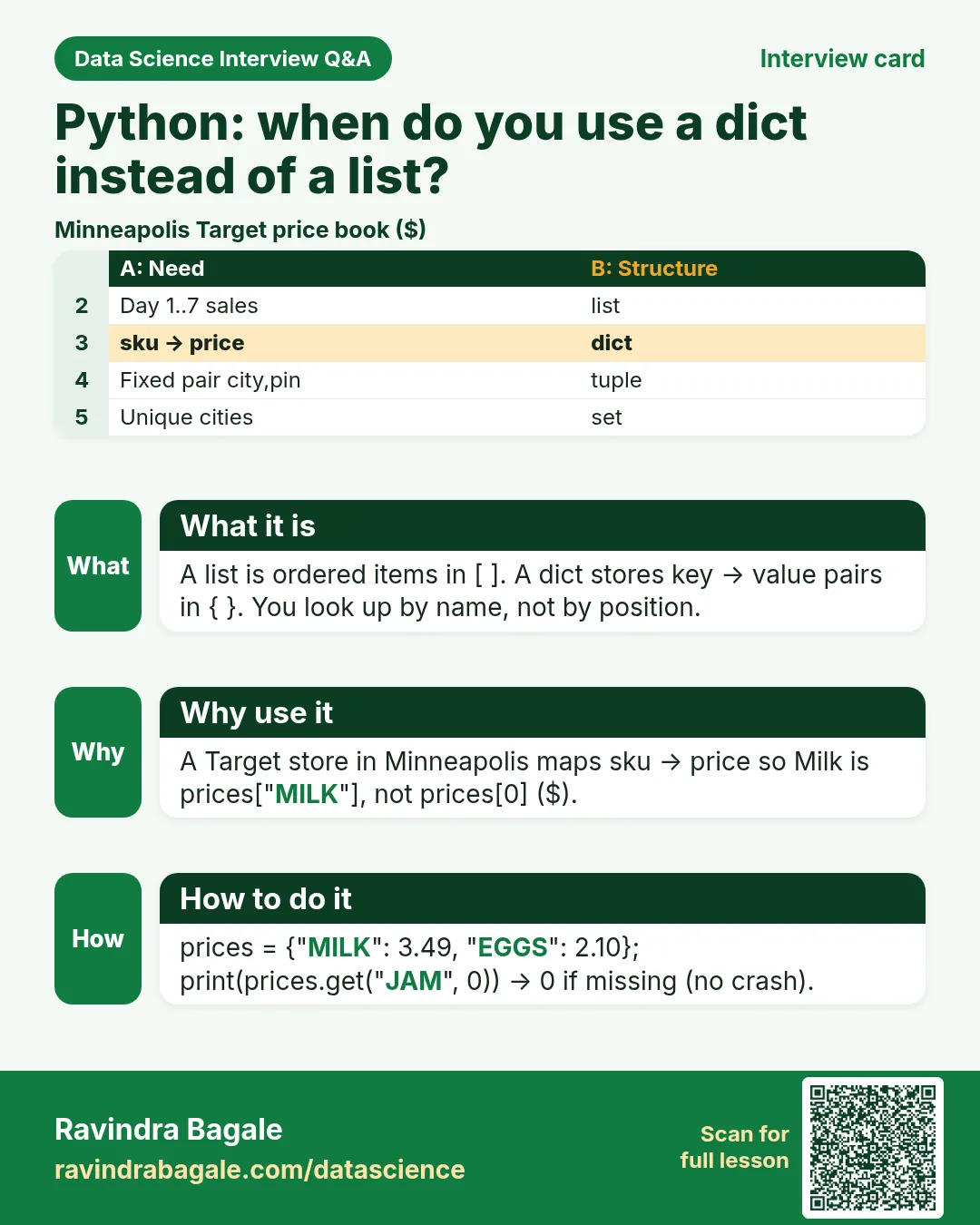
- Card P4: Python: when do you use a dict instead of a list?
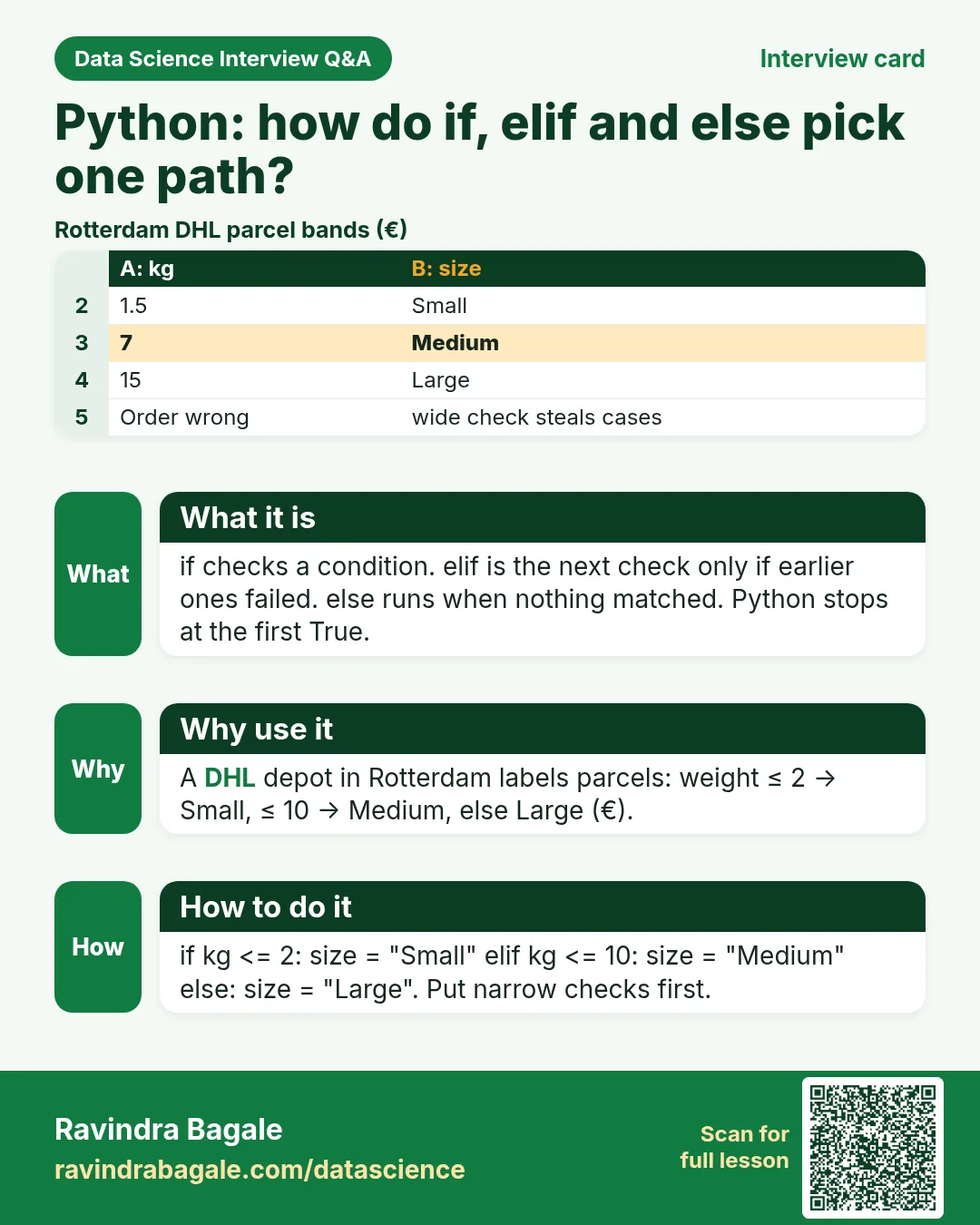
- Card P5: Python: how do if, elif and else pick one path?
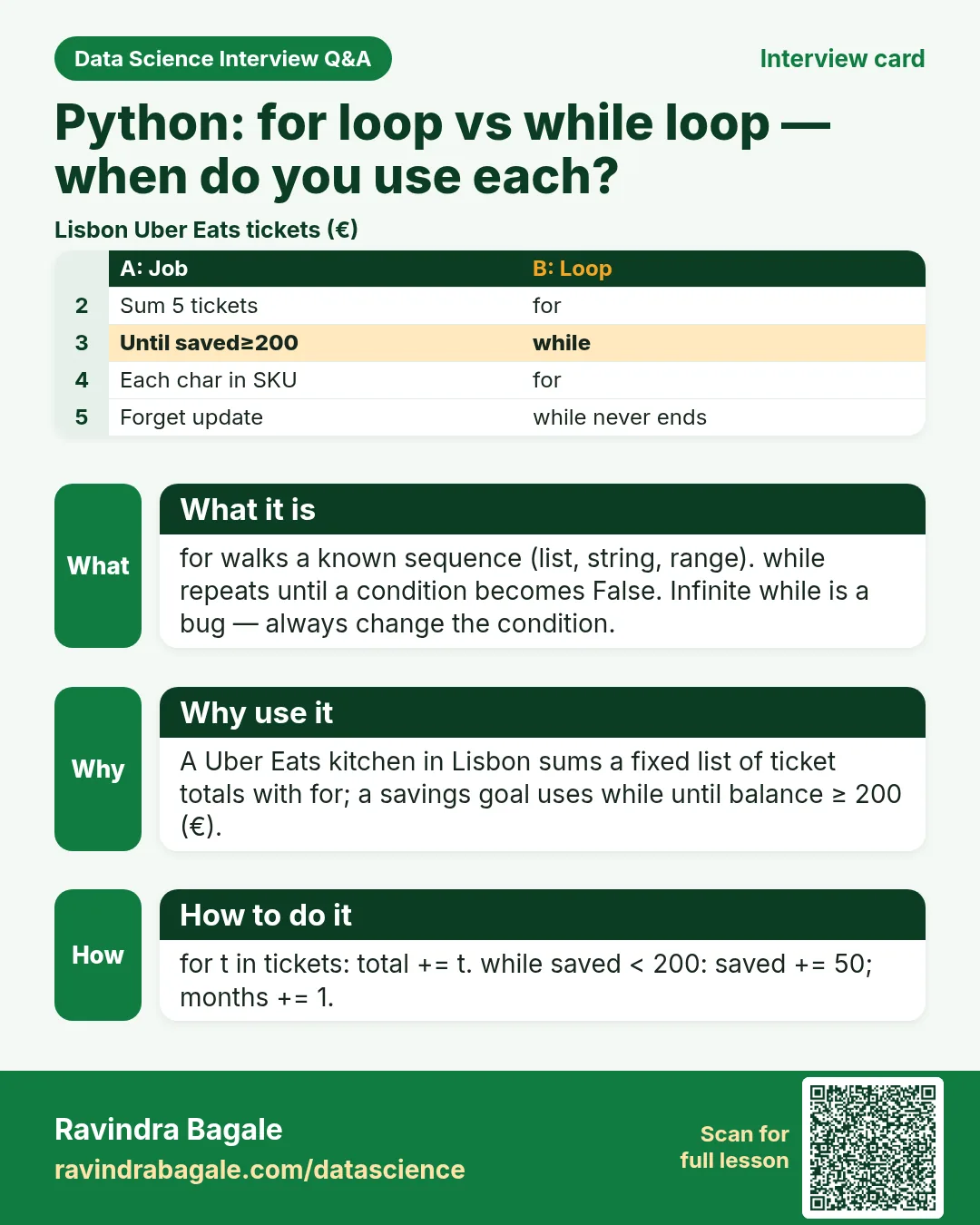
- Card P6: Python: for loop vs while loop — when do you use each?
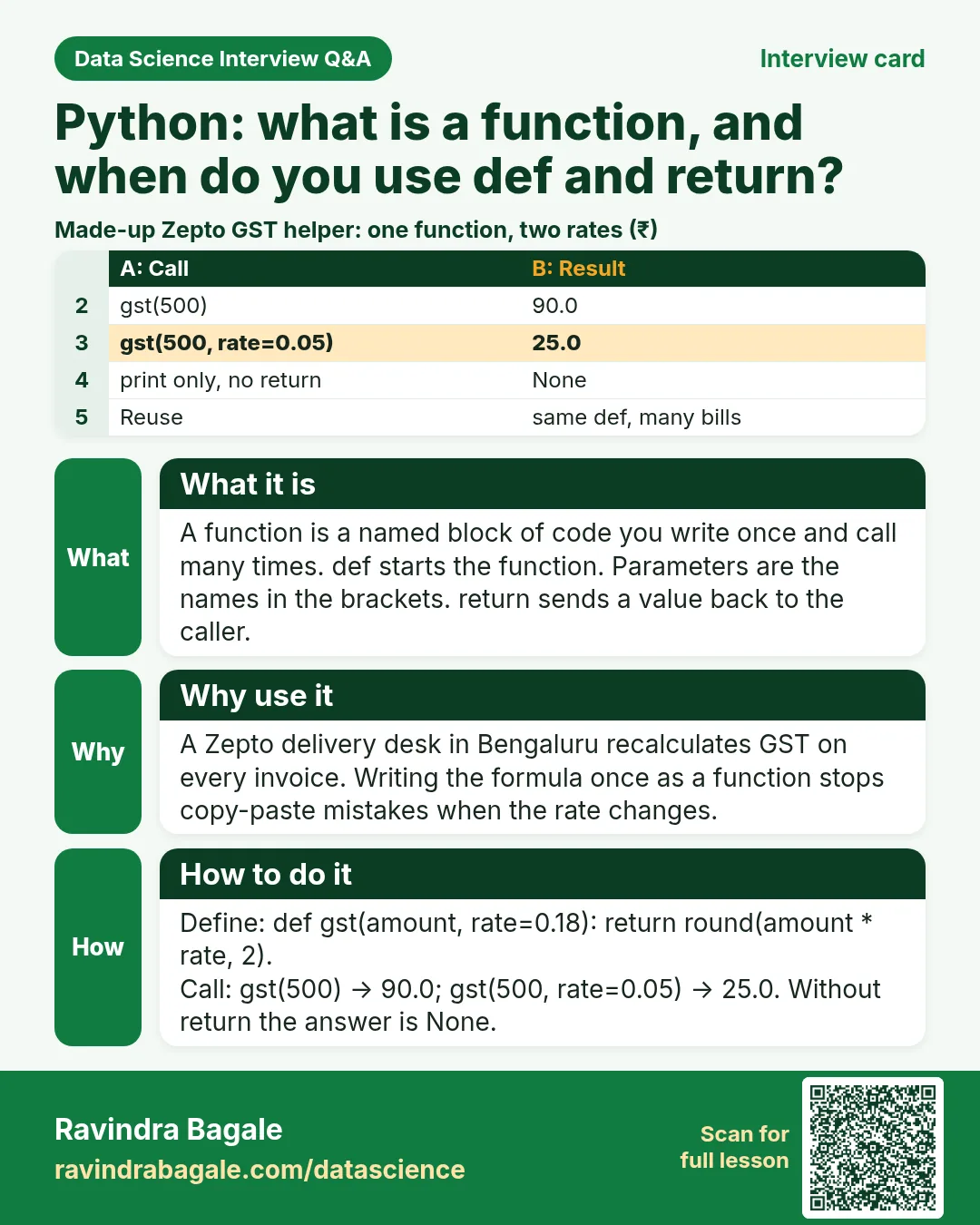
- Card P7: Python: what is a function, and when do you use def and return?
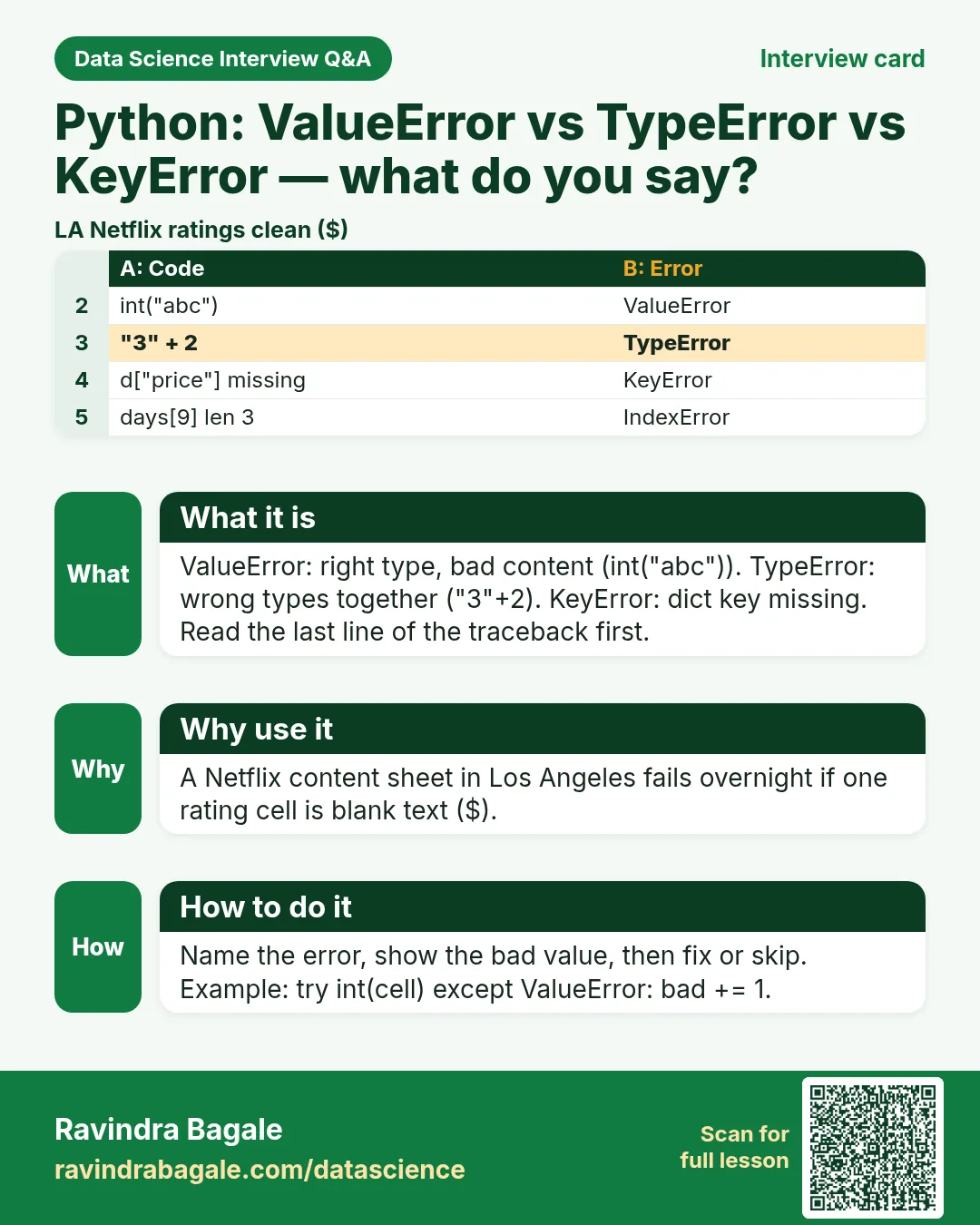
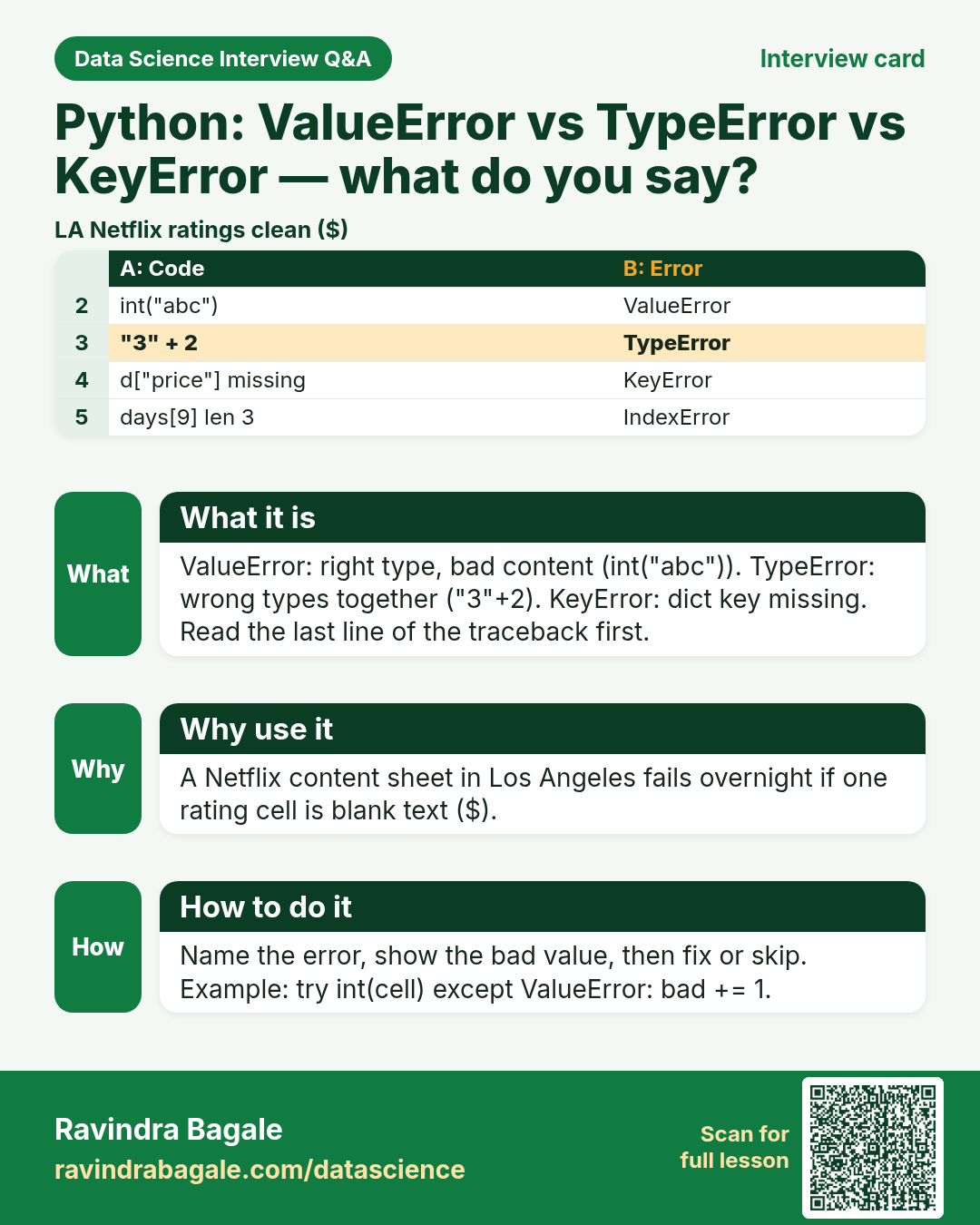
- Card P8: Python: ValueError vs TypeError vs KeyError — what do you say?
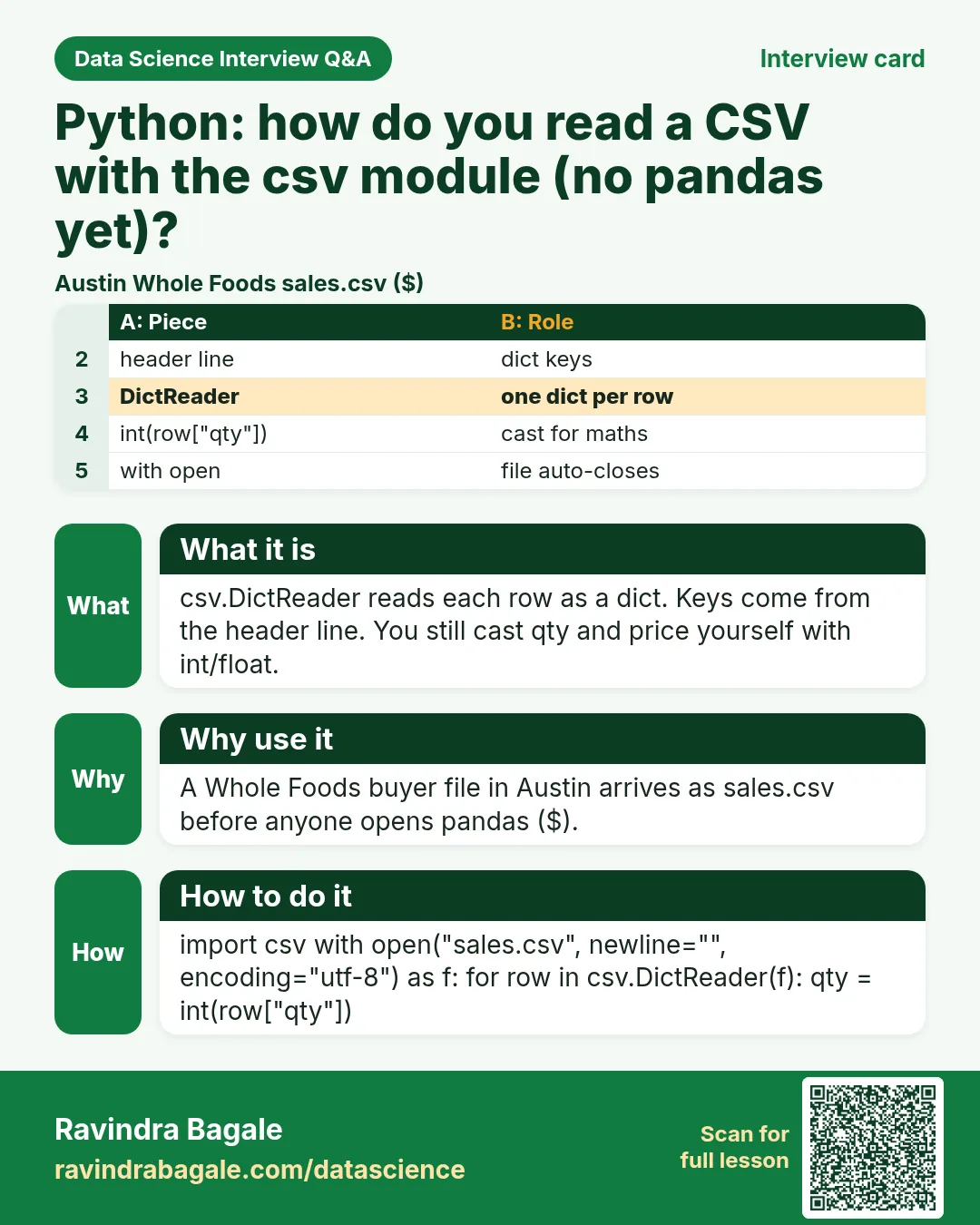
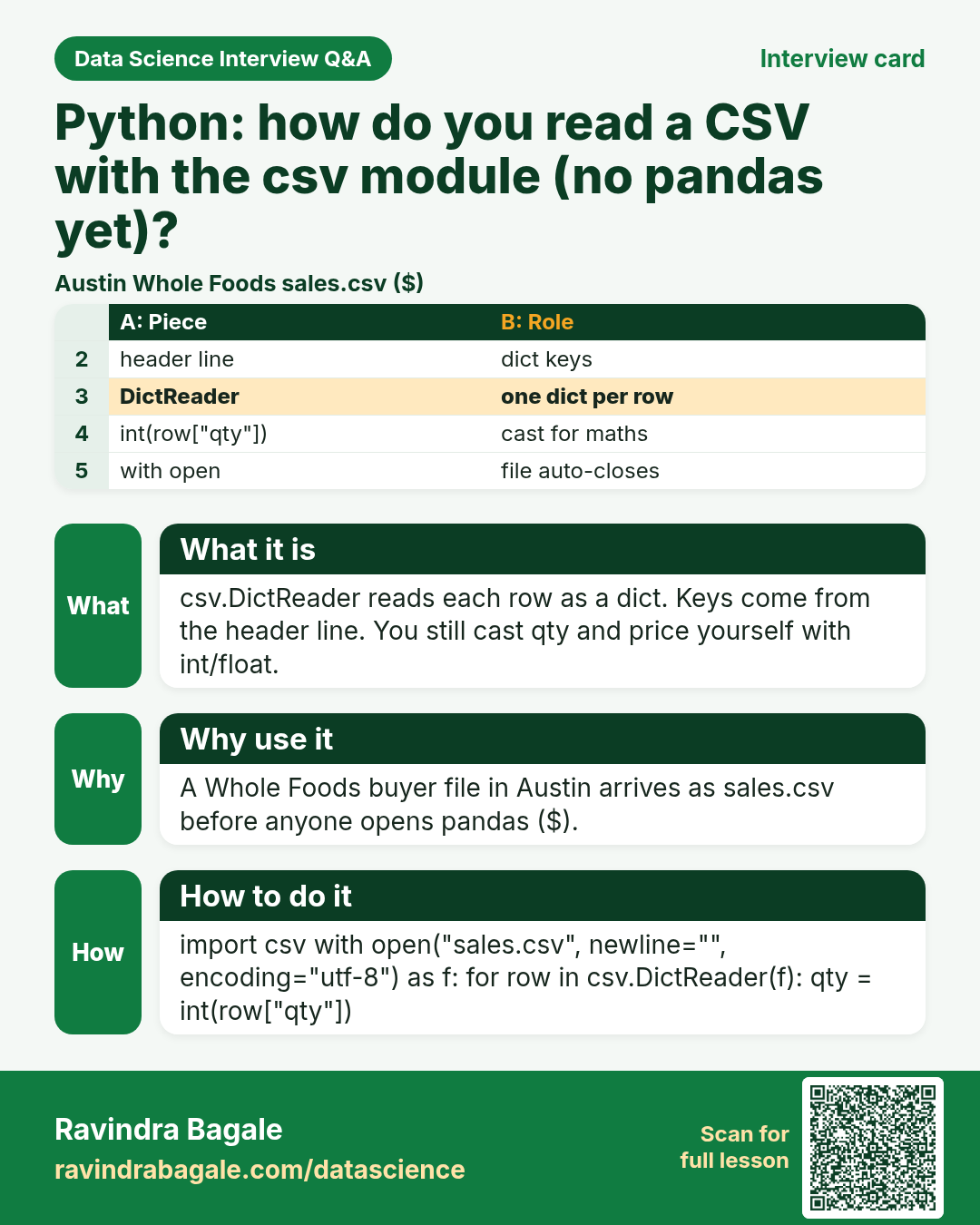
- Card P9: Python: how do you read a CSV with the csv module (no pandas yet)?
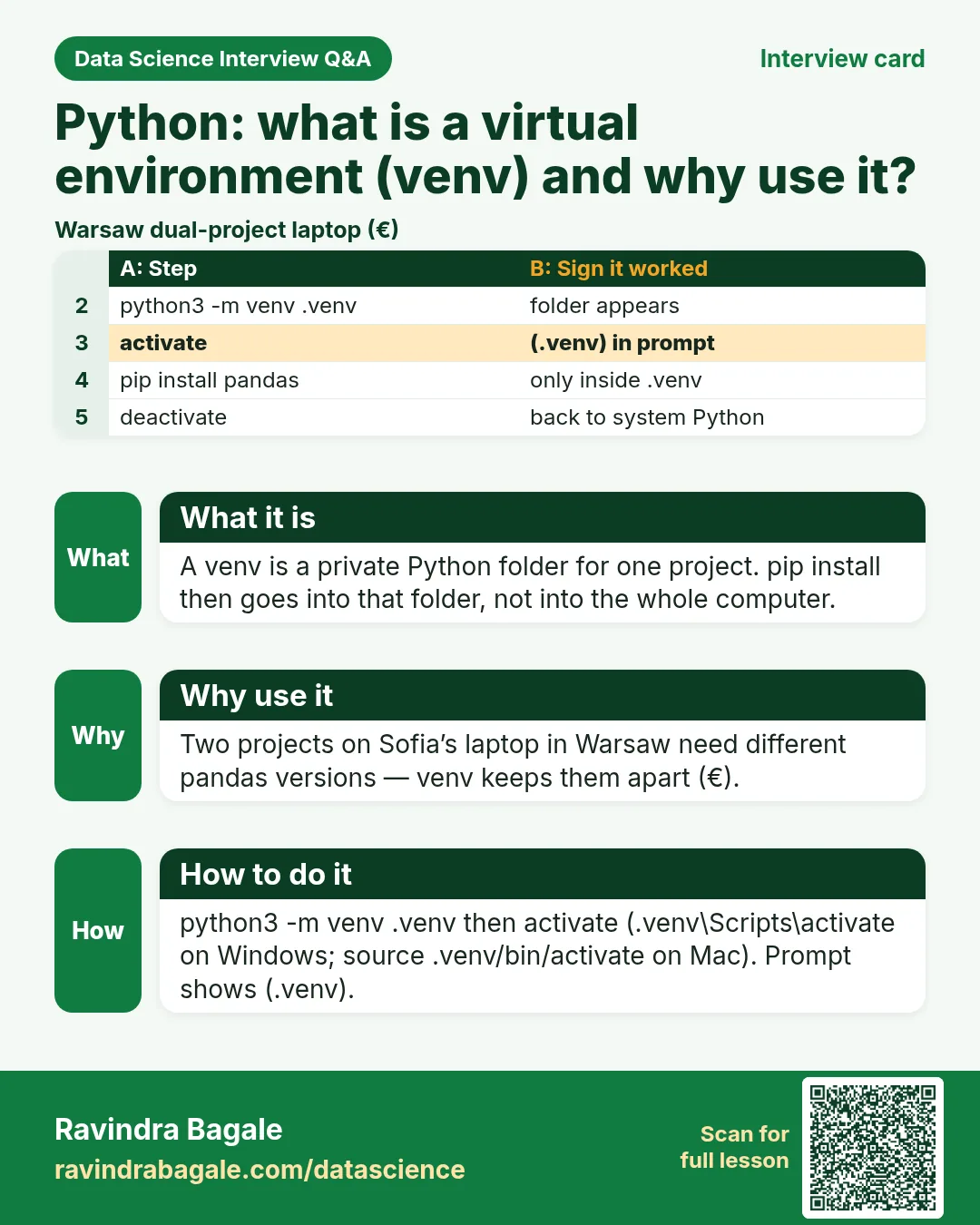
- Card P10: Python: what is a virtual environment (venv) and why use it?
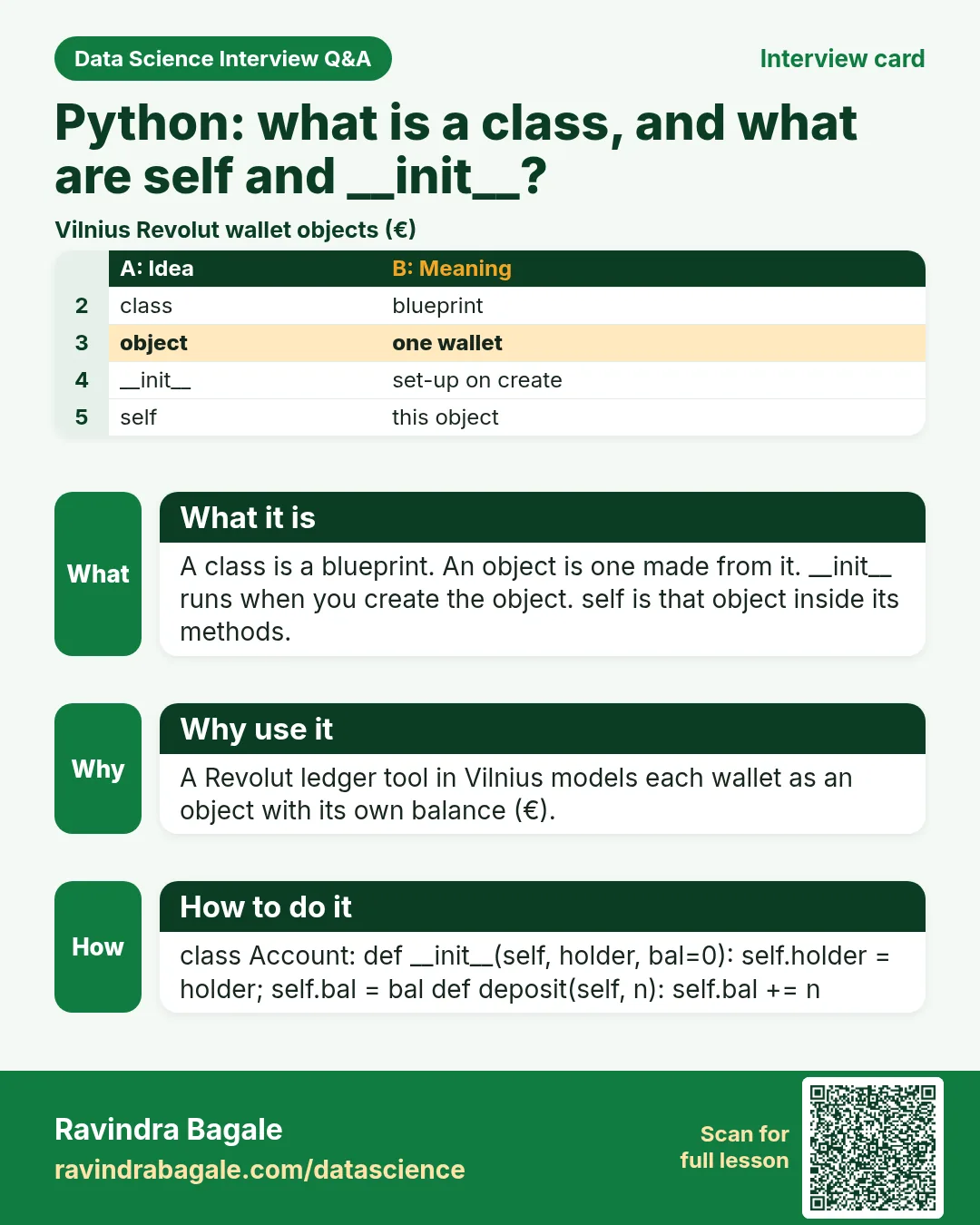
- Card P11: Python: what is a class, and what are self and __init__?
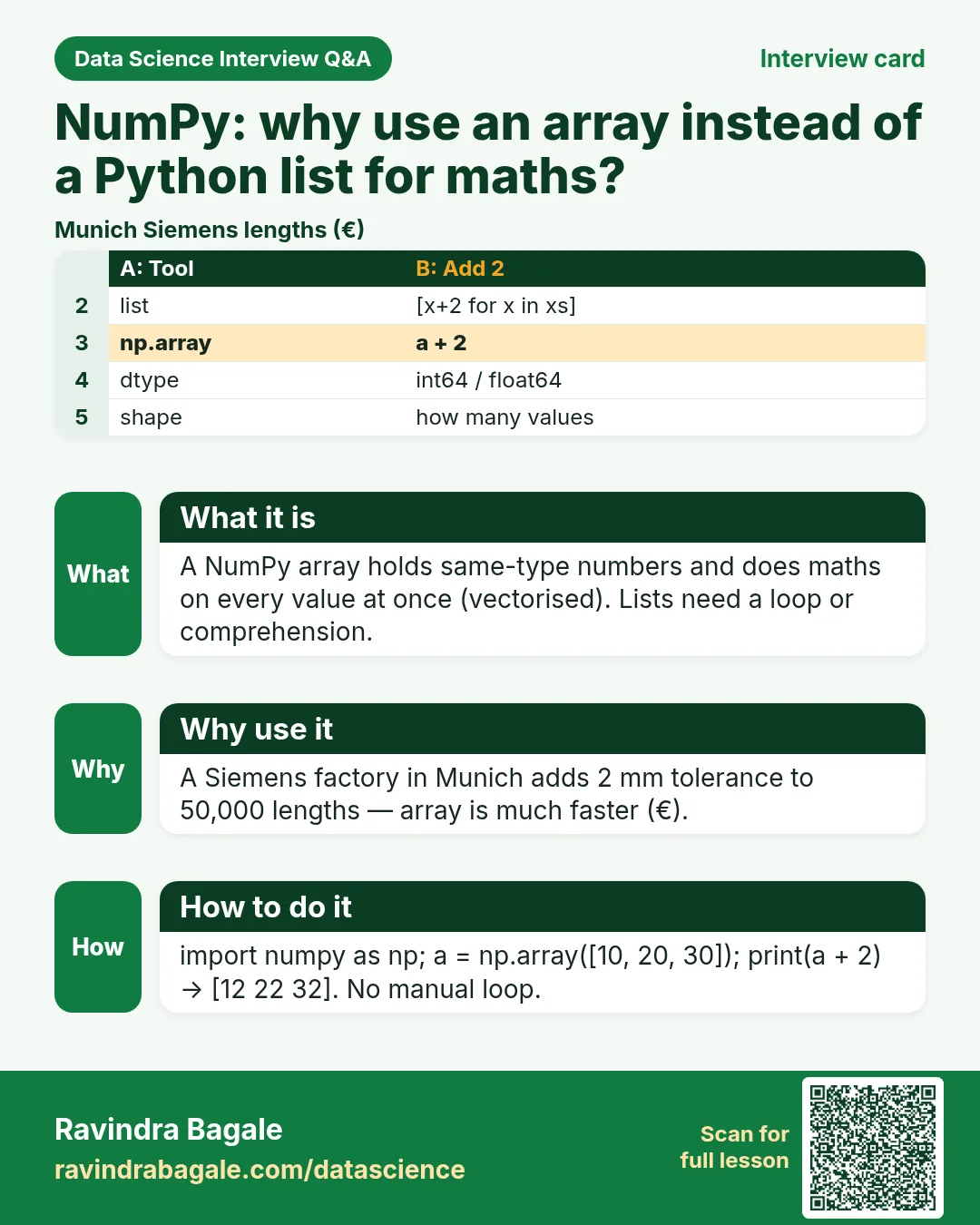
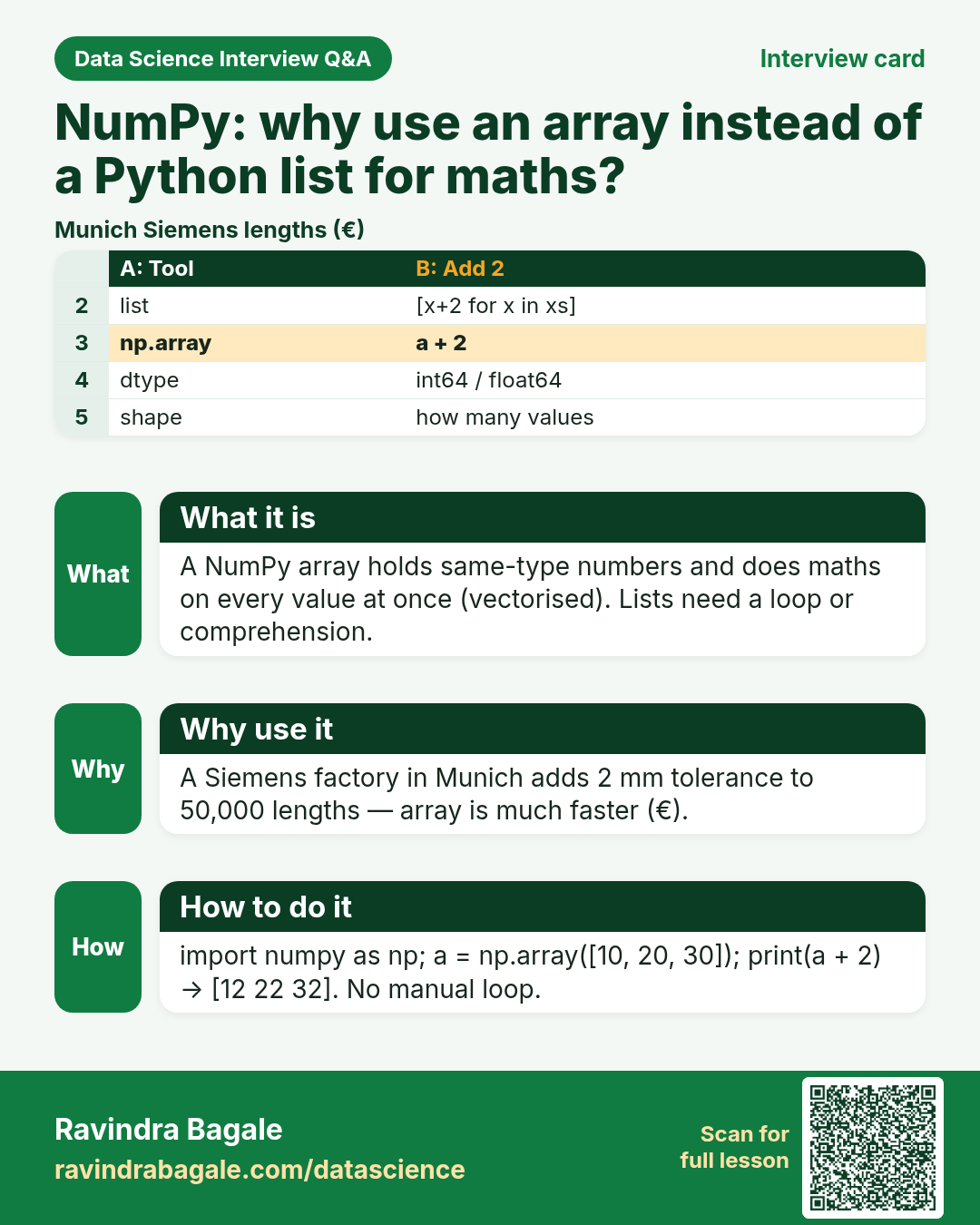
- Card P12: NumPy: why use an array instead of a Python list for maths?
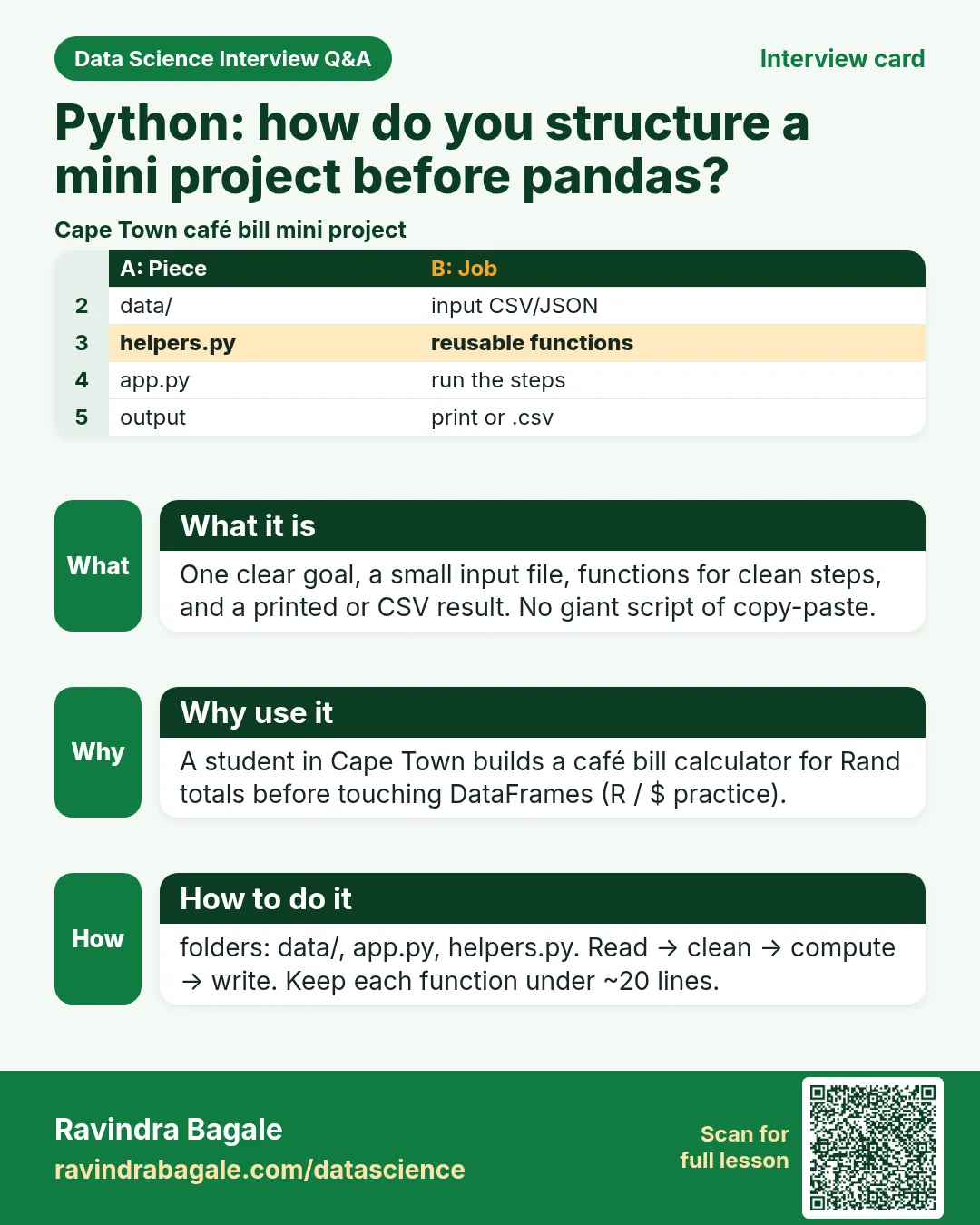
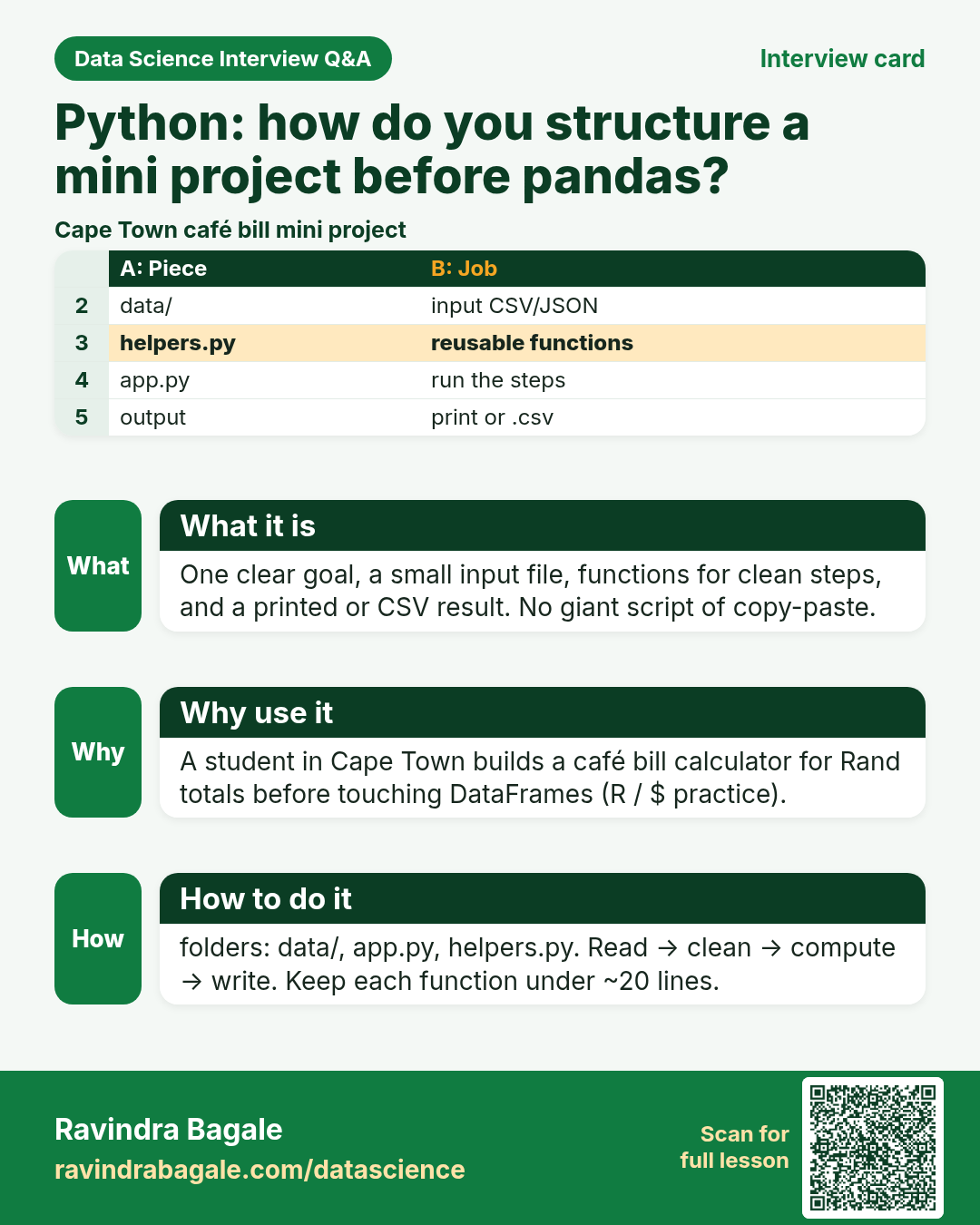
- Card P13: Python: how do you structure a mini project before pandas?
Data Science chapters
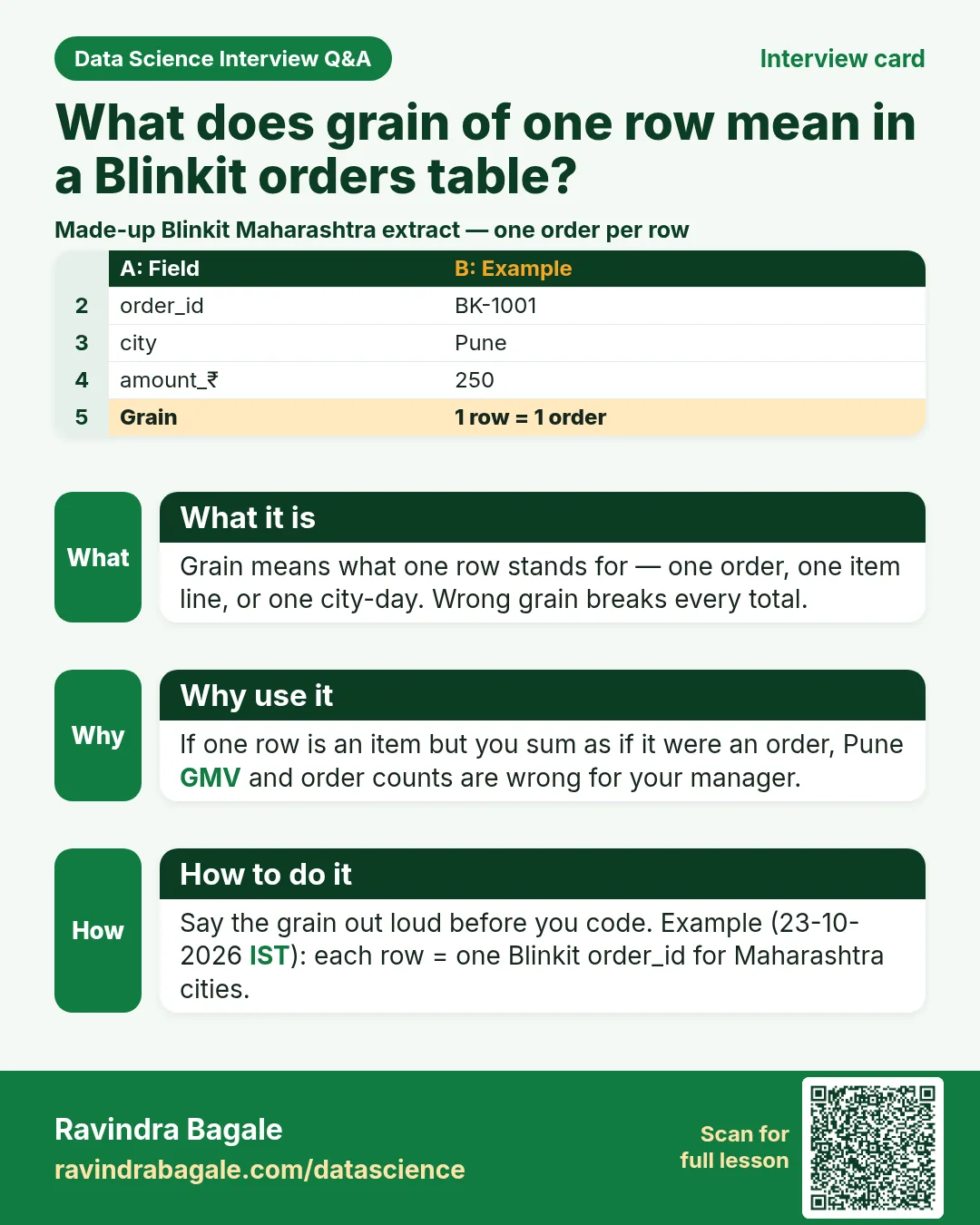
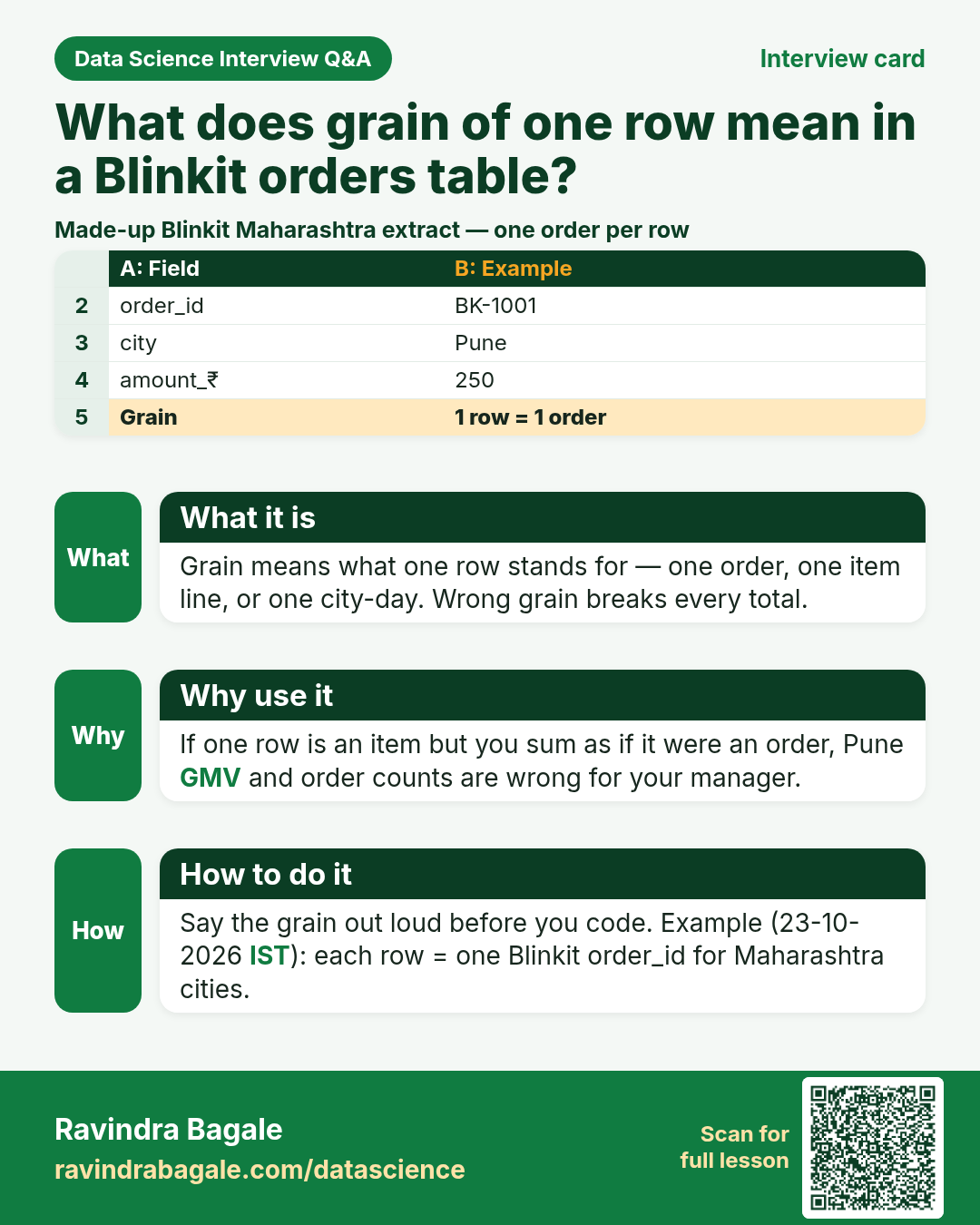
- Card 1: What does grain of one row mean in a Blinkit orders table?
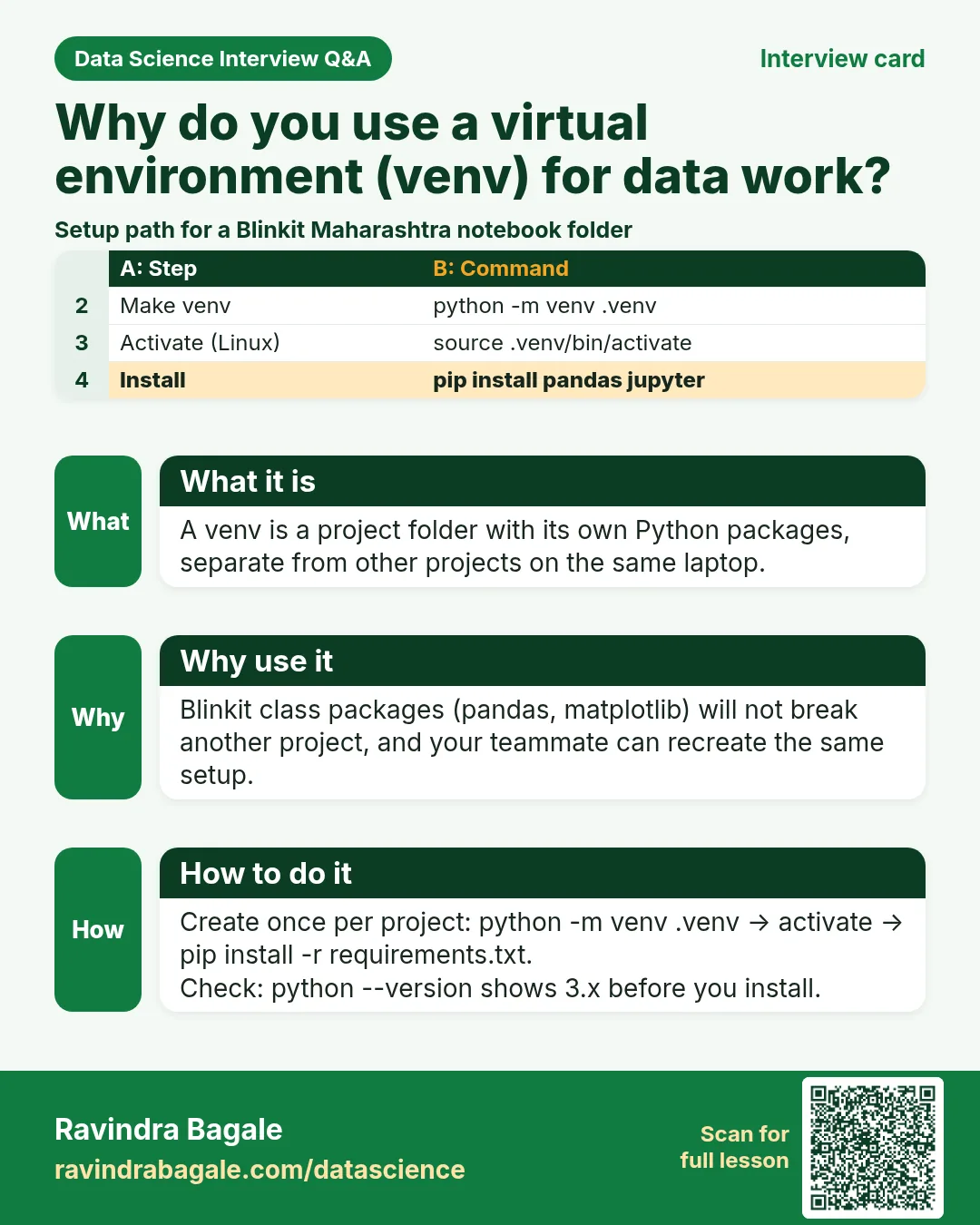
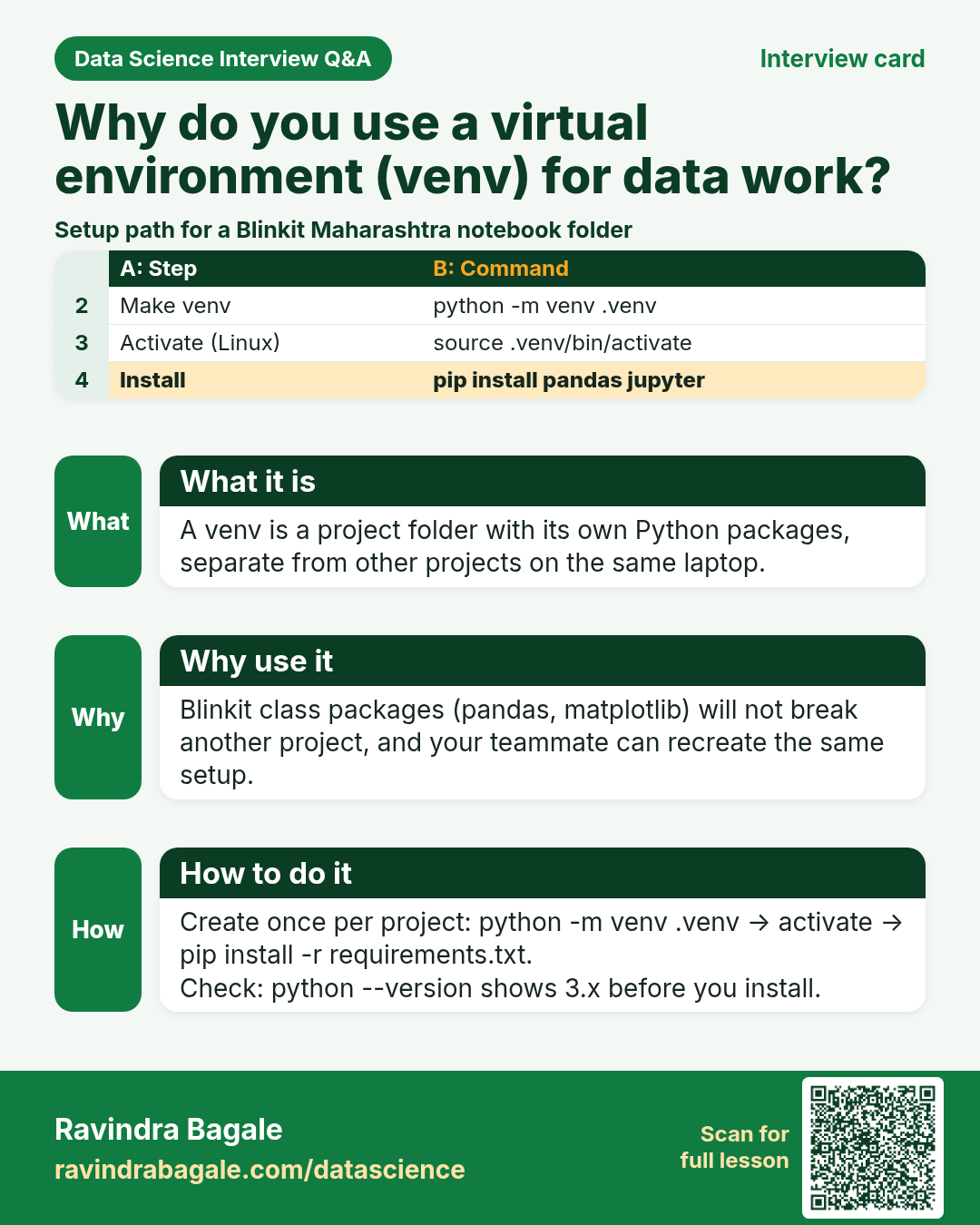
- Card 2: Why do you use a virtual environment (venv) for data work?
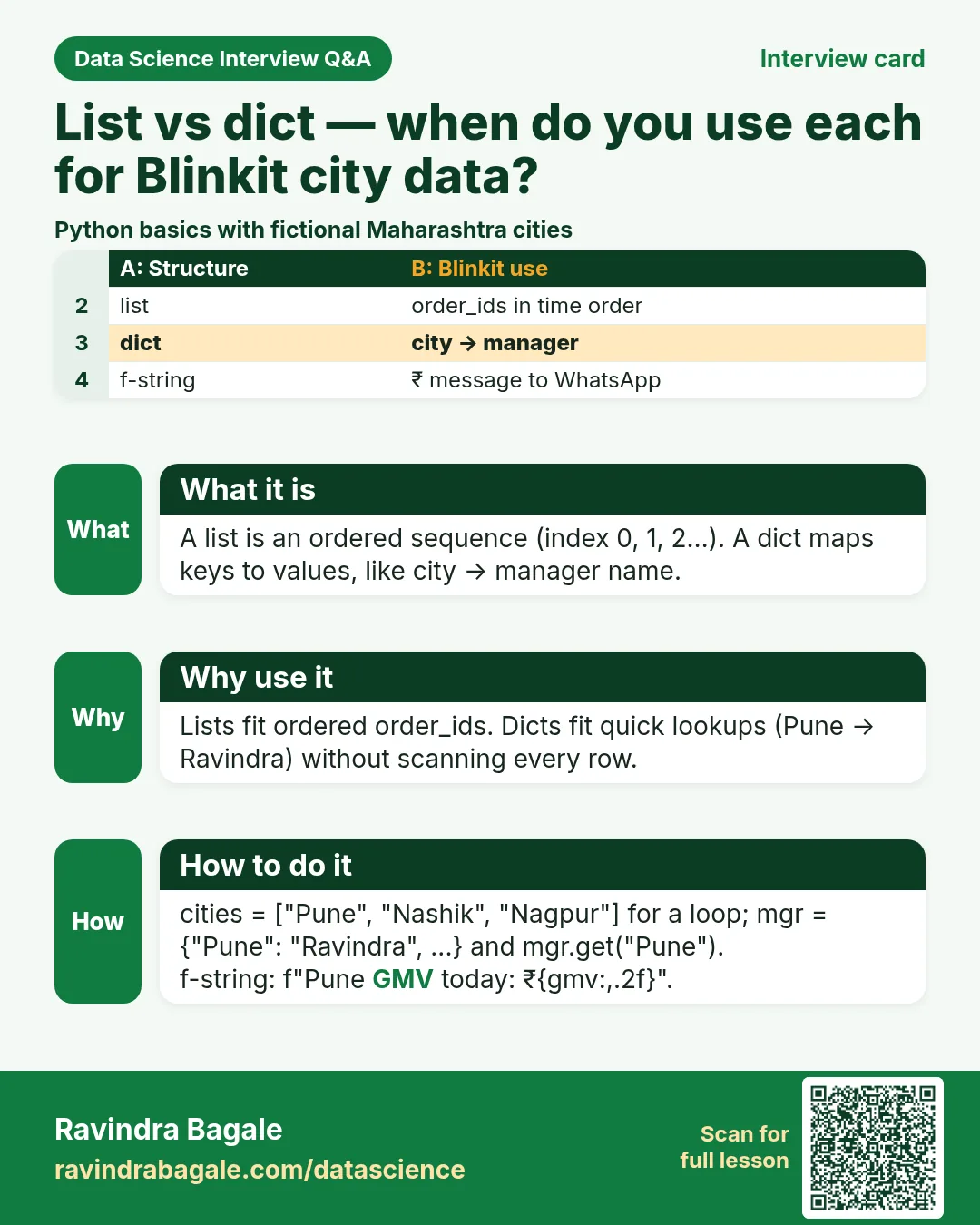
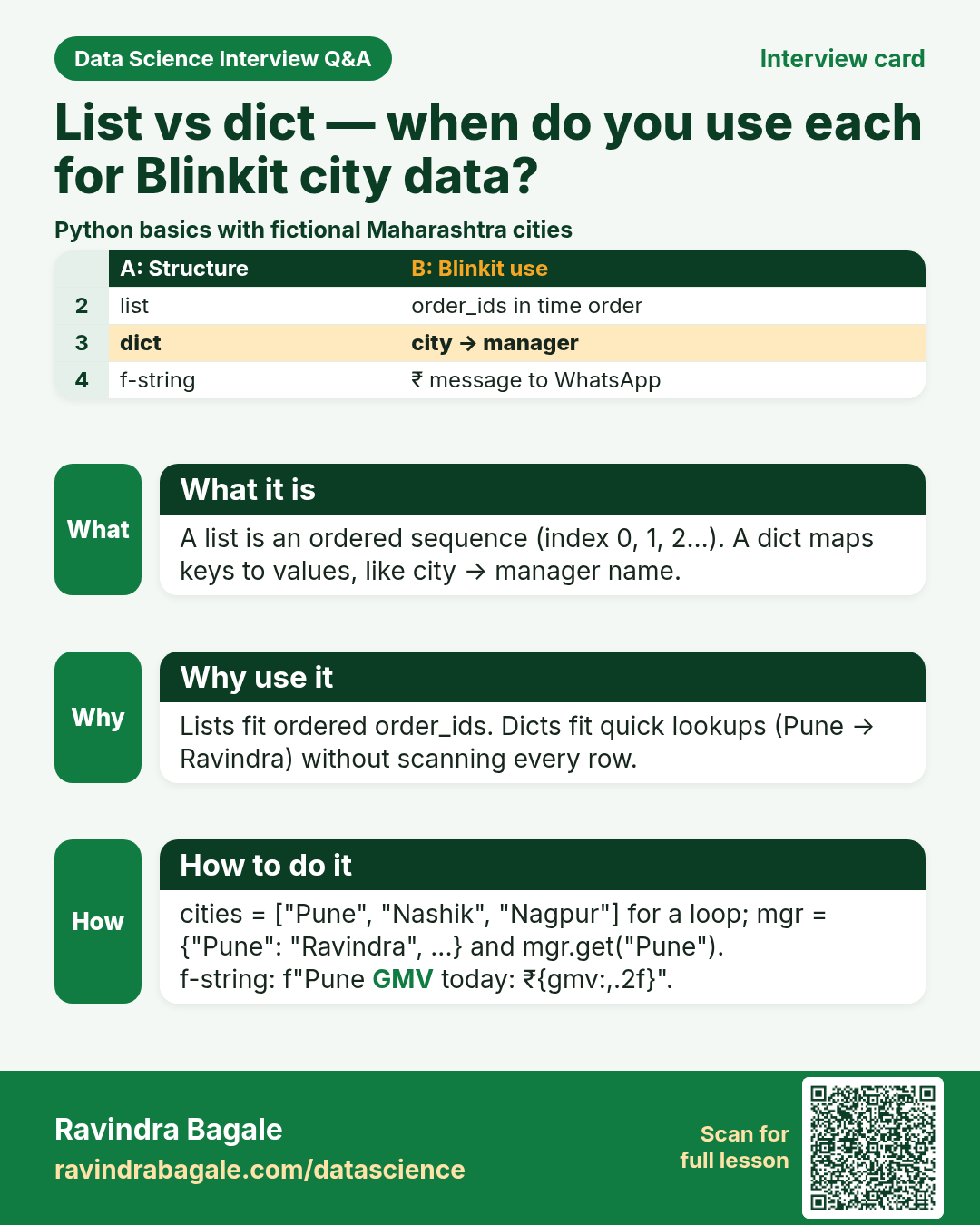
- Card 3: List vs dict — when do you use each for Blinkit city data?
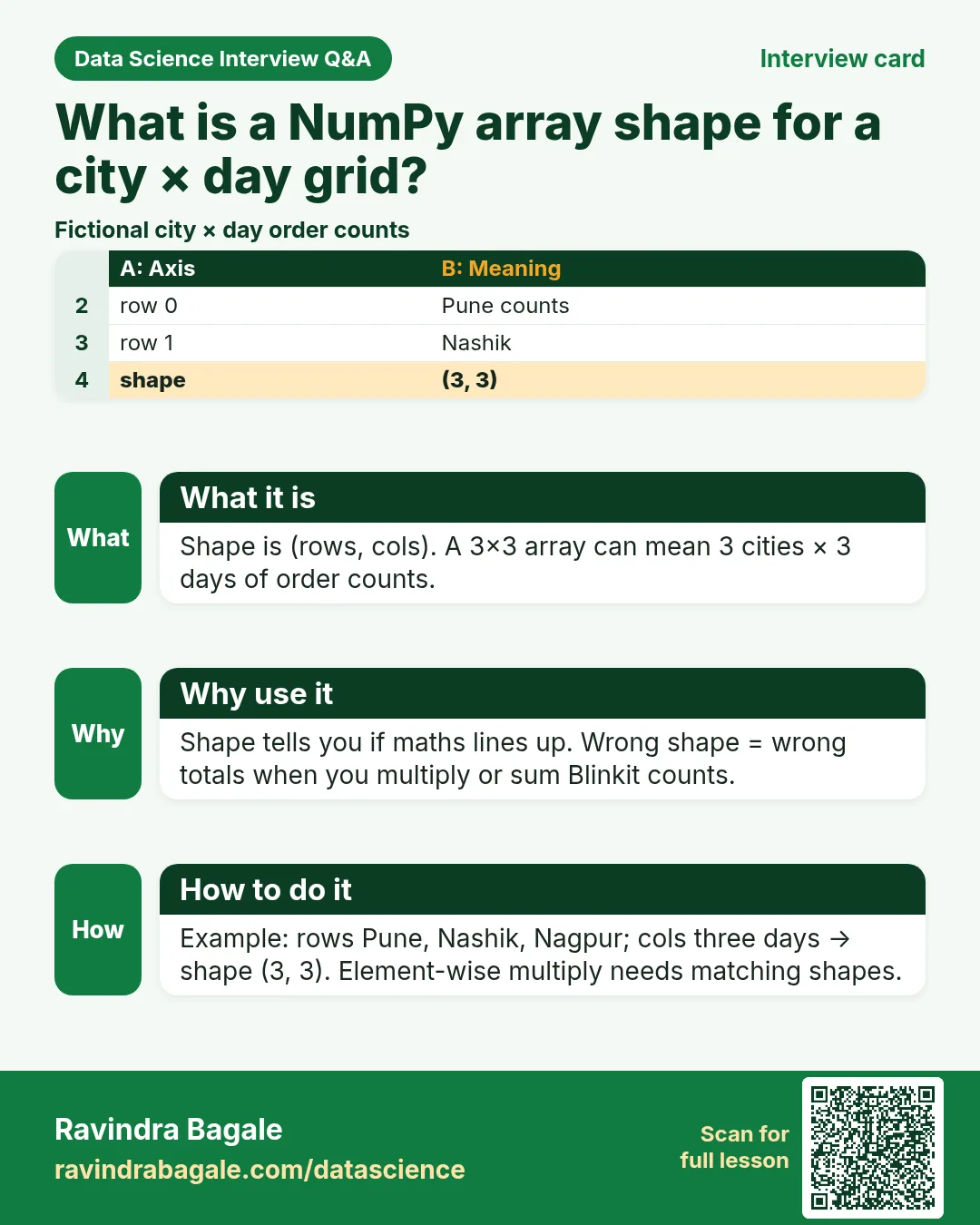
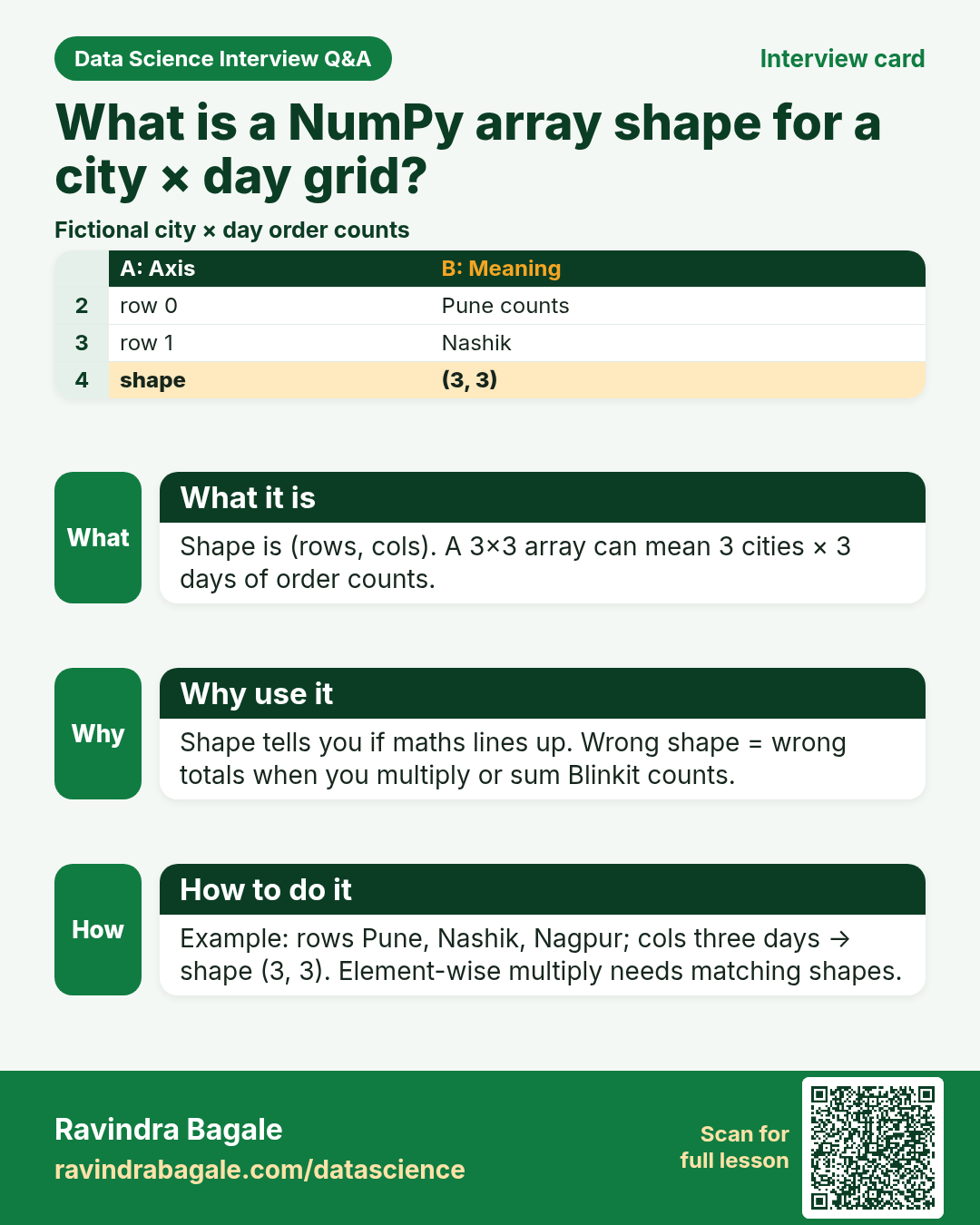
- Card 4: What is a NumPy array shape for a city × day grid?
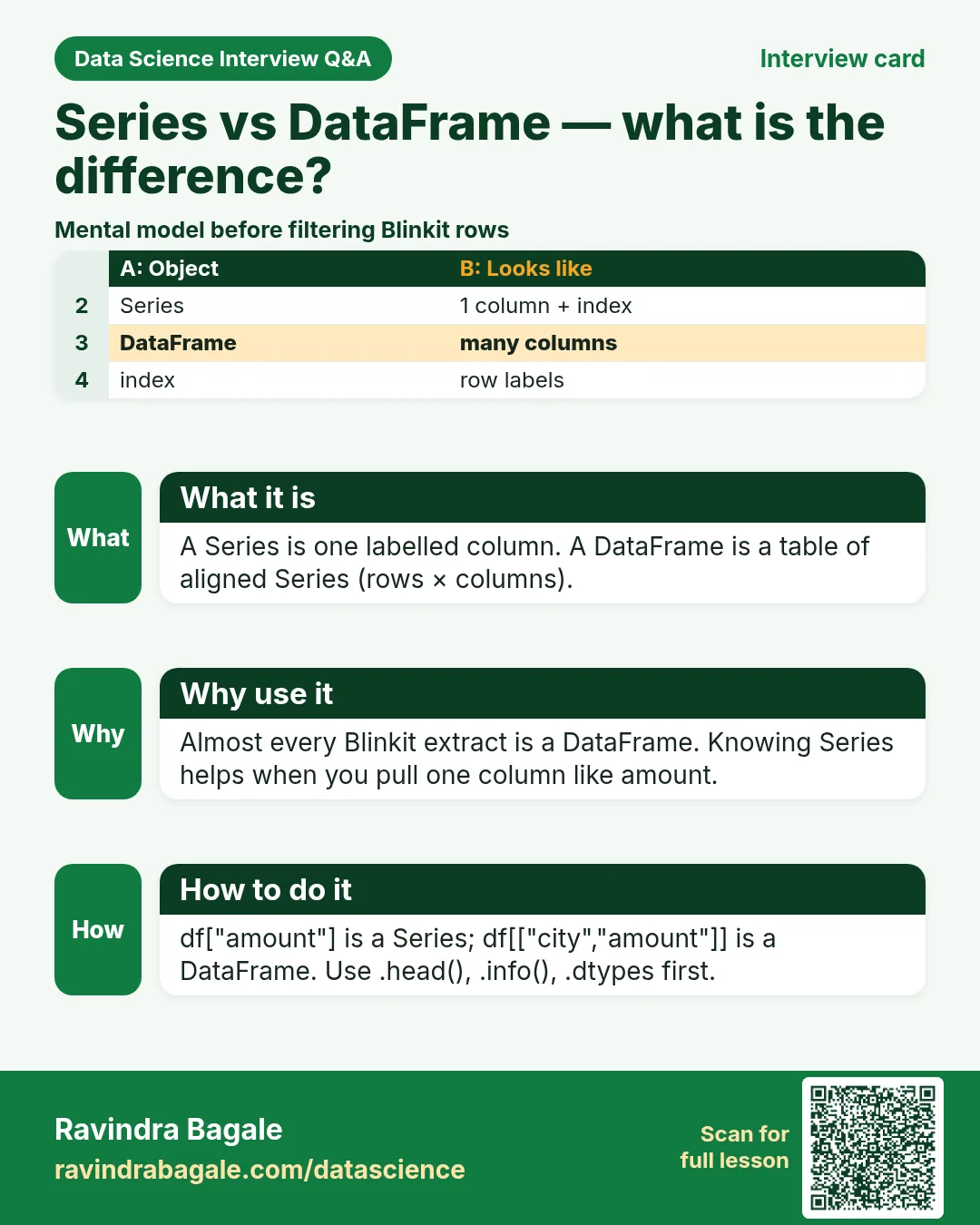
- Card 5: Series vs DataFrame — what is the difference?
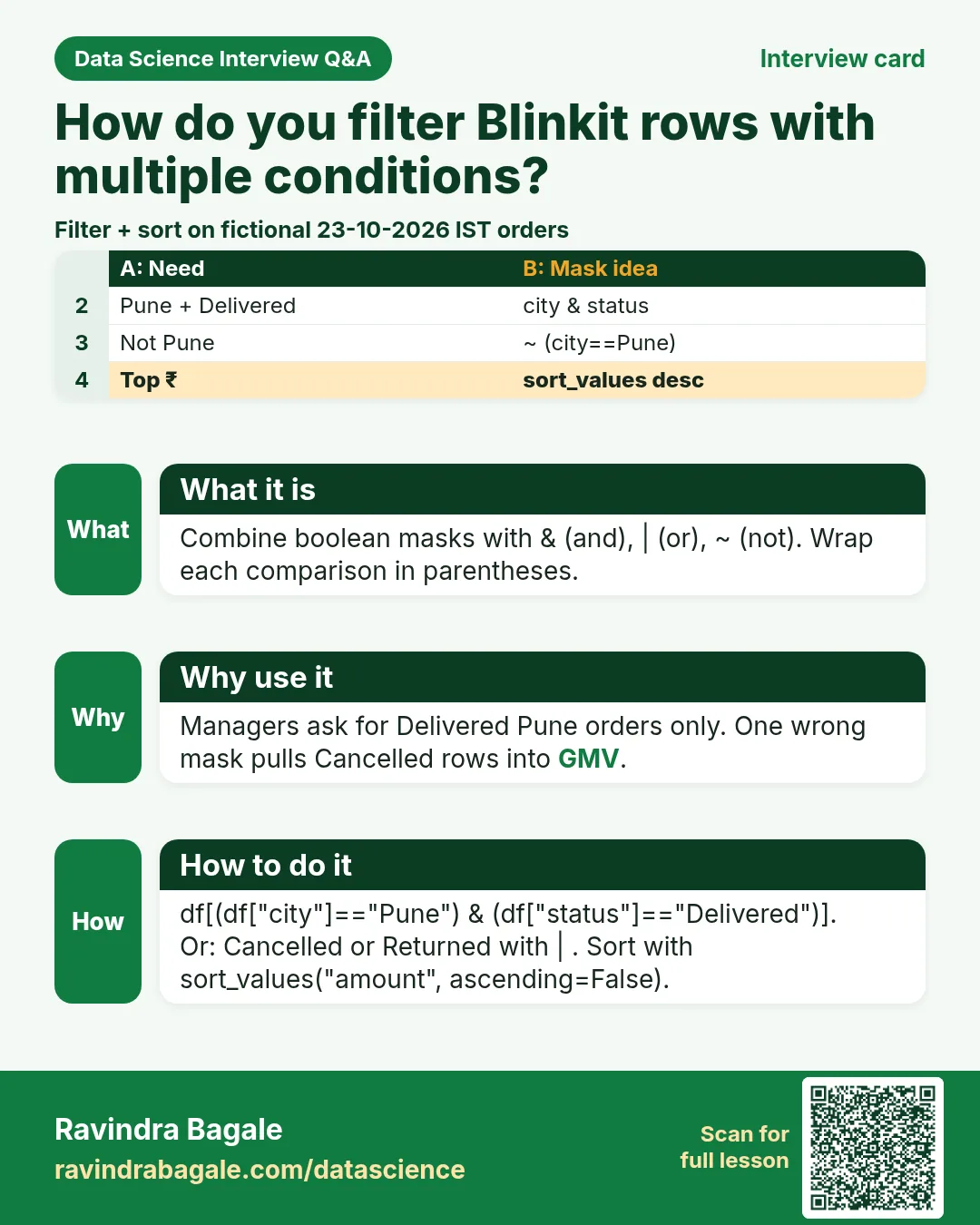
- Card 6: How do you filter Blinkit rows with multiple conditions?
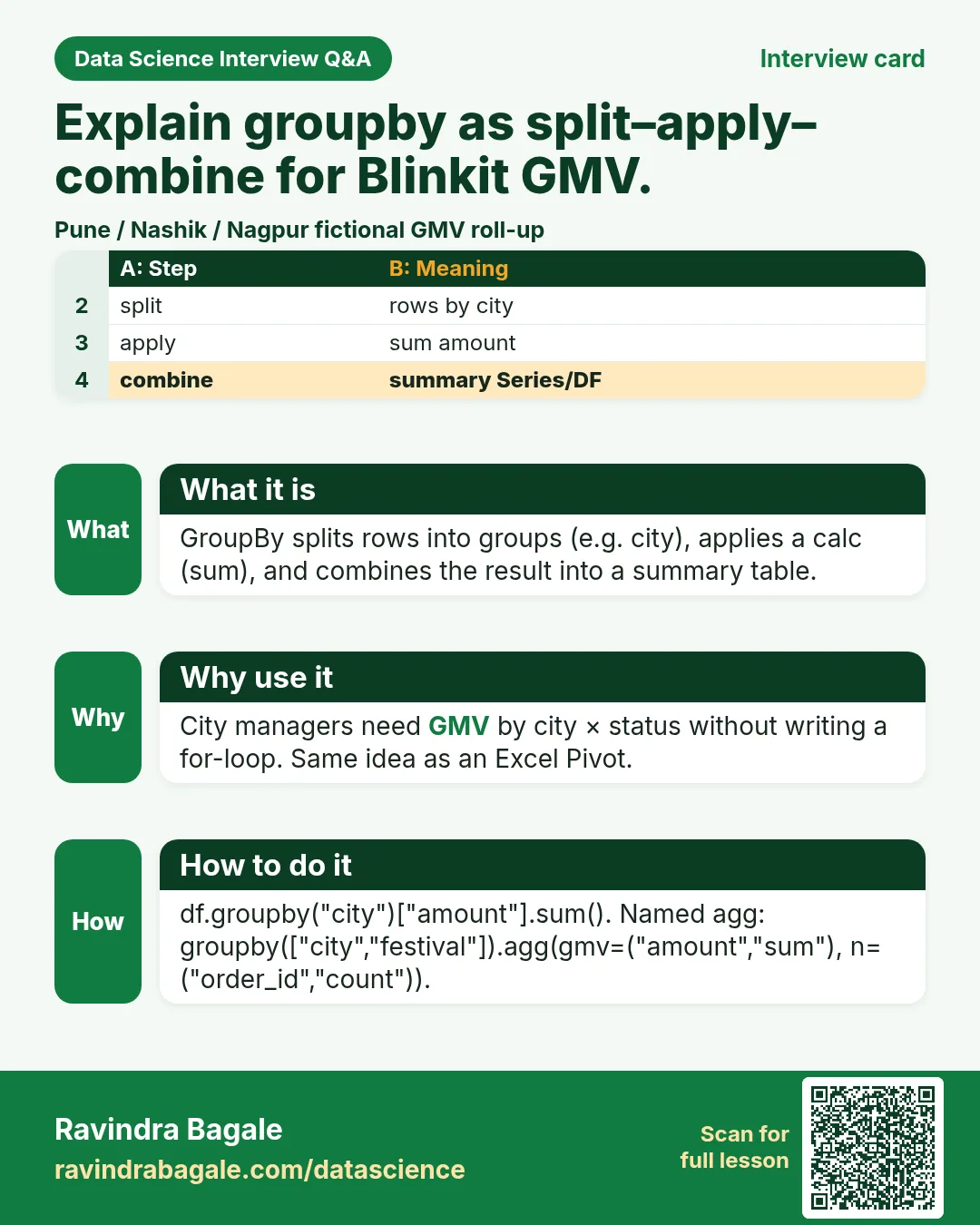
- Card 7: Explain groupby as split–apply–combine for Blinkit GMV.
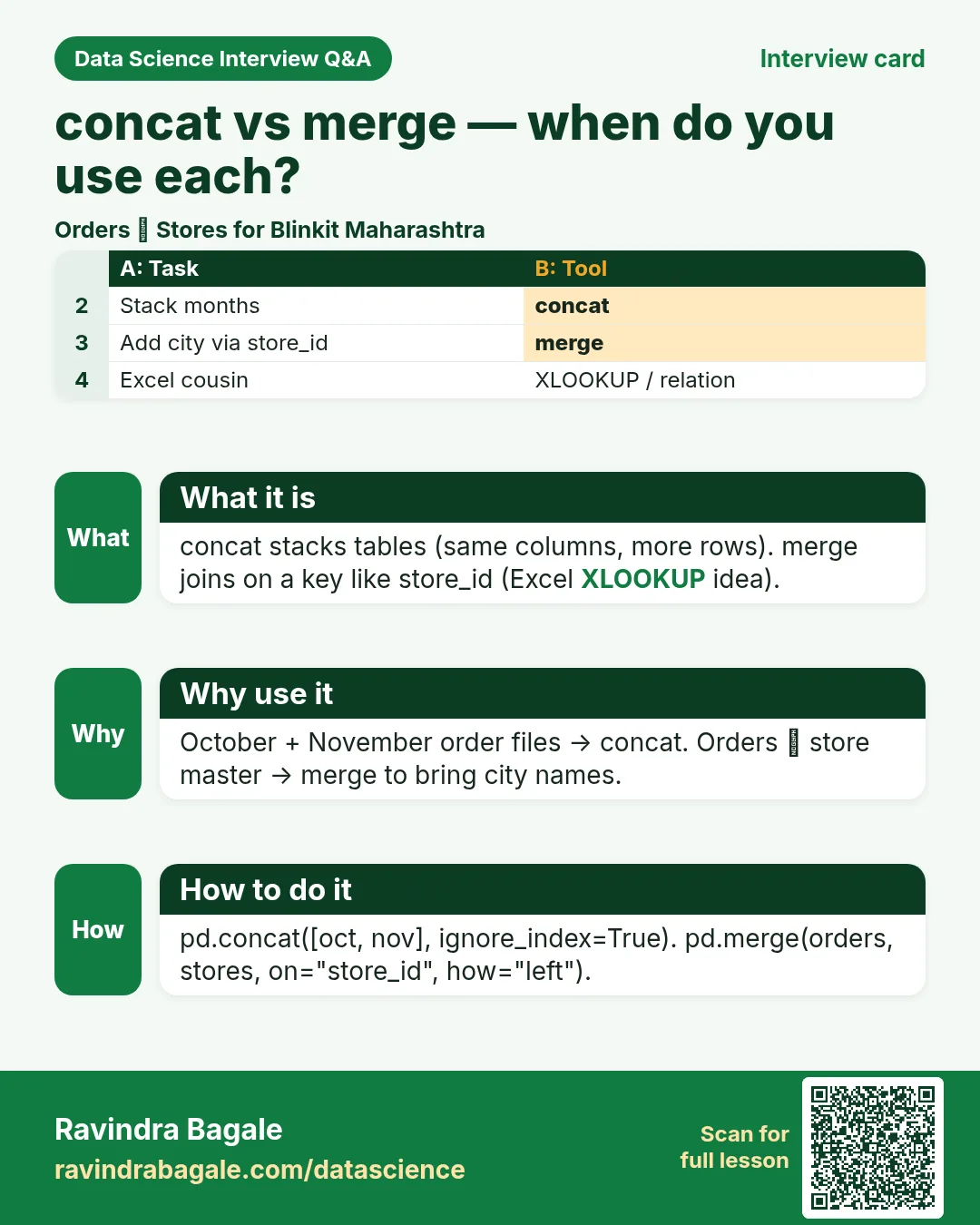
- Card 8: concat vs merge — when do you use each?
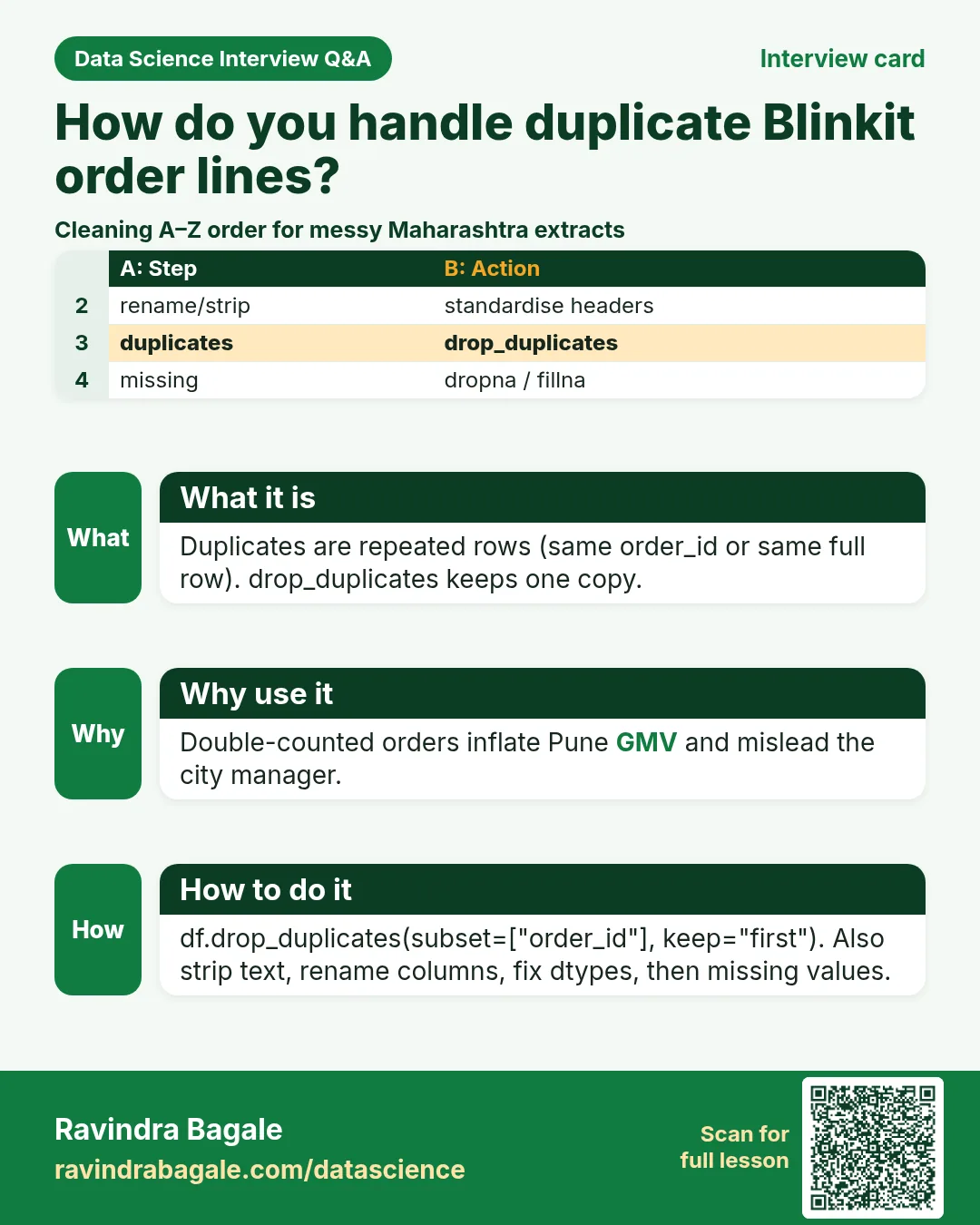
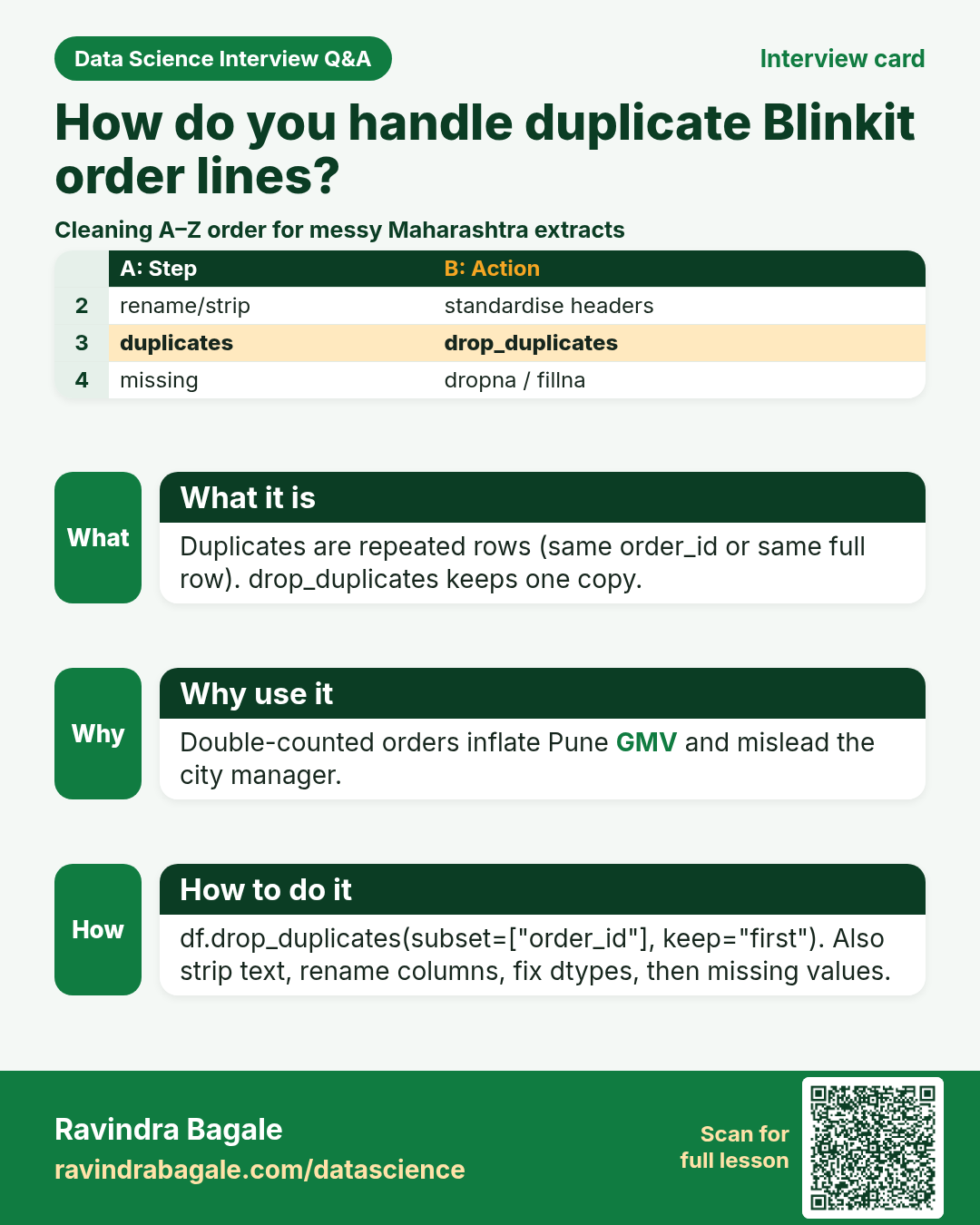
- Card 9: How do you handle duplicate Blinkit order lines?
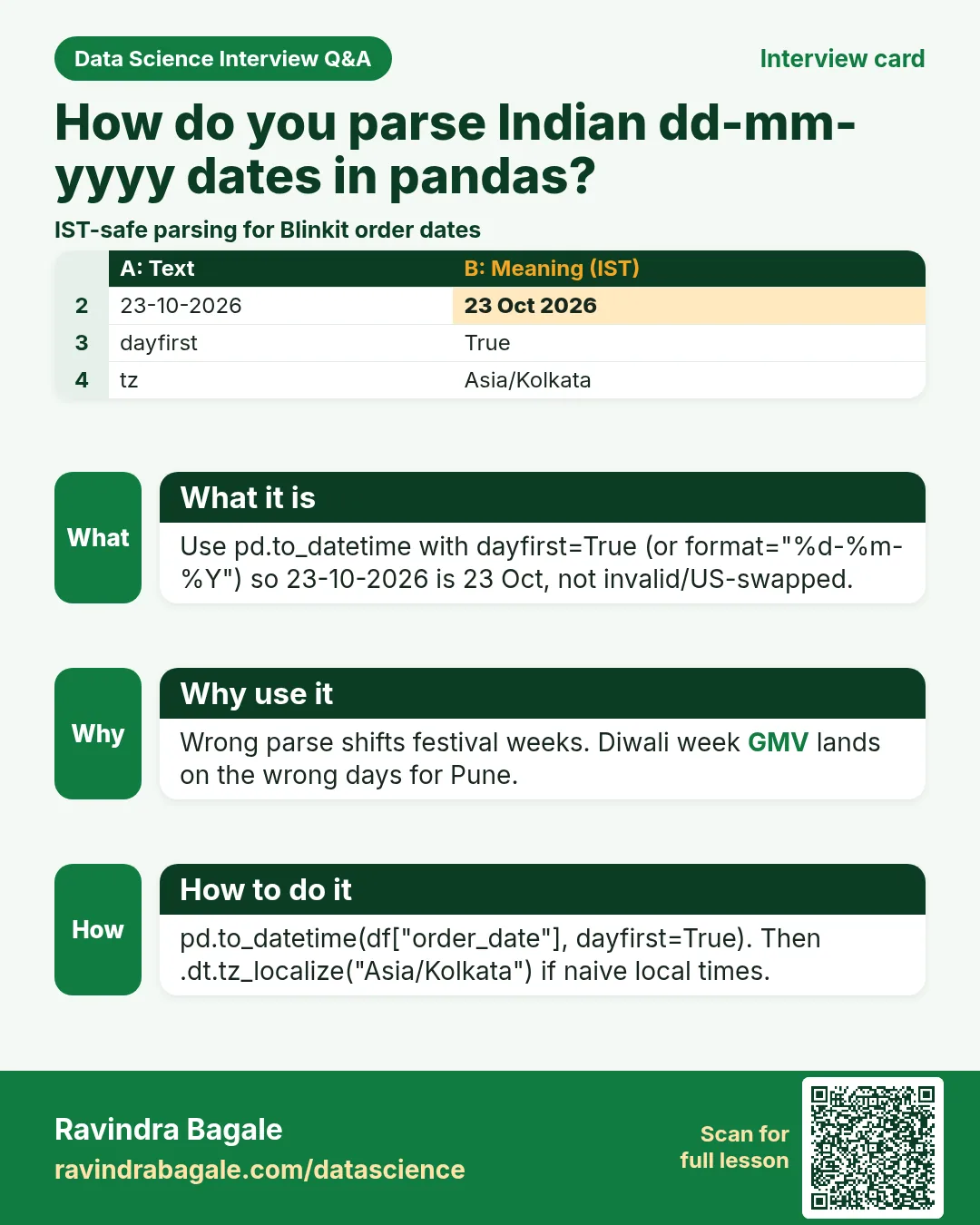
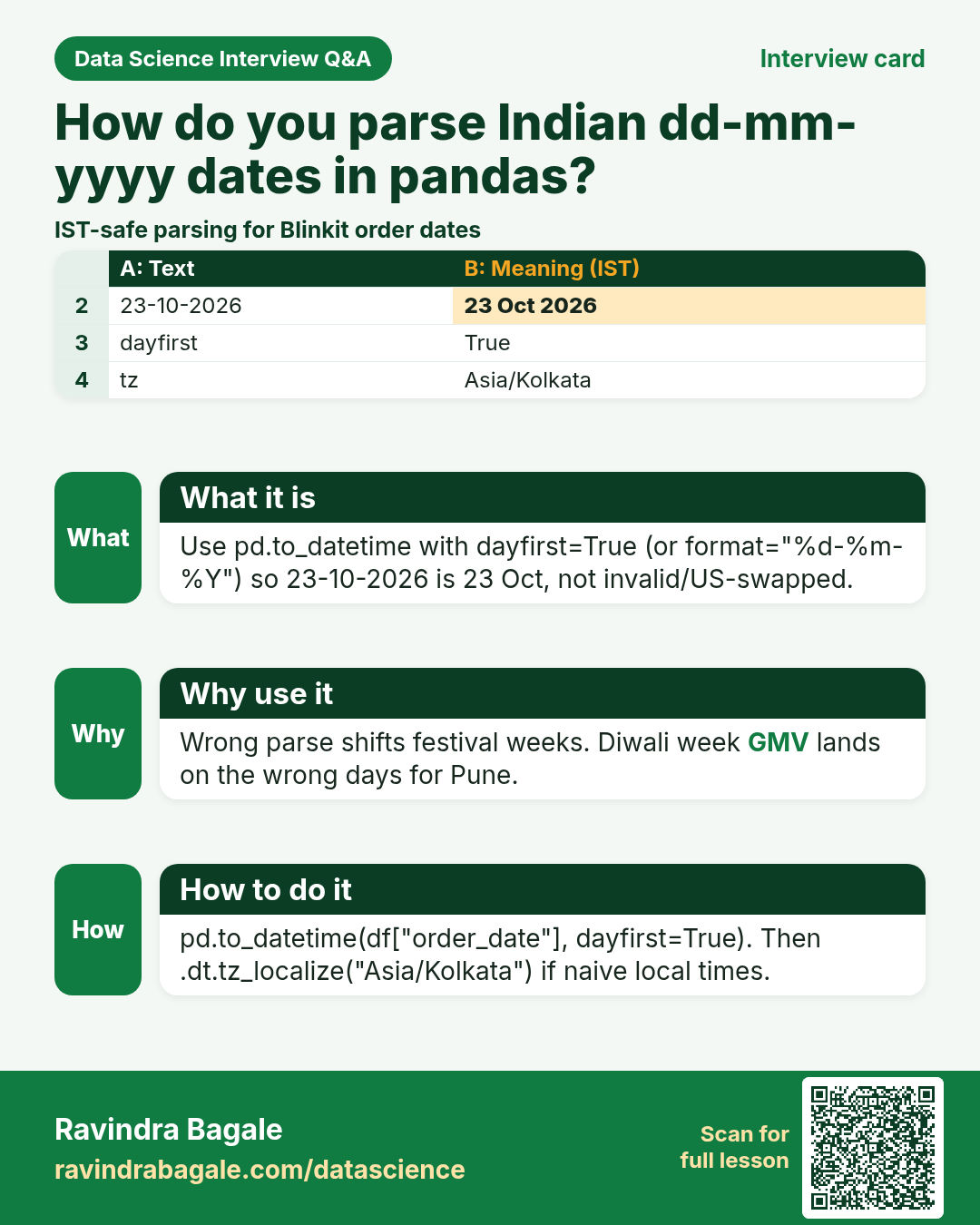
- Card 10: How do you parse Indian dd-mm-yyyy dates in pandas?
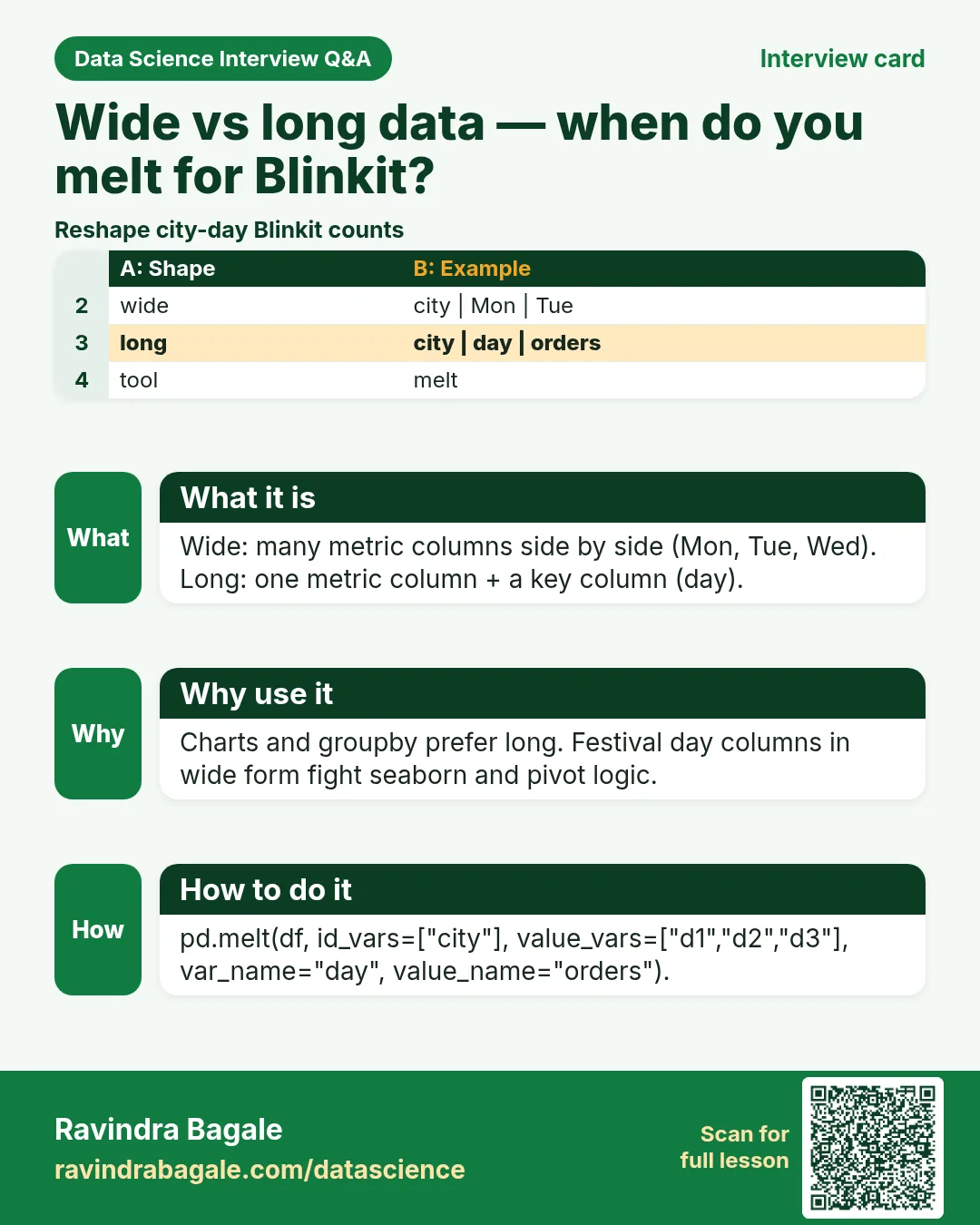
- Card 11: Wide vs long data — when do you melt for Blinkit?
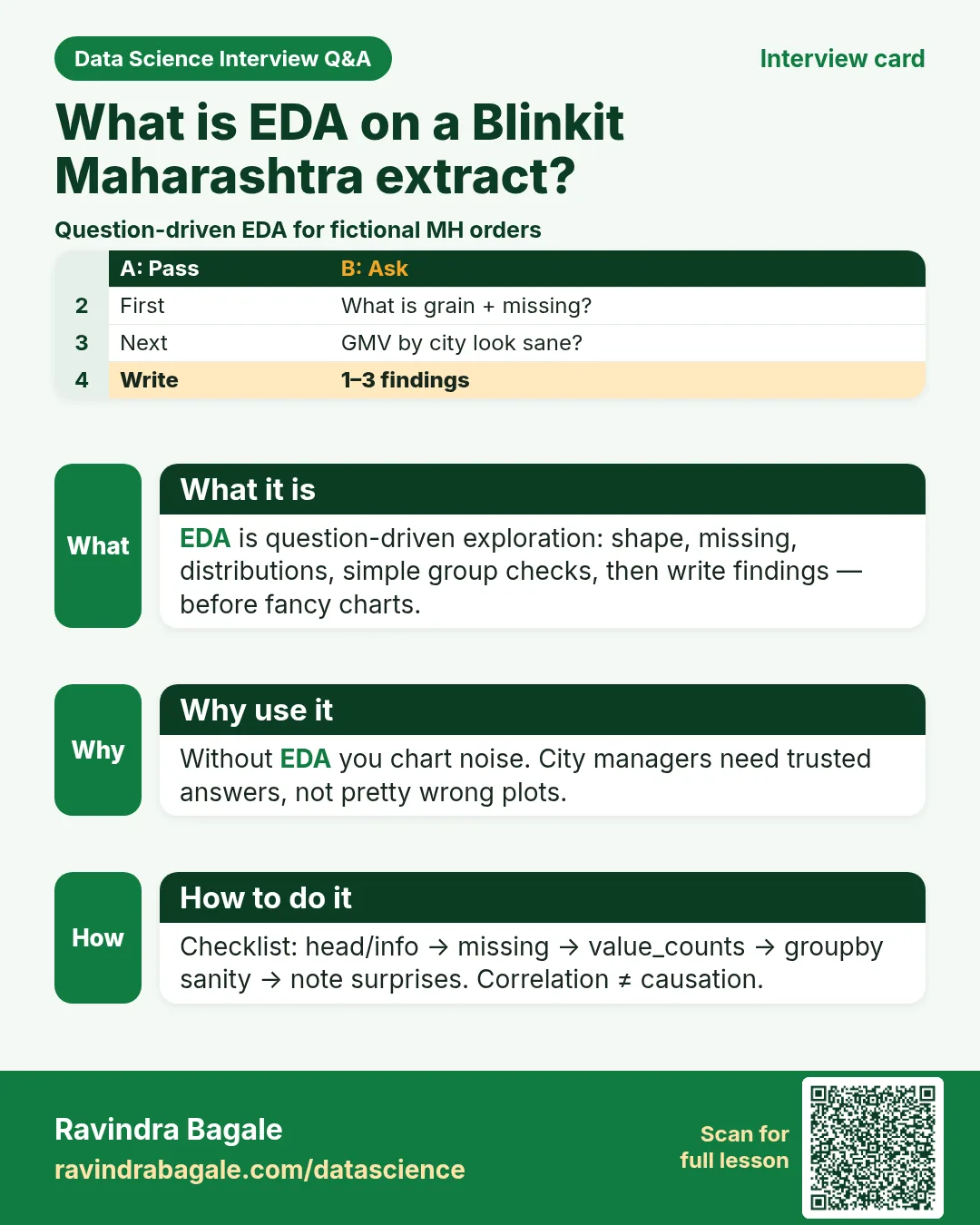
- Card 12: What is EDA on a Blinkit Maharashtra extract?
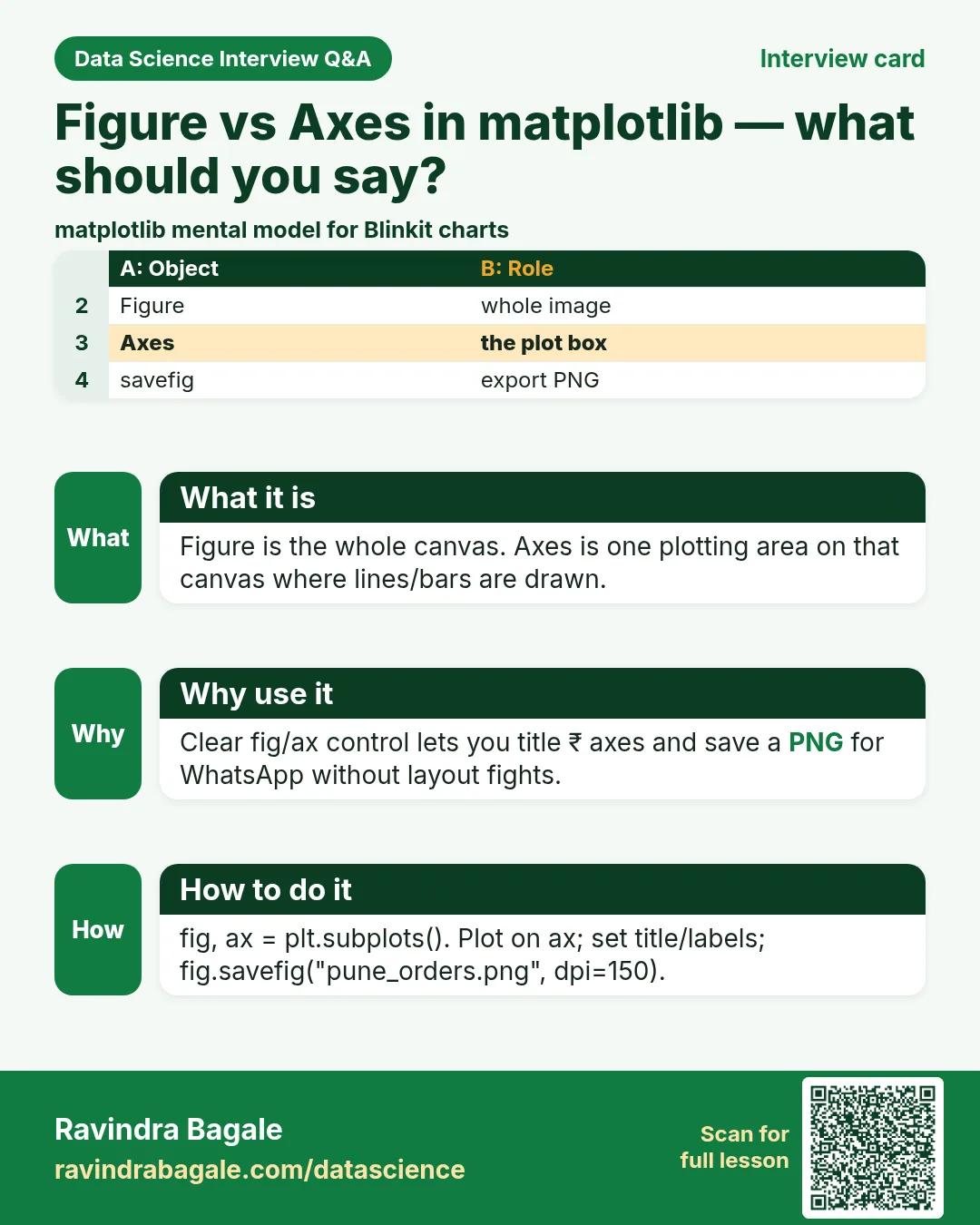
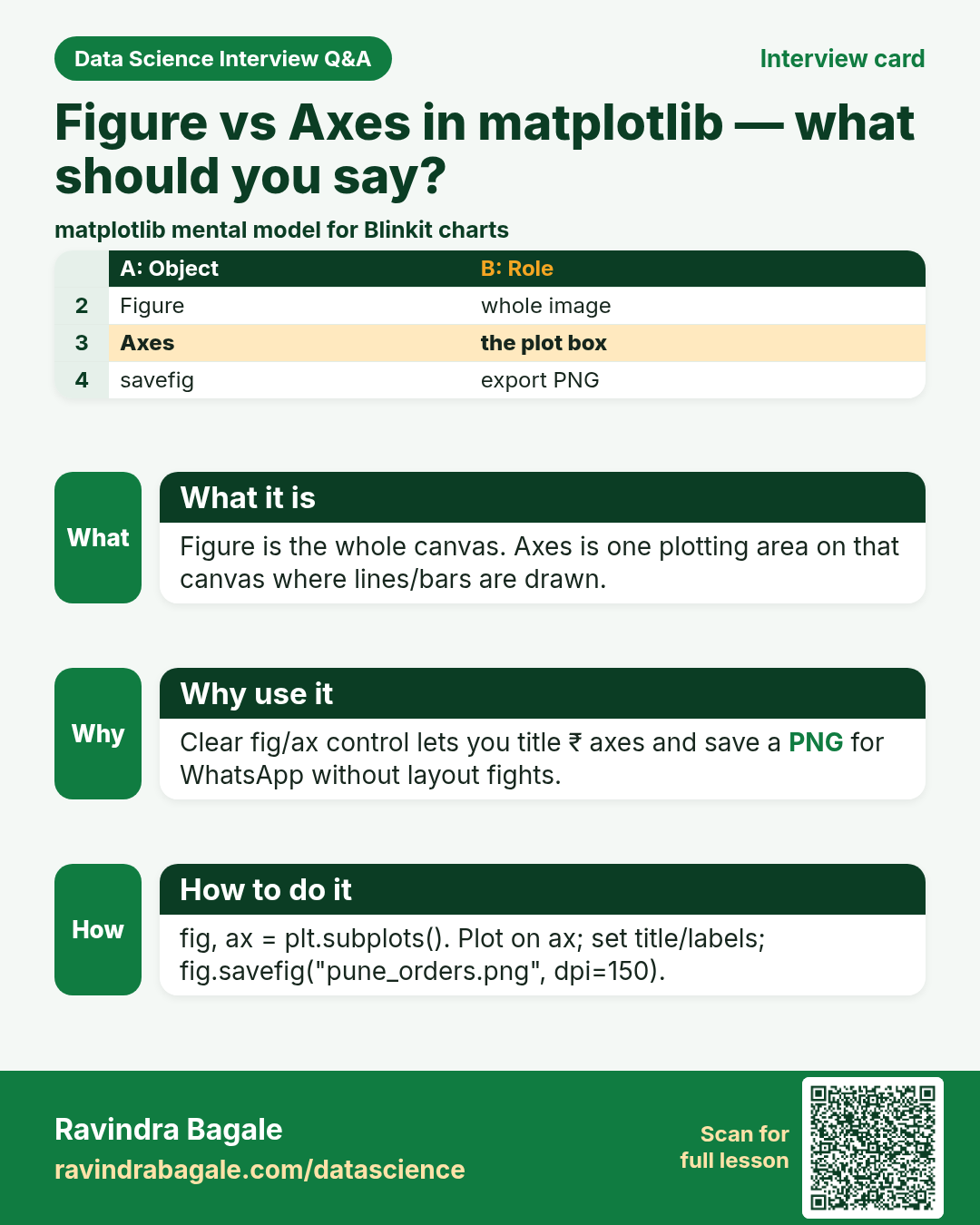
- Card 13: Figure vs Axes in matplotlib — what should you say?
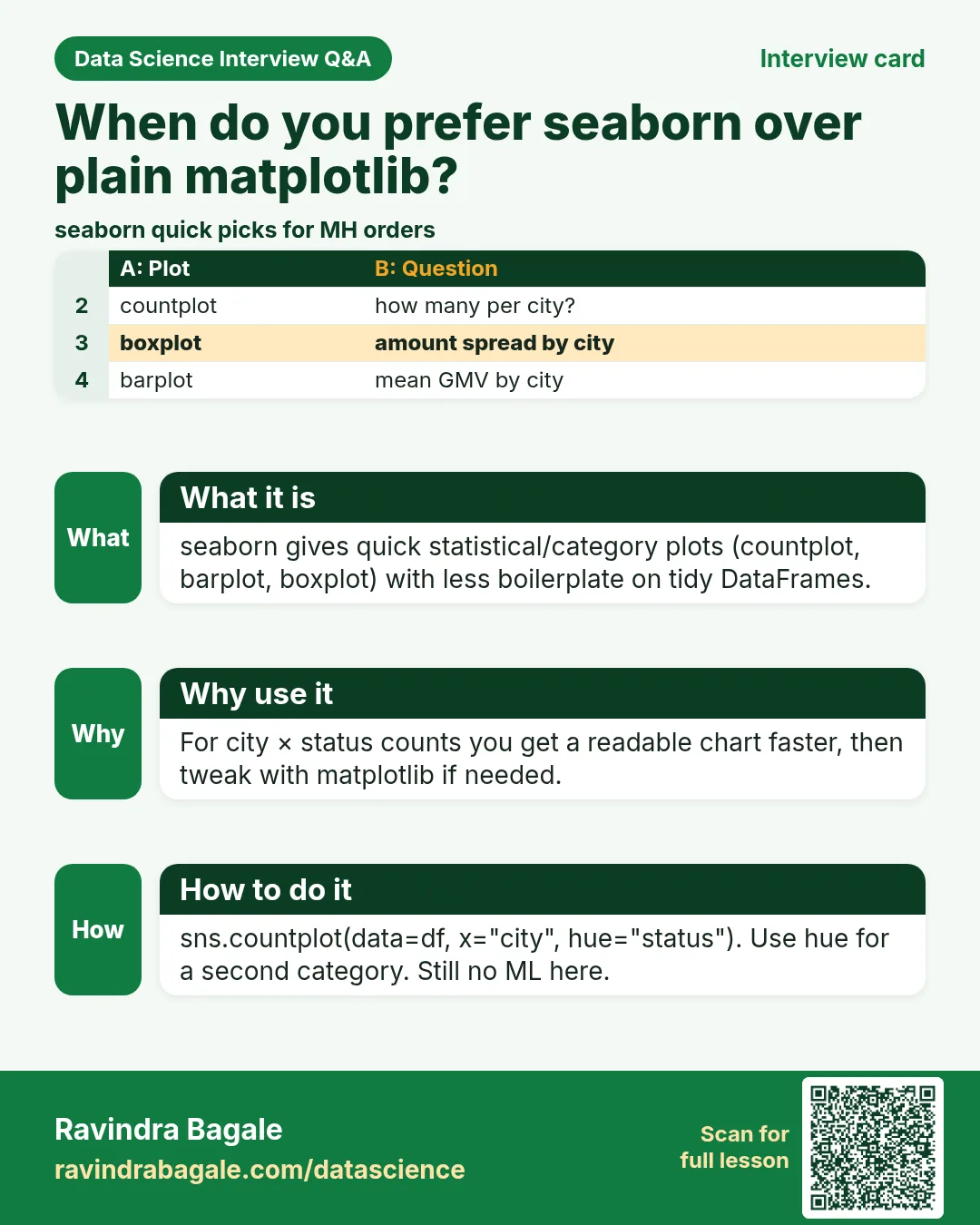
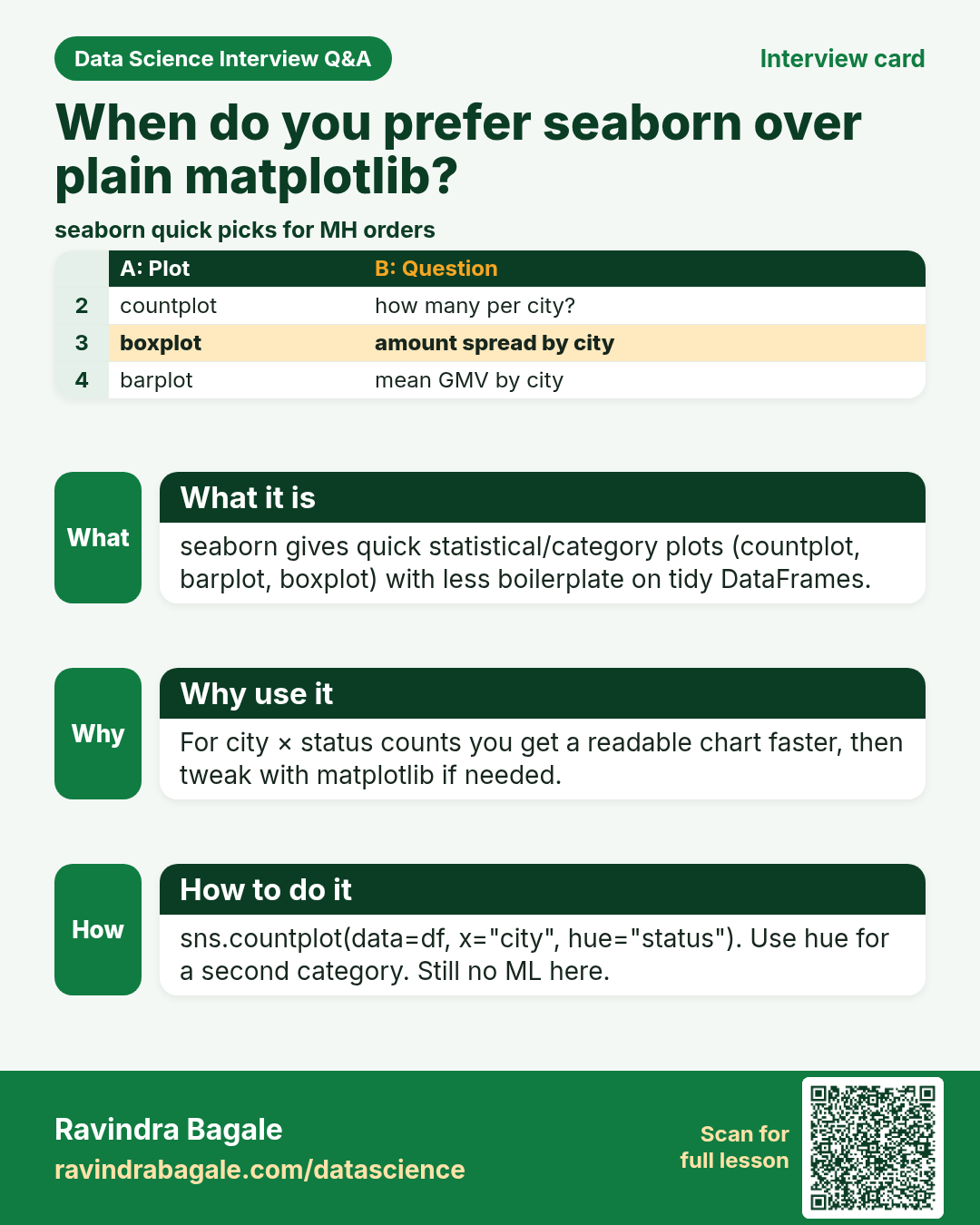
- Card 14: When do you prefer seaborn over plain matplotlib?
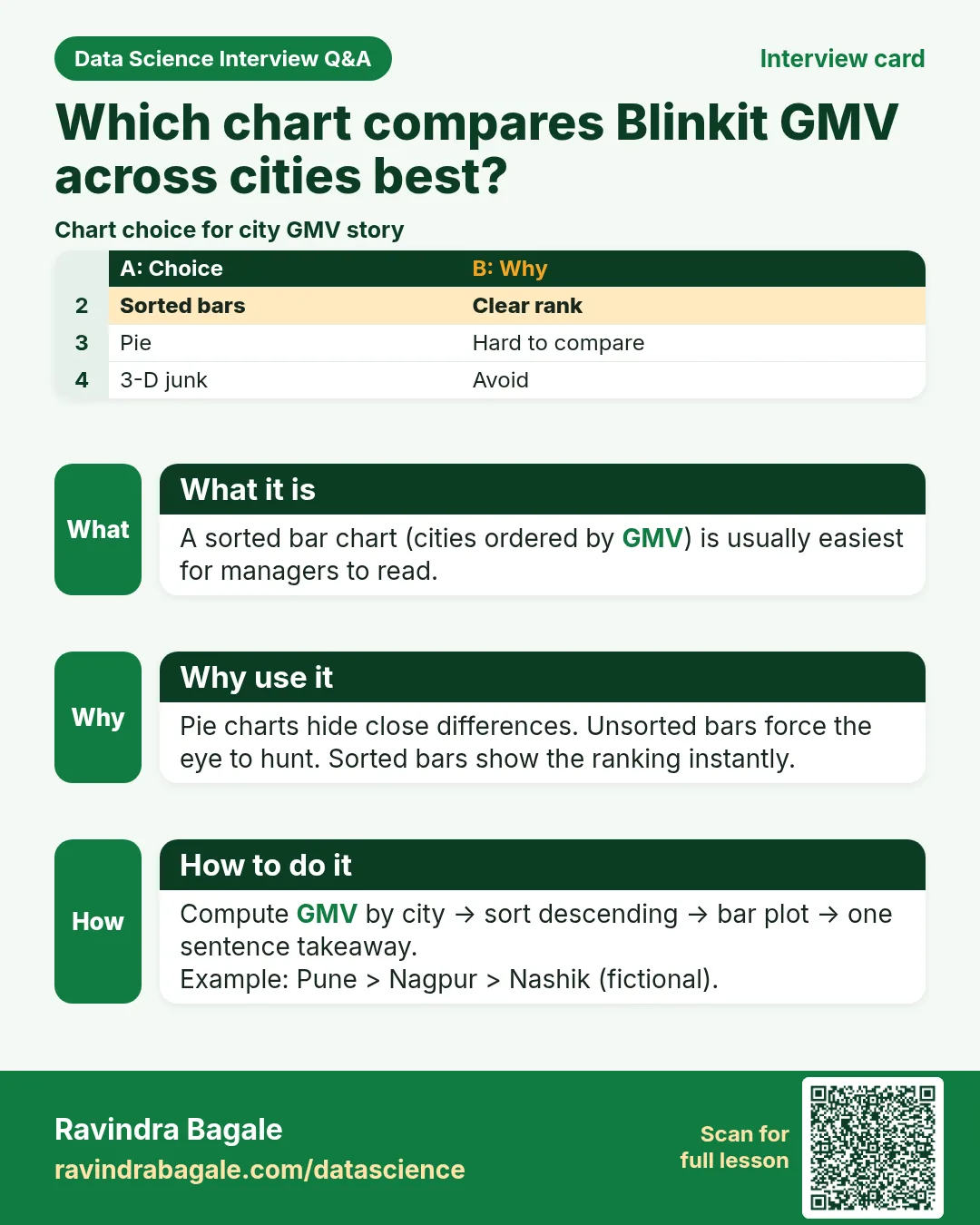
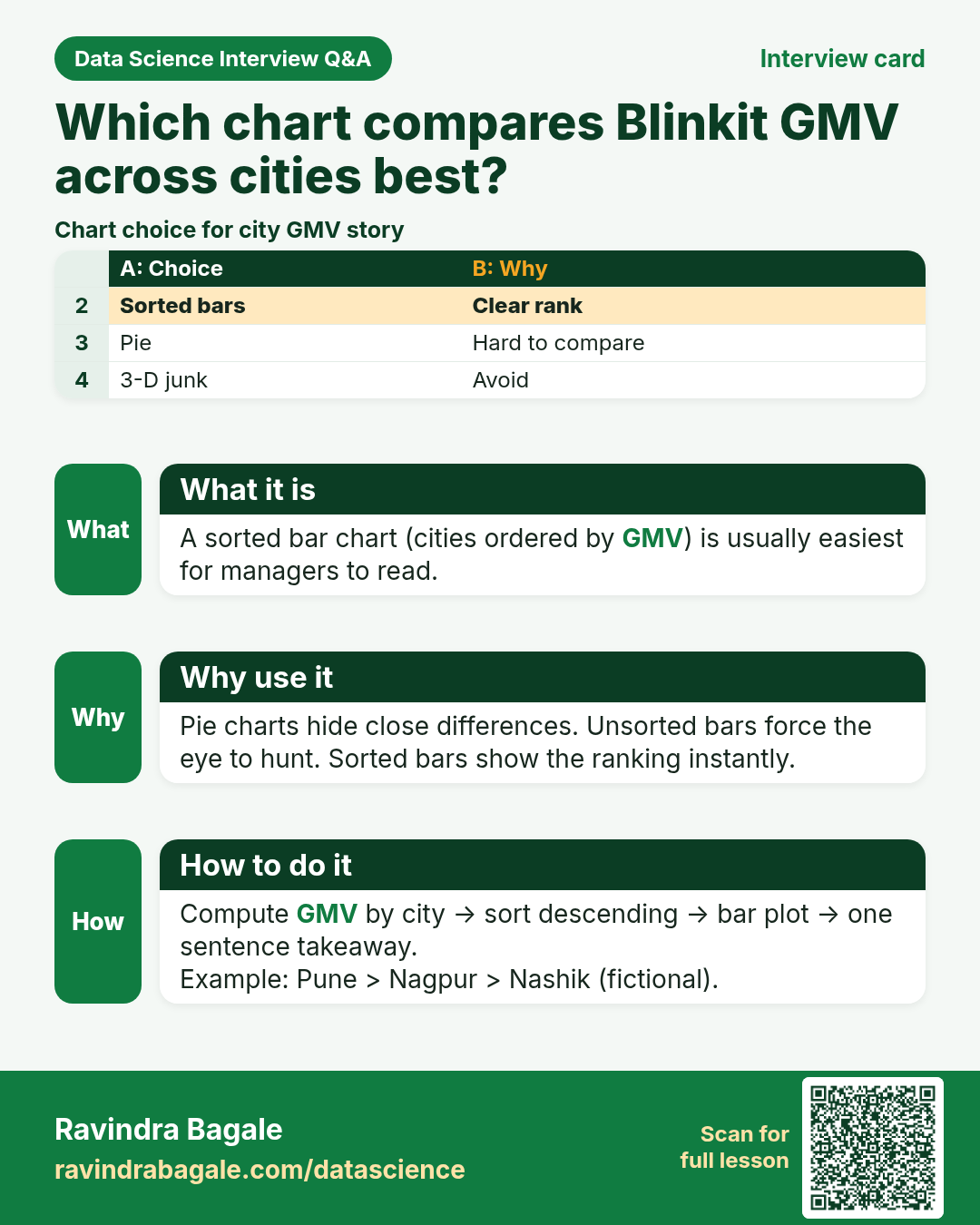
- Card 15: Which chart compares Blinkit GMV across cities best?
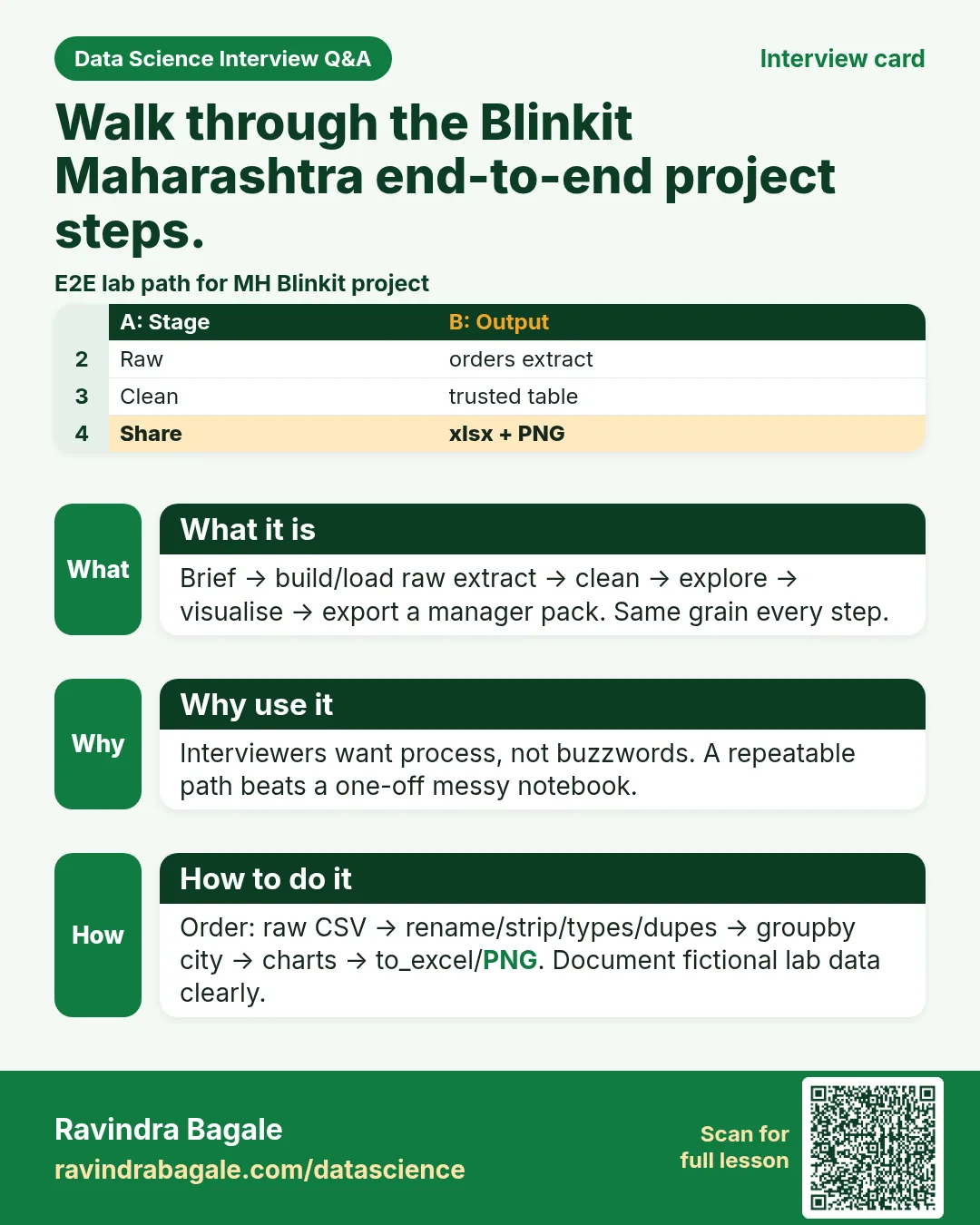
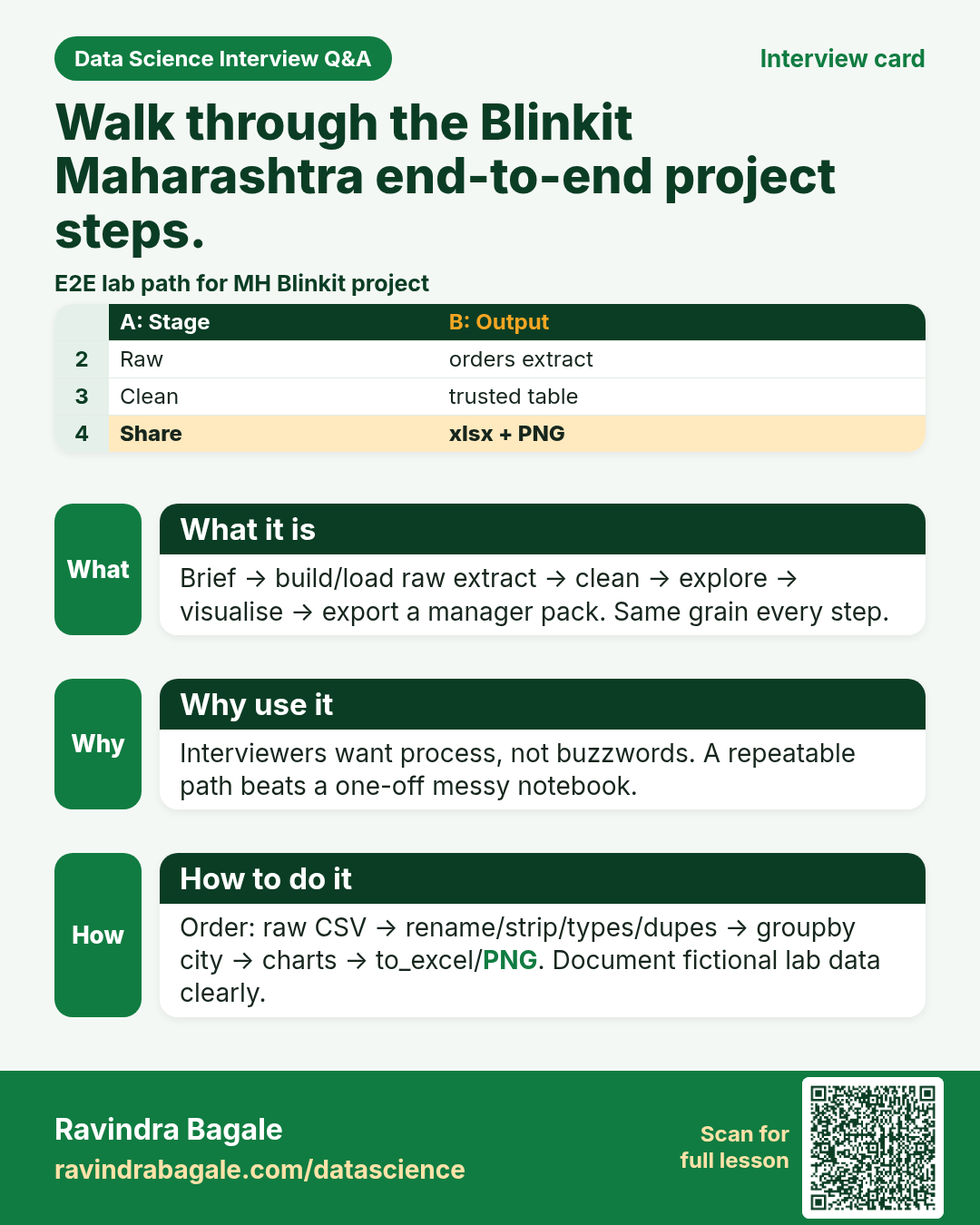
- Card 16: Walk through the Blinkit Maharashtra end-to-end project steps.
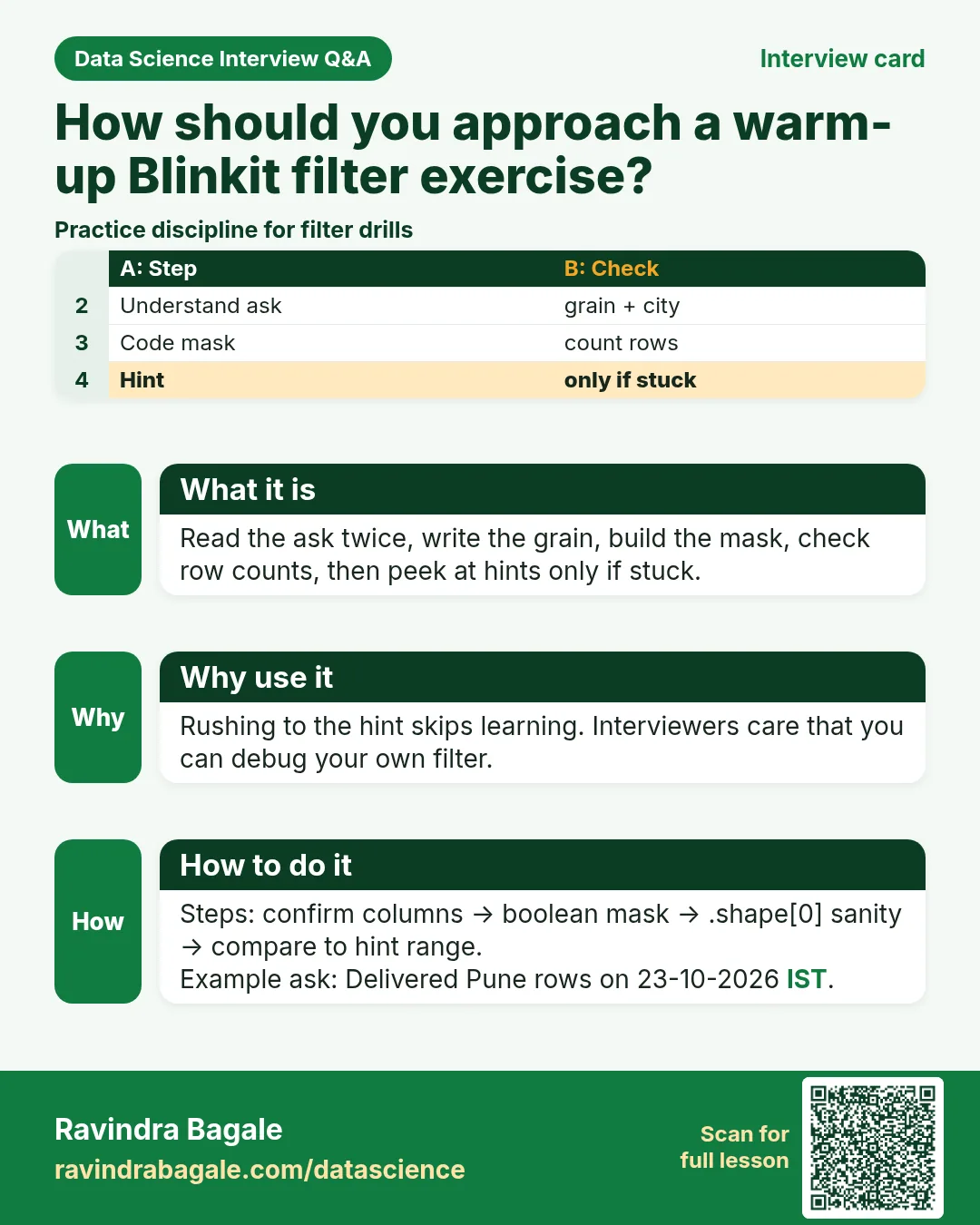
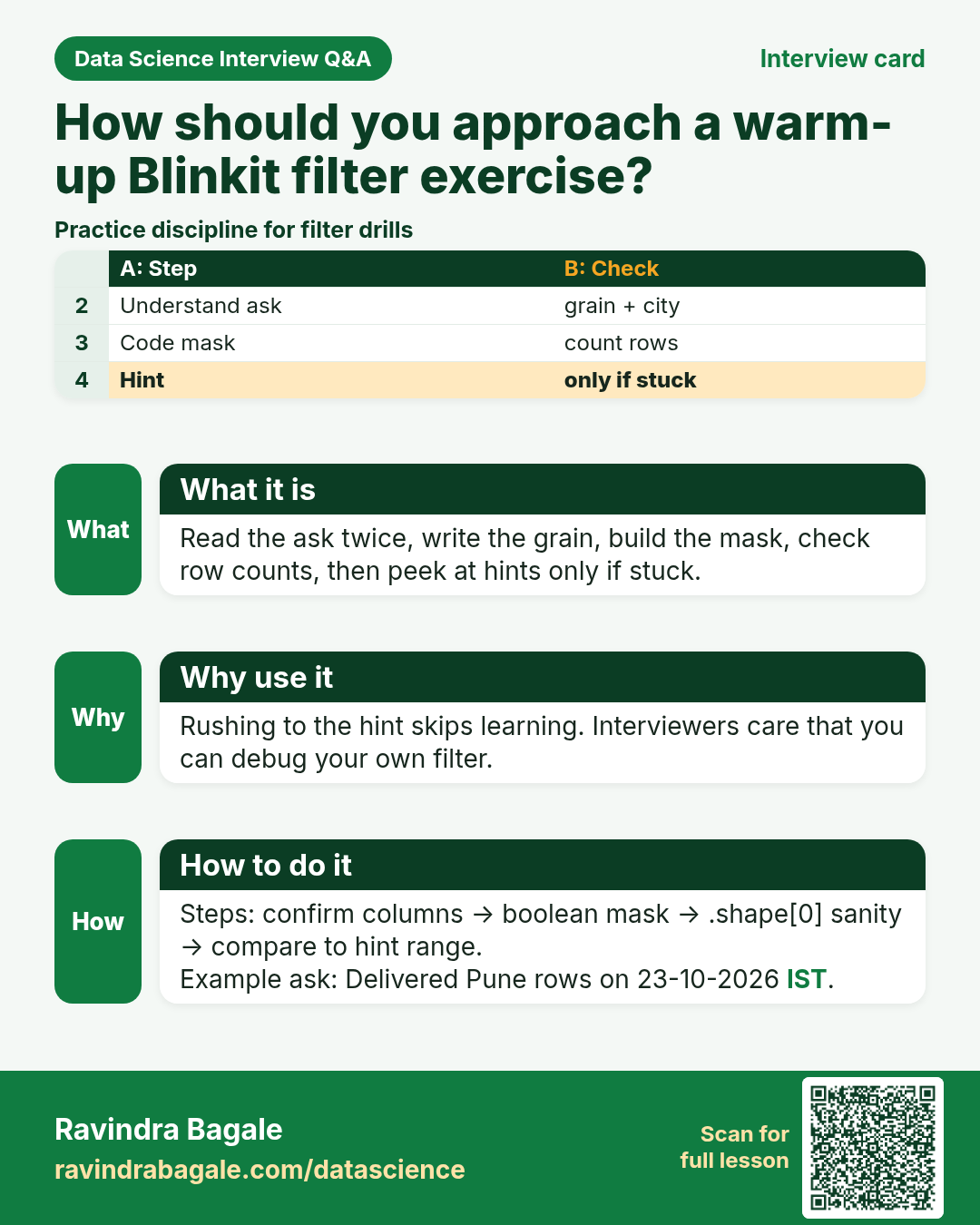
- Card 17: How should you approach a warm-up Blinkit filter exercise?
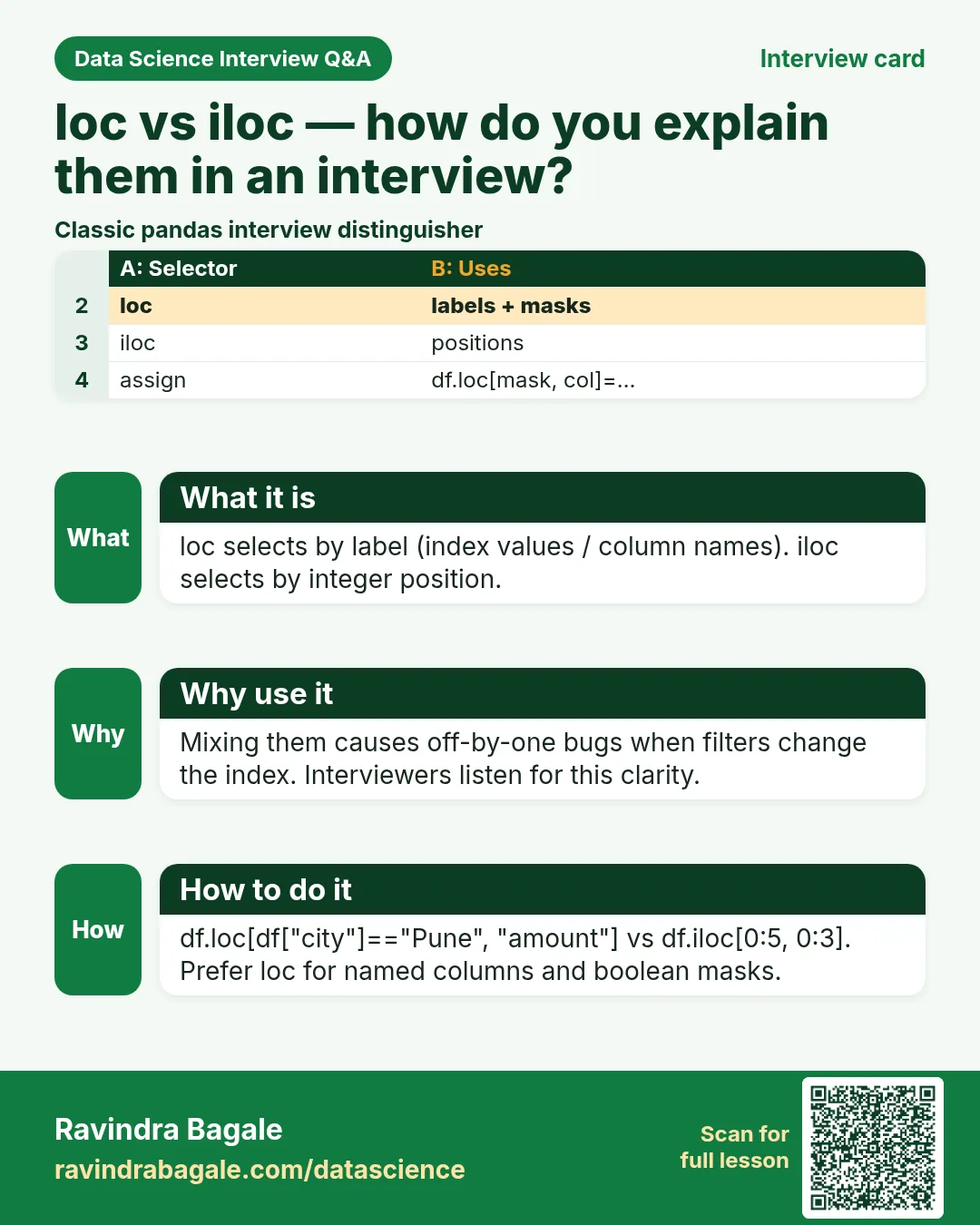
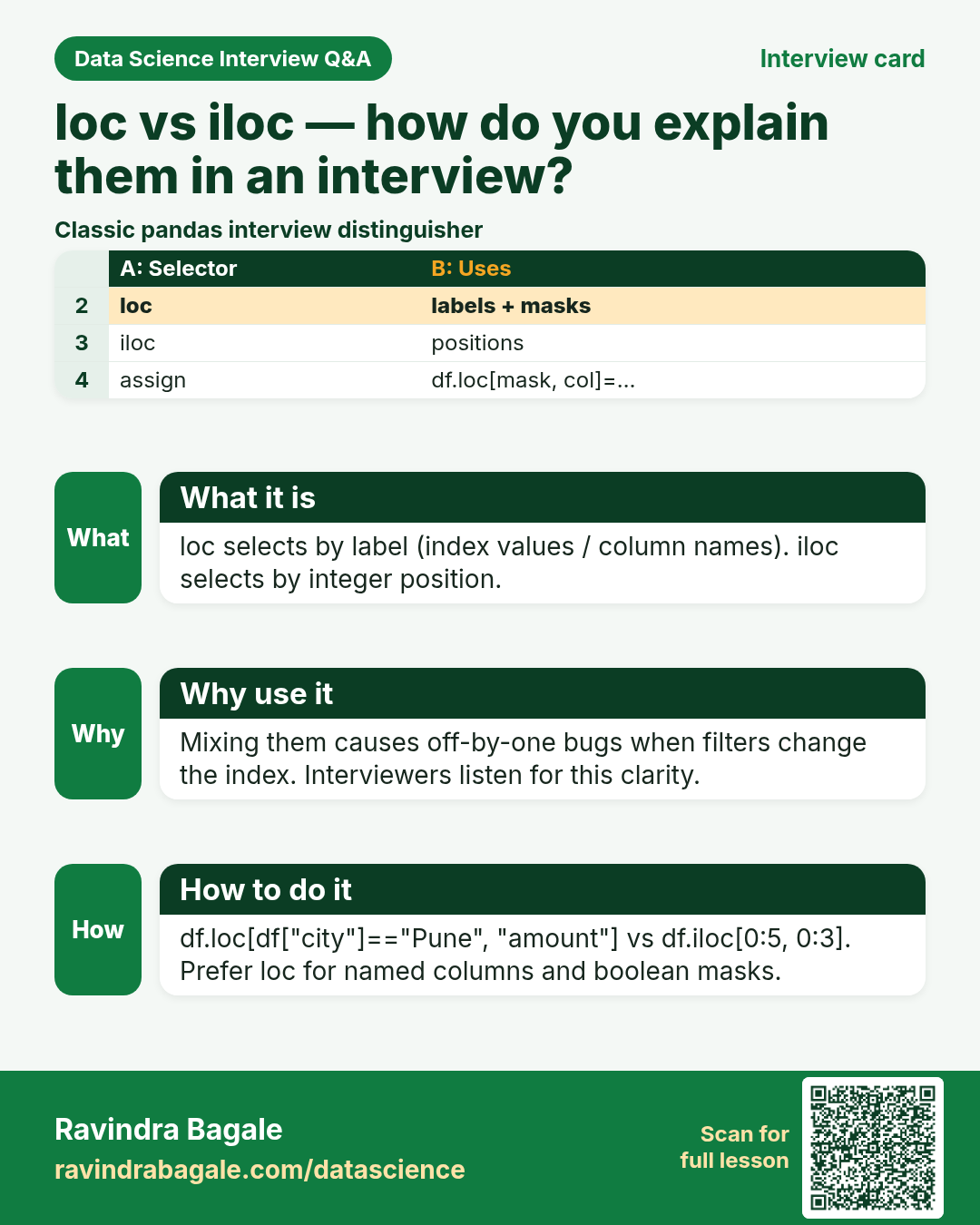
- Card 18: loc vs iloc — how do you explain them in an interview?
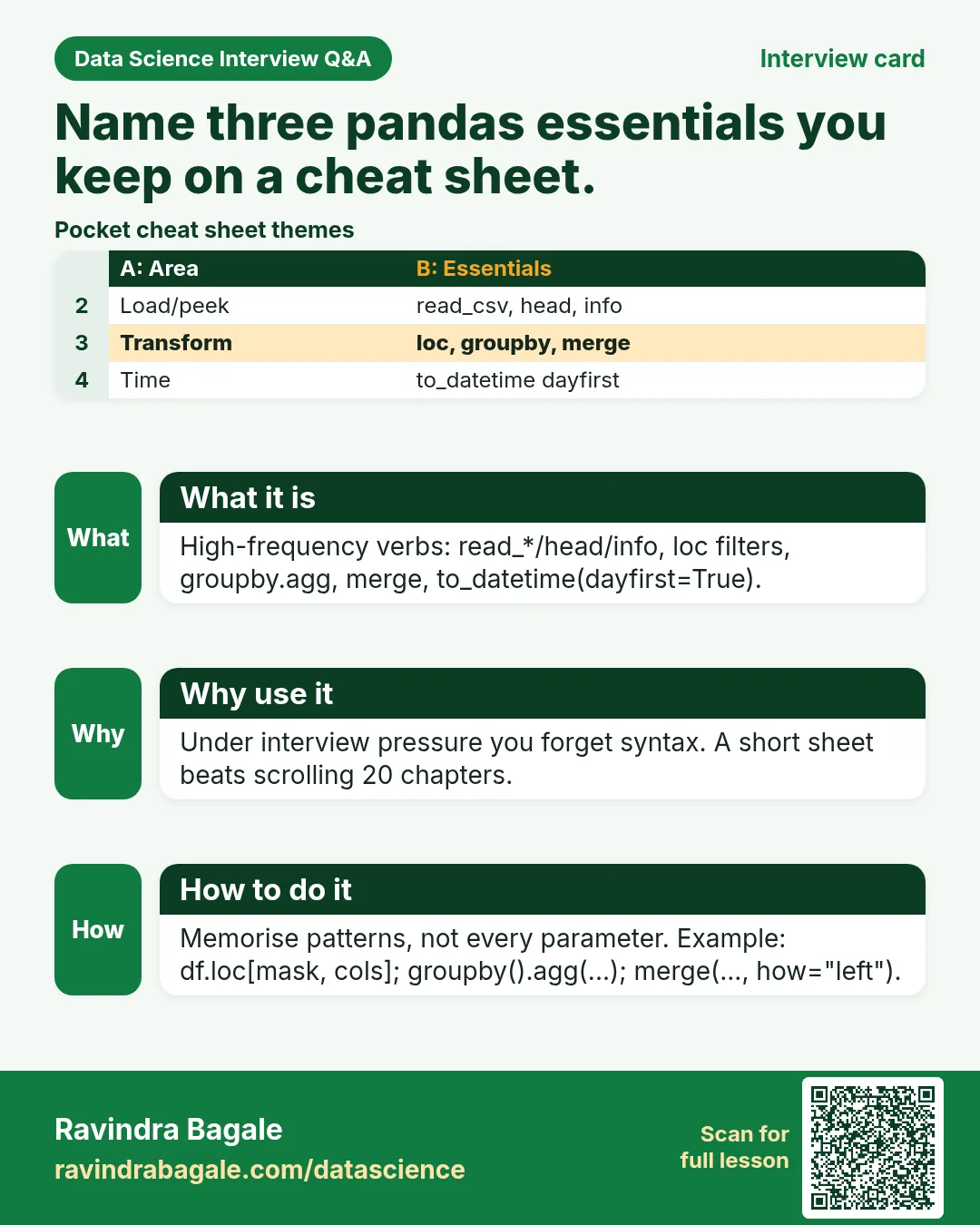
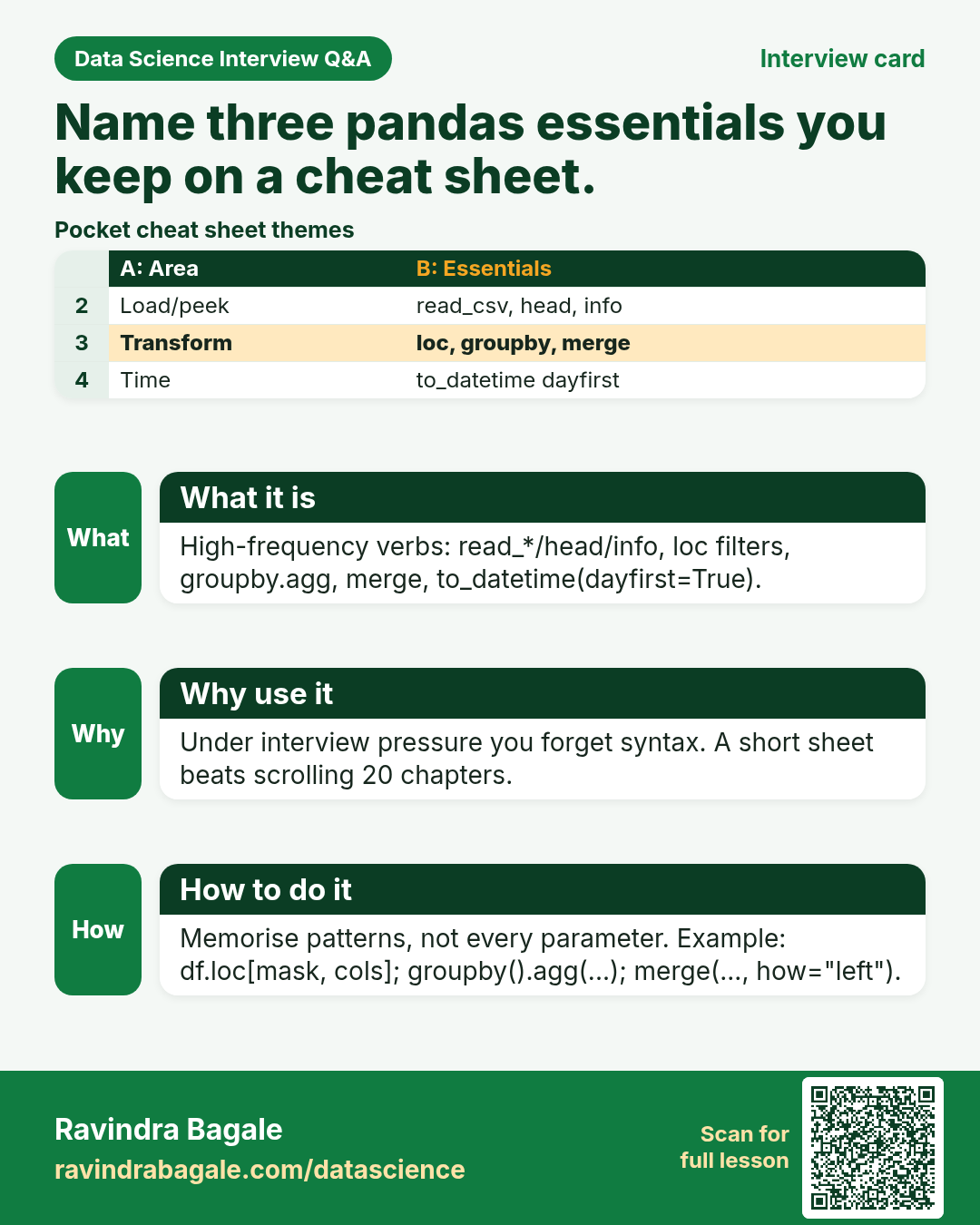
- Card 19: Name three pandas essentials you keep on a cheat sheet.
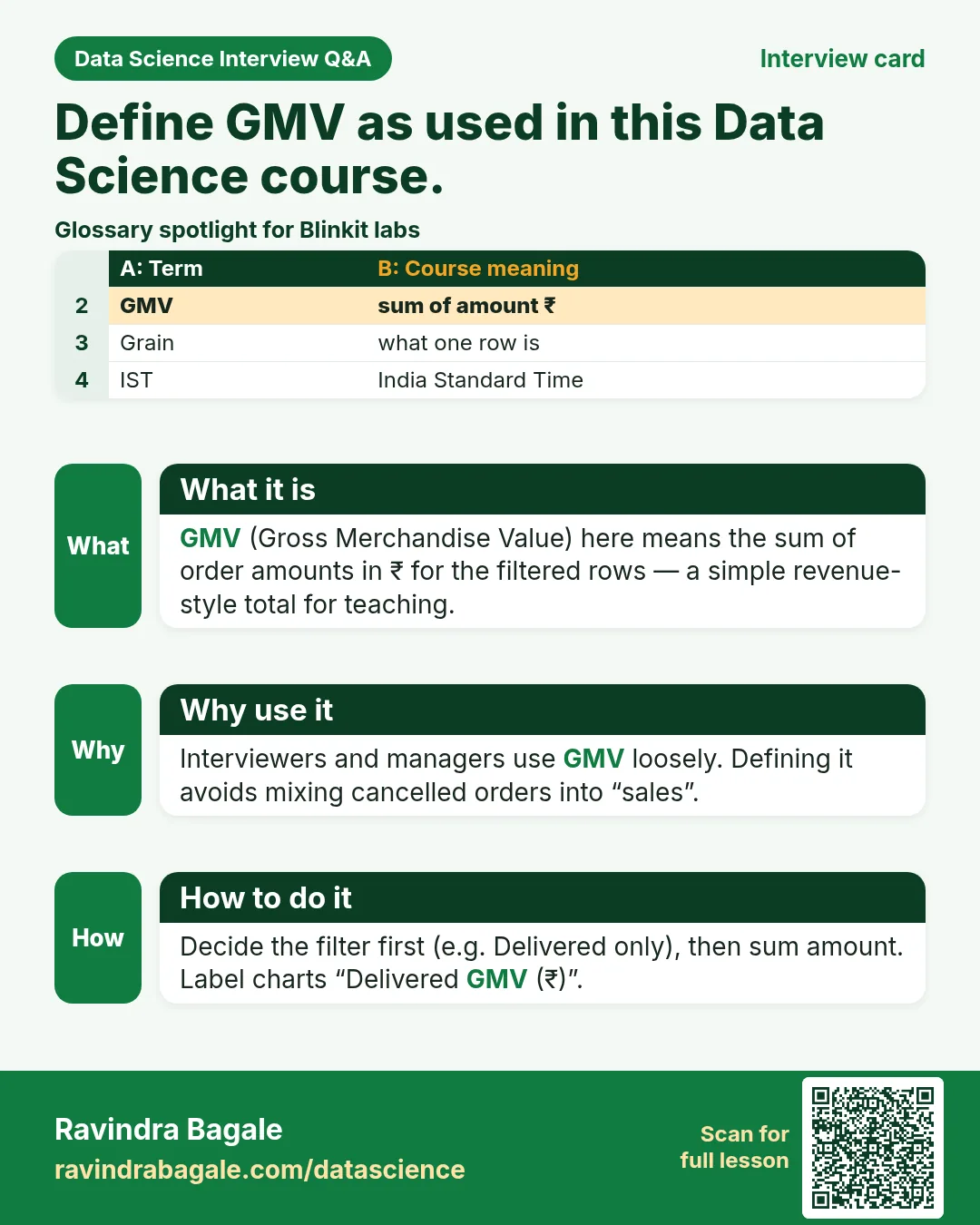
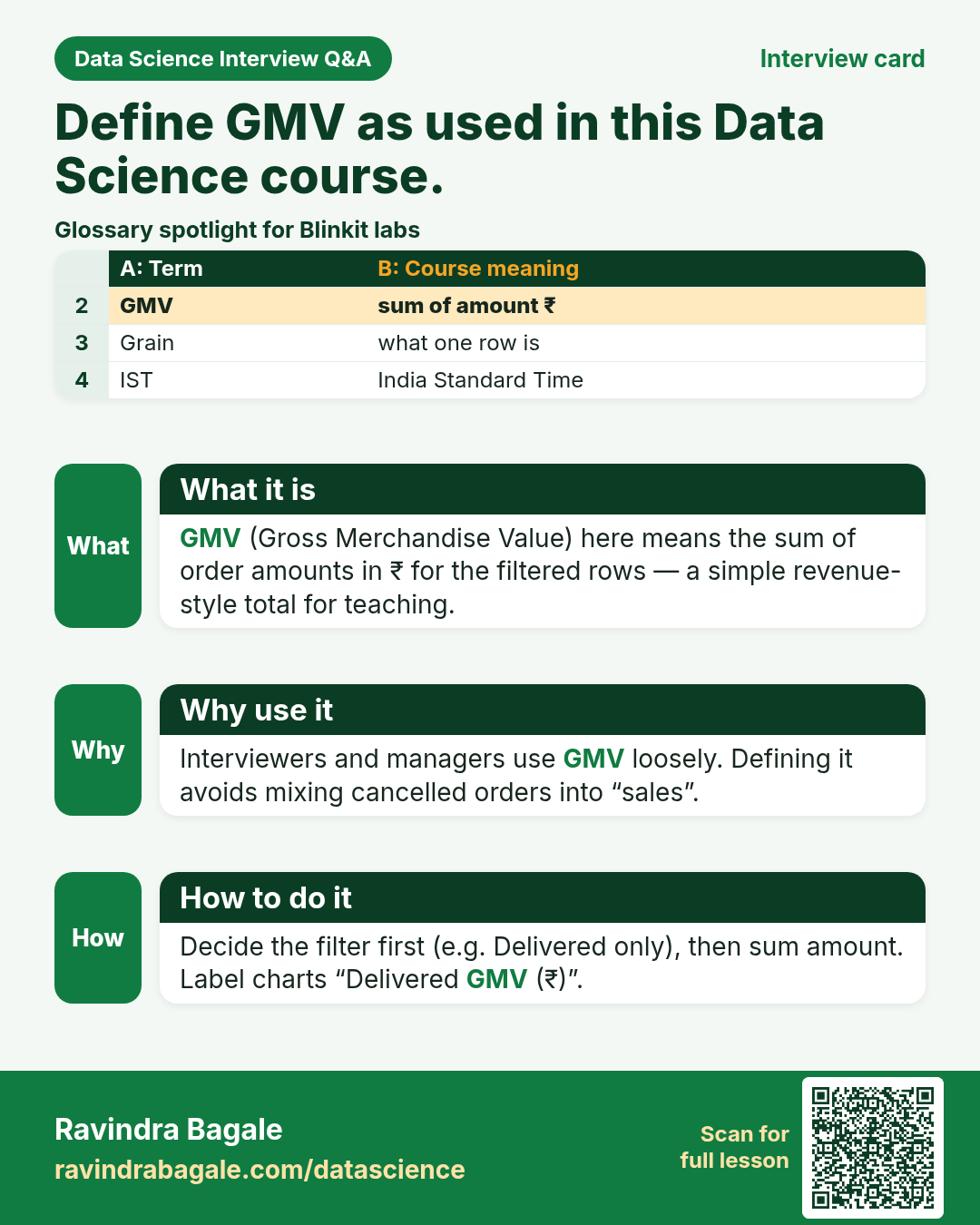
- Card 20: Define GMV as used in this Data Science course.
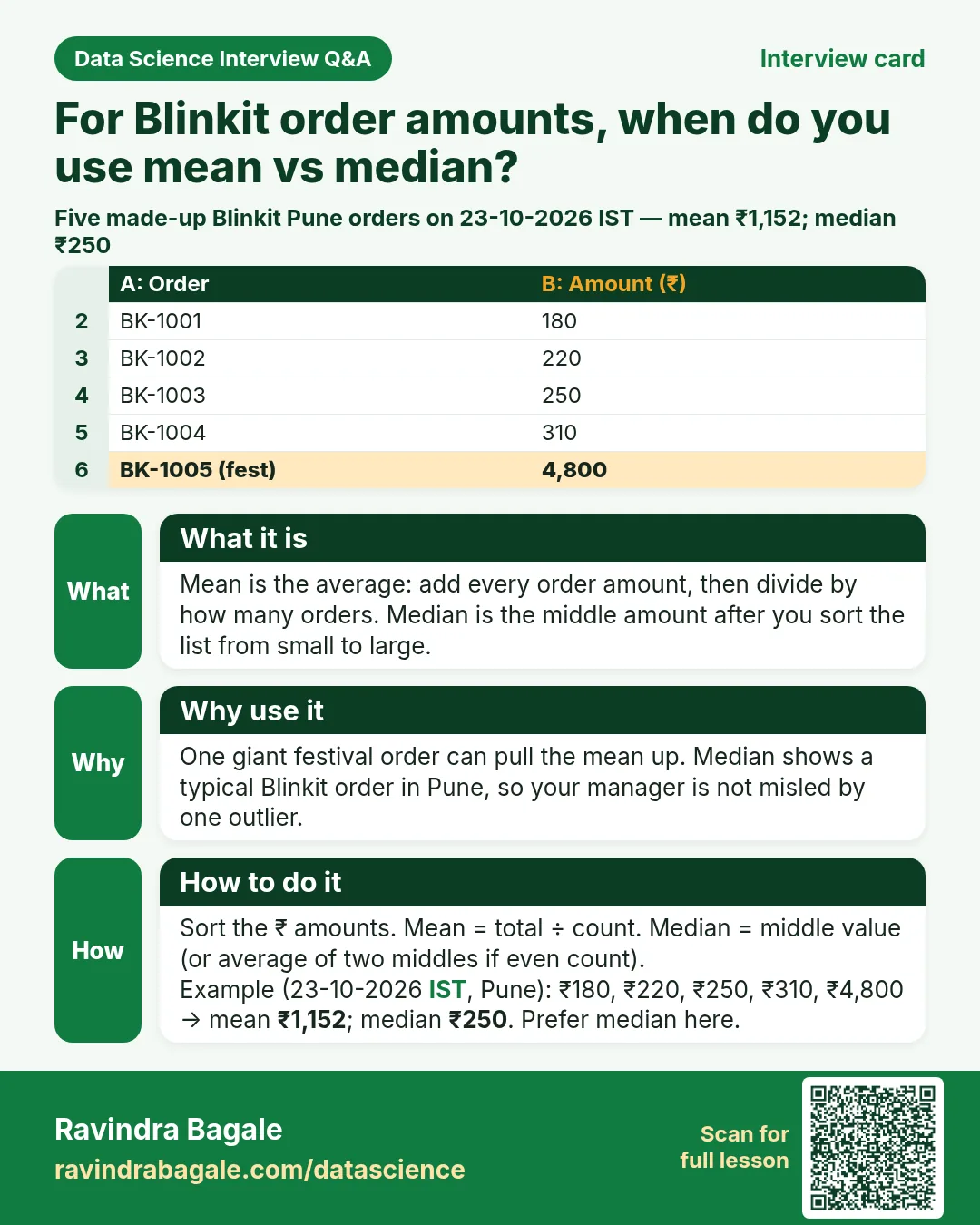
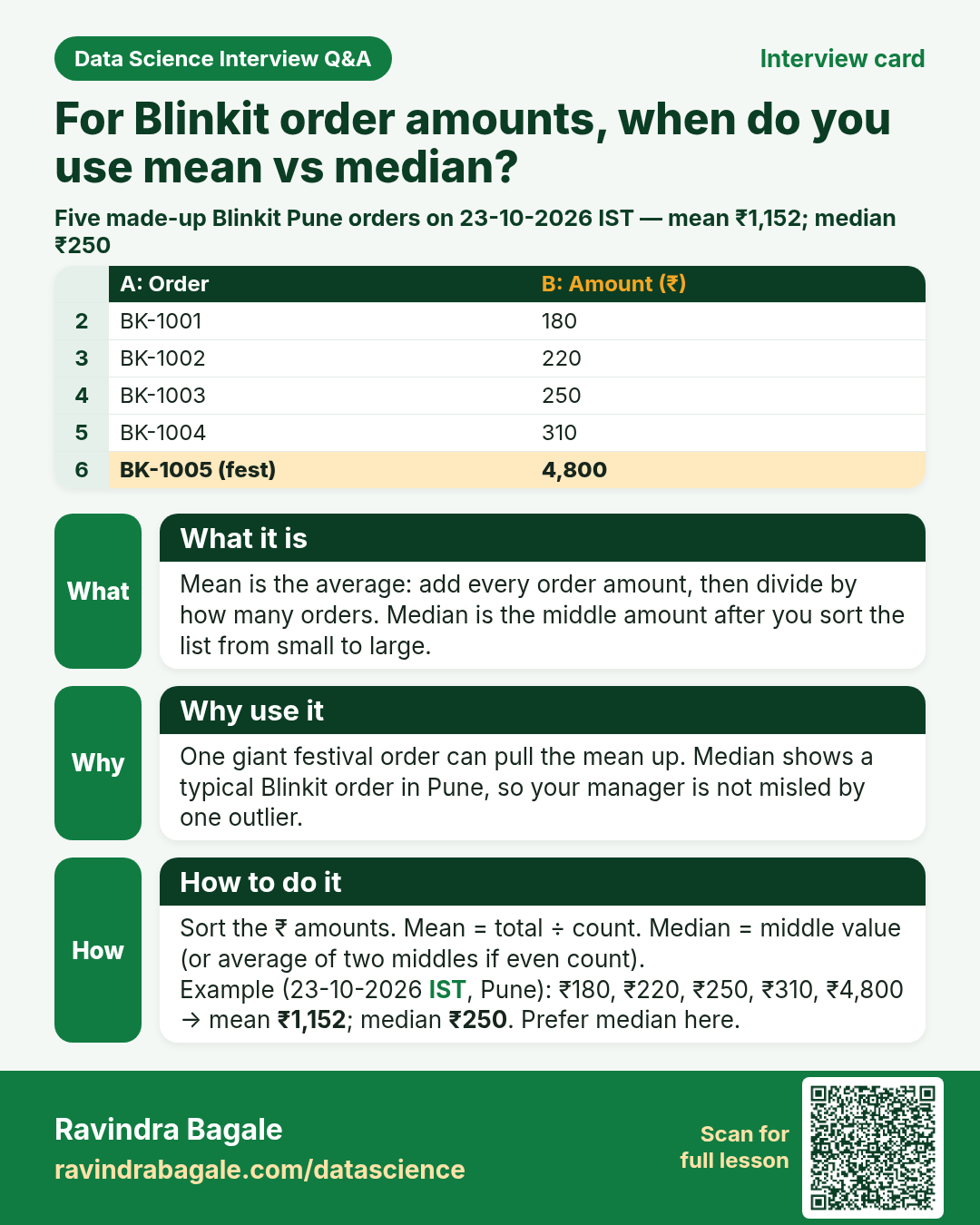
- Card 21: For Blinkit order amounts, when do you use mean vs median?
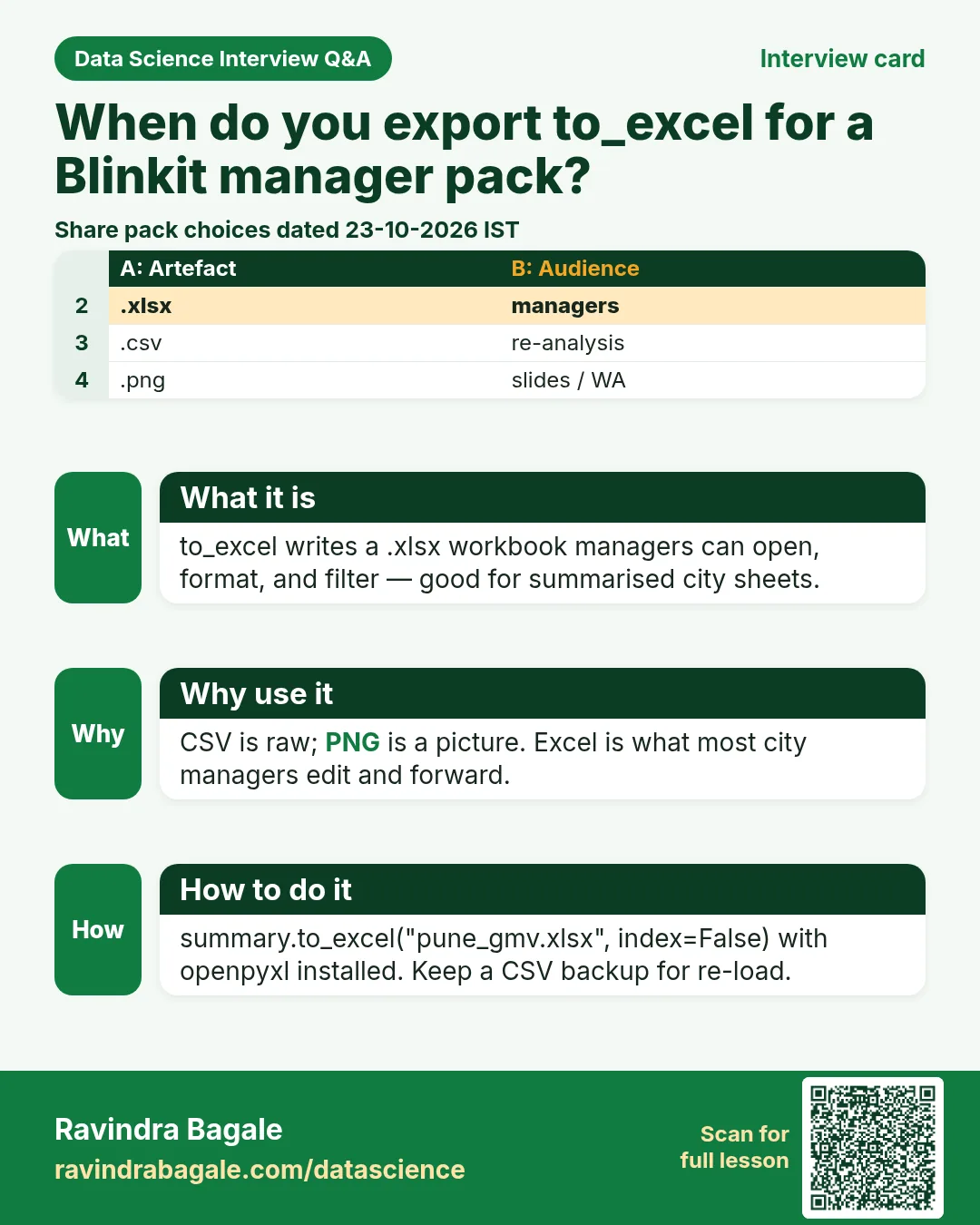
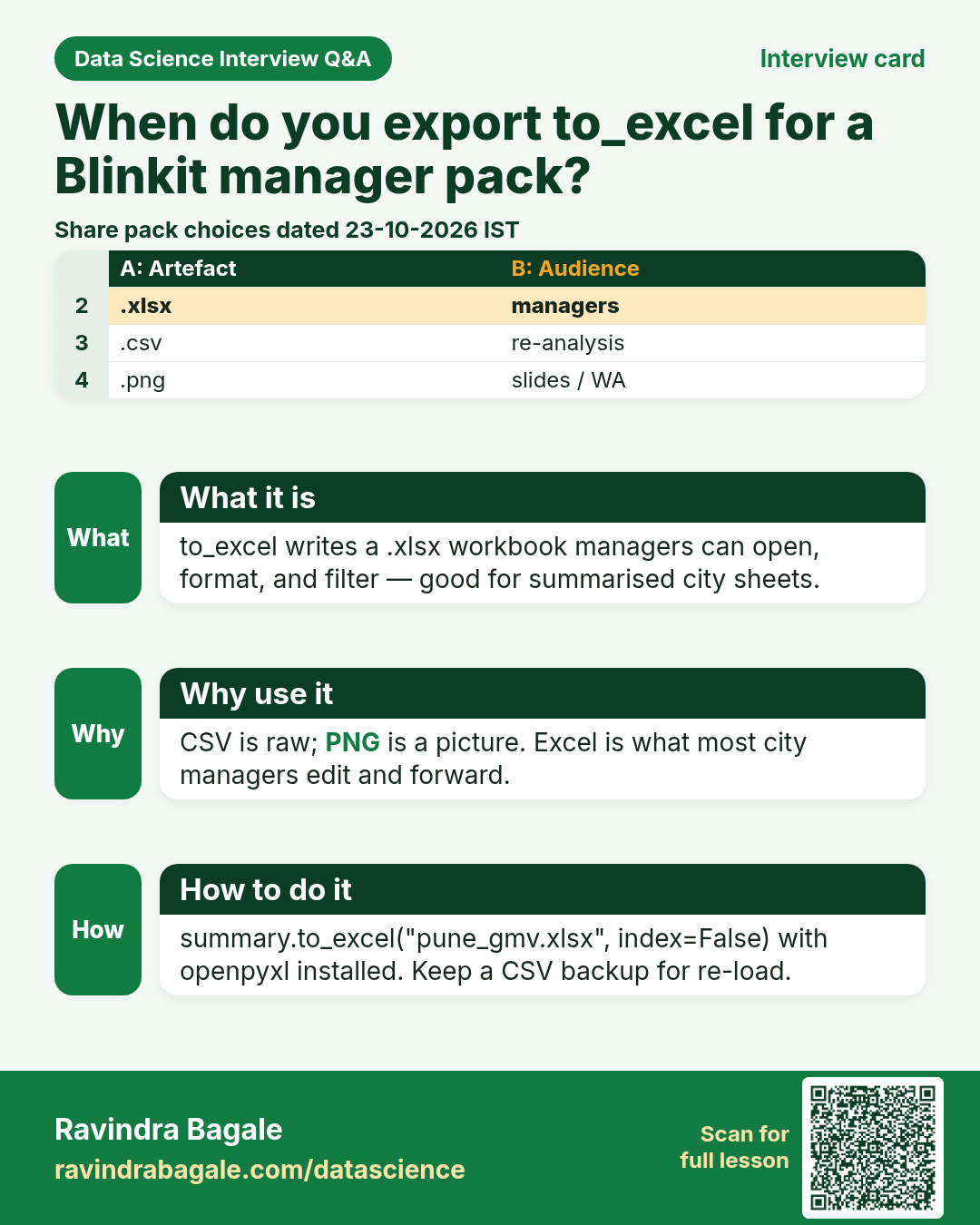
- Card 22: When do you export to_excel for a Blinkit manager pack?
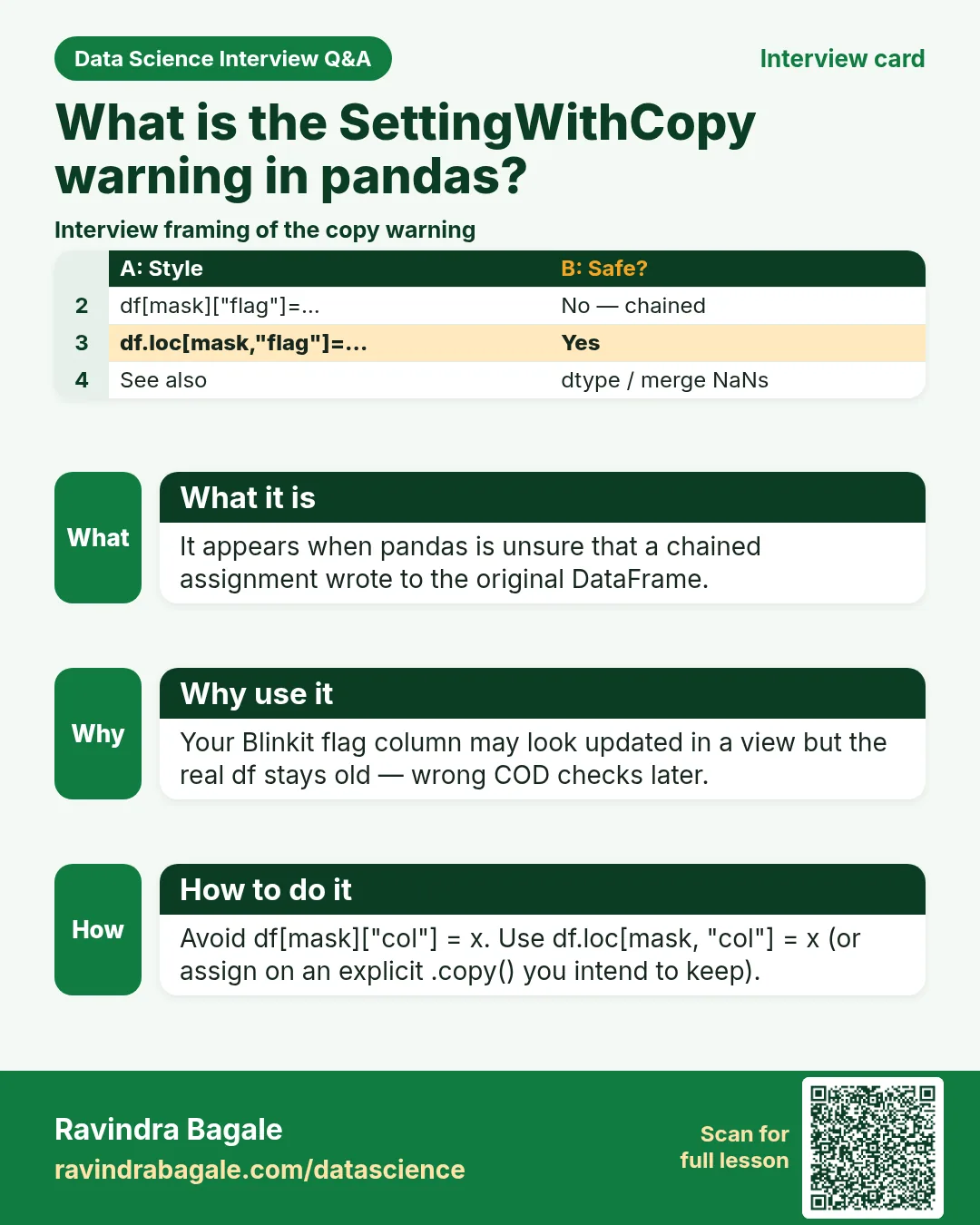
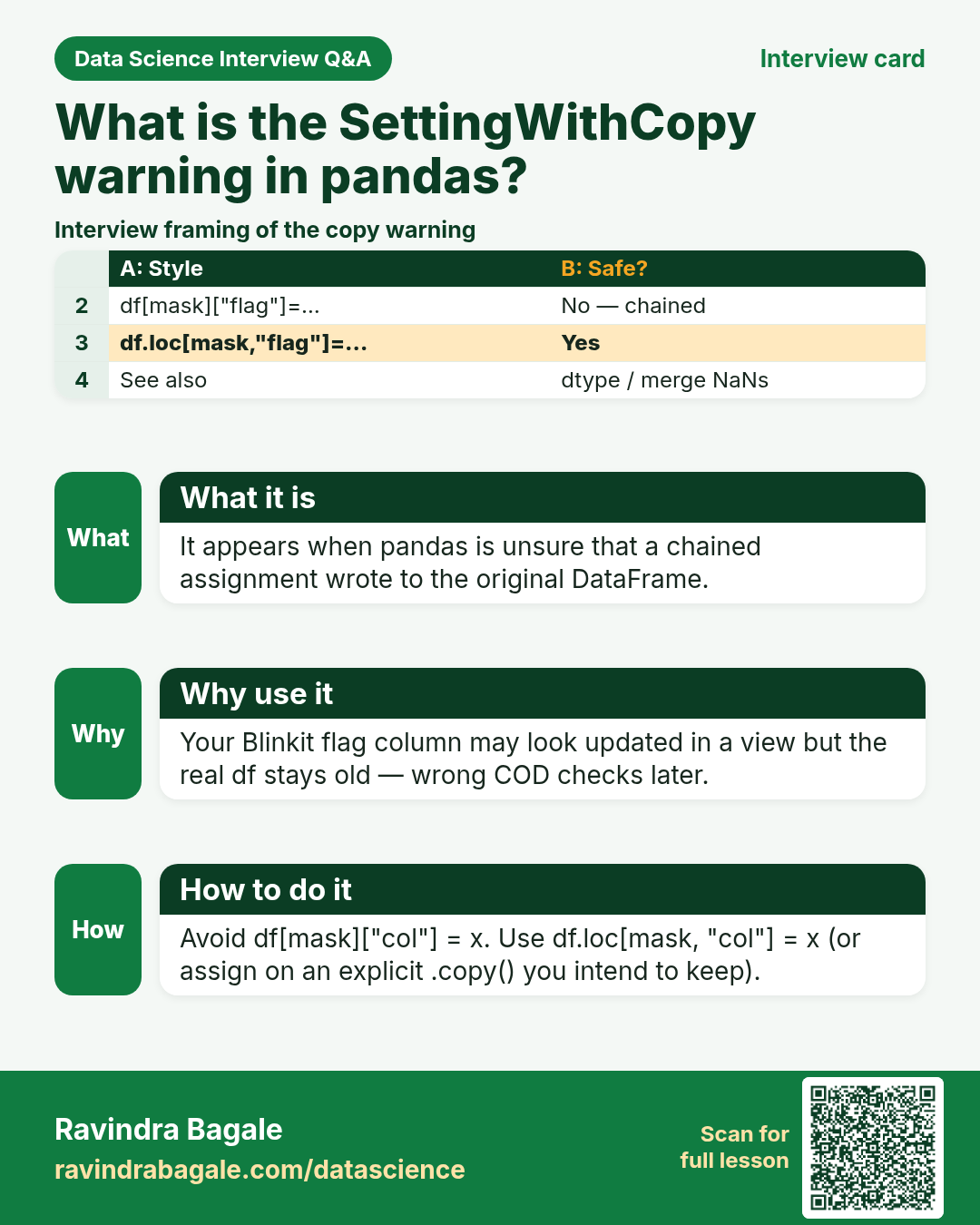
- Card 23: What is the SettingWithCopy warning in pandas?
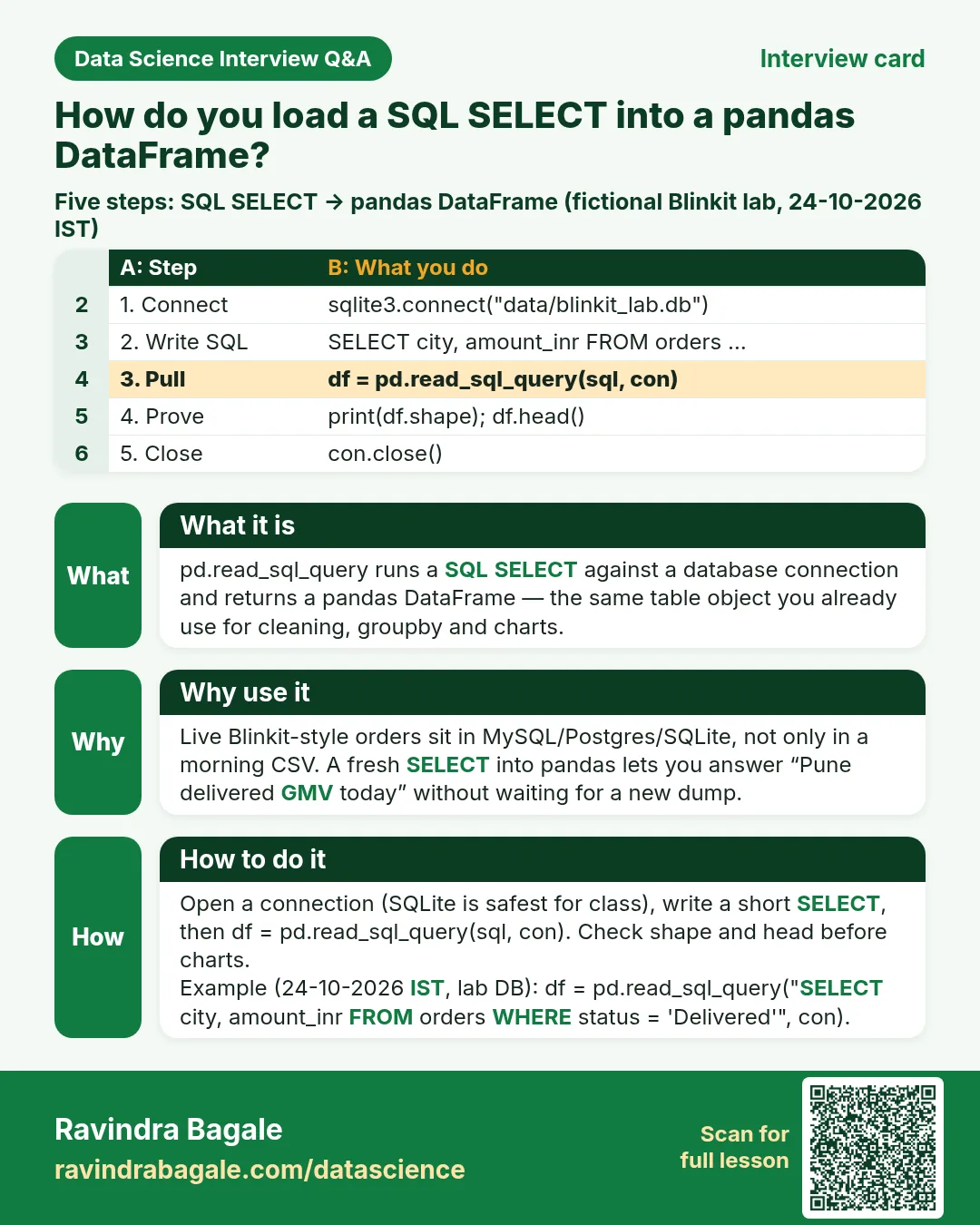
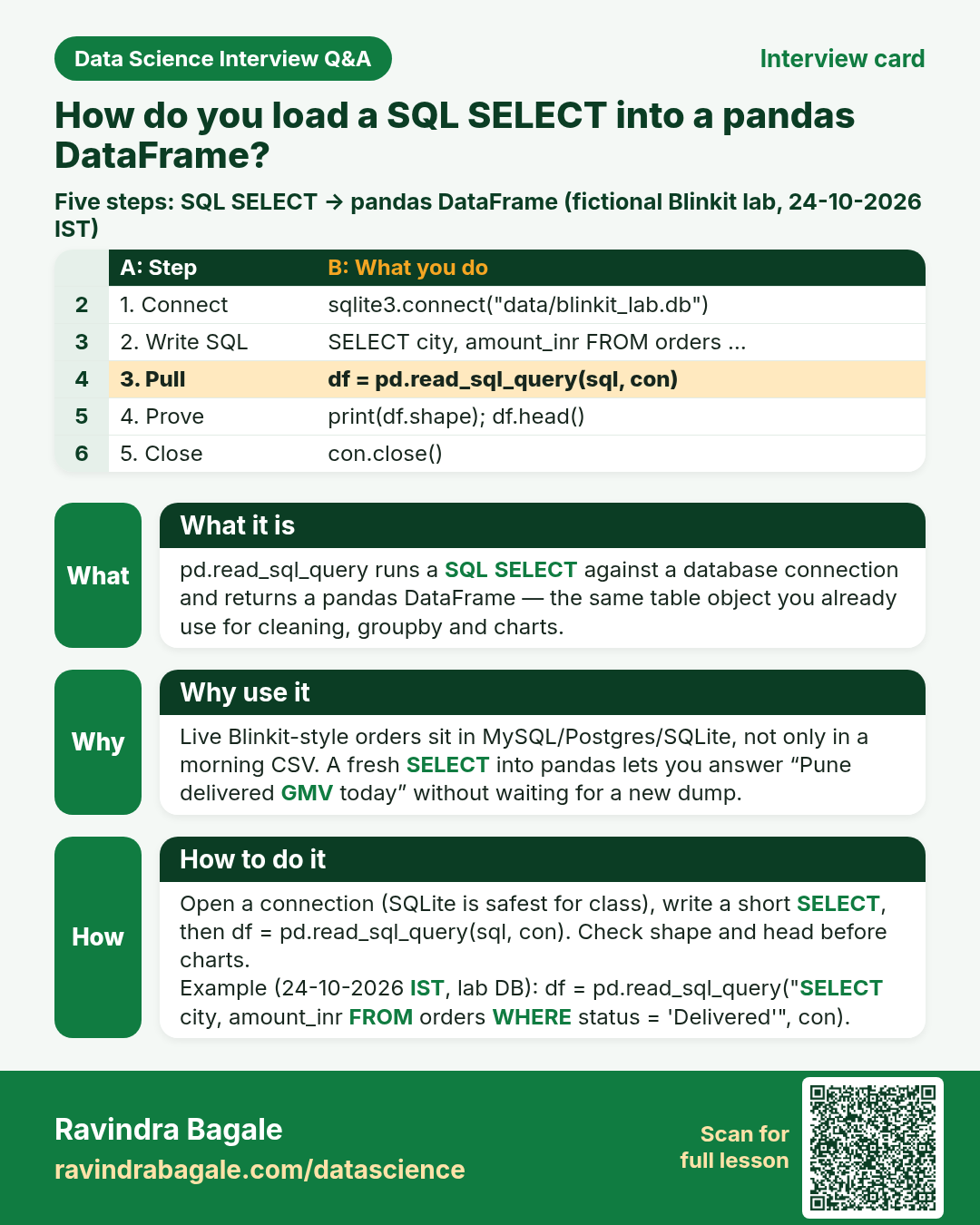
- Card 24: How do you load a SQL SELECT into a pandas DataFrame?
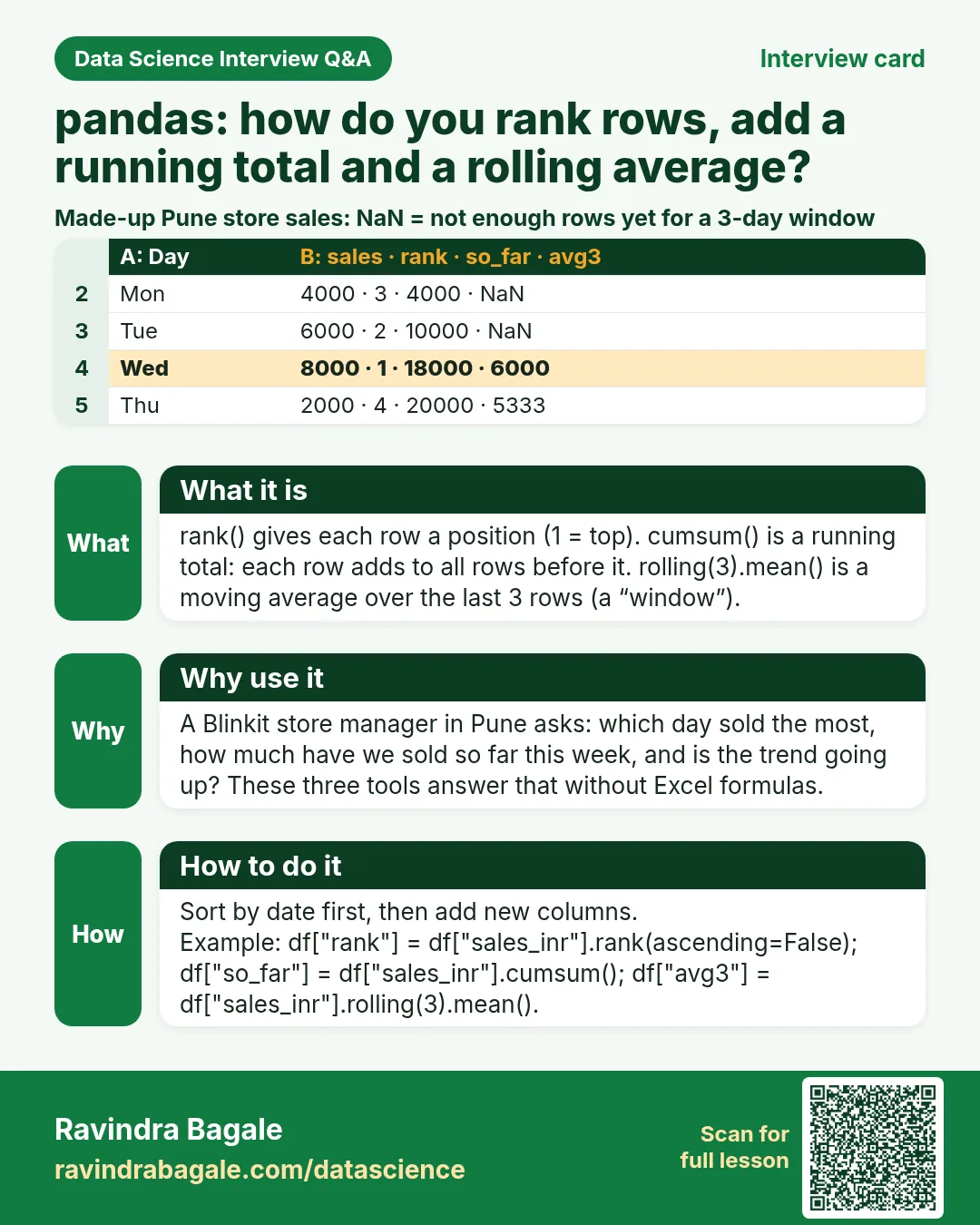
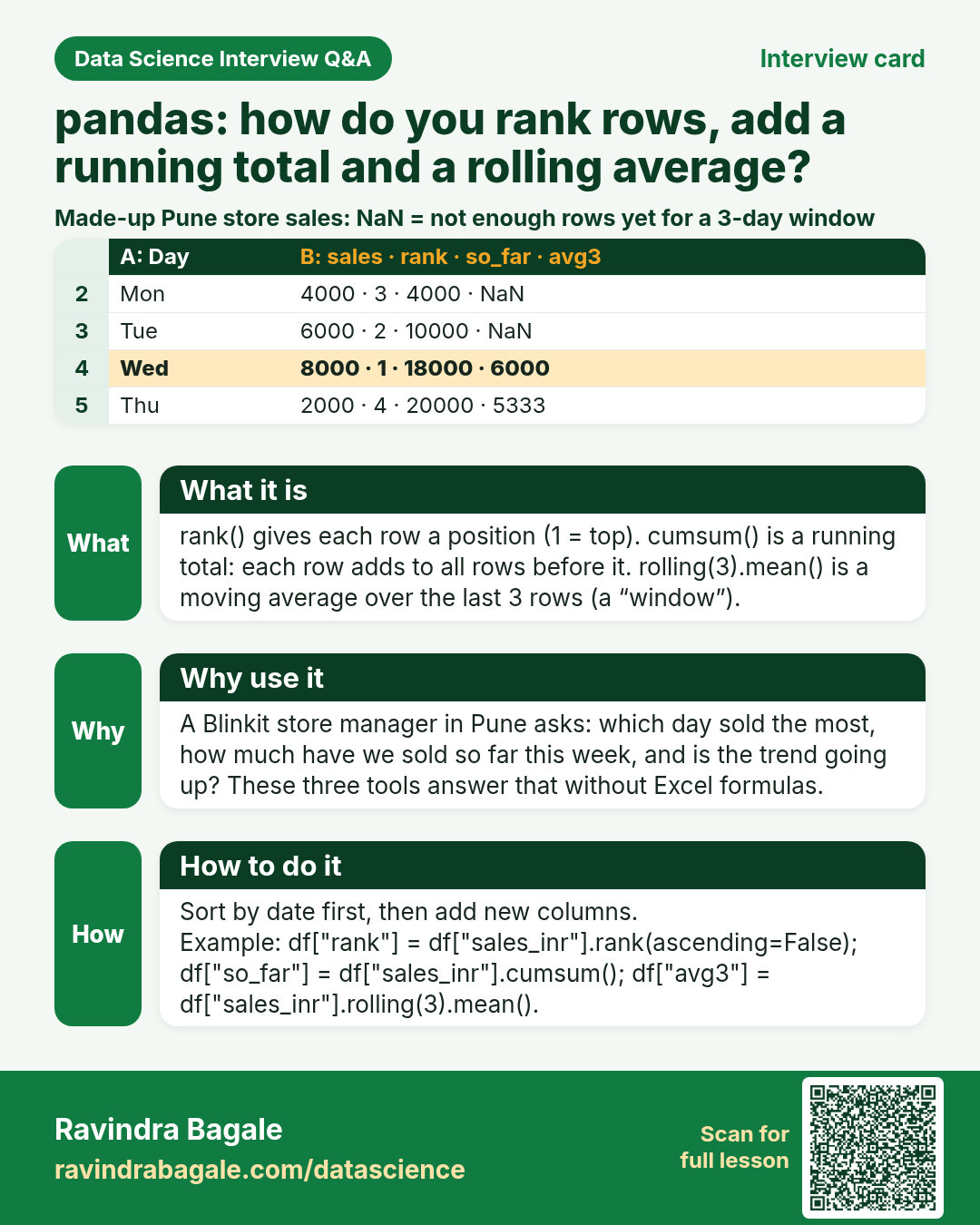
- Card 25: pandas: how do you rank rows, add a running total and a rolling average?
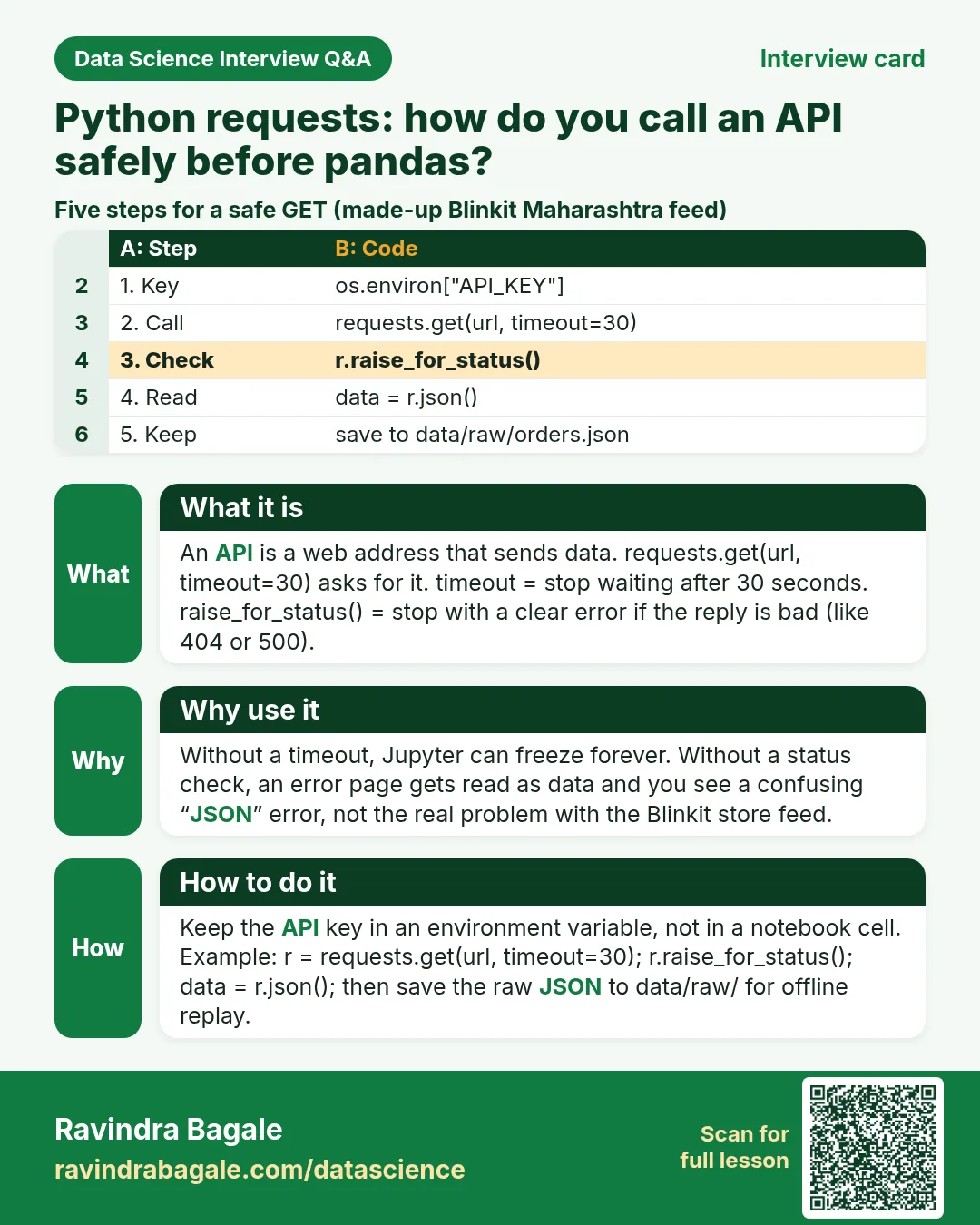
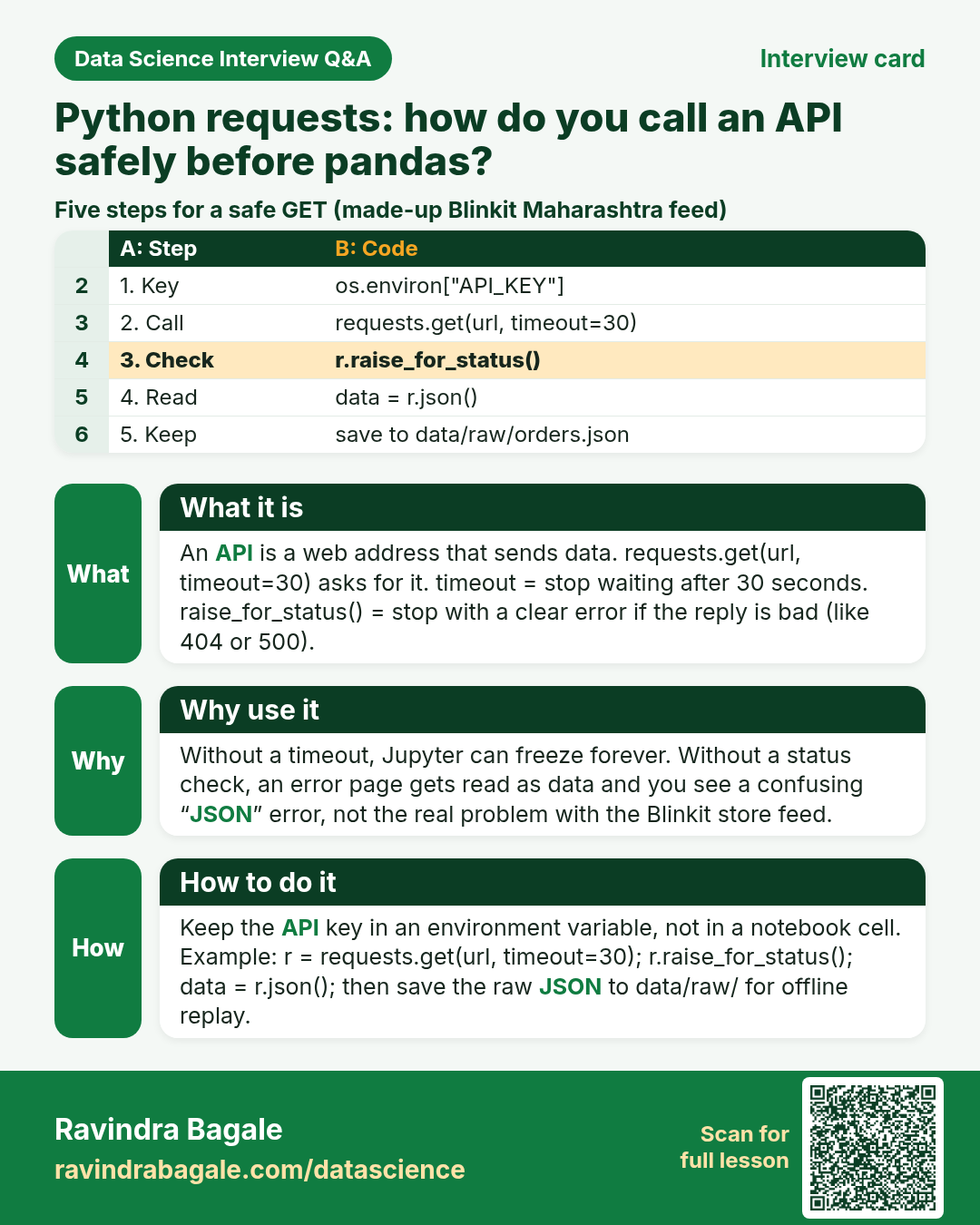
- Card 26: Python requests: how do you call an API safely before pandas?
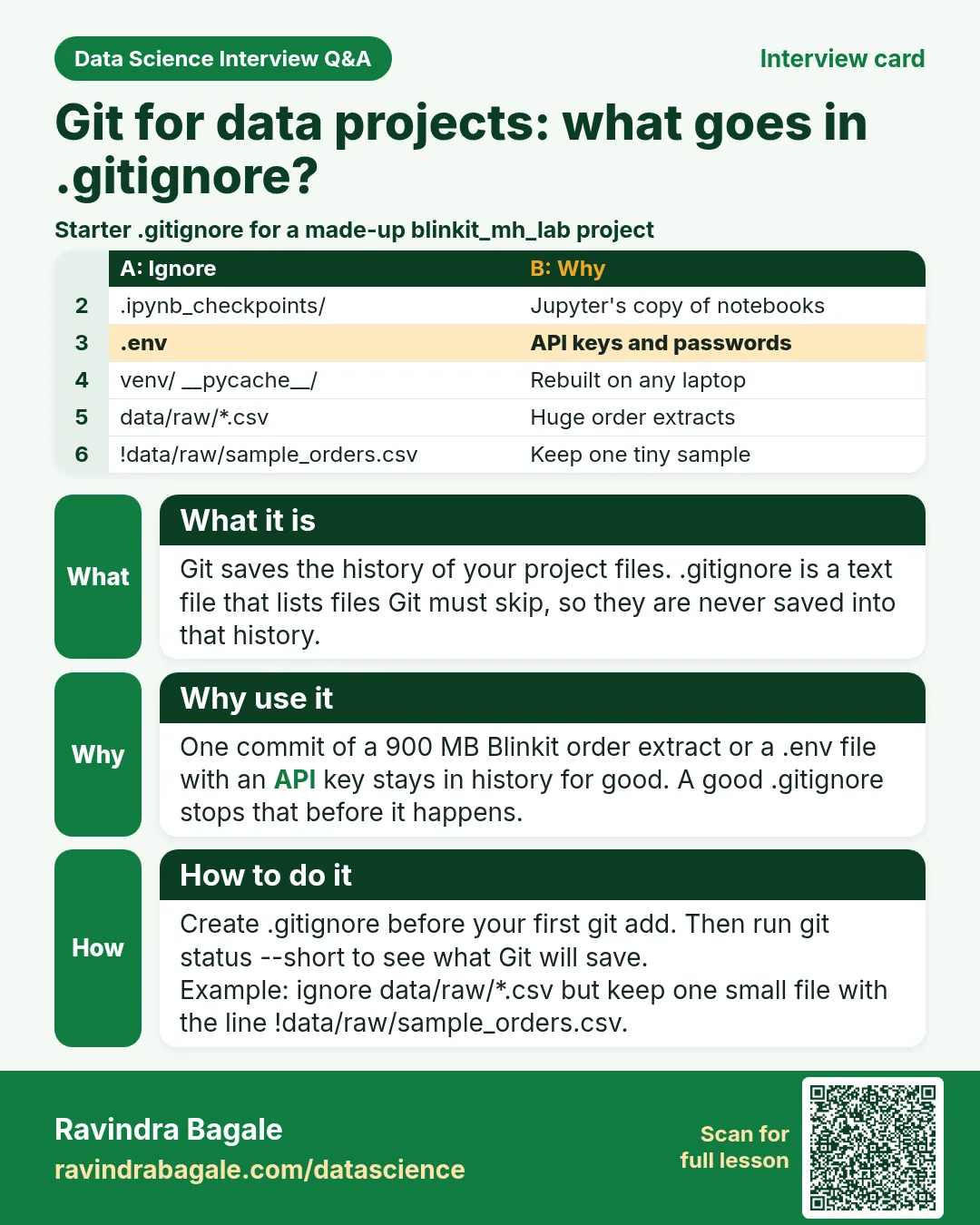
- Card 27: Git for data projects: what goes in .gitignore?
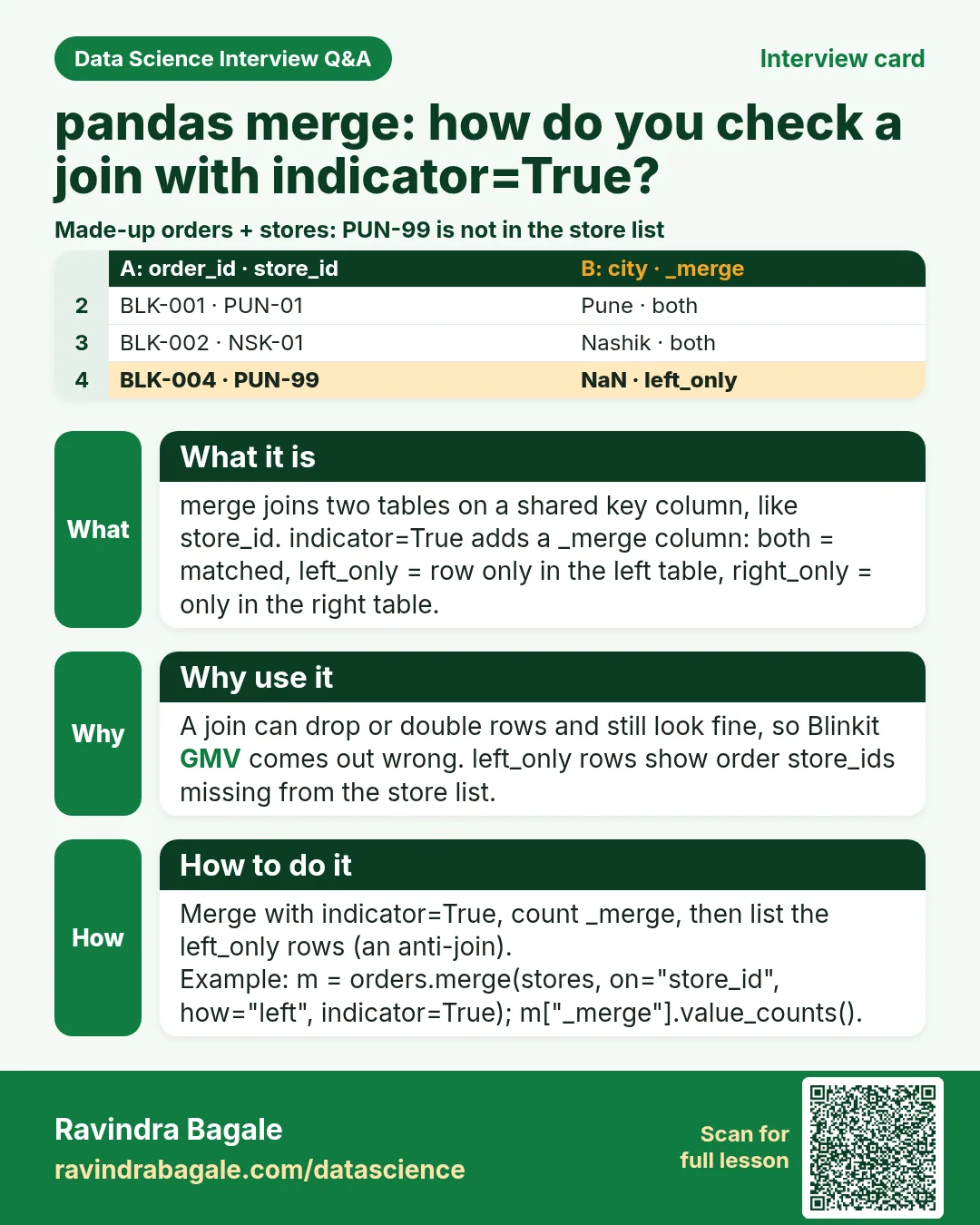
- Card 28: pandas merge: how do you check a join with indicator=True?
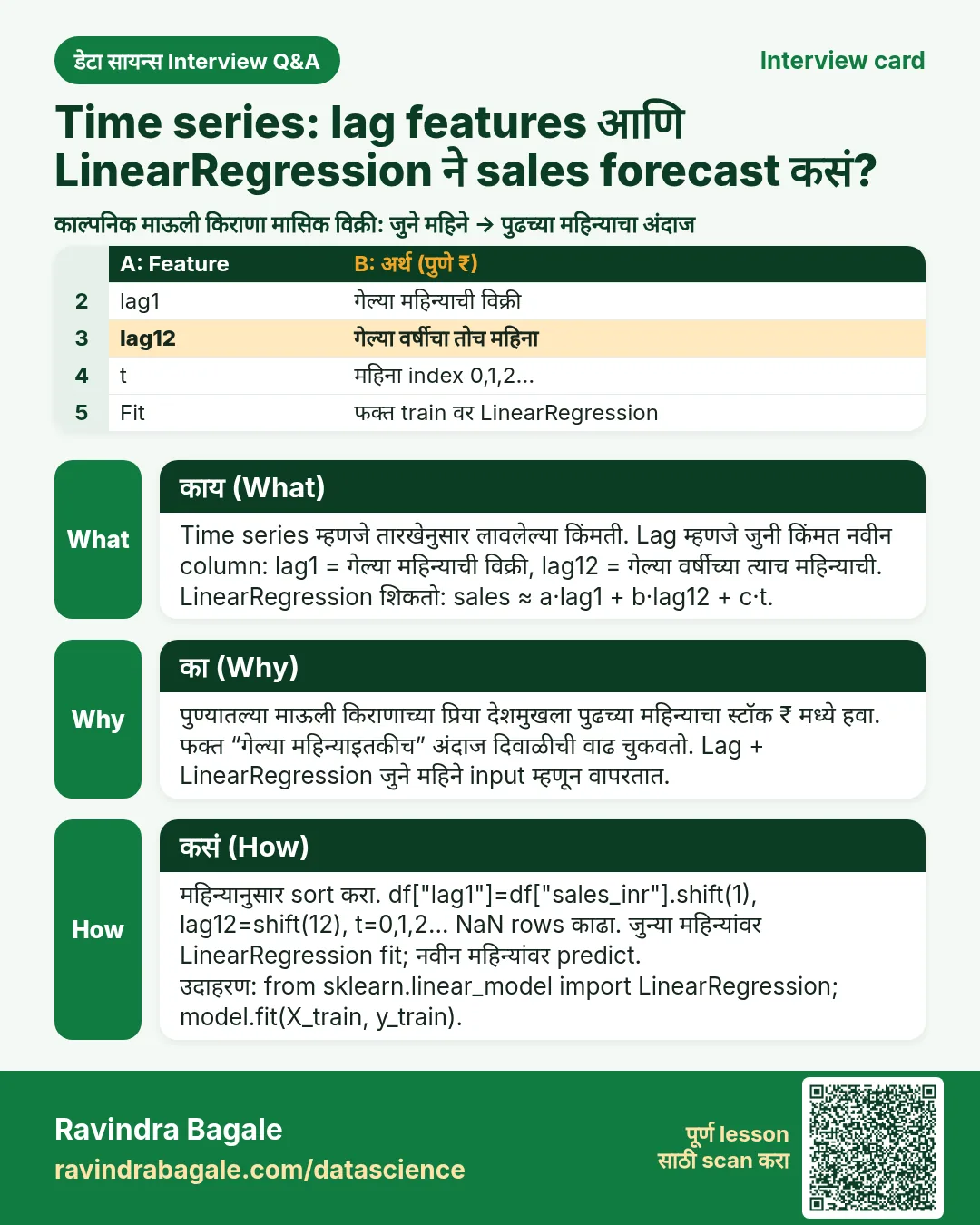
- Card 65: Time series: lag features आणि LinearRegression ने sales forecast कसं?
Python basics
Data Science chapters