Ravi Sir's Cyber Security Cards › Revision Cards
HTTP – Port 80
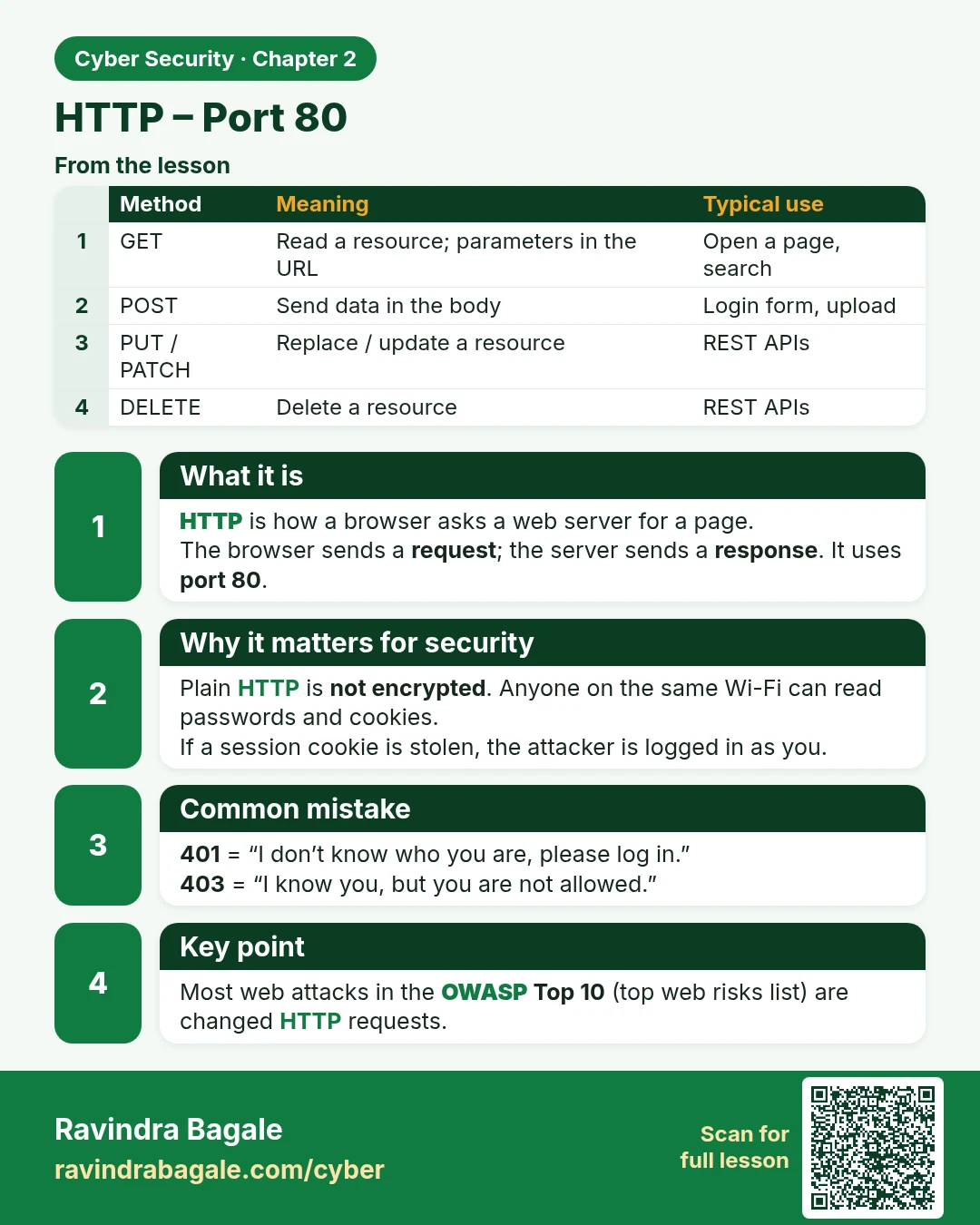
HTTP – Port 80 HTTP is how a browser asks a web server for a page. The browser sends a request ; the server sends a response . It uses port 80 . Plain HTTP is not encrypted . Anyone on the same Wi-Fi can read passwords and cookies. If a session cookie is stolen, the attacker is logged in as you. 401
Read card text
What this card says
What it is
HTTP is how a browser asks a web server for a page.
The browser sends a request; the server sends a response. It uses port 80.
Why it matters for security
Plain HTTP is not encrypted. Anyone on the same Wi-Fi can read passwords and cookies.
If a session cookie is stolen, the attacker is logged in as you.
Common mistake
401 = “I don’t know who you are, please log in.”
403 = “I know you, but you are not allowed.”
Key point
Most web attacks in the OWASP Top 10 (top web risks list) are changed HTTP requests.
| Method | Meaning | Typical use |
|---|---|---|
| GET | Read a resource; parameters in the URL | Open a page, search |
| POST | Send data in the body | Login form, upload |
| PUT / PATCH | Replace / update a resource | REST APIs |
| DELETE | Delete a resource | REST APIs |
| HEAD | Like GET but headers only | curl -I |
Learn more in the lesson: 2.3 HTTP – Port 80