Data Science Revision Cards: 42 Quick Refreshers
About these cards
42 revision cards: 13 Python basics (py01–py13) plus 28 chapter cards (ch01–ch28) and ch65 time-series. Each card is a standalone refresher with What, Why and How plus a small Blinkit example. Scan the QR for the full lesson.
या cards बद्दल
४२ revision cards: Python basics (py01–py13) + chapter cards (ch01–ch28) + ch65. प्रत्येक card स्वतःपूर्ण उजळणी — What, Why, How आणि Blinkit उदाहरण. पूर्ण lesson साठी QR स्कॅन करा.
इन cards के बारे में
42 revision cards: 13 Python basics (py01–py13) plus 28 chapter cards (ch01–ch28) and ch65 time-series. Each card is a standalone refresher with What, Why and How plus a small Blinkit example. Scan the QR for the full lesson.
Contents
Python basics
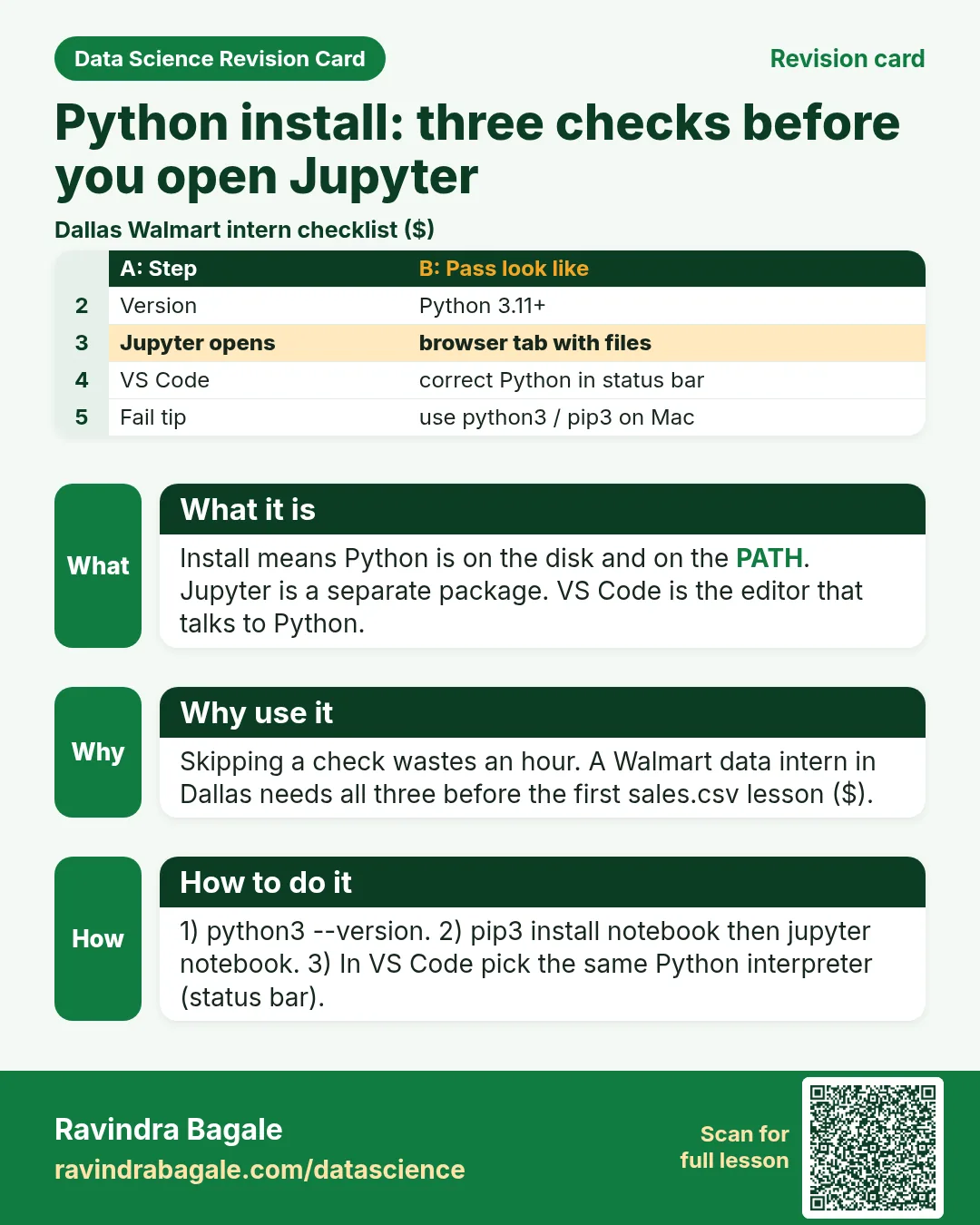
- Card P1: Python install: three checks before you open Jupyter
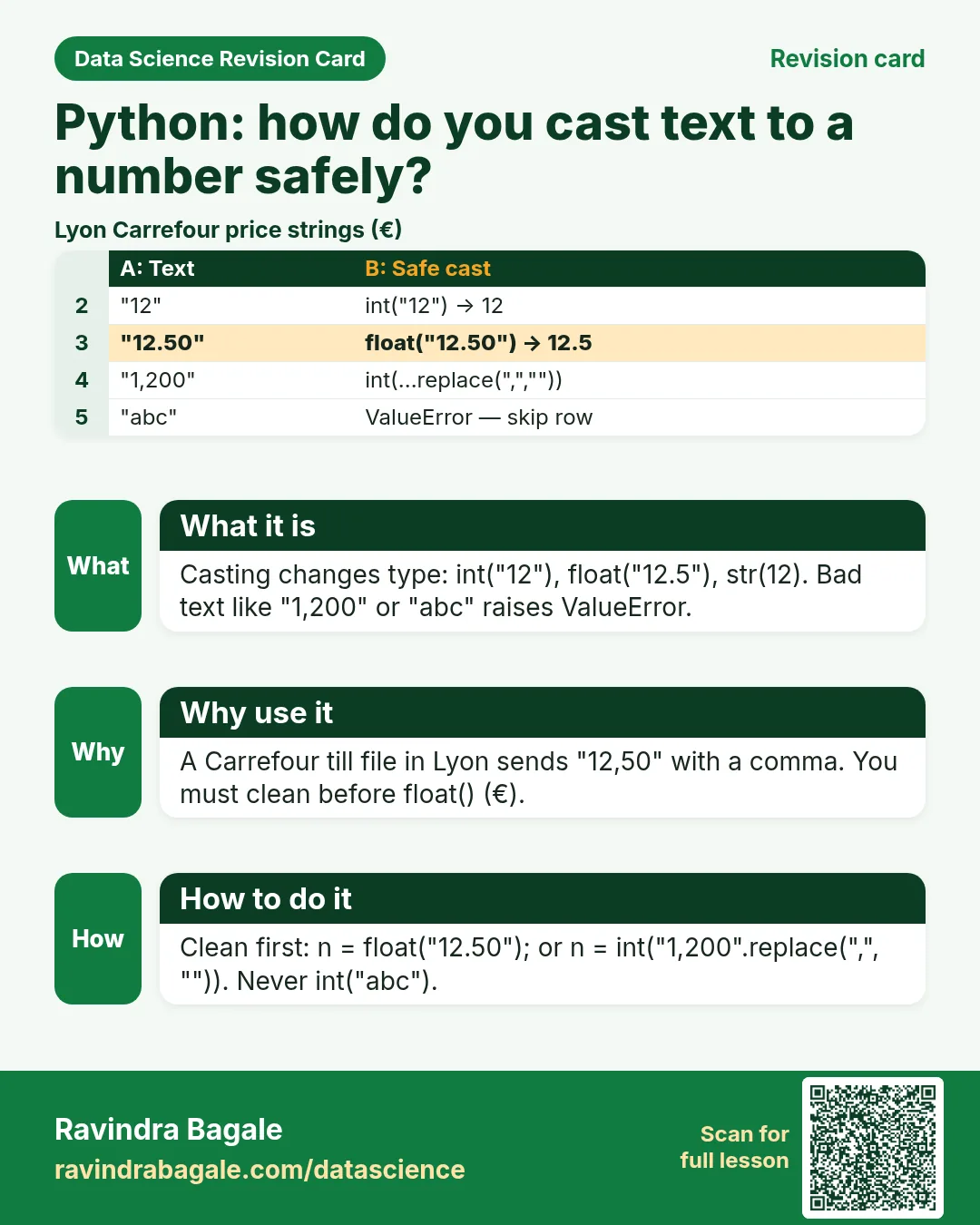
- Card P2: Python: how do you cast text to a number safely?
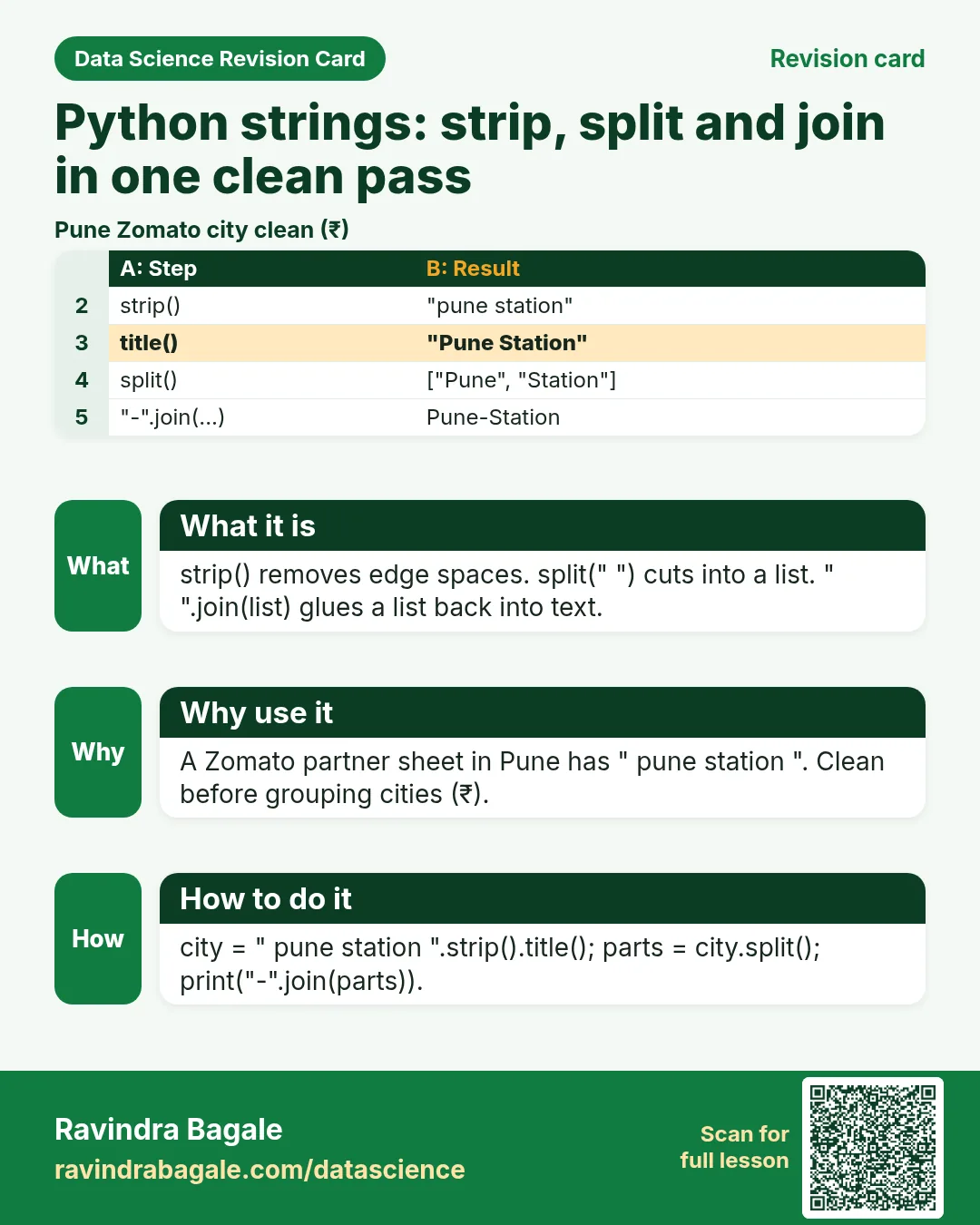
- Card P3: Python strings: strip, split and join in one clean pass
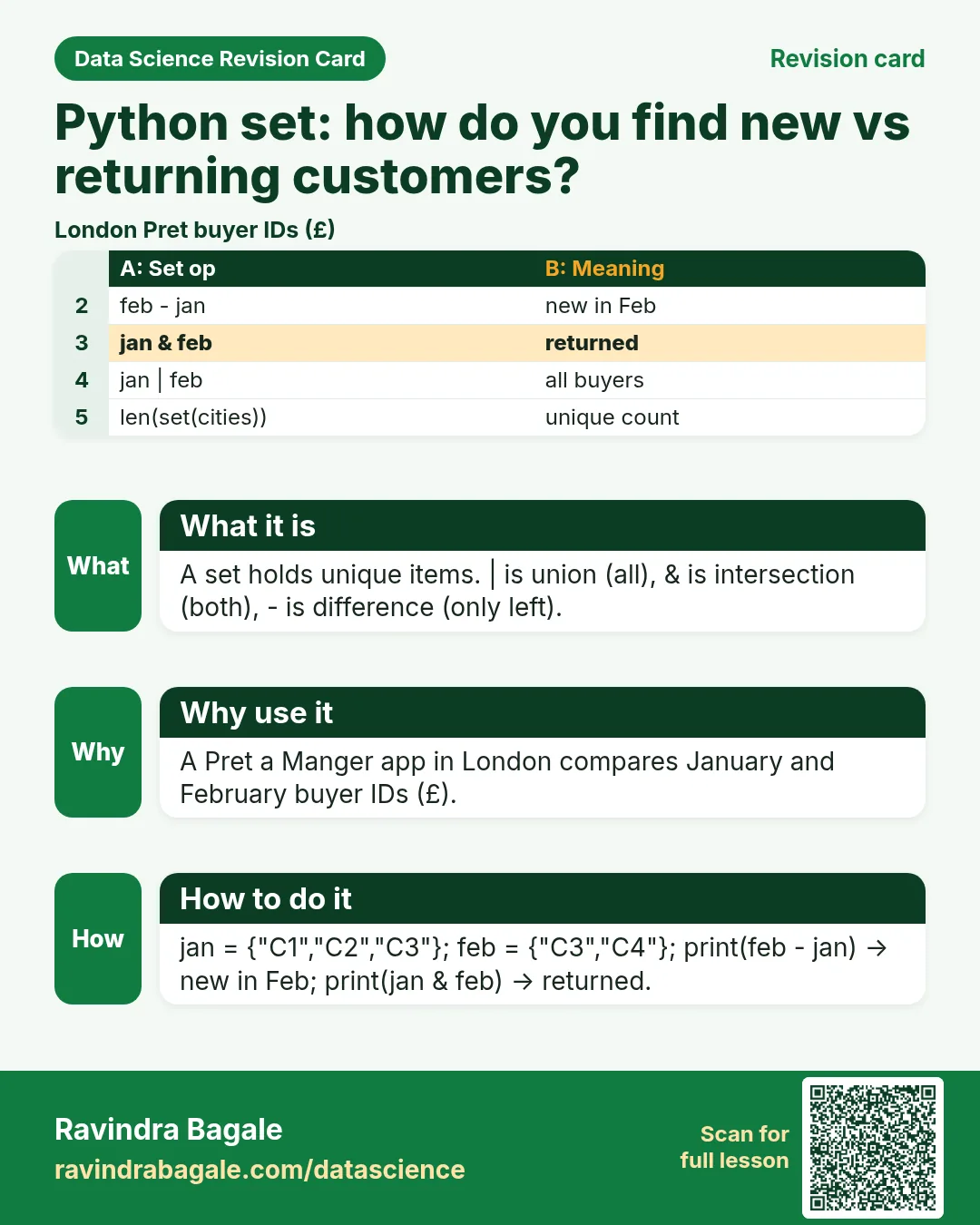
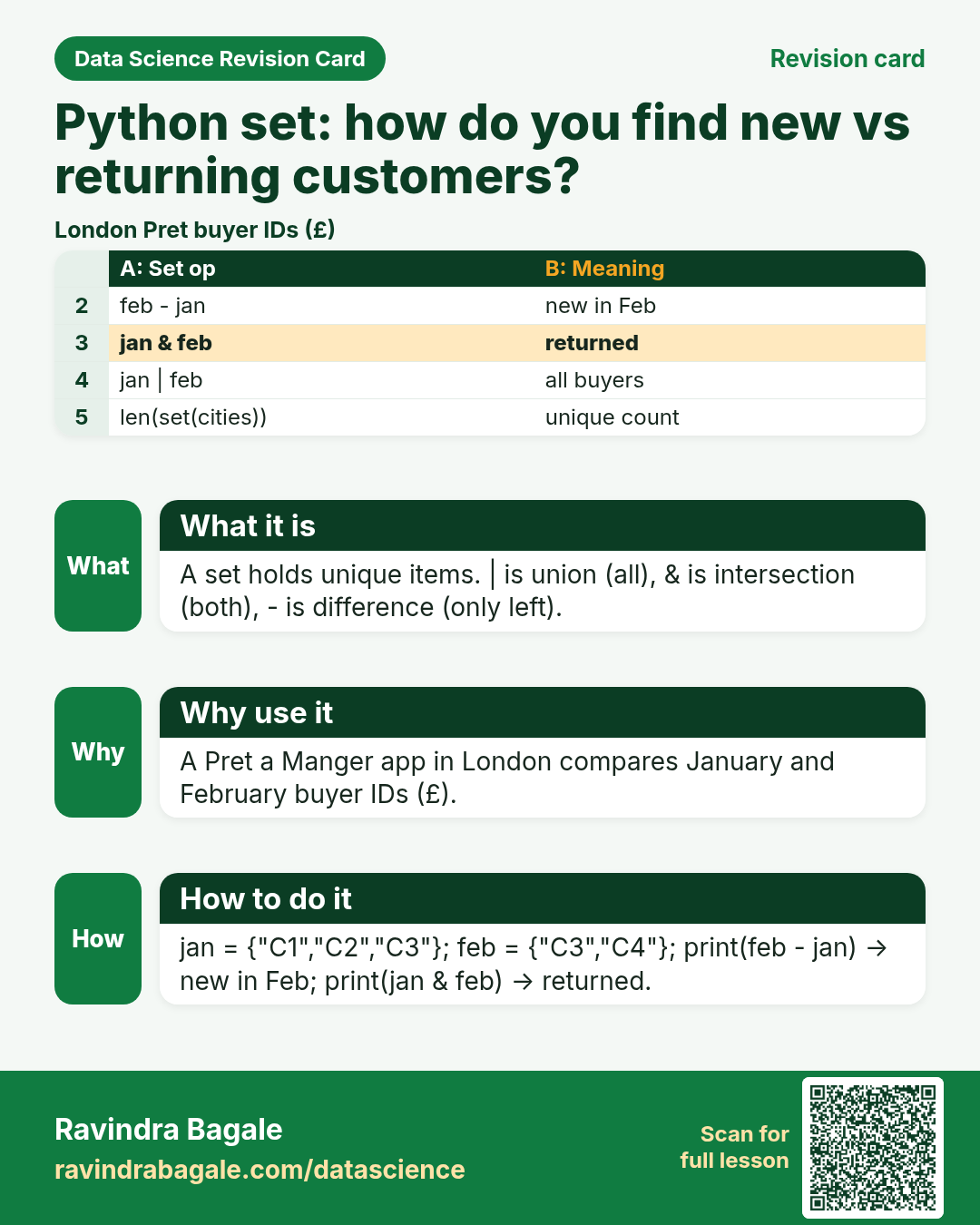
- Card P4: Python set: how do you find new vs returning customers?
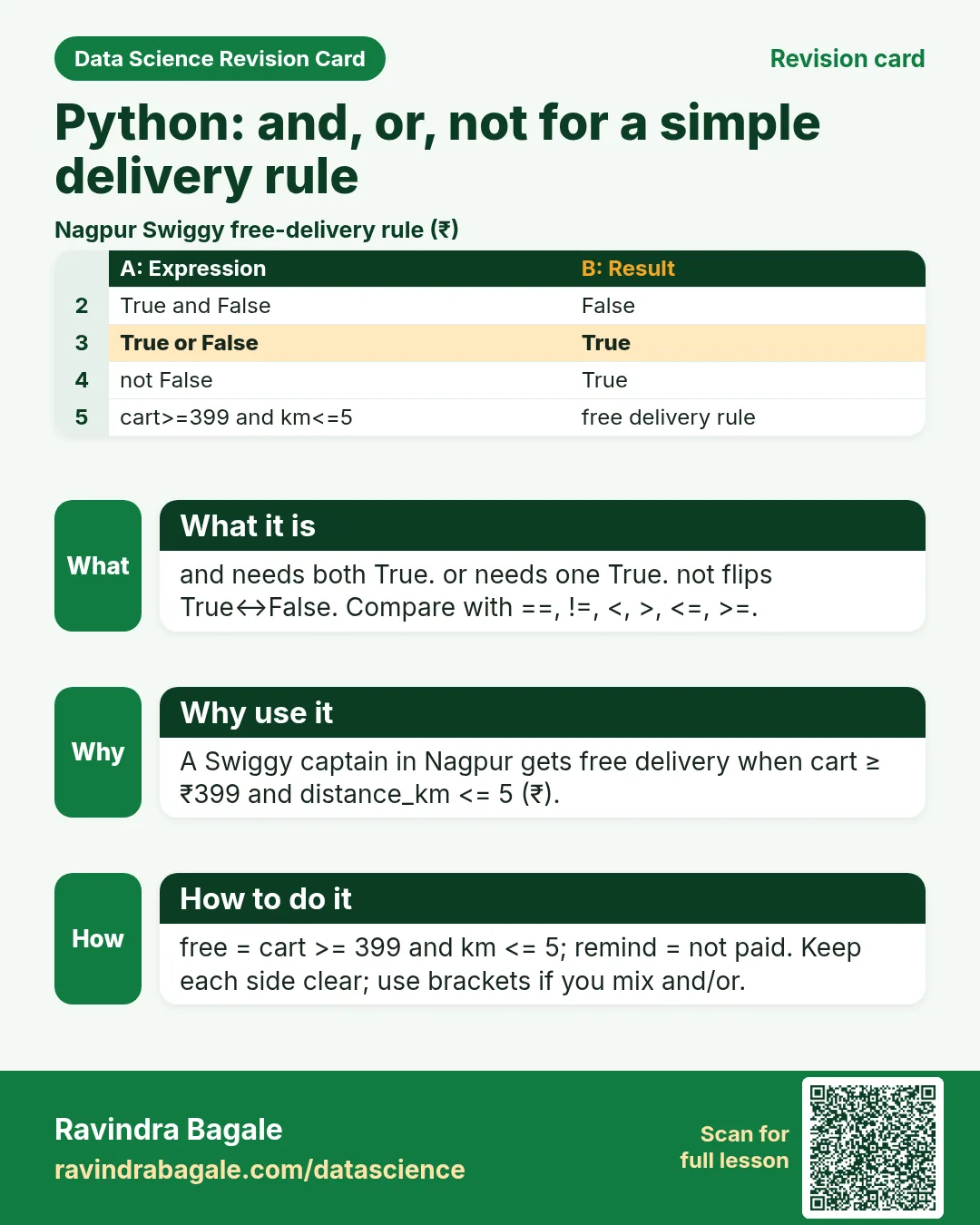
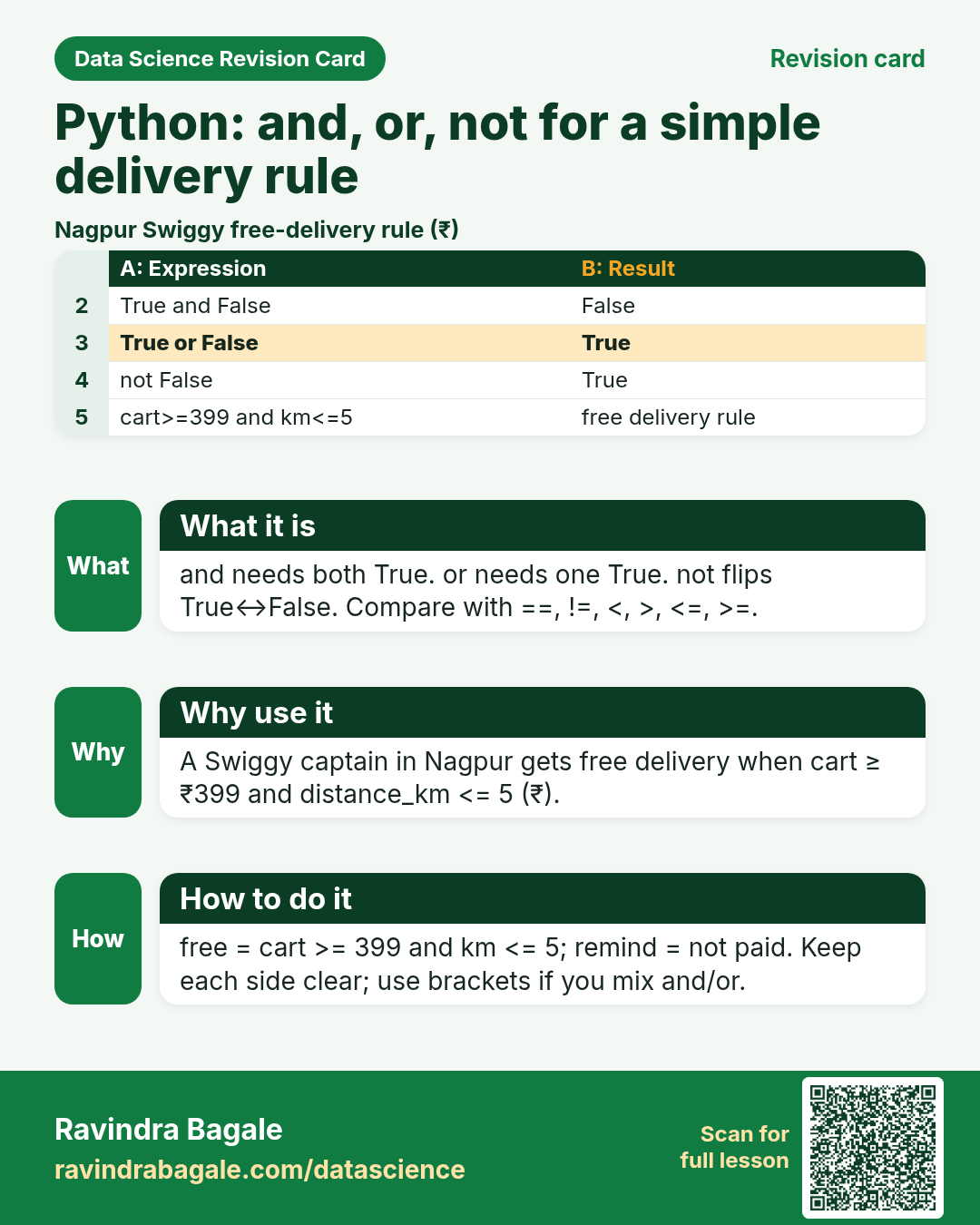
- Card P5: Python: and, or, not for a simple delivery rule
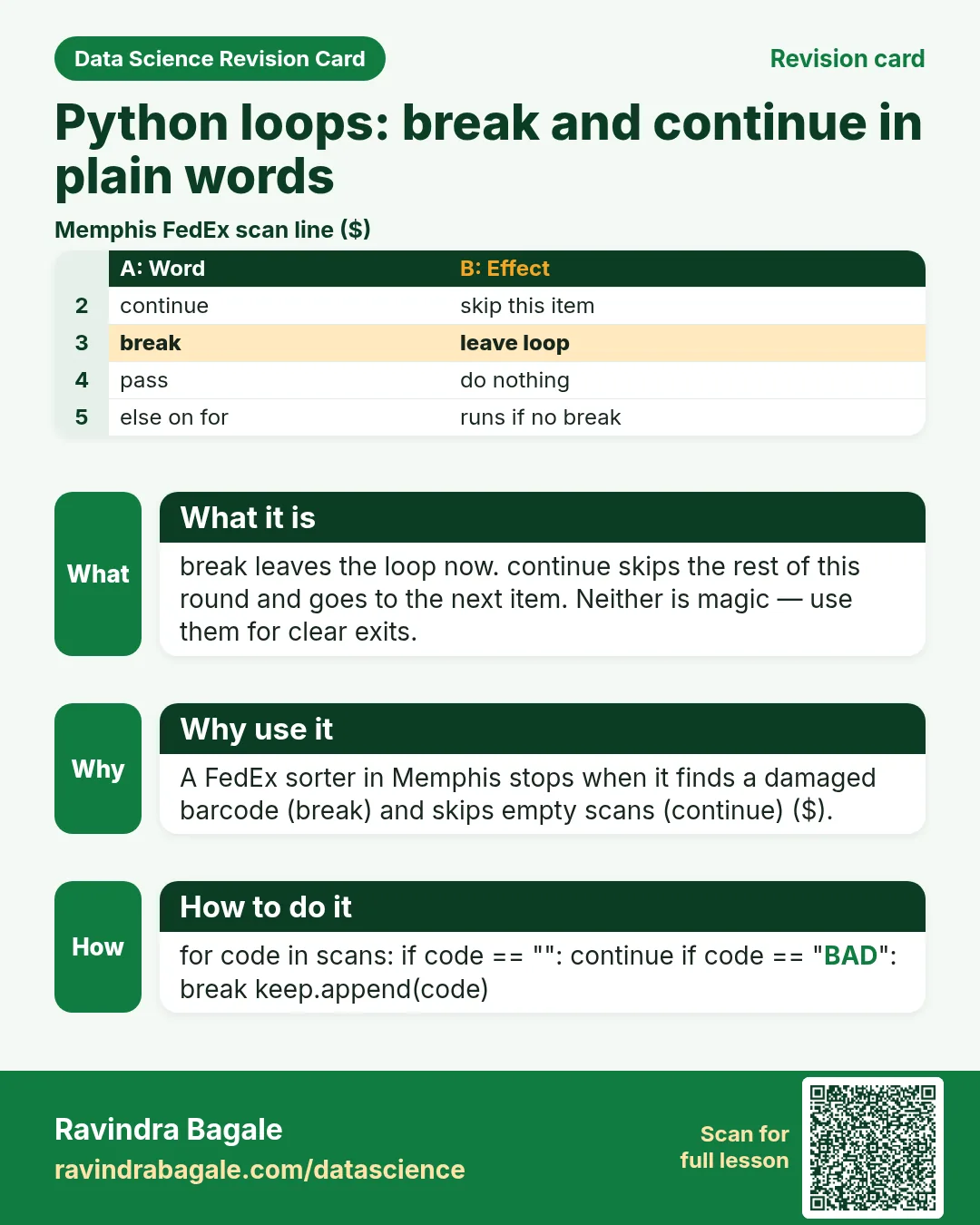
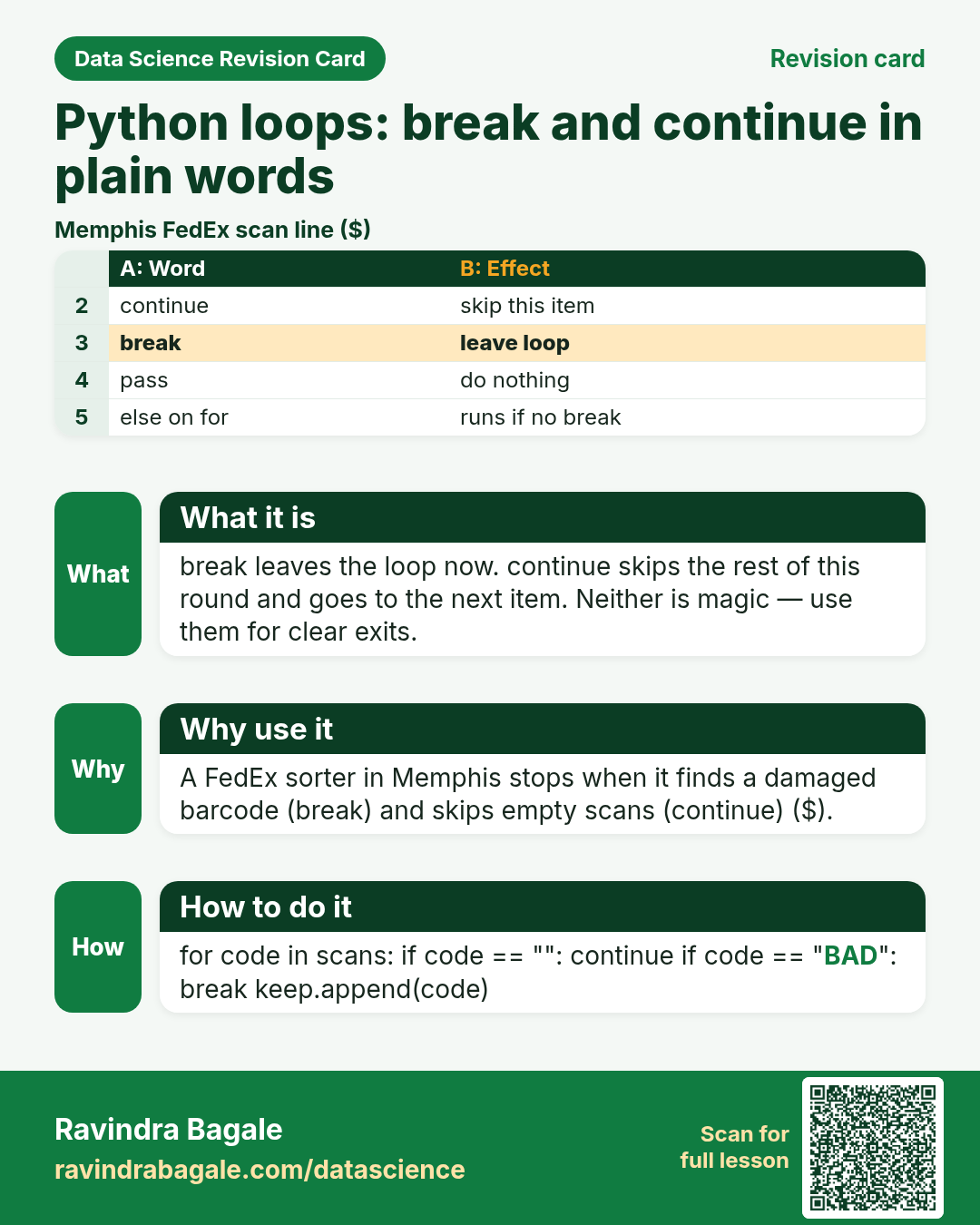
- Card P6: Python loops: break and continue in plain words
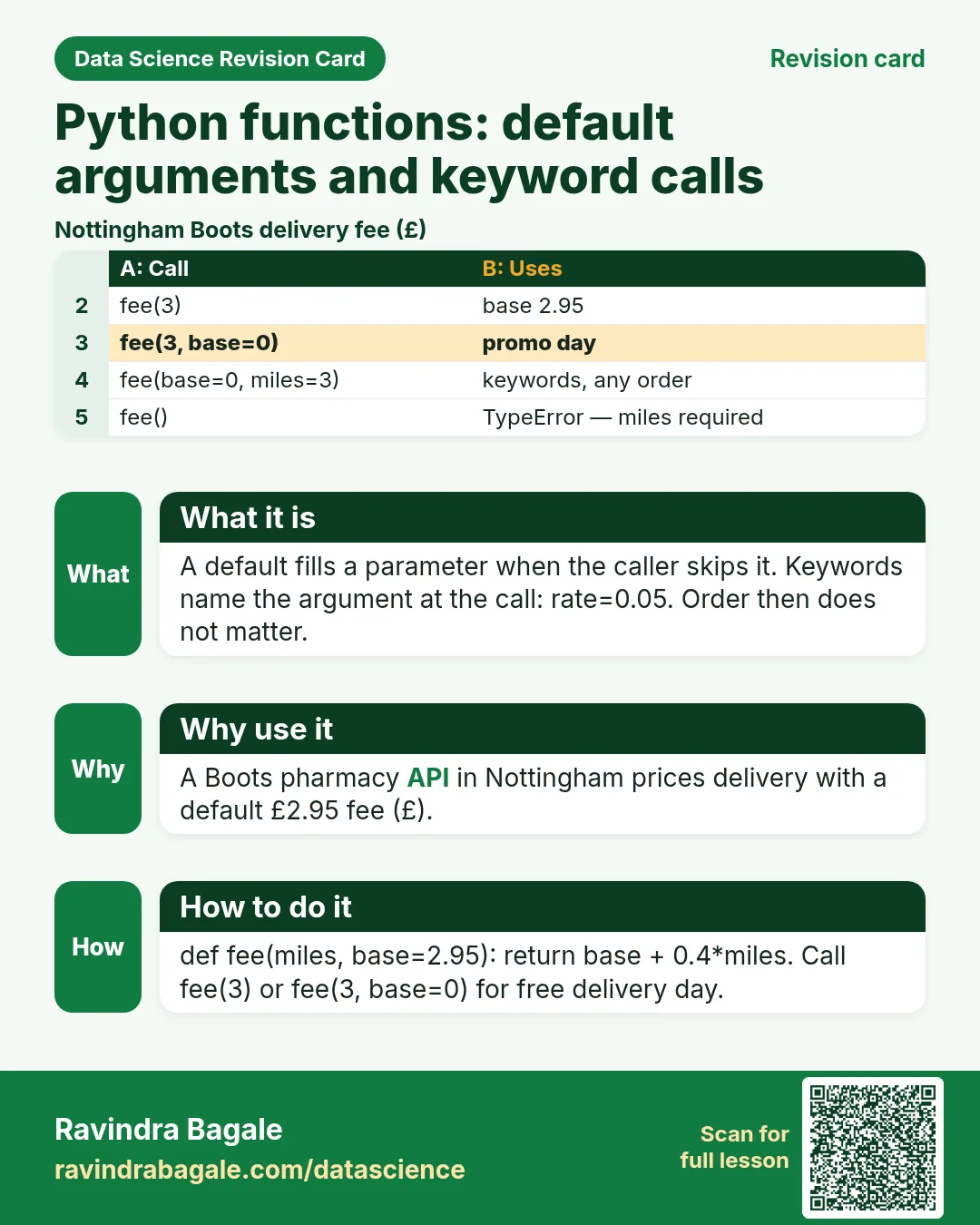
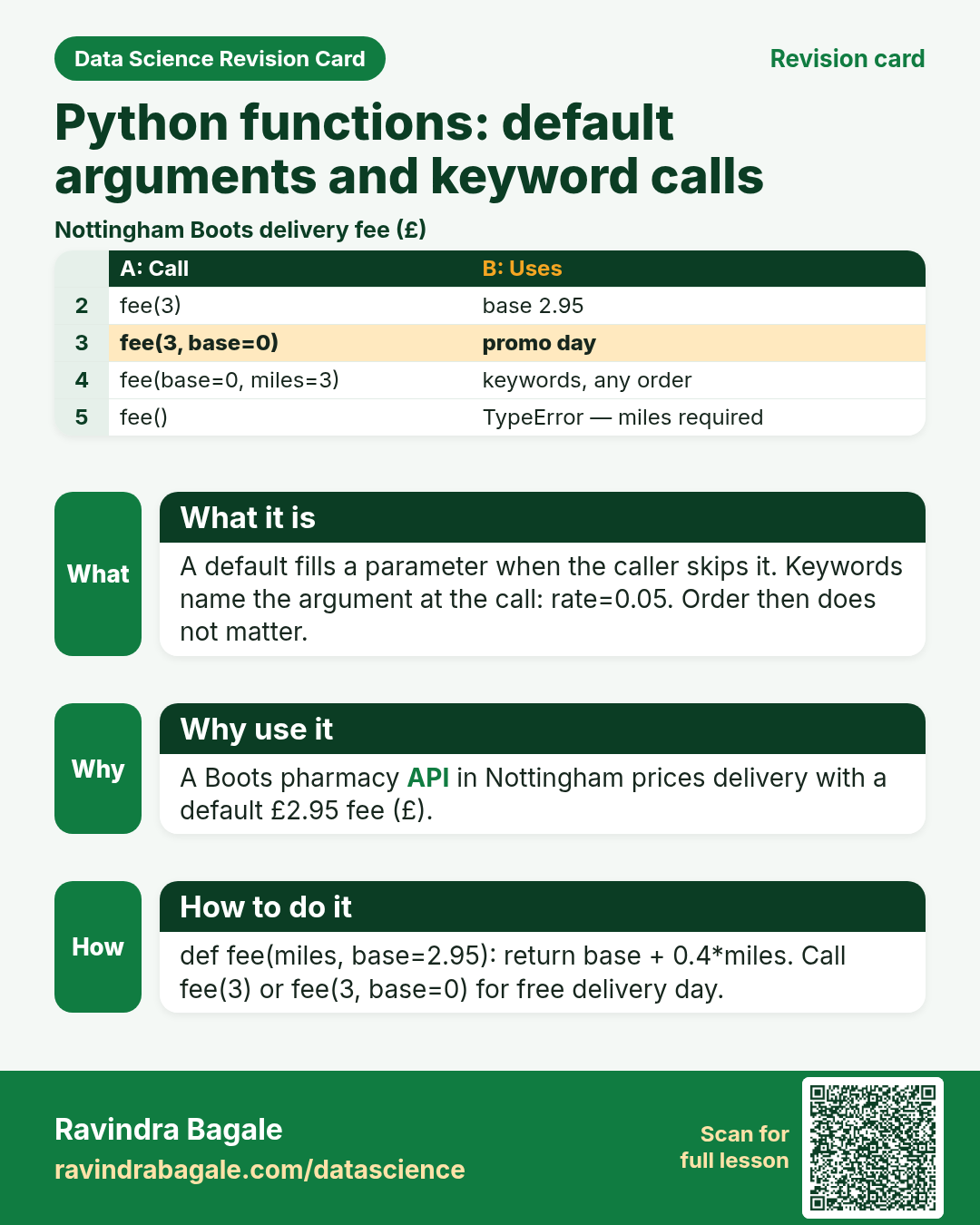
- Card P7: Python functions: default arguments and keyword calls
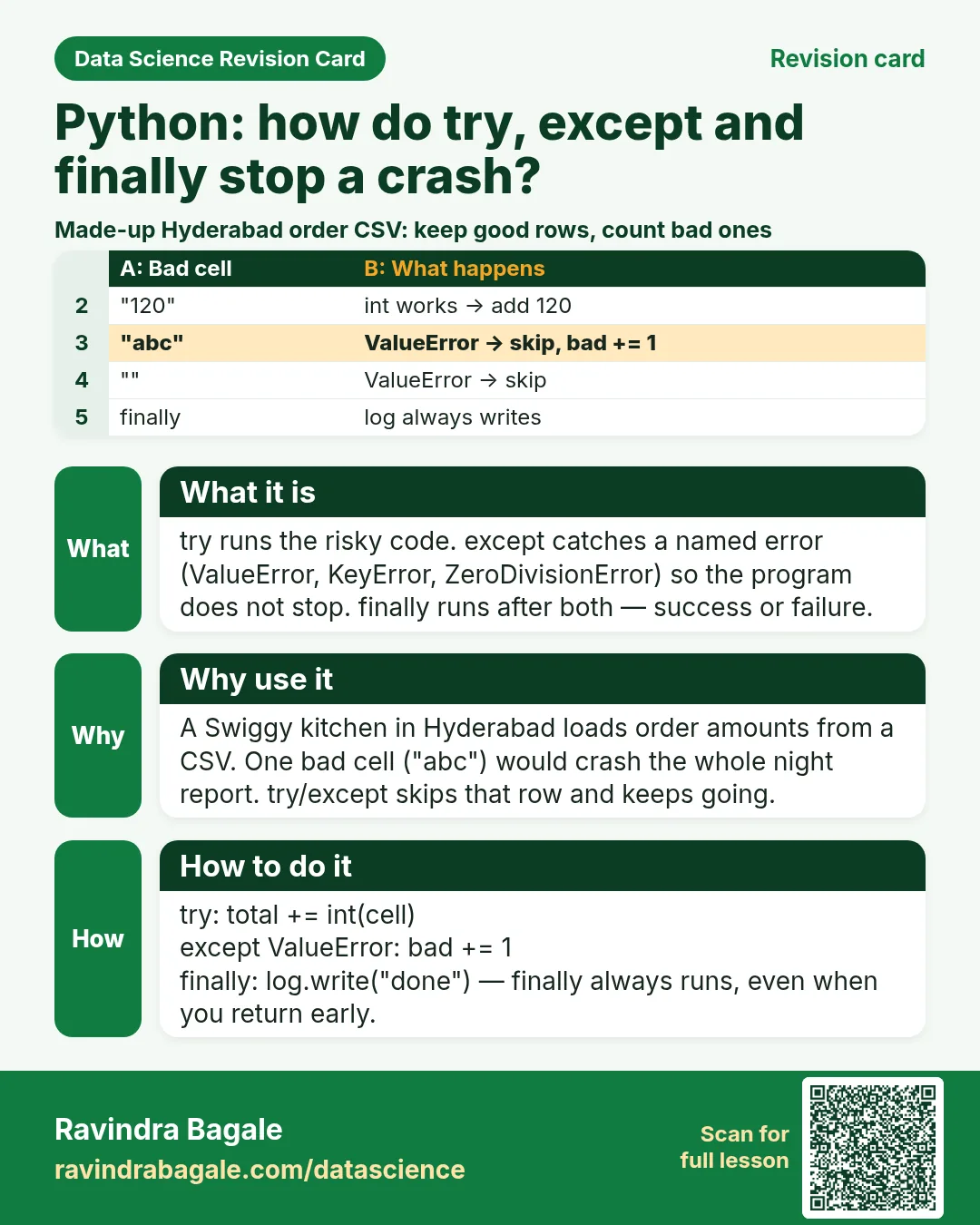
- Card P8: Python: how do try, except and finally stop a crash?
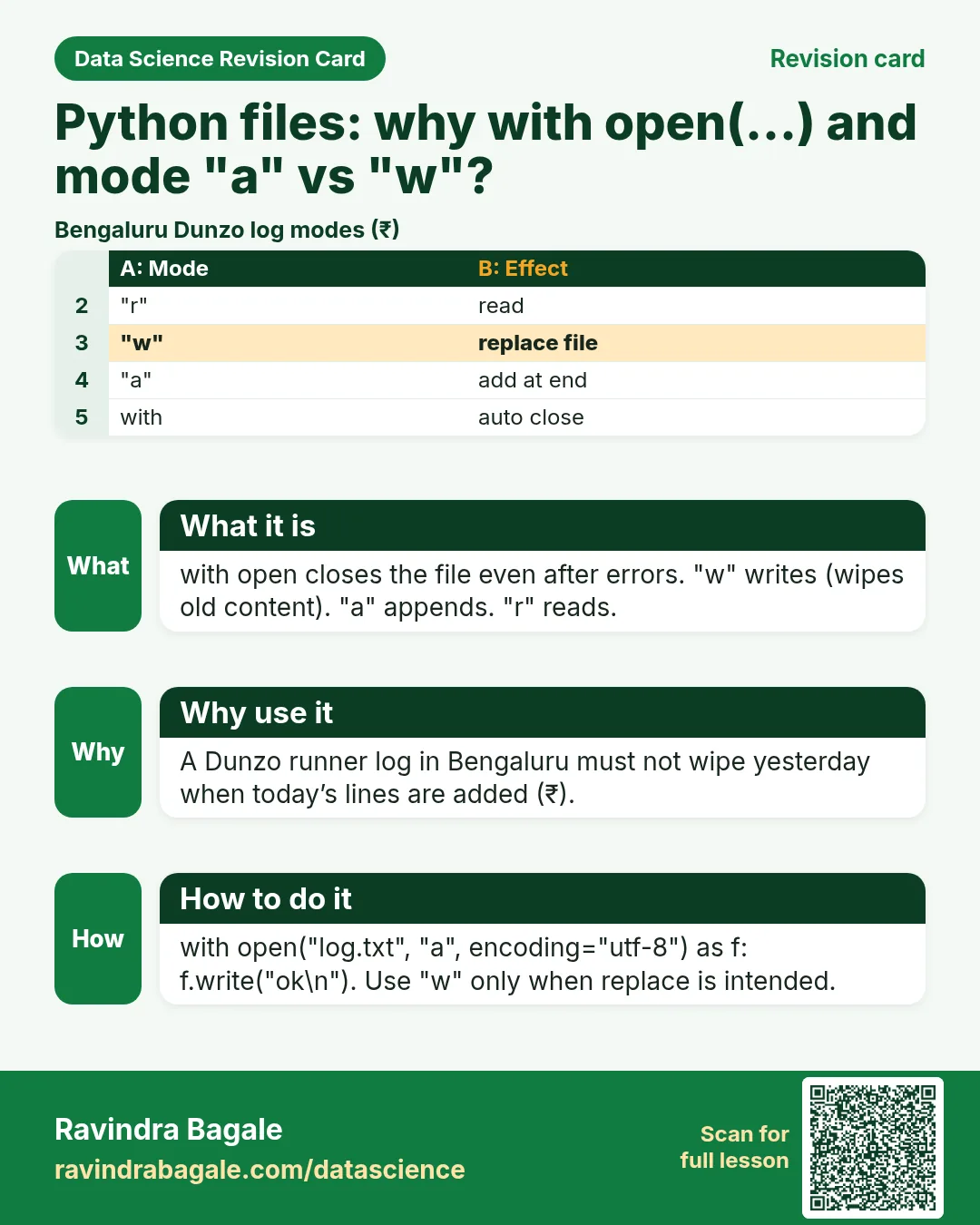
- Card P9: Python files: why with open(...) and mode "a" vs "w"?
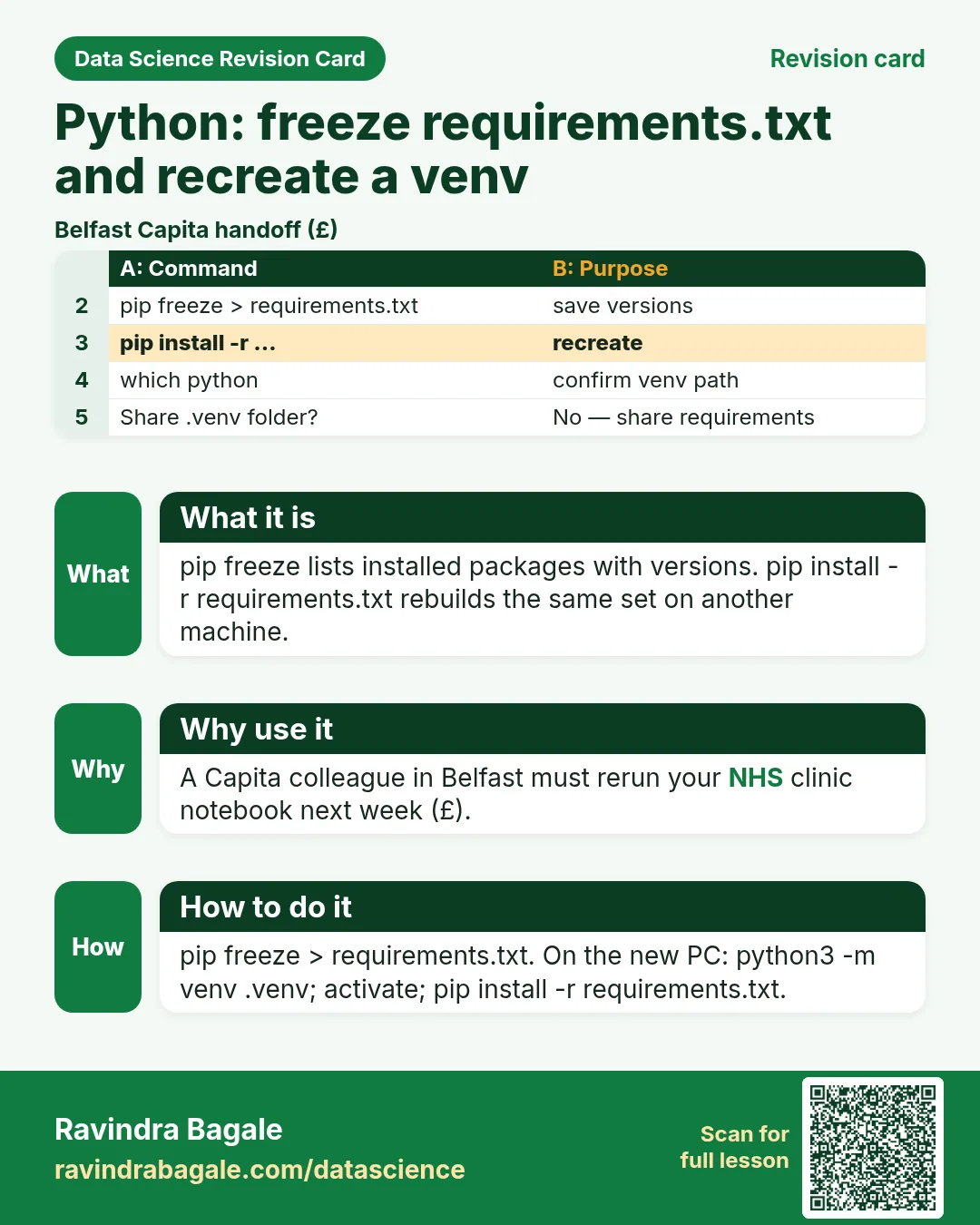
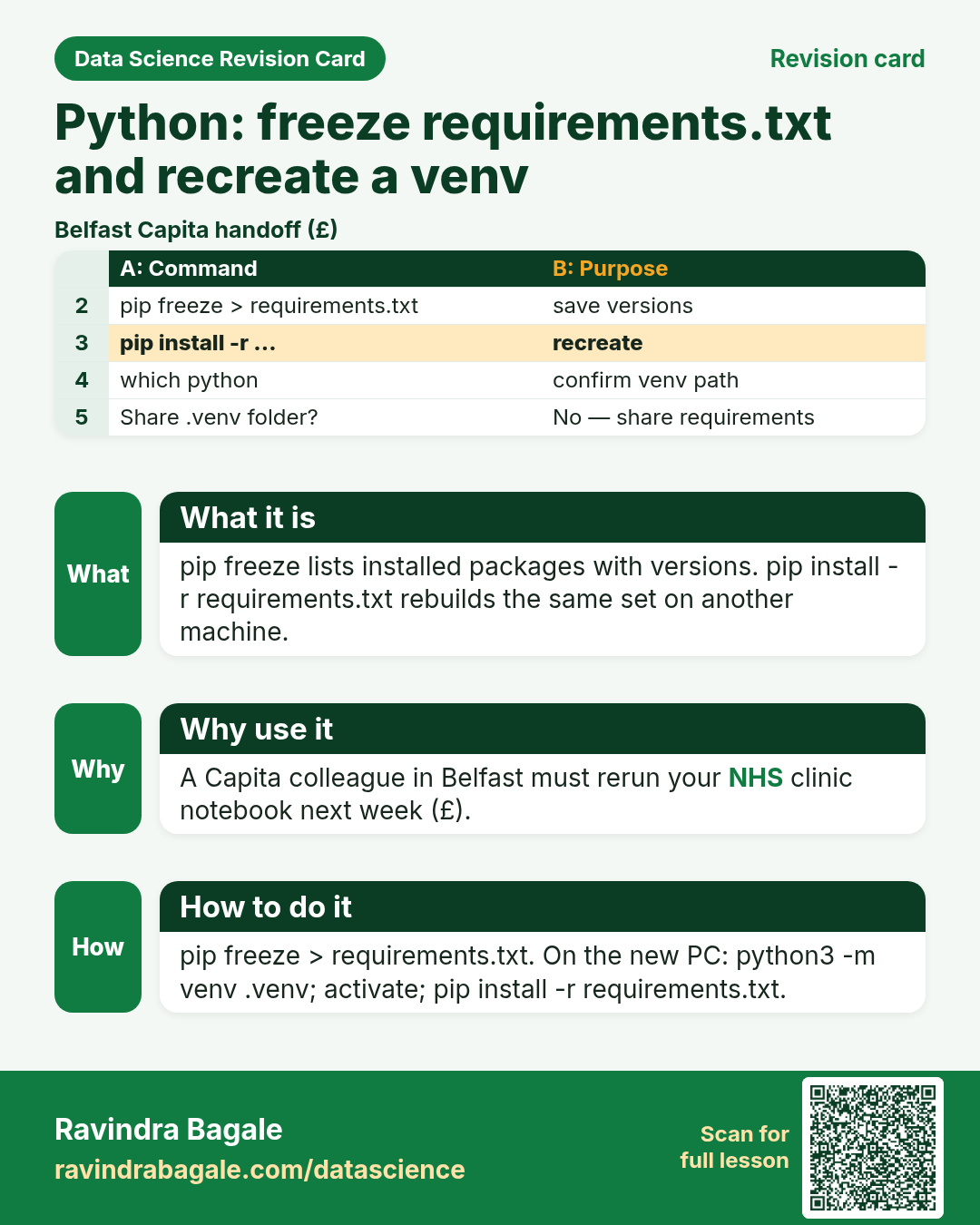
- Card P10: Python: freeze requirements.txt and recreate a venv
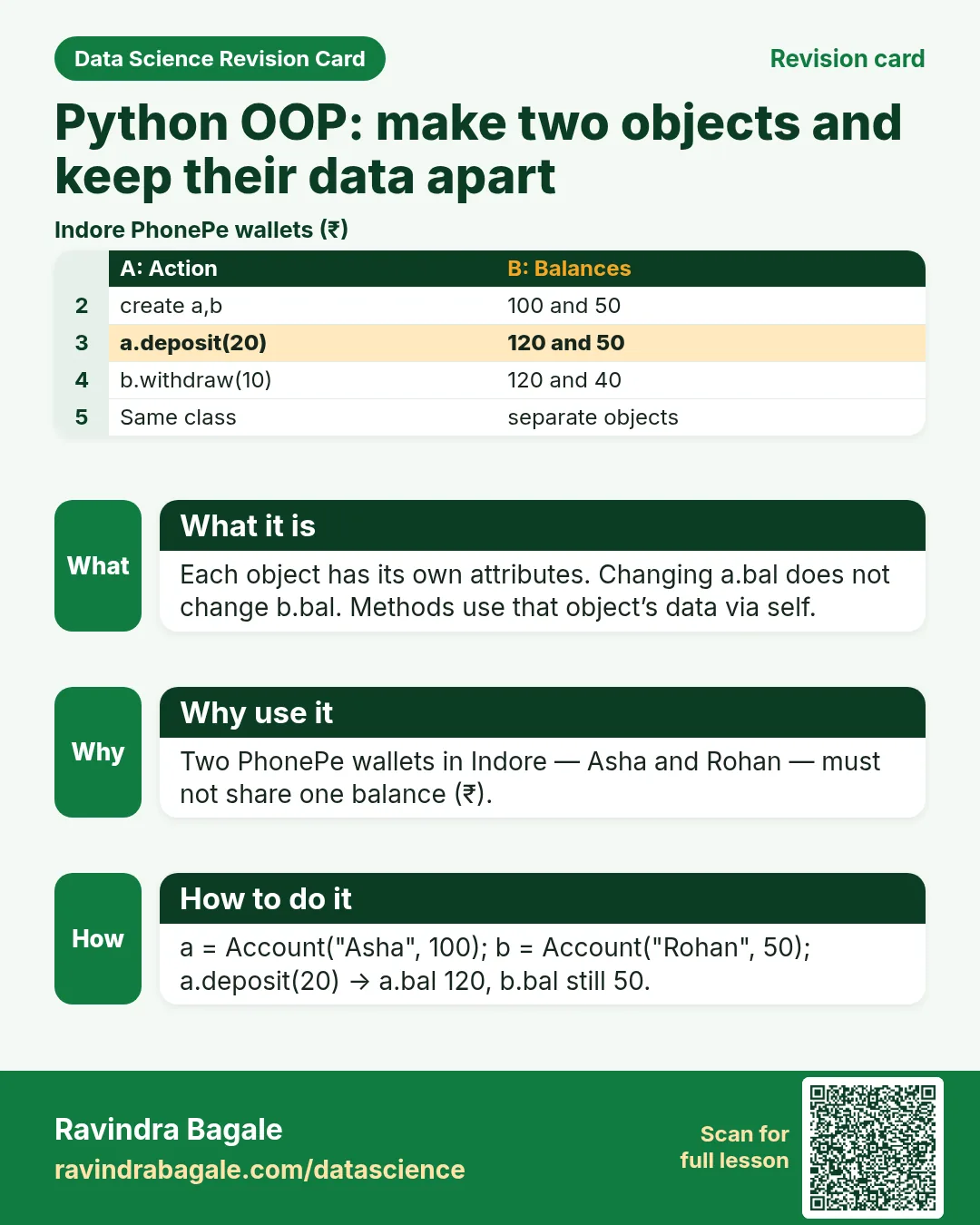
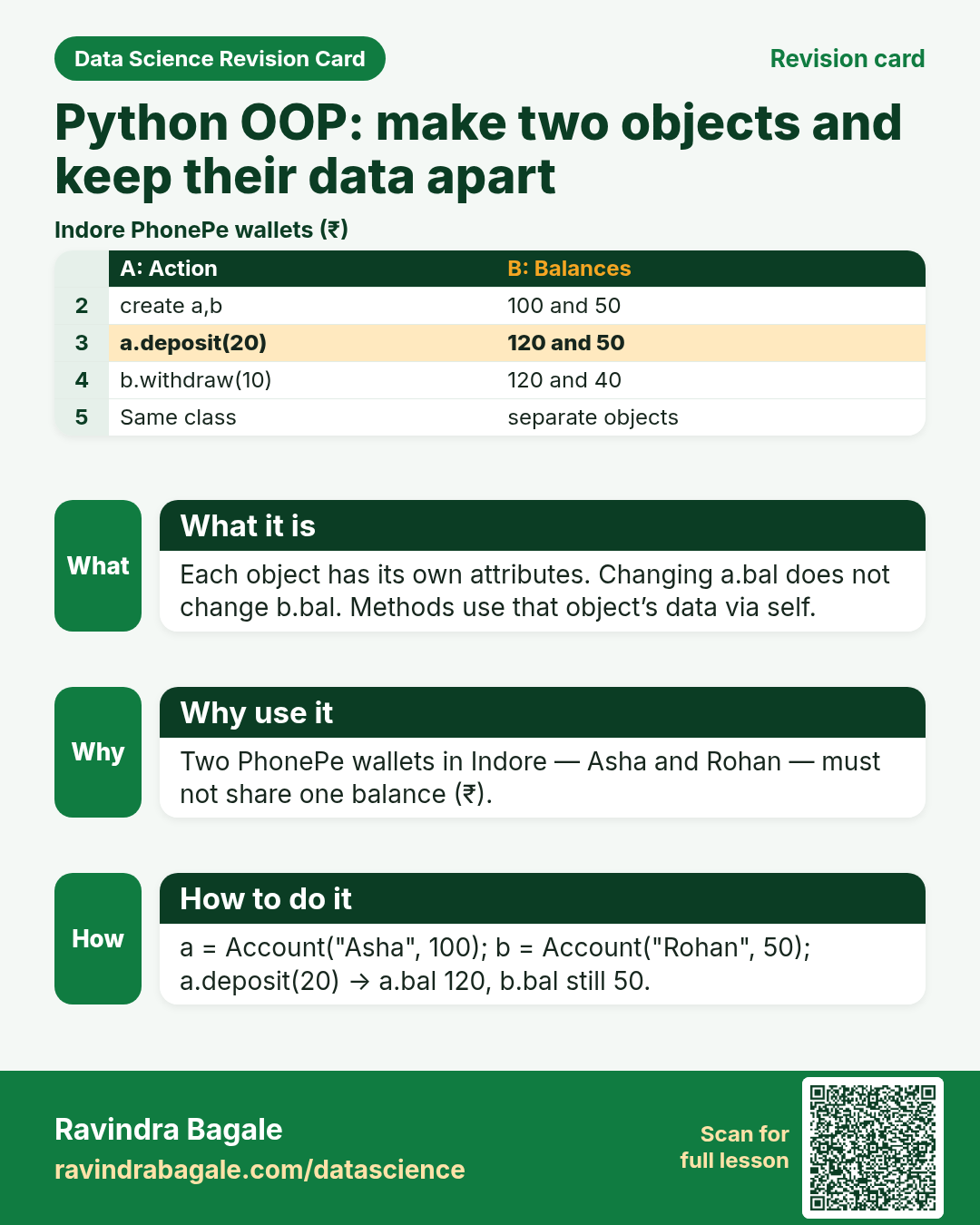
- Card P11: Python OOP: make two objects and keep their data apart
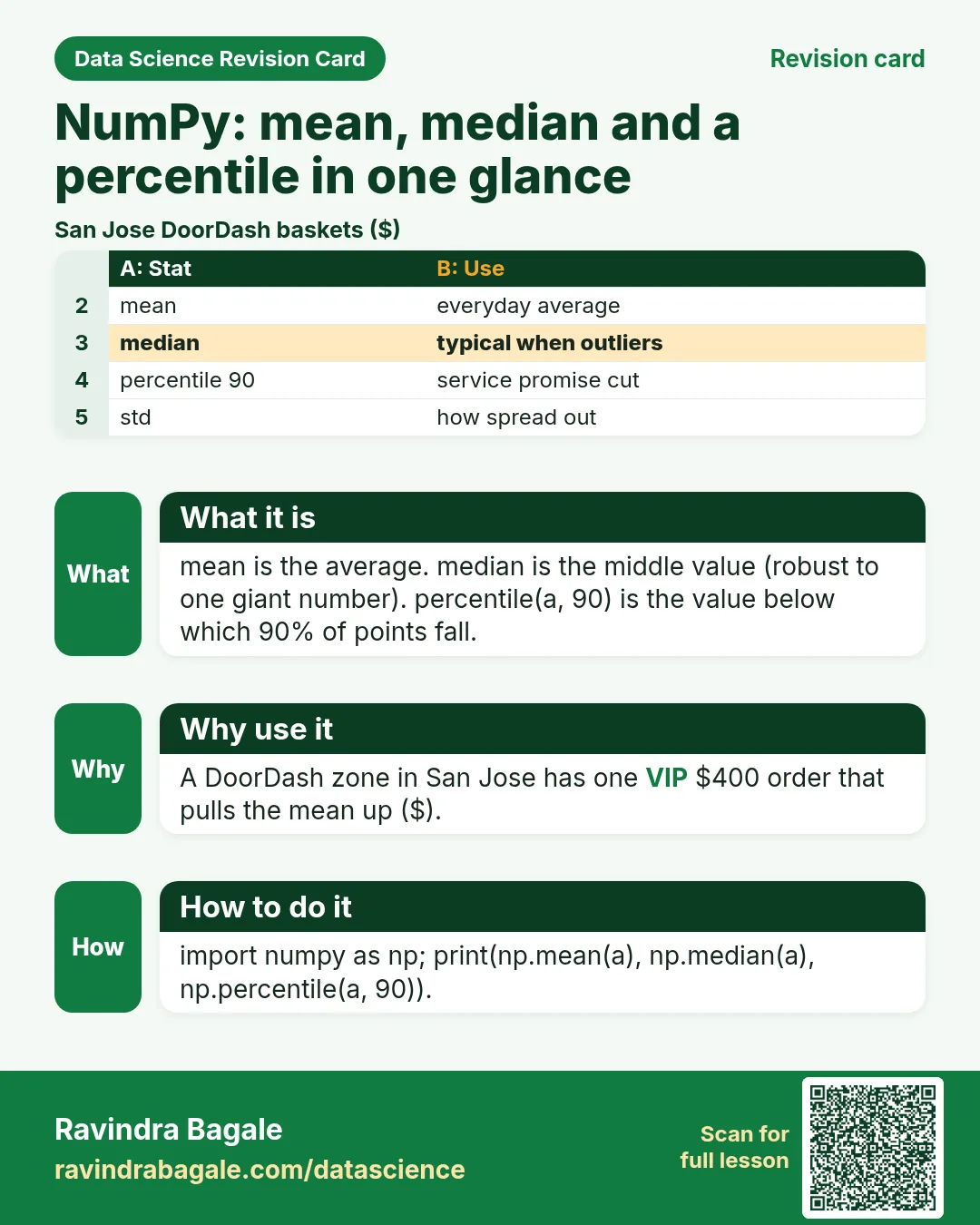
- Card P12: NumPy: mean, median and a percentile in one glance
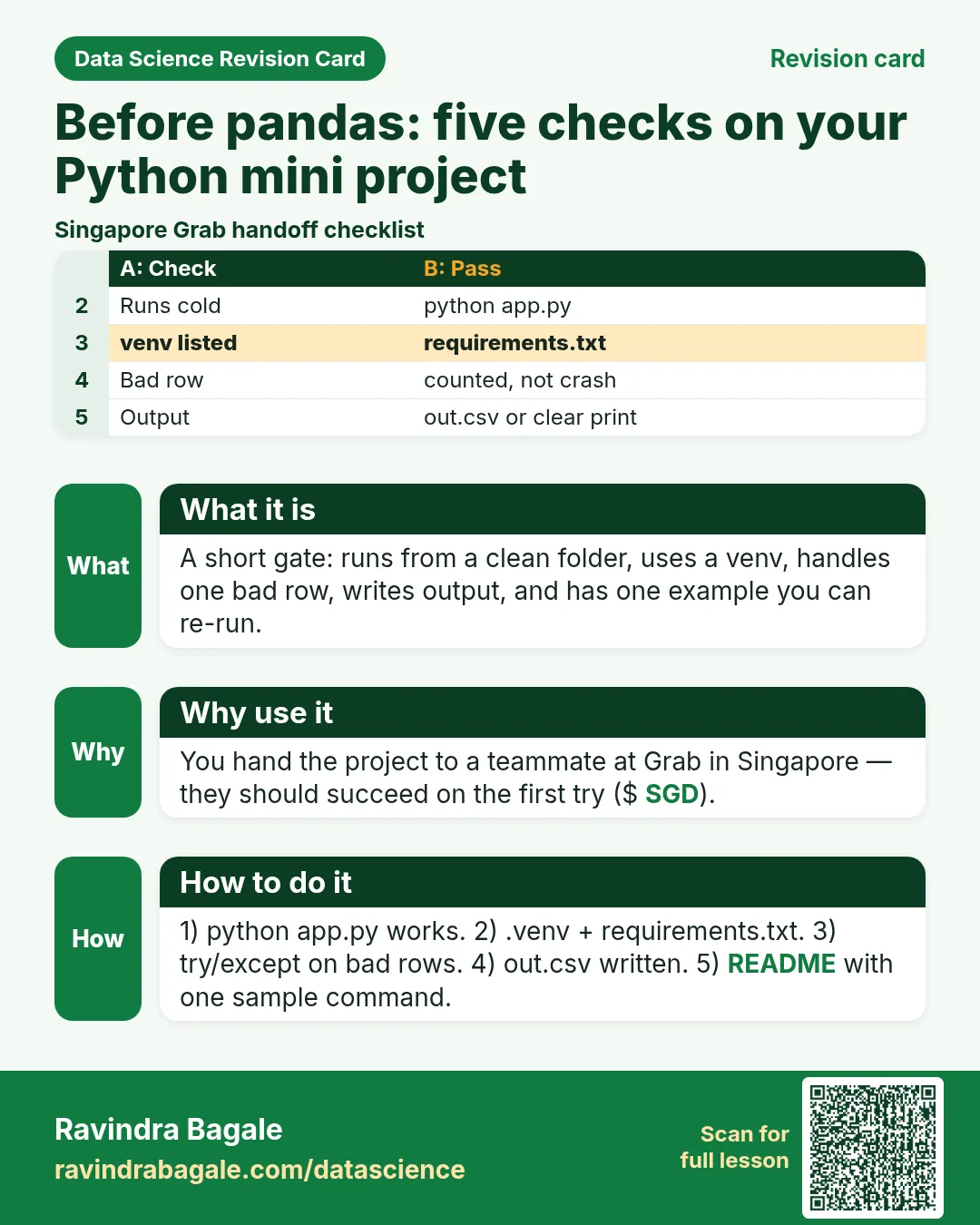
- Card P13: Before pandas: five checks on your Python mini project
Data Science chapters
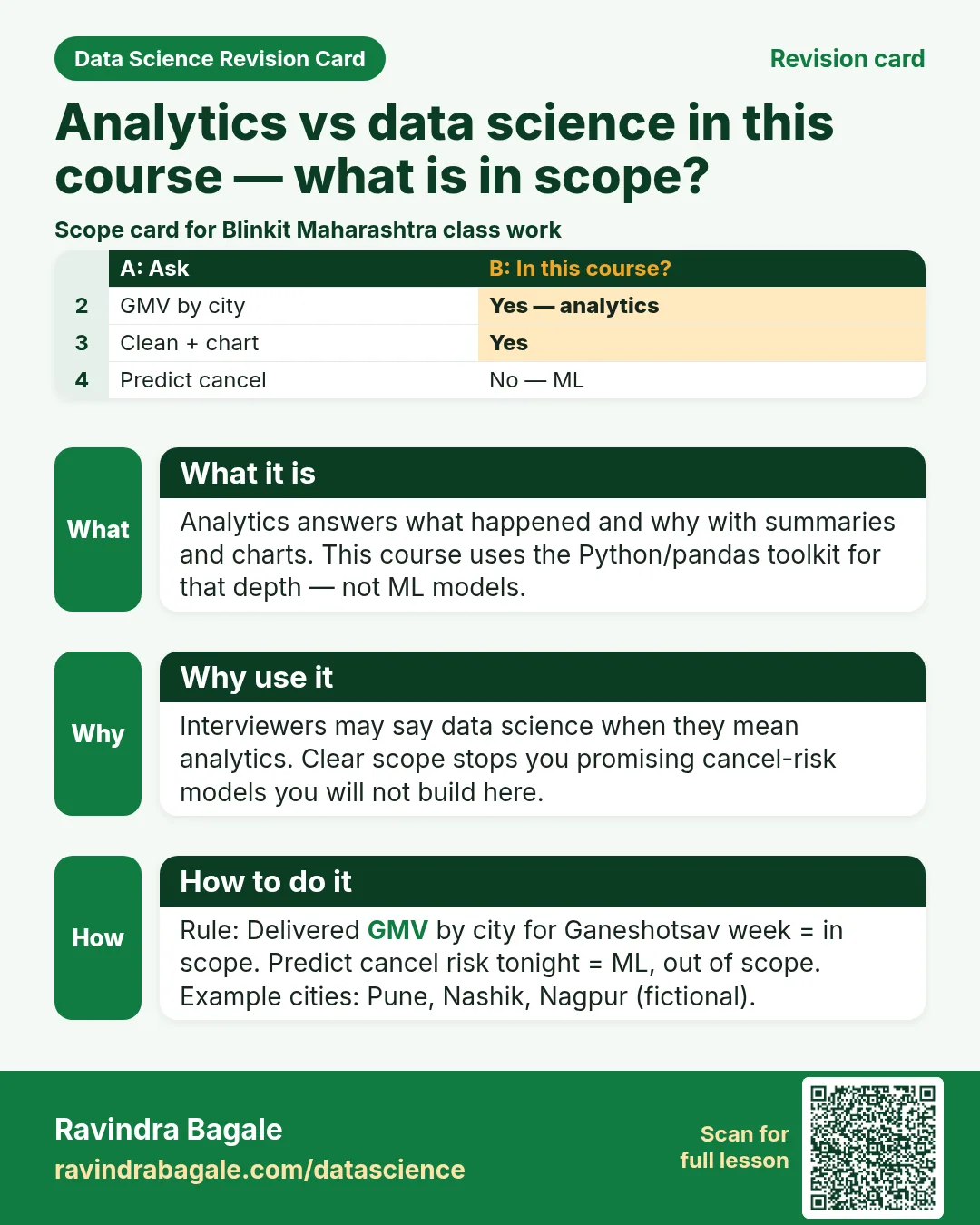
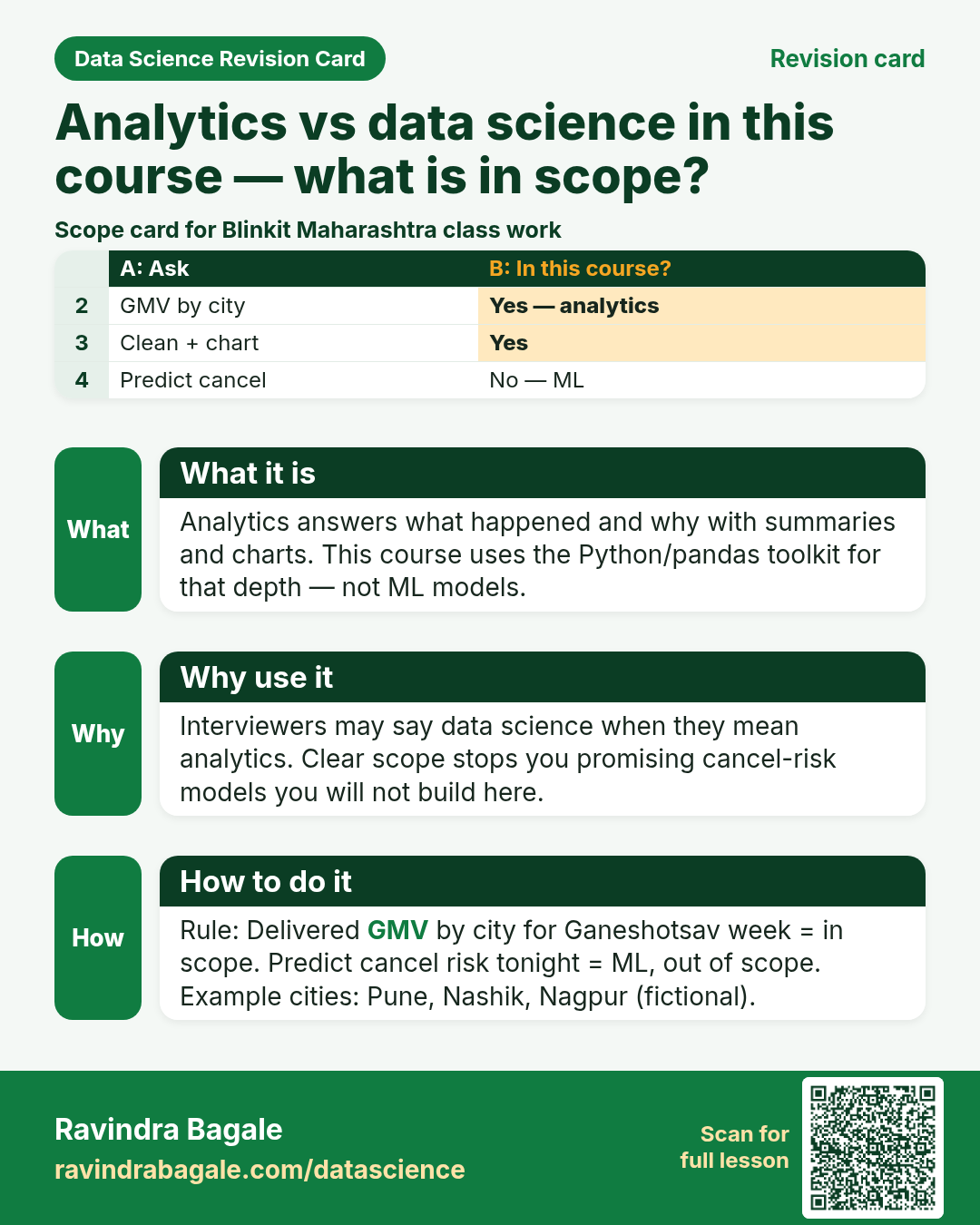
- Card 1: Analytics vs data science in this course — what is in scope?
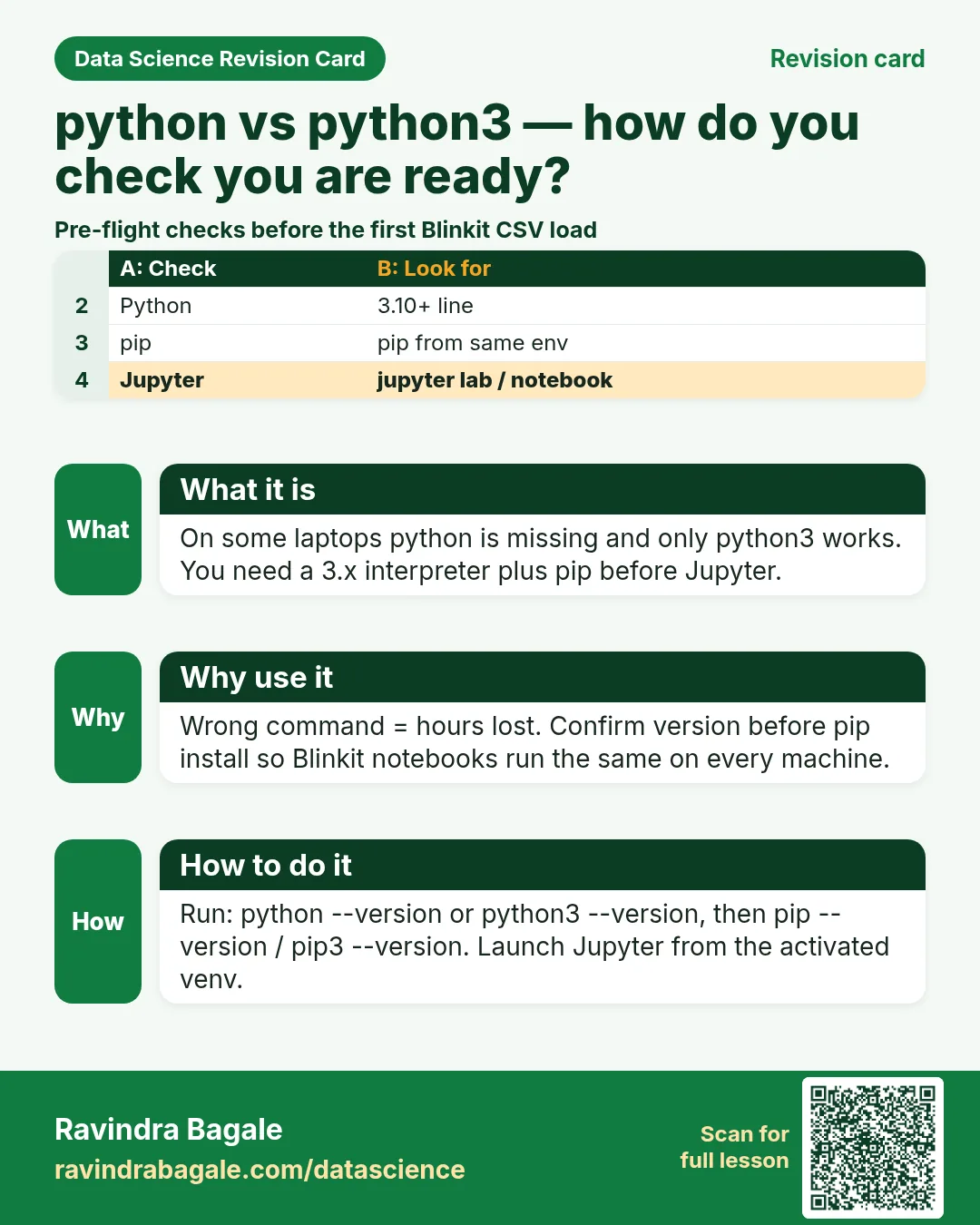
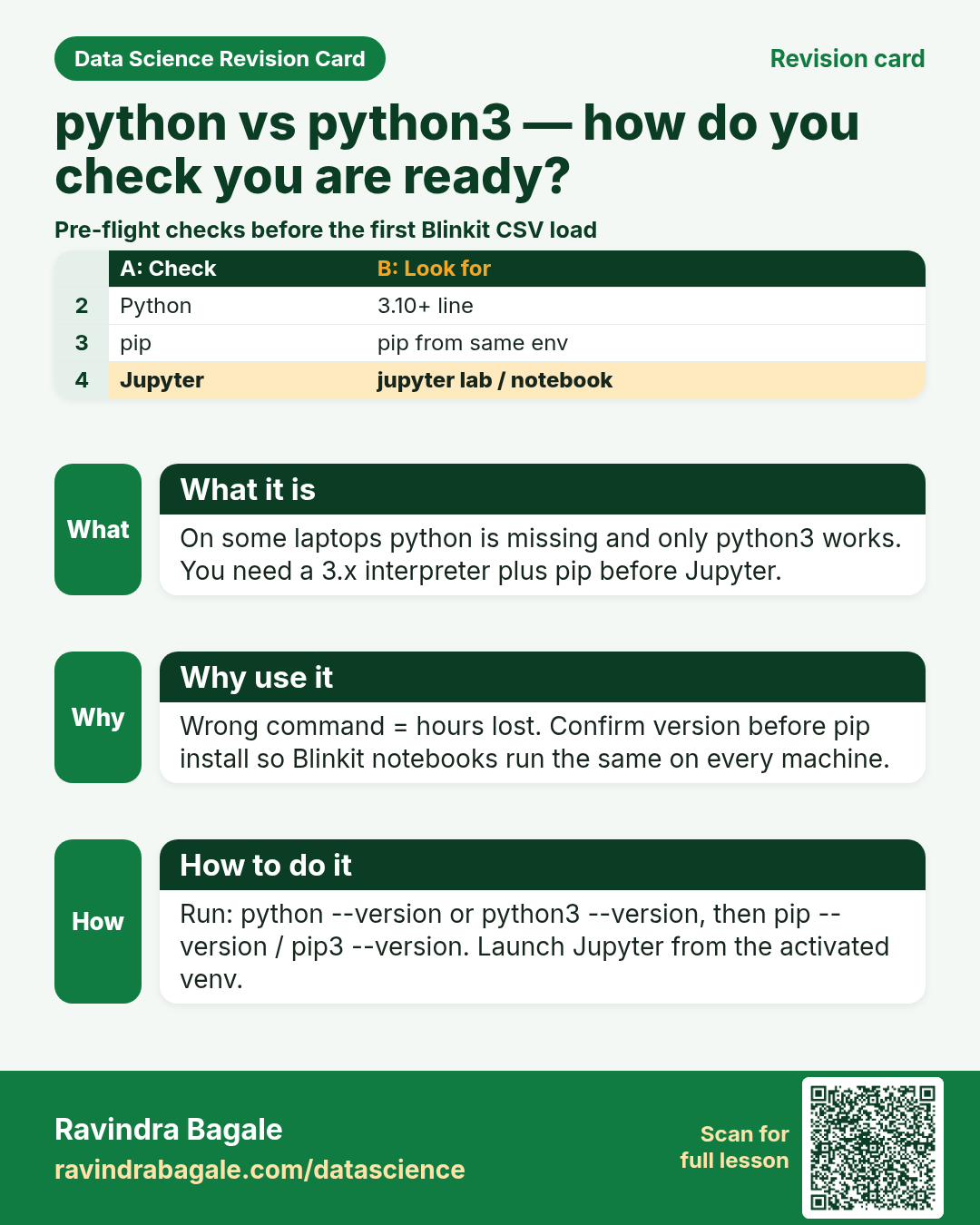
- Card 2: python vs python3 — how do you check you are ready?
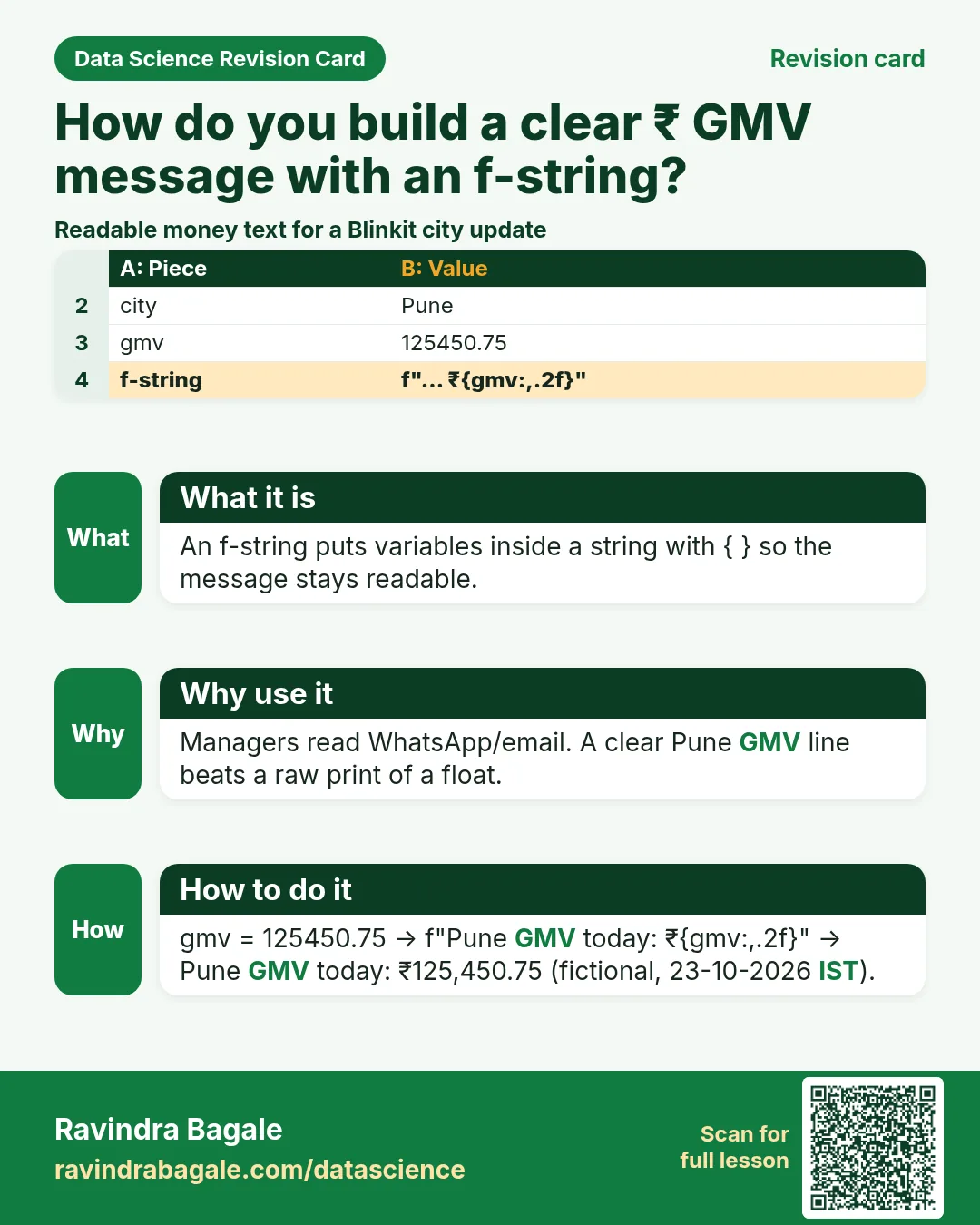
- Card 3: How do you build a clear ₹ GMV message with an f-string?
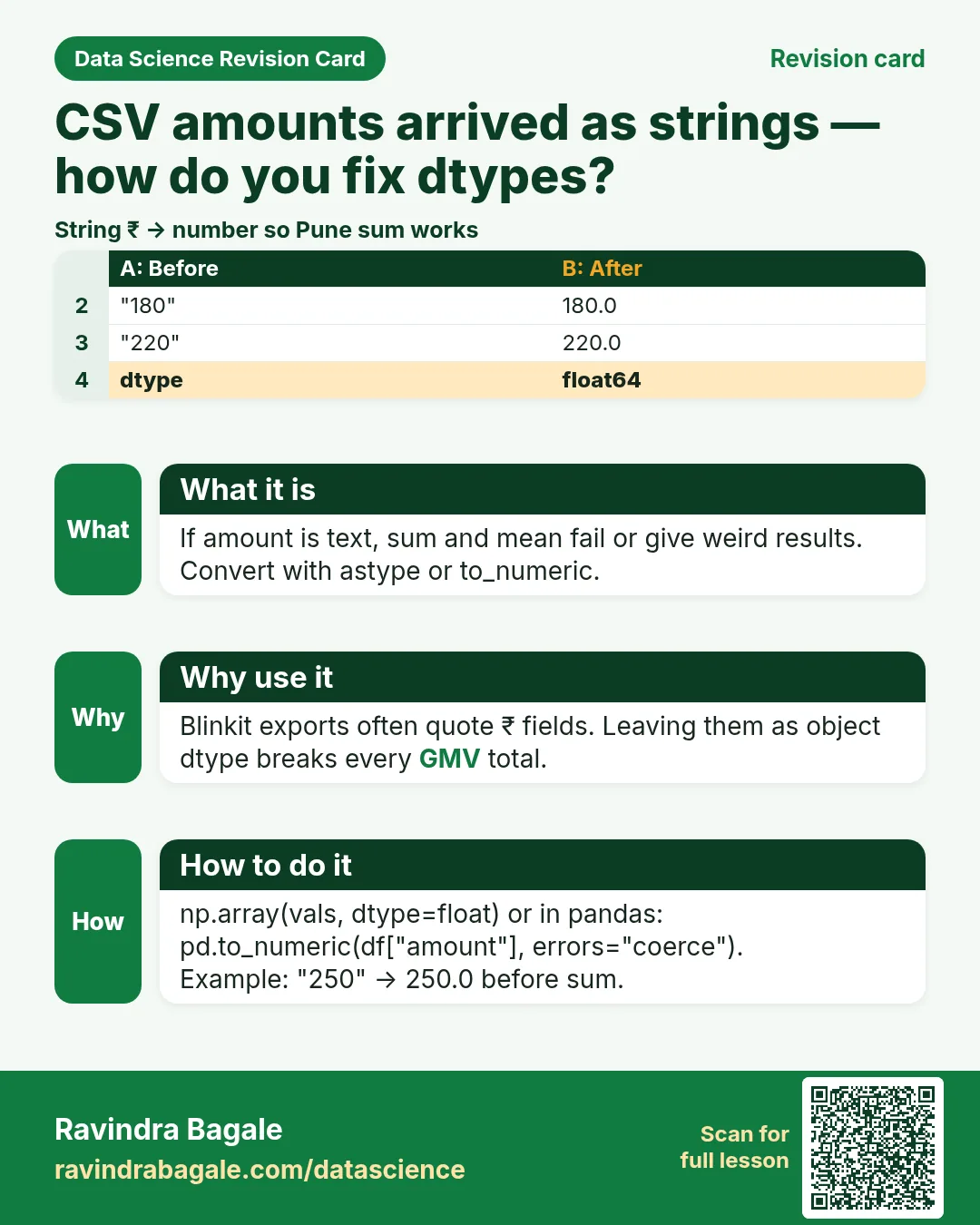
- Card 4: CSV amounts arrived as strings — how do you fix dtypes?
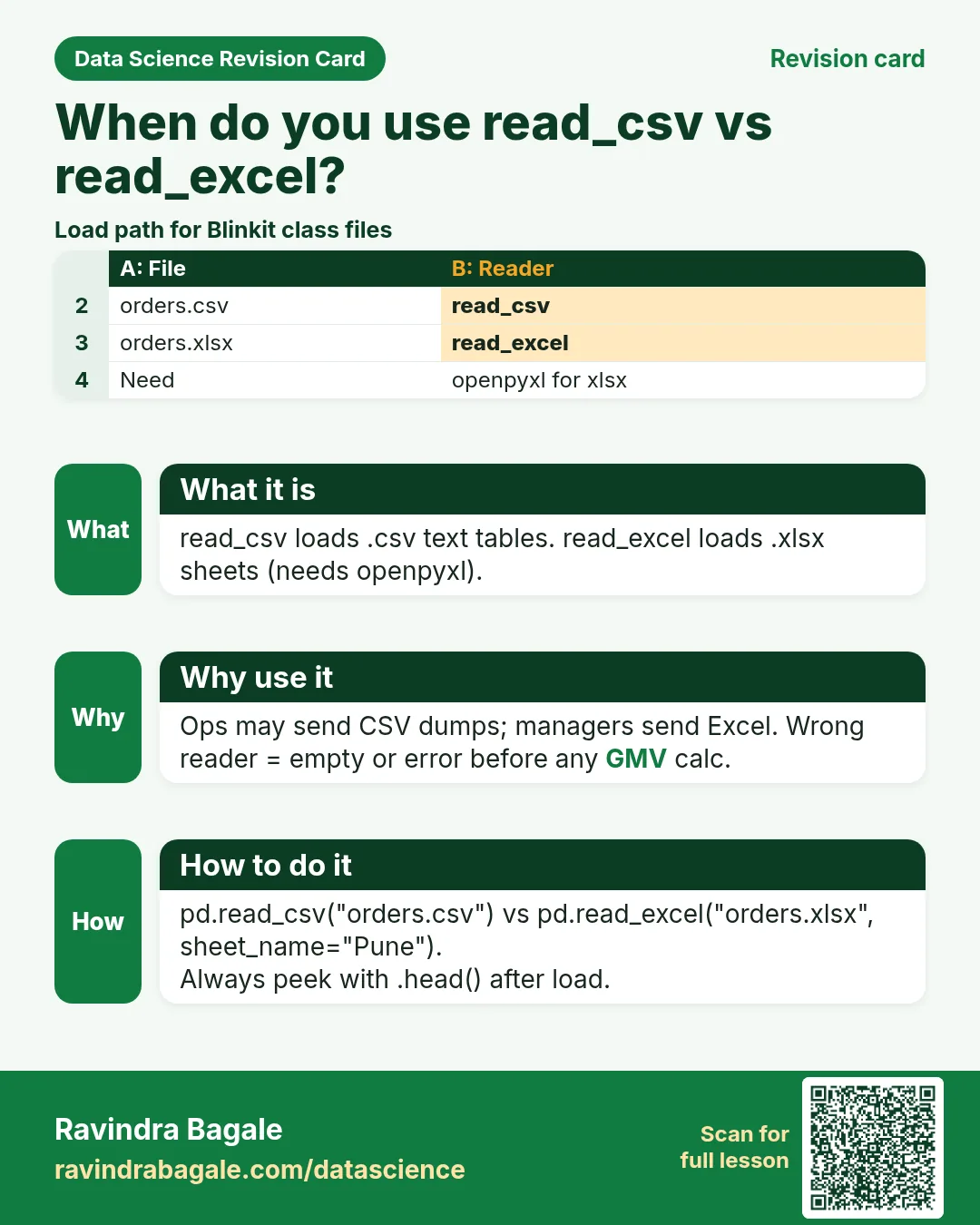
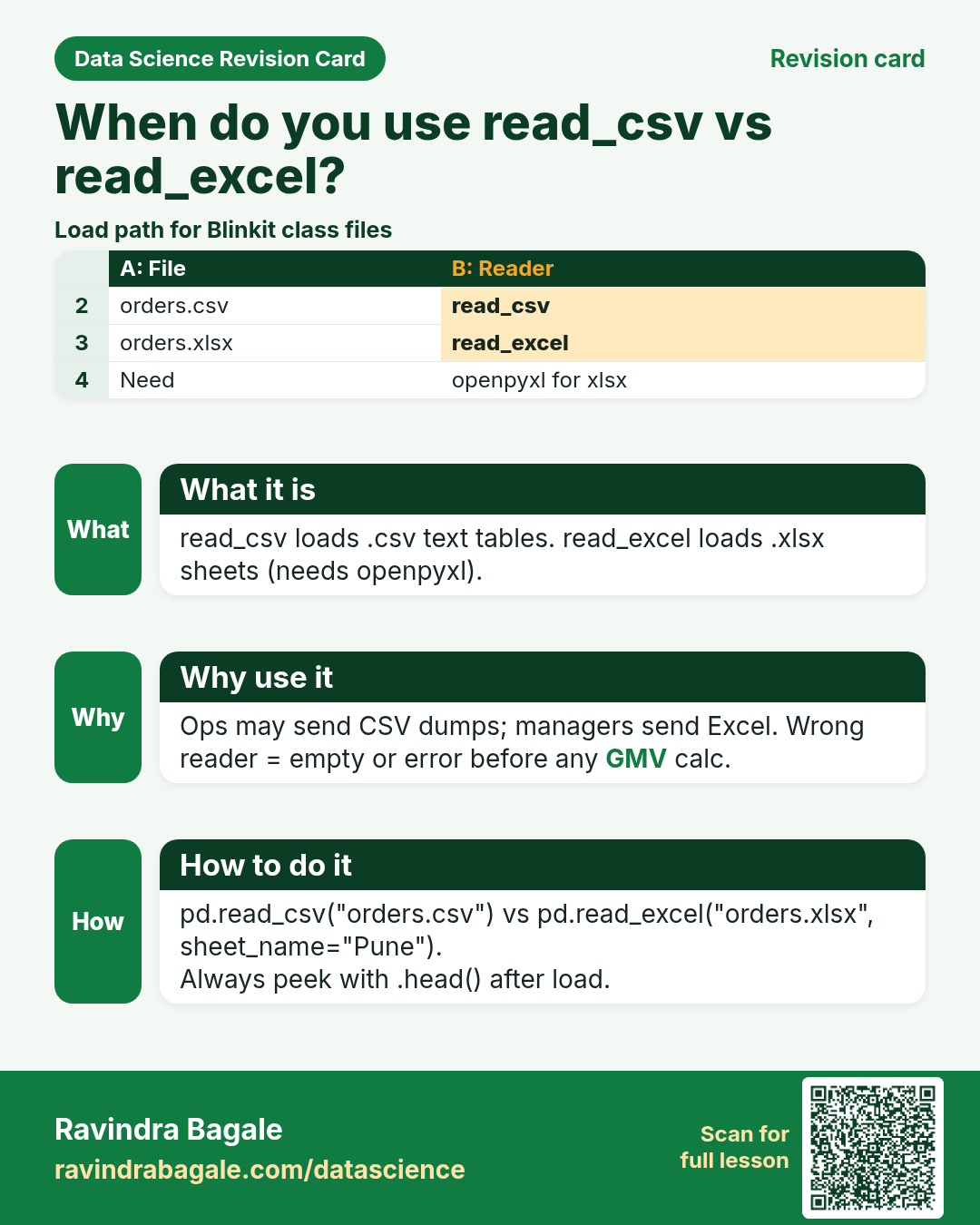
- Card 5: When do you use read_csv vs read_excel?
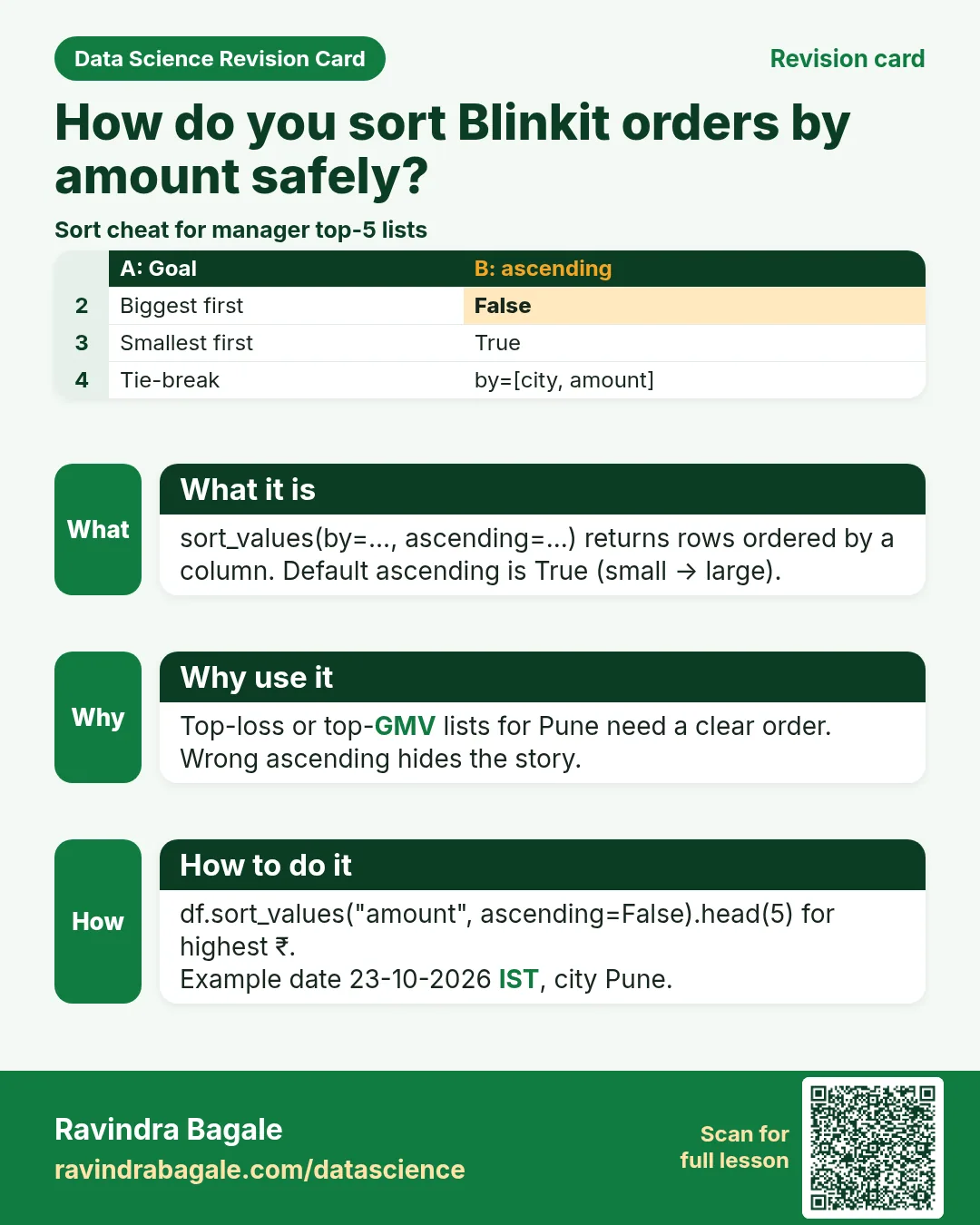
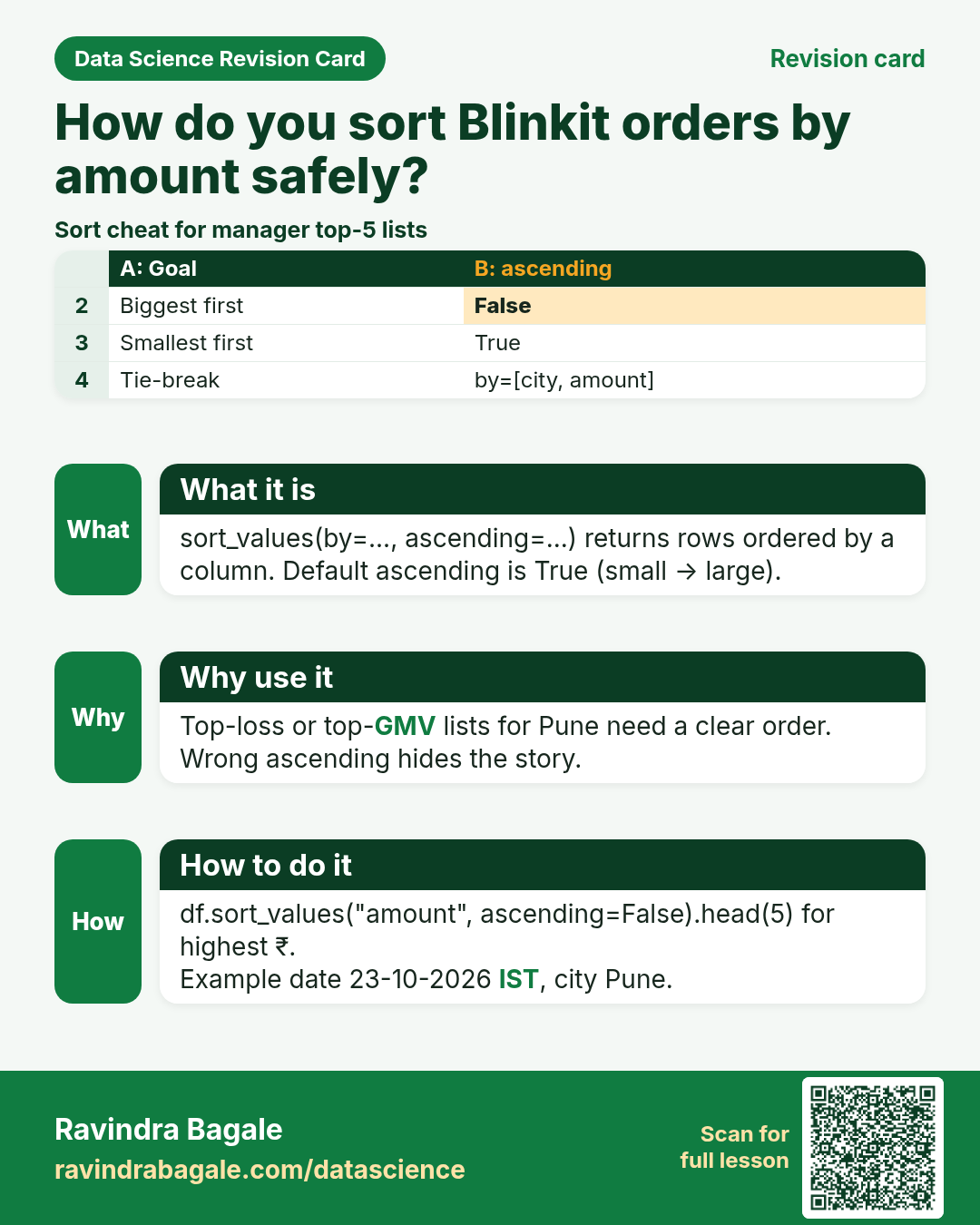
- Card 6: How do you sort Blinkit orders by amount safely?
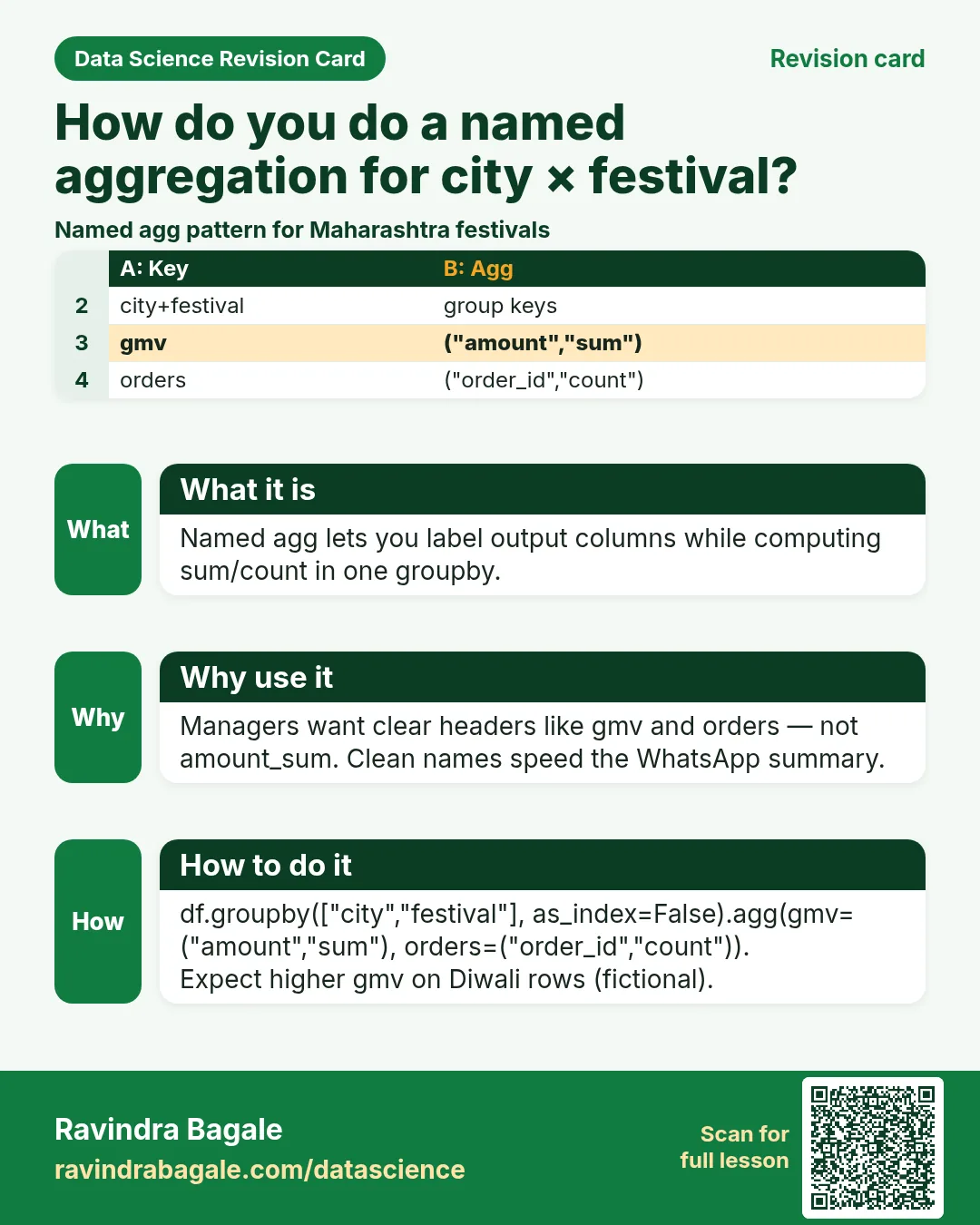
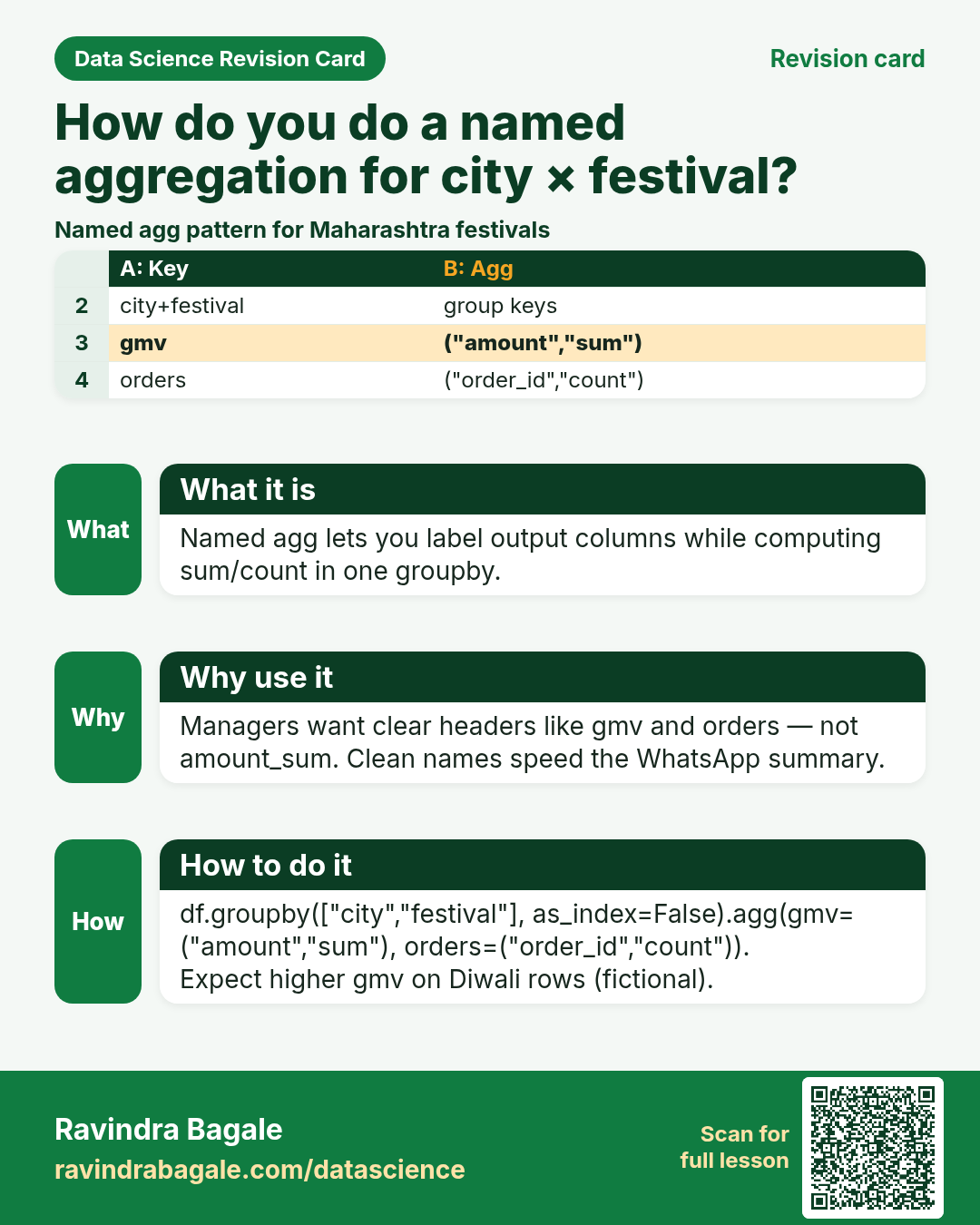
- Card 7: How do you do a named aggregation for city × festival?
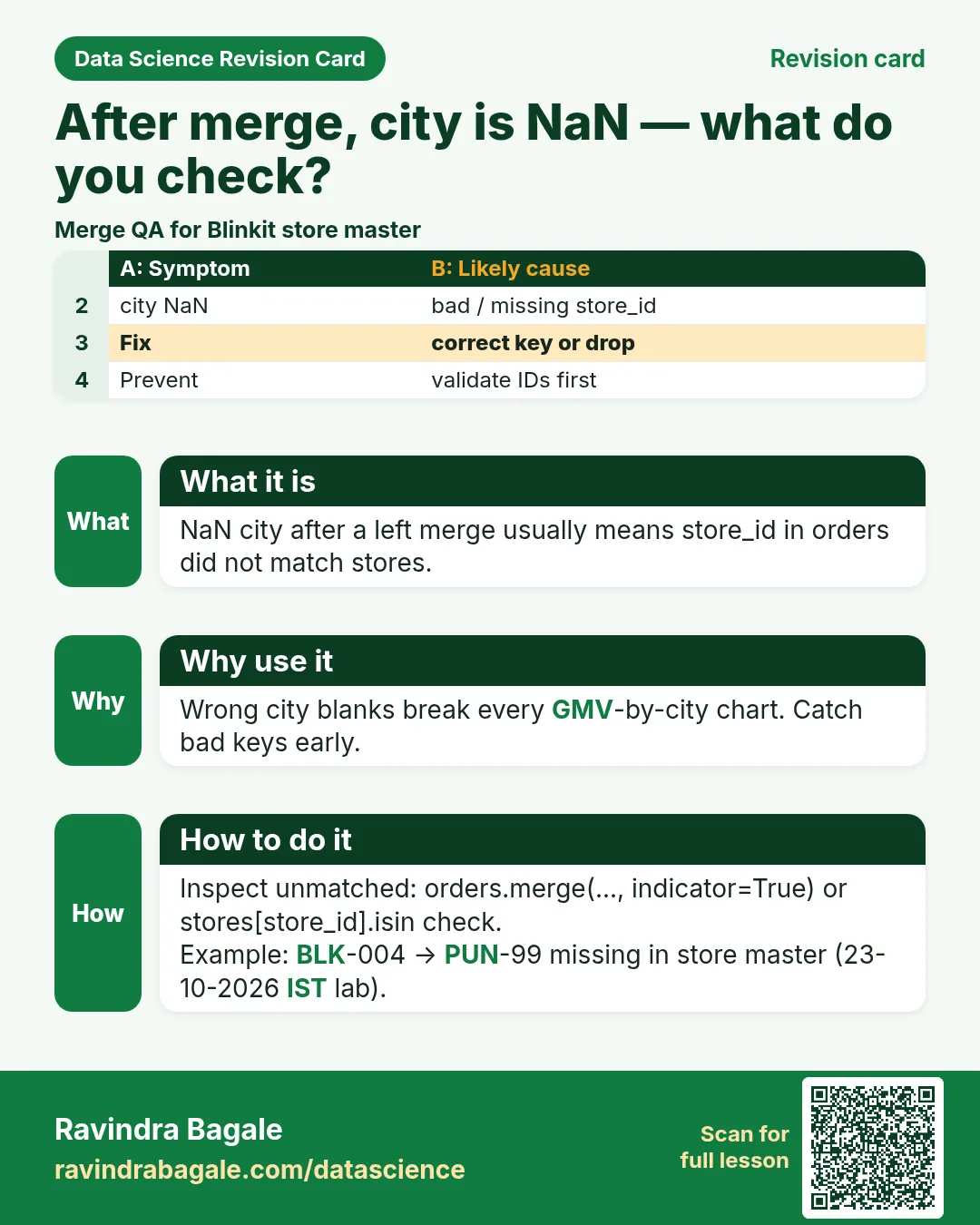
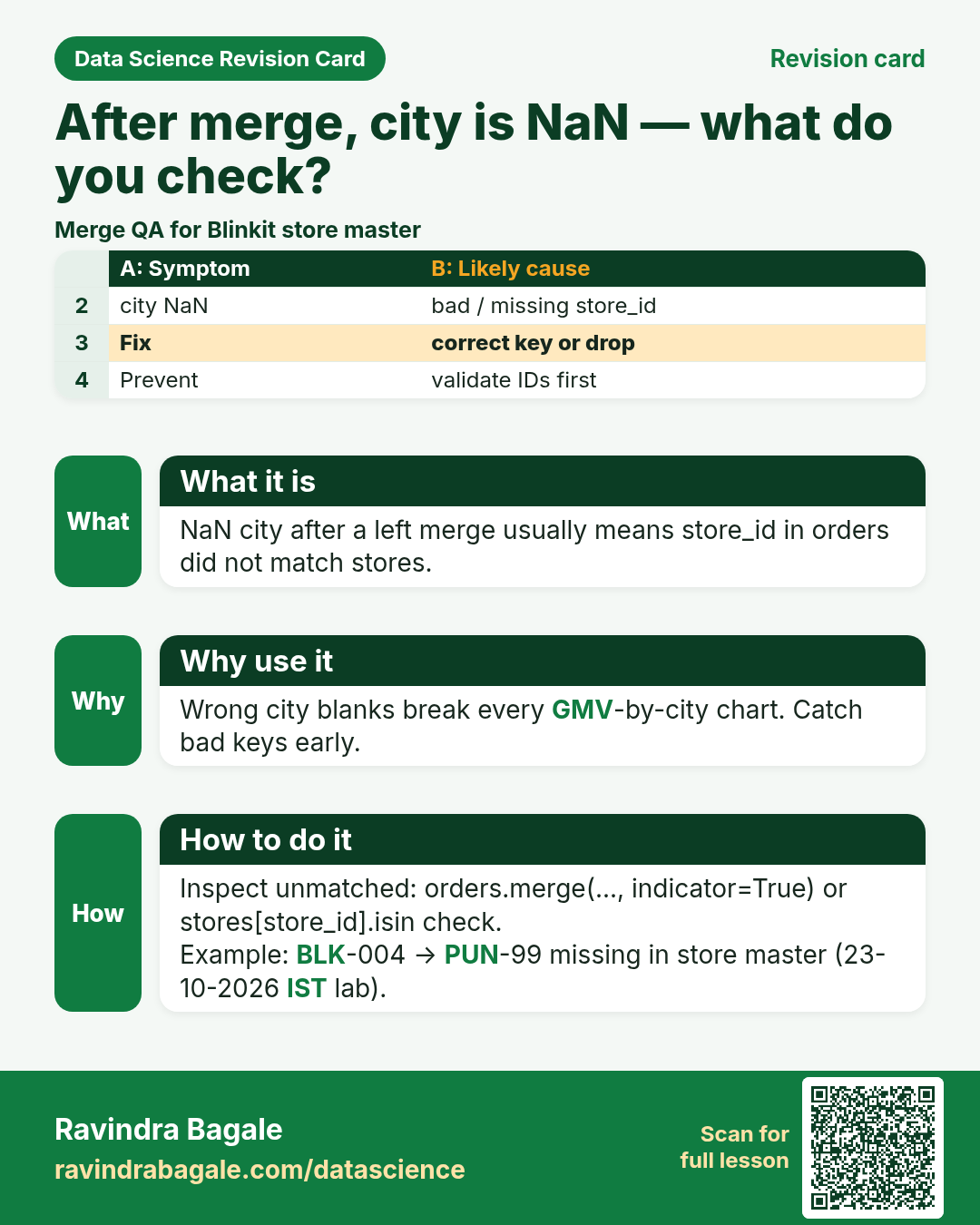
- Card 8: After merge, city is NaN — what do you check?
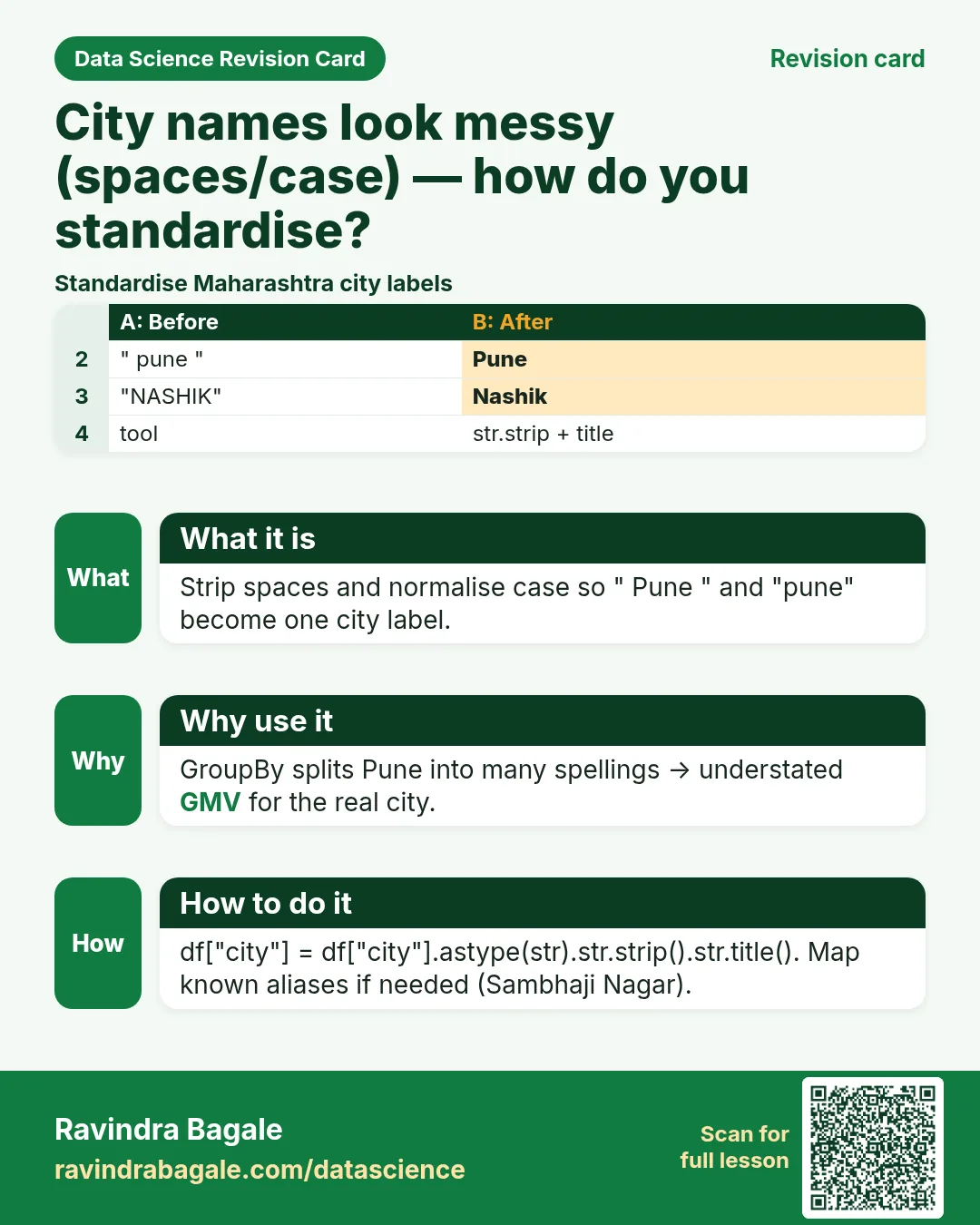
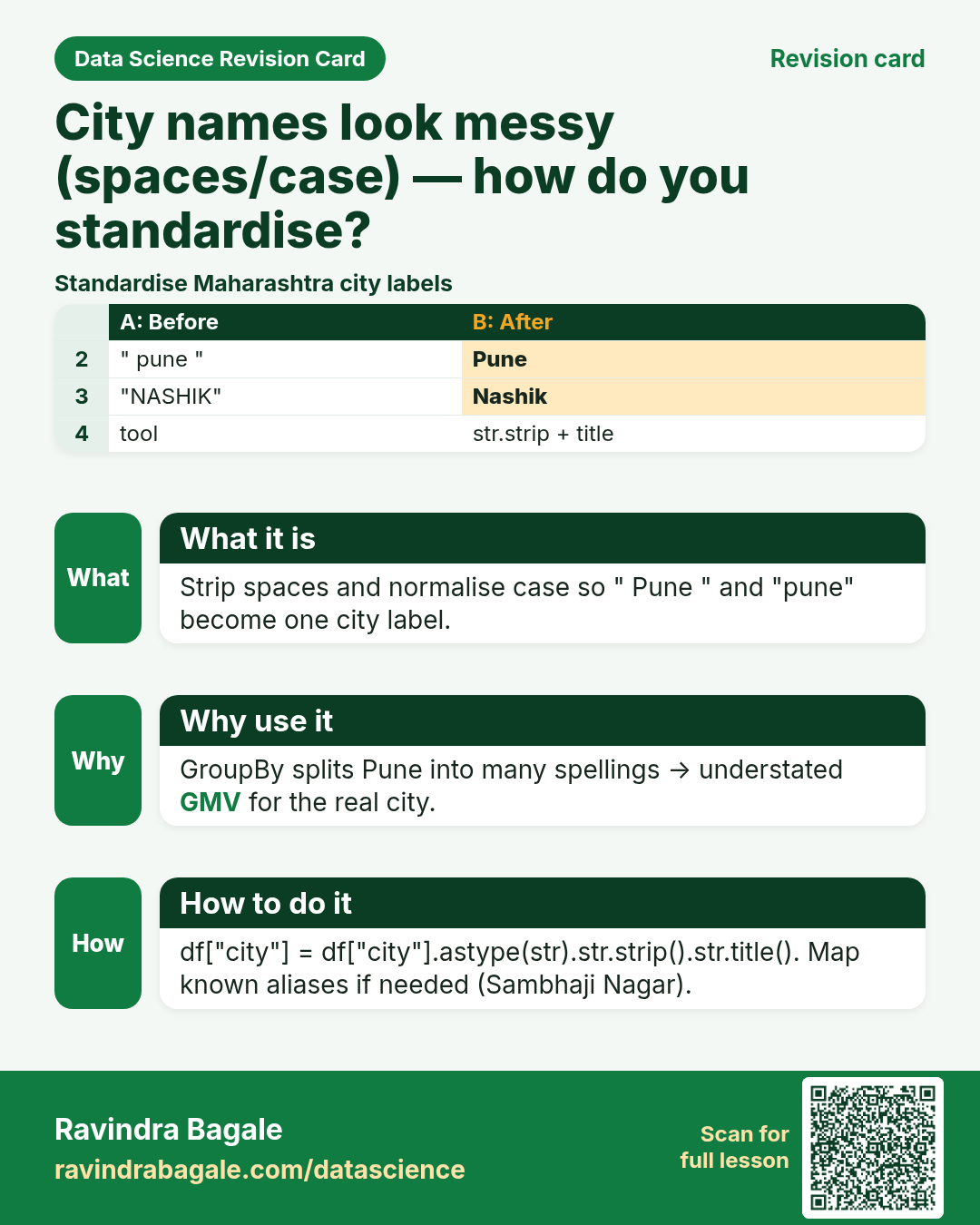
- Card 9: City names look messy (spaces/case) — how do you standardise?
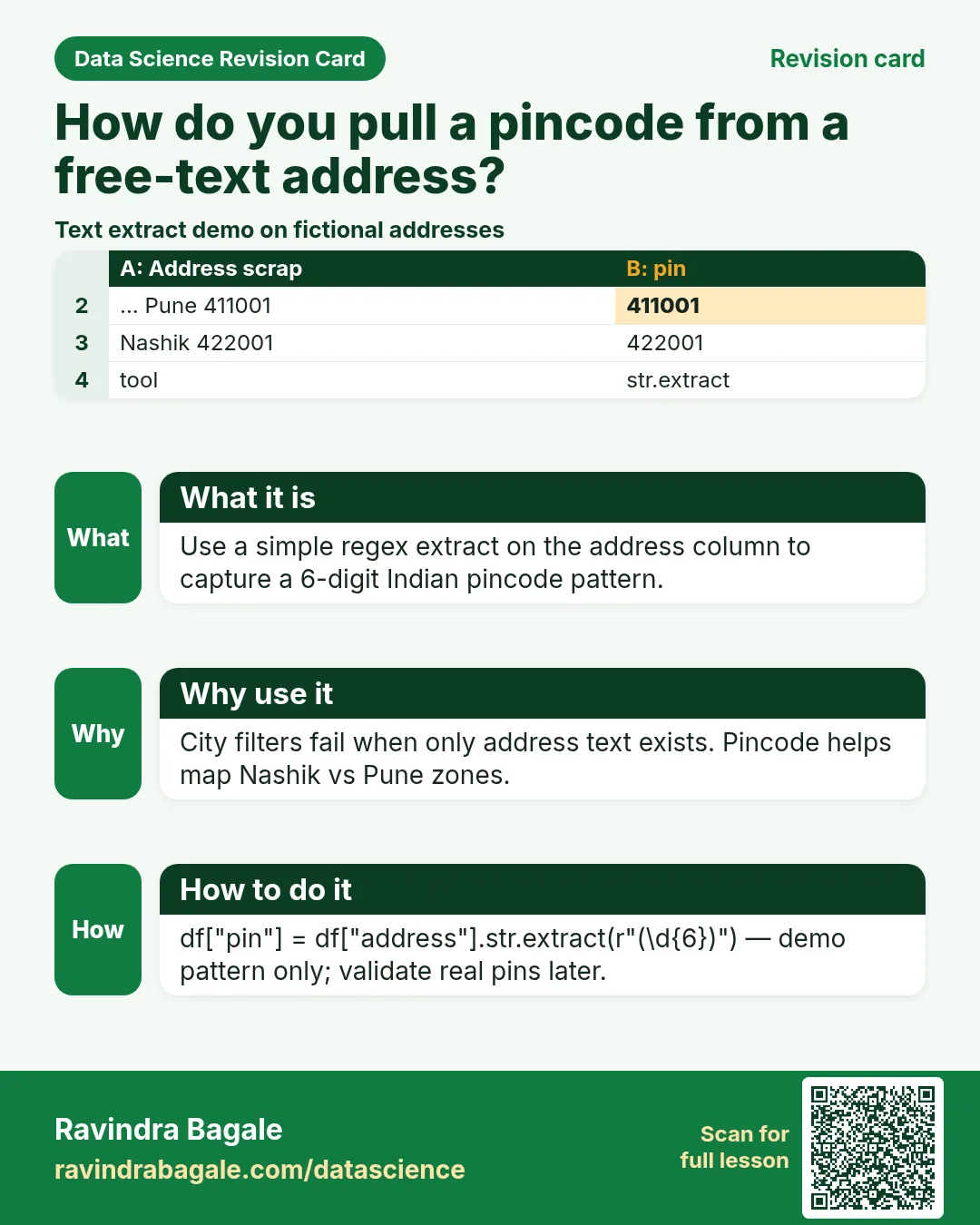
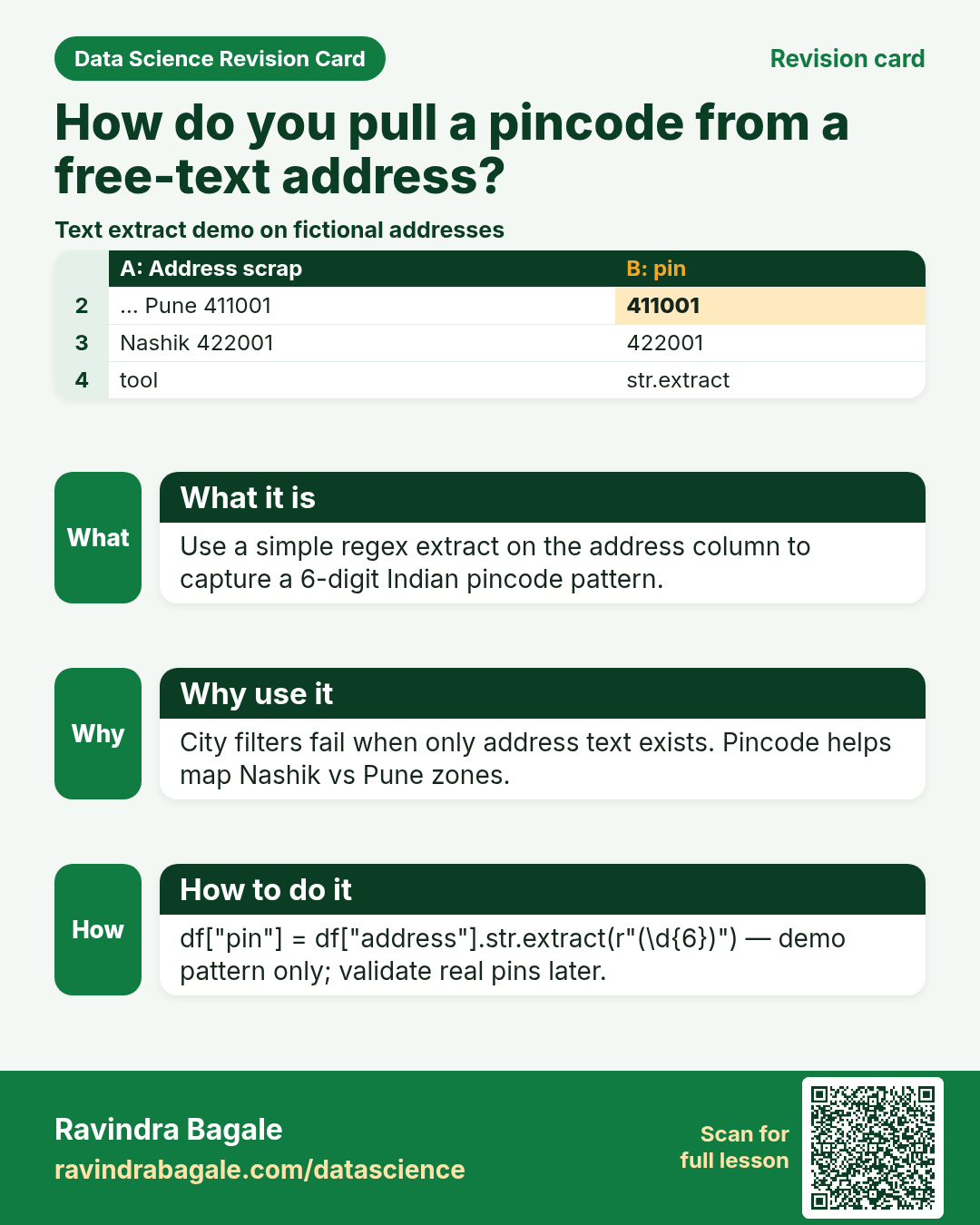
- Card 10: How do you pull a pincode from a free-text address?
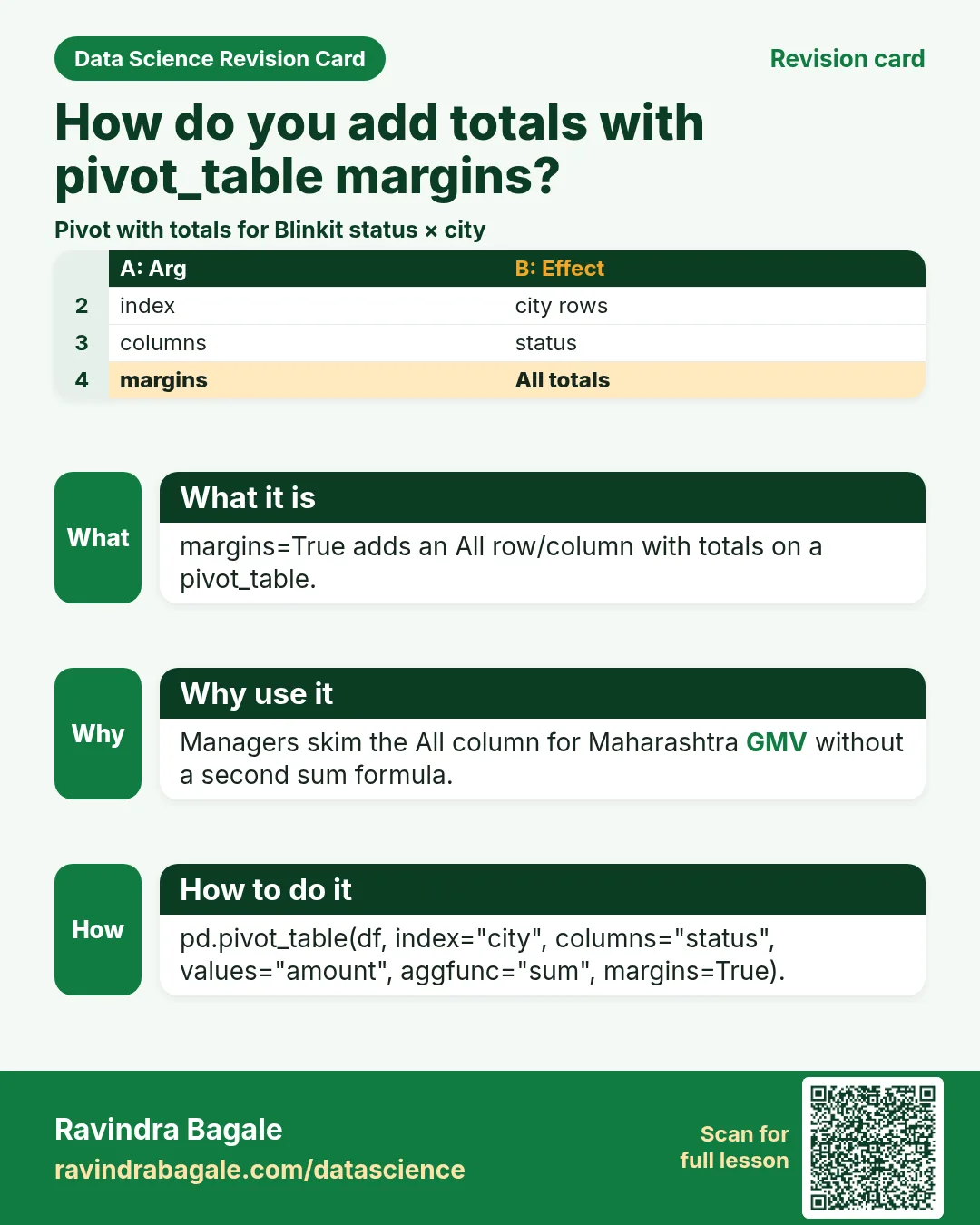
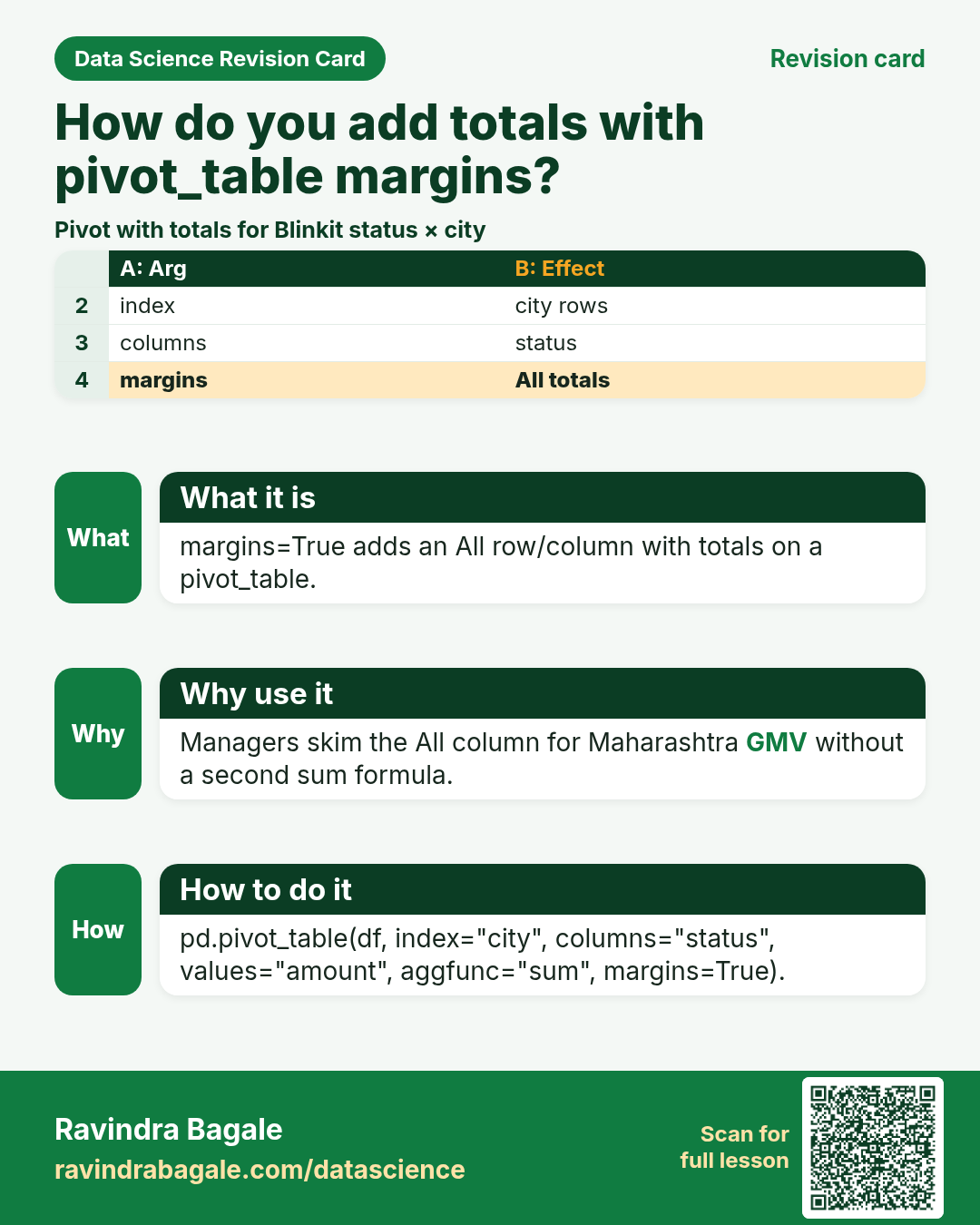
- Card 11: How do you add totals with pivot_table margins?
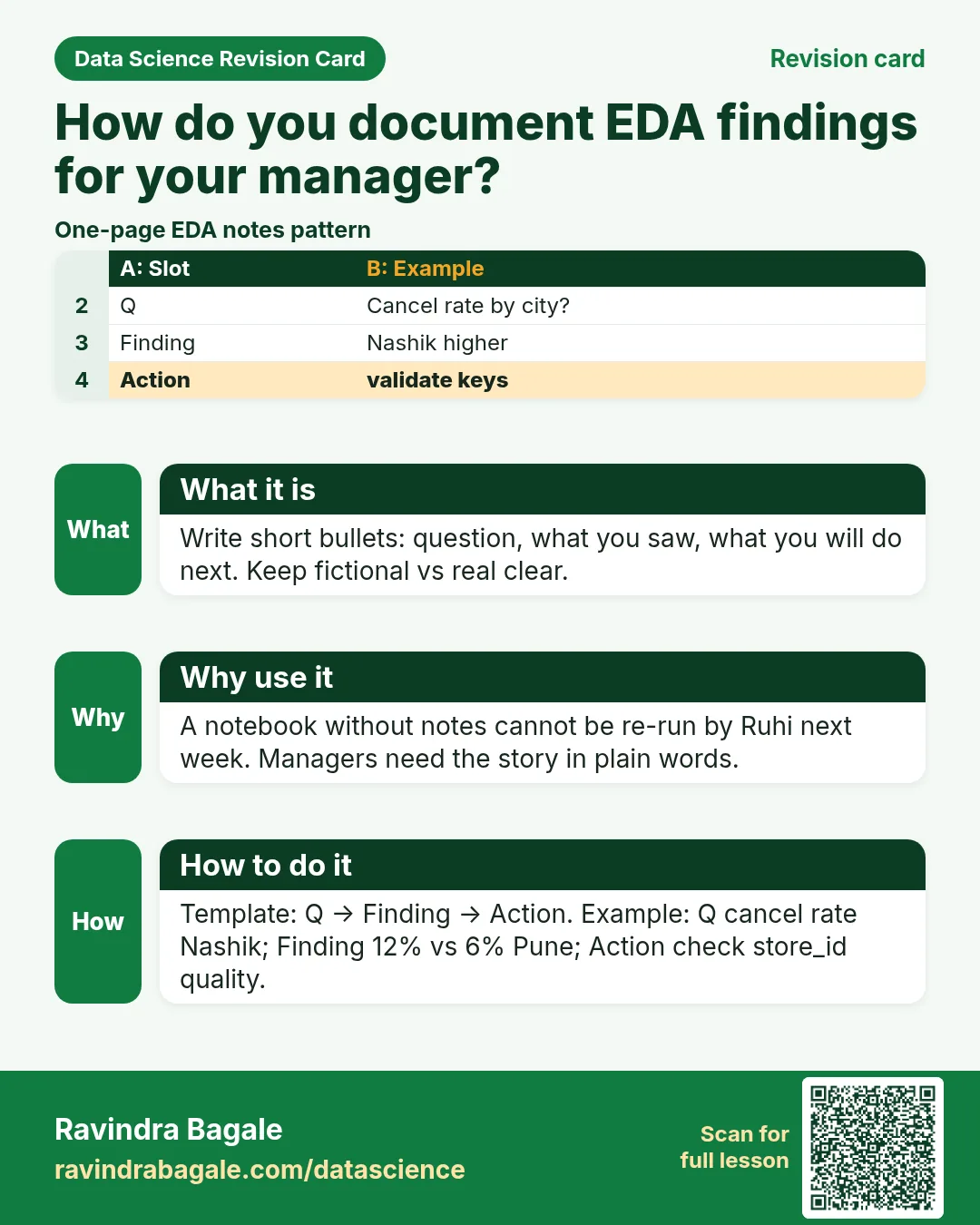
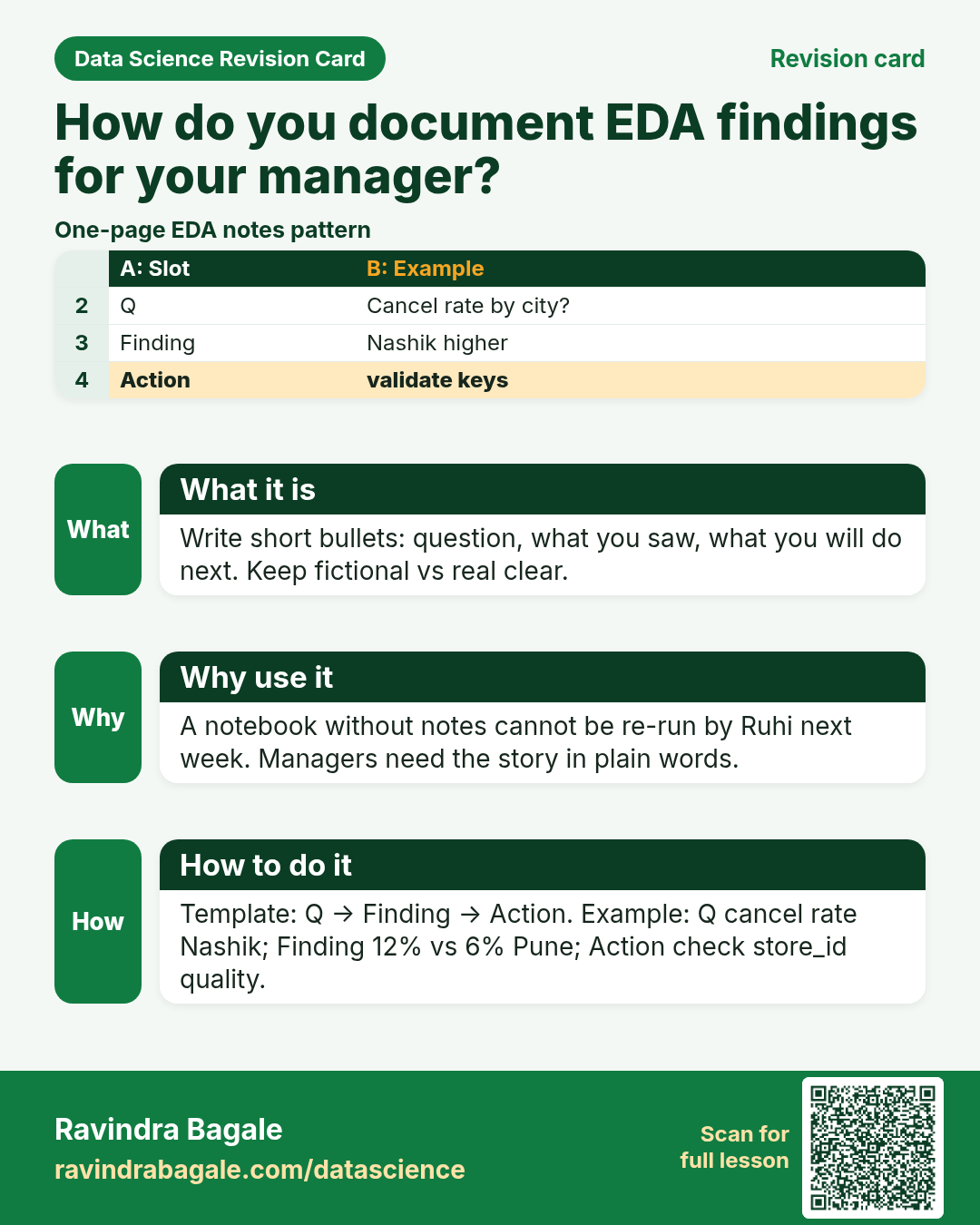
- Card 12: How do you document EDA findings for your manager?
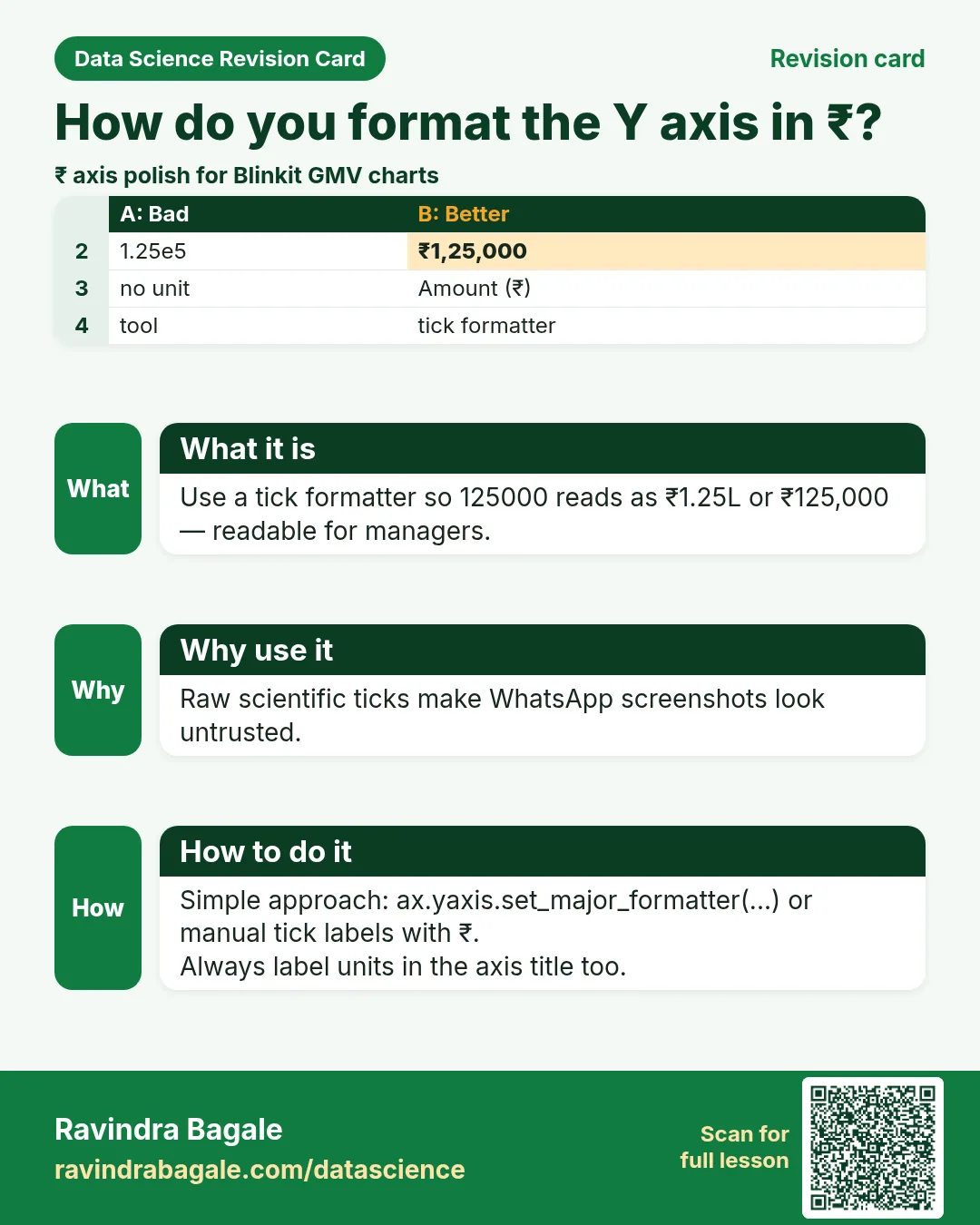
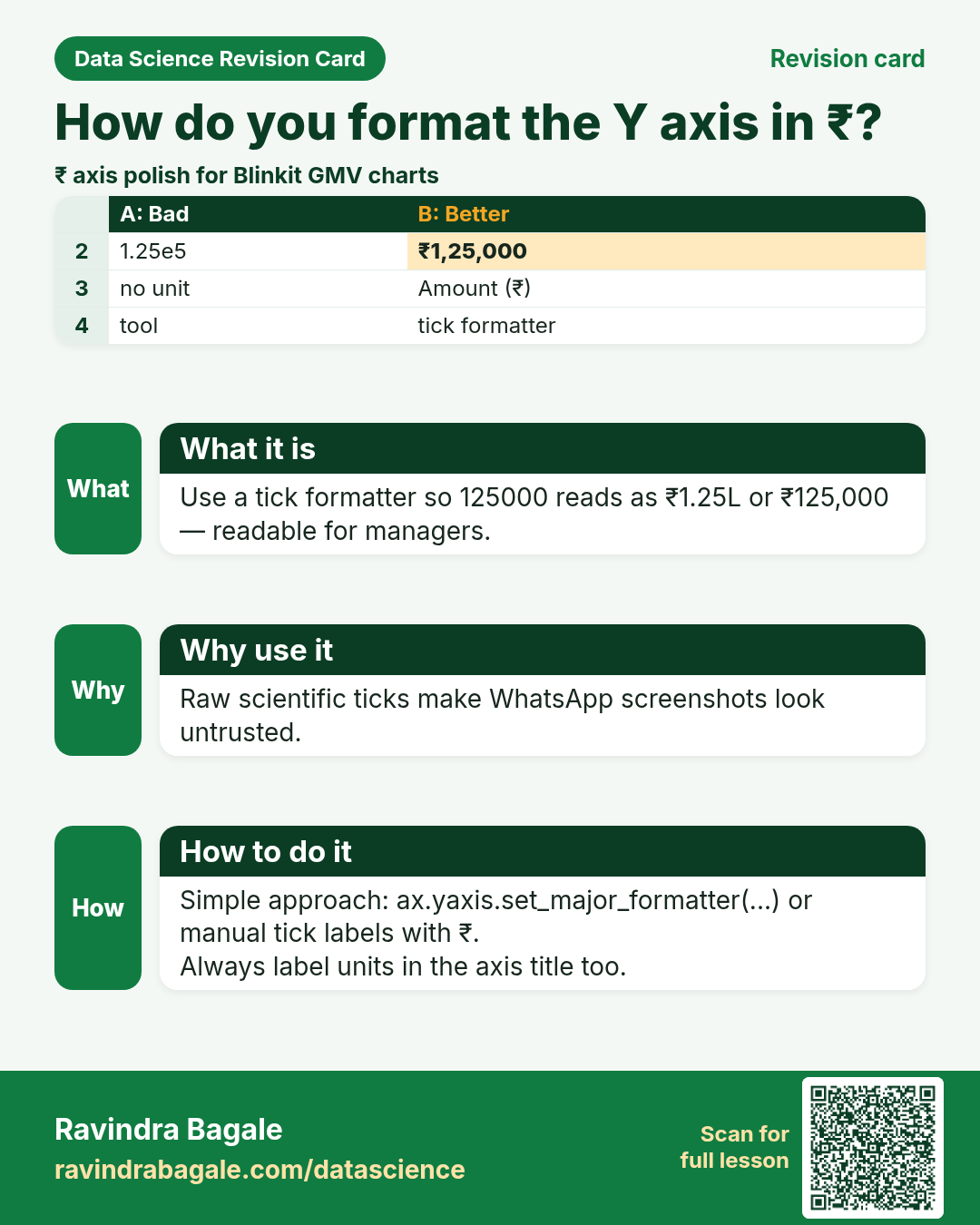
- Card 13: How do you format the Y axis in ₹?
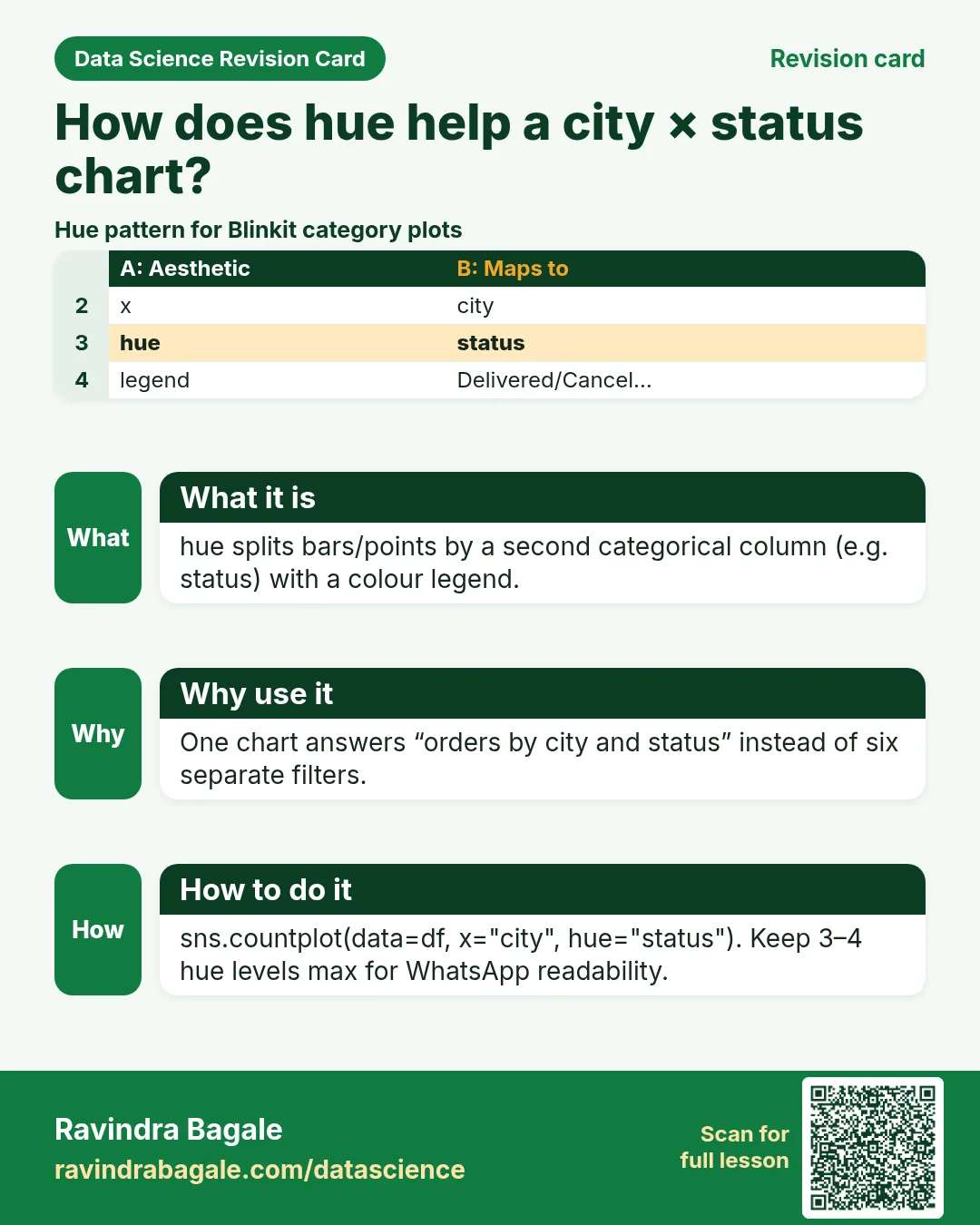
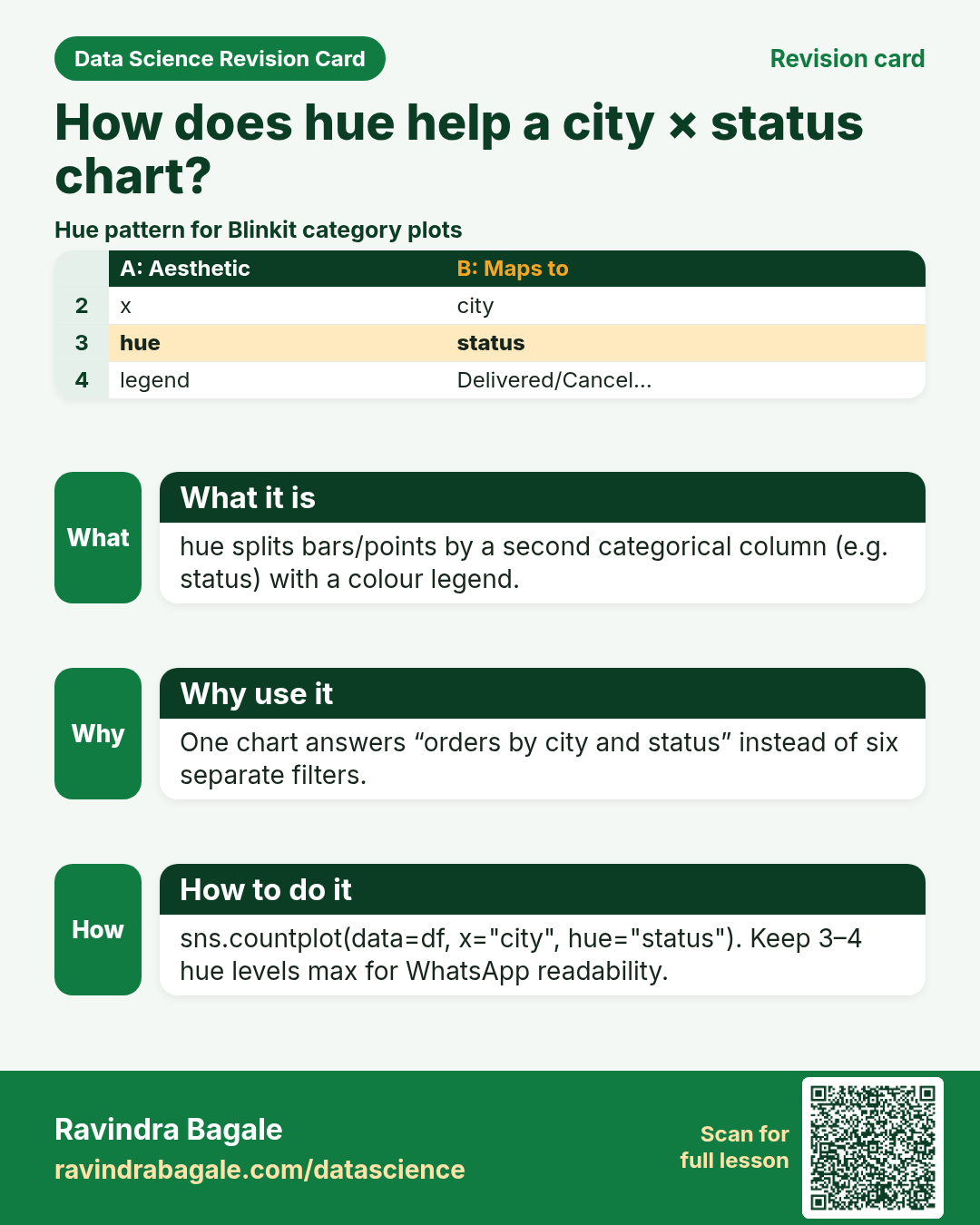
- Card 14: How does hue help a city × status chart?
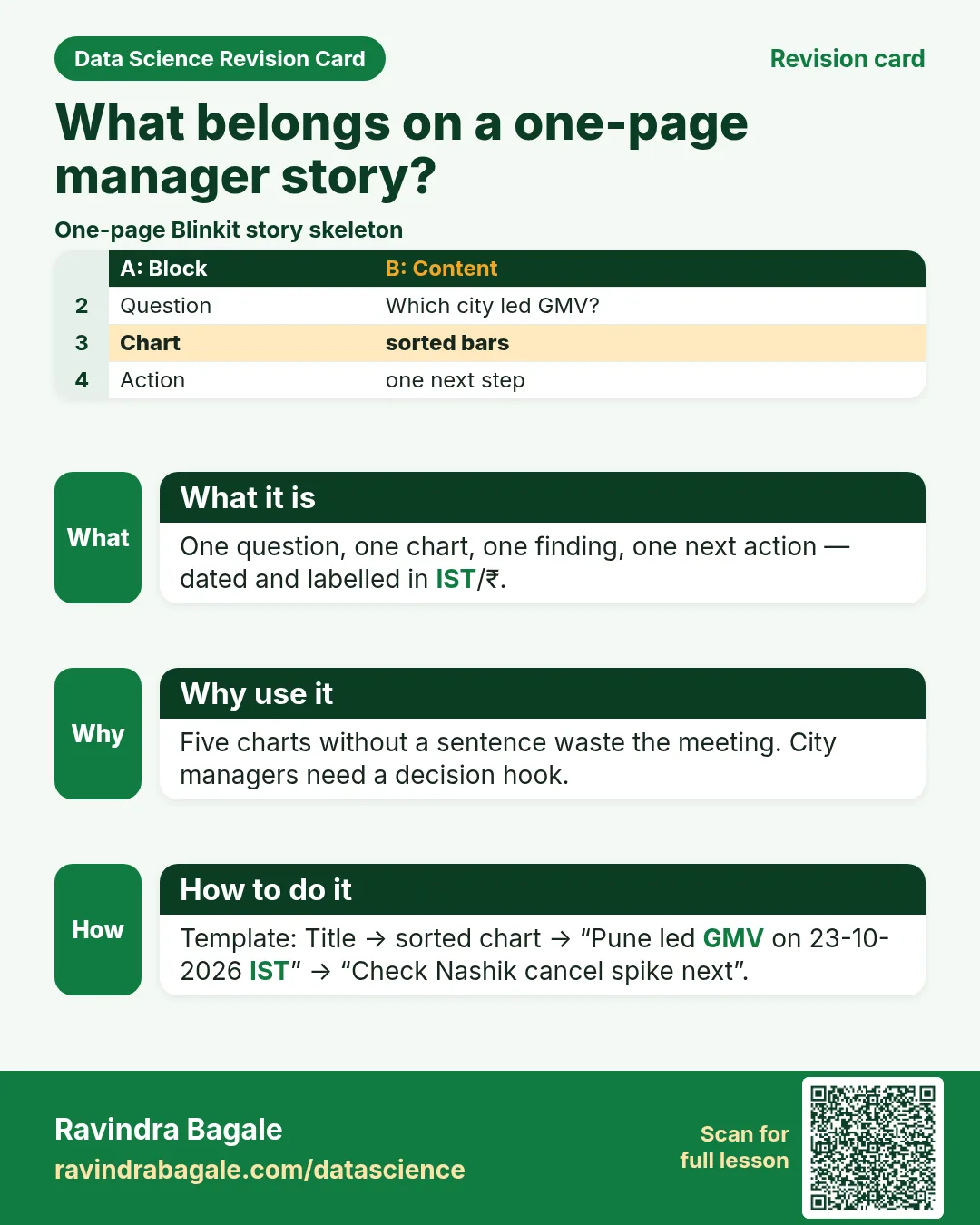
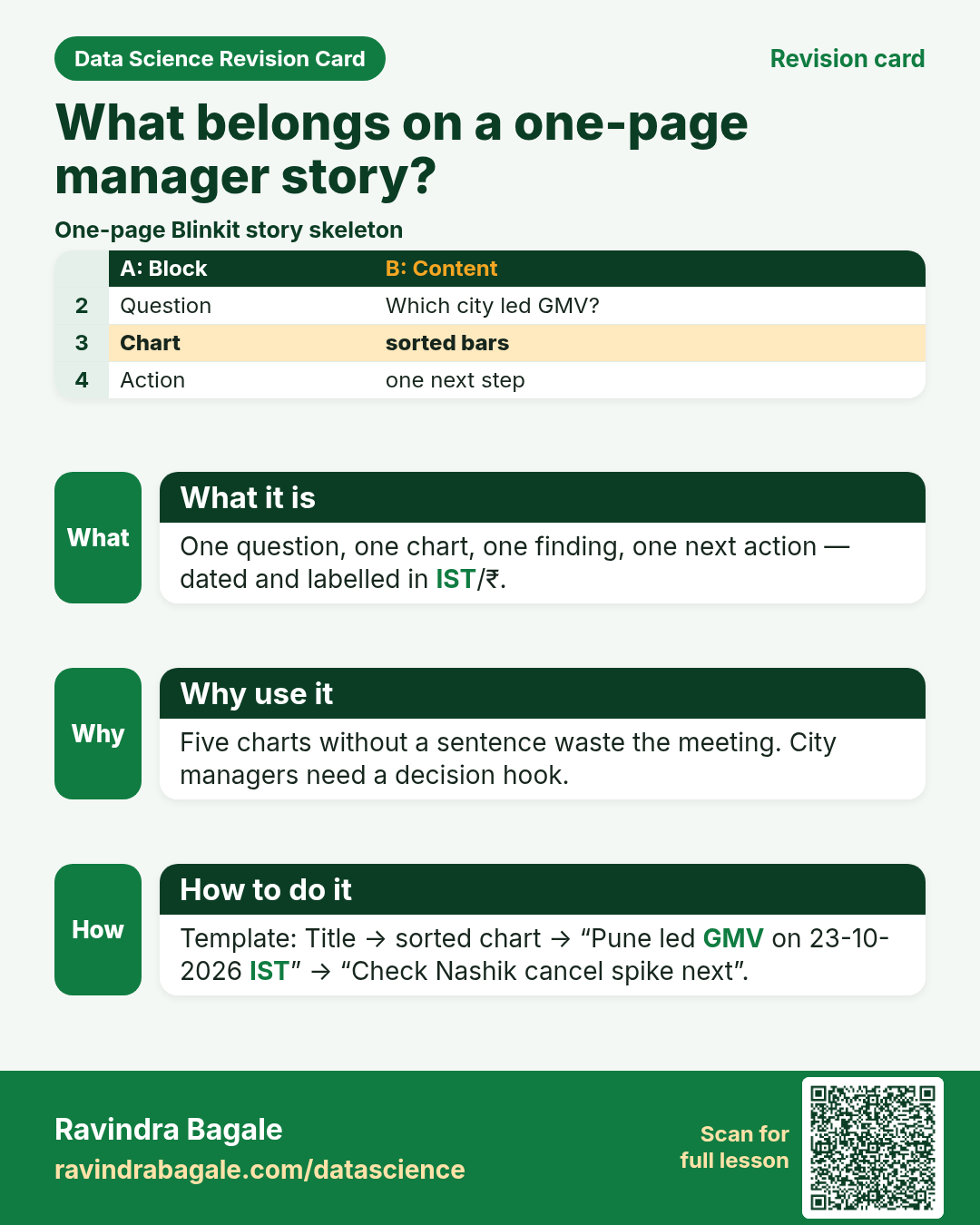
- Card 15: What belongs on a one-page manager story?
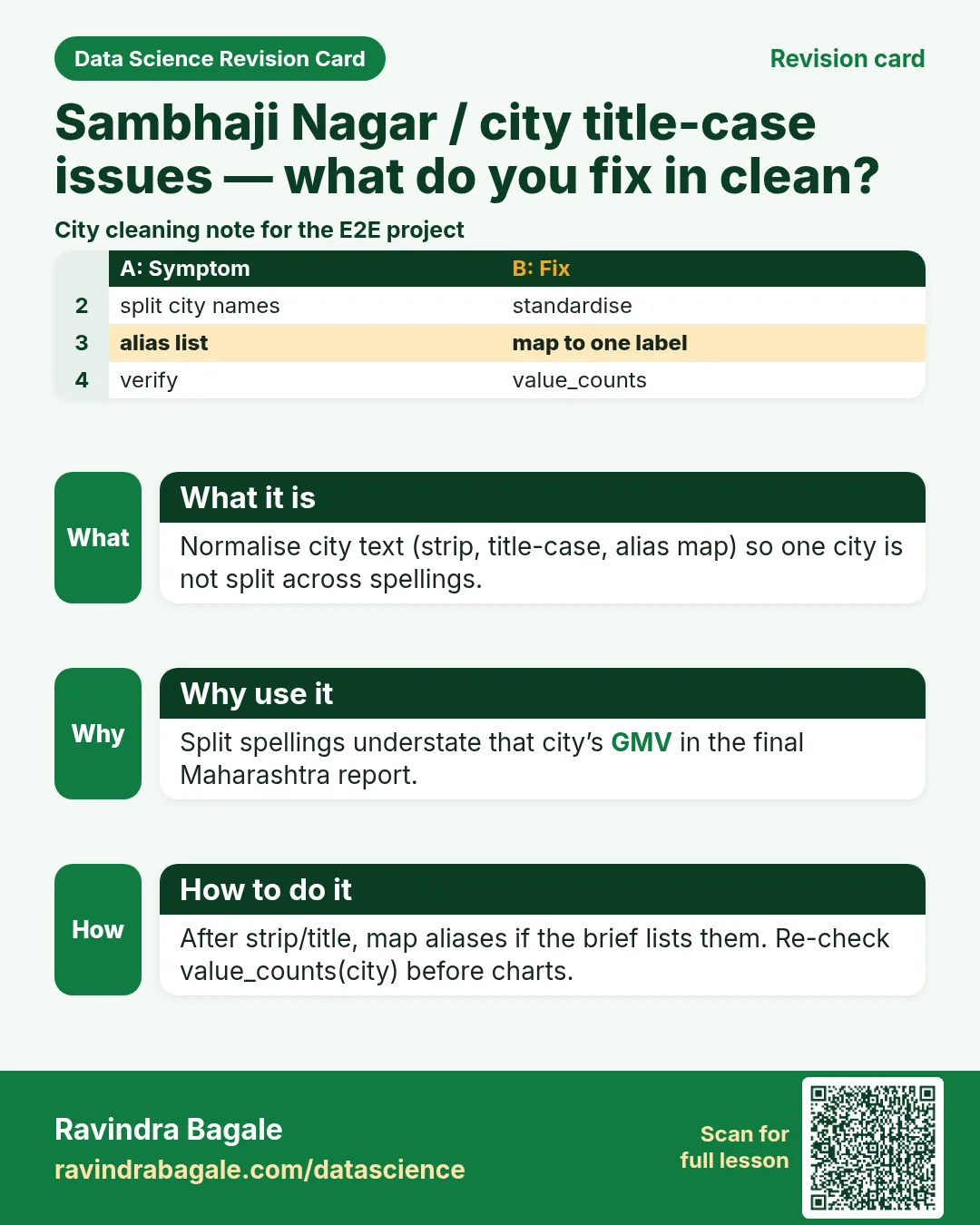
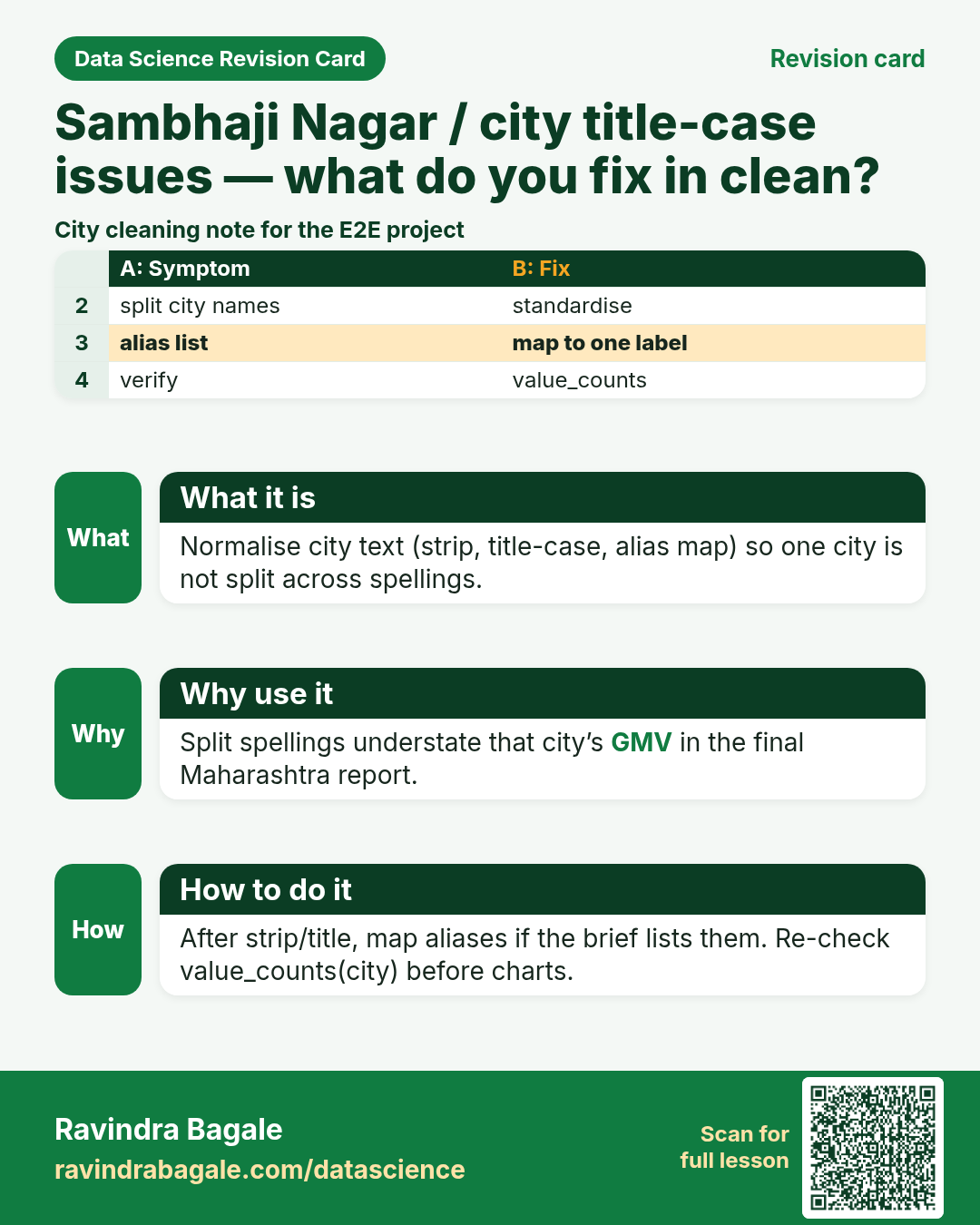
- Card 16: Sambhaji Nagar / city title-case issues — what do you fix in clean?
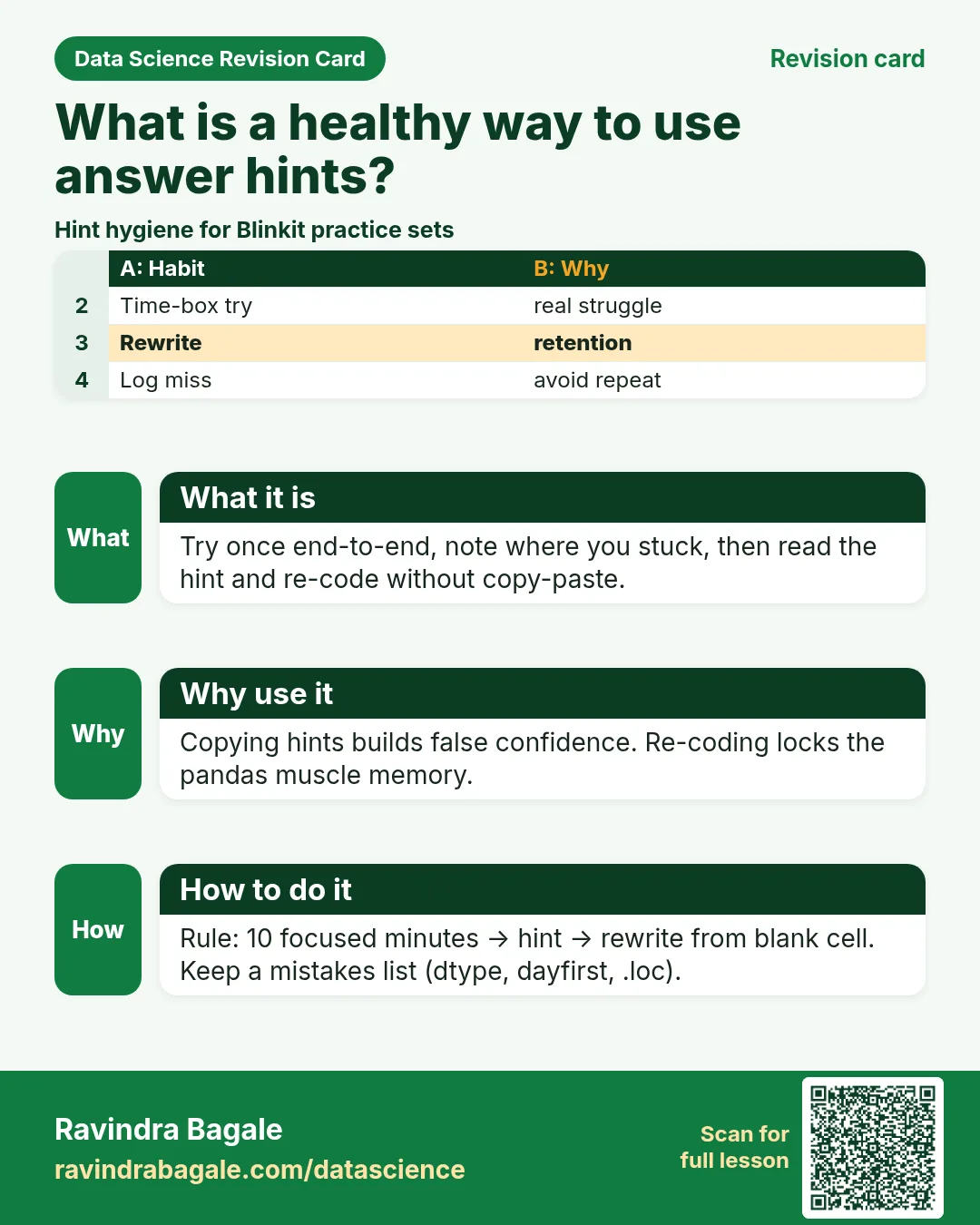
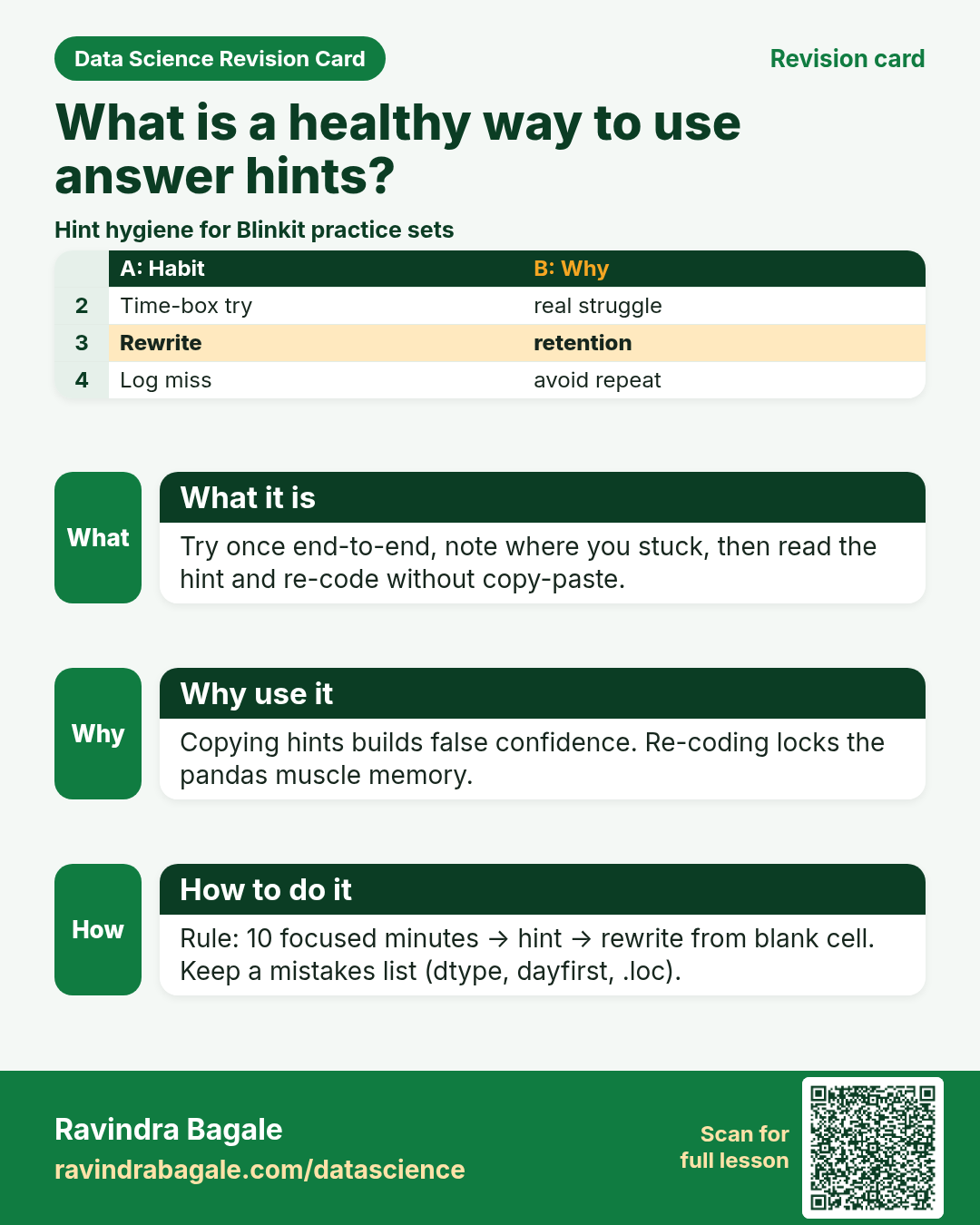
- Card 17: What is a healthy way to use answer hints?
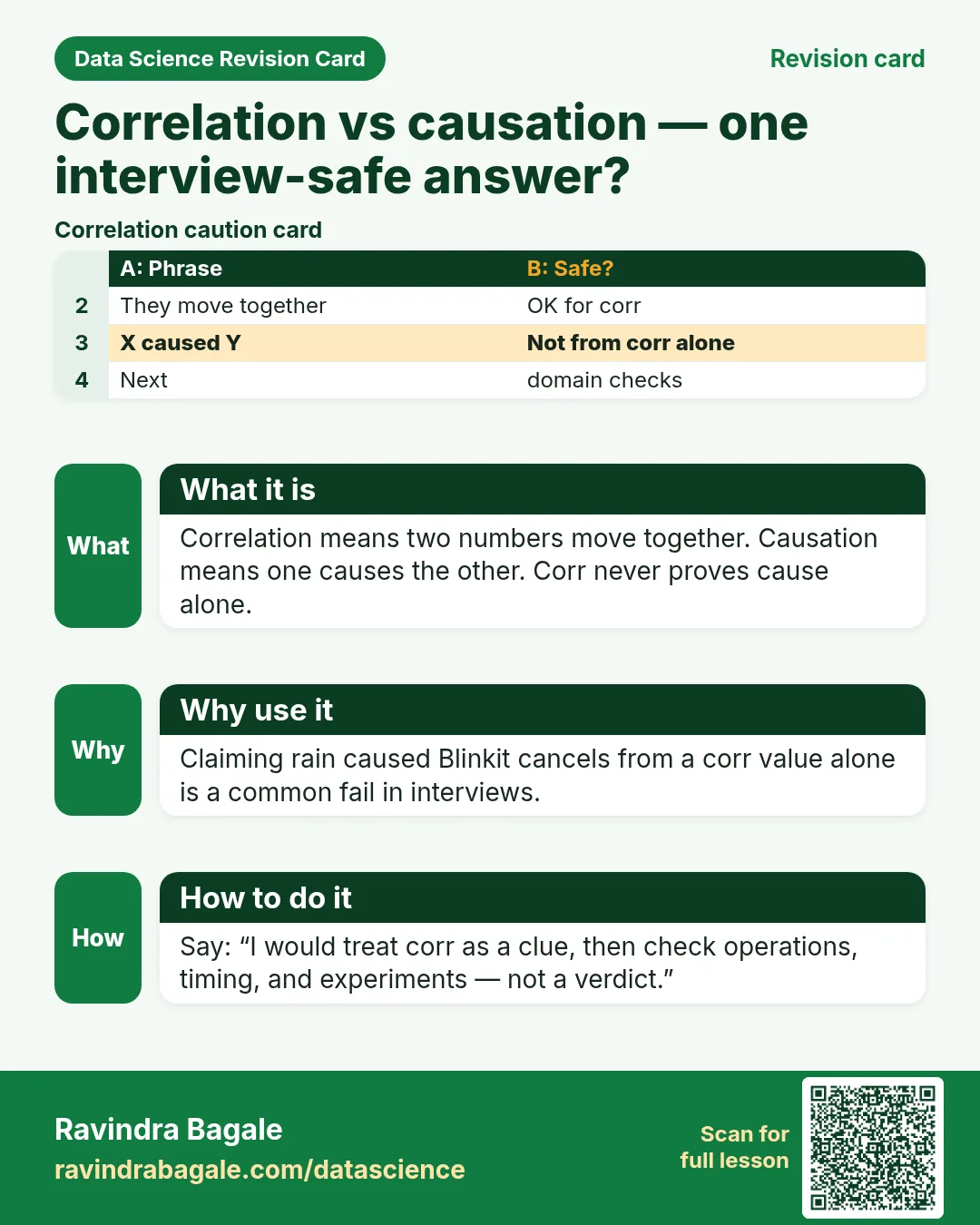
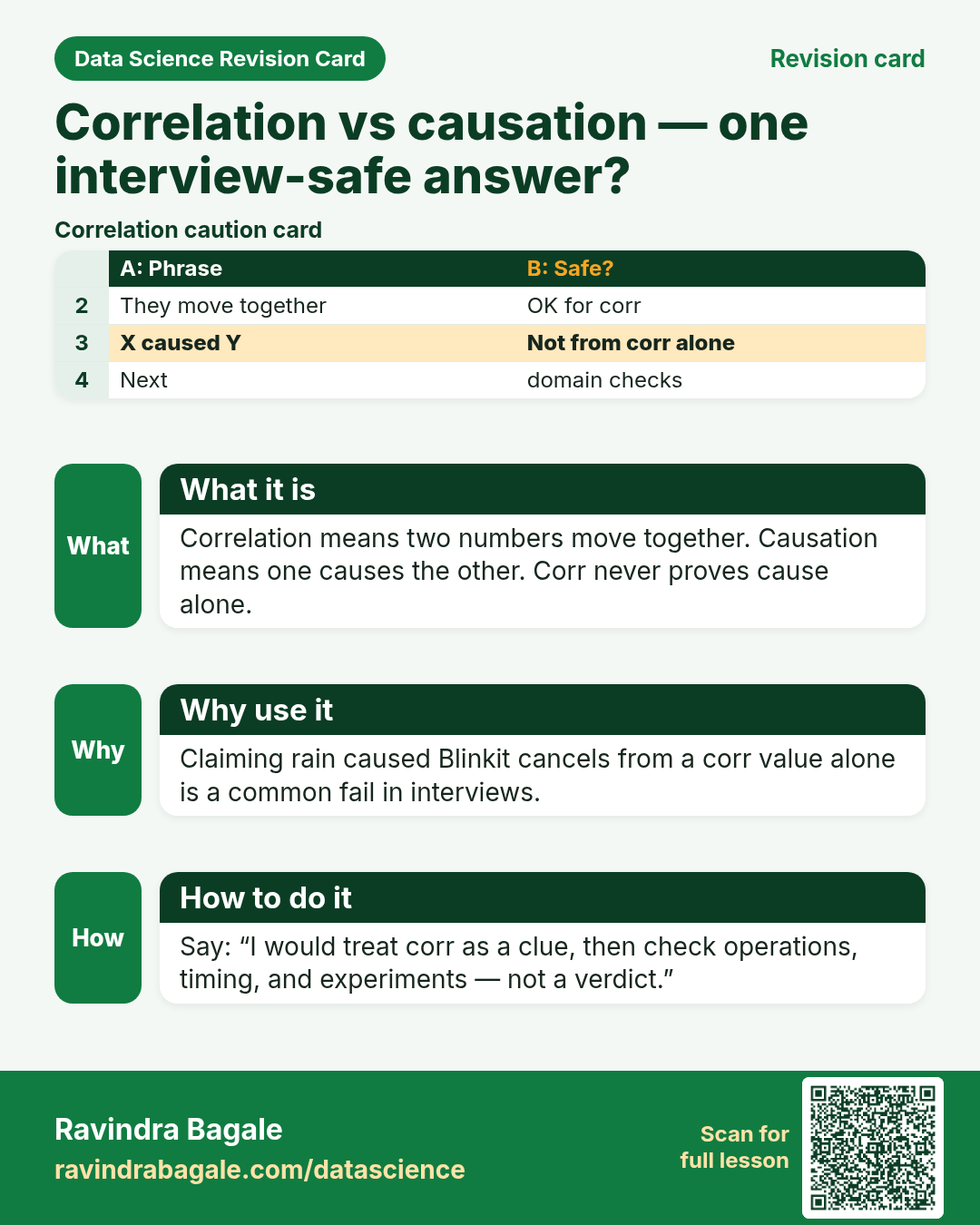
- Card 18: Correlation vs causation — one interview-safe answer?
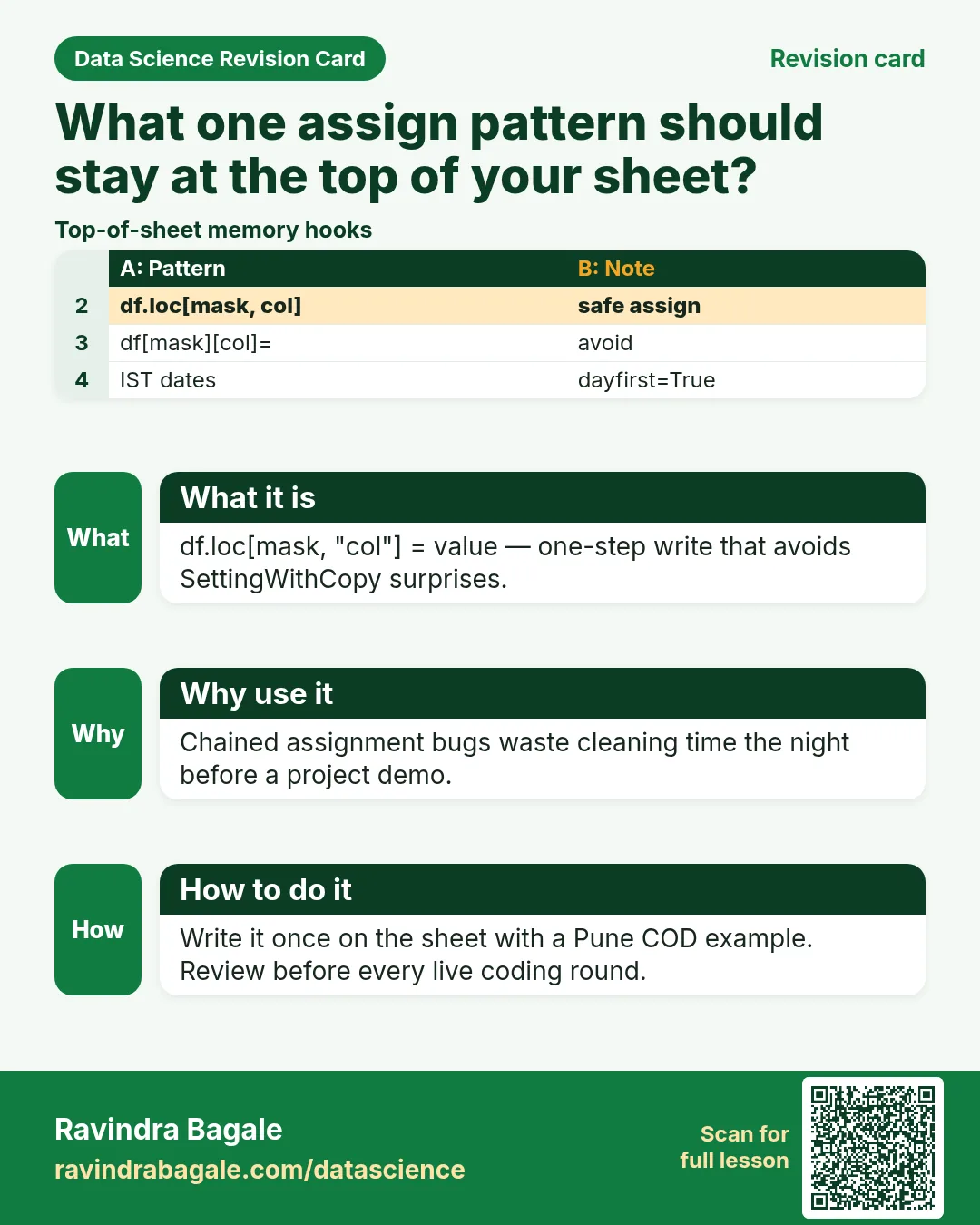
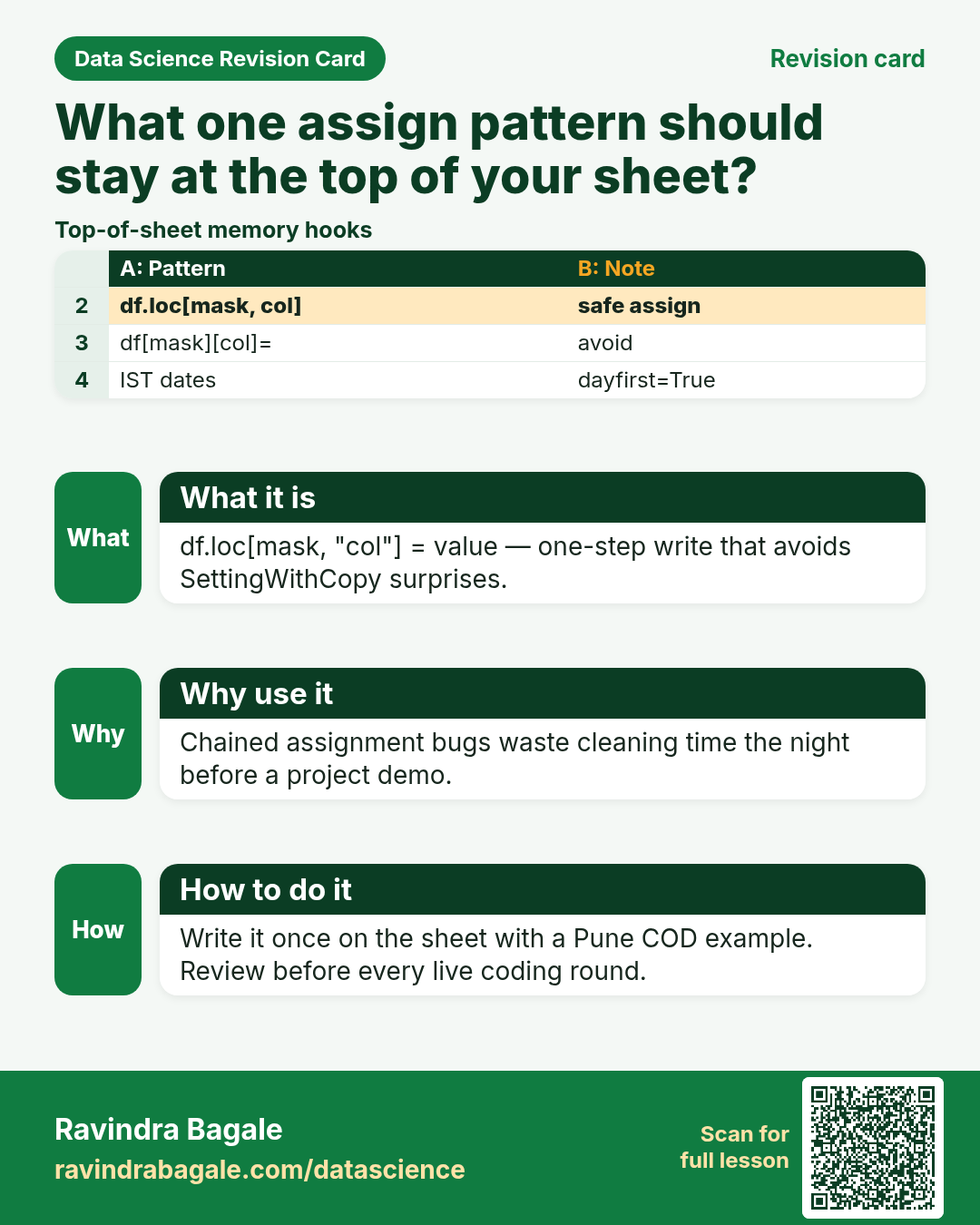
- Card 19: What one assign pattern should stay at the top of your sheet?
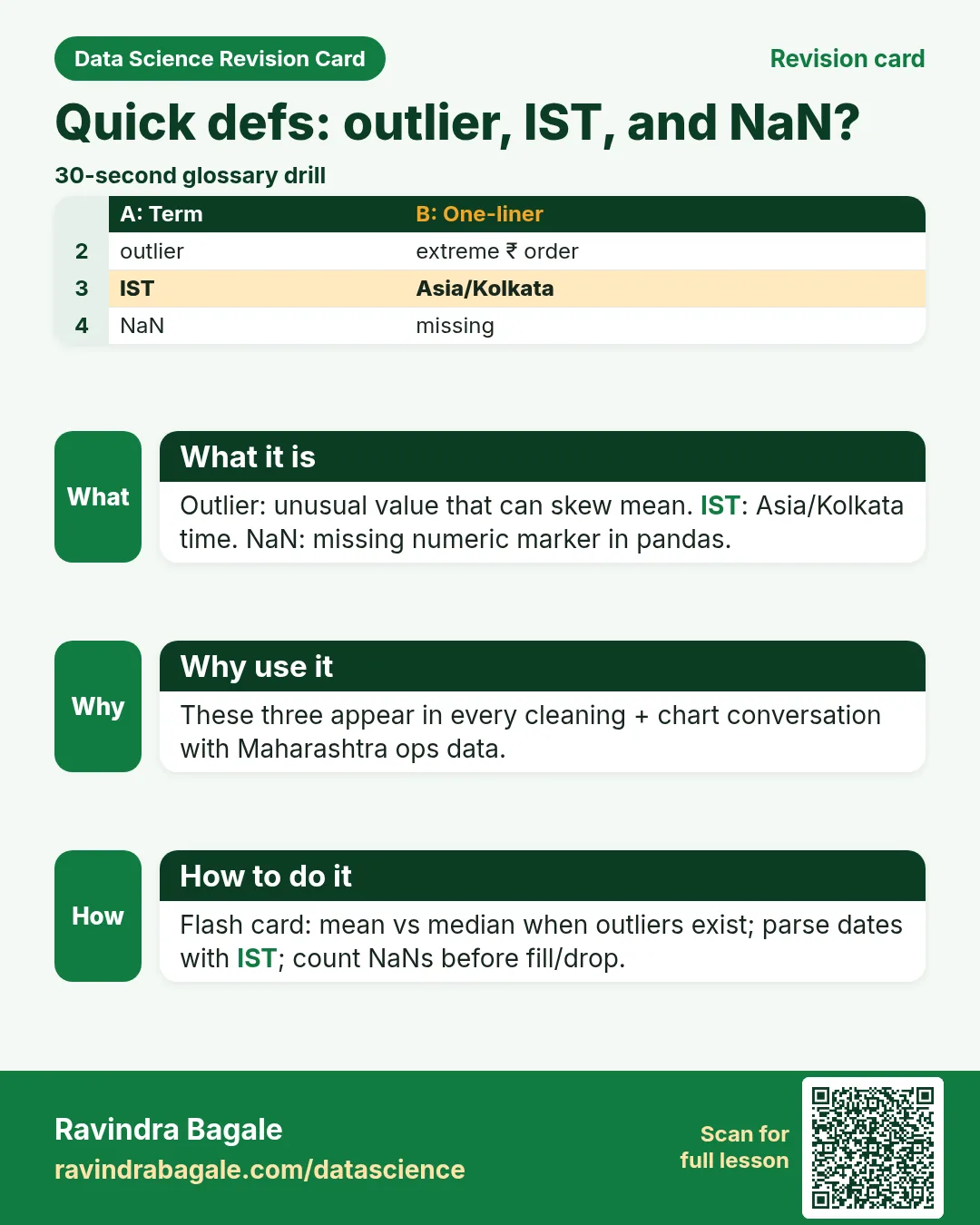
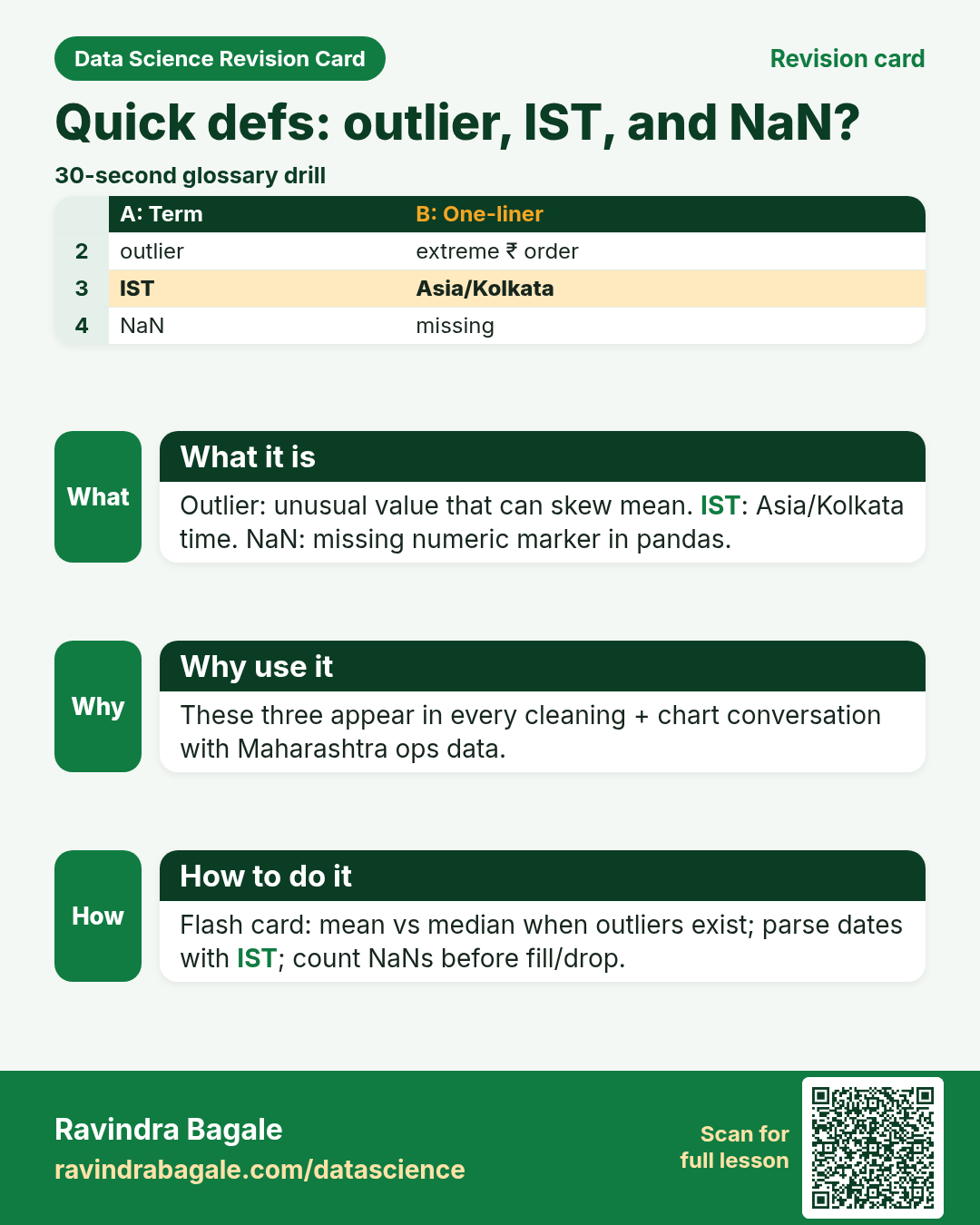
- Card 20: Quick defs: outlier, IST, and NaN?
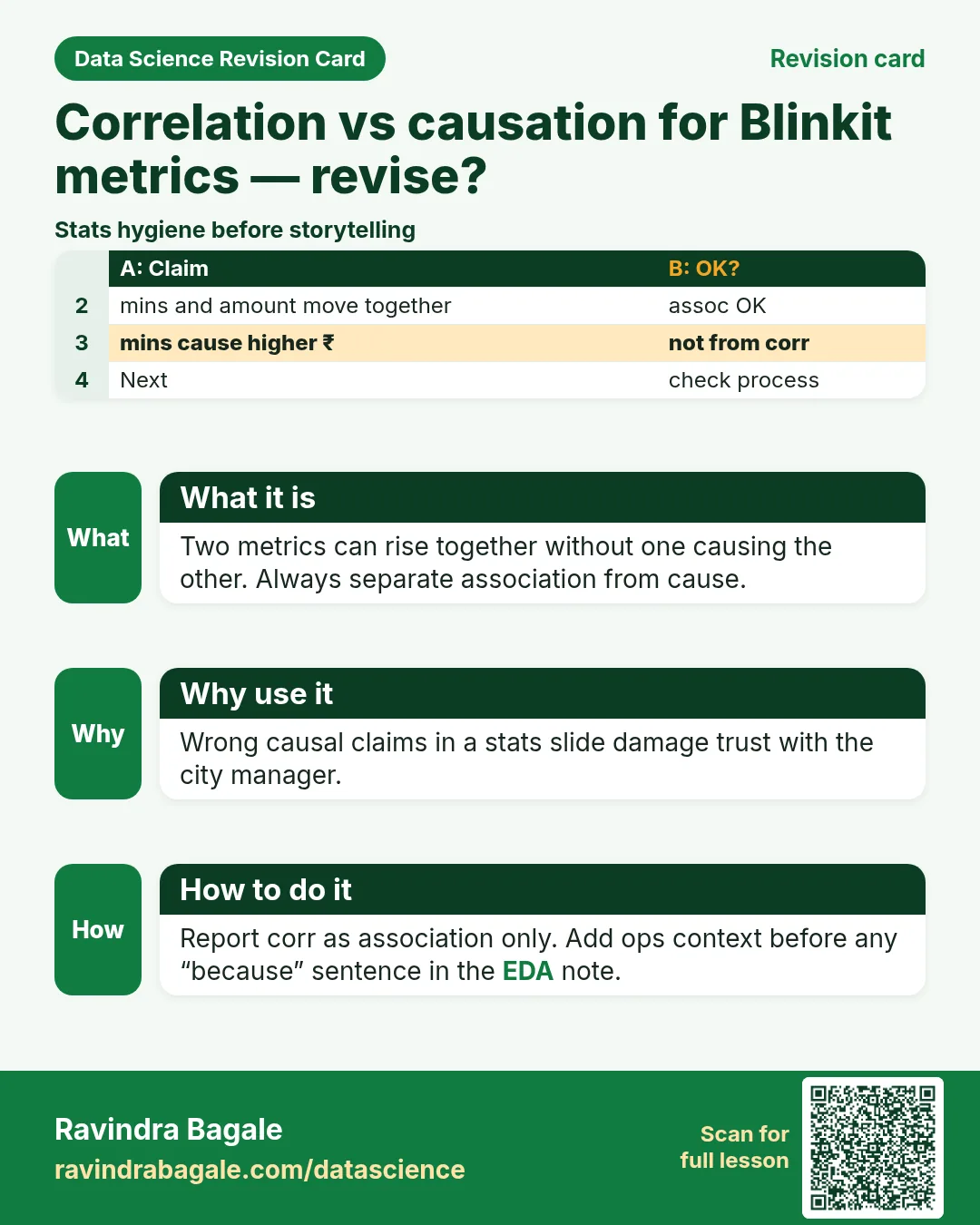
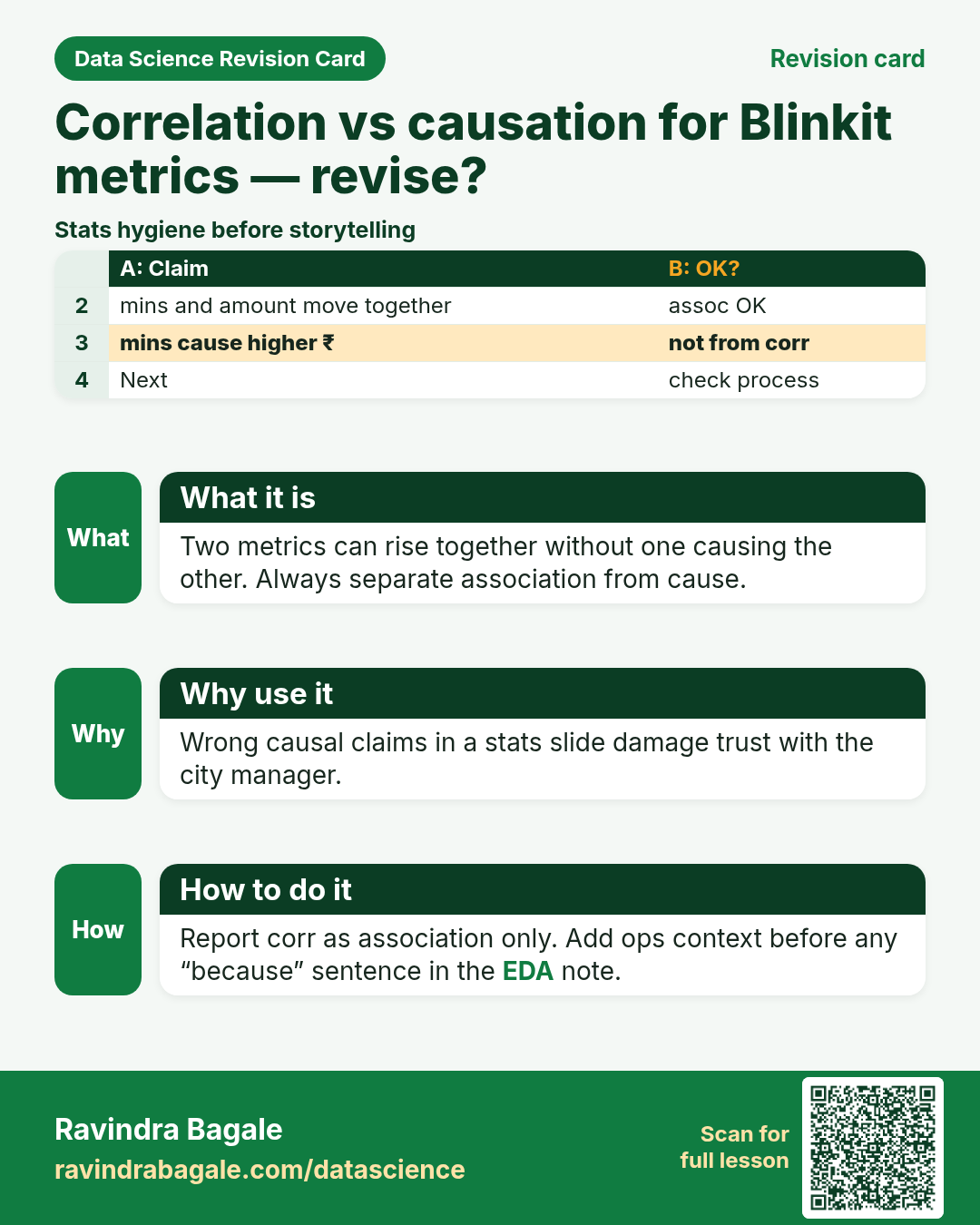
- Card 21: Correlation vs causation for Blinkit metrics — revise?
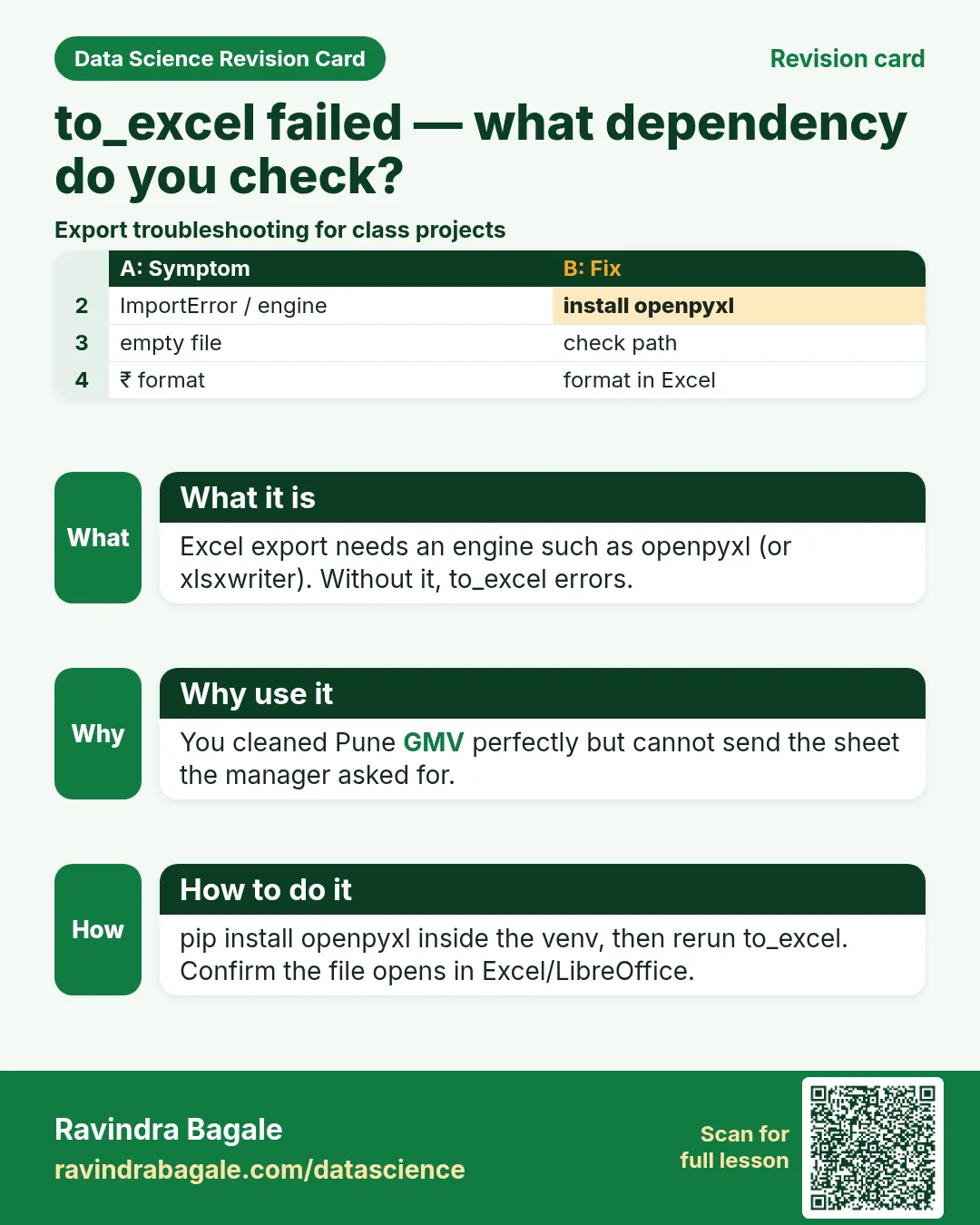
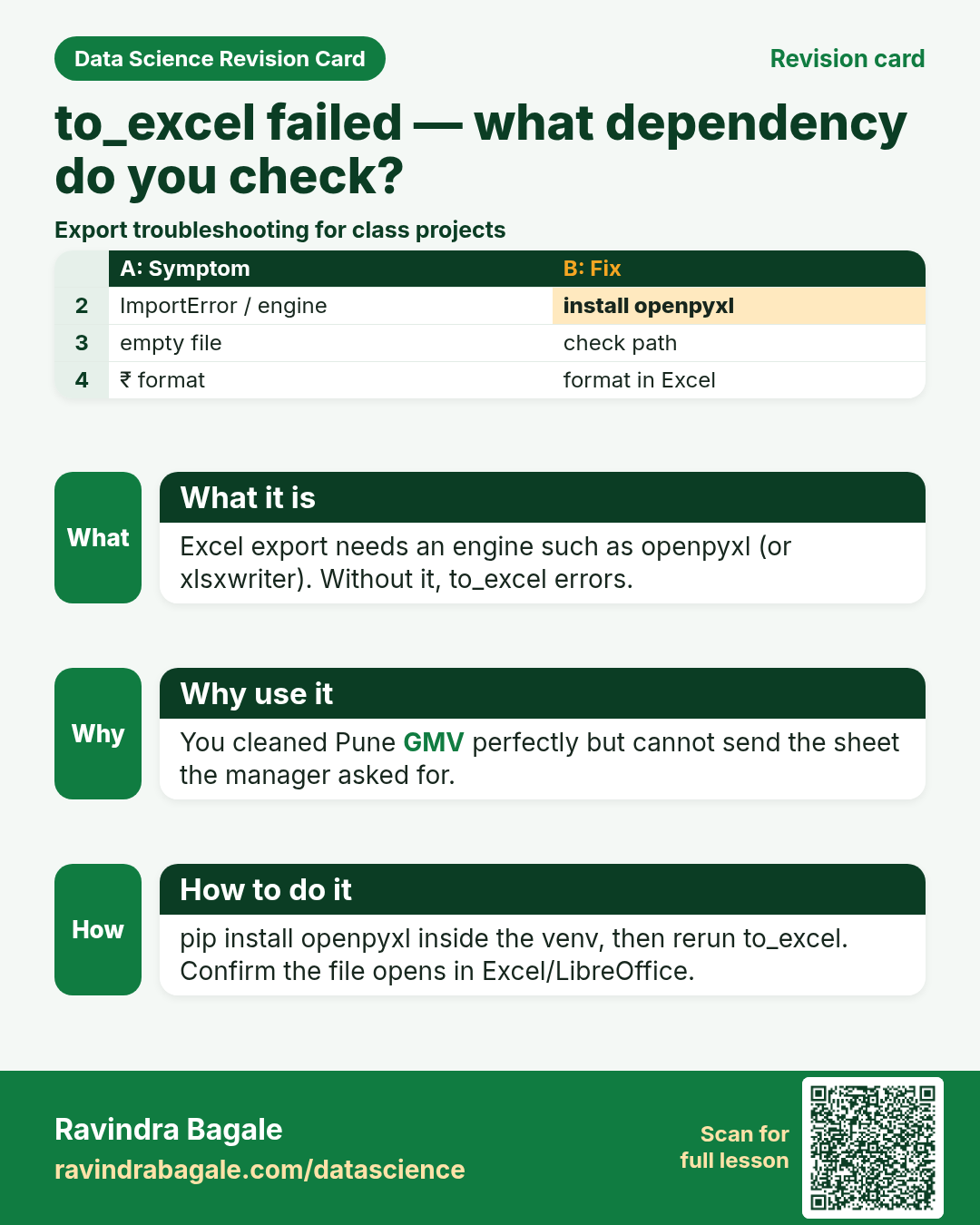
- Card 22: to_excel failed — what dependency do you check?
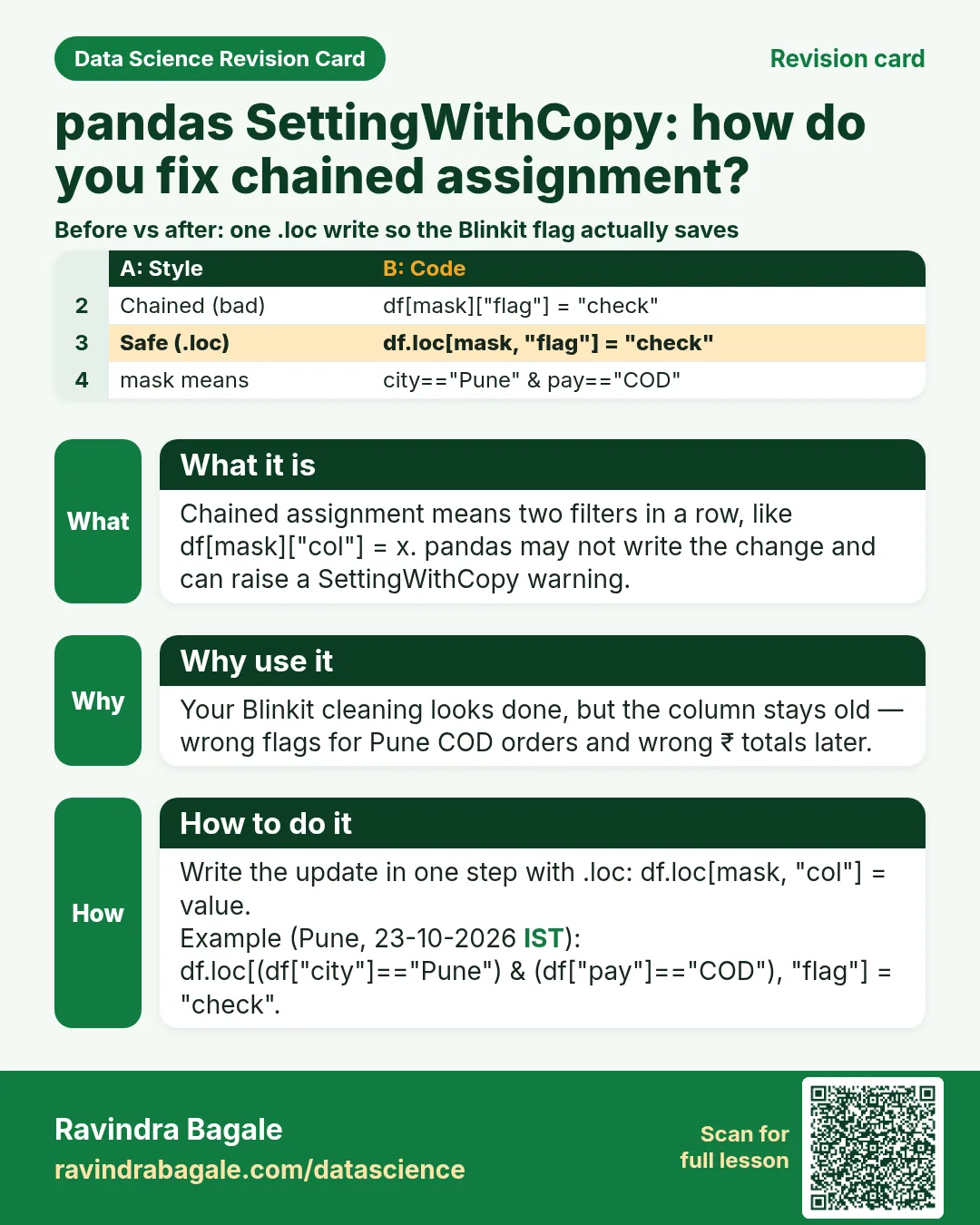
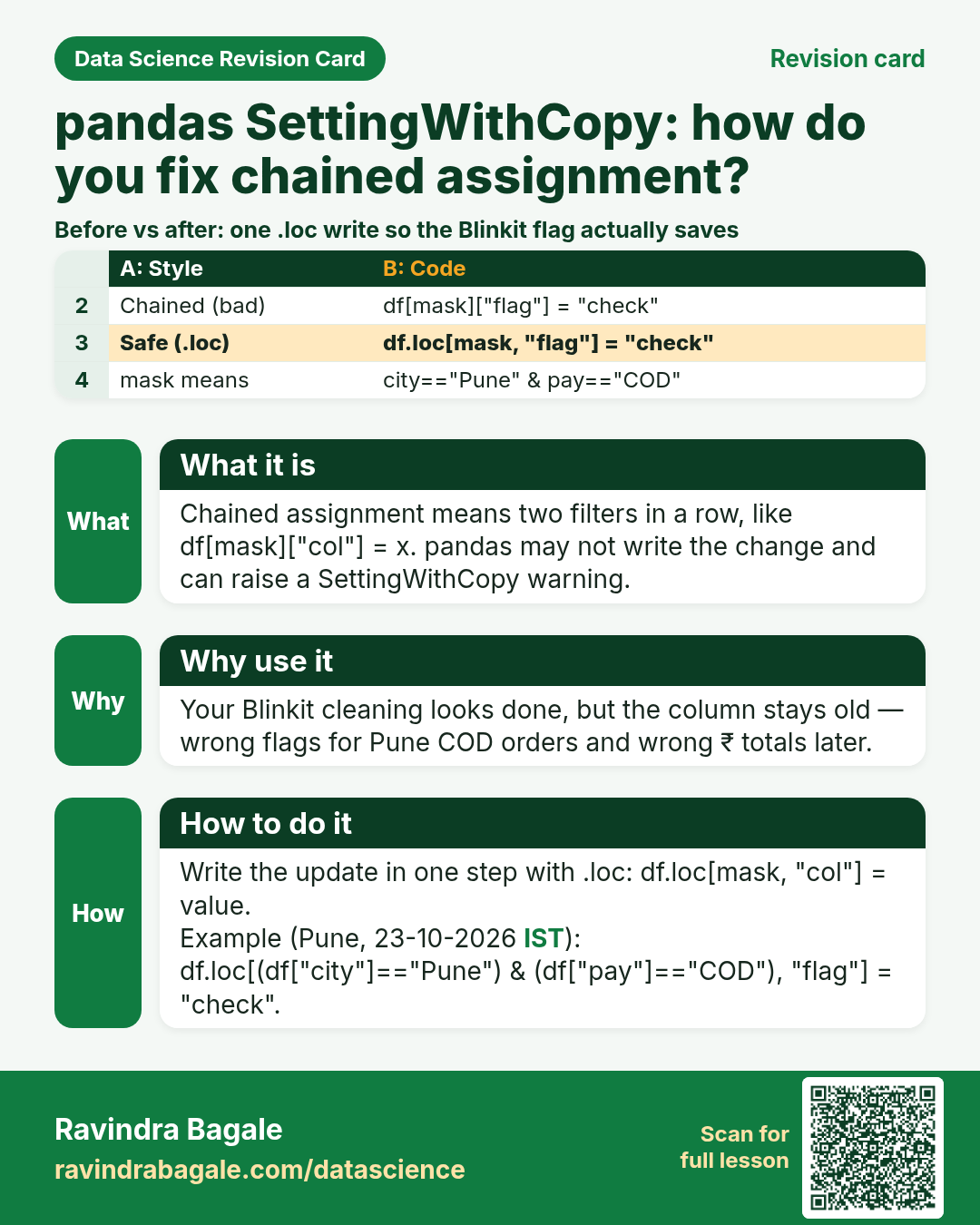
- Card 23: pandas SettingWithCopy: how do you fix chained assignment?
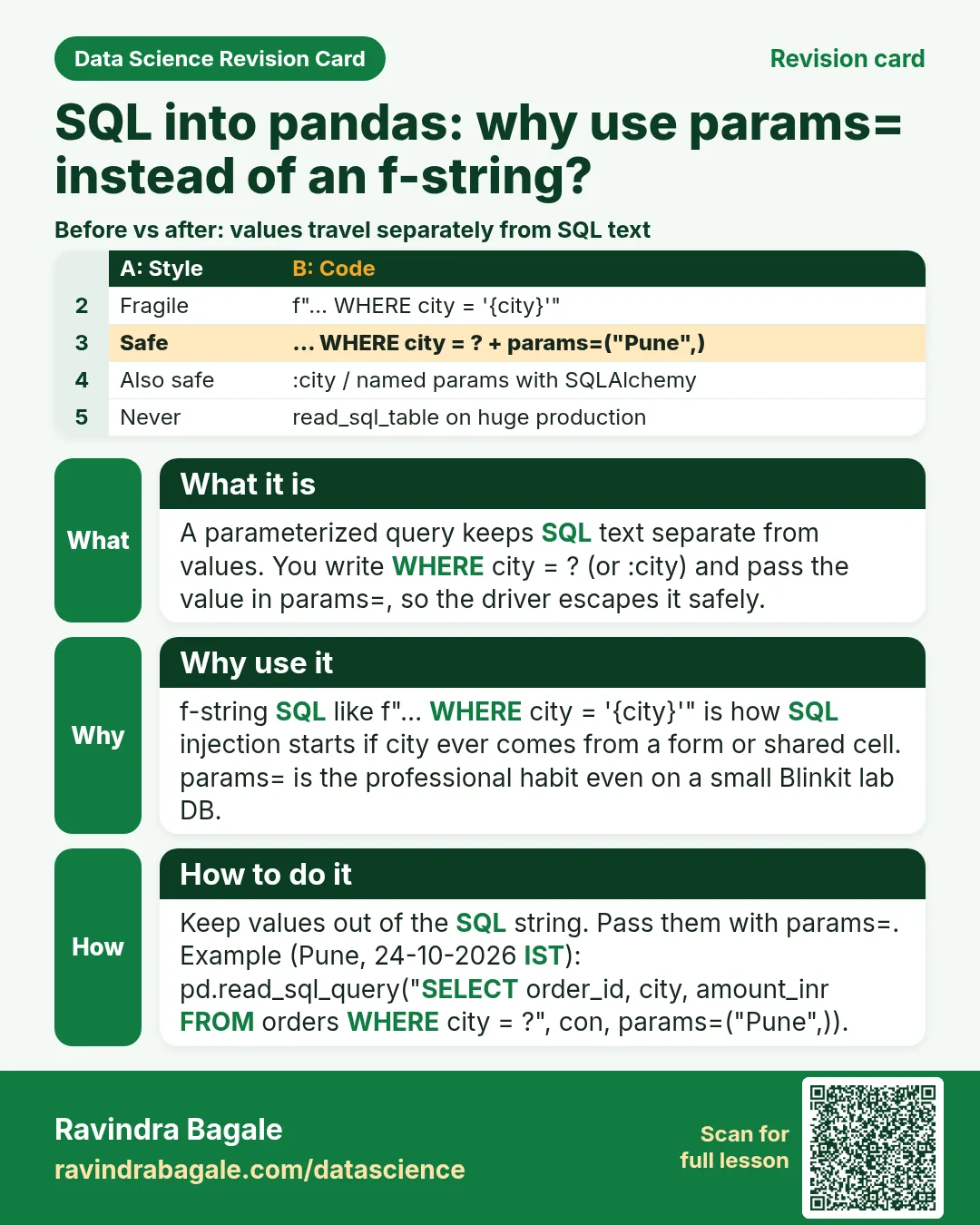
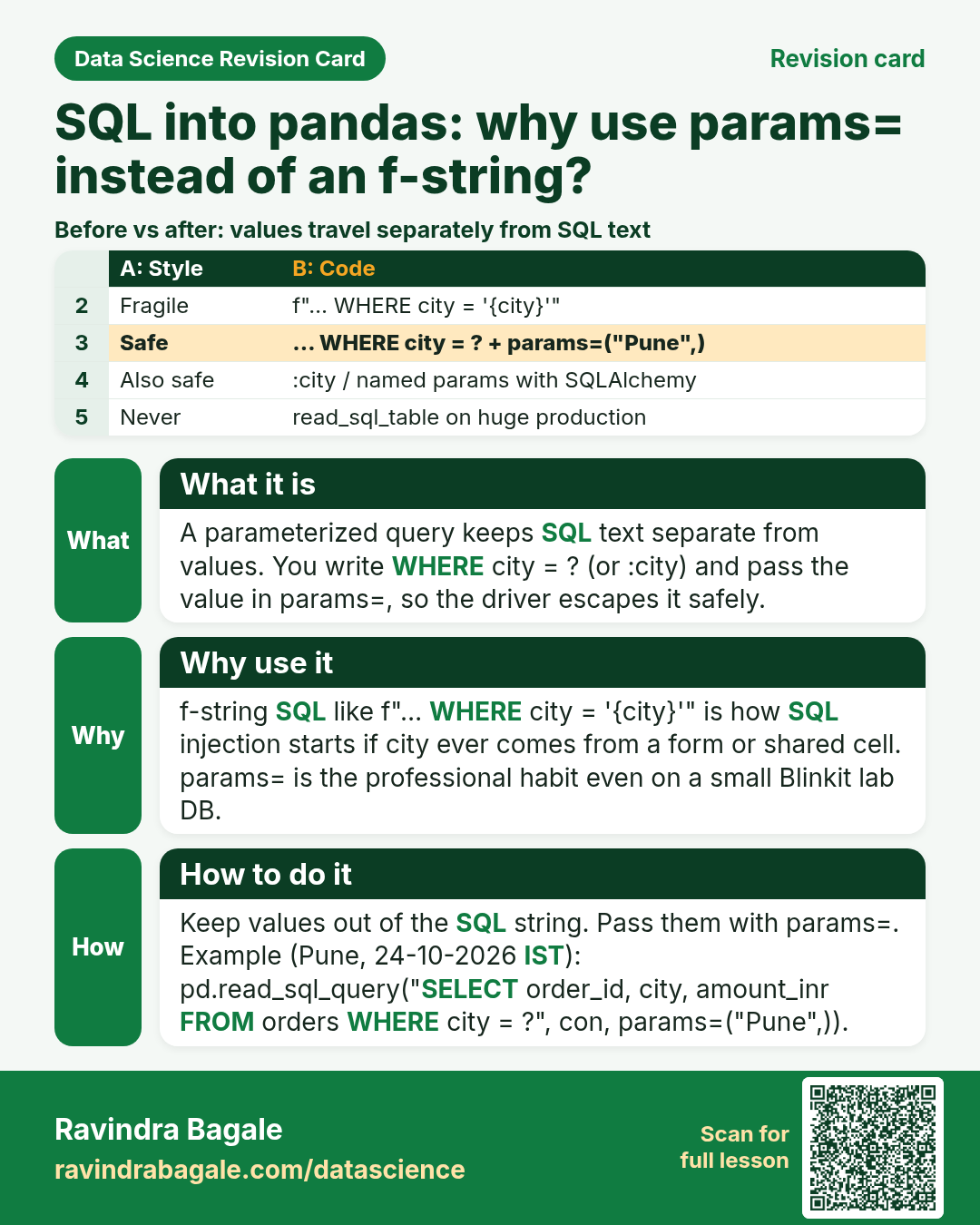
- Card 24: SQL into pandas: why use params= instead of an f-string?
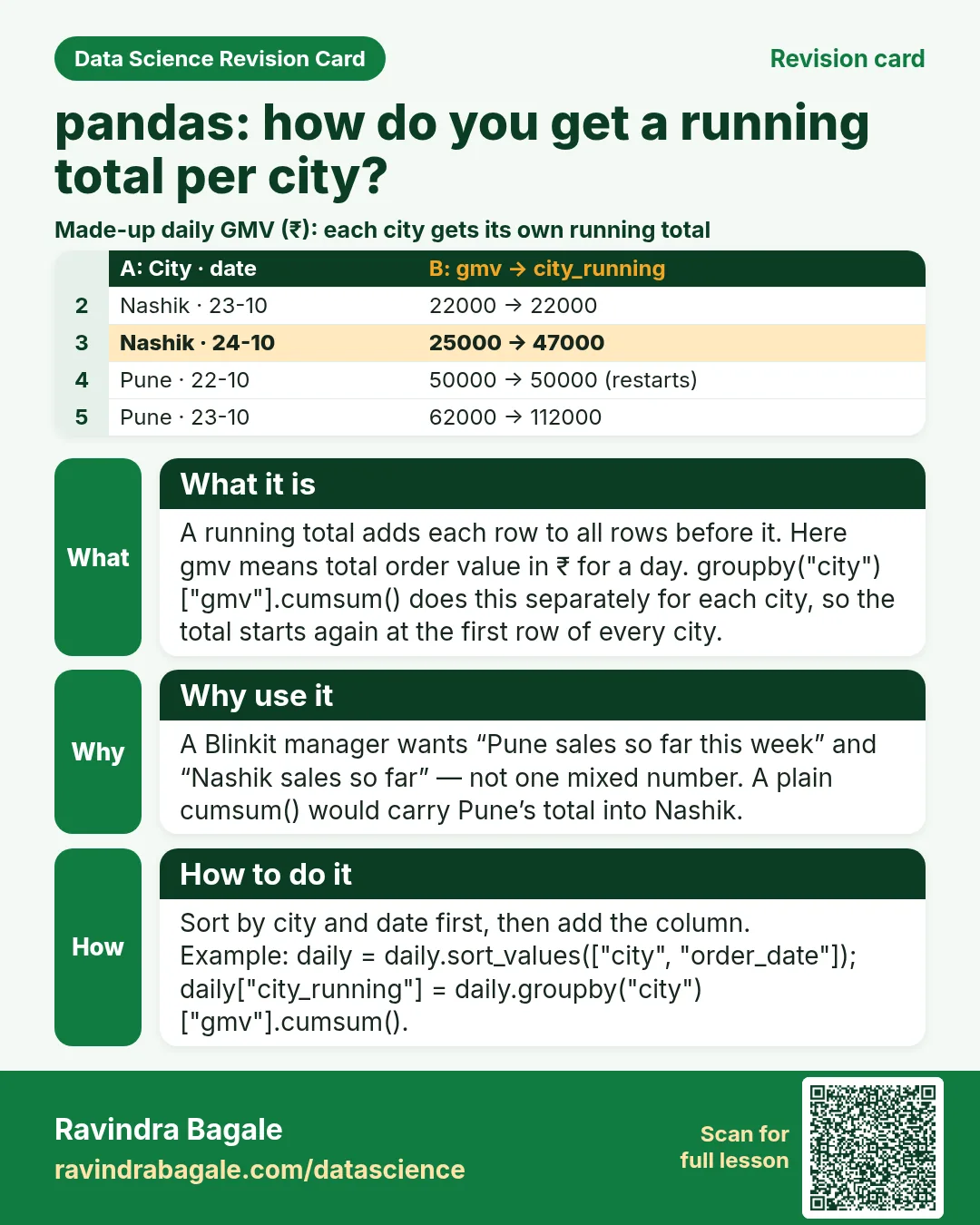
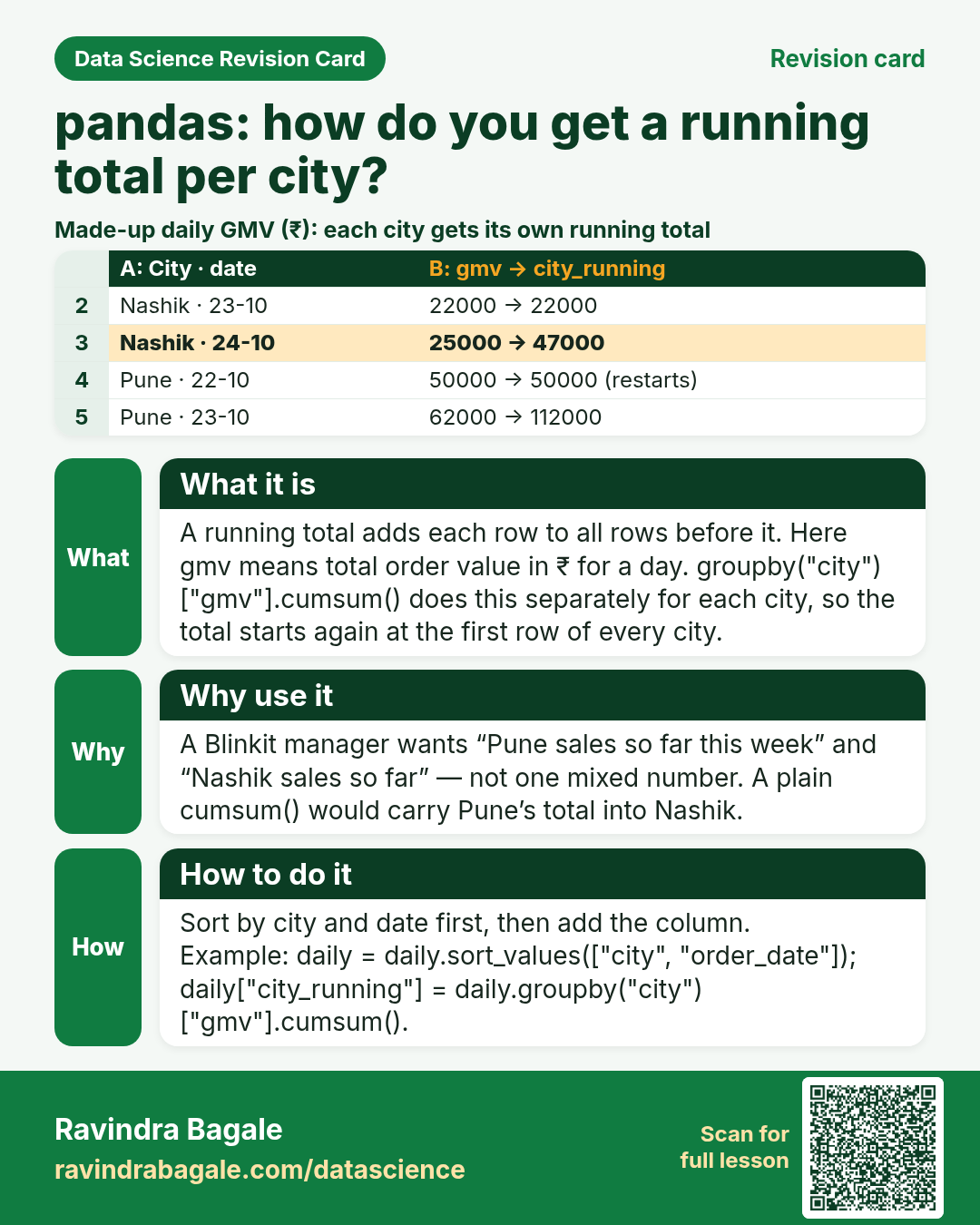
- Card 25: pandas: how do you get a running total per city?
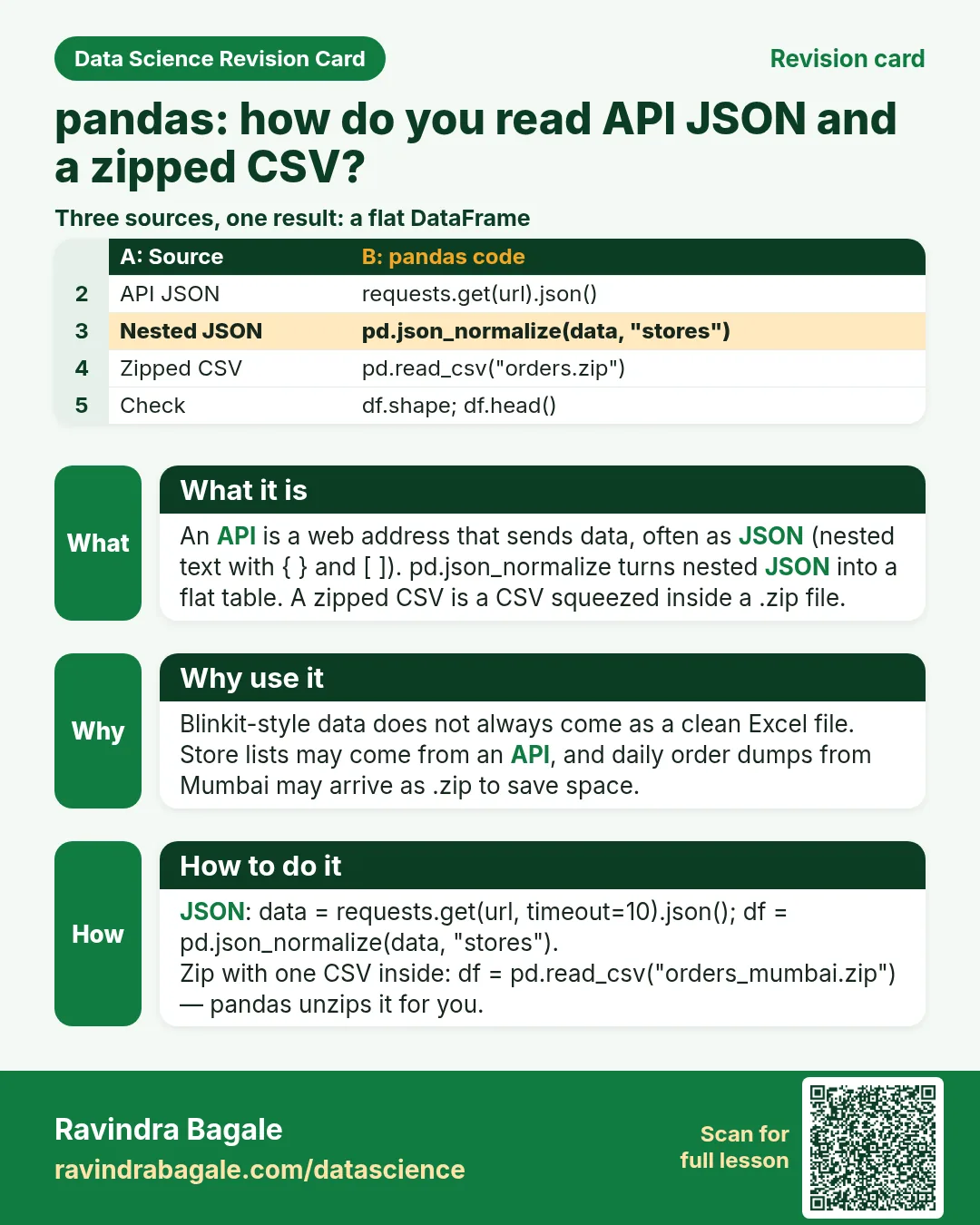
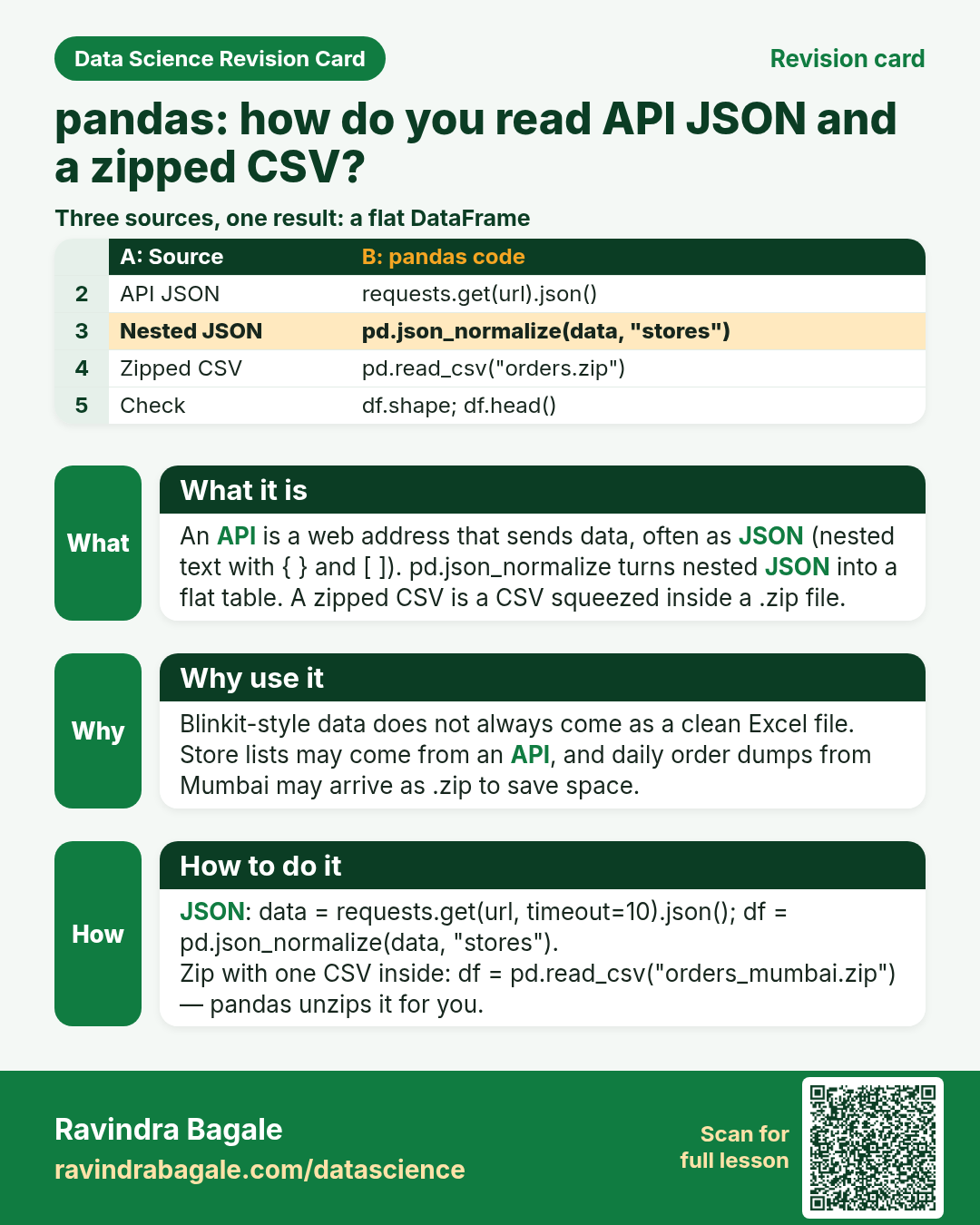
- Card 26: pandas: how do you read API JSON and a zipped CSV?
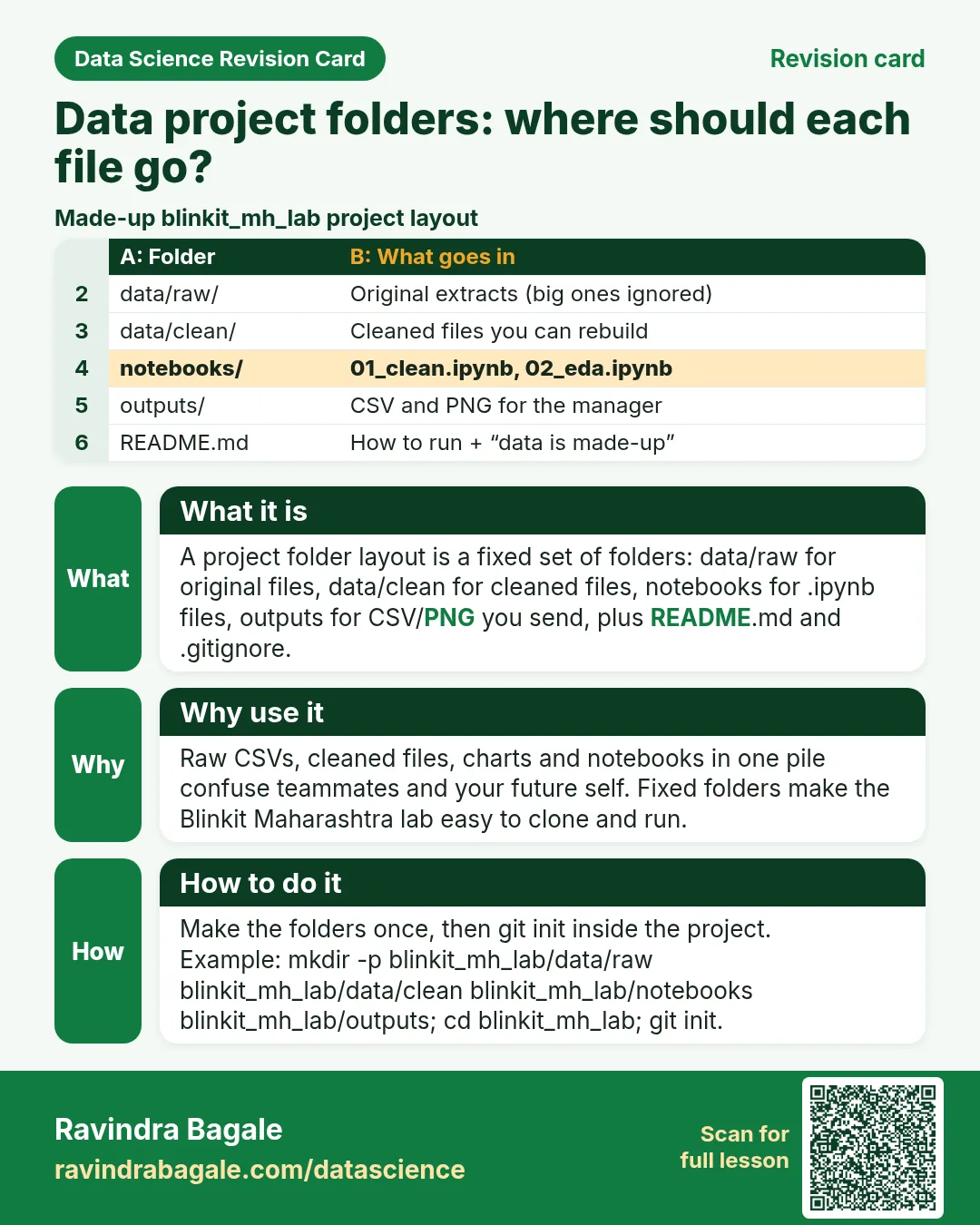
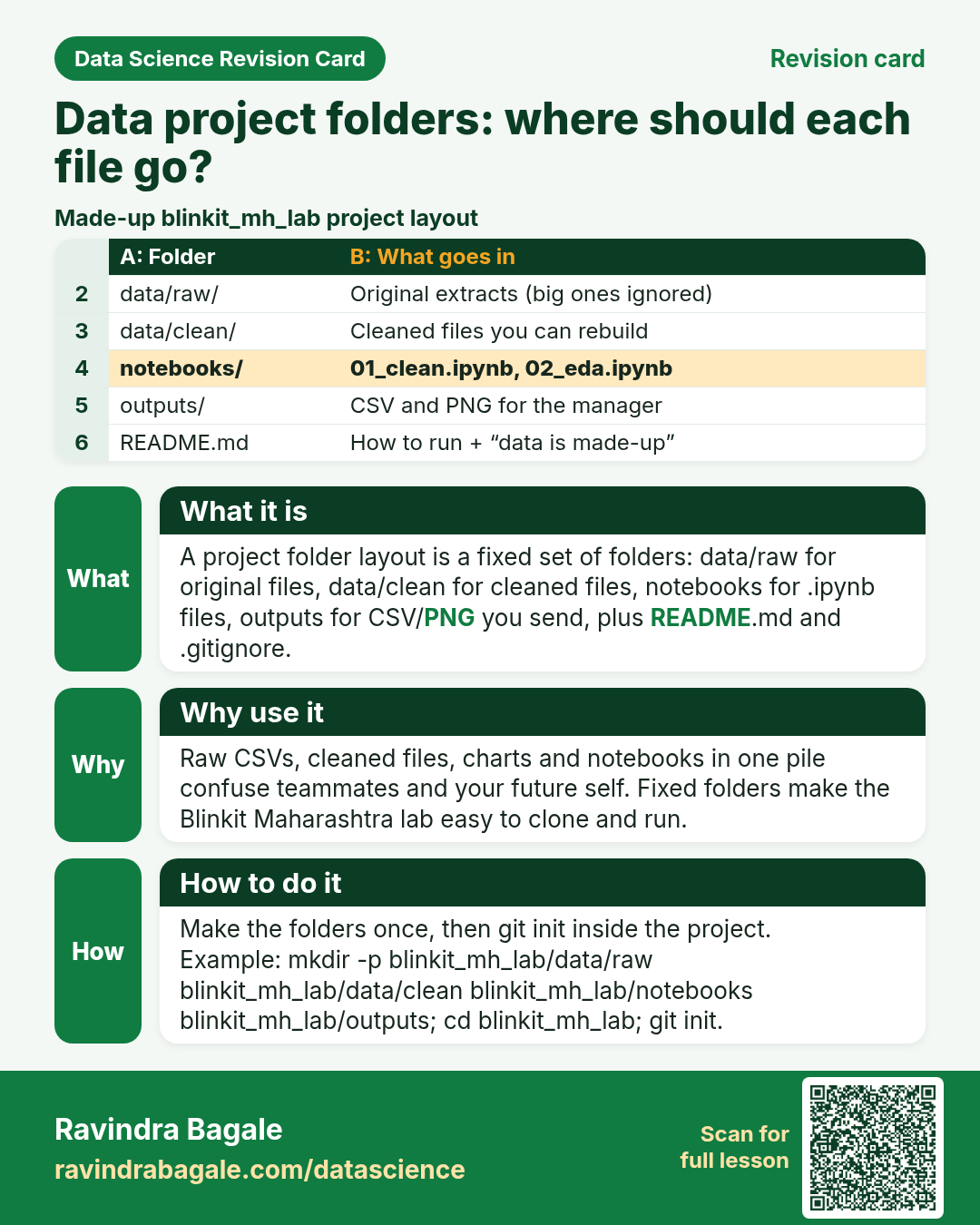
- Card 27: Data project folders: where should each file go?
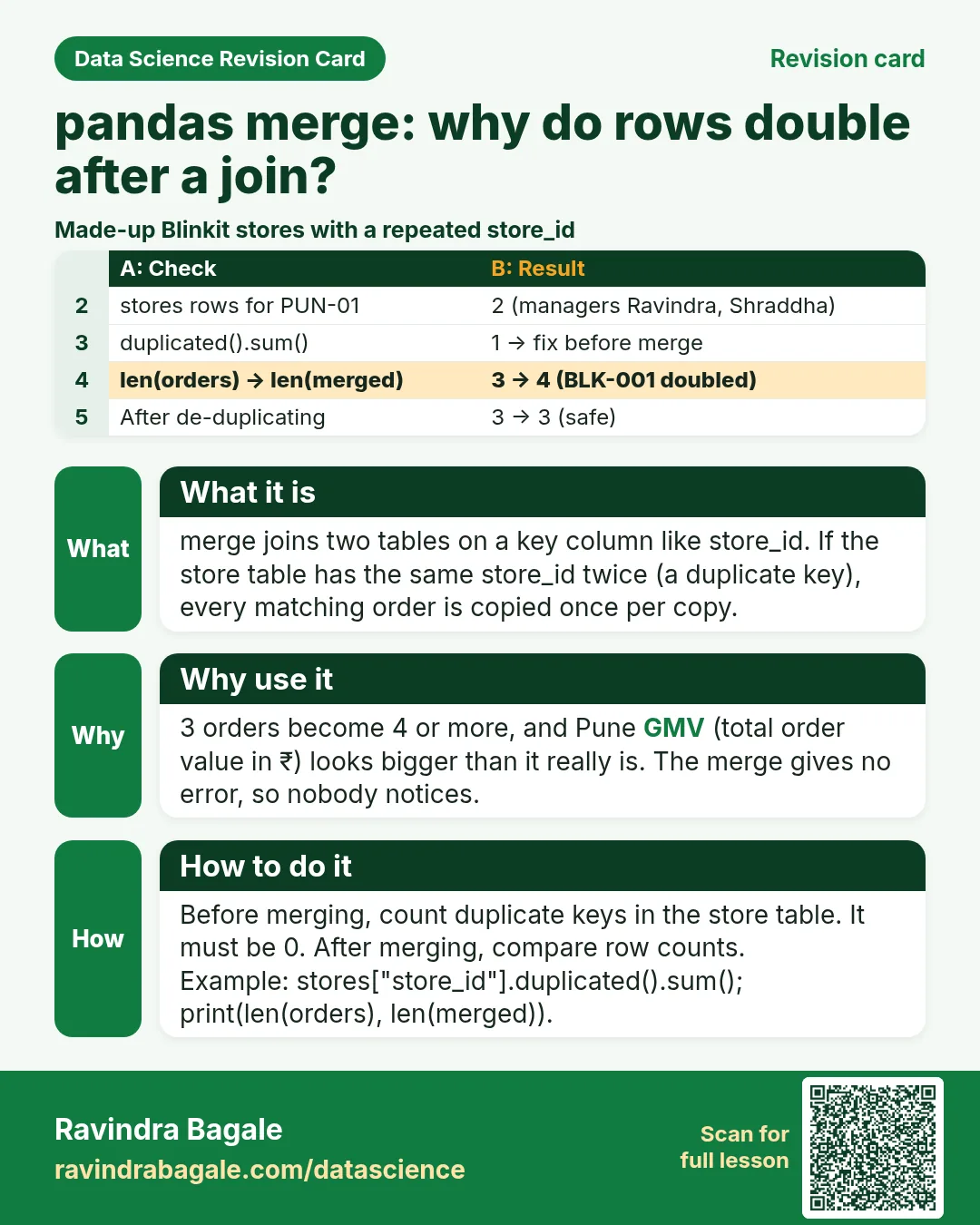
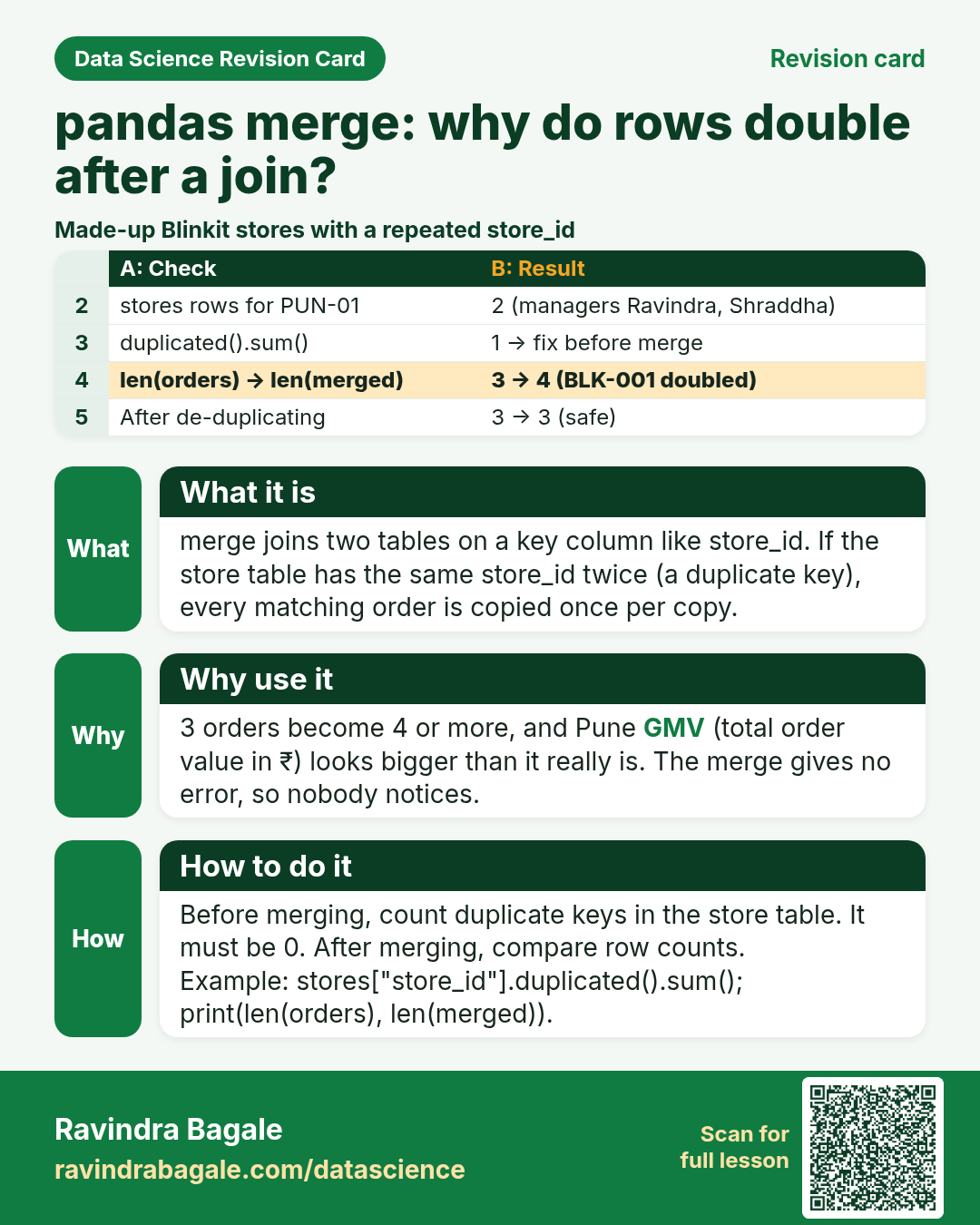
- Card 28: pandas merge: why do rows double after a join?
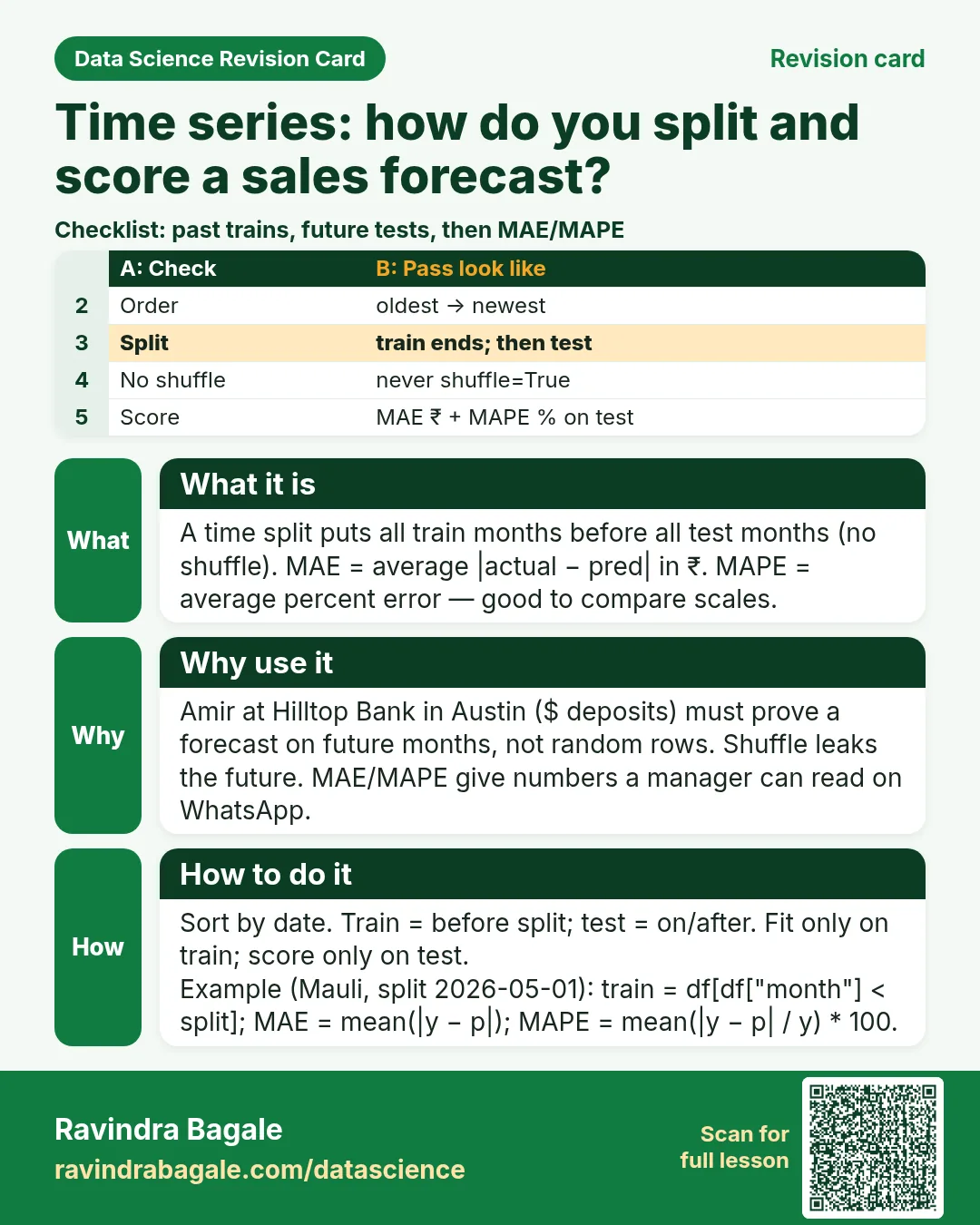
- Card 65: Time series: how do you split and score a sales forecast?
Python basics
Data Science chapters